

A jab step is a short, sharp fake with the lead foot that threatens a drive, forces a defender to react, and creates the space an offensive player needs to shoot, pass, or attack. In basketball, “creating space” means gaining a usable advantage without pushing off or traveling: a cleaner passing lane, a clearer shooting window, or a driving angle that puts the defender behind the play. I have taught jab-step footwork in youth gyms, high school practices, and individual workouts, and the pattern is consistent: players who learn to sell the jab with balance become harder to guard immediately. This matters because modern offense is built on small edges. A defender who shifts six inches the wrong way can give up an open jumper, a straight-line drive, or a help rotation that exposes the entire defense. For a Basketball Skills hub focused on offense, the jab step is foundational because it connects triple threat, shot preparation, first-step explosiveness, ball protection, and decision-making. It is not just a move for scorers on the wing. Guards use it to trigger downhill drives, wings use it to set up pull-ups, and bigs use it on the mid-post to move a defender’s top foot and open middle or baseline. When players ask how to use a jab step to create space in basketball, the best answer is direct: start from a strong triple-threat stance, jab with intent, read the defender’s feet and hips, then attack the reaction with one decisive action.
The key terms are simple but important. Triple threat is the stance where you can shoot, pass, or dribble without resetting. Your pivot foot stays anchored, your knees stay bent, and the ball stays protected near the shooting pocket or hip. A jab step is not a lunge; it is a controlled foot fake that moves the defender, not your center of gravity. Space is not only physical distance. It can also be timing space, meaning the fraction of a second you gain when the defender freezes or rises out of stance. Offensive players who understand that difference use the jab step more effectively. They do not hunt dramatic movement every possession. They hunt useful reactions. This article covers the full tutorial: mechanics, reads, counters, common mistakes, drills, and how the jab step fits into broader offense such as drives, pull-ups, passing decisions, and off-ball scoring actions. If you want one move that improves almost every perimeter possession, this is it.
Build the jab step from triple threat
The best jab step starts before the foot moves. Catch the ball with your feet under control, chin up, and knees loaded. Your pivot foot is the foot that stays down while the jab foot threatens space. Most right-handed players are comfortable pivoting on either foot, but they often prefer a left-foot pivot on the right wing because it aligns naturally with a right-hand drive after the jab. There is no universal rule, though. The correct pivot foot depends on the catch, the defender’s angle, and what finish or pass you want next. What matters is being deliberate. Sloppy pivots lead to travels, weak fakes, and rushed pickups.
Your upper body sells the move as much as your foot. Show the ball enough to make the defender respect a shot or drive, but do not swing it wide where a dig defender can slap it free. I teach players to keep their chest over their hips, eyes at rim level, and shoulders active. If your shoulders stay dead and only your toe moves, experienced defenders will not bite. If your shoulders dip too far, you lose balance and cannot shoot quickly. The sweet spot is a realistic threat: your jab foot strikes the floor sharply, your shoulders and eyes suggest attack, and your weight stays stacked so you can explode in any direction. Watch elite scorers like Carmelo Anthony in the mid-post or Paul Pierce on the wing. Their jab steps worked because they were balanced enough to shoot immediately and strong enough to drive off the same fake.
Read what the defender gives you
A jab step works because defenders are trained to protect direct drives first. Your job is to read how they do it. Focus on three clues: the defender’s top foot, hips, and hand activity. If the top foot slides back and opens the hips, the lane to your shot may be available. Rise into the jumper before the defender recovers. If the defender stays tall and reaches, sweep low and attack the exposed side. If the defender overplays your strong hand, jab there and drive opposite. The read should happen in less than a second. Great offensive players do not perform the move and then think. They identify the reaction during the fake and counter on the first beat after it.
Context also matters. Against a smaller defender, a jab step often creates enough cushion for a shot because that defender is already wary of contact. Against a longer defender, the jab is more useful for shifting feet and opening a hip so you can get into the body on the drive. Team defense changes the answer too. If there is a shot blocker parked at the nail or dunker spot help waiting from the baseline, the right read after the jab may be a pass rather than a drive. This is why the jab step belongs in full offensive development, not just isolation scoring. It improves your ability to trigger the next advantage. On film, many “simple” assists begin with a jab that bends one defender and forces the help rotation that opens a teammate.
Use the right counter for the reaction
Once the defender moves, your next action must be immediate and clean. The four primary counters are the shot, straight-line drive, rip-through, and step-through. The shot is available when the defender gives cushion or pops upright. Keep the ball tight, replace the jab foot under your base, and rise vertically. The straight-line drive works when the defender’s hips open. Push off the pivot into your first dribble without drifting sideways, then win the shoulder battle by getting your inside shoulder past the defender’s chest. The rip-through is effective when the defender reaches or carries hands high. Sweep the ball low and tight across your body, stay under control, and attack the front foot. The step-through is usually a secondary counter after a shot fake or a hard jab against an aggressive closeout.
| Defender reaction | Best offensive counter | Why it works |
|---|---|---|
| Slides back and rises out of stance | Pull-up or catch-and-shoot jumper | You gained cushion and a cleaner release window |
| Opens hips to one side | Straight-line drive to the opposite gap | Opened hips are slow to recover against a decisive first step |
| Reaches at the ball | Low rip-through into one or two dribbles | The reach exposes the defender’s base and balance |
| Jumps to cut off the lane early | Cross jab or step-back counter | Overcommitment creates momentum you can use against them |
These counters are most effective when your footwork stays compact. Players often ruin the move by making the jab too long. A long jab can look dramatic, but it locks your weight forward and delays the counter. In live games, the compact jab wins more often because it lets you get back under your hips and explode. Think sharp rather than wide. The jab should move the defender, not become the entire play.
Apply the jab step in real offensive situations
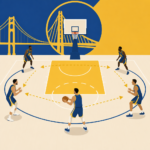
On the wing, the jab step is especially powerful after a live catch because defenders are usually in closeout mode. A hard jab middle can freeze a defender worried about the drive, which opens a baseline attack or a rhythm jumper. From the top of the key, the jab is useful for shifting the on-ball defender away from a ball screen angle or opening a split gap between two help defenders. In the corners, space is tighter, so the jab must be compact and purposeful. Corner players often use a quick jab baseline to force the defender to seal off the sideline, then drive middle where more passing options exist. In the mid-post, a jab step can move a defender’s high foot and set up a turnaround, a middle drive, or a baseline spin.
Big players benefit from this move more than many coaches realize. A face-up four or five who can jab, read, and drive turns a static post touch into a modern offensive possession. Chris Bosh built years of efficient offense from face-up footwork. Jab middle, one dribble pull-up. Jab baseline, sweep middle. Jab to freeze, then hit the cutter when help stepped over. The same principles apply at every level. In a high school game, a skilled forward at the elbow can use a jab step to force a slower defender upright, then get to the rim with one dribble. For guards, the jab is a pace tool. It lets them attack without needing a live dribble first, which is critical late in clock situations when defenders sit on the crossover.
Common mistakes that kill the move
The first mistake is poor balance. If your head and chest drift too far over the jab foot, you cannot shoot quickly or change direction cleanly. The second is telegraphing. Defenders read habits, so if you always jab and drive the same way, the move loses value. The third is exposing the ball. Young players often swing the ball outside their frame on the fake, inviting strips from active hands. The fourth is staring at the floor. Your eyes should sell threat and gather information. Looking down removes both. The fifth is traveling through lazy pivot discipline. Officials watch the pivot foot closely on face-up catches, especially when players try to combine a jab, shot fake, and step-through.
Another major problem is using the jab without a plan. A jab step is not useful just because it looks skilled. It needs a read and a counter tied to the game situation. If the shot clock is low, a hard jab into a quick pull-up may be best. If your team has a shooter lifted on the weak side and the low man is tagging early, the correct answer may be jab-and-go to force help and kick out. Efficiency comes from matching the move to the context. In player development sessions, I often limit athletes to one dribble after the jab during drills. That constraint teaches them to attack immediately and make the right simple play instead of overdribbling into traffic.
Drills that make the jab step game-ready
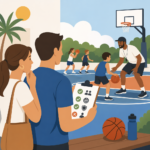
Start with stationary footwork. From triple threat, hold the pivot, snap the jab, return to balance, and freeze. Do five perfect reps each side before adding the ball. Then add ball positioning: shot pocket, protected hip, low rip-through, and quick rise into the jumper. Next, use guided reads with a partner. The defender gives one of three reactions on command: back up, open hips, or reach. The offensive player must jab and choose the correct counter instantly. This is better than empty reps because it trains perception, not only movement.
Progress to live constraints. Use a one-dribble scoring drill from the wing, top, and corner. Award points only for decisions made off the first defender reaction. Another effective drill is jab-to-pass against help. Place a helper at the nail or block and require the ball handler to drive only if the help stays home; otherwise they must hit the open teammate. Film these reps. Players are often surprised to see that their best jab steps are the quiet ones: compact foot, strong shoulders, quick read, no wasted motion. Tools like Hudl, Synergy clips, and simple slow-motion phone video make these details obvious. Over time, tie the jab step into your larger offense by practicing it after common actions such as pin-down catches, slot passes, and short-post entries. That is how a skill becomes usable under pressure.
The jab step is one of the most practical ways to create space in basketball because it turns a stationary catch into a live offensive advantage. Start from a disciplined triple-threat stance, keep the pivot foot honest, sell the fake with your shoulders and eyes, and stay balanced enough to shoot, pass, or drive without resetting. Read the defender’s feet, hips, and hands, then choose the simplest counter that fits the reaction. When the defender backs up, shoot. When the hips open, drive. When the hands reach, rip through. When help rotates early, pass on time. Those decisions are the heart of efficient offense.
As a Basketball Skills hub article for offense, this tutorial connects to nearly every scoring and playmaking concept that matters: footwork, first-step explosion, pull-up shooting, finishing angles, passing windows, and live-game reads. The move works for guards, wings, and bigs because the principles do not change across positions. What changes is where you use it and what counter you favor. If you want better offense without adding flashy complexity, master this one skill through deliberate reps, guided reads, and film review. Take ten minutes in your next workout to practice jab, read, and counter from three spots on the floor. Do it with balance and purpose, and your space creation will improve fast.
Frequently Asked Questions
What is a jab step in basketball, and how does it actually create space?
A jab step is a quick, controlled fake with your lead foot that makes the defender believe you might drive in that direction. The goal is not simply to move your foot. The goal is to force a defensive reaction. When the defender shifts weight, opens the hips, raises up, or takes a retreat step, even for a moment, you gain usable space. That space can become a cleaner jump shot, a safer passing window, or a driving lane where the defender is now slightly behind the play.
The reason the jab step works so well is that defenders are trained to react to threats. If your body language, eyes, shoulders, and footwork all sell the possibility of a real attack, the defender has to respect it. A sharp jab can make a defender lean just enough to compromise balance. Once that happens, you are in control of the next action. You can pull up, rip through and drive, swing the ball, or flow into another move depending on how the defender responds.
Good players do not use the jab step as a random move. They use it as a decision-making tool. You read the defender’s feet, chest, and balance, then choose your next action. That is why a jab step is one of the most practical space-creation moves in basketball. It does not require elite speed or advanced dribbling. It requires timing, body control, and the ability to make your fake look believable without losing your own balance.
What is the correct footwork for a jab step so I do not travel?
The most important rule is to know your pivot foot and keep it grounded until you legally begin your next move. If you catch the ball and establish your pivot foot, that foot becomes your anchor. Your jab foot is the free foot. It steps out quickly to sell the fake, then returns under control. If the pivot foot slides, lifts too early, or changes illegally before the ball is put on the floor, you risk a travel.
In a basic triple-threat position, start with your knees bent, chest tall, and the ball protected. Your feet should be balanced and ready, not too narrow and not too wide. From there, snap the jab foot out a short distance. It should be sharp and purposeful, not a giant reaching step that pulls your body off center. Your shoulders and eyes should sell the threat in the same direction as the jab. Then bring the foot back under you so you are ready to shoot, pass, or attack.
A common mistake is overstepping. When players jab too far, they often become upright, drift off line, or lose the ability to explode into the next action. Another mistake is moving the foot without moving the body. If the jab is only a foot tap and the upper body does not sell the fake, defenders will not react. Proper jab-step footwork is compact, explosive, and balanced. The fake should threaten the defender while still leaving you in position to make a legal, powerful next move.
If you want to stay consistent, practice catches from different angles and immediately identify the pivot foot. Then rehearse jab, recover, and react. That sequence teaches game-realistic footwork. Over time, your body starts to recognize the pattern automatically, which is exactly what you want under pressure.
When should I use a jab step instead of shooting right away or attacking off the dribble?
You should use a jab step when the defender is close enough to be influenced by a fake but not so aggressive that an immediate drive is obviously the better option. It is especially effective from triple threat on the wing, at the slot, or from the mid-post, where you have room to read the defender and multiple options available. If the defender is balanced and square, the jab step can create the slight shift you need to open the possession up.
Think of the jab step as a probe. You are testing how the defender reacts. If the defender leans back, you may have a shot. If the defender opens one hip or lunges, you may have a driving angle. If a help defender shades over early, you may have a pass. The jab is useful because it gets the defense to reveal information without requiring you to pick up the dribble or commit too soon.
That said, do not force it. If you catch the ball with clear shooting space, shoot it. If the defender closes out out of control and gives you a straight-line drive, attack immediately. The jab step is best used when there is uncertainty and you need one quick fake to create an advantage. Great offensive players understand that pace and timing matter as much as the move itself. Sometimes the best decision is instant. Sometimes one sharp jab creates the opening.
It also depends on your strengths. If you are a strong shooter, your jab step can be deadly because defenders are eager to contest and may overreact. If you are a slasher, your jab step can freeze the defender just long enough for you to get downhill. The move becomes even more powerful when opponents know you can score in more than one way.
What are the most common jab-step mistakes players make?
The first major mistake is making the jab step too slow or too obvious. If the defender can tell it is a fake before feeling threatened by it, the move has no value. A good jab is sudden, sharp, and realistic. It should look like the beginning of a real drive. That means your eyes, shoulders, hips, and ball position all need to support the story you are telling.
The second mistake is poor balance. Players often lean too far over the jab foot, let the ball swing wide, or rise out of their stance. Once balance is lost, the next move becomes slower and less effective. The best jab-step players stay loaded in their legs so they can immediately shoot, pass, or explode. The fake creates pressure on the defender, but your own body should still feel stable and athletic.
Another common error is forgetting the read. Some players perform the jab step automatically and decide the next move before seeing what the defender does. That turns a smart footwork tool into a rehearsed habit. The purpose of the jab is to create a reaction. If you do not observe that reaction, you miss the value of the move. Use the jab, then process the defender’s shift. Is the defender upright? Retreating? Reaching? Opening up? Your answer should determine what comes next.
Players also get in trouble by jabbing too far, exposing the ball, or dragging the pivot foot. In youth and high school settings, these are the details that separate an effective move from a turnover. Keep the jab compact. Keep the ball tight and protected. Keep the pivot foot disciplined. The move should be aggressive but controlled. Done correctly, the jab step makes the defender uncomfortable while keeping you fundamentally sound.
How can I practice the jab step so it works in real games?
Start by mastering the movement without defense. Work from triple threat and practice establishing your pivot foot every time you catch the ball. Then rep a simple sequence: catch, settle into stance, jab sharply, recover, and make one clear follow-up action such as a shot fake, a pull-up, a first-step drive, or a pass. The emphasis should be on clean footwork, balance, and a believable fake. Slow practice is useful at first, but you need to build toward game speed if you want the move to transfer.
Next, add decision-making. Instead of doing the same follow-up every rep, choose your next action based on a cue. For example, imagine the defender leans back after the jab, so you shoot. Imagine the defender opens up, so you drive. Imagine help rotates, so you pass. This kind of variable training matters because the jab step is not just a move. It is a trigger for reading the defense. The more your drills reflect that, the more useful they become.
After that, use guided live reps. Have a partner play defense and react in different ways. Sometimes the defender stays home. Sometimes the defender bites hard. Sometimes the defender crowds your space. Your job is to use the jab and make the correct basketball decision. This stage is where timing improves. You begin to understand how little space you really need and how important it is to stay calm after the fake.
Finally, build the jab step into your normal skill routine. Use it on both sides. Practice from different spots on the floor. Work on catching from passes, not just starting stationary. Pair it with the options you actually use in games, such as jab to pull-up, jab to rip-through, jab to one-dribble jumper, and jab to swing pass. When players consistently rehearse the move with realistic pace and reads, the jab step stops being a drill move and starts becoming a reliable game tool for creating space.