

Post move fundamentals separate efficient low-block scorers from players who simply catch with their back to the basket and hope size will be enough. In basketball offense, the low block is the area near the basket just outside the lane where strong footwork, balance, touch, and timing create high-value shots, fouls, and passing angles. A post move is any deliberate action used after establishing position inside, including drop steps, jump hooks, up-and-unders, pivots, seals, and counters. This matters because post offense still punishes switches, stabilizes half-court possessions, and forces defensive help that opens perimeter shooting. I have coached youth bigs, college wings playing small-ball four, and guards learning to punish mismatches, and the same truth keeps showing up: post scoring is not about having the biggest body; it is about winning space early, keeping a strong base, reading the defender’s top foot and chest, and finishing before help arrives. Modern offenses spread the floor, but they have not eliminated the low block. They have made efficient post play more selective and more valuable. Teams use it to attack undersized lineups, create paint touches, generate kick-out threes, and control tempo when transition chances disappear.
To score in the low block, a player must connect several skills into one repeatable sequence. First, earn deep position with a seal, angle, or duck-in. Second, receive the ball with balance and vision. Third, identify whether the defender is behind, on the high side, or sitting on the baseline. Fourth, choose a move that fits the defender’s weight and the help location. Fifth, finish with touch, strength, and shot protection. The best low-post scorers keep their move package simple, but every move has a purpose and a counter. Tim Duncan built a Hall of Fame diet on seals, shoulder fakes, middle-bank touch, and exact footwork. Hakeem Olajuwon turned pivots and counters into art, yet his brilliance still rested on fundamentals. At every level, those principles transfer. If you want a complete basketball skills offense foundation, learning post move fundamentals gives you better finishing, stronger footwork, cleaner reads versus help defense, and more control over physical defenders.
Establishing Position and Winning the Catch
Low-block scoring begins before the pass arrives. The first battle is for angle, not for the ball. Deep catches create layups, short hooks, and free throws; catches two steps off the block create rushed dribbles and contested fadeaways. The goal is to put the defender behind your hip or on your top shoulder, then show a clear target hand. A proper seal starts with a wide base, bent knees, and chest up. You do not back straight into the defender blindly. You make contact, feel pressure, then pivot to put your body between the ball and the defender. Coaches often call this “hit, find, seal.” Hit the defender with legal body contact, find the passer with your eyes, and seal with forearm discipline and lower-body leverage.
There are three common ways to earn a low-block catch. The first is the duck-in, where you step across the defender’s top foot after a high-low action or perimeter reversal. The second is the pin and spin, often used after screening away, when the defender relaxes for a second and gives up inside position. The third is the mismatch seal in transition, where a guard or wing runs directly to the block before the defense can scram switch or front the post. Watch how Nikola Jokic seals early in semi-transition: he does not waste steps. He runs to the rim line, identifies the smaller defender, widens his base, and gives the passer a simple angle. That is elite post offense because it creates efficiency before any move is needed.
The catch itself must be clean and strong. Meet the pass with two hands, chin the ball, and land on balance. Many turnovers happen because players expose the ball on the way in or turn immediately into a crowd without reading help. A good post catch includes a brief scan: where is the primary defender leaning, where is the nearest stunt defender, and is there a baseline dig coming from the corner? If the defense fronts, the offense can use a high-low pass from the elbow, a weak-side skip to improve angle, or a quick screen to force a switch. As the hub of basketball offense in the half court, low-post positioning teaches spacing, timing, and ball security better than almost any other skill package.
Footwork, Balance, and the Core Move Package
Every reliable post scorer owns a small group of foundational moves tied to disciplined footwork. The most important concept is the pivot foot. If the pivot slides, the move breaks down into a travel or a rushed release. I teach players to master three actions first: the drop step, the jump hook, and the up-and-under. The drop step works when the defender plays high side or leans middle. You secure the catch, feel pressure, swing the baseline foot behind the defender, and explode chest to shoulder toward the rim. The power comes from hips and first step, not from lowering your head. If you create contact on the defender’s hip and keep the ball tight, the finish is usually a layup or strong-hand extension.
The jump hook is the safest and most scalable low-block finish because it protects the ball and can be taken over either shoulder. A right-handed player on the left block often prefers a middle jump hook off the left foot, but strong scorers learn both sides. The key details are simple: one hard dribble if needed, inside shoulder between ball and defender, eyes on the top corner of the square or a soft front-rim target, and a high release with touch. Youth players often throw hooks flat. The fix is not more force; it is better wrist finish and more vertical lift off balance. Kareem Abdul-Jabbar’s skyhook was unique in range, but the principle applies to everyone: length plus angle plus touch is almost impossible to block.
The up-and-under is a counter, not a trick shot. It works only after the defender has been conditioned to rise on your shoulder fake or hook motion. You show the ball high, stay low through the pivot, step through the space the defender leaves, and finish under control. Advanced players add an inside pivot to middle, an outside pivot baseline, and a shoulder fake without bringing the ball below the waist. The most efficient low-block players are not improvising randomly. They are reading weight distribution. If the defender’s top foot is high, attack baseline. If the defender sits on baseline, come middle. If the defender crowds chest-to-chest, use a quick spin or face-up. Good post offense is pattern recognition expressed through footwork.
Reading the Defender and Choosing the Right Counter
Scoring in the post is a decision-making skill as much as a finishing skill. The defender gives information through feet, hands, and hips. A defender playing three-quarters top side wants to deny the middle. A defender sitting low with forearm contact is taking away baseline. A smaller defender may pull the chair, giving ground just as you lean. A disciplined scorer reads these cues before the first dribble. One of the biggest mistakes I see is players deciding on a move before they know where the help is coming from. The first question should always be: is this a pure one-on-one post-up or a post touch against loaded help?
Against single coverage, your move selection should be direct. Against hard middle shade, baseline drop step is the highest percentage answer. Against baseline shade, middle hook or middle turn-around becomes available. Against a defender crowding your body, a quick spin can work, but only if you keep your shoulders level and do not expose the ball. Against a smaller player trying to root under you, a simple power dribble and shoulder bump may create all the separation you need. Shaquille O’Neal dominated with force, yet even he relied on timing and angle; he did not simply lower a shoulder on every touch. Physicality without control leads to charges and strips.
| Defender Position | Best First Option | Useful Counter | Main Teaching Point |
|---|---|---|---|
| High side, taking away middle | Baseline drop step | Shot fake to up-and-under | Win the defender’s hip early |
| Baseline shade | Middle jump hook | Middle fade over inside shoulder | Keep inside shoulder between ball and chest |
| Chest-to-chest pressure | Quick spin to space | Face-up rip through | Do not hold the ball low |
| Smaller defender behind | Power finish after one bump | Turn-around jumper if help sinks | Score before the double arrives |
| Late double-team from top | Baseline attack or immediate kick-out | Skip pass to weak-side shooter | Read the second defender on the catch |
Counters matter because defenses scout habits. If you always go middle, defenders sit on your inside shoulder. If you always dribble twice before moving, guards will dig down and strip you. Build simple pairings: drop step with up-and-under, middle hook with baseline spin, power dribble with fade counter. Film study helps here. Use Synergy-style clips if available, or simple phone video, and chart what happens after each catch. You will usually find one move works because of your footwork, not because it is flashy. Keep that move, then add one counter that punishes the defender’s adjustment. That is how post offense becomes dependable instead of streaky.
Finishing, Passing Out of the Post, and Fitting Post Play into Modern Offense
Once you create an edge, the finish must be compact. Bring the ball from gather to release on the shortest protected path. Use the rim as a shield on baseline finishes and extend high off the glass when help rotates from the middle. Touch matters more than strength inside five feet. Great finishers can absorb contact, keep eyes level, and still place the ball softly. Practice both-hand finishes, especially inside-hand layups and off-foot finishes, because defenders often time the obvious step pattern. One useful drill is the Mikan series with contact pads, then progress to jump hooks off either foot. Another is two-dribble bump-and-score from each block, emphasizing balance after contact rather than speed alone.
Passing is part of low-block scoring because doubles are inevitable once you become efficient. The post is a playmaking spot. From the block, you can hit a split cut, find the opposite corner on a skip, or drop a short pass to a dunker spot cutter. Jokic, Domantas Sabonis, and Alperen Sengun show how dangerous post offense becomes when the defense must honor both the score and the pass. The read sequence is straightforward: baseline help often opens the opposite slot, top-side doubles open baseline cutters, and full commits from the corner create a direct pass to the shooter. The pass should come early, before the second defender traps your shoulders. Waiting too long turns an advantage into a tie-up.
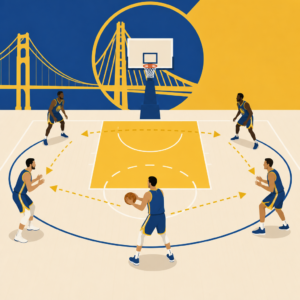
In modern basketball offense, post-ups are most effective when spacing supports them. Keep one teammate in the weak-side corner, one above the break, and avoid crowding the strong-side slot unless you are sending a cutter. This creates room for single coverage and clear passing windows against doubles. Analytics departments correctly note that low-efficiency post fadeaways are poor shots. But deep catches, mismatch post-ups, duck-ins after cuts, and post touches that create open threes remain productive. According to tracking data trends from recent NBA seasons, raw post-up frequency is lower than in earlier eras, yet points generated through post play remain significant when passes, fouls drawn, and cuts are included. For players building complete basketball skills on offense, the low block is still a hub skill. It teaches leverage, patience, reading help, and finishing through traffic. Start with seals, pivots, hooks, and one counter. Drill game-speed catches, chart results, and study your reads. If you want easier paint points and a stronger half-court attack, make low-block fundamentals part of your weekly training.
Frequently Asked Questions
What are the most important fundamentals for scoring consistently in the low block?
The most important low-block fundamentals are early position, balance, footwork, patience, and touch. Great post scorers do not wait until they catch the ball to start working. They fight for deep position before the pass, use their hips and lower body to seal the defender, show a strong target hand, and catch with a wide, stable base. That foundation matters because a post player who catches two feet closer to the rim with balance already established has a much simpler scoring decision than a player catching off-balance, outside the lane line, or drifting away from the basket.
Once the catch is made, everything starts with staying low and under control. Your feet should be active but disciplined, your core should stay engaged, and your shoulders should not rise unnecessarily during pivots or fakes. Strong post players read the defender before making a move. If the defender is on the high side, the baseline may be open. If the defender sits on the baseline hip, a middle turn might be cleaner. If the defender leans hard to stop power, a counter such as an up-and-under becomes available. In other words, low-block scoring is not just about having a favorite move. It is about reading pressure, controlling space, and choosing the simplest high-percentage option.
Touch is another major separator. Even with strong footwork, low-block players must finish with soft hands around the rim. That includes jump hooks with either hand, short bank shots, power finishes through contact, and quick-touch releases before help arrives. The best post scorers also understand timing. They do not rush because they are near the basket, and they do not hold the ball so long that the defense loads up. They catch, read, and attack with purpose. When those fundamentals work together, the low block becomes a reliable source of points, fouls, and inside-out playmaking.
How do you establish strong post position before the catch?
Establishing strong post position begins before the ball even enters your side of the floor. The first key is winning the space battle early. Instead of walking into the post and simply standing behind the defender, a strong low-block player uses sharp cuts, changes of pace, and physical seals to arrive first and force the defender to react. The goal is to get your hips, legs, and inside shoulder between the defender and the basket, creating a passing window and limiting the defender’s ability to push you off your spot.
Your lower body does most of the work. A good seal is not just leaning backward into the defender. It is about spreading your base, keeping your feet active, sitting down with balance, and using your body as a wall. Show the passer a clear target hand, preferably away from the defender, and stay ready to adjust if the angle changes. Strong post players constantly fight for inside leverage, which means keeping the defender on their back hip rather than allowing them to slide around to the top side or front the entry. If the defender fronts, you may need to reverse pivot and re-seal, duck in on the weak side, or hold position long enough for a lob angle or high-low pass to develop.
Timing with teammates is also essential. Many post touches are lost because the player seals too early, relaxes, and then gets pushed off the block before the pass comes. The best approach is to time your contact with the ball movement. As the passer squares up, that is when you want to lock in your seal, widen your base, and present your hands. Catching matters too. Meet the pass with strong hands, chin the ball immediately, and avoid bringing it down where guards can dig it out. Winning the post is a combination of effort, technique, and awareness. If you can consistently catch deep with a stable base, your entire scoring package becomes more effective.
Which post moves should beginners master first in the low block?
Beginners should start with a small set of reliable moves rather than trying to learn every advanced counter at once. The best starting package usually includes the drop step, the jump hook, the reverse pivot into a middle finish, and one simple counter such as an up-and-under. These moves teach the core mechanics of low-post offense: playing off contact, pivoting without traveling, reading the defender’s weight, and finishing from close range with control.
The drop step is often the first move to learn because it is direct and powerful. If the defender is on your high side or leaning toward the middle, a quick baseline drop step lets you turn your hips, gain inside angle, and finish before help rotates. The jump hook is another foundational move because it works against size and allows you to score without fully exposing the ball. A right-hand hook over the left shoulder and a left-hand hook over the right shoulder give you options to finish over either side. Even if one hand is naturally stronger, developing both sides makes you harder to scout and defend.
The reverse pivot into a middle finish is useful when the defender cuts off the baseline. It teaches balance, vision, and body control while opening lanes for a short bank shot, hook, or power layup. Once those basics are comfortable, an up-and-under becomes a natural counter. If the defender jumps at your shot fake or leans hard to contest your first move, the up-and-under punishes that overcommitment. The key for beginners is repetition with precision. One well-practiced move and one trusted counter are more valuable than five rushed moves with weak footwork. Master the stance, pivot foot discipline, shoulder positioning, and finishing touch first. The advanced counters become much easier once those habits are in place.
How do you read the defender and choose the right move on the catch?
Reading the defender starts with understanding where the defender’s body is positioned relative to your hips and shoulders. As soon as you catch the ball, you should know whether the defender is playing on your top side, baseline side, directly behind you, or attempting to push you farther from the basket. That information tells you which move is available. If the defender is high and trying to take away the middle, the baseline drop step is often there. If the defender sits on your baseline hip, a middle turn, jump hook, or inside shoulder finish may be the better answer. If the defender plays straight behind you with no leverage advantage, power and patience can create a direct scoring lane.
You also need to feel the defender’s weight. Good post players do not just see the defender; they sense pressure through contact. If the defender is leaning into you heavily, that pressure can be used against them with a spin, a quick middle turn, or an up-and-under after a shoulder fake. If the defender is backing off to avoid contact, a short face-up, controlled hook, or quick turnaround may be available. If a second defender is digging down from the perimeter, you may need to score quickly or be ready to kick the ball out to an open shooter. That is why keeping your head up and not rushing your first move is so important.
The best decision-makers in the post simplify the process. They do not think of the catch as a moment to show creativity. They think of it as a moment to identify leverage. Ask simple questions: Where is the defender sitting? Which foot is loaded? Is help coming baseline or middle? Can I score immediately, or do I need a counter? That mindset leads to cleaner possessions. Over time, reading the defense becomes instinctive. Instead of predetermining a move, you let the defender tell you what shot is available, and that is when low-block scoring becomes efficient rather than forced.
How can players improve low-block finishing, footwork, and counters in practice?
Improving as a low-block scorer requires deliberate repetition, not just random post touches in live scrimmages. Start with footwork drills that isolate pivots, drop steps, reverse pivots, and balance on the catch. Work from both blocks and with both feet as the pivot foot. Many players become predictable because they only practice one shoulder turn or one hand finish. A complete post player should rehearse catches from different angles, one-dribble and no-dribble finishes, and touch shots with either hand. Form matters here. Stay low, keep the ball tight, avoid extra movement, and finish every rep under control.
Next, build finishing skill with constraints. Practice jump hooks with both hands from short range, then gradually move to game-like spots on each block. Work on power finishes through contact using pads or a live defender. Add shot fakes into the drill so that you can flow from first move to counter naturally. For example, go baseline drop step on one rep, then baseline fake to middle up-and-under on the next. That kind of sequencing teaches not only execution but also reaction. Counters should feel connected to your primary move, not separate from it. If your defender takes away your first option, your body should already know where the next answer is.
Film study and situational work also matter. Watch how effective post players create angles before the catch, keep the ball high, and finish without wasted motion. In practice, simulate different defensive coverages: hard baseline denial, three-quarter fronts, straight-up pressure, and late double teams. Train yourself to read and respond rather than just repeat empty motions. Finally, track results. Notice which move produces your best