
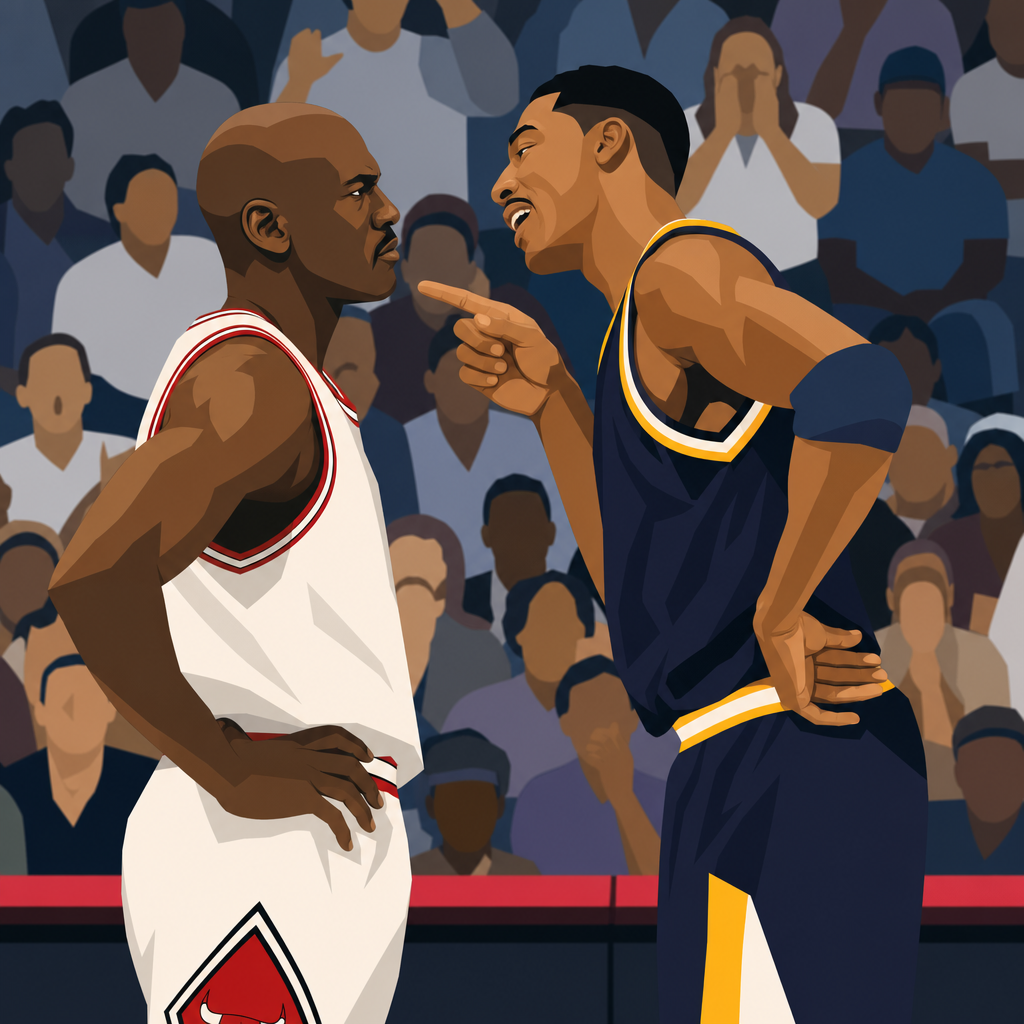
Trash talk has always been part of NBA player culture, but the best chirps and mind games are more than funny one-liners. They are competitive tools used to test confidence, shift momentum, and establish hierarchy on the floor. In the NBA, trash talk means verbal jabs, psychological pressure, and symbolic gestures meant to distract an opponent or sharpen one’s own edge. Mind games extend beyond speech to eye contact, delayed handshakes, strategic silence, and repeated reminders of previous failures. When fans search for NBA trash talk history, they are really asking a broader question: how did players use personality as a weapon, and why has that become central to basketball identity?
I have covered and studied this part of the league long enough to see a consistent pattern. The most memorable talkers were rarely random hecklers. They were elite competitors who paired words with production. Larry Bird did not merely insult defenders; he told them exactly where he would score and then did it. Michael Jordan used perceived slights as fuel and often talked during the punishment. Kevin Garnett turned every possession into an emotional trial. Gary Payton attacked rhythm and confidence, not just skill. Reggie Miller treated Madison Square Garden like a stage. These moments lasted because they revealed something essential about NBA culture: confidence is performative, and performance itself can be psychological.
This topic matters because player culture is one of the clearest ways to understand how the league evolved. Trash talk reflects changes in media coverage, locker room norms, rivalries, and officiating. In the 1980s and 1990s, stories traveled through beat writers, books, and VHS-era highlights. In the social media era, every phrase can become a clip within minutes, and every stare-down can be replayed from ten angles. That visibility changes behavior, but it does not erase the underlying function. Players still search for any edge. The difference is that today’s chirps exist inside a nonstop content machine where reputation can spread faster than any box score.
The Function of Trash Talk in NBA Player Culture
At its best, trash talk serves three practical purposes: intimidation, self-activation, and information warfare. Intimidation is the obvious one. A defender who gets inside a scorer’s head can speed up decisions, trigger bad shots, or turn calm possessions into rushed ones. Self-activation is equally important. Many stars talk not only to unsettle opponents but to elevate their own aggression. Coaches and sports psychologists often describe this as arousal regulation: finding the emotional level that produces peak performance without crossing into recklessness. Information warfare appears when players expose fatigue, defensive coverages, or emotional weakness through conversation and repetition.
Not every great player talked, and not every talker gained an advantage. Tim Duncan famously used low-volume comments that were almost anti-trash talk, a dry style opponents still found irritating because it highlighted their mistakes. Kobe Bryant could go silent and let body language do the work. LeBron James often applies pressure through orchestration, calling out actions and controlling tempo, though he has delivered pointed lines when rivalry demanded it. The key lesson is that player culture includes multiple communication styles. Loud trash talk gets remembered, but subtle psychological pressure often works just as well, especially in playoff environments where familiarity makes every pattern easier to exploit.
The league’s labor structure and travel schedule also help explain why this culture is so rich. NBA players face the same opponents repeatedly, see each other in national television windows, and carry long memories through seven-game series. That repetition creates continuity. A phrase spoken in November can return in May with interest. Because stars often guard each other in decisive possessions, the speaker is exposed to immediate judgment. There is no hiding. If the shot rims out, the talk looks foolish. If it drops, the line becomes folklore. That direct connection between speech and outcome is why basketball produces such durable trash talk stories.
The Legends Who Defined the Art
Larry Bird remains the most cited master because his language was specific, predictive, and backed by ruthless execution. Opponents have long repeated versions of the same story: Bird would announce the play, the spot, sometimes even the hand he would use, then score anyway. One famous account from the 1986 Three-Point Contest has Bird walking into the locker room asking who was playing for second place. Whether every retelling is perfect in wording matters less than the pattern. Bird weaponized certainty. He did not just claim superiority in general terms; he forecasted concrete outcomes, making defenders feel powerless before the action even started.
Michael Jordan’s trash talk had a different architecture. It was personal, relentless, and often tied to an internal file of disrespect. Jordan converted comments, media stories, and on-court incidents into emotional accelerant. That is why so many stories about him include both a line and a scoring avalanche. Teammates and opponents have described Jordan narrating possessions, challenging defenders after makes, and revisiting old grievances years later. The words mattered, but the deeper mechanism was domination through memory. If Bird’s style suggested inevitability, Jordan’s style suggested vengeance. Each bucket became evidence that crossing him had consequences.
Gary Payton and Kevin Garnett brought volume, persistence, and defensive credibility. Payton’s nickname, The Glove, fits this discussion because his talk was attached to pressure defense. He hounded ball handlers physically while talking continuously, forcing them to process noise alongside contact and decision-making. Garnett’s approach was more volcanic. He barked after routine stops, celebrated emotional wins within games, and used intensity to expand his influence beyond the box score. Opponents did not just play a possession against Garnett; they experienced a confrontation. Reggie Miller, meanwhile, specialized in theatrical timing. His back-and-forth with Spike Lee and his playoff needling of the Knicks turned trash talk into public performance without reducing its competitive edge.
Iconic Chirps and the Stories Behind Them
The most enduring NBA trash talk lines survive because they are attached to context, stakes, and replayable outcomes. Bird telling Xavier McDaniel that he was going to get the ball in a certain spot and score is remembered because he then hit the game-winner. Jordan’s “be careful what you say” aura persists because opponents who irritated him often saw immediate retaliation on the scoreboard. Miller’s gestures toward the Garden crowd remain cultural shorthand because they merged antagonism, theater, and postseason pressure. In each case, the line itself is only half the story. The result validated the line.
One reason documented chirps spread so widely is that teammates, trainers, and beat reporters become secondary witnesses. NBA oral history depends on those circles. “Documented” does not always mean there is pristine audio. It often means there is repeated testimony from credible participants, later supported by film context or contemporaneous reporting. That standard matters because basketball folklore can grow in the telling. The strongest stories tend to involve multiple independent recollections, clear game circumstances, and a player whose known style matches the account. Bird, Jordan, Garnett, Payton, Miller, and Kobe all meet that threshold repeatedly.
| Player | Style of trash talk | Typical target | Why it worked |
|---|---|---|---|
| Larry Bird | Predictive, cutting, calm | Defenders, benches | Specific predictions increased pressure before the shot |
| Michael Jordan | Personal, retaliatory, relentless | Primary defenders, rivals | Turned slights into scoring bursts and intimidation |
| Gary Payton | Constant chatter during defense | Ball handlers | Forced decisions under verbal and physical pressure |
| Kevin Garnett | Emotional, aggressive, nonstop | Anyone nearby | Raised game intensity and made opponents react emotionally |
| Reggie Miller | Theatrical, antagonistic, crowd-aware | Rivals, home crowds | Used performance energy to swing momentum |
Mind Games Beyond Words
Some of the greatest NBA mind games were almost silent. Kobe Bryant understood the value of detached composure. By refusing to react to provocation, then scoring in sequence, he made opponents feel their efforts were irrelevant. Hakeem Olajuwon often did something similar through technical poise. A defender would try contact, chatter, and fronts; Olajuwon would counter with footwork so precise that the emotional battle looked one-sided. Silence can be threatening because it denies feedback. Trash talk invites exchange. Calm dominance creates isolation, which many players find even more unsettling.
Rituals and symbolism also matter. Stepping over a fallen opponent, holding a pose, turning to a bench after a make, or repeating the same move until a defense breaks are all forms of psychological pressure. Sam Cassell’s big-balls celebration, Mutombo’s finger wag, and Allen Iverson’s crossover stare carried messages beyond the box score. Even strategic pacing functions as a mind game. Chris Paul has long manipulated tempo, foul pressure, and officiating conversation to make opponents feel trapped inside his preferred rhythm. That is not classic chirping, but it is pure player culture: using personality, intelligence, and timing to bend a game.
Bench interactions deserve attention too. Veteran teams have always used collective talk as environmental pressure. The 1990s Bulls, the early 2000s Lakers, and the 2008 Celtics all featured benches ready to amplify every miss and mistake. That social layer matters because players do not perform in a vacuum. A line from one star feels heavier when ten teammates react as though it has already been proven true. On the other side, resilient teams often diffuse talk with humor or indifference. Championship groups usually understand a simple truth: the most effective answer is not a better insult but repeated execution.
How Media, Rules, and Era Changes Shaped the Conversation
Trash talk in the NBA changed as the league’s rules and media ecosystem changed. Hand-check restrictions, freedom-of-movement emphasis, and tighter scrutiny of confrontations altered how players could escalate physically, which increased the relative visibility of verbal gamesmanship. At the same time, improved microphones, courtside camera placement, and always-on social platforms made every exchange more public. A line that once lived in a newspaper notebook can now become a national debate by halftime. That exposure rewards wit, but it also creates disciplinary risk, reputational blowback, and selective editing that can strip moments from context.
Modern players operate in a more branded environment. Every clip may affect endorsements, fan sentiment, and future matchups. That does not mean the league is softer; it means expression is filtered through greater surveillance. Draymond Green is a useful example of the current model. He mixes direct talk, officiating pressure, tactical communication, and visible emotion in a way that blurs leadership and antagonism. Luka Doncic, Jimmy Butler, and Russell Westbrook have all shown versions of this modern style, where competitive speech becomes part of a player’s weekly identity online. The words travel almost as fast as the highlights.
There is also a cultural broadening in how fans interpret player talk. Earlier coverage often framed chirping as a private code among competitors. Today, audiences analyze it through sports psychology, masculinity, entertainment value, and race-informed media narratives. That wider lens is useful because trash talk is never just noise. It reflects power, authenticity, and audience expectations. The best historical accounts recognize both sides: players use chirps because they are trying to win, and fans remember chirps because they reveal character under pressure. That combination is why NBA player culture cannot be separated from the history of competitive speech.
What NBA Trash Talk Teaches About Player Culture
The history of NBA trash talk shows that player culture is built on more than fashion, tunnel walks, or social media persona. At its core, it is about how players negotiate respect. Every era develops its own language for status, toughness, creativity, and belonging. Trash talk compresses those themes into live action. When Bird predicts a shot, Jordan punishes a slight, Payton disrupts a dribble, or Garnett turns energy into intimidation, each is asserting identity in public. The game becomes a social contest as well as a tactical one.
For a hub page on player culture, this is the central takeaway: trash talk is not a side story to basketball history. It is one of the clearest records of how athletes think, compete, and define themselves against peers. The greatest chirps endure because they were backed by skill, timing, and stakes. The greatest mind games endure because they changed behavior, not just headlines. If you want to understand NBA culture, study the words, the silences, the gestures, and the reactions that followed them. Then keep exploring the broader player culture landscape, because every rivalry, celebration, and code of respect starts from the same place: competition made personal.
Frequently Asked Questions
What counts as trash talk in NBA history, and how is it different from simple on-court banter?
In NBA history, trash talk refers to deliberate verbal and psychological tactics used to unsettle an opponent, project confidence, or control the emotional tone of a game. It goes far beyond harmless banter. Casual on-court chatter might be spontaneous or lighthearted, but true trash talk is usually intentional, strategic, and tied to competition. It can include direct insults, predictions about what will happen next, reminders of past failures, challenges after a made shot, or comments designed to make an opponent second-guess a decision in real time.
What makes classic NBA trash talk so memorable is that it often works as part of a larger mental game. A player might combine a one-liner with eye contact, body language, a refusal to help someone up, a stare after a bucket, or a repeated attack on the same weakness possession after possession. In that sense, mind games are the broader category, while trash talk is one of the sharpest tools inside it. The best chirps in league history were not random jokes; they were weapons used to test focus, pride, and emotional control under pressure.
Who are some of the most famous NBA trash talkers of all time?
Several names come up immediately in any serious discussion of NBA trash talk history. Michael Jordan is one of the most legendary examples because his comments were often tied directly to domination. Opponents and teammates alike have described how he used insults, challenges, and manufactured slights to fuel himself and intimidate others. Gary Payton earned the nickname “The Glove” for his defense, but he was also one of the league’s most relentless talkers, constantly chipping away at opponents mentally while pressuring them physically. Larry Bird is another iconic figure, famous for cool, cutting confidence. His brand of trash talk often involved telling defenders exactly where he was going, exactly what shot he would take, and then proving it.
Reggie Miller belongs in that group as well because his psychological warfare was theatrical and effective, especially in hostile playoff settings. Kevin Garnett became known for intensity that bordered on confrontational performance art, using nonstop verbal pressure to keep opponents uncomfortable. Kobe Bryant also mastered the darker side of competitive mind games, often using silence, stares, or highly personal challenges to break rhythm and test resolve. What unites these players is not just that they talked a lot. It is that their words carried weight because they could back them up, often at the most important moments.
Were the greatest NBA chirps actually effective, or were they mostly for entertainment?
The best NBA chirps were absolutely effective, which is why they have lasted in basketball history. Fans remember the funniest lines, but players remember how talk changed possessions, quarter-to-quarter momentum, and even entire playoff series. Effective trash talk can rush a player into a bad shot, lure a scorer into forcing offense, provoke a retaliation foul, or make a role player hesitate at a crucial moment. At the highest level, where talent margins are thin, even a slight mental disruption can matter.
There is also a self-motivating element that often gets overlooked. Many great trash talkers were not just targeting opponents; they were sharpening their own focus. Saying “you can’t guard me” or announcing a play before it happens can lock a player into full commitment. It creates a psychological contract: now the talker has to deliver. That combination of external pressure and internal activation is why trash talk has always been more than entertainment. The most effective mind games create emotional imbalance in one player and heightened clarity in another.
How do NBA mind games go beyond words and one-liners?
NBA mind games extend well beyond what is said aloud. Some of the most powerful psychological tactics are nonverbal. A long stare after a tough basket, a delayed handshake, a refusal to react after a hit, or a calm smile during an opponent’s outburst can all send messages. Players also use repeated action as a form of mental pressure. If a star keeps hunting the same defender possession after possession, that is not just strategy; it is a public statement about hierarchy and weakness. Even strategic silence can be intimidating, especially when paired with execution.
Body language matters just as much as speech in a league built on confidence and rhythm. Walking back on defense without celebrating, nodding after forcing a turnover, pointing to a spot on the floor before scoring there, or reminding a player of a previous missed assignment can all function as psychological pressure. These gestures tell an opponent that the game is being played on two levels at once: physical and mental. Historically, the greatest NBA competitors understood this perfectly. They knew that if they could control what an opponent felt, not just what an opponent saw, they could influence the outcome before the next play even began.
Why does trash talk remain such an important part of NBA culture and storytelling?
Trash talk remains central to NBA culture because basketball is unusually personal. Players are close enough to hear everything, stars face each other repeatedly in isolation, and momentum can swing fast based on confidence. That makes verbal jabs and mind games feel natural within the sport’s structure. More importantly, trash talk reflects the league’s long-running themes of pride, status, respect, and rivalry. Every era has had players trying to prove who belongs, who leads, and who folds under pressure. Trash talk is often the language used to settle those questions in public.
It also endures because it creates some of the NBA’s best stories. Fans do not just remember the box score; they remember the prediction before the shot, the stare after the dagger, the repeated challenge, and the emotional duel inside the game. Those moments turn competition into mythology. When backed by performance, a chirp becomes part of basketball folklore. That is why the greatest examples are still discussed decades later. They reveal something essential about elite competition: talent matters, but belief, intimidation, memory, and emotional control can matter almost as much.