
Choosing a basketball summer camp sounds simple until you compare schedules, coaching claims, safety policies, pricing, and promises about player development. Parents are not just buying a week of gym time; they are choosing an environment that can shape confidence, habits, friendships, and long-term interest in youth basketball. In practice, the best basketball summer camp is not always the most expensive, the most intense, or the one with the flashiest social media clips. It is the program that matches a child’s age, skill level, goals, temperament, and readiness for structured competition and instruction.
In youth basketball, leagues and programs cover a wide range of formats: school-run camps, park district clinics, travel team camps, college day camps, private skill academies, faith-based programs, and recreation department offerings. Some emphasize fundamentals such as footwork, passing angles, and shooting mechanics. Others focus on games, conditioning, or exposure to club coaches. That difference matters. A seven-year-old beginner usually needs repetition, encouragement, and small-sided play, while a middle school guard preparing for tryouts may need decision-making drills, closeout technique, and live reads against pressure.
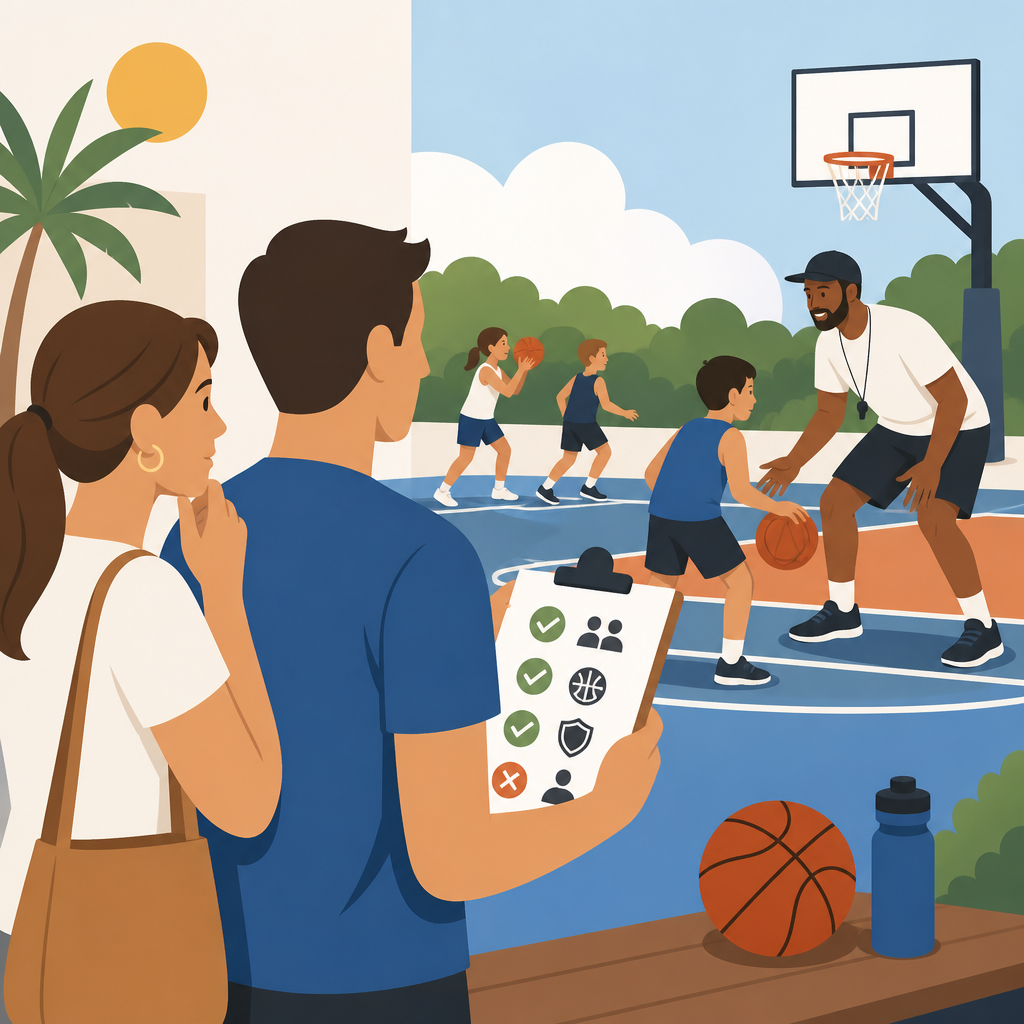
I have evaluated camps with excellent branding and weak supervision, and modest local programs with outstanding teaching. The gap usually shows up in details parents can verify before registering. Who is actually on the court? How are players grouped? What is the coach-to-player ratio? Is there a written emergency plan? How much time goes to instruction versus waiting in lines? Those questions help parents separate a true development program from a childcare service dressed up as elite training.
This guide explains what parents should look for, ask, and avoid when comparing basketball summer camps. It also serves as a hub for the wider leagues and programs landscape within youth basketball, because camp decisions connect directly to rec leagues, school teams, travel programs, private training, and year-round development plans. When parents understand how camps fit into the bigger picture, they make better choices and help young players enjoy the sport while improving in measurable ways.
What a Good Basketball Summer Camp Actually Provides
A quality basketball summer camp provides four things at once: safe supervision, age-appropriate teaching, meaningful repetitions, and a positive experience that keeps kids engaged. Safety comes first. Camps should have clear check-in and check-out procedures, trained staff, hydration breaks, first-aid access, and policies for heat, injuries, allergies, and emergencies. If a camp cannot explain those basics quickly and confidently, parents should keep looking.
Teaching quality is the next separator. Good coaches do more than run drills. They demonstrate, correct, and connect skills to game situations. For example, teaching a layup should include footwork, body control, use of the backboard, and when to finish off one foot versus two. Teaching defense should include stance, vision, help position, closeouts, and communication. Children improve faster when instruction is specific and immediately reinforced in live play.
Meaningful repetition matters because camp time is limited. In a well-run session, players are active most of the day instead of standing in long lines for a turn. Younger players should get lots of touches through stations, partner work, and small-sided games like 1-on-1, 2-on-2, and 3-on-3. Older players still need reps, but they also need decision-making under pressure. The best camps balance technical skill work with read-and-react situations.
Finally, the camp should be enjoyable without becoming chaotic. Fun in youth basketball is not the opposite of discipline. It comes from clear structure, attainable challenges, energetic coaches, and visible progress. Kids come back when they feel seen, taught, and included. Parents should expect a program culture that rewards effort, listening, teamwork, and sportsmanship rather than only scoring or dominance.
How Camps Fit Into Youth Basketball Leagues and Programs
Summer camps sit inside a broader ecosystem of youth basketball leagues and programs, and parents should evaluate them in that context. Recreation leagues usually prioritize participation, local convenience, and basic skill development. School camps often introduce community expectations and can help younger players become comfortable in a future feeder system. Travel or club camps may align more closely with competitive team concepts, pace, and terminology. Private academies often focus on individual skill development, sometimes with more specialized instruction.
Each format serves a different purpose. If your child is brand new to basketball, a local camp attached to a rec league may be the best first step because it lowers pressure and builds fundamentals. If your child already plays on a school or club team, a camp tied to that environment may reinforce system language, defensive principles, and expectations that matter during the season. If your child needs concentrated work on shooting, ball handling, or footwork, a skill academy camp may provide more targeted reps than a general day camp.
Parents often make mistakes when they expect one camp to do everything. No single week can teach advanced skills, build elite conditioning, provide exposure, and replace a full season of games. Camps work best as part of a plan. A summer might include one fundamentals camp, one league for game experience, and regular outdoor shooting or strength work. That layered approach is more effective than chasing whichever program markets itself as elite.
As a hub topic, leagues and programs should be compared by purpose, not by hype. Ask what problem the camp solves. Is it introductory? Is it preparation for school tryouts? Is it a confidence builder after a frustrating season? Is it a structured outlet during summer break? Once the purpose is clear, the right choice becomes much easier.
What Parents Should Look For Before Registering
Parents should look first at staffing, structure, and fit. Start with who teaches. A credible camp lists the camp director, lead instructors, and whether high school or college players are assistants rather than primary teachers. Assistants can be valuable, but instruction quality usually depends on experienced coaches who can manage groups, teach progressions, and correct technique. Background checks and safeguarding policies should be standard, not a bonus.
Next, review grouping and curriculum. Camps should divide players by age, experience, or both. A mixed group of second graders and eighth graders rarely produces useful instruction for either side. Ask for a sample daily schedule. Strong camps usually include dynamic warm-up, skill stations, competitive games, teaching points, lunch or breaks, and controlled scrimmages. If most of the day is open gym or full-court games, beginners may barely touch the ball and advanced players may repeat bad habits.
Facility quality also matters. Good camps have adequate court space, clean restrooms, functioning air flow or heat management plans, accessible water, and enough baskets for station work. Equipment tells a story too. Right-sized basketballs for younger ages, cones, passing targets, and training aids suggest thoughtfulness. So does a written communication process for schedule updates and weather changes.
| What to Check | Why It Matters | Strong Sign | Warning Sign |
|---|---|---|---|
| Coach-to-player ratio | More feedback and safer supervision | One coach for 8 to 12 players | One coach managing 20 or more alone |
| Grouping method | Prevents mismatched instruction | Age and skill based groups | All campers lumped together |
| Daily schedule | Shows balance of drills and play | Stations, teaching, live reps, breaks | Mostly scrimmages and waiting |
| Safety plan | Reduces risk during injuries or emergencies | Written procedures and trained staff | Vague answers or no documentation |
| Development focus | Aligns with player goals | Clear outcomes by age level | Generic promises of elite results |
Finally, look for evidence of learning. Good programs describe what players will work on and how progress is observed. That may include shooting form checkpoints, ball-handling benchmarks, defensive footwork evaluation, or end-of-week feedback. Camps do not need to be formal laboratories, but they should know what they are teaching and why.
Questions Parents Should Ask Camp Directors and Coaches
The most useful questions are direct and practical. Ask who is on the court with the players throughout the day. Ask whether the listed director is physically present or simply attached to the brand. Ask how campers are grouped and whether groups can change if a child is misplaced. Ask how much time is spent on fundamentals, small-sided games, and full scrimmages. Those answers reveal the real camp experience better than any brochure.
Parents should also ask about safety and operations. What is the check-in process? Who administers first aid? Is there an athletic trainer on site, or at least staff certified in CPR and AED use? How are water breaks scheduled? What happens if a child is overwhelmed, emotional, or minorly injured? For all-day camps, ask about lunch supervision, bathroom procedures for younger children, and pick-up security. Responsible programs answer these questions without sounding defensive.
Development questions matter just as much. Ask how shooting is taught, because not every coach teaches age-appropriate mechanics. Ask whether younger players use lower baskets if available, or age-appropriate ball sizes according to common youth guidelines. Ask how coaches handle different learning speeds. A good answer will include progressions, demonstrations, and individualized correction. A weak answer usually relies on generic phrases like “we keep it competitive” or “we push them hard.”
If your child plays in a rec league, school team, or travel program, ask how the camp complements that pathway. A school camp may help with terminology and culture. A club camp may help coaches observe work ethic. A private academy may address specific weaknesses between seasons. The key is fit. Camps should support development, not overload a child with year-round intensity or conflicting instruction.
Red Flags and Common Mistakes to Avoid
Parents should avoid camps that sell status instead of substance. One common red flag is a heavy focus on branding, mixtape-style highlights, or celebrity appearances with very little information about instruction. A guest speaker or famous former player can be inspiring, but it does not guarantee a good teaching environment. Most kids benefit more from a coach who can teach pivoting, spacing, and defensive stance than from a quick photo with a recognizable name.
Another warning sign is a camp that promises dramatic transformation in a few days. Basketball development is cumulative. Shooting consistency, ball security, and defensive discipline improve through repeated quality reps over time. Honest programs explain what a camp can realistically deliver: improved understanding, better habits, confidence, and a framework for future work. They do not promise scholarships for elementary players or “elite” outcomes for everyone.
Poor supervision is a bigger problem than many parents expect. I have seen camps where one adult monitored multiple baskets while players ran unsupervised games, corrected each other poorly, and developed unsafe habits. That is not development. It is occupancy. Parents should also be cautious with camps that tolerate humiliation as motivation. Demanding standards are healthy; sarcasm, public shaming, and fear-based coaching are not.
Cost can create confusion too. Expensive does not always mean better, and cheap does not always mean poor. Sometimes a university-hosted day camp carries a premium because of the facility and brand. Sometimes a community-based camp led by a strong varsity coach provides better feedback at half the price. Judge value by teaching time, staffing, safety, and fit rather than headline price alone.
Matching the Right Camp to Your Child’s Age and Goals
The right basketball summer camp for a first grader is usually very different from the right camp for an eighth grader. Young beginners need movement, coordination, simple cues, and encouragement. They should learn basic stance, dribbling with both hands, passing to a target, stopping under control, and finishing near the rim. Sessions should be short, active, and fun, because attention span is limited and confidence is fragile.
Upper elementary players can handle more structure and repetition. This is a strong stage for teaching triple threat, jump stops, pivots, defensive slides, layups from both sides, and basic spacing concepts. Games like 2-on-2 and 3-on-3 are especially valuable because they force decisions without the chaos of full-court five-on-five. Middle school players often benefit from camps that introduce screening, help defense, transition responsibilities, and pressure ball handling.
For players aiming at school teams or travel basketball, goals should drive camp selection. A player trying to make a seventh-grade team may need camps that stress effort, defensive communication, and playing through mistakes. A player who already makes teams but struggles to contribute may need a camp centered on shooting mechanics, footwork, or finishing through contact. Position-specific claims should be treated carefully with young athletes; complete skill development still matters more than early specialization.
Parents should also consider personality. Some children respond well to a loud, competitive environment. Others learn better from calm, highly organized instruction. Neither is automatically better. What matters is whether the environment helps the child absorb coaching, stay engaged, and leave wanting to keep working. The best camp is the one that improves both skill and relationship with the game.
Making the Most of Camp Week and What to Do After
Once you choose a camp, preparation improves the result. Send your child with the right ball size if requested, broken-in shoes, a water bottle, a simple snack plan, and realistic expectations. Talk about effort goals rather than points scored. Good goals include using the weak hand, speaking on defense, sprinting into drills, or listening the first time. Children usually benefit when parents emphasize learning over performance.
After camp, ask specific questions. What drill felt hardest? What did a coach correct? What should you practice at home? Those conversations help translate camp into ongoing development. If the program offers notes or feedback, keep them. A strong next step might be joining a rec league, attending a school open gym, scheduling a few private skill sessions, or building a weekly shooting routine. Camp should start momentum, not end it.
For parents navigating youth basketball leagues and programs, the central principle is simple: choose environments that teach well, fit your child, and respect long-term development. The best basketball summer camp is not the one with the loudest marketing. It is the one with qualified coaches, a clear structure, safe operations, and a curriculum matched to the player standing in front of them. Ask better questions, trust observable details, and avoid empty promises. If you use this guide to compare options carefully, you will give your child a stronger, healthier, and more enjoyable path through youth basketball.
Frequently Asked Questions
1. What should parents look for first when comparing basketball summer camps?
The first thing to look for is overall fit, not hype. A strong basketball summer camp should match your child’s age, skill level, personality, and goals. Some camps are designed for beginners who need a positive introduction to the game, while others focus on advanced players who want position-specific training, competitive reps, and higher-intensity instruction. Parents should review the daily schedule, coach-to-player ratio, gym setup, and how much actual teaching happens compared with lines, lectures, or loosely supervised scrimmages. A good camp should clearly explain what players will learn, how drills are organized, and how coaches keep sessions productive and age-appropriate.
It is also important to evaluate the camp environment. The best programs build skills and confidence at the same time. That means players are corrected without being embarrassed, challenged without being overwhelmed, and encouraged to develop strong habits such as listening, teamwork, hustle, and self-control. Look for camps that communicate specific values, whether that is fundamentals, sportsmanship, effort, or long-term player development. If a camp only advertises flashy highlights, elite branding, or promises of dramatic improvement without showing how it teaches, that is a sign to slow down and ask more questions.
Practical details matter just as much. Parents should look at check-in procedures, supervision during breaks, water access, injury response plans, and whether there is a clear contact process if a child needs help during the day. Pricing should also be evaluated carefully. The most expensive camp is not automatically the best, and a lower-cost camp is not automatically a compromise. The key question is whether the program delivers safe, structured, thoughtful coaching that leaves your child wanting to come back and keep playing basketball after camp ends.
2. What questions should parents ask camp directors before registering?
Parents should ask questions that go beyond marketing language. Start with the basics: Who are the coaches, what experience do they have working with children, and who is actually on the court every day? A camp may promote a well-known director or former player, but that does not always mean that person is directly coaching your child’s group. Ask how groups are divided, how many campers are assigned to each coach, and whether players are separated by age, skill, or both. These answers tell you a great deal about whether instruction will be organized and useful.
Next, ask about the teaching philosophy and daily structure. A quality camp should be able to explain what a typical day looks like, how much time is spent on fundamentals, how drills progress, and how coaches balance skill work with games and competition. It is smart to ask how the camp handles different ability levels, shy kids, first-time players, and athletes who may need more encouragement or a slower learning pace. You can also ask how feedback is given. The best camps usually have a method for correcting mistakes constructively rather than relying on yelling, vague criticism, or simply rewarding the strongest players with the most attention.
Parents should also ask direct questions about safety, staffing, and policies. Find out whether background checks are conducted, whether medical staff or first aid-trained personnel are on site, and what happens if a child gets injured, overheated, or emotionally overwhelmed. Ask about drop-off and pickup procedures, restroom supervision for younger campers, allergy awareness, and whether there is a written emergency plan. Finally, ask about refunds, cancellations, make-up policies, and what is included in the registration fee. A camp that answers these questions clearly and comfortably usually signals professionalism, while vague or defensive responses can be an early warning sign.
3. How can parents tell whether a basketball camp will actually help player development?
Real player development usually looks less dramatic than advertising makes it seem. A camp that truly helps children improve tends to emphasize fundamentals, repetition, correction, and game understanding rather than nonstop trick moves or highlight-reel moments. Parents should look for signs that the program teaches core skills such as footwork, passing, ball handling under control, shooting mechanics, defensive positioning, spacing, and decision-making. Good development also includes helping players understand when and why to use a skill, not just how to perform it in an isolated drill.
Another sign of strong development is instructional quality. Effective coaches break skills into teachable steps, demonstrate clearly, and adjust explanations based on age and experience. They create drills that keep players engaged instead of standing in long lines, and they give feedback that is specific enough to help a child improve. For example, a coach who says, “Stay lower on your drives and protect the ball with your off arm,” is developing players. A coach who only says, “Go harder,” is not offering much real teaching. Development also happens best when children feel safe making mistakes, asking questions, and trying again without fear of embarrassment.
Parents should also think long term. The best camp does not need to transform a player in one week. Instead, it should leave your child with better habits, clearer fundamentals, more confidence, and renewed enthusiasm to practice after camp is over. If your child comes home able to explain what they learned, show improved mechanics, and talk positively about the coaches and structure, that is meaningful progress. Development is not just about scoring more points in camp scrimmages; it is about building a stronger foundation for future growth in youth basketball.
4. What safety and supervision issues should parents pay closest attention to?
Safety should be treated as a core feature of camp quality, not a minor checklist item. Parents should pay close attention to supervision standards, coach qualifications, and emergency planning. A well-run basketball summer camp should have clear procedures for arrival, dismissal, restroom access, hydration breaks, injury response, and communication with parents. It should also be obvious who is in charge at all times. Camps that seem disorganized during registration or cannot explain who supervises players between activities may create unnecessary risk, especially for younger children.
Physical safety is especially important in a summer sports setting. Ask how the camp handles heat, fatigue, and overuse. Even indoor camps can become physically demanding, and younger players may not recognize when they need water or rest. A responsible camp will schedule breaks, encourage hydration, and monitor players for signs of exhaustion rather than pushing every child through the same intensity regardless of age or conditioning. Parents should also ask whether there is first aid equipment on site, whether staff are trained in basic injury response, and how parents are notified if a problem arises. If your child has asthma, allergies, medication needs, or prior injuries, the camp should have a clear plan for managing those concerns.
Emotional safety matters too. The best camps create a respectful culture where players are coached firmly but appropriately. Parents should be cautious about programs that normalize humiliation, intimidation, or “toughening kids up” through yelling and public embarrassment. A child can be challenged without being belittled. Strong supervision also includes behavior management among campers, anti-bullying expectations, and an environment where children feel comfortable speaking up if something is wrong. When a camp takes both physical and emotional safety seriously, parents can be more confident that their child will be able to learn, enjoy the experience, and return home feeling supported rather than stressed.
5. What are the biggest red flags or mistakes parents should avoid when choosing a camp?
One of the biggest mistakes parents make is choosing a camp based only on reputation, branding, or social media highlights. Polished videos and big promises can make a camp look impressive, but they do not tell you much about day-to-day instruction, supervision, or whether the environment is right for your child. Another common mistake is assuming that more intensity always means better development. Some children thrive in competitive settings, but others need a camp that builds confidence first. If the camp’s style, pace, or coaching tone does not fit your child, even a well-known program may be the wrong choice.
Parents should also avoid overlooking vague communication. If camp directors are unclear about staffing, safety procedures, grouping methods, or what campers will actually do all day, that should raise concern. The same is true if the camp makes unrealistic claims, such as guaranteeing dramatic improvement, elite status, or special exposure opportunities in a very short period of time. Quality coaches know development takes time, and they usually speak honestly about process rather than selling shortcuts. Be careful with camps that seem to prioritize volume over structure, especially if they pack in too many campers without enough qualified staff to teach and supervise them well.
Finally, avoid ignoring your child’s needs in favor of adult expectations. A camp should support your child’s growth, not just your hopes for their basketball future. If your child is new to the game, a fundamentals-based camp may be far more valuable than an advanced “elite” program. If your child needs encouragement, a camp with patient teachers may be better than one built around nonstop competition. The goal is not to buy the flashiest experience. It is to choose a basketball summer camp that is safe, honest, well-organized, and genuinely committed to helping young players improve while enjoying the game.