
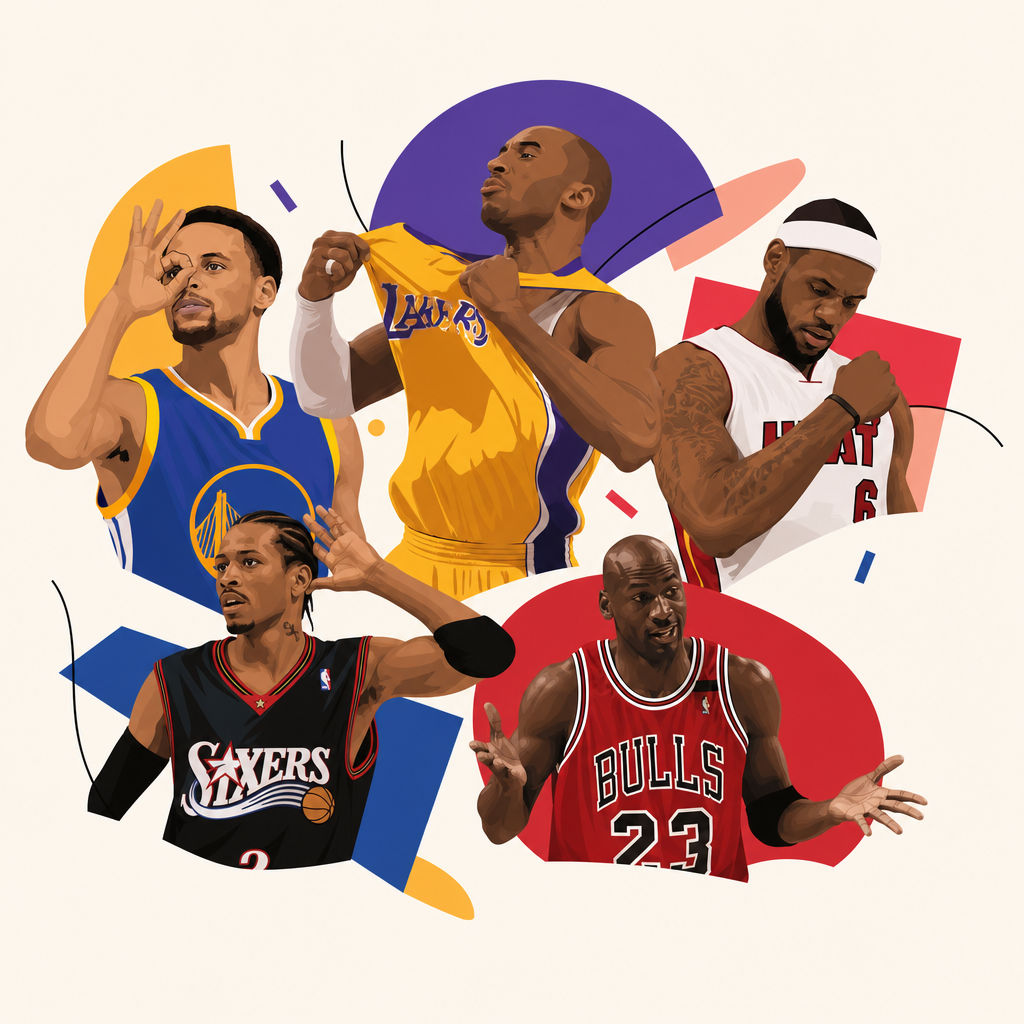
NBA celebrations are more than spontaneous reactions to a big shot or a playoff win; they are a central part of player culture, shaping how fans remember games, how stars build identity, and how basketball spills into mainstream entertainment. In the NBA, a celebration can be a gesture, dance, pose, handshake, or ritual performed after a dunk, three-pointer, block, series clincher, or championship. The best NBA celebrations in history endure because they communicate emotion instantly: confidence, joy, defiance, relief, humor, or collective pride. Over years of covering basketball culture and studying how signature moments travel from arenas to commercials, social feeds, music videos, and youth courts, I have seen one pattern repeat constantly: when a celebration feels authentic, it leaves the box score behind and becomes language. That matters because player culture is one of the NBA’s greatest strengths. Fans do not only follow teams; they follow personalities, rituals, and symbols. A finger wag or pregame chalk toss can become as recognizable as a crossover. For a hub page on NBA player culture, celebrations are essential because they connect style, branding, rivalry, media, fashion, and fan participation into one visible form.
To understand why certain celebrations crossed into pop culture, it helps to define what separates a memorable reaction from a cultural artifact. First, the move must be visually simple enough to imitate. Second, it needs a clear context, usually attached to winning, dominance, or a strong personal narrative. Third, repetition matters. A one-time celebration can go viral, but a repeated ritual builds mythology. Finally, timing is everything: nationally televised games, playoff pressure, and highlight-era media all amplify the moment. The NBA has produced every version of this formula, from iconic taunts to choreographed bench reactions. Some celebrations have been copied in school gyms for decades. Others influenced ad campaigns, video games, memes, and athlete branding across sports. This article explores the best NBA celebrations in history as a gateway into player culture, showing how these moments worked, why they spread, and what they reveal about the league’s larger relationship with identity and entertainment.
Why celebrations matter in NBA player culture
Celebrations matter because the NBA is the most personality-driven major North American league. Players are visible without helmets, constantly in close-up, and heavily discussed as individuals. That visibility gives even small gestures unusual power. In practical terms, a celebration acts like a signature. It turns an athlete into a recognizable character and gives fans an easy point of connection. I have watched this firsthand at games and in digital engagement data: fans remember sequences through the reaction as often as through the play itself. Ask casual viewers about Dikembe Mutombo, and many picture the finger wag immediately. Mention LeBron James in pregame introductions, and people remember the chalk toss as much as the first tip.
Celebrations also humanize elite competition. Basketball is emotionally volatile, and rituals help players channel pressure. Some are playful and team-building, like choreographed bench routines. Others are confrontational, like Sam Cassell’s big-ball dance, which became infamous because opponents and the league saw it as excessive. The tension between expression and restraint is part of NBA culture itself. League office rules on taunting, technical fouls, and sportsmanship have often shaped what players can do, but restrictions usually make memorable celebrations even more culturally potent. When a move survives fines, criticism, or imitation, it usually means it touched something larger than a single game.
The classic icons: gestures that became basketball shorthand
No celebration better shows the power of simplicity than Mutombo’s finger wag. After a block, he would shake his index finger side to side, often paired with a knowing smile. The move was clear, repeatable, and tied directly to his defensive identity. It translated across ages and countries because it needed no explanation. It later appeared in commercials and broad fan culture, proof that a defensive specialist could own a pop-culture symbol without needing a scoring title. In the same category is Michael Jordan’s shrug during the 1992 NBA Finals. Technically, it was a reaction more than a designed celebration, but that is part of why it lasted. After hitting seemingly impossible shots against Portland, Jordan looked toward the scorer’s table and lifted his shoulders as if to say even he could not explain it. The image became shorthand for effortless greatness.
Allen Iverson’s step-over of Tyronn Lue in the 2001 Finals also crossed into culture, though it sits between celebration, taunt, and iconic image. It represented rebellion, fearlessness, and the league’s shift toward individual style. Iverson’s entire cultural presence, from arm sleeves to cornrows, amplified the moment. Reggie Miller’s choke sign toward Spike Lee in the 1994 playoffs worked similarly because it fused player performance with celebrity crowd culture in New York. These moments matter in player culture because they are not isolated actions. They become symbols attached to larger narratives: underdog swagger, superstar inevitability, villain energy, or urban cool. Once that symbolic meaning clicks, the celebration no longer belongs only to the game; it becomes part of how broader culture talks about confidence and pressure.
Pregame rituals and repeatable signatures that built personal brands
Some of the most famous NBA celebrations happen before the game even starts. LeBron’s chalk toss is the clearest example. During introductions, he would clap powdered chalk into the air, creating a visual cue that cameras loved and fans immediately associated with him. It was dramatic but not complicated, and because it happened consistently, it became a brand asset as much as a ritual. I have seen arenas fill with anticipation for that one motion. It framed LeBron as both performer and ritualist, adding theater to elite preparation. The chalk toss eventually became inseparable from his public image during his first Cavaliers era and his Miami years.
Kevin Garnett had a different kind of ritual with his pregame head-butting of the stanchion and his intensity-driven routines. While less copied by fans, they shaped the perception of him as relentless and emotionally maximal. Russell Westbrook’s rock-the-baby celebration after finishing through contact became another enduring signature. The move was legible and personal, and it fit Westbrook’s explosive style. When players develop repeatable celebrations that fit their on-court identity, the effect is powerful because the audience learns the cue. A crossover from Kyrie Irving, a deep three from Stephen Curry, or a staredown from Kobe Bryant was never just a basketball event. It carried the possibility of a recognizable response, and that anticipation helped convert repeated performance into brand memory.
The social media era: celebrations designed for replay, memes, and fan imitation
Modern NBA celebrations spread faster because digital platforms reward short, expressive visuals. Stephen Curry’s “night night” gesture is a perfect case. By placing his hands together beside his face after closing out games, Curry created an image that instantly communicated finality. It worked in the 2022 playoffs because it arrived in high-leverage moments and was easy for fans, kids, and even athletes in other sports to mimic. Another example is Carmelo Anthony’s three-to-the-head gesture after a made shot, a small move that circulated widely online because camera framing made it easy to capture. Damian Lillard’s “Dame Time” point-to-the-wrist signal became a modern classic for the same reason: clear message, game-ending context, repeatability.
| Celebration | Player | Why it spread | Pop-culture effect |
|---|---|---|---|
| Finger wag | Dikembe Mutombo | Simple visual tied to blocks | Commercials, youth imitation, universal gesture |
| Chalk toss | LeBron James | Pregame ritual repeated for years | Brand identity, intro theatrics, arena anticipation |
| Night night | Stephen Curry | Perfect for clips and playoff endings | Meme format, cross-sport adoption, social media shorthand |
| Big-ball dance | Sam Cassell | Provocative, funny, controversial | League attention, fan debate, lasting folklore |
What changed in the social media era was not only speed but authorship. Players now know the clip will live independently from the game broadcast. Bench units perform for cameras, stars build signature gestures consciously, and fan accounts turn reactions into recurring templates. That does not make the celebrations less real; it means modern player culture is more media-literate. The best examples still feel organic. Curry’s celebration worked because it matched his calm killer instinct. Lillard’s signal worked because he repeatedly delivered late-game daggers. In other words, the internet can amplify a celebration, but it cannot manufacture one that lacks basketball credibility.
Team celebrations, bench culture, and the rise of collective performance
Not every great NBA celebration is individual. Some of the most beloved moments come from team rituals and bench performances, which reveal how player culture extends beyond stars. The 2010s turned NBA benches into entertainment spaces. The Warriors’ coordinated reactions during their dynasty years, the Lakers’ exaggerated sideline dances, and the Nets’ “Bench Mob” energy all demonstrated that celebrations could deepen team identity and improve fan attachment. In my experience, these collective moments matter especially in the regular season, when a bench celebration can make a Tuesday game feel culturally alive.
The “shimmy” popularized by Curry also evolved into a shared team language. So did complex handshakes between teammates, from LeBron and Dwyane Wade to Russell Westbrook and Steven Adams. These rituals signal trust, familiarity, and internal hierarchy. They matter because player culture is social before it is commercial. Fans love seeing chemistry made visible. Championship teams often create the most enduring collective celebrations because success gives repetition and emotional stakes. Think of the 2008 Celtics’ intense postgame unity, the Heatles’ intro theatrics, or the 2016 Cavaliers’ cathartic championship reactions. Even when a single image leads the memory, the deeper story is usually communal: a roster expressing itself together in ways the audience can recognize instantly.
Controversy, rules, and why some celebrations became bigger because they offended people
Some NBA celebrations became legendary precisely because they tested boundaries. Cassell’s big-ball dance is the clearest example. It was intentionally provocative, a boast that opponents considered disrespectful and the league often treated harshly. Yet controversy gave it durability. Fans remember not just the move but the reaction around it. The same principle applied to Miller’s choke sign, too-small taunts used by numerous players, and various staredowns that brought technical-foul risk. The NBA has long tried to balance entertainment with sportsmanship, especially after emphasizing respect rules in the 2000s. That tension is important context for player culture because expression in basketball is always negotiated.
The boundary line matters for another reason: when a celebration triggers debate, it often reveals generational differences in what fans want from the sport. Older critics may prefer restraint; younger audiences often value personality and theater. Neither position is entirely wrong. Excessive taunting can cheapen competition, but overregulation can flatten charisma. The NBA’s cultural success has usually come from allowing enough room for individuality while punishing actions that escalate conflict. The celebrations that survive this tension are often the smartest ones: unmistakable, emotional, and bold without becoming physically threatening. That balance is one reason the greatest celebrations remain beloved rather than merely notorious.
How celebrations crossed into pop culture and why the best ones still matter
The best NBA celebrations crossed into pop culture because they satisfied three tests at once: they captured a player’s identity, they translated visually outside basketball, and they arrived in meaningful moments. That is why Mutombo’s finger wag, Jordan’s shrug, LeBron’s chalk toss, Curry’s night night, and Westbrook’s rock-the-baby still resonate. They were not random flourishes. They were compressed stories. Each one told viewers who the player was and what the moment meant without dialogue. That is the core lesson of NBA player culture. The league thrives when performance and personality reinforce each other.
For fans exploring NBA culture, celebrations are a strong starting point because they link to every major subtopic: fashion, rivalries, media narratives, endorsements, arena presentation, and fan behavior. They also show how the NBA became a global entertainment product without losing competitive edge. When a celebration enters schoolyards, commercials, video games, and everyday conversation, it has done more than decorate a highlight. It has expanded the league’s cultural footprint. Rewatch these moments with that lens, and the history becomes richer. You are not just seeing reactions. You are seeing identity made visible. If you want to understand player culture fully, start with the celebrations, then follow how those gestures turned athletes into enduring cultural symbols.
Frequently Asked Questions
What makes an NBA celebration memorable enough to become part of pop culture?
The most memorable NBA celebrations work because they communicate a feeling in a split second. Fans do not need a long explanation to understand a triumphant fist pump, a dramatic pose, a signature dance, or a stare into the crowd after a huge shot. The best celebrations capture confidence, joy, swagger, relief, or competitive fire in a way that instantly attaches itself to the moment. When that reaction happens on a big stage such as the playoffs, the Finals, or a nationally televised rivalry game, it becomes even more powerful because millions of people experience it at once and connect the gesture to the importance of the result.
Pop-culture staying power also comes from repetition and recognizability. A one-time reaction can be iconic, but a celebration becomes larger than basketball when it is easy to imitate, easy to reference, and tied closely to a player’s identity. Think about how certain routines, handshakes, dances, or signature poses become shorthand for an era, a superstar, or a winning team. Fans copy them on playgrounds, celebrities reference them, commercials borrow them, and social media turns them into looping visuals that live far beyond the original game. In that sense, the greatest NBA celebrations are not just emotional outbursts. They become symbols that help define how a player, a team, and even a basketball era are remembered.
Which NBA celebrations are most often cited as iconic in basketball history?
Several celebrations consistently appear in any serious conversation about the best NBA celebrations in history because they crossed from sports highlights into mainstream recognition. Michael Jordan’s triumphant fist pump after big shots and championships remains one of the clearest examples of a simple gesture carrying enormous emotional weight. Allen Iverson stepping over Tyronn Lue became more than a reaction in a Finals game; it became an image of attitude, defiance, and star power. LeBron James’s chalk toss before games turned a pregame ritual into a signature visual known even to casual sports fans. Stephen Curry’s “night night” celebration quickly became a modern classic because it was easy to understand, perfectly timed, and attached to his reputation for closing games with impossible shot-making.
There are also team-centered and personality-driven celebrations that became cultural landmarks. The Big Three Miami Heat era featured choreographed energy and confidence that made every big play feel theatrical. Dikembe Mutombo’s finger wag after blocks became one of the most recognizable defensive celebrations in sports. Reggie Miller’s choke sign aimed at Spike Lee remains one of the defining taunts in NBA playoff lore. Sam Cassell’s “big balls” dance, while controversial and often penalized, became instantly famous because of its boldness and repeatability. More recently, celebrations like Damian Lillard’s “Dame Time” wrist tap or D’Angelo Russell’s “ice in my veins” have shown how a clear visual cue can become part of a player’s personal brand almost overnight.
Why do certain player celebrations become tied so closely to personal brand and legacy?
In the NBA, individual identity matters enormously, and celebrations help players express who they are without saying a word. Basketball stars are visible at all times, unlike athletes in heavily helmeted or more system-driven sports, so every gesture is easier to associate with a face, personality, and style of play. A celebration can reinforce what fans already believe about a player. If a scorer is known for fearlessness, a calm or dismissive celebration after a clutch basket strengthens that image. If a player is known for joy and charisma, a dance or elaborate handshake can make them feel even more relatable and entertaining. Over time, these habits stop feeling random and start feeling like part of the athlete’s identity.
That connection matters for legacy because fans rarely remember great players only through statistics. They remember scenes, emotions, and repeated visuals. A celebration can act like a logo for a player’s career, condensing years of highlights into a single recognizable act. It also helps bridge performance and entertainment, which is a major reason NBA players often resonate so strongly in music, fashion, advertising, and internet culture. When a celebration becomes signature enough, it turns into a storytelling device. It tells fans, “This is who this player is when the lights are brightest.” That is why certain celebrations remain attached to a player long after specific box scores are forgotten.
How have social media and highlight culture changed the way NBA celebrations spread?
Social media has dramatically accelerated the life cycle of NBA celebrations. In earlier eras, fans might have seen a signature reaction on a nightly sports show, in newspaper photos, or through word of mouth. Now a celebration can be clipped, captioned, memed, and shared globally within seconds. That speed matters because celebrations are naturally short, visual, and emotionally clear, making them perfect for digital platforms. A player hits a game-winner, flashes a recognizable gesture, and the image immediately becomes part of online conversation. Fans, media outlets, brands, and other athletes can all amplify the moment at the same time.
This environment also encourages celebrations to function as cultural currency. A gesture that is easy to imitate can spread across youth basketball, college sports, celebrity events, and even non-sports contexts. It might show up in reaction memes, video edits, commercials, or music references. That does not mean modern celebrations are automatically more meaningful than older ones, but it does mean they can become famous much faster. At the same time, social media has made the history of NBA celebrations easier to revisit. Classic moments from past decades now circulate alongside current clips, which helps create a continuous pop-culture archive where a finger wag, a shrug, a stare-down, or a victory pose can keep gaining new audiences years after it first happened.
Do NBA celebrations matter beyond entertainment, or are they just part of the show?
They matter beyond entertainment because celebrations reveal something fundamental about how basketball is experienced and remembered. The NBA is not only about outcomes; it is also about personality, emotion, rivalry, momentum, and theater. Celebrations mark turning points inside games and can influence how those moments feel to everyone watching. A huge dunk followed by a roar or a chest pound can energize teammates, ignite a crowd, and deepen the psychological pressure on opponents. In that sense, a celebration is not always separate from competition. It can become part of the atmosphere and rhythm of the game itself.
They also matter culturally because they help explain why NBA moments travel so well outside traditional sports spaces. Celebrations give basketball a visual language that connects with music, fashion, film, advertising, and internet humor. They make athletes feel expressive and distinctive rather than interchangeable. For fans, they become memory anchors: people may not recall every possession from a classic playoff game, but they remember the pose after the dagger, the dance after the upset, or the ritual after the title clincher. That is why the best NBA celebrations in history endure. They are not just reactions. They are part of the story, part of the mythology, and part of what allows certain basketball moments to live far beyond the final buzzer.