
Basketball hoop installation cost in 2026 depends on the hoop type, site conditions, labor rates, safety upgrades, and long-term maintenance, so homeowners should budget for more than the advertised price of the goal itself. In practical terms, most buyers are choosing between portable hoops, wall-mounted systems, roof-mount kits, and in-ground basketball goals, each with a different total installed cost and a different impact on play quality. As someone who has helped families compare systems, schedule installers, and fix failed DIY setups, I can say the cheapest hoop is rarely the cheapest project. A hoop anchored over uneven concrete, placed with poor overhang, or installed without enough curing time often leads to wobble, cracks, and expensive rework. That is why understanding full project cost matters. This hub page covers the core of hoops and gear: what installation includes, what drives price in 2026, how equipment choices change the budget, and where accessories fit into the total. If you are researching basketball equipment for a home driveway, backyard court, school, church, or small training space, this guide gives you the baseline numbers and decision points to plan confidently.
Before getting into prices, define the key terms clearly. A portable hoop uses a wheeled base filled with water or sand and usually requires only assembly. A wall-mounted hoop attaches to a garage wall, masonry wall, or dedicated post structure; the backboard extension and wall strength determine both safety and cost. A roof-mounted hoop attaches through a bracket system engineered for roof pitch and structural load, but these systems are less common because they can complicate placement and maintenance. An in-ground basketball hoop uses a steel pole set in concrete below grade, usually with a specified setback or overhang from the playing area. “Installation cost” may mean labor only, or it may include excavation, concrete, assembly, hardware, delivery, disposal of packaging, and adjustment of rim height. That distinction matters because one quote may list $450 while another lists $1,250 for the same hoop model, simply because the second installer includes the footing, concrete, and final leveling. In 2026, clear scoping is the first step to a realistic budget.
Why does this topic matter within basketball equipment? Because the hoop is the center of the playing experience, and every other gear decision connects to it. Backboard size affects rebounding angles. Rim style affects dunk tolerance and net wear. Pole padding affects safety for kids. Court lighting affects whether the hoop is usable after work or school. A premium ball and shooting aid do not help much if the rim is mounted crooked or the backboard shakes on every bank shot. The right budget protects both performance and safety. It also prevents common mistakes, such as buying a 72-inch tempered glass backboard for a space that cannot safely support the required overhang, or choosing a bargain portable unit for serious practice where a fixed in-ground system is the better long-term value. By understanding basketball hoop installation cost as part of a broader hoops and gear plan, buyers can make decisions that fit their space, playing goals, and maintenance tolerance.
Average basketball hoop installation cost in 2026
For 2026, a realistic national budgeting range for basketball hoop installation cost is $300 to $2,500, depending on hoop type and site complexity. Assembly of a portable hoop often runs $300 to $700 if the surface is already usable and no anchoring or court work is needed. Wall-mounted hoop installation typically falls between $400 and $1,200 because installers must verify structural support, align the backboard precisely, and work at height. In-ground basketball hoop installation generally ranges from $800 to $2,500 when excavation, concrete, pole setting, assembly, and finishing are included. High-end projects with large tempered glass backboards, thick-gauge poles, sloped driveways, difficult access, or add-ons like pole pads and edge guards can exceed that range. Labor rates also vary sharply by region. In major metro areas, I regularly see installation labor alone priced 20 to 40 percent higher than in smaller markets, especially where contractors carry higher insurance and concrete delivery minimums.
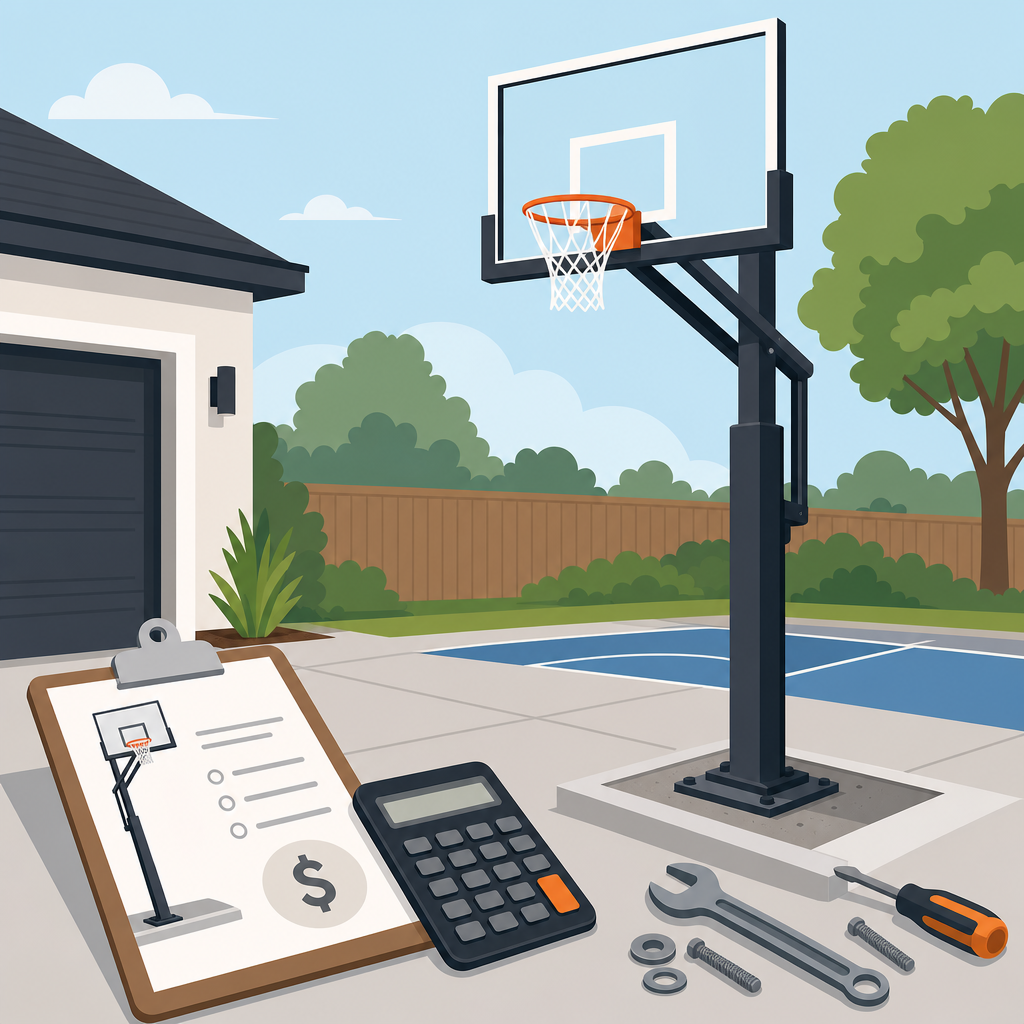
The most useful way to budget is to separate equipment cost from installed project cost. A quality residential in-ground hoop in 2026 commonly costs $1,200 to $3,500 for the unit, with premium systems from brands such as Goalrilla, Goalsetter, Lifetime, Spalding, and First Team spanning different performance tiers. Add labor, concrete, and site prep, and the total project often lands between $2,000 and $5,000. Portable systems may retail from $250 to $1,200, but the premium models with larger bases and better backboards still need careful assembly and can require more than two people. Wall-mount systems often appear affordable upfront, yet custom brackets, reinforcement, and safe access can make total cost surprisingly high. If a homeowner asks for one budgeting shortcut, mine is simple: expect the fully installed price to be meaningfully higher than the hoop price, and ask every installer for a line-item scope before comparing bids.
| Hoop type | Typical equipment cost | Typical installation cost | Typical total project range |
|---|---|---|---|
| Portable hoop | $250–$1,200 | $300–$700 | $550–$1,900 |
| Wall-mounted hoop | $300–$1,500 | $400–$1,200 | $700–$2,700 |
| In-ground hoop | $1,200–$3,500 | $800–$2,500 | $2,000–$6,000 |
| Premium training or light commercial system | $3,000–$8,000+ | $1,500–$4,000 | $4,500–$12,000+ |
What drives the cost: hoop type, materials, and site conditions
The biggest cost driver is hoop type, but materials come next. Backboards are usually polycarbonate, acrylic, or tempered glass. Polycarbonate is durable and budget-friendly but less responsive. Acrylic looks clearer and plays better than polycarbonate, though it can scratch and age. Tempered glass delivers the most authentic rebound and is standard for higher-end residential and institutional systems, but it raises both equipment and installation costs because the assemblies are heavier and require more rigid support. Pole design matters too. A one-piece, thick-gauge square pole with direct bury or anchor-mount stability costs more than a lighter multi-piece design, yet it reduces vibration and generally lasts longer. Breakaway rims also cost more than standard static rims, but for frequent play they reduce stress on the backboard and mounting points. When parents tell me they want the “best value,” I usually steer them toward the strongest pole and best backboard they can reasonably afford, because those two components define how the hoop feels over time.
Site conditions can change pricing more than buyers expect. Concrete thickness is a common issue. A driveway may look ideal, but if it is cracked, sloped too aggressively, or too narrow for safe play, installers may recommend a different placement or added prep work. In-ground systems need adequate excavation space and proper footing dimensions specified by the manufacturer. Rocky soil, tree roots, buried utilities, and poor access for concrete delivery increase labor. So does hauling bagged concrete by hand into a fenced backyard. Climate also matters. In cold regions, frost depth requirements can affect footing depth, and winter installations may require scheduling around frozen ground. In coastal areas, corrosion resistance becomes more important, so powder-coated finishes, stainless hardware, and regular inspection may justify a higher upfront spend. None of these variables are minor. They determine whether the hoop remains plumb, stable, and safe after seasons of weather and repeated use.
Labor, permits, and the hidden line items many buyers miss
Labor pricing in 2026 reflects more than assembly time. Professional installers factor in travel, crew size, lifting equipment, liability insurance, and callbacks. A large in-ground system with a 60-inch or 72-inch glass backboard may require a three-person crew or specialized lifting support during final mounting. That is one reason labor quotes can differ so much. Another is curing and return trips. Some installers set the anchor or pole one day, then return after concrete reaches sufficient strength for backboard installation. If a quote includes two visits, its price may look higher than a single-visit estimate, but it may also align better with manufacturer requirements. Following cure times is not optional if you want a stable system. The best installers reference the hoop manufacturer’s installation manual, footing dimensions, and anchoring instructions rather than improvising based on habit.
Permits are not always required for a residential basketball hoop, but they can apply, especially for in-ground systems, large accessory structures, or projects near property lines. Homeowners associations may have placement rules, visibility restrictions, or noise concerns tied to driveway hoops. I have seen avoidable costs when buyers ordered a system first and only later discovered setback restrictions or HOA review requirements. Hidden line items also include utility locating, concrete disposal, core drilling for unusual mounts, reinforcement of garage framing, touch-up paint, and post-installation cleanup. Accessories such as pole pads, backboard edge pads, anti-whip nets, and anchor covers are often quoted separately. Delivery can be another surprise, particularly for heavy glass backboards. Before approving any proposal, ask whether the quote includes freight, tax, packaging disposal, and adjustment of the rim to regulation height. A complete bid is easier to compare than a low number with half the project omitted.
Budgeting by use case: driveway, backyard court, and training setup
The best budget depends on how the hoop will be used. For a casual family driveway hoop, a portable or midrange in-ground system may be enough. In this use case, buyers usually care about height adjustability, basic durability, and whether younger players can use the goal comfortably. A total project budget of $700 to $2,500 often fits. For a dedicated backyard half-court or serious driveway practice setup, an in-ground hoop with a tempered glass backboard and a sturdy square pole is usually the right investment. Here, a budget of $2,500 to $6,000 is more realistic once installation and accessories are included. The difference in rebound quality and rigidity is obvious. Players practicing bank shots, form shooting, and game-speed layups feel the improvement immediately. For training-focused spaces, add court markings, ball storage, return systems, or lighting, and total spend can rise further, but the hoop should still remain the anchor of the budget.
Commercial or institutional environments should be budgeted differently from residential projects. A church gym annex, school outdoor blacktop, apartment complex amenity area, or training facility may need thicker steel, tamper-resistant hardware, more durable nets, and compliance with broader safety standards. Installation may require coordination with facility managers, scheduled work windows, and surfacing protection. In these settings, lifecycle cost matters more than initial price. A lower-end hoop installed cheaply can turn into repeated service calls for bent rims, loose hardware, or damaged backboards. That is why many facilities choose recognizable commercial-grade lines and documented installation practices. For homeowners building a premium practice area, it is useful to borrow this institutional mindset: buy for the actual volume and intensity of play. If teenagers are hanging on the rim or adults are using the court daily, residential entry-level gear will not hold up like a heavier-duty system.
How hoops and gear fit together in a complete basketball equipment plan
A hub article on hoops and gear needs to connect the hoop to the surrounding equipment because installation decisions affect everything else. Start with the backboard width. Common residential sizes are 44, 54, 60, and 72 inches. Smaller boards fit tight spaces and lighter use, while 60 and 72 inches better mimic gym play. Rim selection follows use level: standard rims work for light recreational play, but breakaway rims are the better choice where forceful layups, rebounds, and occasional hanging are likely. Nets seem minor, yet anti-whip nets reduce tangling and last longer outdoors. Pole pads matter whenever players can reach the support on drives or rebounds. If the hoop is mounted over a court, lighting should be considered early because fixture placement can create glare on the backboard. Basketball storage, ball carts, and weatherproof covers are not installation necessities, but they affect how often the equipment gets used and how well it ages.
Surface and spacing are equally important. A great hoop on a poor surface still produces a weak playing experience. For driveway courts, check slope, drainage, and available run-off area at the baseline and wings. For backyard courts, modular tile systems and acrylic sport surfacing can improve traction and reduce puddling, but both require compatible sub-bases. Placement should account for overhang, shooting angles, and whether parked cars interfere with rebounding. I always recommend planning the hoop together with the ball, footwear, and training tools the players will actually use. An adjustable hoop supports younger players learning mechanics with a smaller ball, while a fixed 10-foot setup suits older athletes and adults. If you are building out the broader basketball equipment category, this is where internal decision-making starts: hoop first, then surface, then safety gear, then training accessories. That order prevents overspending on add-ons before the core playing system is right.
Ways to save money without sacrificing safety or playability
The smartest way to save is to match the system to your use case, not to buy the cheapest product on the page. If your family plays casually a few times a week, a reliable midrange hoop installed correctly is usually a better value than a premium competition-style unit that exceeds your space and budget. Shop during seasonal promotions, but compare model specifications carefully. A discounted hoop with a weaker pole, narrow offset, or lower-grade backboard may not be a bargain if it vibrates excessively or needs replacement in a few years. Ask installers whether they can assemble owner-supplied equipment while still honoring manufacturer instructions. In some markets, bundling purchase and installation through a local dealer reduces freight and callback risk. If you are comfortable with simple tasks, you may also save by handling site cleanup, old hoop removal, or accessory installation yourself, while leaving excavation, anchoring, and heavy lifting to professionals.
What should you never cut from the budget? Structural stability, proper footing, and safe placement. Do not reduce concrete volume below manufacturer recommendations, guess at wall structure for a wall-mounted hoop, or install an in-ground pole before utilities are marked. Those shortcuts create the highest long-term cost. Also avoid false economy on hardware. Outdoor hoops live through sun, rain, freeze-thaw cycles, and constant vibration, so corrosion-resistant fasteners and periodic tightening matter. A final money-saving strategy is maintenance. Inspect bolts, rim springs, net condition, and pad attachment at least seasonally. Keep the base of portable hoops filled correctly and move them carefully. Clean tempered glass with non-abrasive products, and touch up coating damage before rust spreads. Small maintenance steps preserve play quality and delay replacement, which is the most effective budget strategy of all. If you are planning a purchase in 2026, collect two or three detailed quotes, compare total scope, and invest in a hoop system that fits your players, your property, and your long-term goals.
Frequently Asked Questions
What is the average basketball hoop installation cost in 2026?
In 2026, the total cost can vary widely depending on the type of system you choose, but most homeowners should expect to budget for more than the sticker price of the hoop itself. Portable basketball hoops are usually the most affordable option because they require little to no professional installation, though you may still spend extra on assembly, ballast material such as sand or water, and accessories. Wall-mounted and roof-mounted systems often fall into a mid-range price category, but labor can increase quickly if installers need to reinforce framing, adjust mounting height, or work around garage doors, rooflines, or siding materials. In-ground basketball goals usually represent the highest total investment because they involve excavation, concrete, precise leveling, and in some cases hauling away debris or modifying the driveway edge. For many households, a realistic all-in budget in 2026 includes the hoop, delivery, professional assembly or installation, site prep, and a small cushion for upgrades or unexpected labor charges. That is why it is smart to think in terms of total installed cost rather than advertised retail price.
Why do in-ground basketball hoops cost more to install than portable or mounted systems?
In-ground goals cost more because they are a more permanent and labor-intensive installation. Unlike a portable hoop that can often be assembled on-site and weighted down, an in-ground system needs a hole excavated to the manufacturer’s depth and width specifications, followed by a properly poured concrete footing. Installers also need to make sure the anchor system is level, square, and aligned correctly so the backboard sits at the proper height and distance from the playing surface. That process takes more time, more equipment, and more material. In addition, site conditions matter a lot. If the soil is rocky, the surface is sloped, access is tight, or the goal is being installed near an existing driveway or retaining wall, labor costs can increase significantly. Homeowners are often willing to pay that premium because in-ground systems usually offer better stability, less vibration, more authentic rebound performance, and a cleaner long-term appearance. If the goal is for serious family play, teenagers, or frequent use, many buyers find the higher installation cost worthwhile.
What extra costs should homeowners plan for beyond the price of the basketball hoop?
One of the biggest budgeting mistakes is assuming the hoop price covers the full project. In reality, there are several additional costs that can affect your final total. Delivery charges may apply for heavy backboards, poles, and anchor kits. Professional assembly is often separate from the equipment cost, especially for premium systems. If you are installing an in-ground hoop, you may need excavation, concrete, rebar in some cases, and return visits if the pole is installed after the footing cures. Wall-mounted and roof-mounted systems may require structural reinforcement, specialty brackets, or additional labor for safe placement. Homeowners should also consider safety and usability upgrades such as pole pads, backboard edge padding, anchor covers, net upgrades, lighting, or court striping. If your driveway has drainage issues, slope problems, or cracked concrete where the hoop will be placed, site corrections can add to the bill as well. A good rule is to build a buffer into your budget so small but necessary extras do not become a surprise after the project starts.
Is professional basketball hoop installation worth paying for in 2026?
For many homeowners, yes. Professional installation is often worth the cost because it protects both safety and performance. Basketball systems are larger, heavier, and more complex than they appear in product photos, and even a small mistake in leveling, anchoring, or mounting can affect stability, playability, and long-term durability. A professional installer understands manufacturer specifications, proper setback distance, and how to account for driveway slope, surface irregularities, and safe overhang. With in-ground systems, accurate concrete work is especially important because correcting a misaligned footing later can be expensive. With wall-mounted or roof-mounted units, professionals can identify whether the structure can safely support the load and whether extra reinforcement is needed. Professional installation can also save time, reduce the risk of damage to your home or equipment, and in some cases help preserve the product warranty. If you are investing in a premium hoop or want a dependable setup that feels solid for years, professional labor is usually money well spent.
How can I keep basketball hoop installation costs under control without sacrificing quality?
The best way to manage cost is to match the hoop type to how your family will actually use it. If the hoop is for younger children or occasional casual play, a quality portable model may provide enough value without the higher expense of excavation and concrete. If your goal is stronger rebound, less shake, and better long-term durability, an in-ground system may be the better investment even though the upfront cost is higher. It also helps to get multiple quotes and ask each installer exactly what is included, such as delivery, assembly, concrete, cleanup, and any follow-up visit. Choosing a straightforward location with good access and stable ground can reduce labor charges, while bundling accessories at the time of installation may sometimes be more cost-effective than adding them later. Avoid selecting solely on the lowest advertised hoop price, because cheaper systems can have thinner poles, smaller backboards, and more vibration, which often leads to disappointment and replacement sooner than expected. The most cost-effective purchase is usually the one that fits your space, your budget, and your long-term expectations from the start.