

Learning how to dribble a basketball without looking down is one of the clearest signs that a player is moving from basic control to real game-ready ball handling. In simple terms, dribbling without looking down means maintaining command of the ball through touch, rhythm, and body positioning while keeping your eyes up to read defenders, teammates, open space, and the rim. That single skill changes everything. It improves decision-making, reduces turnovers, speeds up passing reads, and makes every move more useful under pressure. In my experience coaching youth guards, adult beginners, and wings who needed tighter handles, players usually think they have a dribbling problem when they actually have an awareness problem. They stare at the ball because they do not yet trust their fingertips, their off-hand protection, or their balance.
Ball handling is the larger category that includes stationary control, live dribble movement, change of pace, change of direction, protection dribbles, retreat dribbles, in-and-out moves, crossovers, hesitation moves, and combo sequences. This article serves as a hub for that full topic within Basketball Skills, but the foundation is simple: if your eyes are glued to the floor, none of the advanced moves matter much in a game. Great handlers such as Chris Paul, Kyrie Irving, Jalen Brunson, and Shai Gilgeous-Alexander do not just move the ball well. They process the court while dribbling. That is why this skill matters for beginners trying to survive pressure and for experienced players trying to create advantages on demand.
The good news is that head-up dribbling is trainable. It does not require rare talent. It requires correct mechanics, progressive drills, and enough repetition to make ball contact feel automatic. Players who understand how to use finger pads instead of palms, keep the ball outside their frame when attacking, maintain an athletic base, and vary dribble height start improving fast. The process is practical. Build control first, add movement second, introduce visual distractions third, then test the skill against pressure. Once that progression is in place, your dribble becomes a tool for seeing the game rather than a task that consumes all your attention.
What Head-Up Dribbling Actually Requires
If you want to dribble a basketball without looking down, you need three things working together: reliable touch, stable posture, and visual discipline. Reliable touch means feeling the ball with your fingertips and finger pads rather than slapping it with a flat palm. The wrist stays loose, the elbow stays relaxed, and the hand guides the top half of the ball into the floor. Stable posture means your hips are lowered, knees bent, chest slightly forward, and feet active enough to keep balance during movement. Visual discipline means training yourself to look at targets beyond the ball: the rim, a coach’s hand signal, a teammate’s chest, or open floor.
A common mistake is thinking players should never glance down. In real games, brief peripheral checks happen. The goal is not zero eye movement. The goal is avoiding dependence on direct visual tracking. Skilled handlers use proprioception, the body’s sense of position and movement, to know where the ball is. They also use rhythm. A low pound dribble feels different from a retreat dribble or a crossover because the body learns each pattern. When I correct players, I usually start with posture. Most people look down because their torso rises too tall and the dribble gets loose. Once they sink their hips and shorten the ball’s path to the floor, control improves immediately.
Hand strength matters less than many players assume. Coordination matters more. Smaller players can become excellent handlers if their mechanics are clean and they train both hands equally. The non-dribbling arm also plays a major role. It helps shield defenders, maintain space, and stabilize the body during movement. That is why true ball handling is not just bouncing the ball. It is controlling the ball while your whole body stays ready to pass, attack, stop, and react.
Master the Core Mechanics Before Adding Fancy Moves
The fastest way to improve ball handling is to simplify your technique before chasing advanced combinations. Start with stance. Your feet should be about shoulder width apart, with weight on the balls of your feet rather than on your heels. Bend at the knees and hips, not at the waist alone. Keep your chest over your toes enough to stay athletic without collapsing forward. Your head stays level. That matters because sudden head bobbing usually means poor balance and inconsistent dribble timing.
Next, fix hand contact. The ball should be pushed, not carried or slapped. Use your fingertips to apply force downward, and let the ball return to your hand naturally. Do not catch it high and pause. That breaks rhythm and makes steals easier. Keep the dribble height intentional. A low control dribble near the knee is safer against pressure. A higher speed dribble near the hip is useful when advancing in open space. Players who dribble every bounce at the same height become predictable and easier to trap.
Off-hand positioning is another overlooked detail. Your free arm should stay active but legal. It is not for pushing. It is for creating a frame between the ball and the defender. Watch strong point guards and you will see that their shoulders, hips, and off-arm all help protect the dribble. Finally, connect the dribble to your feet. Every move in ball handling works better when the feet and ball hit rhythm together. On a basic crossover, for example, the ball should move across as your lead foot plants and your body shifts direction. When players mistime that sequence, they either expose the ball or lose speed.
Drills That Build Feel, Control, and Confidence
Good drills move from simple to demanding. Start with stationary work because it builds touch without the added challenge of movement. Do low pounds for twenty to thirty seconds with each hand, keeping the ball below the knee and your eyes on the rim or a point on the wall. Then do waist-high pounds, alternating high and low to learn dribble height changes. Add crossovers, between-the-legs dribbles, and behind-the-back wraps only after the basic pound dribbles feel secure. The purpose is not speed at first. The purpose is clean, repeatable contact.
Once stationary control improves, add movement. Walk the length of the court with right-hand dribbles while calling out numbers posted on the wall or scoreboard. On the return trip, switch to the left hand. Then progress to jog dribbles, retreat dribbles, and change-of-pace bursts. One drill I use often is cone hesitation to crossover. Place three cones five to seven feet apart. Attack the first cone with a speed dribble, hesitate at the second, and cross over at the third while keeping your eyes forward. This teaches players to control tempo rather than just pound the ball in place.
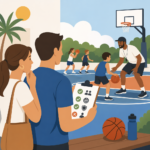
To train head-up awareness, give your brain another task while dribbling. Have a partner hold up fingers and call out the number. Read letters from cue cards. Track a tennis ball tossed lightly from hand to hand while you dribble. If training alone, use a wall-mounted target and call out colors, words, or clock times from sticky notes as you move. These drills work because games are not pure dribbling tests. They are perception tests. The dribble must become automatic enough that your eyes and brain can handle more important information.
| Drill | Main Skill | How to Do It | Common Mistake |
|---|---|---|---|
| Low pound dribbles | Finger control | Dribble below the knee for 20 to 30 seconds per hand | Standing too tall |
| Walk and scan | Eyes-up movement | Dribble while reading signs, numbers, or targets ahead | Glancing at the ball every bounce |
| Cone hesitation crossover | Change of pace | Attack a cone, pause slightly, then cross and burst | Crossing too wide and slow |
| Tennis ball distraction drill | Split attention | Dribble with one hand while tossing or tracking a tennis ball | Using only the strong hand |
How to Practice Ball Handling Like It Happens in Games
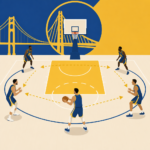
Many players become comfortable in workouts but lose control once a defender applies pressure. That happens because practice often lacks decision-making, contact, and unpredictability. To make your dribbling transfer into games, add live constraints. Start with guided defense. Have a partner shade your strong hand and force you to advance the ball with your weak hand. Then practice escape dribbles from the sideline, half-court traps, and dead-corner pressure. These scenarios are common in organized basketball and quickly reveal whether your eyes stay up under stress.
Use the half-court and full-court environment differently. In the backcourt, your job is usually security and spacing. A lower, safer dribble and strong shoulder positioning matter most. In the frontcourt, ball handling becomes more tactical. You may need a hesitation to freeze a defender, a retreat dribble to reset angle, or a hard crossover to get into the lane. Players often over-dribble because they treat every possession like a mixtape. Real ball handling is efficient. If one move creates an advantage, take it. If nothing is there, protect the ball, reverse it, or flow into the offense.
Video review helps here. Record ten possessions of live dribbling, even in a simple one-on-one setting. Count how often you look down, pick up the ball early, expose the ball outside your frame, or fail to use your off-arm. This is the same kind of feedback loop used in skill development programs from high school to professional levels. Tools can help as well. Training glasses that narrow lower-field vision, contact pads for pressure, and dribble goggles can expose bad habits, but they are only useful when paired with proper mechanics. Equipment does not replace disciplined repetitions.
Common Mistakes and the Fastest Fixes
The most common mistake is dribbling with the palm instead of the fingertips. Palming deadens touch and makes the ball rebound unpredictably. The fix is simple: spread the fingers, relax the wrist, and focus on pushing the ball down through the pads of the fingers. Another major mistake is standing upright. Tall posture increases dribble height, slows reactions, and forces the eyes downward. Lower your hips and keep your nose roughly over your toes when under pressure. You should feel ready to slide, stop, or explode.
A third mistake is ignoring the weak hand. Players often do every comfort drill with the dominant hand and assume game performance will balance out later. It will not. Defenders quickly force weakness. Dedicate equal volume to both hands, and for some drills give the weak hand extra reps. Another issue is practicing only rhythm dribbles with no purpose. Ball handling should connect to outcomes: getting into a pull-up, creating a passing angle, escaping pressure, or finishing at the rim. If the move does not lead to a basketball action, it is incomplete.
Players also look down because they are moving too fast for their current skill level. Slowing down is not a setback. It is how clean mechanics are built. Start at a pace where you can keep your eyes up consistently, then increase speed gradually. Finally, do not confuse flashy combinations with useful control. A tight in-and-out, a strong crossover, and a reliable retreat dribble win more possessions than random chains of moves. The best handlers are not the busiest. They are the clearest.
Building a Weekly Plan for Long-Term Improvement
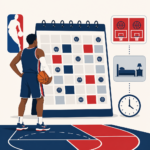
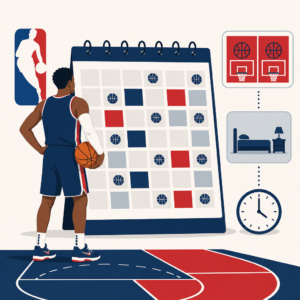
If you want lasting progress, use a simple weekly structure. Train ball handling four to six days per week for fifteen to thirty minutes, depending on your schedule and level. Day one can focus on stationary pounds, crossovers, and weak-hand control. Day two can add movement patterns such as speed dribbles, retreats, and change-of-pace attacks. Day three should emphasize visual awareness with reaction cues, partner signals, or scanning tasks. Day four should include live pressure, even if it is only one-on-one from the wing or backcourt advancement against token defense.
Keep the workload measurable. Track clean reps, not just time. For example, complete fifty right-hand low pounds without looking down, fifty left-hand pounds, twenty-five clean crossovers in stance, and ten full-court trips per hand while reading visual targets. If you lose the ball or stare down too often, restart the set. That creates accountability. Young players especially improve when standards are visible. Over a month, increase complexity by tightening the space, increasing pace, or adding defenders rather than just extending the workout.
Recovery and context matter too. Ball handling trained after shooting, sprinting, or contact work better reflects game conditions than always practicing fresh. At the same time, some sessions should stay technical and low fatigue so mechanics remain sharp. Balance both. As you explore related Basketball Skills content, connect this hub to focused work on weak-hand development, crossover technique, pressure dribbling, and guard footwork. Ball handling is not isolated. It sits at the center of passing, attacking, playmaking, and late-clock composure.
Dribbling a basketball without looking down is not a trick. It is the foundation of functional ball handling and one of the fastest ways to become more effective in real games. When your eyes stay up, you see help defenders earlier, spot cutters sooner, protect the ball better, and attack with more confidence. The path is straightforward: build fingertip control, stay low and balanced, train both hands, add movement, then challenge your vision and decision-making under pressure. Those habits turn a loose dribble into dependable court command.
The biggest improvement comes from practicing the right things in the right order. Start with stance and touch. Progress to walking and jogging dribbles with visual targets. Add changes of pace, direction, and live defenders. Review your habits honestly. If you keep looking down, tighten the drill until success is repeatable, then build back up. That patient progression works better than chasing advanced moves before the basics are secure. In every level I have worked with, from beginners to serious club players, the athletes who commit to this process become calmer and more dangerous with the ball.
Use this page as your Ball Handling hub within Basketball Skills, then keep building from here with focused drills for weak-hand control, crossovers, pressure escapes, and game-speed creation. Choose three drills from this article, practice them consistently this week, and measure your head-up reps every session. The results will show up in games faster than you think.
Frequently Asked Questions
Why is dribbling a basketball without looking down so important?
Dribbling without looking down is important because it allows a player to stay connected to everything happening on the court instead of becoming locked into the ball. When your eyes are down, your awareness drops immediately. You are more likely to miss a cutting teammate, fail to recognize defensive pressure, overlook open driving lanes, or react late to help defenders. In a real game, those delays lead to turnovers, rushed decisions, and lost scoring chances.
Keeping your eyes up turns dribbling from a basic mechanical skill into a game skill. It helps you read defenders, scan for passing options, recognize traps before they happen, and attack space more confidently. It also improves timing. A player who can handle the ball by feel is able to pass, change direction, or accelerate without needing an extra second to locate the ball. That extra second is often the difference between making a play and losing the advantage. In short, learning to dribble without looking down improves control, composure, and court vision all at once.
How can beginners learn to dribble without looking at the ball?
Beginners should start by building comfort with the ball through repetition and simple structure. The biggest mistake is trying to dribble at full speed with eyes up before basic control is in place. Start in a stationary stance with knees bent, back straight, and the ball being controlled by the fingertips rather than slapped with the palm. Practice low, controlled dribbles with the right hand and then the left, focusing on keeping the bounce consistent. Once that feels steady, pick a target straight ahead on the wall or at eye level and keep your eyes fixed on it while continuing to dribble.
From there, progress gradually. Count out loud, recite the alphabet, or hold up a conversation while dribbling. These small distractions force your body to rely more on touch and rhythm instead of visual confirmation. Next, add basic movements such as walking forward, backward, and side to side while maintaining the same eyes-up focus. As confidence grows, begin practicing crossovers and change-of-pace dribbles without looking down. The key is patience. Players do not develop this skill by rushing; they develop it by mastering easy versions first and then increasing difficulty while keeping control.
What are the best drills to improve eyes-up ball handling?
Some of the best drills are the ones that train both control and awareness at the same time. A strong starting drill is stationary pound dribbles with eyes fixed ahead. Do these with each hand, then alternate hands, and then move into crossovers, between-the-legs dribbles, and behind-the-back dribbles while never dropping your eyes. Another excellent drill is the wall-focus drill, where you choose a spot on the wall and maintain your gaze there for the entire set. This teaches discipline and removes the habit of checking the ball after every bounce.
Walking dribble drills are also highly effective. Dribble while moving in straight lines, then change directions, vary speeds, and practice stopping and starting without looking down. Cone drills add another layer by forcing you to handle the ball around obstacles while keeping your head up. If possible, use numbered cones or have a partner call out directions so you must react while dribbling. Tennis ball toss drills are especially useful for advanced coordination. In these, you dribble with one hand while tossing and catching a tennis ball with the other. That drill quickly reveals whether you truly control the basketball by feel. The best drill routine usually combines stationary control, movement, reaction, and decision-making rather than relying on one type of exercise alone.
How long does it take to get comfortable dribbling without looking down?
The timeline depends on a player’s starting point, consistency, and quality of practice, but most players can make noticeable progress within a few weeks if they train the right way. If someone is still learning basic dribbling mechanics, it may take longer because hand strength, ball familiarity, and rhythm all need to develop first. On the other hand, a player who already has decent control can often improve quickly by simply adding more eyes-up practice and reducing the habit of checking the ball.
A realistic approach is to practice for short periods every day instead of relying on occasional long sessions. Even 10 to 15 focused minutes of eyes-up dribbling can create meaningful improvement over time. The goal is not immediate perfection. At first, the ball may feel unstable, your dribble may rise too high, and your off hand may not feel coordinated. That is normal. Comfort comes from repeated exposure to controlled difficulty. If you stay consistent, most players begin to trust their dribble more, react faster, and feel less tempted to look down during live play. The process is gradual, but the progress is very real when practice is deliberate.
What mistakes should players avoid when trying to dribble without looking down?
One of the biggest mistakes is practicing too fast before control is established. Players often assume that better ball handling means moving quickly, but speed without control usually reinforces bad habits. If your dribble is wild, too high, or inconsistent, you will naturally want to look down to recover it. Slow the drill down, tighten the bounce, and build clean mechanics first. Another common mistake is dribbling with the palm instead of the fingertips. Fingertip control gives you far better feel for the ball and makes it easier to handle it without visual feedback.
Players should also avoid standing too upright. A strong athletic stance improves balance, keeps the ball protected, and makes changes of direction smoother. Looking straight ahead but mentally zoning out is another problem. Eyes-up dribbling is not just about posture; it is about awareness. You should be scanning, reading, and staying mentally engaged. Finally, many players neglect their weak hand. True eyes-up ball handling requires trust in both hands, especially when pressure forces you away from your dominant side. The best way to avoid these mistakes is to practice with intention: stay low, use your fingertips, control the pace, train both hands evenly, and make every drill resemble the awareness you need in a real game.