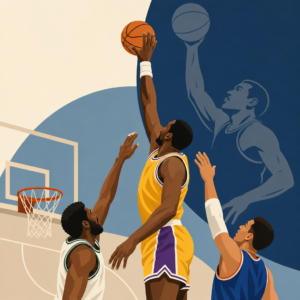


NBA records are more than impressive numbers; they are benchmarks that explain how the league has evolved, what kinds of greatness are repeatable, and what achievements may stand untouched for generations. In the NBA Players landscape, records and milestones function like a map: they connect individual dominance, team context, league rules, pace of play, sports science, and longevity. When fans ask which marks are truly unbreakable, they usually mean a mix of statistical distance, structural change, and competitive improbability. A record becomes nearly untouchable when today’s game no longer creates the same conditions that produced it.
After years of covering player performance and digging through Basketball-Reference, Stathead, NBA play-by-play logs, and official league archives, I have found that the hardest records to challenge are not always the flashiest. Some are protected by minutes loads modern teams will never permit. Others depend on styles of play that have disappeared, such as extreme offensive rebounding opportunities or ironman season participation. A few survive because the player who set them combined elite talent with absurd durability and the right era. That blend is rare enough to make certain milestones feel permanent.
This hub article on NBA records and milestones focuses on the marks most likely to endure. It also explains why they matter within the broader NBA Players conversation. If you are building knowledge around player legacies, Hall of Fame debates, career arcs, or era comparisons, these records are central reference points. They help answer practical questions searchers often have: What is the hardest NBA record to break? Which Wilt Chamberlain record is safest? Can anyone catch John Stockton or LeBron James? Why do some single-game records look vulnerable while career records do not?
The key idea is simple: records survive when talent alone is not enough. A player must also get health, coaching trust, favorable rules, enough possessions, enough seasons, and often a roster built around his strengths. That is why this article treats records and milestones as a complete subtopic hub rather than a list of trivia. The numbers below reveal how player value is measured, how context shapes output, and why some achievements still tower over a league filled with better training, deeper analytics, and more skilled athletes than ever before.
Wilt Chamberlain and the single-game records that define statistical impossibility
No discussion of unbreakable NBA records starts anywhere but Wilt Chamberlain’s 100-point game on March 2, 1962. It remains the ultimate single-game outlier because scoring 100 requires a perfect storm: elite usage, remarkable efficiency, overtime-level volume without necessarily needing overtime, and a team willing to feed one player all night. Kobe Bryant’s 81 in 2006 is the closest modern reminder of how distant 100 still is. Even that masterpiece finished 19 points short, and it came in a game where Bryant took 46 shots and 20 free throws. In today’s league, coaches are far quicker to rest stars, opponents trap earlier, and blowout dynamics often remove the chance to chase history.
Chamberlain also owns the single-game rebounding record with 55, set against Bill Russell in 1960. This mark is protected by modern shot selection. Today’s offenses create more spacing and usually better efficiency at the rim, which means fewer total rebound chances than the fastest, least efficient eras. Rotations also spread rebounds across guards and wings who are expected to crash, leak out, or start transition. Even dominant rebounders like Dennis Rodman, Andre Drummond, and Rudy Gobert have operated far below 55 because the environment no longer supports that volume.
His 48.5 minutes per game average in 1961-62 may be even safer. Yes, 48.5 is possible only because overtime minutes pushed the average above regulation length, but that detail makes the record more astonishing, not less. Modern load management, sports science, and franchise asset protection make such usage functionally extinct. No contender wants its best player approaching 44 minutes over a full season, much less every game plus overtime. Chamberlain’s records are not simply huge; they were created under conditions the current NBA considers irrational.
Career records built on longevity, health, and role stability
Career milestones are usually harder to break than single-game explosions because they demand excellence over 15 to 20 years. John Stockton’s 15,806 assists and 3,265 steals are the clearest examples. To threaten his assist record, a guard needs elite passing from day one, durable seasons in the 75-to-82 game range, and a ball-dominant role for nearly two decades. Chris Paul, Steve Nash, Jason Kidd, and LeBron James all show how difficult the climb is even for all-time playmakers. The steals record is similarly secure because it combines anticipation, hand speed, conditioning, and years of defensive engagement. Many stars age offensively better than they age as disruptive perimeter defenders.
LeBron James surpassed Kareem Abdul-Jabbar in career points, proving that supposedly eternal records can fall. Yet his own total may become the next mountain. What makes LeBron’s scoring record so intimidating is not merely peak output; it is the blend of 25-plus points per game, year-after-year playoff contention, and unprecedented durability for a primary creator. Prospects entering the league younger no longer get the same developmental runway because one-and-done rules, load management, and offensive sharing all lower the odds of a two-decade accumulation run at that level.
AC Green’s 1,192 consecutive games played belongs in this category too. The league’s understanding of injury prevention has changed so dramatically that an ironman streak now collides with team incentives. Even healthy stars sit back-to-backs, minor strains, or precautionary maintenance nights. Green’s record requires not just toughness but institutional willingness to prioritize streak continuity over optimization. That philosophy is largely gone.
Season records and why modern strategy protects them
Some season records look vulnerable because offensive numbers are high again, but context matters. Wilt Chamberlain averaged 50.4 points per game in 1961-62. That figure sits far beyond Michael Jordan’s best season at 37.1 and James Harden’s 36.1 in 2018-19. The issue is not that modern stars cannot score; it is that no team wants one player consuming that much offense across an entire season. High-usage creators now carry heavier playmaking duties, face more sophisticated help defenses, and are managed for postseason freshness. A 50-point average would require extreme volume plus durability that clashes with every modern efficiency principle.
Another massive season mark is Chamberlain’s 27.2 rebounds per game career average and his 25.7 rebounds per game in 1960-61. Rebounding leaders today usually finish in the low-to-mid teens. Pace can increase, but league-wide shooting efficiency, longer rebounds, and positional rebounding distribution suppress individual totals. The center who parks near the rim for every possession is less common, and coaches value getting back on defense over chasing every board.
| Record | Holder | Why it may never be broken |
|---|---|---|
| Points in a game | Wilt Chamberlain, 100 | Modern defenses trap earlier, stars rest more, and teams rarely allow unlimited shot volume |
| Assists in a career | John Stockton, 15,806 | Requires elite passing, health, ball dominance, and near full-season availability for two decades |
| Steals in a career | John Stockton, 3,265 | Long-term defensive consistency is rare, especially as offensive stars age |
| Points per game in a season | Wilt Chamberlain, 50.4 | Usage, fatigue, and roster design make that average incompatible with modern team building |
| Consecutive games played | AC Green, 1,192 | Load management and injury prevention practices discourage streak chasing |
Minutes-based season records tell the same story. Chamberlain averaged 48.5 minutes per game and played 3,882 total minutes in one season. Those numbers are effectively banned by modern logic. The regular season is now treated as a long optimization process, not a nightly endurance contest. Front offices monitor workload with tracking data, force plate analysis, and recovery metrics. As a result, the game produces fresher playoff stars but fewer chances at the old accumulation extremes.
Playoff milestones that endure because the postseason is smaller and harder
Playoff records deserve separate treatment because the environment is harsher. Defenses scout every action, rotations shrink, and weak links are attacked relentlessly. Bill Russell’s 11 championships as a player is the classic team-linked milestone that may never be matched. Even allowing for the smaller league he played in, the modern path is longer, deeper, and less stable. Free agency, salary cap rules, luxury tax pressure, and injury variance make sustained dynasty control extraordinarily difficult. Michael Jordan reached six titles without a Finals loss and still finished five short of Russell.
On the individual side, LeBron James has built playoff totals in points, games, and minutes that are likely to age well because they combine durability with annual deep runs. To catch him, a player must enter the league young, become the best option quickly, avoid major injury, and play into late career on contenders. That is a narrow corridor. Tim Duncan, Kareem, Kobe Bryant, and Magic Johnson all had long successful playoff careers, yet the cumulative bar keeps rising only for the rarest stars.
One subtle category to watch is playoff triple-doubles and all-around counting stats. Nikola Jokic and Luka Doncic can generate historic postseason rates, but even they need repeated conference finals and Finals appearances to stack totals. Greatness is not enough. Opportunity must be multiplied across many springs.
Why rule changes, pace, and team construction matter when evaluating records
The simplest mistake in records and milestones analysis is treating all eras as if they produce the same statistical opportunities. They do not. Pace in the early 1960s was dramatically faster, creating more possessions, more shots, more misses, and more rebound chances. Illegal defense rules in later decades changed spacing. The hand-checking crackdown altered perimeter creation. The three-point revolution expanded efficiency and redistributed offense. Each change affects whether a record is alive, threatened, or functionally extinct.
Team construction matters just as much. Stockton’s assists total is inseparable from Jerry Sloan’s continuity and Karl Malone’s finishing. Chamberlain’s numbers came from massive usage and minute loads. Russell’s titles came from a dynasty built around defense, depth, and coaching under Red Auerbach. LeBron’s scoring longevity reflects skill adaptation: downhill force became post craft, then playmaking control, then selective shot diet. When I evaluate whether a record can fall, I ask whether the current league can reproduce the player, the scheme, and the institutional patience. Usually it cannot.
This is why records and milestones remain such a useful NBA Players hub topic. They are not isolated facts; they are windows into how stars are developed, deployed, and remembered. They also help frame internal comparisons across related subjects, from scoring leaders to assist specialists to all-time durability cases. If you are exploring player legacy, start with the records that still resist modern basketball. They show where greatness ends and improbability begins.
The top NBA records that may never be broken endure because they sit at the intersection of extraordinary talent and vanished conditions. Wilt Chamberlain’s 100-point game, 55 rebounds, 50.4 points per game season, and 48.5 minutes average are not merely large numbers; they are products of an era and workload model the league will not revisit. John Stockton’s career assists and steals totals survive because modern careers rarely combine elite skill, full health, stable role, and near-perfect attendance for that long. AC Green’s consecutive games streak is shielded by today’s sensible but record-unfriendly caution around player health.
Other milestones, especially Bill Russell’s 11 championships and LeBron James’s accumulating playoff and scoring totals, remind us that context is everything. Winning records require roster continuity, coaching alignment, and years of deep postseason access. Career totals require adaptation as much as dominance. The lesson across this entire records and milestones hub is that the safest records are usually protected by structure, not just by talent. If the current NBA no longer creates the same statistical environment, a record can stand even as the league grows more skilled.
For fans, analysts, and anyone studying NBA Players seriously, these marks are essential reference points. They clarify how to compare eras without flattening their differences. They also show why some debates never end: a record can be both historically conditioned and genuinely awe-inspiring. Use this page as your hub for the broader Records and Milestones subtopic, then trace each category deeper through scoring, playmaking, durability, postseason dominance, and championship legacy. The more context you add, the more impressive these records become. Start there, and every player discussion gets sharper.
Frequently Asked Questions
What makes an NBA record feel “unbreakable” rather than just very difficult to beat?
An NBA record starts to feel unbreakable when it combines three things at once: a massive statistical gap, a unique historical context, and a modern league environment that no longer supports the same path to reaching it. In other words, it is not enough for a number to be huge. The conditions that produced it also matter. Many of the records discussed among the top NBA records that may never be broken were built in eras with different pace, different travel realities, different roster construction, different sports medicine approaches, and different expectations around workload. That is why evaluating records is really about more than arithmetic. It is about understanding how the league has changed.
Take longevity-based records as an example. A player may need not only elite talent, but also remarkable health, team stability, playoff relevance, and motivation to sustain excellence for 15 to 20 years. Even then, modern load management, injury prevention strategies, and front-office caution can reduce total games played and total opportunities. On the other side, single-game or single-season records may have benefited from a style of play that created more possessions, looser defensive structures, or a heavier reliance on one superstar. Some achievements are therefore protected not just by greatness, but by the disappearance of the exact ecosystem that made them possible.
That is why fans often describe certain marks as structurally unbreakable. They are not saying no future player will ever be great enough. They are saying greatness alone may not be enough. The player would also need the right era, the right health profile, the right coaching philosophy, and the right statistical environment. When all of those variables must align perfectly, the record becomes less a target and more a monument.
Why is Wilt Chamberlain’s 100-point game still considered one of the most untouchable records in sports?
Wilt Chamberlain’s 100-point game remains one of the most iconic and intimidating single-game records because it sits at the extreme edge of individual scoring possibility. Scoring 100 points in an NBA game requires a near-impossible blend of usage, efficiency, stamina, pace, and game flow. A player has to dominate almost every offensive possession for a full night while avoiding foul trouble, injury, fatigue, and defensive adjustments. Even for the greatest scorers in league history, reaching 70 is extraordinary. Reaching 80 is historic. Reaching 100 moves into a category that barely feels real.
Part of what protects the record is the way modern basketball distributes offense. Even superstars are usually operating within systems designed to create balance, preserve efficiency, and involve multiple playmakers. Coaches are often reluctant to force-feed a scorer once the team has control of the game, and many stars sit late in blowouts. Defenses also react faster, double teams are more sophisticated, and analytics encourage smarter shot selection over volume for volume’s sake. That does not mean a player cannot get incredibly hot, but it does mean the game is less likely to bend entirely around one player chasing a number for 48 minutes.
There is also the psychological dimension. Once a player gets deep into the 60s or 70s, every possession becomes a public event. The pressure rises, the defense tightens, and the offense can become distorted. To maintain enough efficiency and aggression to climb all the way to 100 is an enormous challenge. Chamberlain’s record survives because it is not just about talent. It is about a statistical ceiling that modern basketball rarely even approaches, making it one of the clearest examples of an NBA record that may never be broken.
Is John Stockton’s all-time assists record more unbreakable than some of the famous scoring records?
There is a strong argument that John Stockton’s all-time assists record is one of the most difficult records in the league to touch, and in some ways it may be even more secure than certain scoring milestones. The reason is simple: assists require an unusually specific combination of individual skill and long-term circumstances. A player must be an elite passer, maintain a lead-guard role for nearly two decades, stay healthy year after year, and play with teammates capable of consistently finishing possessions. Scoring records can at least be chased by volume scorers across many styles and eras. Assists are more dependent on context.
Stockton’s durability is a huge part of the record’s strength. He did not just rack up assists with brilliant court vision and decision-making. He was available. In record discussions, availability often matters as much as ability. Missing 15 to 20 games a season, which is not unusual by modern standards, can destroy a player’s long-term pursuit of a counting-stat record. A star point guard today may have the passing talent to average high assist numbers, but if he is resting more, playing fewer minutes, or sharing creation duties with multiple ball handlers, the pace of accumulation slows significantly.
Modern offensive systems also work against the record. Today’s teams often spread playmaking responsibilities across guards, wings, and even big men. That is great for offensive versatility, but it limits the kind of centralized control that helps one player pile up staggering assist totals. To catch Stockton, a player would need elite passing production for an extremely long time without losing role, health, or effectiveness. That is why this record is so often listed among the top NBA records that may never be broken. It is protected by excellence, durability, and a league structure that has evolved away from one-player orchestration over that many years.
How do changes in pace, rules, and sports science affect whether old NBA records can be broken?
Changes in pace, rules, and sports science are central to understanding why some old NBA records feel safer now than they might have years ago. Pace affects opportunity. More possessions generally create more chances for points, rebounds, assists, steals, and blocks. In high-possession eras, counting stats can rise simply because games provide more statistical events. But pace alone does not decide record vulnerability. Rules and style of play determine how those possessions are used, who controls them, and what kinds of shots are emphasized.
Rule changes can either open the door for records or close it. The three-point revolution, for example, has made some perimeter scoring and shooting records more vulnerable because players now take far more threes than previous generations. At the same time, modern defensive schemes are more advanced in many respects, and offenses are more collaborative, which can make certain individual volume records harder to reach. Rebounding records are also influenced by how the game is spaced. Long rebounds, more perimeter attempts, and frequent lineup changes affect who gets boards and how consistently they can dominate the glass compared with earlier eras.
Sports science is another major factor, but it works both ways. On one hand, better training, recovery, nutrition, and medical care can extend careers and help stars remain productive longer. On the other hand, the modern application of sports science often leads teams to protect players from excessive wear and tear. That means fewer minutes, more rest, and less willingness to chase regular-season milestones at the cost of long-term health. So while modern players may be better prepared physically, they may also have fewer raw opportunities to accumulate the kind of numbers that define “unbreakable” records. That tension is one of the most important reasons some historical NBA records continue to look out of reach.
Which types of NBA records are most likely to survive for generations: single-game, single-season, or career records?
Career records are usually the best candidates to survive for generations because they require the broadest and rarest combination of traits. A player chasing a career mark needs star-level production, exceptional durability, elite conditioning, adaptability across multiple eras of teammates and coaching staffs, and enough motivation to remain productive for a very long time. A single-game record can, at least in theory, be threatened by one perfect night. A single-season record can be challenged by one extraordinary year in the right system. A career record demands a decade and often much more of sustained excellence.
That said, the hardest records in any category are the ones protected by both statistical distance and structural change. Some single-game records, such as Wilt Chamberlain’s 100 points, feel nearly permanent because modern basketball does not naturally create the same conditions for one player to monopolize offense for long enough. Some single-season records can also be extremely safe if the league no longer encourages the workload or style that produced them. But in general, career records such as all-time assists, total minutes, or certain longevity-based scoring marks are especially difficult because every missed game, role adjustment, injury setback, and strategic shift chips away at the chase.
For readers exploring the top NBA records that may never be broken, the most useful perspective is to stop thinking of records as isolated numbers. They are really the product of entire careers, team ecosystems, league trends, and historical timing. The records most likely to last are the ones that future players cannot simply attack with talent alone. If a record requires a once-in-a-generation player to also have uncommon health, uncommon consistency, uncommon opportunity, and uncommon era fit, then it stands an excellent chance of remaining untouched for decades.