
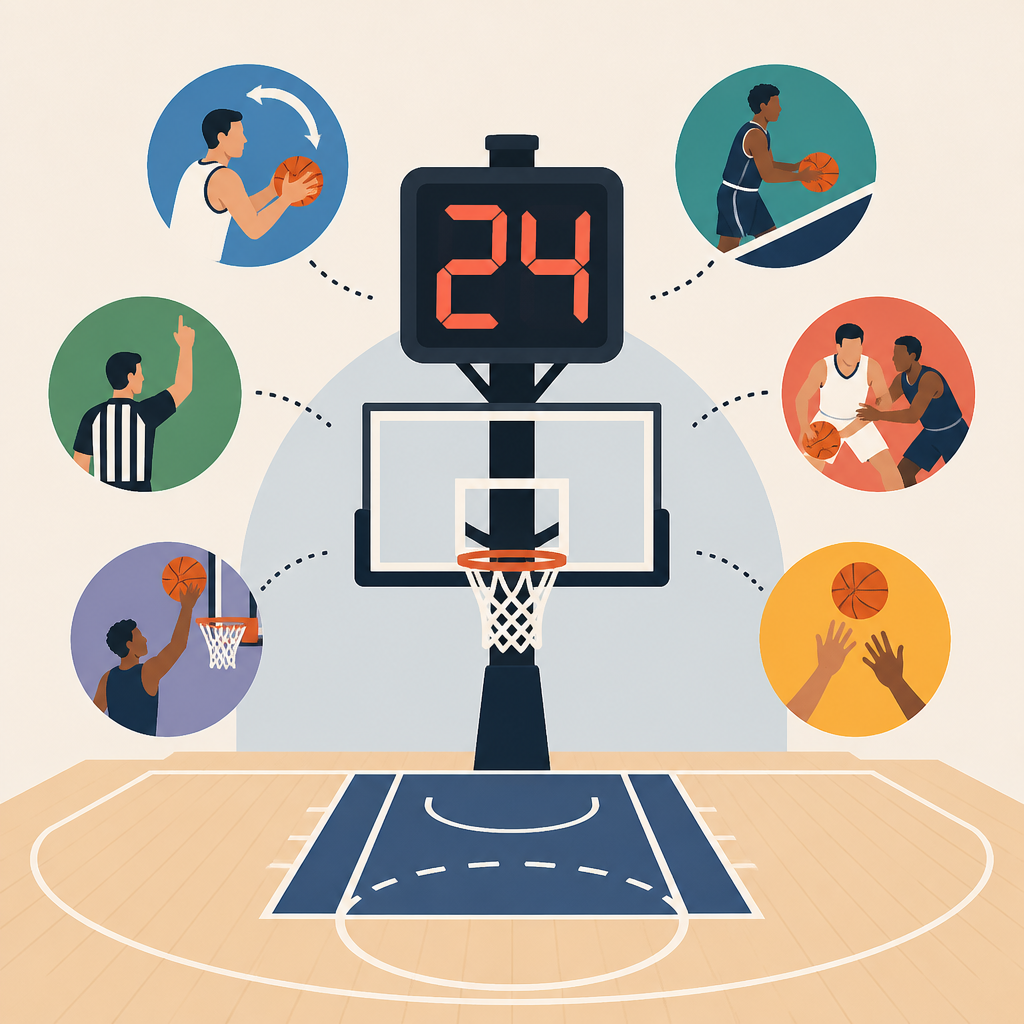
The NBA shot clock rules shape every possession, every late-game decision, and many of the strategic adjustments that separate efficient offenses from empty trips. A shot clock is the countdown that limits how long a team can control the ball before attempting a legal field goal, and in the NBA that count usually starts at 24 seconds. Reset situations are the events that restart that countdown either to 24 seconds or, in specific frontcourt cases, to 14. For fans, coaches, players, broadcasters, and anyone studying NBA rules, knowing every reset situation matters because it explains why the clock changes after fouls, kicked balls, rebounds, reviews, and out-of-bounds rulings.
I have worked through these situations live while charting possessions and reviewing official play-by-play logs, and the same confusion comes up repeatedly: why did the clock go to 14 there, why did it return to 24 here, and why did it stay where it was somewhere else? Those questions matter because the shot clock is not just an administrative timer. It governs pace, spacing, end-of-quarter tactics, offensive rebounding value, and defensive risk. A single reset can create an extra action in a possession, change whether a team can hold for one shot, or force a rushed attempt against a set defense.
This hub article covers the NBA game rules around shot clock resets comprehensively. It defines the core terms, explains the standard 24-second framework, and then breaks down every practical reset situation you are likely to see in a game. It also acts as a central guide for deeper rules study across the broader NBA Rules topic, because shot clock enforcement connects directly to fouls, violations, replay review, possession status, and timing rules. If you want a reliable answer to what should happen after a whistle or deflection, this is the reference point.
Core Shot Clock Rule: When the Count Starts and What Ends a Possession
The baseline NBA rule is simple: a team in control of the ball gets 24 seconds to attempt a field goal that leaves the shooter’s hand before the horn and then touches the rim. If the shot misses the rim entirely and the shot clock expires, that is a shot clock violation. If the shot hits the rim and either team can legally recover it, play continues. The shot clock starts on a legal touch inbounds after a throw-in, on player control after a rebound, or when a team otherwise gains possession.
Possession is the key concept behind all reset situations. A reset usually happens when team control changes, when certain defensive violations interrupt play, or when the offense retains the ball in the frontcourt after a stoppage that the rules treat differently from a full new possession. The distinction between frontcourt and backcourt matters because modern NBA rules use the 14-second reset to preserve pace after offensive team-retained stoppages in the frontcourt. Before that rule change, many of these situations returned to 24, which created longer recycled possessions and slower game flow.
Another essential term is team control. Team control exists when a player is holding or dribbling the ball, or when the ball is being passed among teammates. Team control ends on a field goal attempt. That detail explains why an offensive rebound after a missed shot is treated as a new possession event for shot clock purposes even if the same team recovers it. In practical terms, once the shot is up, the previous team-control segment is over, and the rebound can create a fresh 24 or, in frontcourt offensive rebound cases, a 14-second reset.
Full 24-Second Resets: New Possession, New Clock
The clearest reset is a change of possession. When the defensive team secures a rebound, makes a steal, intercepts a pass, or gains control after a loose ball, the shot clock resets to 24 because a new offensive possession is beginning. The same is true after a made basket when the opposing team inbounds and starts its possession. This is the easiest category to recognize: new team control by the other team means a full 24.
A full 24-second reset also applies when the offense earns a backcourt throw-in after a defensive foul, kick, punch, or other violation and the stoppage does not leave the ball in the frontcourt under the 14-second framework. For example, if Team A has the ball in the backcourt with 18 on the shot clock and Team B commits a personal foul before the ball crosses midcourt, Team A keeps possession and the clock resets to 24. The logic is that the offense has not yet established frontcourt status and should not be limited to a shortened reset.
Free throws can also produce a full reset depending on the result. If the defense commits a foul that leads to free throws and the shooting team retains or gains possession in a way recognized as a new possession sequence, the shot clock returns to 24. A common example is a loose-ball foul by the defense after a missed shot and before control is secured. Once the free throw administration is complete and the offended team is awarded the ball or play resumes with that team in possession, the shot clock is set according to the location and rule category, often 24 if it is not a frontcourt-retained situation.
Replay review can preserve or restore a full reset as well. If officials determine that the defending team last touched the ball before it went out of bounds and the offense is awarded possession in the backcourt, the shot clock is set to 24. In arena operations, this can look inconsistent because the in-game display may briefly show another number before the crew confirms the ruling. The final number follows the possession and court-location rules, not the temporary display.
14-Second Resets: Frontcourt Team Control Is the Difference
The most misunderstood NBA shot clock rule is the 14-second reset. If the offensive team is awarded the ball in its frontcourt after a defensive foul or defensive violation, and the shot clock shows 13 seconds or less, the clock resets to 14. If it already shows 14 or more, it stays where it is. This rule applies only to frontcourt situations, and it exists to balance two goals: preserving an offensive advantage after a defensive infraction while preventing the offense from effectively receiving a full new possession without earning one through a change of possession or a shot that struck the rim.
Take a standard example. Team A has the ball on the wing in the frontcourt with 9 seconds remaining. A defender kicks a pass. Because Team A retains possession in the frontcourt after a defensive violation, the shot clock resets to 14, not 24. If the same kicked ball occurs with 17 seconds on the shot clock, Team A keeps 17; there is no reset upward or downward to 14 because the existing time already exceeds the minimum frontcourt restoration.
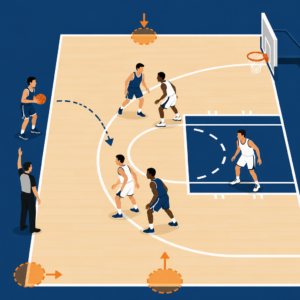
The same logic applies to common fouls by the defense in the frontcourt when the foul does not result in free throws that change administration. Suppose Team A is running pick-and-roll with 6 on the shot clock and Team B grabs the ballhandler before the shot. On the ensuing sideline inbound in the frontcourt, the shot clock becomes 14. This rule is one reason teams cannot simply foul late in a possession to erase a defensive disadvantage. The offense still gets a usable amount of time.
Frontcourt offensive rebounds are another major 14-second category. If Team A attempts a shot, the ball hits the rim, and Team A secures the rebound in the frontcourt, the shot clock resets to 14. This is one of the most visible modern pace rules in the NBA. It rewards offensive rebounding without recreating a full 24-second possession. Coaches adjust accordingly: after an offensive board, many teams flow directly into quick-hitting actions like a slot pick-and-roll, a kick-out three, or a duck-in post seal because 14 seconds supports one or two quality actions, not an entire possession tree.
Reset Situations by Event Type
The cleanest way to remember every shot clock reset situation is to group them by event type: change of possession, rim contact, defensive whistle, out-of-bounds ruling, and technical administration. In my experience, most confusion disappears when fans first ask two questions: which team has possession after the stoppage, and is the ball being awarded in the frontcourt or backcourt? Those two answers resolve most cases immediately.
| Event | Resulting possession | Shot clock outcome |
|---|---|---|
| Defensive rebound or steal | Other team gains control | Reset to 24 |
| Offensive rebound after ball hits rim | Same team, frontcourt | Reset to 14 |
| Defensive foul with offense retaining ball in frontcourt and 13 or less showing | Same team, frontcourt | Reset to 14 |
| Defensive foul with offense retaining ball in backcourt | Same team, backcourt | Reset to 24 |
| Defensive kicked ball in frontcourt with 13 or less showing | Same team, frontcourt | Reset to 14 |
| Ball out of bounds, defense last touched, frontcourt, 14 or more showing | Same team, frontcourt | Stay at current time |
| Held ball won by defense on jump-ball procedure | Other team gains control | Reset to 24 |
| Held ball won by offense in frontcourt after defensive violation context | Same team, frontcourt | Usually 14 if 13 or less |
Rim contact is especially important. A field goal attempt that hits the rim and is then recovered by the offense creates a 14-second reset in the frontcourt. A shot that misses the rim does not. If the offense airballs and regains the ball without a change of possession, there is no automatic reset merely because a shot was attempted. The ball must touch the rim to trigger the post-shot rebounding reset framework.
Out-of-bounds plays require attention to who touched the ball last and where the inbound occurs. If the defense deflects the ball out in the frontcourt with 11 on the shot clock, the offense gets 14. If the same play happens with 16 on the clock, the offense keeps 16. If the ball is awarded in the backcourt, the offense receives 24. These are not judgment calls; they are timing rules tied to court position.
Special Cases, Reviews, and Common Misunderstandings
Several situations create confusion because they look similar on television but are treated differently by rule. One is the difference between a blocked shot and a loose-ball deflection. If a defender blocks a shot attempt and the ball never touches the rim, the offense does not earn a reset simply because it recovered the ball. Team control ended when the shot was attempted, but no rim contact means no offensive-rebound reset. The remaining time stays live unless a whistle or out-of-bounds ruling intervenes.
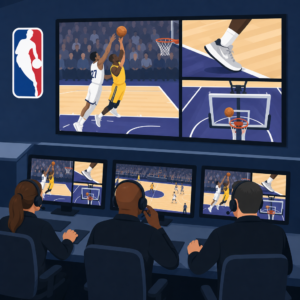
Another misunderstood case involves double fouls, offsetting technicals, or inadvertent whistles. When play is resumed at the point of interruption, the shot clock is restored according to what it should have been at the time play was stopped, unless another rule mandates a reset. Replay centers and scorekeepers rely on the official timer record, not the broadcast graphic, when reconstructing this number. That is why post-review clock settings can seem abrupt yet still be correct.
Jump balls and held balls depend on the resulting control. If Team B gains possession after a held ball, it gets 24. If Team A retains possession in the frontcourt and the applicable rule treats the stoppage like a frontcourt retained-ball situation, the shot clock may become 14 if 13 or fewer remained. The exact administration follows the alternating-possession and point-of-interruption procedures in place, so the key is not the tie-up itself but who is awarded the ball and where.
End-of-period timing adds another layer. No shot clock can exceed the time remaining in a period or overtime. If 8.2 seconds remain in the quarter and a situation would otherwise create a 14-second reset, the clock is set to 8.2 because the game clock controls the maximum available time. This comes up often after late offensive rebounds or defensive fouls in the frontcourt, and it affects whether teams can hunt a clean look or must shoot immediately.
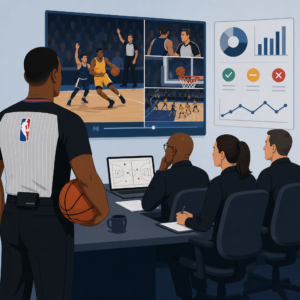
Finally, remember that scorekeepers and officials apply these rules in real time under heavy pressure. Teams often monitor them closely from the bench, and veteran coaches will instantly signal when they believe a 14 should have been restored. Understanding these standards helps fans evaluate whether the game crew handled the possession correctly.
Why Shot Clock Reset Knowledge Matters in Real Games
Knowing NBA shot clock reset situations improves more than rules literacy. It sharpens how you watch strategy. When a team grabs an offensive rebound and gets 14, expect quicker second-side actions. When a defense commits a foul with 5 on the shot clock, it may have saved an immediate shot but still conceded a structured inbound with 14. When a backcourt foul yields 24, the offense can fully reset its playbook. These distinctions influence lineup choices, foul tactics, and replay challenges.
They also matter for anyone writing about the NBA Rules topic more broadly. Shot clock administration links directly to game rules governing possession, fouls, violations, replay, and timing. As a hub concept, it helps readers navigate related issues such as goaltending sequences after rim contact, loose-ball fouls on rebounds, advance-the-ball situations, and last-touch reviews. If you understand the reset logic, many seemingly complicated rulings become straightforward.
The main takeaway is simple. New possession usually means 24. Frontcourt offense-retained stoppages with 13 or less usually mean 14. Offensive rebounds after a shot hits the rim in the frontcourt mean 14. If 14 or more is already on the clock in a frontcourt retained-ball situation, the clock typically stays put. Learn those anchors, and most NBA shot clock rulings will make immediate sense. Use this article as your hub for NBA game rules, then apply the same possession-first thinking the next time a whistle stops play and the shot clock suddenly changes.
Frequently Asked Questions
What is the standard NBA shot clock, and when does it reset to 24 seconds?
The standard NBA shot clock is 24 seconds, and it begins whenever a team gains control of a live ball. In the most basic sense, that means a team has 24 seconds to attempt a legal field goal that leaves the shooter’s hand before the horn sounds and then hits the rim. The clock resets to a full 24 seconds in several common situations, most notably when the defensive team gains possession, after made baskets followed by a new possession, and after certain violations or fouls that award a fresh possession. It also resets to 24 when a shot hits the rim and the offensive team recovers the rebound in the backcourt or when a completely new team possession is established after a change of control. The easiest way to think about it is this: if the previous possession has clearly ended and a new one has begun, the default reset is usually 24 seconds.
This full reset matters because it gives the offense the maximum amount of time to organize. Teams can flow into their half-court sets, use multiple actions, and even restart a possession after a broken play without being under immediate time pressure. In broadcast terms, this is why announcers often emphasize “fresh 24” after a turnover, a defensive rebound, or another clear possession change. For fans trying to understand the rulebook, the key distinction is whether the ball control truly changed hands or whether the same offense simply retained the ball in the frontcourt after a stoppage. If it is a brand-new possession, 24 seconds is the standard rule.
When does the NBA shot clock reset to 14 seconds instead of 24?
The 14-second reset applies in specific frontcourt situations where the offensive team keeps the ball rather than starting a completely new possession. The most familiar example is an offensive rebound after a field goal attempt hits the rim and the same team regains control in the frontcourt. In that case, the offense does not get a full 24-second restart; instead, the shot clock resets to 14. The logic is simple: the team has already used part of the possession, so the rules reward the extra effort of an offensive rebound without giving a complete restart. This speeds up the game and prevents overly long possessions while still giving the offense a meaningful second chance.
The shot clock can also be reset to 14 after certain defensive fouls or violations when the offensive team is awarded the ball in its frontcourt. If play is stopped and the offense keeps possession in the frontcourt, the officials look at how much time remained. If there were fewer than 14 seconds on the clock, it is typically reset up to 14. If there were already 14 or more seconds remaining, the clock usually stays where it is rather than being increased. That is an important nuance because “reset” in NBA conversation does not always mean a full restart from zero; sometimes it means raising the clock only to the minimum required amount. This frontcourt 14-second rule is one of the most important reset situations to know because it affects late-clock strategy, sideline out-of-bounds plays, and how aggressively defenses can pressure after an offensive rebound or stoppage.
Does the shot clock reset after every foul, violation, or out-of-bounds play?
No, and this is one of the biggest misconceptions among fans. The shot clock does not automatically reset after every whistle. What happens depends on who committed the foul or violation, where the ball will be put back into play, and whether possession actually changes. For example, if the defense commits a non-shooting foul and the offense is awarded the ball in the frontcourt, the shot clock may reset to 14 if it was below 14, but it will not necessarily go back to 24. If the same foul occurs in a way that creates a completely new possession context, then a full 24 might apply. The details matter.
Similarly, on out-of-bounds plays, the shot clock treatment depends on how the ball went out and who gets it next. If the offense retains possession in the frontcourt after a defensive deflection or violation, the shot clock may remain where it was or be adjusted to 14, depending on the exact ruling and the amount of time left. If the defense gains control and then the ball goes out, creating a new possession for the other team, that usually means a fresh 24. This is why official scorer’s table decisions can feel subtle in real time. The best rule-of-thumb is not to focus only on the whistle. Instead, ask two questions: did possession actually change, and is the offense inbounding in the frontcourt? Those answers usually tell you whether the clock stays the same, goes to 14, or resets all the way to 24.
What happens to the shot clock after a shot hits the rim, and why is that so important?
When a legal field goal attempt hits the rim, the shot clock is affected because the offense has satisfied the requirement to attempt a timely shot. From there, the reset depends on who gets control of the rebound and where. If the defensive team secures the rebound, that creates a new possession and the shot clock resets to 24 for the defense-now-offense. If the offensive team grabs the rebound in the frontcourt, the shot clock resets to 14 rather than 24. That 14-second offensive rebound rule has become a major strategic feature of the modern NBA because it allows teams to immediately flow into quick secondary actions without dragging possessions out too long.
This is important because offensive rebounds no longer just extend possessions in a vague sense; they create a very specific timing environment. Teams know they have enough time to attack again, but not enough to casually reset their entire offense. That leads to fast put-backs, kick-out threes, quick post seals, and immediate pick-and-roll actions before the defense can fully recover. It also explains why players, coaches, and broadcasters react so sharply to whether the ball touched the rim. If a shot misses everything, the shot clock does not reset, and the offense may be in immediate violation danger if it recovers the ball. If it touches the rim, the offense gets relief through the reset structure. In many possessions, that tiny detail is the difference between a frantic broken play and a controlled second-chance opportunity.
How do shot clock resets affect late-game strategy, coaching decisions, and what fans should watch for?
Shot clock resets are especially important late in games because every second carries added value. A team protecting a lead may prefer a possession outcome that creates a fresh 14 or 24, allowing it to burn more time before taking a shot. A trailing team, on the other hand, may pressure the ball, gamble for steals, or contest rebounds with extra urgency because preventing a reset can be just as important as forcing a miss. Coaches design late-game plays around these realities. After an offensive rebound and 14-second reset, for example, many teams immediately run a high-efficiency action rather than restarting everything from scratch. They know the defense is often scrambled and the shortened clock encourages quick, decisive execution.
Fans should watch for a few key clues in those moments. First, notice whether the shot touched the rim. Second, note whether the offense is keeping the ball in the frontcourt after a whistle. Third, look at how much time was on the shot clock before the stoppage, because that often determines whether the clock stays the same or is raised to 14. These details shape timeout usage, fouling strategy, two-for-one decisions, and end-of-quarter possessions. In practical terms, understanding reset situations helps explain why one team slows the game down after a rebound, why another rushes into a quick-hitter after a whistle, or why coaches argue so intensely with officials and the scorer’s table about a single second. The reset rules are not just technicalities; they directly influence pace, efficiency, and the tactical chess match that defines NBA basketball.