
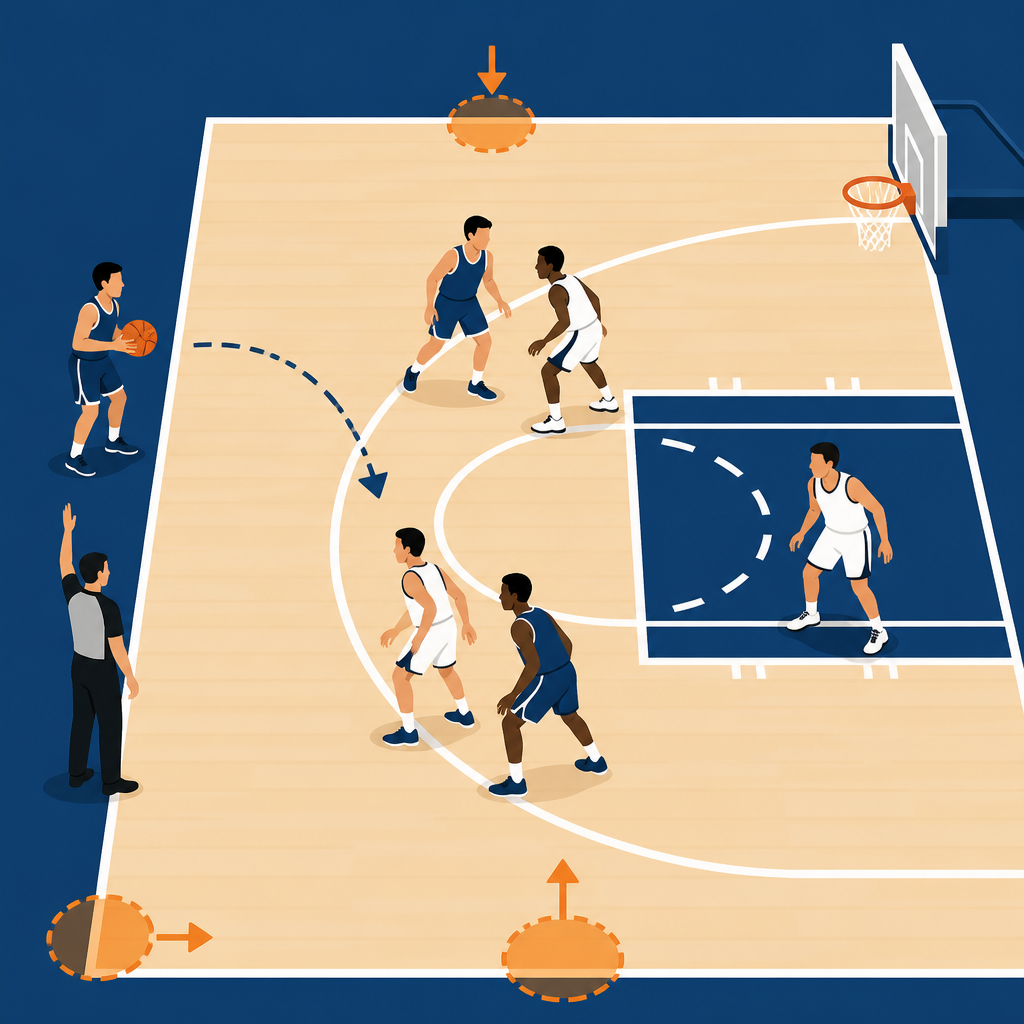
Inbounding rules in basketball determine when play restarts, where a throw-in occurs, and which team gets possession after violations, fouls, made baskets, timeouts, reviews, and period breaks. In the NBA, these game rules shape late-game strategy as much as shot making does, because one step, one touch, or one clock error at the sideline can swing a possession, a quarter, or an entire playoff series. I have spent years breaking down officiating clips, coaching youth and adult players through dead-ball situations, and tracking how the rulebook translates to live action, and the same lesson always comes back: teams that understand inbounding rules give away fewer easy points and create more controlled possessions.
At its core, an inbound or throw-in is the act of putting the ball back into play from out of bounds after the whistle stops live action. The inbounder must stand at the designated spot, release the ball within five seconds, and avoid stepping onto the court before the pass is released. Teammates and defenders also operate under strict boundaries involving movement, contact, delay tactics, and timing. These details matter because inbounding rules connect nearly every part of basketball game administration, including out-of-bounds rulings, personal fouls, team fouls, alternating restart locations, the backcourt rule, replay reviews, and the game clock.
This article serves as a hub for basketball game rules by explaining not only standard sideline and baseline inbounds, but also the larger framework of when and where teams get the ball back. If you want to understand why some possessions start at the nearest spot while others move to the free throw line extended, why a made field goal usually lets the defense inbound immediately, or why the NBA awards the ball at midcourt after certain late timeouts, this guide covers the full logic. The goal is simple: give you a working map of NBA inbounding rules so the next whistle makes immediate sense.
What inbounding means and when it is used
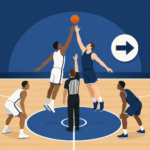
Inbounding is used whenever the ball becomes dead and the rules require a throw-in rather than a jump ball or free throw. Common triggers include the ball going out of bounds, a made basket not followed by free throws, most violations, many non-shooting fouls, offensive fouls, kicked-ball violations, delay-of-game situations, and the start of each quarter other than the opening tip. In the NBA, after the opening jump ball establishes first possession, the game usually returns to live action through a throw-in from a clearly defined location.
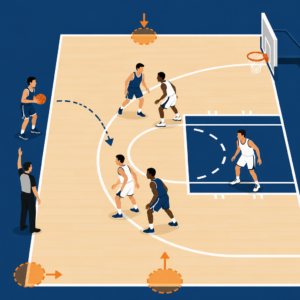
The designated inbound spot depends on the reason for the stoppage. If the ball goes out of bounds, the throw-in generally occurs at the nearest spot where it crossed the boundary. If there is a foul by the defense before the penalty, the offended team often inbounds from the sideline nearest the foul. If there is an offensive foul or offensive three-second violation, the defensive team gets the ball at the nearest sideline. During replay reviews, officials may adjust both possession and location, which is why bench staffs watch monitor rulings so closely.
One practical point many casual viewers miss is that not every dead ball stops movement equally. On a made basket in the NBA, the scoring team cannot interfere with the offense’s right to retrieve and inbound the ball quickly from the end line. That is why smart teams push pace after made baskets, especially if the defense is slow to match up. I have seen coaching staffs drill this every day in camp: the quickest legal inbound after a make can create a transition chance without a formal fast break.
Where the inbound happens on the court
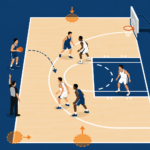
The location of the throw-in is one of the most important game rules because it affects spacing, passing angles, and pressure. Most out-of-bounds plays restart from the nearest spot on the sideline or baseline. “Nearest spot” does not mean wherever a player feels convenient; it means the official designates a precise area tied to where the violation, foul, or deflection occurred. If the ball goes out along the baseline under the basket, the inbound is typically from the baseline. If it goes out on the wing, the inbound is from the sideline near that point.
There are special placement rules. In the frontcourt, certain stoppages move the inbound to the sideline at the free throw line extended rather than the exact foul location. In the last two minutes of the fourth quarter or overtime, an offensive team that takes a timeout after securing possession in the backcourt may advance the ball to the frontcourt inbound spot on the sideline at the 28-foot mark, often described broadly as midcourt advancement. This rule dramatically changes endgame design because it reduces the distance needed for a game-tying or game-winning shot.
Baseline privileges also differ by situation. After a made basket, the team scored upon may run the baseline and inbound from any point behind the end line. After most other baseline throw-ins, the inbounder must remain at the designated spot and does not get that freedom. This distinction matters late in games. A team trailing by one can save precious tenths of a second by using the post-make running baseline allowance to trigger a long outlet or handoff before the defense is set.
| Situation | Team Awarded Ball | Inbound Location | Key Note |
|---|---|---|---|
| Ball out of bounds | Opponent of last toucher | Nearest spot | Official determines final touch |
| Made basket | Team scored upon | Baseline | May run the end line |
| Defensive non-shooting foul | Offense | Nearest spot or side out | Free throws apply if in penalty |
| Offensive foul | Defense | Nearest sideline | No points if foul occurred before release result counts |
| Timeout in late-game backcourt | Team with possession | Advanced frontcourt sideline | Fourth quarter or overtime only |
| Start of quarter | Based on prior possession procedure | Sideline near scorer’s table | Opening tip starts game only |
How teams regain possession after common violations and fouls
Teams get the ball back for many reasons beyond a simple out-of-bounds call. If the offense travels, double dribbles, commits an offensive three-second violation, or violates the backcourt rule, the defense receives a throw-in at the nearest spot. If the defense kicks the ball, the offense usually keeps possession and inbounds from the sideline nearest the violation unless the act occurred with a shot clock reset context that changes timing. If a player punches the ball, that is a violation and possession is awarded accordingly.
Personal fouls create a different decision tree. A defensive foul on a non-shooter usually results in a side-out until the team foul count reaches the penalty. Once the defense is in the penalty, the offended player or eligible substitute shoots free throws instead of the team inbounding. On shooting fouls, free throws generally replace the inbound unless the basket counts and an additional free throw follows. Offensive fouls, including illegal screens and charges, give the defense the ball out of bounds, with no free throws unless special flagrant or unsportsmanlike standards apply.
Loose-ball fouls can confuse fans because possession before the whistle does not always control the restart. If Team A shoots, the ball caroms free, and Team B fouls while neither side clearly controls it, officials apply the foul as written and then award possession or free throws based on team foul status and the nature of the contact. In practice, this means coaches must know whether the whistle creates a side-out, bonus free throws, or continuation. That knowledge determines substitution choices, timeout use, and whether to challenge a call.
The five-second rule, player positioning, and legal movement
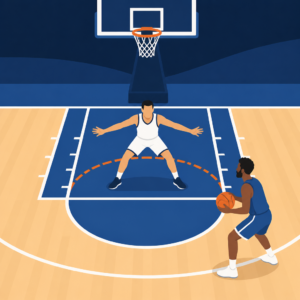
The inbounder has five seconds to release the pass once the official places the ball at the player’s disposal. That count begins when the ball is available, not when the inbounder feels ready. If the player delays, pivots excessively, or cannot find an option, it is a turnover. Against playoff-level pressure, the five-second count is one of the most dangerous hidden clocks in basketball. I have watched excellent offenses break down simply because the first screen was denied and no safety valve flashed hard enough to the ball.
The inbounder may move laterally along the baseline only after a made basket or made free throw that allows baseline freedom. On standard throw-ins, the player must stay within the designated spot and may not step over the boundary line onto the court before releasing the pass. The ball itself may break the plane of the court while still in the inbounder’s hands; the violation occurs when the player illegally enters or changes location. Defenders cannot cross the boundary line to dislodge the ball, and excessive reaching can become a delay-of-game warning or technical foul.
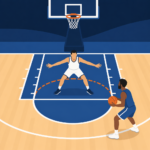
Teammates on the floor may screen, cut, and switch positions, but they must avoid illegal contact. The NBA emphasizes freedom of movement, so grabbing cutters on inbound actions can produce automatic fouls that hand the offense either a fresh side-out or free throws in the penalty. Defenders may deny and face-guard, yet they cannot hold. One well-known endgame tactic is to stack shooters near the lane line, force a switch-heavy defense into traffic, and spring the best option to the corner or safety outlet. The legality of that action depends on clean screens and timing.
Clock rules, made baskets, and late-game strategy
Inbounding rules are inseparable from the game clock and shot clock. After a made basket, the clock stops only if the period has ended or officials have otherwise signaled a stoppage; normally, the defense can inbound immediately and the clock starts when a player on the court legally touches the pass. On a sideline or baseline throw-in during a dead ball, the game clock starts when the inbound pass is legally touched inbounds. The shot clock starts based on possession status, reset amount, and whether the pass establishes control in the frontcourt or backcourt.
The NBA’s late-game timeout advancement rule is one of the most strategic inbounding rules in basketball. If a team secures possession in the backcourt during the final two minutes of the fourth quarter or overtime and then calls timeout, it may inbound in the frontcourt at the designated sideline spot. Coaches save timeouts specifically for this privilege. A team down three with 4.8 seconds left has a far better chance to run a catch-and-shoot action from an advanced inbound than from ninety feet away after a rebound.
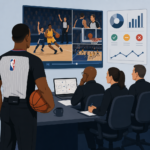
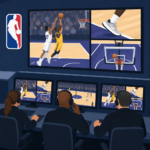
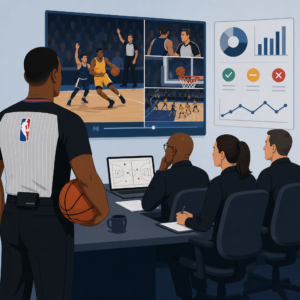
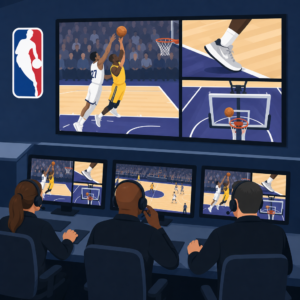
Replay also affects where teams get the ball back. Officials can review out-of-bounds decisions, clock timing, goaltending and basket interference in specific contexts, hostile acts, clear-path fouls, and whether a player stepped out before touching an inbound pass. The review may restore time, change possession, or move the throw-in location. This is why elite staffs track not just whether to challenge but what remedy the rules allow. A successful challenge is most valuable when it changes both possession and court position.
Special cases that decide possessions
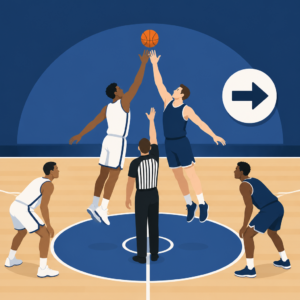
Several special cases deserve direct attention because they often decide close games. First, after a held ball in the NBA, play does not use the college alternating-possession arrow; instead, officials administer a jump ball between the involved players unless a different rule applies. That means inbounding is not the universal restart for tied-up situations at the professional level. Second, if the ball lodges between the rim and backboard, it is a jump-ball situation in the NBA, again potentially changing who gets the next real possession.
Third, clear-path, flagrant, and away-from-the-play fouls can produce free throws plus retained possession, which means the fouled team gets the ball back even after scoring at the line. These are some of the highest-value rulings in the game because they stack points and possession. Fourth, technical fouls usually award one free throw, but possession generally remains according to the point of interruption rather than automatically switching. Fans often assume every whistle flips possession; many do not.
Fifth, the point of interruption principle matters whenever officials resume play after unusual stoppages such as inadvertent whistles, replay corrections, or simultaneous violations. The rule aims to restore the game to the status closest to where it would have continued. Sometimes that means the same team keeps the ball at the same spot with the same clock count. Finally, frontcourt status on throw-ins matters for the backcourt rule. A pass legally touched by an offensive player in the frontcourt establishes frontcourt control; from there, a retreating pass can trigger a violation if the offense is the first to touch it in the backcourt.
Practical mistakes teams make and how to avoid them
The most common inbounding mistakes are simple and costly: failing to face the court before the official hands over the ball, burning the safety outlet too early, screening while moving, stepping over the line, and ignoring the count. Another frequent error is not knowing the exact spot of the throw-in. I have seen players set a brilliant baseline action only to discover the inbound is really from the sideline, collapsing spacing and timing. Great teams solve this by teaching categories of inbounds rather than isolated plays.
Players also need a mental checklist. Ask: who has possession, what caused the whistle, are we in the penalty, can we run the baseline, can we advance after timeout, and when will the clock start? Those questions turn confusion into structure. For coaches, the best approach is to script late-game packages by location: under-baseline, side-out below the free throw line, sideline at the hash, and advanced frontcourt sideline. Each package should include a primary option, a counter, and a safety valve against switching or denial.
Understanding inbounding rules gives teams cleaner possessions, fewer turnovers, and better endgame execution. It also makes every other NBA rules topic easier to read, from fouls and violations to replay and clock management. Use this hub as your foundation, then study live examples during games: watch where the official points, where the inbounder stands, and when the clock starts. The more closely you track those details, the faster the sport opens up, and the smarter every possession looks.
Frequently Asked Questions
What is an inbound in basketball, and when does a team get the ball back for a throw-in?
An inbound, also called a throw-in, is how basketball restarts play after the ball becomes dead. A team gets the ball back for a throw-in after a made basket by the opponent, many common violations, certain fouls, official reviews, held-ball rulings that do not go to a jump ball under the applicable league rule, and at the start of a new period. The key idea is that once the whistle stops live action, the officials must determine both possession and inbound location. That decision depends on what caused the stoppage.
In practical terms, the easiest example is after a made field goal. The team that was scored on gets the ball and may inbound from along the end line, which allows quick restarts and often fuels transition opportunities if the defense is not organized. After a ball goes out of bounds, the team that did not touch it last gets possession for a throw-in near the spot where it left the court, unless a special rule changes the location. After many violations such as traveling, double dribble, or offensive goaltending, the opposing team gets the ball at the nearest legal inbound spot. After some fouls, teams shoot free throws; after others, play resumes with a sideline or baseline inbound. Timeouts can also affect where the ball is put back in play, especially in late-game situations where rules may allow advancement to the frontcourt.
What matters most is that inbounding is not a minor administrative detail. It controls spacing, tempo, matchup hunting, and clock management. Good teams treat every dead-ball situation as a chance to gain an edge, because the throw-in spot, the game clock, and the shot clock can all change the next possession before the pass is even made.
Where does the inbound take place after out-of-bounds plays, violations, and fouls?
The inbound spot depends on the reason play stopped. On a standard out-of-bounds call, the throw-in usually happens at the nearest spot to where the ball crossed the boundary line. If it went out along the sideline, the inbound is on the sideline. If it went out along the baseline, the inbound is on the baseline unless a rule exception applies. On violations such as traveling, carrying, three seconds, or illegal screens, the opposing team generally inbounds from the nearest spot, but not directly behind the backboard if that would create an illegal or impractical setup. Officials use designated throw-in spots and administration mechanics to keep the restart legal and consistent.
Fouls add another layer. If free throws are awarded, the next inbound may occur after the final free throw, often from the end line if the shot is made or from a designated spot if it is missed and the ball remains live. If no free throws are awarded, the offended team commonly gets a sideline inbound at the nearest spot, though team-foul penalty rules and special situation rules can alter that. In the NBA and similar rule sets, some late-game timeouts allow a team to advance the ball to the frontcourt, which changes the inbound location dramatically and is one of the most important strategic tools in close games.
There are also special locations for certain administrative stoppages. Reviews, delay warnings, and correctable errors can send teams to a spot that is based on where play was interrupted rather than where the ball physically was last touched. That is why experienced coaches and players pay close attention not only to possession arrows or signals, but also to the lead official’s point to the exact throw-in location. One step to the wrong side of a division line, lane line extended, or hash mark can reshape the passing angle and the entire set the offense wants to run.
What are the main inbounding violations, and what happens if the team inbounding makes a mistake?
The inbounding team must follow strict rules, and small mistakes can immediately cost possession. The most common violation is failing to release the throw-in within five seconds after the official hands or bounces the ball to the inbounder and begins the visible count. If the inbounder steps on or over the boundary line before releasing the pass, that is also a violation. The inbounder cannot run the baseline unless the rules specifically permit it, such as after a made basket in many game codes. A player receiving the pass must establish legal inbounds status, and teammates cannot illegally exit and re-enter the court to gain an advantage. Depending on the rule set, the ball may need to touch a player on the court before certain backcourt or frontcourt restrictions are judged.
Defenders have restrictions too, but the inbounding team is usually punished if it mishandles the procedure. Throwing the ball directly out of bounds untouched is a turnover. Throwing it into the backcourt can trigger an over-and-back issue if frontcourt status had already been established under the relevant rules. Passing to a teammate who is standing out of bounds is another straightforward violation. On baseline throw-ins under the opponent’s basket, players often get trapped by the backboard, the corner, and help defense, so footwork and spacing are essential.
The penalty for most inbound violations is simple and severe: the other team gets the ball for its own throw-in from the spot of the violation. That is why inbound execution is coached so heavily. At high levels, teams script sideline out-of-bounds and baseline out-of-bounds sets in detail, because one illegal screen, one late release, or one misread against a switch can erase a critical possession. In close games, an inbound mistake is often the difference between getting a shot and never even starting the play.
How do made baskets, timeouts, and period breaks affect who gets the ball and where the inbound happens?
After a made basket, possession switches to the team that was scored on. In many rule sets, including NBA play, that team may inbound from anywhere along the end line, which is why quick “grab-and-go” inbounding can catch defenses off balance. The clock does not start until the ball is legally touched inbounds, so smart teams use speed, spacing, and misdirection to create immediate advantages without wasting time. Defenses, meanwhile, may deny the first pass, set up pressure, or force the ball to a weaker handler.
Timeouts are where inbounding strategy becomes especially important. Depending on league and game situation, a timeout can preserve possession and in some cases allow the offense to advance the ball from the backcourt to a designated frontcourt sideline spot. That changes everything: the offense needs less time to reach scoring range, can use its best sideline set, and can attack with more of the shot clock intact. This is one reason coaches save timeouts late. They are not just stoppages; they are position-changing assets. If a team has no timeouts and calls one, the penalty can affect possession or field position under the governing rules, so endgame awareness matters.
At the start of quarters and other period breaks, the league’s possession rules determine who gets the first throw-in. In the NBA, opening possession begins with the jump ball, and subsequent period-start possessions follow the rule framework in place for that competition. Officials also use period breaks to confirm clock settings and possession status, because a mistake there can unfairly hand one team an extra chance. In other words, made baskets, timeouts, and period starts are not routine bookkeeping moments. They are structured restarts that can be leveraged by disciplined teams to create cleaner entries, better matchups, and more controllable late-game offense.
Why are inbounding rules so important in late-game strategy and officiating reviews?
Inbounding rules matter so much late because every detail becomes magnified: score, clock, shot clock, foul count, timeout count, and court position all intersect at the throw-in. A team down one with 3.2 seconds left does not care only about drawing up a shot. It also cares whether the ball can be advanced, whether the inbound spot is on the sideline or baseline, whether the defender can switch freely, and whether the passer has enough room and time under the five-second count. One incorrect assumption about where the ball should be put in play can ruin the design of the entire possession.
Reviews often focus on who touched the ball last, whether the game clock should be reset or adjusted, and where the throw-in belongs after an interruption. These are not trivial corrections. If a review changes possession from baseline to sideline, or moves the inbound from backcourt to frontcourt, expected scoring chances can swing sharply. Officials must apply both the possession rule and the restart location rule correctly. Coaches, players, and broadcasters often fixate on the last touch, but experienced analysts know the full ruling also includes the proper spot, the correct clock, and the right shot-clock value.
This is exactly why inbounding is so central to winning basketball. A clean throw-in can produce a layup, a game-winning three, or a safe release against pressure. A bad one can lead to a five-second violation, a steal, or a rushed heave. Over a full season, teams that understand inbound rules gain hidden possessions and avoid preventable errors. In the playoffs, that edge can decide an entire series. The rules governing when and where teams get the ball back are not background mechanics. They are part of the game’s strategic