
Defensive three seconds is an NBA rule that prevents a defender from standing in the lane for more than three seconds unless he is actively guarding an opponent, and it exists to keep the paint open, promote movement, and balance the freedom of zone principles with the league’s desire for spacing. For anyone building a clear understanding of NBA rules, this is one of the most important game rules to learn because it affects rim protection, pick-and-roll coverage, post defense, weak-side help, and even roster construction. I explain it this way when training new analysts: if you want to know why a center cannot simply camp under the rim all night, this rule is the answer.
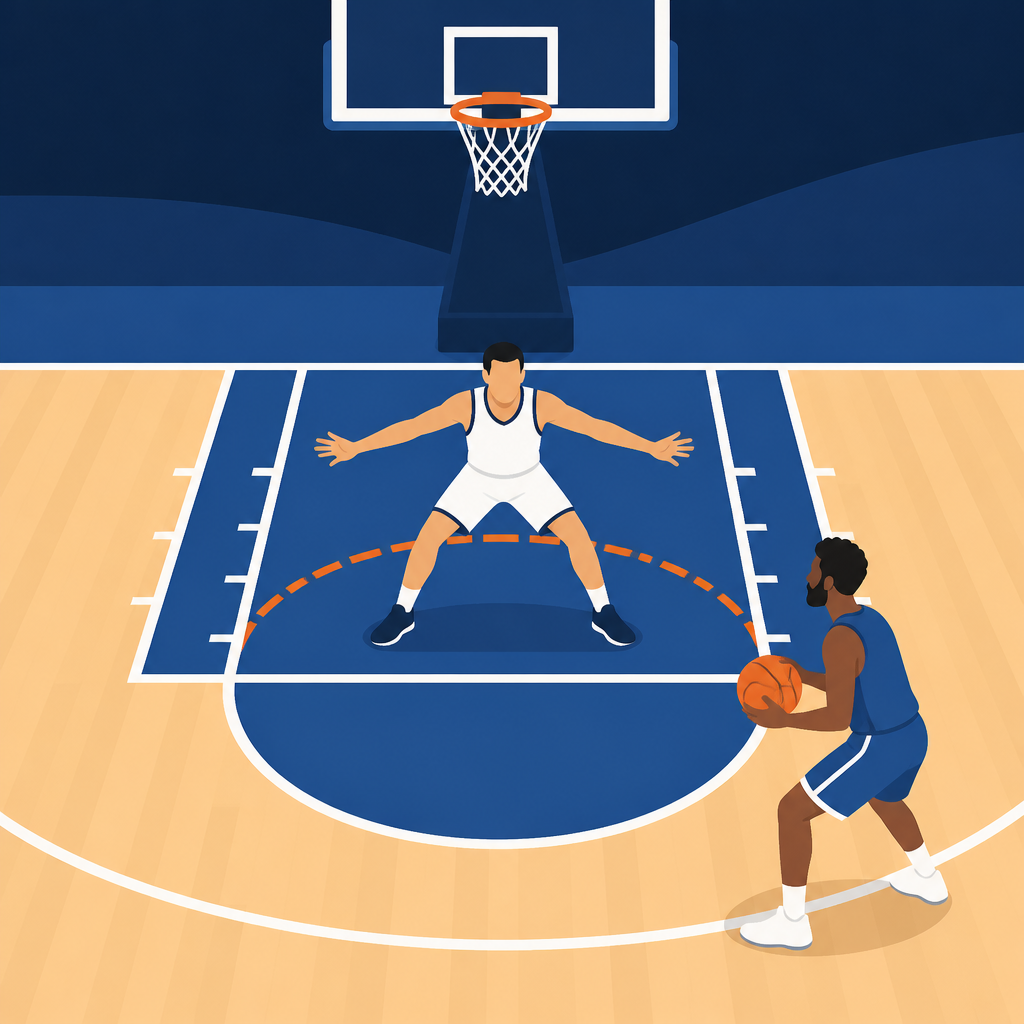
The lane, often called the paint or key, is the rectangular area stretching from the baseline to the free-throw line between the lane markers. Under NBA Rule No. 10, a defensive player cannot remain in that area longer than three seconds while not actively guarding an opponent. If he does, officials call a defensive three-second violation. The penalty is one technical free throw for the offensive team, and the offended team retains possession. That consequence is significant because it combines free points with another chance to score.
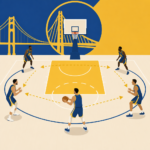
This rule matters beyond isolated whistles. It shapes the geometry of every possession. Without it, the biggest defenders could sit directly at the rim, shrinking driving lanes and neutralizing slashers before the play develops. With it, help defenders must time rotations, tag rollers, stunt at ball handlers, and recover with discipline. The result is a game that rewards anticipation rather than stationary shot blocking. In modern NBA strategy, where spread pick-and-roll and five-out spacing are common, defensive three seconds remains one of the clearest examples of a rule designed to influence style of play.
As a hub topic within NBA game rules, defensive three seconds connects naturally to other core concepts: the difference between legal guarding position and illegal defense, how technical fouls are administered, what constitutes the restricted area, and how offensive and defensive lane violations differ. Understanding this rule gives fans a practical framework for reading help defense on every possession, not just interpreting an occasional stoppage.
What defensive three seconds means in the NBA
The plain-language definition is simple: a defender cannot stay in the paint for more than three seconds unless he is guarding someone. In practice, the wording officials use is more nuanced. A defender is allowed in the lane if he is actively guarding an opponent within a reasonable distance, generally interpreted as close enough to affect that player. If the defender is between opponents, drifting away from his assignment, or planting himself near the basket without a direct matchup, the three-second count can begin.
There are also timing details. The count only applies when the offensive team has control of the ball in the frontcourt. Transition moments often create confusion because a trailing center may step into the lane early, but if the offense has not yet established frontcourt control, officials do not enforce defensive three seconds. Similarly, a defender can reset the count by getting both feet out of the lane. Coaches teach big men to “dip a toe out” or fully clear the paint before re-entering, though in reality the safest method is a clear exit that leaves no doubt.
Another important point is that the rule does not ban help defense. It bans prolonged stationing in the lane without active coverage responsibility. A weak-side defender may rotate from the dunker spot area to challenge a drive, contest at the rim, and then recover. That sequence is legal because it is a reactive play, not camping. Rudy Gobert, Brook Lopez, and Jaren Jackson Jr. all protect the rim effectively within this framework by reading actions early and arriving on time rather than waiting indefinitely under the basket.
Why the NBA created the rule
The defensive three-second rule was introduced for the 2001–02 season when the league relaxed prior illegal defense restrictions and allowed zone concepts that had long been limited. Before that change, defenders generally had to stay attached more directly to their assignments, which made full zone structures difficult. Once teams gained the freedom to load up and protect areas, the league needed a counterweight. Otherwise, dominant rim protectors could remain planted near the basket possession after possession, turning the paint into a permanent roadblock.
The NBA’s goal was competitive balance between defense and offense, not the elimination of strong interior defense. League officials wanted more driving, more cutting, and more space for post play without returning to the old illegal defense regime. Defensive three seconds became the compromise. Teams could zone up, flood the strong side, and send early help, but they could not place a seven-footer in the lane indefinitely with no immediate matchup responsibility.
This context matters because many fans assume the rule exists simply to increase scoring. That is only partly true. It was also created to preserve skill expression. Guards need a believable lane to attack. Wings need room to cut. Bigs need post touches that are not instantly swallowed by a defender who never had to leave the restricted area. By forcing help defenders to move in and out, the rule tests timing, communication, and processing speed. In other words, it shifts value from size alone to coordinated team defense.
How officials enforce defensive three seconds
Officials track the violation visually, and usually the lead or slot official is most responsible for seeing paint occupancy while keeping awareness of the ball. There is no public arena countdown. The referee silently judges whether the defender has remained in the lane too long while failing to actively guard an opponent. Because the rule depends on judgment, consistency can vary. Veterans know some crews call it tightly in the first half to set tone, while others allow more latitude if the defender is shading toward a nearby offensive player.
In my experience reviewing film, the most common triggers are these: a center sinks too far off a non-shooting big and lingers under the rim; a weak-side helper tags a roller and never exits; or a defense in zone principles collapses around the nail and low block while one player loses clear matchup responsibility. Players and assistants constantly monitor this from the bench. You will often see a coach point at the lane and shout for a big to clear out before the whistle arrives.
The penalty structure is straightforward enough to memorize.
| Situation | Ruling | Result |
|---|---|---|
| Defender stays in the paint over three seconds without actively guarding | Defensive three-second violation | One technical free throw, offense keeps the ball |
| Defender is in the paint but actively guarding an opponent nearby | No violation | Play continues |
| Defender exits the lane with both feet before the count expires | Count resets | Play continues |
| Offense does not yet have frontcourt control | No active count | Play continues |
This administration makes the violation more costly than a simple side-out. Because the offense retains possession after the technical free throw, one lapse can produce a two-possession swing in expected value. That is why disciplined defenses drill paint timing repeatedly during training camp.
Common game situations and examples
The easiest real-world example is a drop-coverage center defending a high pick-and-roll. If the ball is above the break and the screener rolls hard, the center can backpedal into the lane to contain the drive and protect against the lob. That is legal because he is participating in the action and preparing to guard the roller or ball handler. Trouble starts when the play stalls, the roller clears out, and the center remains parked in front of the rim without a live assignment. At that point, officials may call defensive three seconds.
Another frequent example comes against a non-shooting forward stationed in the corner or dunker spot. Defenders are tempted to sag all the way into the lane and ignore the shooter. They are allowed to help, but only within the rule’s guard-or-exit logic. Draymond Green has long excelled at this balancing act: he shades toward the paint, shows numbers to the driver, then recovers or repositions before the count becomes dangerous. The skill is not merely being in the right place; it is being there at the right moment and leaving at the right moment.
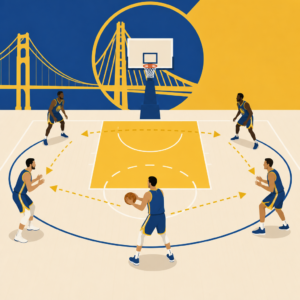
Zone-like alignments create the most debate. Since the 2001 rule changes, NBA teams routinely use hybrid coverages that resemble 2-3, 3-2, matchup zone, or strong-side overload concepts. Defensive three seconds does not outlaw those schemes. It simply prevents the deepest low man from turning the defense into a static shot-blocking shell. Miami under Erik Spoelstra has often shown how to protect the paint with swarms, scram switches, and pre-rotations while avoiding repeated violations. The principle is movement, not camping.
How the rule changes strategy for players and coaches
For centers, defensive three seconds changes footwork and decision-making. Traditional rim protectors must learn to hover, stunt, and recover rather than anchor in one spot. Coaches teach them landmarks: one step above the restricted arc, a quick touch out of the lane, then a re-entry on the drive. Film study focuses on when to meet the roller, when to peel back to a shooter, and when to commit fully at the rim. A big who masters those reads can still dominate defensively without drawing violations.
For offenses, the rule creates tactical opportunities. Teams use empty-corner pick-and-roll, five-out spacing, and baseline drift actions to force the low defender into difficult choices. If the helper steps in early, the count starts. If he stays attached to avoid the count, the driver gets a cleaner lane. Smart offenses also move non-shooting bigs along the baseline because that motion makes it harder for a help defender to claim active guarding status while remaining planted in the middle.
Coaches also exploit the rule late in games. Against elite shot blockers, they may flatten the floor and keep weak-side players lifted to the wings, stretching the defender’s responsibility. The objective is not only to attack one-on-one but to remove the comfort of a permanent rim protector. This is one reason spacing has become inseparable from modern NBA game rules. Personnel matters too: mobile bigs who can guard in space are more valuable because they can honor the rule without sacrificing coverage integrity.
Misconceptions, edge cases, and related NBA rules
The biggest misconception is that any defender in the paint for three seconds commits a violation. That is false. The key question is whether he is actively guarding an opponent. A center standing in the lane while bodying a post player is legal. A forward stepping into the lane to tag a cutter is legal if the action is immediate and connected to a matchup. The violation targets unattended occupancy, not every paint presence.
Another misconception is that the rule exists in the same form across all levels of basketball. It does not. The NBA has this specific defensive three-second rule, but many other leagues and rule sets do not apply it the same way. FIBA rules, for example, permit more traditional zone protection near the basket. That difference is one reason international games can look denser in the paint. Fans comparing NBA and Olympic play often notice more direct rim camping overseas because the structural incentive is different.
It also helps to separate defensive three seconds from other NBA game rules. Offensive three seconds applies to offensive players remaining in the lane too long. The restricted area rule governs charge and block calls near the basket. Goaltending and basket interference deal with contact on a shot near the rim. Illegal screen rules affect the action leading into the paint. Learning these together gives a fuller picture of why the lane is so heavily regulated: the NBA wants contested action there, but under rules that preserve flow, fairness, and athletic skill.
Defensive three seconds is a small rule with outsized influence on how NBA basketball looks. It defines how far help defenders can go, why rim protectors must move with purpose, and how offenses create space at the basket. If you remember one thing, remember this: a defender may protect the paint, but he cannot live there without guarding someone. That balance is exactly why the rule was created when zone principles expanded in 2001–02, and it remains central to modern game strategy.
For fans using this page as an NBA Rules hub, defensive three seconds is a strong starting point because it connects directly to technical fouls, illegal defense history, pick-and-roll coverage, restricted area decisions, and offensive lane violations. Watch a few possessions with this rule in mind and the game opens up immediately. You will notice bigs stepping out to reset, helpers timing their rotations, and offenses spreading the floor to test those limits. That is the practical value of knowing the rule: you do not just understand the whistle, you understand the strategy behind it. Keep exploring the rest of the NBA Rules topic with that lens, and every possession becomes easier to read.
Frequently Asked Questions
What is defensive three seconds in the NBA?
Defensive three seconds is an NBA violation that stops a defender from remaining in the painted area, or lane, for more than three seconds unless he is actively guarding an offensive player. In simple terms, a defender cannot just camp under the basket waiting to block shots if he is not closely engaged with an opponent. The rule is most often applied to help defenders, especially big men who want to protect the rim from the weak side without being directly matched up in the paint.
To be considered legally positioned, the defender generally must be guarding a player within a reasonable distance rather than standing freely in the lane with no immediate assignment. If the defender stays too long without actively guarding someone, officials can call a defensive three-second violation. The penalty is a technical free throw for the offense, and the offense keeps possession. That makes it a meaningful rule, not a minor warning, because it can directly produce points and extend a possession.
This rule is a key part of understanding modern NBA defense because it affects how teams protect the basket, rotate in help, and recover to shooters. It is one of the clearest examples of how the NBA tries to balance defense with spacing and offensive freedom.
Why was the defensive three-second rule created?
The defensive three-second rule was created to prevent teams from stationing a defender in the paint full-time and turning the lane into a permanent traffic jam. When the NBA expanded the legal use of zone concepts, the league did not want defenses to gain the full benefit of zone positioning while also allowing a center to stand under the rim indefinitely. Without a restriction like this, defenses could crowd the basket constantly, making drives, cuts, and interior scoring far more difficult.
The league’s broader goal was to preserve space and movement. NBA basketball has long emphasized open driving lanes, one-on-one creation, and freedom for offensive players to attack the rim. If a big defender could simply wait in the paint every possession, offenses would face a much more congested floor. That would reduce the effectiveness of slashing guards, post entries, pick-and-roll actions, and weak-side cuts.
So the rule was designed as a compromise. It allowed teams to use more sophisticated team defense and zone principles, but it also required defenders to stay honest by actively guarding someone rather than parking in the lane as a stationary obstacle. In that sense, defensive three seconds is not just a technical rule; it reflects the NBA’s larger philosophy about entertainment, spacing, and competitive balance between offense and defense.
How do referees decide whether a defender is actively guarding an opponent?
Officials look at positioning, distance, and purpose. A defender does not have to be face-to-face with an offensive player every second, but he generally must be close enough to show that he is actually engaged in guarding someone. If a defender is standing in the lane while loosely watching the ball and not within a reasonable guarding distance of an opponent, he risks a defensive three-second call. If he is shading toward a nearby player, reacting to that player’s movement, or legally helping and then recovering, he is more likely to be considered active rather than illegal.
This is why the rule can feel subtle in real time. NBA defenders are constantly tagging rollers, stunting at drivers, showing help, and recovering out to shooters. Referees are not expecting defenders to avoid the paint completely. Instead, they are judging whether a player is using the lane as part of a real defensive action or simply lingering there too long without a direct assignment. A brief help step is normal. Camping is not.
In practice, defenders often manage the count by stepping out of the lane briefly, re-engaging with a man, or timing their help rotations carefully. Veteran big men are especially skilled at “toeing out” of the paint for a moment before re-entering legally. That cat-and-mouse element is one reason the rule matters strategically. It influences footwork, timing, and communication, not just where a player stands.
How does defensive three seconds affect strategy for rim protection, pick-and-roll defense, and help defense?
The rule has a major impact on defensive structure. For rim protectors, it means they cannot simply wait under the basket on every possession. They must time their help, track their assignment, and choose when to step into the lane. That changes how centers and power forwards defend drives and post touches. Instead of living at the rim continuously, they have to read the play and arrive at the right moment.
In pick-and-roll coverage, defensive three seconds influences how big men position themselves before the screen action fully develops. A drop defender can still protect the paint, but he must remain aware of the count if he is not clearly guarding the screener or roller. That can slightly alter how deep he sits and how long he can linger in the lane before engaging. Teams therefore build their coverages with this rule in mind, especially against guards who pressure the paint and force weak-side help decisions.
Weak-side help defense is also shaped by the rule. The best NBA defenses want an extra body near the lane to deter drives, but they cannot leave that helper parked there indefinitely. As a result, defenders often “show and recover,” tag cutters and rollers for a split second, or rotate from one side to the other with precise timing. This keeps the paint contested without violating the rule. On offense, smart teams exploit defenders who are worried about the count by forcing them to choose between stepping out of the lane and staying in position to protect the rim.
Overall, defensive three seconds rewards disciplined movement and anticipation. It makes paint defense more dynamic and less static, which is exactly what the league intended.
Is defensive three seconds called the same way in every basketball league?
No. Defensive three seconds is a specifically important part of NBA rules, and fans are often surprised to learn that not every league uses it in the same way, or at all. International basketball under FIBA rules does not mirror the NBA approach exactly, which means defenders in other competitions may be allowed to occupy the paint more freely. That difference changes how teams defend the basket, how much zone is used, and how crowded the lane can become.
This is one reason the NBA has its own defensive identity. Because defenders cannot simply sit in the paint without actively guarding someone, NBA offenses usually have more room to attack off the dribble. It also means certain defensive habits from other leagues do not transfer perfectly. A big man who is comfortable staying near the rim for long stretches overseas may need to adjust his positioning, timing, and awareness in the NBA.
For fans trying to build a clear understanding of basketball rules, this is an important distinction. Defensive three seconds is not just a trivia detail. It helps explain why NBA spacing looks the way it does, why certain rim protectors are so valuable, and why defensive rotations in the league are often faster and more complex than they appear at first glance. Learning this rule gives you a better grasp of how the NBA game is designed and why it flows the way it does.