
NBA franchise values in 2026 reflect far more than team record or star power. They capture the economics of media rights, arena control, sponsorship inventory, premium seating, real estate development, global brand reach, and the scarcity of owning one of only 30 NBA teams. When investors, executives, and fans ask which NBA teams are worth the most, they are really asking how modern sports businesses turn attention into durable enterprise value. In 2026, that question matters more than ever because the league sits at the center of a changing media market, rising private capital interest, and intense competition for live entertainment dollars.
Franchise value is the estimated market price a buyer would likely pay for an NBA team, including its operating business and, in many cases, the strategic advantages tied to arena deals and surrounding development rights. It is not the same as annual revenue, operating income, or payroll. A team can spend heavily on players and still rise in value if its media position, ticket demand, and long-term commercial assets remain strong. Likewise, a team can rank in the middle of the standings and still command a premium valuation because buyers pay for future cash flow, market position, and scarcity. I have worked through enough team finance models to know that the headline number usually masks a deeper story about control: control of venue economics, control of inventory, and control of audience.
That is why a league finance hub needs to start with valuation. Franchise values shape debt capacity, ownership strategy, front-office budgets, facility planning, and even the appetite for minority stake sales. They influence expansion discussions, luxury tax tolerance, and how teams negotiate local partnerships. They also provide context for related topics across NBA business, including media rights, collective bargaining, arena finance, sponsorship structure, and private equity participation. This article serves as that hub by explaining which teams sit at the top in 2026, why they are there, and which financial drivers matter most.
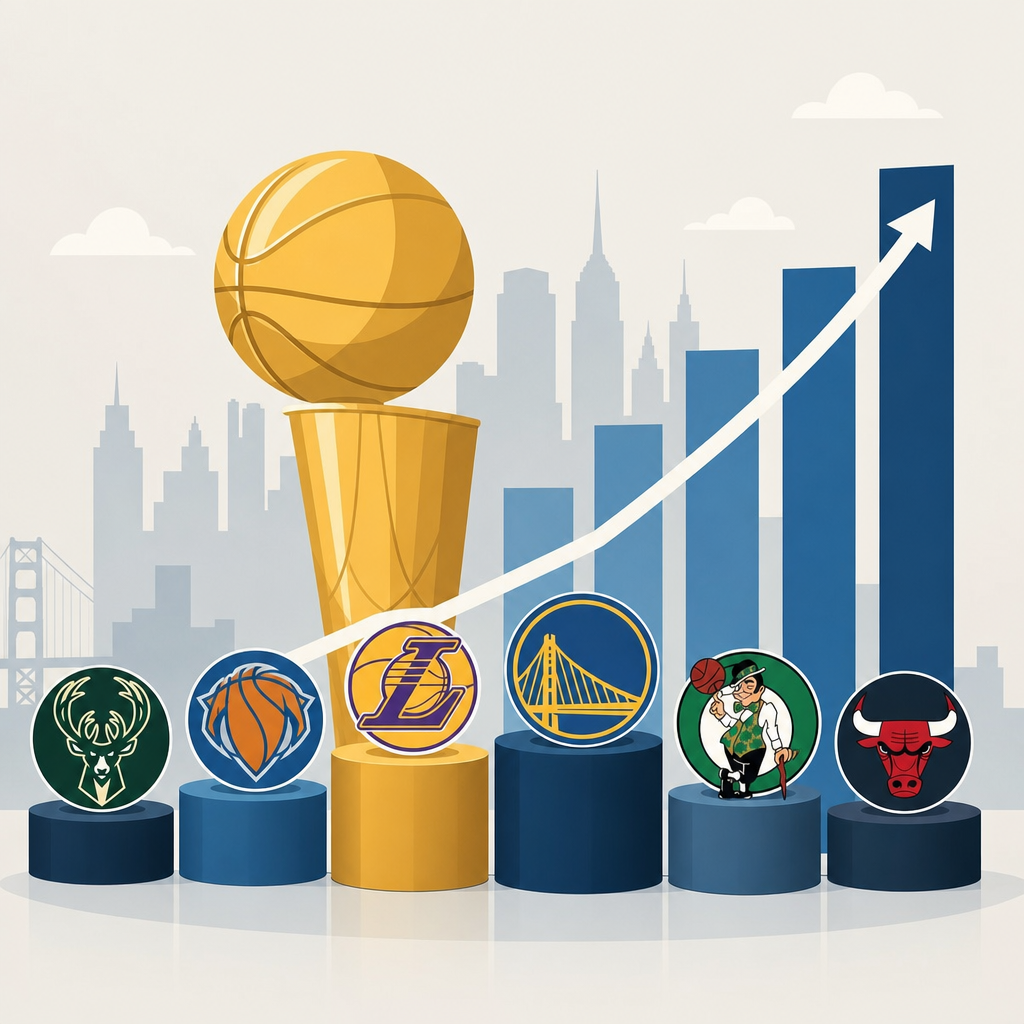
The broad pattern is clear. The Golden State Warriors, New York Knicks, Los Angeles Lakers, and Boston Celtics remain in the top tier because they combine elite brand strength with exceptional revenue infrastructure. Close behind are franchises such as the Los Angeles Clippers, Chicago Bulls, Brooklyn Nets, and Dallas Mavericks, each with different strengths but similar strategic appeal. Smaller-market teams can still create impressive value, yet the largest premiums generally attach to franchises with major media markets, premium venue economics, and international relevance. Understanding that hierarchy helps explain the entire business side of the NBA.
The 2026 valuation leaders and why the top tier stays expensive
The most valuable NBA teams in 2026 are still led by the Golden State Warriors, New York Knicks, and Los Angeles Lakers, with the Boston Celtics firmly in the same premium cluster. Depending on methodology, sale comps, and treatment of arena-related assets, the exact ordering can shift slightly, but the top group does not. These franchises have multiple reinforcing advantages: high local demand, national relevance, global merchandising power, and premium sponsorship inventory. They also benefit from a market truth that applies across sports: buyers pay more for brands that can compound revenue without needing perfect on-court performance every season.
The Warriors are a textbook example. Chase Center changed the organization’s economics by giving the team deep control over suites, clubs, naming rights, concerts, and surrounding district monetization. Their dynasty years built a worldwide following, but the more durable driver is venue ownership and event programming. A modern arena can operate as an all-year commercial platform rather than a basketball-only building. That matters because recurring premium seating revenue and non-NBA event income tend to support stronger valuation multiples than ticket sales alone.
The Knicks remain one of the clearest cases of location creating value. Madison Square Garden, Manhattan positioning, and an enormous corporate base make New York uniquely powerful even when the team’s competitive results fluctuate. The Knicks can command premium prices for courtside inventory, luxury suites, sponsorship integrations, and hospitality packages in a way few franchises can match. The Lakers occupy a similar category from a brand standpoint. Their valuation is supported by decades of championship equity, star association, Southern California media strength, and global fan recognition that extends far beyond local television audiences.
The Celtics deserve special attention because their rise shows how heritage and modern execution combine. Boston’s history is unmatched, but value growth accelerated because the franchise remained consistently relevant, competitive, and commercially sophisticated. Premium demand in a strong sports market, combined with dependable national visibility, creates a valuation profile that buyers trust. In finance terms, trust lowers perceived risk, and lower perceived risk supports higher multiples.
| Tier | Representative Teams | Primary Value Drivers |
|---|---|---|
| Top tier | Warriors, Knicks, Lakers, Celtics | Arena economics, major media markets, global brands, premium sponsorships |
| Upper middle | Clippers, Bulls, Nets, Mavericks | Large markets, ownership investment, strong commercial upside, strategic assets |
| Growth tier | Heat, 76ers, Raptors, Suns, Rockets | Regional strength, competitive visibility, development upside, media positioning |
| Efficient small-market tier | Bucks, Spurs, Thunder, Nuggets, Jazz | Operational discipline, loyal fan bases, modern facilities, rising scarcity value |
What actually drives NBA franchise values in league finance
NBA franchise value in 2026 is driven by six core inputs: revenue scale, revenue diversity, arena control, media economics, market size, and brand durability. Revenue scale matters because larger top lines support higher debt capacity and investment flexibility. Revenue diversity matters because buyers place a premium on businesses that are not dependent on one stream. Teams with strong ticketing, sponsorship, premium seating, concessions participation, local media rights, and event-related income are safer assets than teams leaning too heavily on one category.
Arena control is often the decisive factor. When a franchise controls booking, premium inventory, naming rights, and ancillary development, its economics improve materially. This is why the Clippers’ Intuit Dome changed perceptions of their value trajectory. A purpose-built venue does more than add seats. It gives an owner control over customer data, in-building spending patterns, event scheduling, and branded experiences. Those levers can increase earnings before interest, taxes, depreciation, and amortization, and sophisticated buyers still look closely at EBITDA even in a scarcity-driven market.
Media economics are in transition, but they remain central. National rights are highly valuable because live sports remain one of the few products that audiences watch in real time. Local rights are more complicated due to regional sports network disruption, direct-to-consumer experiments, and changing cable bundles. In my experience, this complexity does not reduce value for the strongest teams as much as people assume. Premium franchises can replace some legacy distribution weakness through stronger direct relationships, broader national exposure, and superior sponsor demand.
Market size helps, but it is not sufficient on its own. Chicago remains extremely valuable because it combines a large market with iconic branding, not simply because it is a large city. Brooklyn benefits from New York adjacency and premium partnerships, but it still needs stable basketball relevance to maximize commercial upside. Dallas has become especially interesting because population growth, corporate relocation, and the broader Texas business climate improve long-term assumptions. Buyers do not purchase only current cash flow; they purchase future optionality.
Brand durability may be the least visible but most powerful factor. The Lakers can have an uneven season and still hold elite value because their brand is embedded in basketball culture worldwide. The same is true, in a different way, for the Bulls, whose Michael Jordan era legacy continues to carry licensing and recognition power decades later. Durable brands hold pricing power. In finance, pricing power is value.
Why media rights, sponsorship, and premium seating matter more than win-loss records
Fans naturally connect team worth to championships, but valuations respond more consistently to monetizable audience than to standings. Winning helps because it drives demand, but the financial effect is strongest when wins translate into premium inventory sales, corporate partnerships, and sustained media relevance. A 50-win season without deep commercial conversion is less valuable than a strong business platform that produces recurring revenue regardless of year-to-year performance.
Media rights are still the anchor. The NBA’s national packages with major distribution partners support leaguewide economics, while local media and streaming arrangements determine how much each team can monetize its regional audience. Teams in major markets generally command stronger ad rates, sponsorship bundles, and branded content opportunities. Even as local distribution models evolve, advertisers still prize NBA audiences because they are younger and more multicultural than many other sports audiences, a critical selling point for consumer brands.
Sponsorship has become more sophisticated than simple logo placement. The highest-value franchises sell integrated partnerships across jersey patches, arena signage, digital content, social media, hospitality, and business-to-business access. A global team such as the Lakers can package local and international activation in one conversation. The Warriors can tie sponsorship to technology, premium experiences, and a modern venue district. Teams with strong analytics and customer relationship management systems can prove return on investment more clearly, which supports higher rates and longer deals.
Premium seating is the quiet giant in NBA finance. Courtside seats, clubs, suites, and member lounges generate outsized revenue compared with general admission inventory. Corporate buyers value access, networking, and convenience, not just sightlines. This is why franchises invest heavily in hospitality design, exclusive entrances, and concierge-level service. In valuation models, premium seating is attractive because it tends to be sticky and margin rich. A sold-out upper bowl is helpful. A deeply subscribed premium base is transformative.
On-court success still matters, but mostly as an accelerant. The Denver Nuggets, Milwaukee Bucks, and Phoenix Suns all benefited from periods of high competitiveness that improved national profile and local demand. Yet their valuations rose most convincingly when competitive success aligned with stronger commercial execution. The lesson is simple: basketball performance opens the door, but business infrastructure determines how much value walks through it.
Which franchises have the most upside after the top group
Beyond the headline leaders, several teams stand out for valuation upside in 2026. The Los Angeles Clippers are the clearest example because Intuit Dome gives them control over a modern arena platform in a premium market. For years, the franchise shared a building and fought perception battles. That changed once the organization could define its own customer experience, sponsorship environment, and event calendar. Even if the Clippers never surpass the Lakers in cultural weight, they do not need to. They only need to maximize the economics of independence.
The Dallas Mavericks also merit attention. Dallas-Fort Worth continues to expand economically, with population growth, corporate migration, and a deep sponsor base supporting long-term demand. The Mavericks have a strong digital brand, a globally recognizable history tied to Dirk Nowitzki and now Luka-era momentum, and a market that increasingly looks like a durable top commercial asset. Similar logic applies to the Houston Rockets, whose large market, international resonance, and corporate infrastructure create higher upside than short-term performance might suggest.
The Philadelphia 76ers remain one of the most strategically interesting franchises because their market is large, intense, and commercially attractive, and arena ambitions can reshape future economics. If a team can secure more favorable venue terms or broader district development rights, valuation can move quickly. The Toronto Raptors are another important case. They represent the entire Canadian market, enjoy cross-border brand reach, and benefit from scarcity in a country with only one NBA team. Currency and tax considerations complicate the picture, but national positioning is a serious advantage.
Smaller-market teams can outperform expectations when they pair smart ownership with modern facilities and sustained relevance. The Bucks gained value from championship visibility and Deer District-style ecosystem benefits. The Thunder have shown how a disciplined organization in a smaller market can still create significant enterprise value through fan loyalty, civic alignment, and competitive credibility. These teams usually will not top the valuation rankings, but they can narrow the gap faster than many casual observers expect.
How to read franchise valuations without misunderstanding the numbers
Valuation rankings are useful, but they are estimates, not transaction receipts. Different firms weigh debt, real estate, minority discounts, and revenue normalization differently. Some include more arena-related economics than others. Some place heavier emphasis on comparable sales, while others lean on revenue multiples or discounted cash flow assumptions. That is why one list may place a team slightly higher or lower than another without either being unreasonable.
It is also important to separate enterprise value from operating health. A franchise can be worth several billion dollars and still face annual profitability pressure if player costs, debt service, and venue expenses rise faster than revenue. The NBA’s collective bargaining system, including salary cap rules, luxury tax thresholds, and revenue sharing, shapes operating margins in ways casual readers often overlook. Valuation reflects what a strategic buyer might pay for the whole asset, not what the team necessarily earns in free cash flow each year.
Minority stake sales provide useful signals, but they are not perfect comparables. A buyer purchasing a small percentage often pays for access, prestige, and long-term appreciation, while accepting limited control rights. Control premiums matter. A majority buyer who can direct strategy, financing, and governance may pay very differently. League approval rules, debt limits, and the growing role of institutional capital all influence pricing. In short, headline valuations are best used as informed directional measures of market perception and earning power, not as precise accounting facts.
For anyone following NBA business, the practical takeaway is to watch the underlying drivers. Monitor arena projects, local media strategy, sponsorship category growth, premium seating sell-through, and ownership capital plans. Those indicators usually explain valuation movement before a new ranking does. If you want to understand league finance, start with the team that controls its building, grows premium demand, protects its brand, and adapts fastest to media change.
That is the central answer to the question of which NBA teams are worth the most in 2026. The top franchises lead because they combine scarce brand equity with superior revenue systems. The Warriors, Knicks, Lakers, and Celtics remain the standard, while teams like the Clippers, Bulls, Mavericks, 76ers, and Raptors show how strategic assets can raise the ceiling quickly. Across the league, valuation is no longer a simple reflection of wins, losses, or market size alone. It is the result of infrastructure, monetization discipline, and long-term control over fan demand.
As the NBA business landscape evolves, this league finance hub should guide how you read every related topic, from media rights and sponsorships to arena development, ownership strategy, and expansion economics. Franchise value sits at the center because it connects all of them. Follow the money behind the building, the broadcast, the premium seat, and the brand, and the rankings make sense. If you are building a deeper understanding of NBA business, use this page as your starting point and continue into each connected league finance subject with valuation in mind.
Frequently Asked Questions
What factors determine NBA franchise values in 2026?
NBA franchise values in 2026 are driven by a mix of revenue power, asset control, and long-term growth potential rather than wins and losses alone. Team performance still matters because successful franchises usually attract more fan engagement, better sponsorship momentum, and stronger ticket demand, but valuation is much more closely tied to business fundamentals. The biggest inputs include local and national media rights, arena economics, premium seating revenue, sponsorship inventory, merchandising strength, and the overall scarcity of owning one of only 30 NBA teams. In practical terms, investors want to know how much cash flow a team can generate today and how durable that cash flow will be over time.
A major differentiator is arena control. Teams that own or operate their buildings, or have favorable long-term arena agreements, usually command higher values because they capture more revenue from suites, club seating, concessions, parking, naming rights, and non-basketball events. Real estate development around the arena can also materially increase franchise value, especially when owners participate in mixed-use districts that include retail, office, residential, and entertainment components. In 2026, this kind of ecosystem matters because top NBA franchises are often valued as platforms for broader sports, media, and real estate businesses.
Brand reach is another critical factor. The most valuable NBA teams tend to have national and global audiences, recognizable identities, and strong digital followings that extend beyond their local markets. That increases sponsorship pricing, international merchandise sales, and the ability to monetize content across platforms. At the high end, valuation reflects not just current earnings but confidence that the franchise can keep converting attention into premium revenue for many years. That is why the teams worth the most are usually those with elite commercial infrastructure, not simply the best record in a given season.
Which NBA teams are typically considered the most valuable in 2026?
In 2026, the teams most commonly discussed at the top of NBA franchise value rankings are the league’s biggest brands and strongest business operators. Franchises such as the Golden State Warriors, New York Knicks, Los Angeles Lakers, and Boston Celtics are often central to the conversation because they combine large-market influence, powerful brand recognition, strong premium ticket demand, and exceptional sponsorship appeal. These organizations benefit from decades of cultural relevance, broad media visibility, and fan bases that reach well beyond their home cities.
The Warriors are often cited because modern arena economics, premium inventory, and deep corporate demand can dramatically lift value. The Knicks remain highly significant because of their New York market position, the pricing power attached to Madison Square Garden, and the commercial upside of one of basketball’s most famous brands. The Lakers consistently rank near the top because few sports properties anywhere in the world carry that level of star-driven prestige, international awareness, and media relevance. The Celtics, meanwhile, benefit from one of the league’s strongest legacy brands and a history that supports durable fan loyalty and sponsorship demand.
That said, exact rankings can shift depending on methodology. Some analysts emphasize revenue multiples, while others look more closely at operating income, debt structure, market conditions, and transaction comps from recent sports sales. So when people ask which teams are worth the most, the answer usually includes the same cluster of elite franchises, but the order may vary slightly based on whether the focus is current earnings, strategic assets, future upside, or sale-market scarcity.
Why do market size and media rights matter so much in NBA valuations?
Market size and media rights matter because they directly influence how much revenue a team can generate from fans, advertisers, and corporate partners. A larger market usually means a bigger population base, more companies capable of buying sponsorships and suites, and stronger visibility for local broadcasts and premium experiences. Even in an era where teams can build global audiences online, local economics still shape ticket pricing, partnership demand, and media leverage. That is why franchises in major cities often start with structural advantages in valuation conversations.
Media rights are especially important in 2026 because live sports remain one of the most valuable forms of programming in the media ecosystem. National NBA rights deals help every team, but local and regional media arrangements can further separate top franchises from the rest. Teams with strong viewership, attractive demographics, and long-term relevance are better positioned to monetize game broadcasts, shoulder programming, digital content, and sponsor integrations. Even as the media landscape evolves with streaming, direct-to-consumer offerings, and new distribution models, the core principle remains the same: teams that can consistently command audience attention have more ways to create high-margin revenue.
There is also a valuation effect beyond immediate income. Strong media positioning signals long-term resilience. Investors place a premium on franchises that can adapt as content consumption changes because those teams are more likely to preserve pricing power and commercial relevance. In other words, media rights are not just about current checks from broadcasters or platforms. They represent future monetization potential, brand visibility, and a team’s place inside a rapidly evolving sports entertainment economy.
How does arena ownership or control affect what an NBA team is worth?
Arena ownership or operational control can significantly increase an NBA franchise’s value because it gives the team access to revenue streams that extend far beyond the 41 regular-season home games on the schedule. When a franchise controls its venue, it can benefit more directly from luxury suites, club seating, concessions, parking, naming rights, in-building advertising, and premium hospitality. It may also share in profits from concerts, college events, and other non-NBA programming. That broader revenue base can make the business more stable and more attractive to investors.
Control also creates flexibility. A team that can redesign seating inventory, improve premium experiences, update technology, or build adjacent entertainment offerings is in a better position to grow revenue over time. This matters a great deal in 2026 because the highest-valued sports franchises are often judged by their ability to operate as year-round live entertainment businesses. A modern arena is not just a place to host games. It is a monetization engine that supports sponsorship activations, fan data collection, exclusive events, and high-end customer experiences that are difficult to replicate elsewhere.
In some cases, the arena is only part of the story. Surrounding real estate can be just as important. If ownership has a stake in nearby retail, hotels, apartments, offices, or entertainment districts, the franchise becomes connected to a larger portfolio of recurring economic activity. That integrated model can boost valuations because buyers are not simply acquiring a basketball team. They are acquiring access to a broader urban asset with multiple revenue channels and long-term development potential.
Why are NBA franchise values rising even when some teams do not win championships?
NBA franchise values can rise without championships because valuation reflects the strength of the business more than the trophy count. A team does not need to win the title every year to increase ticket prices, secure major sponsors, grow its digital audience, or benefit from rising league-wide media deals. In 2026, investors view NBA ownership as a scarce, premium asset class with both financial and strategic appeal. That scarcity alone supports value, especially when there are only 30 franchises and very few become available for sale.
League economics also lift all boats to some extent. Shared national revenue, broader international interest in basketball, and continued demand for live sports content create a favorable backdrop for franchise appreciation. Even teams that are rebuilding on the court can gain value if they are in attractive markets, have strong arena situations, maintain loyal fan bases, and show upside in sponsorship, media, and premium seating. Buyers are often thinking in decades, not seasons. They are evaluating how the franchise fits into larger portfolios, family offices, institutional sports strategies, or cross-platform media and entertainment investments.
There is also an emotional and prestige component that should not be ignored. Owning an NBA team offers influence, visibility, and access that go well beyond annual profit. That tends to support robust bidding whenever a franchise is available. As a result, rising values in 2026 are not simply a reflection of recent win-loss records. They are the product of scarcity, brand equity, league momentum, commercial infrastructure, and confidence that top sports properties will remain highly desirable long-term assets.