
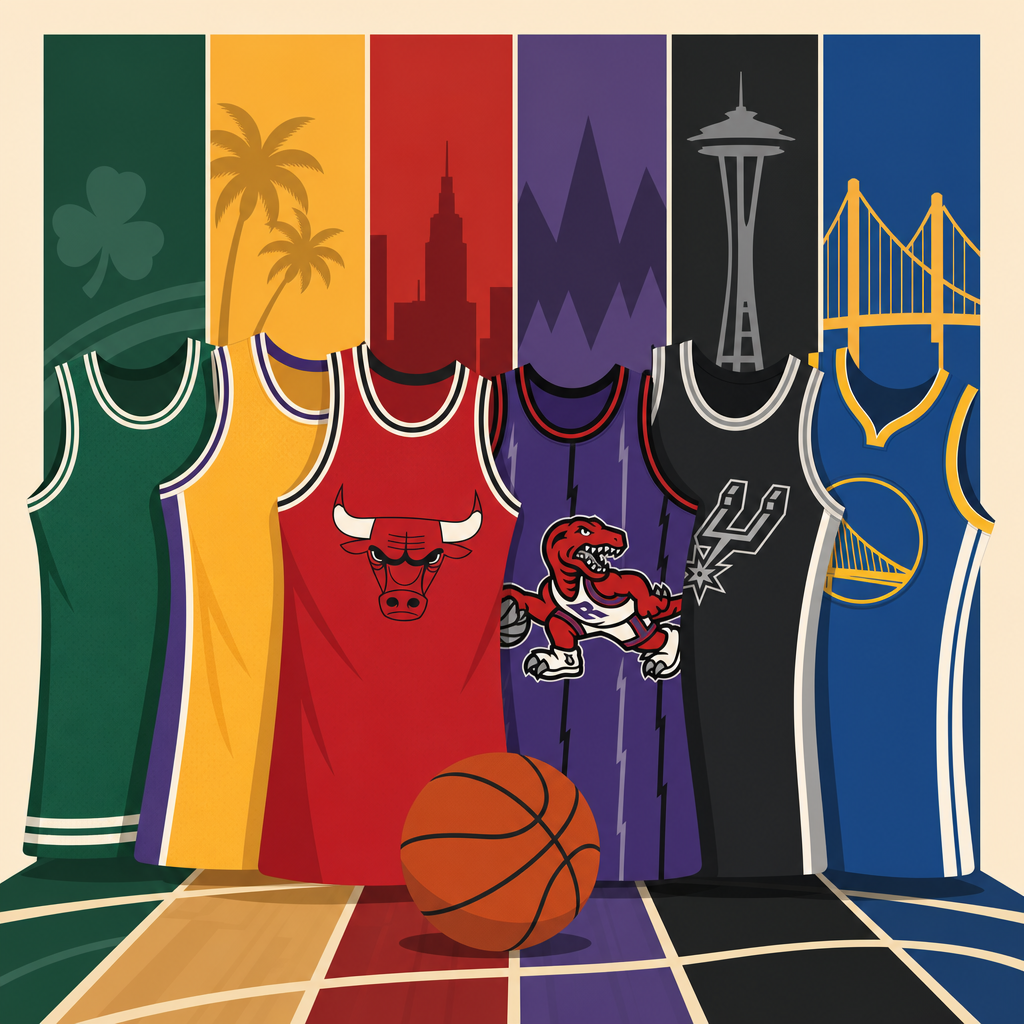
The most iconic NBA jerseys of all time are more than uniforms; they are visual shorthand for dynasties, rule changes, television eras, sneaker revolutions, and the way basketball style moved from arenas into everyday culture. In NBA culture, “gear and style” covers jerseys, shorts, warmups, sneakers, lettering, color palettes, branding, and the broader fashion language attached to teams and stars. A great jersey does three jobs at once: it identifies a franchise instantly, flatters movement on the court, and captures the spirit of its moment. When those elements align, a jersey stops being seasonal merchandise and becomes a permanent cultural artifact.
I have worked on basketball content and apparel analysis long enough to see the same patterns repeat: the jerseys people remember are rarely just the prettiest ones. They usually mark a turning point. The Celtics’ clean home whites signaled continuity and winning discipline. The Showtime Lakers’ gold uniforms mirrored a faster, brighter league built for network television. Michael Jordan’s Bulls red became the defining color of 1990s basketball dominance. Allen Iverson’s black Sixers look connected the league to hip-hop-inflected street style. The Miami Heat’s Vice uniforms showed how modern alternate design could become a global fashion product rather than a niche collector piece.
This matters because NBA jerseys are one of the clearest entry points into the history of the sport. Fans often remember eras visually before they recall records, rotations, or front-office decisions. A silhouette, trim pattern, or script wordmark can tell you whether the league was emphasizing regional identity, national broadcast appeal, retro nostalgia, or youth-driven lifestyle branding. Jerseys also shape commerce. Mitchell & Ness built an entire business on authenticity and nostalgia. Nike’s city editions turned annual drops into conversation engines. Classic looks still anchor arena retail, resale markets, and fashion collaborations.
As a hub for NBA gear and style, this guide explains which jerseys defined each era, why they worked, and what design lessons they still teach. It also points naturally to deeper topics within this subcategory: throwback jersey history, the evolution of shorts and fit, the rise of alternates and city editions, the business of licensed apparel, and how player image affects what fans wear. If you want a single foundation piece on basketball uniforms as cultural objects, start here. The best NBA jerseys are not memorable by accident. They are precise combinations of timing, identity, and design execution.
What makes an NBA jersey iconic
An iconic NBA jersey has four consistent traits: instant recognition, era fit, championship association, and strong reproduction value. Instant recognition means the design reads from a distance. Think of the Bulls’ red with black-and-white trim, the Lakers’ gold with purple lettering, or the Knicks’ royal-and-orange road set. Era fit means the jersey reflects what the league looked and felt like at that moment. In the 1980s, brighter television-friendly colors mattered. In the late 1990s and early 2000s, aggressive logos, black alternates, and wider cuts matched the aesthetics of the time.
Championship association matters because winning fixes an image in public memory. The 1986 Celtics, the 1987 Lakers, the 1996 Bulls, and the 2013 Heat are remembered partly through the uniforms seen during title runs and Finals broadcasts. Reproduction value matters because a classic has to survive outside its original context. If a jersey still looks strong on a rack, in a tunnel-fit photo, or on the street twenty years later, it has crossed from sportswear into design history. That is why some technically solid team uniforms are respected but not iconic; they never made the leap into broader culture.
Construction and typography also play a bigger role than casual fans often realize. Tackle twill lettering, balanced striping, proportionate number placement, and durable mesh all contribute to how a jersey ages. Adidas-era sleeved experiments failed partly because they disrupted basketball’s visual grammar and player comfort. By contrast, traditional arm openings, clear chest marks, and restrained trim persist because they support movement and preserve legibility. The best gear and style analysis starts with that simple truth: iconic jerseys succeed because they look right in motion, in photos, and in memory.
The classic foundation: Celtics, Lakers, Knicks, and Bulls
The Boston Celtics established the template for timeless restraint. Their home whites with green “Celtics” script and clean block numerals have changed remarkably little because they do not need to. Reducing unnecessary elements created a uniform tied to winning rather than trend. Eleven titles in thirteen seasons under Bill Russell made that look synonymous with basketball excellence, and later Larry Bird teams reinforced it for a new television generation. In apparel terms, the Celtics proved that consistency can be a brand strategy. Minimalism works when a franchise has history and discipline behind it.
The Los Angeles Lakers built the opposite kind of classic: bright, glamorous, and instantly suited to a star-driven entertainment market. The gold uniforms associated with Magic Johnson’s Showtime era were optimized for visibility and spectacle. Purple trim and flowing script gave them polish, while the color itself separated the team from every other major American sports brand. Even small shifts in shade have sparked debate among fans because the identity is so closely guarded. The Lakers jersey is iconic not simply because of titles, but because it fused Hollywood, pace, and personality into one wearable symbol.
The New York Knicks road blues deserve a place in any serious discussion because they embody urban basketball tradition. Royal blue, orange trim, and arched “New York” lettering created a civic identity that felt direct and durable. The look connected Madison Square Garden to playground culture long before brands began using “city” language for every alternate. During the Willis Reed era and later the Patrick Ewing 1990s teams, that uniform projected toughness without gimmickry. It remains one of the easiest throwbacks to wear casually because the palette is balanced and the typography is strong.
No jersey, however, became more universally recognizable than the Chicago Bulls red of the Jordan years. Designed before the dynasty but immortalized by six championships from 1991 to 1998, it married simplicity with aggression. Red made the team pop on television, while black-and-white trim sharpened every line. Because Jordan was the global face of basketball, the jersey traveled farther than any of its predecessors. It appeared in highlight tapes, commercials, schoolyards, music videos, and international retail. When people picture 1990s NBA style, they often picture that Bulls red first.
The television boom and the rise of identity-driven design
As the NBA grew on cable and international broadcasts in the 1980s and 1990s, uniforms had to communicate faster and more distinctly. Teams recognized that visual identity could travel ahead of local familiarity. The Detroit Pistons’ “Bad Boys” look in blue and red became memorable because the team’s physical style gave the clean design attitude. The Portland Trail Blazers’ diagonal sash stood out because it broke from conventional chest lettering while remaining readable. The Houston Rockets’ championship-era pinstripes captured a mid-1990s appetite for motion and futurism, even if the design now divides opinion.
One of the smartest examples was the Utah Jazz mountain set introduced in the late 1990s. Purple, teal, and copper formed a palette that reflected western landscape branding more than traditional basketball convention. On paper it was busy; in practice it felt distinctive in a league moving toward bolder experimentation. The jersey became more beloved over time because nostalgia softened initial skepticism and because modern fans appreciate its commitment to place. That is a common pattern in NBA apparel history: uniforms criticized at launch can become iconic once they represent a complete era led by specific stars.
The Orlando Magic pinstripes provide another case study. Shaquille O’Neal and Penny Hardaway wore a look that was clean enough to be classic but fresh enough to feel unmistakably 1990s. Black, white, and blue created contrast, and the star motif in the wordmark gave the expansion franchise a confident identity. Because the Magic reached the Finals in 1995 and became central to video game and trading card culture, the jersey gained staying power. Expansion teams often struggle to create instant heritage. Orlando did it by pairing a coherent uniform system with charismatic players at the right media moment.
| Jersey | Era | Why it defined the time |
|---|---|---|
| Boston Celtics home white | 1960s and 1980s | Minimal tradition linked to dynasty and continuity |
| Los Angeles Lakers gold | 1980s | Bright television-ready glamour matched star-driven basketball |
| Chicago Bulls red | 1990s | Globalized through Jordan, championships, and mass merchandising |
| Orlando Magic pinstripes | 1990s | Expansion identity fused with trading-card and highlight culture |
| Philadelphia 76ers black alternate | 2000s | Streetwear influence and tougher monochrome styling |
| Miami Heat Vice | 2010s | Alternate design became mainstream fashion and collector item |
The 2000s shift: black alternates, baggier fits, and streetwear influence
The early 2000s changed NBA gear and style dramatically. Jerseys became longer and looser, shorts widened, and black alternate uniforms spread across the league because they looked sharper in stores and fit the era’s fashion preferences. The Philadelphia 76ers’ black Iverson-era jersey is one of the clearest symbols of that shift. It carried edge, matched the player’s image, and felt aligned with the aesthetics of hip-hop, sneaker culture, and urban fashion retail. It was not merely a team uniform; it was an attitude piece that fans wore with fitted caps, denim, and signature shoes.
The Sacramento Kings also benefited from the black-uniform wave. Their early-2000s alternate became attached to the Chris Webber, Mike Bibby, and Peja Stojakovic teams that played beautiful, inventive offense. Purple and black gave the franchise a regal but modern identity, and the look stood apart from brighter 1990s palettes. The San Antonio Spurs, meanwhile, demonstrated the strength of monochrome restraint. Silver and black felt industrial, disciplined, and appropriately unsentimental for a franchise built on precision. Tim Duncan did not need loud design to create memorable imagery; repeated June success did the work.
Not every 2000s trend aged equally well. Some oversized cuts now look excessive, and several heavily branded alternates feel trapped in their time. But that decade’s influence on modern basketball fashion is undeniable. It normalized the idea that a jersey could function as streetwear first and team identifier second. It also accelerated player-brand alignment. Iverson, Vince Carter, Tracy McGrady, and LeBron James all helped define how fans combined on-court apparel with off-court identity. Any comprehensive NBA Culture hub on gear and style has to treat that period as a turning point rather than a detour.
The modern era: alternates, city storytelling, and fashion crossover
In the 2010s and 2020s, the most iconic NBA jerseys were no longer limited to primary home and road sets. Alternate programs became central to how franchises told visual stories. No example is stronger than the Miami Heat Vice series. The initial black base with neon pink and blue accents was a precise response to place, nightlife imagery, and social-media-era merchandise demand. It worked because it did not feel random. The colors, typography, and court presentation formed a complete environment. Sales surged, celebrity wear followed, and the jersey became one of the few modern alternates with true long-term status.
The Toronto Raptors’ purple dinosaur jersey offers a different lesson. Initially rooted in 1990s expansion exuberance, it became even more powerful in the modern era through nostalgia and reissue culture. Vince Carter’s legacy, Drake-associated branding energy around the franchise, and renewed appetite for bold throwbacks elevated it from quirky to canonical. The Phoenix Suns’ “The Valley” uniform similarly showed that contemporary alternates succeed when they use local meaning and sharp graphic hierarchy. Fans respond when a jersey tells a coherent story, not when it piles on references that only make sense in a press release.
Modern jersey design also operates within a faster commercial cycle. Nike’s annual city editions create excitement, but they can dilute identity if a team changes direction too often. The strongest franchises maintain a stable core look while using alternates selectively. The Golden State Warriors understand this balance well. Their primary sets anchor the brand, while special editions reference Oakland roots, San Francisco bridges, or classic We Believe aesthetics without erasing continuity. That is the main modern challenge: creating novelty without sacrificing recognition. The iconic jerseys of this era are the ones that solve that problem cleanly.
How fans can judge a jersey and build a smarter collection
If you are evaluating NBA jerseys as a fan, collector, or style-conscious buyer, start with context before hype. Ask which player and season made the jersey meaningful. A Bulls red Jordan jersey from the second three-peat carries different cultural weight than a random alternate from a non-playoff year. Next, study construction. Authentic and swingman versions differ in material, cut, and lettering application. Mitchell & Ness is strong for legacy-era reproductions, while Nike’s current swingman line is practical for daily wear. Adidas Rev30 and older Champion replicas have their own collector followings because they represent specific manufacturing eras.
Fit matters as much as design. Vintage jerseys often run boxier, and early-2000s pieces can be dramatically larger than current sizing. If the goal is fashion wear rather than framing, balanced proportions usually beat strict era accuracy. Condition, tagging, and provenance matter in resale markets, especially for player-specific editions and limited runs. Grailed, eBay authentication, arena stores, and official team shops are safer paths than anonymous marketplaces. For a rounded NBA gear and style collection, build around four categories: one all-time classic, one era-specific statement piece, one hometown or personal-favorite jersey, and one modern alternate with genuine design merit.
The broader takeaway is simple. The most iconic NBA jerseys endure because they connect team identity, player mythology, and design clarity in a way that survives changes in fashion. They help fans read league history at a glance. They also make collecting and wearing basketball apparel more meaningful, because each choice carries a story. If you want to explore NBA Culture through gear and style, begin with the classics in this guide, then follow the threads into throwbacks, sneaker pairings, warmup history, and city editions. The jersey is never just the jersey. It is the era, stitched into fabric.
Frequently Asked Questions
What makes an NBA jersey truly iconic rather than just popular for a few seasons?
An iconic NBA jersey does more than look good in photos or sell well at retail. It becomes a lasting symbol of a team, a player, and a specific moment in basketball history. The most memorable designs usually combine several elements at once: a distinctive color palette, lettering that is easy to recognize from across the room, a silhouette that complements the way players move, and strong association with winning, innovation, or cultural relevance. When fans think of the Chicago Bulls red, the Los Angeles Lakers gold, the Boston Celtics green, or the black-and-red era of the Portland Trail Blazers, they are not just remembering fabric. They are recalling championships, TV broadcasts, signature sneakers, playoff battles, and the personalities who made those uniforms feel larger than the game itself.
Another reason certain jerseys become iconic is repetition at the highest level. A uniform worn deep into the postseason year after year enters the visual memory of the sport. Michael Jordan’s Bulls, Magic Johnson’s Lakers, Larry Bird’s Celtics, and the Showtime and dynasty eras all benefited from massive visibility in an expanding television age. Those jerseys became shorthand for excellence because people repeatedly saw them under the brightest lights. Over time, a jersey stops being just a team identifier and starts acting like a historical marker for an era.
Finally, iconic status often depends on crossover appeal beyond basketball. Some NBA jerseys became streetwear staples, influenced music videos, sneaker culture, and everyday fashion. They worked both in motion on the court and as lifestyle pieces off it. That ability to live in multiple spaces—sports, style, nostalgia, and pop culture—is what separates a truly iconic jersey from a design that was merely trendy for a short period.
Which NBA teams are most often associated with the most iconic jerseys of all time?
A handful of franchises dominate any serious discussion of iconic NBA jerseys because their designs remained memorable across multiple generations. The Chicago Bulls are at the top of that list. Their red road uniforms with black-and-white trim, bold block lettering, and clean numbering became inseparable from the Michael Jordan era. Those jerseys represented global basketball expansion in the 1990s and are still among the most recognized sports uniforms in the world.
The Los Angeles Lakers also belong in that top tier, especially for the Showtime-era gold uniforms and the purple road sets. Their visual identity matched the glamour of Los Angeles and the fast-break energy of the team. The Boston Celtics are equally important, though in a very different way. Their minimalist green-and-white design proved that simplicity can become timeless when it is tied to tradition, championships, and continuity. The Celtics uniform did not need dramatic experimentation to be iconic; its strength came from consistency and legacy.
Beyond those three, several other teams stand out for specific looks that defined particular eras. The New York Knicks’ white and blue sets carried a classic big-market feel and looked especially strong under Madison Square Garden lights. The Detroit Pistons’ “Bad Boys” look, the Phoenix Suns’ 1990s sunburst jerseys, the Utah Jazz mountain gradient uniforms, the Orlando Magic pinstripes, the Charlotte Hornets’ teal identity, and the Houston Rockets’ ketchup-and-mustard era all have strong claims. What links all of these teams is not simply strong graphic design. It is the way the jersey matched the team’s personality, stars, broadcast era, and place in wider sports culture.
How did NBA jersey design change from one era to the next?
NBA jersey design evolved alongside the league itself. In earlier decades, uniforms were generally more restrained, with straightforward fonts, limited striping, and traditional team color usage. The focus was functionality and clear team identification rather than brand storytelling. As television coverage improved and the league expanded its national profile, jerseys had to read better on screen. Cleaner typography, stronger contrast, and more distinctive color blocking became increasingly important.
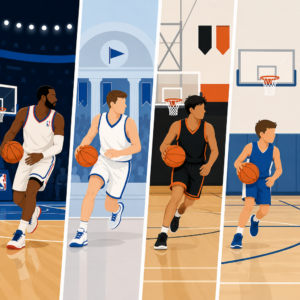
By the 1980s and especially the 1990s, jersey design became far more expressive. This was the period when franchises began embracing bolder graphics, oversized logos, unusual side panels, gradients, pinstripes, and nontraditional color combinations. The visual language of the NBA became more experimental because the league was becoming more entertainment-driven, more fashion-aware, and more global. Teams were no longer just representing local identity; they were competing for attention in a fast-growing media environment. That shift produced some of the most unforgettable jerseys ever made, from the Suns’ sunburst to the Raptors’ dinosaur era and the Hornets’ teal-heavy branding.
In the 2000s and beyond, the design approach shifted again. Some teams moved toward sleeker, cleaner looks, while others leaned into throwbacks and alternate uniforms to tap into nostalgia. Advances in fabric technology also changed how jerseys fit and moved, making them lighter and more performance-oriented. More recently, the NBA has embraced frequent alternate editions and city-based concepts, reflecting a modern branding strategy where uniforms are part of an ongoing content cycle. Even so, the most respected designs still follow the same core rule: they must instantly communicate who the team is and why that identity matters.
Why do certain NBA jerseys become fashion staples outside of basketball?
Some NBA jerseys make the jump from sports apparel to everyday fashion because they are visually strong enough to stand on their own, even for people who may not closely follow the league. Color plays a huge role here. Teal Hornets jerseys, black Bulls jerseys, purple Lakers jerseys, and pinstriped Magic uniforms are instantly eye-catching. The best of these designs are bold without being cluttered, recognizable without requiring explanation, and versatile enough to fit into streetwear, vintage fashion, and sneaker-focused styling.
Celebrity and music culture also helped turn NBA jerseys into mainstream fashion pieces. In the 1990s and 2000s especially, rappers, actors, and style tastemakers wore basketball gear as part of a larger cultural shift in which sportswear became central to everyday style. An NBA jersey could signal hometown pride, admiration for a player, alignment with a certain era, or simply good taste in design. Because basketball has always had a close relationship with sneakers and self-expression, jerseys naturally became part of a larger style system that included shoes, hats, warmups, and accessories.
Nostalgia is another major factor. Fans often wear older jerseys not just because they like the look, but because the jersey represents a specific memory: a playoff run, a favorite player, a first introduction to the sport, or a beloved period in league history. That emotional connection makes the garment feel personal. When a jersey combines strong design, cultural visibility, and emotional resonance, it stops being just fan merchandise and becomes a lasting fashion object.
Are the most iconic NBA jerseys always the best-designed ones?
Not necessarily. There is significant overlap between iconic jerseys and great design, but the two are not exactly the same thing. A jersey can be beautifully designed from a technical standpoint—balanced colors, smart typography, clean lines, and excellent visual hierarchy—yet never become iconic if it was worn during an unremarkable era or lacked cultural visibility. On the other hand, a jersey with flaws or divisive design choices can still become iconic if it is attached to unforgettable players, major moments, or a distinct shift in basketball culture.
That is why discussions about the most iconic NBA jerseys often blend aesthetics with context. The jersey’s legacy depends on who wore it, what happened in it, how often it was seen, and whether it captured the mood of its time. The Allen Iverson-era 76ers black uniforms, the Vince Carter Raptors dinosaur jerseys, and the early-1990s Suns sunburst sets all benefited from strong storytelling value in addition to design appeal. Fans remember the highlights, the attitude, and the era just as much as the actual cut and graphics.
In practical terms, the most iconic jerseys usually succeed because they hit both standards. They are memorable to look at and meaningful to remember. The best designs are not just attractive in isolation; they become part of the league’s visual history. That is what gives them staying power. When people talk about the jerseys that defined each era, they are really talking about the uniforms that made basketball’s evolution visible—through branding, movement, personality, and the way the game looked and felt to the world.