
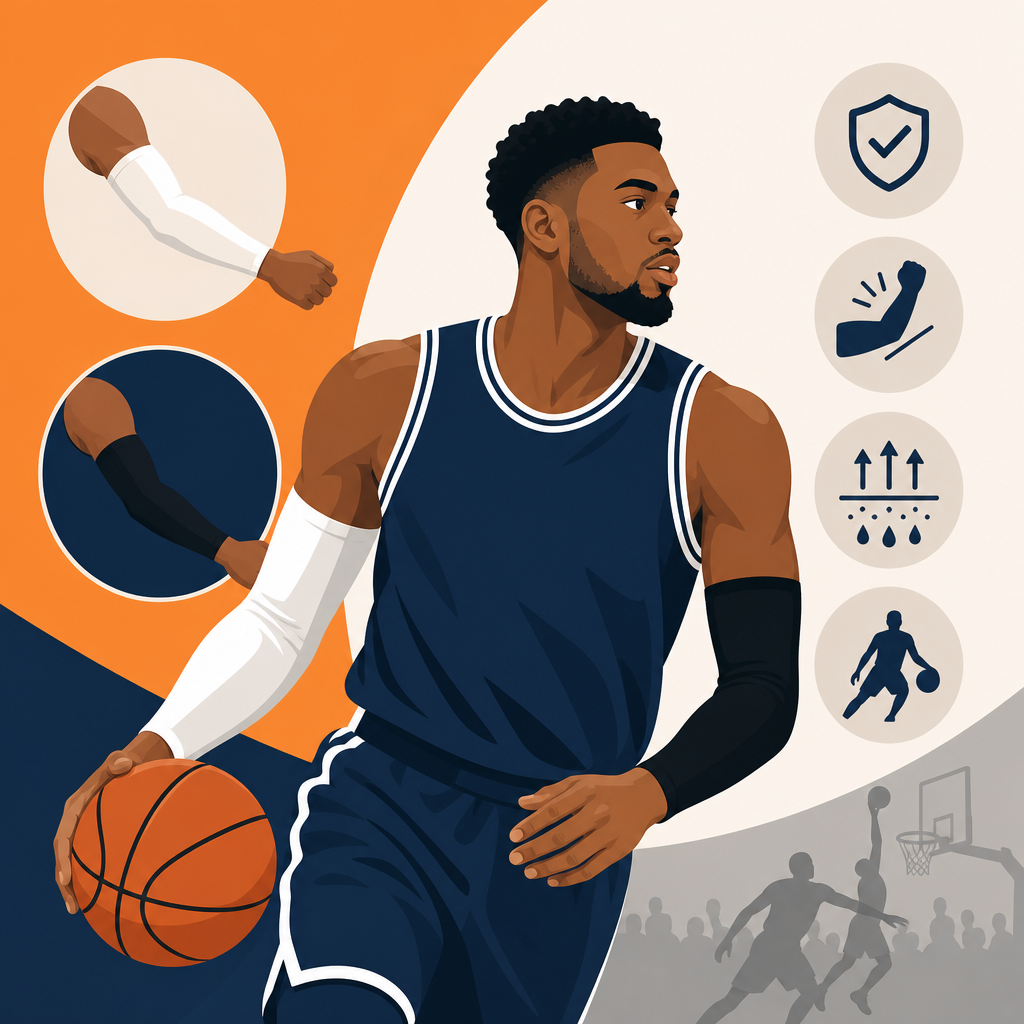
Basketball sleeves are one of the most visible pieces of modern NBA gear, but their purpose is often misunderstood. Fans see an arm sleeve, leg sleeve, or full shooting sleeve and assume it is just fashion, superstition, or a copycat trend started by stars. In practice, sleeves sit at the intersection of performance, injury management, recovery, branding, and league culture. After working on basketball content and interviewing coaches, athletic trainers, and equipment staff, I have found that the real answer to why basketball players wear sleeves is not one reason but a stack of practical decisions shaped by the body, the game, and the image of the sport. This hub explains what sleeves are, why players use them, which claims are supported by evidence, where myths persist, and how the NBA turned a simple compression garment into a recognizable part of gear and style.
In basketball, a sleeve usually means a tight compression garment worn on the arm, calf, thigh, knee, or entire leg. Arm sleeves are the most iconic because television makes them easy to notice, especially when high-usage guards and scorers wear them on the shooting or non-shooting arm. Leg sleeves, calf sleeves, and padded shooting sleeves are also common across the NBA, WNBA, college basketball, and youth levels. The category overlaps with compression wear, braces, kinesiology tape, and protective padding, but sleeves are distinct because they combine light support, skin coverage, and streamlined fit without the stiffness of a brace. That distinction matters when evaluating their benefits. A sleeve will not stabilize a joint the way a medical brace can, but it may help with warmth, comfort, abrasion protection, and an athlete’s sense of readiness.
Understanding sleeves matters because basketball is a repetitive, high-impact sport built on sprinting, jumping, cutting, absorbing contact, and shooting under fatigue. Small differences in comfort and confidence can affect routine, and routine matters in elite performance. Sleeves also matter culturally. They became part of NBA identity during the 2000s and 2010s, helped by stars such as Allen Iverson, Kobe Bryant, LeBron James, Dwyane Wade, Russell Westbrook, and many others who turned game-day gear into a personal signature. Today, sleeves signal far more than style. They can hint at an elbow issue, a recovery plan, a preference for compression, a desire to keep muscles warm between stoppages, or simply an athlete locking into a familiar ritual. For anyone following NBA culture, gear and style, sleeves are one of the clearest examples of how function and image merge on the court.
The Performance Reasons Players Wear Sleeves
The most practical reason basketball players wear sleeves is compression. Compression garments apply gentle pressure to soft tissue, which can improve the feeling of support and may assist circulation during activity and recovery. In basketball terms, players and trainers often describe sleeves as helping the arm or leg feel “awake,” “warm,” or “held together” over a long game or dense travel schedule. That language is not magic; it reflects how athletes perceive body awareness and readiness. A shooter coming off an elbow flare-up may prefer an arm sleeve because it keeps the area warm and reduces the uncomfortable sensation that appears when the joint cools during timeouts or halftime.
Warmth is especially important in arenas, where cool air, sweat evaporation, and long stoppages can make muscles tighten. This is why players commonly put on sleeves during warmups even if they remove them before tip-off, and why others keep them on all game. In my experience covering team routines, equipment managers consistently emphasize predictability: players want the same feel every night. A calf sleeve or arm sleeve can become part of that controlled environment. Some athletes believe this helps maintain shooting rhythm because they dislike the sensation of a “cold” elbow or forearm. The science on direct performance gains is mixed, but the practical effect of comfort and consistency should not be dismissed in a sport based on repeatable mechanics.
Sleeves can also reduce friction burns and minor scratches. Basketball includes dives on hardwood, body contact in the lane, and repeated brushing against defenders. An arm sleeve provides a thin barrier that can protect skin from floor burns and small abrasions. Padded sleeves add another layer of benefit for players who attack the rim, absorb forearm contact, or hit the floor frequently. Guards and wings often prefer minimal padding because it offers protection without the bulk of a full brace. Big men may use leg sleeves or knee padding for similar reasons, especially when recovering from knocks that do not require rigid support.
Another real-world factor is sweat management. Some sleeves help absorb or move moisture, which can make the ball-handling arm feel less slippery and reduce the need to wipe down as often. This is not a dramatic edge, but across dozens of possessions, details matter. Compression fabrics from brands such as Nike, Under Armour, adidas, and McDavid are engineered for stretch, moisture control, and close fit. Players test versions in practice, then settle on what feels least distracting. In elite basketball, “least distracting” is often the winning criterion for any piece of gear.
Injury Management, Recovery, and What Sleeves Cannot Do
A major reason sleeves appear in the NBA is injury management. Players use them when dealing with tendon irritation, swelling, muscle tightness, bruising, or return-to-play discomfort. An arm sleeve is common with elbow tendinitis, forearm soreness, or generalized irritation from overuse. A leg sleeve may be worn after a quad contusion, calf strain history, or knee soreness, particularly when the player wants compression around the area without the restriction of a hinged brace. Trainers often approve sleeves because they are easy to wear, easy to remove, and compatible with normal movement patterns.
That said, sleeves are not treatment by themselves. They do not heal tendons, fix ligament instability, or replace strength work, load management, manual therapy, or medical evaluation. This is where many myths begin. Fans may see a player return wearing a sleeve and assume the sleeve solved the problem. Usually, it is part of a broader plan that includes rehab exercises, minutes monitoring, anti-inflammatory strategies, tissue work, and technical adjustments. The sleeve is visible, but the real work happened in the training room, weight room, and recovery process.
Research on compression wear suggests modest potential benefits for perceived soreness and post-exercise recovery, but results vary based on sport, garment pressure, and individual response. The strongest claims should be made carefully. A sleeve can help an athlete feel better supported and possibly reduce next-day heaviness, yet it is not a performance cheat code. Good sports medicine staff explain this clearly. If a player says the sleeve helps, that statement usually means it improves comfort, confidence, or symptom management enough to stay within a normal routine. In professional basketball, those are meaningful gains, even if they do not show up cleanly in a stat line.
| Sleeve Type | Common Reason for Use | What It Can Help With | What It Cannot Replace |
|---|---|---|---|
| Arm sleeve | Elbow warmth, compression, abrasion protection | Comfort, skin protection, perceived support | Rehab for tendinitis or structural injury care |
| Padded arm sleeve | Contact protection for drivers and defenders | Minor impact cushioning and floor-burn reduction | Serious joint stabilization |
| Calf sleeve | Compression, muscle warmth, recovery preference | Reduced heaviness, routine consistency | Treatment for muscle tears or circulation disorders |
| Leg sleeve | Quad or knee-area comfort and skin coverage | Warmth, compression, confidence during movement | Support equal to a medical knee brace |
The Myths: Shooting Aid, Pure Fashion, and Instant Recovery
The biggest myth is that sleeves automatically improve shooting accuracy. There is no universal evidence that an arm sleeve makes a player shoot better by itself. Players may shoot better while wearing one because it keeps the arm warm, supports a preferred routine, or reduces awareness of minor soreness. That is different from saying the fabric creates better mechanics. Shooting depends on footwork, alignment, release consistency, timing, and repetition. A sleeve can support conditions around those factors, but it does not replace them.
The second myth is that sleeves are only fashion. Style is absolutely part of the story, especially in the NBA, where accessories become identity markers. Allen Iverson made the arm sleeve iconic, and that image still shapes fan perception. But reducing sleeves to aesthetics misses how often they begin as functional gear. Many players start wearing one because of pain, swelling, or trainer recommendation, then keep it because it feels right and becomes part of their look. In other words, the style often grows out of function, not the other way around.
A third myth is that sleeves speed recovery in a dramatic, guaranteed way. Compression can support recovery strategies, but recovery remains multi-factorial. Sleep, nutrition, hydration, travel management, soft-tissue work, cold or heat protocols, and training load matter more. An athlete who wears sleeves but ignores those basics will not gain much. At the NBA level, sleeves are one detail in a tightly managed system. Their value is incremental, not miraculous.
NBA Trends, Player Identity, and the Business of Gear
Sleeves became embedded in NBA culture because the league sits where performance equipment and personal branding meet. In the early 2000s, televised close-ups, signature sneakers, and rising sportswear marketing amplified every visible accessory. Iverson’s sleeve was more than gear; it became an extension of persona. Kobe Bryant used sleeves and compression strategically during different phases of his career, particularly while managing wear. LeBron James normalized performance-minded accessories for a generation of players who saw no conflict between optimization and style. By the 2010s, sleeves were standard visual language across the league.
This shift also followed broader changes in sports science and apparel technology. Compression wear moved from niche to mainstream as brands invested in lighter fabrics, better elasticity, anti-microbial treatments, and athlete-specific fits. Team equipment rooms now stock multiple cuts, sizes, and pad configurations. Some players prefer a sleeve only on back-to-backs. Others wear one exclusively in games, not practice. A few match colorways precisely to uniforms or shoes because visual symmetry matters to them. In the NBA, comfort, superstition, and brand presentation often overlap.
League rules and uniform policies shape these choices too. The NBA has had periods of stricter enforcement on accessory colors and branded elements, which pushed sleeves into more standardized visual categories. Even within those constraints, players use gear to express identity. One arm sleeve can make a silhouette instantly recognizable. That is valuable in a highlight economy where image travels fast across broadcasts, social clips, and merchandising.
As a hub for NBA gear and style, sleeves connect naturally to other topics: compression shorts, leggings, headbands, shooting shirts, wristbands, knee pads, finger tape, ankle braces, player-exclusive sneakers, and tunnel fits. Understanding sleeves helps decode the broader logic of basketball gear. Players choose items that solve a physical problem, support a ritual, or complete a visual statement. The best gear survives because it does at least one of those jobs exceptionally well.
How Players Choose the Right Sleeve
Choosing a basketball sleeve comes down to purpose, fit, fabric, and tolerance. First identify the need. Is the player trying to keep an elbow warm, protect skin, add light compression, cushion contact, or feel more secure after injury? That answer determines whether an arm sleeve, padded arm sleeve, calf sleeve, or full leg sleeve makes sense. Fit is next. A sleeve should be snug without cutting circulation, bunching at the joint, or sliding during play. If it leaves deep marks, rolls down, or needs constant adjustment, it is the wrong size or construction.
Fabric matters more than casual buyers expect. Blends with strong elastane content maintain compression better over repeated washes. Moisture-wicking textiles reduce discomfort late in games. Seams should sit in places that do not irritate the elbow crease or behind the knee. For youth players, I usually recommend starting simple: one well-fitted, non-padded sleeve from a reputable brand, tested in practice before using it in competition. If pain is the reason for wearing it, a sports medicine professional should evaluate that pain rather than letting the sleeve hide a worsening issue.
Price ranges vary, but expensive does not always mean better. The best sleeve is the one that stays put, feels predictable, and matches the player’s actual need. For fans building an NBA-inspired look, sleeves can be a style element. For active players, they should first be a practical decision. If you are exploring basketball gear and style, use sleeves as a starting point for understanding a bigger truth about the sport: the most memorable accessories endure because they help players perform, recover, and express themselves at the same time.
Basketball players wear sleeves for real, practical reasons: compression, warmth, skin protection, contact cushioning, injury management, and routine. They also wear them because the NBA turned useful gear into part of the sport’s visual language. The myths are easy to clear up. Sleeves do not magically improve shooting, cure injuries, or replace proper recovery. What they can do is support comfort, consistency, and confidence, which matter in a game built on repetition and fine margins.
For anyone following NBA culture, sleeves are more than an accessory. They are a window into how players think about their bodies, their image, and their edge. They connect medicine to marketing, habit to performance, and personal style to team uniformity. That is why they remain relevant across eras, positions, and levels of play.
If you are building out your understanding of NBA gear and style, start with sleeves, then explore the rest of the ecosystem: tights, headbands, tape, braces, shoes, and tunnel fashion. The more closely you look, the clearer the pattern becomes. In basketball, gear is rarely just gear. It tells you how the game feels from the inside.
Frequently Asked Questions
Do basketball sleeves actually improve performance, or are they mostly for looks?
Basketball sleeves can help performance, but the effect is usually practical and modest rather than magical. An arm sleeve, leg sleeve, or full shooting sleeve does not suddenly make a player faster, stronger, or more accurate on its own. What sleeves can do is provide light compression, warmth, and a more secure feel in the muscles and joints, which may help a player feel more comfortable during high-intensity movement. That matters in a sport built on repetition, rhythm, and confidence. Some players like the way a sleeve keeps the elbow or knee warm throughout a game, especially during breaks, timeouts, or long stretches on the bench. Others feel more stable when cutting, landing, or extending through a shot.
There is also a psychological side that should not be dismissed. Basketball is full of routines, and if a sleeve helps a player feel locked in, prepared, and physically supported, that can translate into better decision-making and consistency. At the same time, sleeves are not a replacement for training, recovery, or proper mechanics. Coaches and trainers generally view them as a tool, not a shortcut. In the NBA and at lower levels, the real value tends to come from comfort, warmth, and targeted support, with any performance benefit being secondary and highly individual. So yes, sleeves can help, but usually because they solve a specific need rather than because they offer some universal athletic advantage.
Why do so many NBA players wear arm sleeves, shooting sleeves, and leg sleeves after injuries?
One of the biggest real-world reasons players wear sleeves is injury management. After an elbow issue, knee irritation, calf tightness, shin discomfort, or a muscle strain, a sleeve can become part of a broader return-to-play routine. Athletic trainers often use sleeves to help maintain warmth in an area that has been vulnerable, because warm tissue generally feels looser and more responsive than tissue that cools down between bursts of action. In basketball, where players stop and start constantly, that steady warmth can be useful.
Sleeves may also offer mild compression that helps reduce the heavy, fatigued feeling some athletes experience during games or practices. That does not mean a sleeve heals an injury by itself. Instead, it can support the area while the player continues strengthening, rehab work, mobility training, and load management. A player recovering from tendinitis, for example, may wear an arm sleeve because the elbow feels better when compressed and warm. A player with recurring leg soreness may choose a calf or knee sleeve for a similar reason.
This is why you often see sleeves remain in a player’s gear rotation even after the obvious injury has passed. Once a player finds a setup that makes the body feel more reliable, there is little incentive to stop using it. In that sense, sleeves are less about appearance and more about preserving function over the long NBA season, where even minor discomfort can affect performance.
Are basketball sleeves just a fashion trend started by star players?
Style absolutely plays a role, but it is only part of the story. Sleeves became highly visible because star players wore them on national television, which naturally pushed them into basketball culture. Once fans saw elite scorers, defenders, and franchise faces wearing a sleeve, the look gained status. Younger players copied it, brands marketed it, and sleeves became part of the visual identity of modern basketball. That is the trend side, and it is real.
But reducing sleeves to fashion alone misses why they have lasted. Basketball gear trends come and go, yet sleeves stayed because they serve multiple functions at once. They can help with warmth, skin protection, mild compression, and post-injury confidence. They can also help manage sweat or reduce floor-burn irritation in some cases. For equipment staff and trainers, that versatility matters more than aesthetics. For players, the fact that a sleeve also looks sharp is a bonus, not always the main reason.
NBA culture also encourages personalization. Players want gear that fits their body, their role, and their routine. A sleeve can become part of a player’s on-court identity, much like certain shoes, headbands, or compression tights. So yes, branding and copycat behavior helped popularize sleeves, but their staying power comes from the fact that they are useful enough to remain in rotation long after the fashion novelty wears off.
What is the difference between an arm sleeve, a shooting sleeve, and a leg sleeve in basketball?
These terms are often used interchangeably, but they can mean slightly different things depending on the player, brand, and purpose. An arm sleeve usually refers to a compression garment worn over part or most of the arm, often from the biceps down toward the wrist. Players wear it for warmth, light support, and comfort. A shooting sleeve typically covers the shooting arm and is often discussed in the context of rhythm and shooting feel. Some players believe it helps keep the arm warm and loose through repeated jumpers, while others simply prefer the sensation and consistency it provides during the shooting motion.
A leg sleeve can refer to gear worn on the calf, knee, or the full leg area depending on design. Calf sleeves are commonly associated with compression and muscle support, while knee sleeves are more often tied to warmth, joint comfort, and post-injury management. Full-leg compression sleeves or tights can be used for similar reasons, especially during practices, travel, and recovery periods. The specific benefit depends on the area being targeted and what the player is trying to manage.
In practice, the key difference is not the label but the purpose. Trainers and players choose sleeves based on where support is needed and how the athlete responds to the fit. One player may use a shooting sleeve to keep the elbow warm after past soreness. Another may wear a calf sleeve to reduce the feeling of fatigue late in games. The gear looks similar from a distance, but the reason behind it can be very specific to the athlete.
Do basketball sleeves help with recovery, soreness, and long-season wear and tear?
They can help, especially as part of a bigger recovery plan. Compression gear is often used in sports because some athletes report less swelling, less muscle heaviness, and a better overall feeling in the body after intense work. In basketball, where players deal with frequent jumping, sprinting, contact, and travel, that matters. Sleeves are not a cure-all, but they may contribute to keeping an area warm and supported during activity and more comfortable afterward. For veteran players in particular, anything that helps the body feel more manageable over months of competition can be worth keeping in the routine.
That said, sleeves should be viewed as a supporting piece, not the foundation of recovery. Sleep, hydration, nutrition, strength work, mobility, treatment, and proper rest are far more important. Trainers generally use sleeves alongside those strategies, not instead of them. If a player is sore because of poor workload management or an unresolved injury, a sleeve may make the area feel better temporarily without fixing the underlying problem.
The most accurate way to think about sleeves is that they can help athletes tolerate the demands of the season a little better. That might mean less perceived soreness, more confidence in a previously irritated area, or a better sense of readiness from warm-up through the final quarter. In a league where small margins matter and the schedule is relentless, those incremental benefits are often enough to explain why sleeves remain so common across the NBA.