
Technical fouls sit at the intersection of NBA rules, player emotion, and competitive edge, which is why any discussion of the most technical fouls in NBA history quickly becomes a broader guide to fouls explained. A technical foul is a penalty for unsportsmanlike conduct or procedural violations that do not involve live-ball illegal contact, and it can be called on players, coaches, benches, or even teams for administrative issues. In practical terms, the NBA uses technical fouls to police behavior: arguing excessively with officials, using abusive language, taunting, delay of game actions, hanging on the rim without justification, or entering the court from the bench during an altercation can all trigger one. Because repeated technical fouls often lead to ejections, fines, and suspensions, the players with the highest totals also tend to appear on lists of the league’s most ejected players. That connection makes this topic more than trivia. It reveals how rules shape game flow, reputations, playoff availability, and even how stars negotiate the line between passion and self-destruction. I have covered and tracked foul data for years, and the pattern is consistent: fans may remember spectacular scoring nights, but coaches remember the extra point, the lost possession, and the suspended starter. As a hub within NBA Rules, this guide explains what technical fouls are, how they differ from other fouls, why some players pile them up, and which names define the category historically.
What a technical foul means in the NBA rulebook
Under the NBA rulebook, technical fouls cover conduct that undermines sportsmanship or orderly administration rather than standard defensive or offensive contact. That distinction matters. A personal foul usually involves illegal physical contact against an opponent. A shooting foul grants free throws because contact affected a shot attempt. An offensive foul punishes the player with the ball or a screener for illegal contact. A flagrant foul addresses unnecessary or excessive contact and carries replay review consequences. A technical foul, by contrast, is usually about behavior, bench decorum, game administration, or non-contact actions. The standard penalty is one free throw for the opposing team and, depending on timing and circumstances, retained possession under specific procedures. Two unsportsmanlike technical fouls on a player or coach in one game usually result in ejection, although some administrative technicals are treated differently.
Common examples include demonstrative protests toward referees, profanity directed at anyone in the game environment, throwing the ball aggressively after a whistle, making overt taunts, clapping at an official in a confrontational way, or stepping onto the court from the bench during a fight. Delay of game warnings can also escalate to technicals, such as touching the ball after a made basket to slow an inbound. The league office then reviews incidents and may assess additional fines. During the regular season, accumulated technicals trigger automatic suspensions after a set threshold, a rule designed to deter repeat offenders. In the playoffs, the threshold is lower, because the league wants behavior under control in the highest leverage games.
How technical fouls fit into fouls explained
To understand the NBA’s most ejected players, it helps to place technical fouls within the larger fouls explained framework. Basketball rules divide fouls into several buckets because each addresses a different competitive harm. Personal fouls protect freedom of movement and legal guarding position. Loose-ball fouls regulate rebounding and 50-50 plays. Clear path and take fouls prevent defenders from cynically stopping transition scoring opportunities. Flagrant fouls protect player safety when contact becomes unnecessary or excessive. Technical fouls protect the integrity of officiating and the pace of the game by discouraging conduct that escalates tension or delays play.
This is why a player can dominate a physical game without leading the league in technicals, while a less physical player can still become notorious for constant arguing. Draymond Green is a useful modern example. His defensive value is built on legal anticipation, communication, and timely contact, yet many of his technicals have come from confrontational reactions after whistles rather than ordinary game contact. Rasheed Wallace, the all-time symbol of technical foul accumulation, became famous for arguing calls before, during, and after dead balls, to the point that officials often had little tolerance once a game’s temperature rose. Understanding that difference is essential for any fan learning NBA rules: not every foul reflects rough play, and not every ejection begins with dangerous contact.
The players most associated with technical fouls and ejections
When fans ask who has the most technical fouls in NBA history, Rasheed Wallace is the definitive answer. Wallace set the standard for this category, including his famous 2000-01 season with 41 technical fouls, a total so extreme that it forced the league to confront its discipline structure more aggressively. His combination of visible frustration, nonstop commentary toward officials, and combustible game environments made him the face of the technical foul era. Wallace was also ejected repeatedly, illustrating the direct pipeline from accumulated technicals to removal from games. His case remains the benchmark because it was not a one-season fluke; it reflected a long-running style of emotional engagement with referees.
Other names belong in any serious discussion. Karl Malone accumulated a high number of technicals over a long career, partly because of his physical style and forceful personality. Charles Barkley mixed elite production with outspoken reactions, turning many disagreements into memorable confrontations. Gary Payton’s relentless talking extended to officials as well as opponents. More recently, DeMarcus Cousins and Draymond Green have regularly ranked near the top in technical fouls, each for different reasons. Cousins often drew them through visible frustration and emotional overreactions. Green’s technicals have ranged from arguing to demonstrative behavior to confrontations that straddle the line between emotional leadership and costly excess.
| Player | Why he is associated with technical fouls | Typical trigger | Impact on team |
|---|---|---|---|
| Rasheed Wallace | Historic accumulation and frequent ejections | Arguing calls, visible dissent | Free points for opponents, suspensions |
| Karl Malone | Long-career total with intense physical presence | Disputes after contact plays | Momentum swings in close games |
| Charles Barkley | Fiery personality and public confrontations | Verbal exchanges, frustration | Distraction and foul trouble overlap |
| DeMarcus Cousins | Frequent emotional reactions in modern era | Complaints, gestures, demonstrative behavior | Unstable availability and game control |
| Draymond Green | High-profile technicals in playoff and title races | Arguing, taunting, escalations after whistles | Suspension risk, altered rotations |
The exact ordering after Wallace can vary depending on whether a source separates regular-season totals, career totals across eras, rescinded technicals, or combined player and coach incidents. Basketball-Reference, StatMuse, and official NBA game reports are useful tools, but researchers should always verify whether a count includes playoffs and whether league rescissions changed the number. That nuance matters because technical foul history is often repeated loosely on broadcasts. The reliable takeaway is simpler: Wallace stands apart, and the rest of the most ejected players cluster around a common profile of elite competitors with volatile referee relationships.
Why some players accumulate technicals far faster than others
Technical foul leaders are rarely random. In my experience reviewing game film and postgame reports, repeat offenders usually share four traits: constant verbal engagement, strong belief that contact is being called inconsistently, high-usage involvement in pressure possessions, and a public identity built around intimidation or emotional intensity. Once a player gains a reputation, each borderline outburst gets less benefit of the doubt. Officials are trained to manage games, and game management includes recognizing when one person is trying to test boundaries repeatedly. That does not mean every technical is correct. It means recurring behavior shortens the runway before an official decides enough is enough.
Position and role matter too. Big men who battle on every rebound and post touch often feel they absorb unseen contact, which can fuel arguments. Ball-dominant stars experience the opposite frustration when hand-checking, grabbing, or shade contact disrupts rhythm without a whistle. Enforcers and emotional leaders may believe that showing anger energizes teammates. Sometimes it does. The problem is cost. A single technical gives away a point with the clock stopped, can affect substitution patterns, and can push a player toward a second technical or an automatic suspension later in the season. Coaches regularly tell players that the first outburst is emotional release, while the second is selfish. That is harsh, but strategically accurate.
How ejections happen and why the league tracks them closely
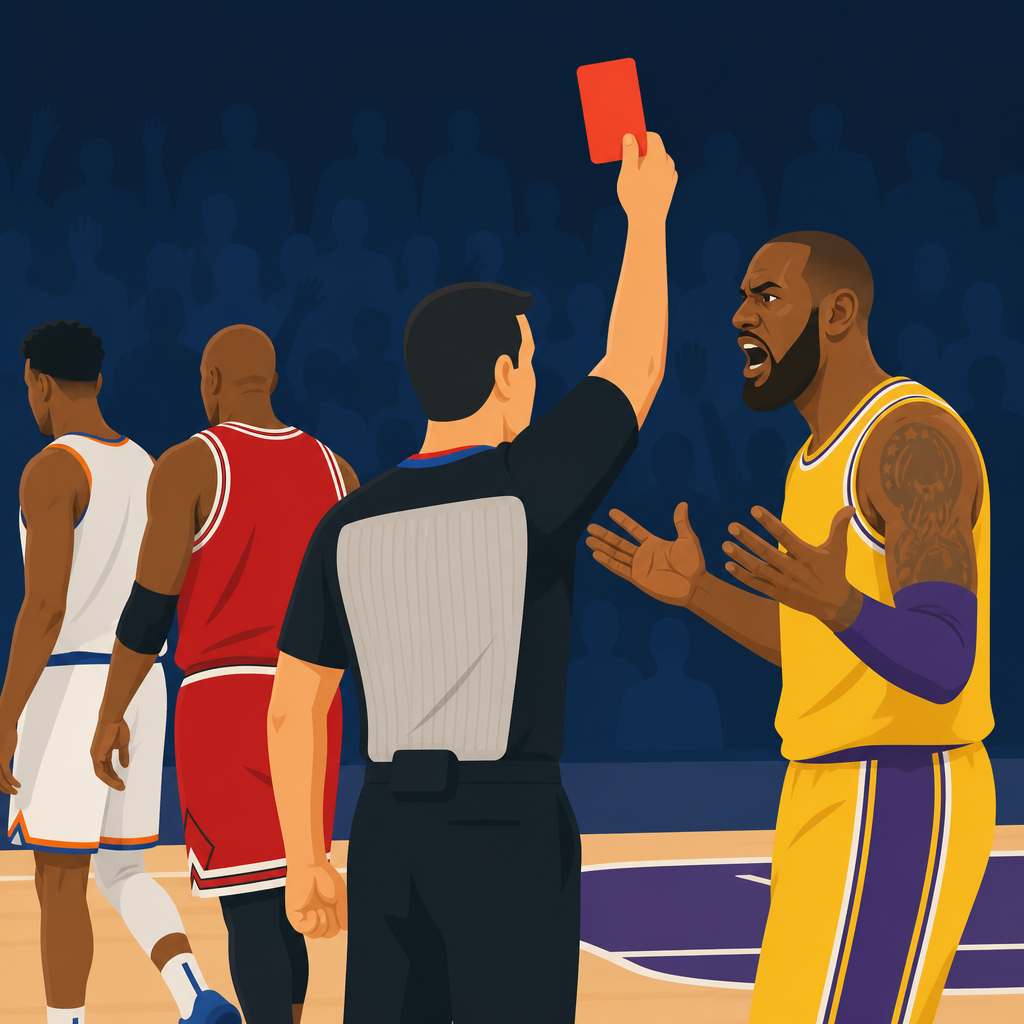
An ejection usually follows two unsportsmanlike technical fouls, but not always. Players can be ejected immediately for flagrant foul penalty two actions, fighting, abusive language, or conduct the officials deem severe enough to warrant direct removal. Still, for the league’s most ejected players, technical accumulation is the common path. One technical often comes from arguing a call. The second comes because the player keeps going after being warned, makes a demonstrative gesture, or re-engages later in the game after another whistle. That pattern is so common that veteran broadcasters can often predict it by reading body language.
The NBA tracks ejections and technical totals closely because they affect competitive integrity. Suspensions tied to technical accumulation can change playoff races. Ejections alter outcomes immediately by removing starters, forcing bench players into expanded roles, and changing defensive assignments. They also shape officiating narratives. If a crew allows prolonged complaining early, it may lose control later. If it calls technicals too quickly, the game can become about the referees. The league therefore emphasizes consistency through points of education, Last Two Minute Reports for late-game calls, and central review structures for certain categories, even though technical fouls still depend heavily on context and crew judgment.
Famous technical foul moments that changed games and reputations
Some technical fouls matter because of volume; others matter because of timing. Tim Duncan’s 2007 ejection for laughing on the bench remains one of the clearest examples of how technical fouls can become cultural flashpoints. The call amplified debates about referee discretion and professionalism because the behavior seemed minor compared with the consequence. Draymond Green’s accumulation during the 2016 Finals became historically significant because a suspension altered the texture of the championship series. Rasheed Wallace built his legend less through one isolated moment than through relentless repetition, making technical fouls part of his basketball identity as much as his shooting touch and defensive versatility.
These cases show that technicals are never just bookkeeping. They influence how players are remembered, how officials are evaluated, and how fans interpret fairness. They also explain why this subject belongs at the center of any fouls explained hub. A technical foul is a rules concept, a disciplinary tool, and a storytelling device all at once. When viewers ask why one act earned a whistle and another did not, they are really asking how the NBA balances expression, respect, and control. Learning those boundaries makes every game easier to read.
For anyone following NBA Rules, the clearest lesson is that technical fouls are the league’s behavior-management mechanism, and the most technical fouls in NBA history tell you which players pushed hardest against that boundary. Rasheed Wallace remains the defining case because his totals, ejections, and suspensions turned a personal habit into leaguewide policy attention. Players like Karl Malone, Charles Barkley, DeMarcus Cousins, and Draymond Green show the many paths to the same outcome: emotional intensity, constant dialogue with officials, and repeated visible dissent. They also demonstrate the competitive price of crossing the line, from free points to ejections to missed games through suspension.
As a hub for Fouls Explained, this article should make one idea stick: not all fouls are about contact. Personal, offensive, loose-ball, flagrant, clear path, and technical fouls each solve a different rules problem, and technicals exist to protect order, pace, and sportsmanship. If you want to understand why certain stars are among the league’s most ejected players, start by watching dead-ball behavior, bench conduct, and post-whistle reactions rather than only collision plays. Use that lens the next time you watch a heated national TV game, and you will see the rulebook working in real time. Then continue through the rest of the NBA Rules coverage to deepen your grasp of shooting fouls, flagrants, and review procedures.
Frequently Asked Questions
What is a technical foul in the NBA, and how is it different from a personal foul or a flagrant foul?
A technical foul in the NBA is a penalty for unsportsmanlike conduct, disrespect toward officials, procedural violations, or behavior that disrupts the game without involving standard live-ball illegal contact. That distinction matters. A personal foul usually comes from physical contact during play, such as reaching, holding, blocking, or bumping an opponent illegally. A flagrant foul also involves contact, but it is judged to be unnecessary or excessive, which raises the level of punishment. A technical foul, by contrast, often comes from actions like arguing with referees, using abusive language, taunting, hanging on the rim unnecessarily, delay of game violations, or leaving the bench during an altercation.
In the context of the most technical fouls in NBA history, this difference helps explain why some of the league’s most intense competitors appear so high on these lists. Technicals are not just about aggression. They are often a reflection of temperament, constant engagement with officials, emotional leadership, gamesmanship, and the pressure of high-stakes moments. A player can be physically disciplined while still accumulating technical fouls through confrontational behavior or repeated protests. That is why technical foul leaders and the league’s most ejected players are often remembered not only for their talent, but also for the emotional volatility that shaped their careers.
Who are the players most associated with the most technical fouls in NBA history?
When fans talk about the most technical fouls in NBA history, a few names almost always come up first: Rasheed Wallace, Charles Barkley, Karl Malone, Dennis Rodman, Gary Payton, and more recently players such as DeMarcus Cousins and Draymond Green. Rasheed Wallace is especially central to this conversation because he has long been recognized as one of the defining examples of a player whose brilliance and intensity were matched by constant clashes with officials. His name is nearly synonymous with technical foul records, and he stands out as one of the clearest symbols of how emotion can influence a Hall of Fame-level career.
Other players are associated with high technical foul totals for slightly different reasons. Rodman’s unpredictable style and confrontational edge made him a frequent candidate for whistles. Barkley combined physical dominance with a fearless willingness to challenge anyone, including referees. Malone and Payton played with relentless fire and often pushed the boundaries of what officials would tolerate. In more modern discussions, Draymond Green is often cited because his defensive intensity, verbal competitiveness, and emotional style put him in frequent technical foul territory. The common thread is not simply bad behavior. It is sustained competitiveness at a level where personality, pressure, and rule enforcement collide repeatedly over long careers.
Why do some great NBA players rack up so many technical fouls and ejections?
Great players often operate with enormous competitive intensity, and that intensity can spill over into behavior referees penalize. Many stars feel every call matters, every possession is high leverage, and every perceived missed whistle is worth challenging. Over time, that mindset can produce a pattern. A player argues one call too long, reacts visibly to contact, uses language that crosses the line, or escalates a confrontation with an opponent. Those moments turn into technicals, and repeated technicals can turn into ejections. In that sense, the most ejected players in NBA history are often not fringe participants in the game. They are major personalities with outsized influence and emotional investment.
There is also a strategic side. Some players have historically used confrontation to energize themselves, intimidate opponents, or shift momentum. While that edge can be valuable, it comes with risk. Officials monitor repeat offenders closely, and reputations can shape how quickly behavior is penalized. Once a player becomes known for arguing or demonstrative reactions, there may be less room for error. That does not mean the calls are unfair by definition, but it does mean self-control becomes an important part of longevity. The players who pile up technical fouls are often walking a fine line between passion that helps them win and emotion that hurts their team through free throws, suspensions, or ejections.
How do technical fouls lead to ejections and suspensions in the NBA?
A single technical foul does not always result in an ejection, but two unsportsmanlike technical fouls assessed to a player or coach in the same game typically lead to automatic ejection. That is why some of the league’s most ejected players are also among the leaders in technical fouls. Once a player receives the first technical, any additional outburst, prolonged argument, or retaliatory behavior can quickly end the night. In some cases, an especially severe act can lead to immediate ejection even without a second technical, particularly if the conduct is considered extreme or threatening.
Beyond the game itself, the NBA tracks season-long technical foul totals and can impose automatic suspensions once a player crosses designated thresholds. Those thresholds have changed over time, but the principle has remained consistent: repeated unsportsmanlike conduct carries escalating consequences. The league may also review incidents after games and issue fines or additional discipline if necessary. For players near the top of the all-time technical foul lists, these cumulative penalties become part of the story. It is not just about one dramatic argument or one famous meltdown. It is about how repeated technicals affect availability, team rhythm, playoff risk, and public reputation over months and years.
Why are technical foul records and ejection totals such a big part of NBA history and fan interest?
Technical foul records matter because they tell a deeper story than a box score ever could. They capture the emotional side of basketball: the pressure, the rivalry, the swagger, the frustration, and the personalities that make the NBA compelling. Fans are drawn to these records because they sit at the intersection of rules and identity. When people look up the most technical fouls in NBA history, they are usually not searching for a dry statistic. They want to understand how certain players played on the edge, why referees reacted the way they did, and how those fiery moments shaped unforgettable careers.
There is also historical value in these numbers. Ejection totals and technical foul counts help illustrate how different eras were officiated, how league standards evolved, and how player behavior has been interpreted over time. Some periods tolerated more visible emotion, while others emphasized stricter decorum and faster disciplinary action. That makes technical foul history a useful lens for understanding broader NBA culture. It is about much more than who argued the most. It is about how the league balances entertainment, professionalism, intensity, and control. For that reason, the players most associated with technical fouls and ejections remain central figures in conversations about NBA toughness, personality, and competitive fire.