
Not making the basketball team can feel crushing for a child and surprisingly painful for a parent, yet it is also one of the most common turning points in youth sports. In youth basketball, being cut from a school, travel, AAU, club, or community roster usually reflects a mix of roster limits, coach preference, physical development, timing, and program philosophy, not a final verdict on talent. Parents who respond well can protect confidence, keep a young athlete connected to the game, and find better leagues and programs that match current skill level and long-term goals. I have helped families navigate this moment after middle school tryouts, competitive club evaluations, and crowded recreation drafts, and the same pattern appears every season: the first forty-eight hours matter, the next team choice matters even more, and the child’s relationship with basketball matters most. This guide explains what to do immediately after a cut, how to talk to coaches, how to evaluate alternate basketball leagues and programs, and how to build a practical plan that turns disappointment into development. The aim is not to erase frustration. The aim is to help your kid recover, improve, and keep playing in an environment that gives them real opportunities.
Handle the first response with calm and clarity
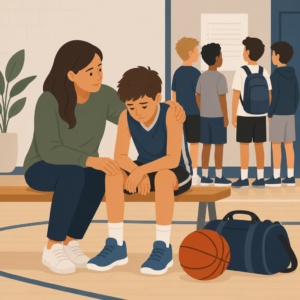
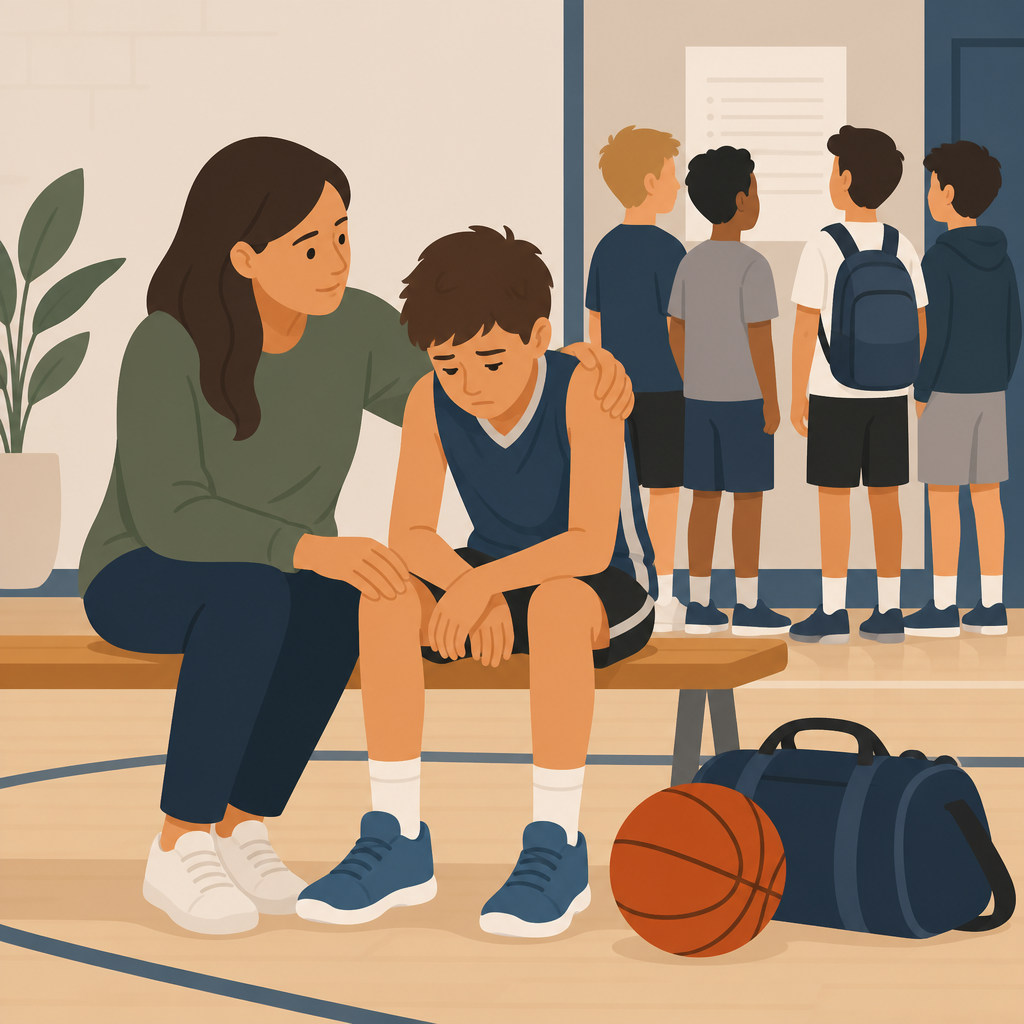
The first job is emotional triage. If your kid does not make the basketball team, resist the urge to criticize the coach, blame politics, or promise that the evaluators were wrong. Young athletes often borrow their parent’s reaction, so visible anger can turn disappointment into humiliation. Start with simple language: “I know this hurts. I’m proud of how you tried out. We’ll figure out the next step together.” That response validates the setback without defining the child by it.
Give your kid a little space before launching into analysis. Some players want to talk in the car. Others need a night. What usually helps is asking narrow questions instead of loaded ones. “What part feels worst?” works better than “Do you think the coach was unfair?” If your child is in elementary or middle school, they may not have the vocabulary to explain embarrassment, especially if friends made the team. Naming the emotion can lower the temperature: disappointment, jealousy, confusion, and anger are normal.
It also helps to separate outcome from effort. A missed team can mean the player needs better ball handling, stronger defense, improved conditioning, or more confidence under pressure. It can also mean there were twenty-four kids trying out for ten spots, or that the coach needed more size, more shooting, or more experienced guards. In many youth basketball programs, cuts are comparative rather than absolute. One player is not being judged against a universal standard; they are being ranked against a specific pool for a specific roster.
Do not force a lesson too fast. Saying “everything happens for a reason” usually lands poorly on the day of the cut. Better to say, “This is hard, and it is also workable.” That framing tells a child that the setback is real but temporary.
Find out why your kid was cut
The most useful next step is direct feedback from the coach or program director. Many families skip this because they fear an awkward conversation, but a calm request for specifics can save months of guessing. Ask for feedback by email or at a scheduled time, not in the parking lot. Keep the request respectful and short: thank the coach for evaluating your child, ask for two or three areas to improve, and ask whether there are recommended leagues or programs that would fit right now.
Good feedback is concrete. “Needs a better handle against pressure” is actionable. “Needs to get better” is not. Strong coaches will often mention decision-making, defensive stance, finishing through contact, help-side awareness, pace, communication, conditioning, or consistency. If your child is older, ask whether the issue was skill, physicality, basketball IQ, role fit, or simple roster math. Each answer points toward a different development path.
Accept that some feedback will be limited. School coaches may avoid extended explanations. Volunteer coaches may not communicate well. Even then, you can still gather clues by reviewing the tryout itself. Did your kid struggle in transition drills, shy away from contact, dribble too high, rush shots, lose focus after mistakes, or stop talking on defense? Those patterns often matter more than the final scrimmage points total.
One caution from experience: never ask for feedback so you can argue with it. Coaches share less when they sense cross-examination. Treat the conversation like a scouting report. Your goal is usable information, not vindication.
Choose the right alternative leagues and programs
If your kid still wants to play, the answer is almost never to wait until next year without competition. The better approach is to place them in a basketball setting where they will get touches, instruction, and game reps. That is why understanding youth basketball leagues and programs matters. Different environments develop different things, and the wrong fit can stall progress even when a child is working hard.
Recreation leagues usually offer the widest access and the lowest pressure. They are useful for newer players, younger athletes, and kids who need confidence through meaningful minutes. Community travel leagues are a step up, often with more structured practices and stronger competition against nearby towns. AAU and club programs vary enormously: the best ones provide serious coaching, role clarity, and strong competition; the worst charge high fees for tournaments and little teaching. Skills academies can sharpen fundamentals but should not replace live games for long. School development teams, church leagues, YMCA programs, and park district leagues can also be valuable depending on the coaching and game quality.
| Program type | Best for | Main advantage | Main risk |
|---|---|---|---|
| Recreation league | Beginners, younger players, confidence rebuilding | Playing time and lower pressure | Inconsistent competition or coaching |
| Community travel | Players needing structure and stronger game reps | Regular practices and local competition | Varies by town and roster depth |
| AAU or club | Advanced players seeking exposure and high-level games | Top competition and tournament volume | High cost, weak teaching in poor programs |
| Skills academy | Players with clear technical gaps | Focused repetition and correction | Limited transfer if there are no games |
When families ask me what program to pick after a cut, I use one filter: where will this player get challenged without disappearing? A twelve-year-old guard who was cut for weak ball handling may improve faster in a solid recreation or travel team where they can run offense than on a stacked club bench. A taller player who needs physicality may benefit from a stronger travel league with regular contact and rebounding demands. The best fit is not the most prestigious logo. It is the program that creates repetitions in the exact areas that need work.
Evaluate leagues and programs like a scout, not a shopper
Parents often compare youth basketball programs by brand name, uniform quality, or social media presence. Those factors matter far less than coaching, roster construction, and developmental intent. Before joining a new league or team, ask specific questions. How many players are kept on each roster? How many practices happen each week? Who runs practices? Is there a written philosophy on playing time? What is the average tournament or game volume? How are kids grouped for training? Are there separate teams by level?
Watch one practice if possible. In a good basketball practice, players are active, corrections are specific, and drills connect to game actions. You should hear teaching cues such as spacing, jump stop, weak-side help, closeout angle, chin the rebound, and read the low defender. In a poor practice, kids stand in lines, run isolated cone drills with little decision-making, and scrimmage without instruction. The difference is enormous over a season.
Also examine roster context. A developmental-minded team with eight players can offer more growth than a famous club with eleven where two athletes barely enter games. For younger players, minutes are oxygen. A child who gets real possessions, defensive assignments, and late-game learning opportunities usually improves faster than a child who practices hard and watches games from the bench.
Cost deserves a hard look. Expensive does not equal elite. Ask for a full breakdown that includes fees, uniforms, tournament admissions, travel, lodging, and private training expectations. A lower-cost local program with excellent coaching may beat a national-circuit team for a player who still needs fundamentals, strength, and confidence.
Create a development plan your kid can actually follow
After the emotion settles and the new program is chosen, turn feedback into a plan. The strongest plans are short, measurable, and tied to game outcomes. “Get better at basketball” fails because it is too vague. “Tighten left-hand dribble under pressure, improve defensive stance endurance, and make fifty form shots five days a week” is much better.
Start with one or two priority weaknesses, not six. Most cut players need one technical fix and one game habit fix. For example, a wing might need cleaner footwork on catches and stronger help defense. A guard might need a lower handle and better pace in pick-and-roll reads. A post player might need rebounding technique and balance on finishes. Use ten to twelve weeks as a realistic block. Skill change requires repetition over time, not one intense weekend.
Include games, not just workouts. Basketball is an open-skill sport, which means improvement depends on decision-making under live pressure. A player can look sharp in solo drills and still struggle in traffic. That is why the right league or program is part of development, not an afterthought. The game reveals whether the practice is transferring.
Track progress simply. Count turnovers in scrimmages, note free-throw percentage after workouts, or record how often your child gets to the paint with control. Video helps, especially for older players. Short clips can expose posture, shot preparation, and defensive habits faster than memory can. If you use a trainer, make sure the sessions align with the coach’s feedback and the player’s role. Fancy drills are not the goal. Functional improvement is.
Protect confidence without lowering standards
One missed team should not become a story your child repeats for years: “I’m not athletic,” “coaches never like me,” or “I choke in tryouts.” Those identity statements are more damaging than the cut itself. Parents can interrupt them by praising controllable behaviors: showing up on time, competing on defense, asking for feedback, finishing workouts, and responding after mistakes. Confidence grows from evidence, not slogans.
At the same time, avoid empty reassurance. If your child was cut because they could not handle pressure or defend in space, saying “you were just as good as everyone there” does not help. Better to be honest and hopeful: “You are good enough to improve into this level, and here is what will close the gap.” Young athletes handle truth well when it comes with a path.
Watch for signs that disappointment is becoming withdrawal. If a child suddenly avoids open gyms, refuses to shoot around, or says they want to quit the sport immediately, ask whether they want a break or whether they feel ashamed. A short break can be healthy. A total exit driven by embarrassment deserves a gentler conversation. Sometimes the right move is to step back for two weeks, then re-enter through a lower-pressure setting such as a skills clinic or local league.
Know when to push, when to pause, and when to move on
Not every child needs the same response after not making a basketball team. Some are highly motivated and want a detailed plan the next day. Others need time before recommitting. Age matters too. A third grader cut from an advanced club team does not need a year-round recovery strategy. A high school player trying to make varsity may need one if school basketball is a major goal.
Pushing is appropriate when the child still loves basketball, accepts coaching, and wants another shot. Pausing is appropriate when the sport has become a source of dread, family conflict, or chronic overtraining. Moving on is appropriate when the player’s interest has genuinely shifted and they are staying only to satisfy adult expectations. There is no virtue in forcing a miserable child to chase a roster spot they no longer value.
Still, many kids who get cut once make later teams because they find the right developmental environment. I have seen undersized sixth-grade guards become dependable high school varsity players after two seasons of local travel ball, steady ball-handling work, and hundreds of live reps against pressure. I have also seen talented kids stall in expensive programs because they practiced around better players without ever getting enough game responsibility. The lesson is clear: progress usually follows fit, feedback, and consistent work.
When your kid does not make the basketball team, respond calmly, gather honest feedback, choose leagues and programs with care, and build a plan around real weaknesses. A cut can expose gaps, but it also clarifies what kind of basketball environment your child needs next. The best outcome is not just making a future roster. It is finding a place where your child can play meaningful minutes, learn from solid coaching, and reconnect effort with improvement. In youth basketball, leagues and programs are not interchangeable; they shape confidence, skill growth, and long-term enjoyment of the sport. If you treat this moment as a decision point instead of a dead end, your child can come back stronger and smarter. Start with one conversation, one evaluation, and one better-fit opportunity this week.
Frequently Asked Questions
What should I say to my child right after they do not make the basketball team?
The first conversation matters more than most parents realize. Start by acknowledging the disappointment without rushing to fix it. A simple response like, “I know this hurts, and it is okay to feel upset,” helps your child feel understood instead of judged or lectured. Many kids do not want immediate analysis, motivational speeches, or comparisons to other players. In the moment, they usually need calm support, emotional safety, and reassurance that one team decision does not define who they are as a player or a person.
It also helps to avoid extreme reactions. Try not to criticize the coach, question the fairness of the process, or promise that the coaches made a huge mistake. While those responses may come from love, they can keep your child stuck in anger and prevent them from learning how to handle setbacks constructively. Instead, remind them that roster decisions in youth basketball often come down to far more than pure talent. Team size, positional needs, physical maturity, experience level, timing, and coaching philosophy all play a role.
Once the initial emotion has settled, ask open-ended questions such as, “Do you want to talk about what you are feeling?” or “Would it help to think about what comes next?” Let your child guide the pace. Some kids want space for a day or two before discussing solutions. Others are ready immediately. Your job is not to erase the pain; it is to help them move through it in a healthy way, protect their confidence, and keep this setback from becoming a lasting identity.
Should I contact the coach to ask why my child was cut from the basketball team?
Yes, in many cases it is reasonable to seek feedback from the coach, but the way you do it makes all the difference. If you reach out, do so respectfully and with the goal of learning, not arguing. A good approach is to ask for specific, actionable feedback your child can use to improve. For example, you might say, “Thank you for the opportunity. If you have a few minutes, could you share two or three areas my child should focus on to be better prepared next time?” That kind of question invites useful information and shows maturity.
What you want to avoid is a confrontational conversation focused on proving your child deserved a spot. Coaches are unlikely to revisit the decision, and pushing for a reversal can damage relationships and make the experience more stressful for your child. Even if you strongly disagree with the outcome, the more productive goal is clarity. Was the issue ball-handling under pressure, defensive awareness, conditioning, confidence, physical strength, decision-making, consistency, or simply roster fit? Specific feedback gives your child a roadmap instead of vague frustration.
It is also important to remember that not every coach will offer great feedback. Some will be thoughtful and detailed. Others may be brief, generic, or difficult to read. If the response is limited, take what is useful and move on. One coach’s opinion is not a permanent label. In youth basketball, development is uneven, and players can change dramatically in a season or two. The best use of coach feedback is not to dwell on rejection, but to turn it into a practical plan for growth.
How can I help my child rebuild confidence after not making the team?
Confidence returns fastest when it is built on action, not empty reassurance. Telling your child, “You are great, do not worry about it,” may help briefly, but lasting confidence usually comes from seeing progress. Help your child identify a few areas they can control and improve. That might mean tightening their handle with both hands, becoming a more reliable defender, improving conditioning, developing a consistent jump shot, or getting stronger and quicker. Small, measurable goals create momentum and give your child evidence that they are getting better.
It also helps to separate self-worth from team selection. Many young athletes quietly believe that making a team proves they are talented, while getting cut proves they are not. That is simply not how youth sports work. Basketball development is rarely linear. Some players are early bloomers physically. Others catch up later and end up surpassing peers who looked better at younger ages. Remind your child that one tryout is just one snapshot in time, not a final verdict on potential.
Look for opportunities to help them experience success again. That could be through pickup games, skills clinics, training sessions, a different league, or another team level where they can play meaningful minutes and keep growing. Success does not always mean making the most prestigious roster immediately. Often, the best thing for confidence is being in an environment where a player can compete, contribute, and improve. Praise effort, consistency, resilience, and coachability just as much as outcomes. When kids learn that progress matters more than a single decision, confidence becomes steadier and more durable.
What are the best next steps if my child still wants to keep playing basketball?
If your child still loves the game, the priority is to keep them playing, learning, and developing rather than letting one cut end their participation. Start by looking at the available alternatives in your area. Depending on age and location, that may include recreational leagues, community programs, YMCA leagues, park district teams, church leagues, club developmental teams, local travel programs, private training groups, school intramurals, or consistent pickup basketball. The right option is not always the most elite one. Often, the best next step is the environment that offers regular reps, good coaching, and room for confidence to grow.
Create a realistic improvement plan around that next opportunity. For example, your child might play in a rec league twice a week, attend one skills session, and spend two or three short workouts per week on ball-handling, finishing, footwork, shooting form, and conditioning. Keep the plan structured but manageable. Young athletes improve more from steady, focused repetition over time than from emotional bursts of overtraining right after a disappointment. Consistency beats intensity when it comes to long-term development.
It is also smart to think beyond playing. Watching games with purpose, studying spacing and decision-making, learning defensive concepts, and understanding what coaches value can all accelerate growth. If possible, encourage your child to ask, “What kind of player does a coach trust?” The answer is often broader than scoring. Coaches notice effort, communication, defense, rebounding, toughness, attitude, and the ability to play within a team structure. A child who keeps working, stays connected to the game, and uses the setback as fuel can be in a very different position by the next tryout cycle.
How do I know when to push my child to try again versus letting them take a break?
The key is to respond to your child’s emotional state and motivation, not your own hopes or disappointment. Some kids bounce back quickly and want a plan right away. Others need time before they are ready to re-engage. If your child seems emotionally drained, embarrassed, or resistant to anything basketball-related for a short period, that does not necessarily mean they are quitting forever. It may simply mean they need space to process the loss. A brief break can be healthy if it prevents burnout and allows emotions to settle.
At the same time, pay attention to whether the break is restorative or avoidant. If your child still talks about basketball, watches games, shoots around casually, or asks about future opportunities, the interest is still there. In that case, gentle encouragement can help. You do not need to force motivation; you can support it by offering options and letting them choose. For example: “If you want to keep playing, we can look at another league, work on skills, or just take a couple of weeks and revisit it.” Giving some control back to your child often leads to better buy-in.
If they truly want to step away longer, respect that too, while keeping the door open. Not making a team can temporarily shake a child’s identity and joy. Pushing too hard too soon can turn disappointment into resentment. The goal is not to manufacture toughness by denying emotion. The goal is to help your child learn that setbacks can be faced, processed, and eventually used for growth. Whether they return in two weeks or two months, your support should communicate the same message: this was painful, it does not define them, and if they want another path forward, there is one.