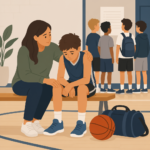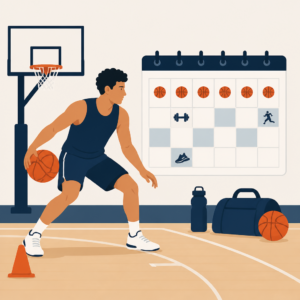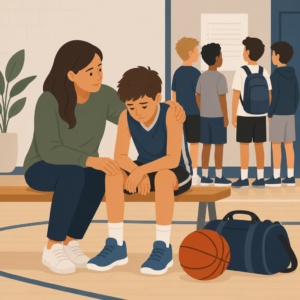


Mental toughness in basketball is the skill of staying composed, confident, and competitive when shots stop falling, mistakes pile up, and pressure rises, and it sits at the center of athletic development because physical talent only helps when a player can use it under stress. In practice gyms, film rooms, and close games, I have seen the same pattern repeat: players usually do not lose form first; they lose clarity, then timing, then effort, and the box score only reflects the mental slide after it has already started. A slump is a temporary drop in performance, whether that means poor shooting, careless turnovers, hesitant decision-making, or flat defensive energy, while a bad game is a single performance where execution falls below a player’s normal standard. Mental toughness does not mean ignoring frustration or pretending confidence; it means recognizing the problem quickly, responding with disciplined habits, and protecting the next possession from the last one. This matters because basketball is a high-error sport. Even elite guards miss open threes, turn the ball over against pressure, and get beaten on a switch. The players who keep helping their teams are the ones who recover fastest. For a basketball training plan, that is why athletic development must include mindset, recovery, communication, and game-day routines alongside strength, speed, skill work, and conditioning. A complete player is not just explosive or technically polished. A complete player can think clearly when tired, accept coaching after mistakes, stay engaged without touches, and compete with the same body language in the first quarter and the last two minutes. If you want to play through slumps and bad games, start by treating mental toughness as a trainable basketball skill, not a personality trait some athletes simply have and others do not.
What Mental Toughness Looks Like on the Court
Mental toughness in basketball shows up in visible behaviors before it shows up in results. A mentally tough player sprints back after a turnover instead of arguing for a foul. They call the coverage on defense after missing two jumpers. They keep cutting hard even when they have not scored. Coaches notice those details because they stabilize team performance. Players often think mental toughness means making a clutch shot, but the real foundation is emotional regulation and task focus. In plain terms, that means controlling your response, narrowing your attention to the next action, and refusing to let one mistake become three. Sports psychologists often describe this as staying process-oriented rather than outcome-oriented. In basketball, process cues are simple and specific: wide base, eyes up, jump to the pass, two-foot stop, chin the rebound, hit the first open teammate. Outcome thinking sounds different: do not miss, I need 20 points, coach is mad, everyone sees this. The second mindset creates tension and hesitation.
Athletic development depends on this distinction because decision speed and movement quality drop when the brain is overloaded. Under stress, players either rush or freeze. I have worked with wings who looked smooth in workouts but became passive after early misses because their self-talk shifted from reading the game to judging themselves. Once we changed the routine from score obsession to possession goals, their consistency improved. Instead of tracking points, we tracked paint touches, deflections, rebounds outside their area, and defensive talk. That gave them controllable targets. Mental toughness is therefore not abstract motivation. It is the ability to anchor performance to repeatable actions under pressure.
Why Slumps Happen and Why They Often Last Too Long
Most basketball slumps are not caused by one thing. They usually come from a stack of small issues that compound: mechanical drift, fatigue, stronger competition, reduced sleep, overtraining, loss of confidence, and poor shot selection. A shooter might start a slump because their release point drops when their legs are tired. Then they notice misses, begin aiming the ball, pass up clean looks, and force harder shots late in possessions. What started as a minor physical issue becomes a decision-making problem. That is why playing through a slump requires honest diagnosis, not motivational slogans. You need to know whether the problem is technical, physical, tactical, or mental.
Bad games follow a similar pattern but on a shorter timeline. Maybe the opponent top-locks every off-ball screen, the officials allow more contact than expected, or early foul trouble changes rhythm. Strong players adapt by simplifying the game. They defend, rebound, screen, and move the ball while they recalibrate. Struggling players chase recovery with hero possessions. In my experience, the fastest way out of a bad game is to shrink your focus to actions that travel well under pressure: defensive stance, communication, ball security, and shot discipline. Those habits restore rhythm because they reduce chaos. Slumps last too long when players personalize them. Missing four shots becomes proof that their work is not paying off. That emotional interpretation adds stress hormones, tightens movement, and steals attention from cues that actually solve the problem.
Build a Reset Routine for the Next Possession
The most effective mental toughness tool I have used with players is a reset routine that takes less than five seconds. After a miss or mistake, the player uses one breath, one physical cue, and one verbal cue. For example: exhale hard, slap the chest or shorts, then say next play. This works because routines interrupt rumination. They give the nervous system a predictable sequence and redirect attention forward. College programs and professional teams use versions of this because the game moves too fast for long self-correction speeches. You need something automatic.
A good reset routine must be practiced in training, not invented in a game. During shooting drills, add a consequence after misses: sprint back, reset breath, repeat the cue, then shoot again. During live play, have coaches or teammates reinforce the language. The goal is not to erase emotion. The goal is to prevent emotion from controlling behavior. A point guard who turns it over and then picks up full court pressure with clear communication has recovered. A shooter who misses three straight but keeps taking clean catch-and-shoot opportunities in rhythm has recovered. Results may still lag for a few possessions, but behavior is back under control, which is what allows performance to return.
Use Objective Checks Instead of Guessing
When players are in a slump, they often rely on feeling, and feeling is unreliable. Objective checks create clarity. Use film to review shot quality, footwork, balance, and decision timing. Use workload data if available from Catapult, WHOOP, Oura, or simple session ratings of perceived exertion. Review sleep consistency, not just one night. Check practice volume, especially for players adding extra workouts on top of team training. The question is straightforward: is the player under-recovered, mechanically off, or mentally crowded? Different causes need different interventions.
| Problem area | Common signs | Best first response |
|---|---|---|
| Shooting mechanics | Flat misses, drifting, inconsistent release point | Film review, form shooting, lower volume with high feedback |
| Fatigue | Short misses, slow closeouts, heavy legs, irritability | Sleep focus, reduced workload, recovery sessions, nutrition check |
| Decision-making | Forced shots, late passes, over-dribbling, turnovers | Film edits, advantage reads, simpler role-based actions |
| Confidence | Hesitation, passing up open looks, negative body language | Reset routine, controllable goals, early-success drill design |
This type of evaluation is essential for athletic development because players improve faster when feedback is specific. Saying be more confident is vague. Saying your base narrows when you rush left and your misses all come short in the fourth quarter gives the player a real entry point. Objective checks also stop overcorrection. A shooter in a normal variance dip does not need a rebuilt jump shot. They may need two lighter days, better sleep, and cleaner shot selection. Precision protects progress.
Train Confidence Through Preparation, Not Hype
Confidence in basketball is not built by positive talk alone. It comes from evidence. Players trust their game when they have repeated the right actions under realistic conditions. That means game-speed shooting after movement, live reads against pressure, and conditioning that matches the energy demands of competition. Research from sport psychology consistently shows that self-efficacy grows from mastery experiences more than speeches. In basketball terms, players believe when they have done it before in environments that feel similar to the game.
This is why athletic development should connect physical training and mental training rather than separating them. For example, if a guard struggles late in games, do not only tell them to stay calm. Build late-clock reads after sprints, require verbal communication before every rep, and track decisions as carefully as makes. If a post player gets discouraged when doubled, script short-roll passing reads and weak-side kick-outs until those options feel familiar. Preparation reduces fear because the brain recognizes the problem. I have seen players calm down immediately when they realize, this exact action was in Tuesday’s drill. Confidence is often memory, not mood.
Control What You Can During a Bad Game
Every player needs a bad-game checklist. When scoring disappears, contribution cannot. The checklist should include five controllables: sprint in transition, win the rebounding battle in your area, talk on every defensive possession, make simple passes on time, and generate one paint touch or one hard cut every half-court trip. These actions keep a player useful and often restart rhythm without forcing offense. They also matter to coaches, because reliable impact during off nights earns trust and minutes.
Consider a shooting guard who starts 1 for 8. If they stop defending and begin hunting step-backs, the bad game spreads to the team. If they pressure the ball, tag rollers early, relocate on penetration, and attack closeouts under control, they can still finish with a positive plus-minus. Many winning players have average scoring nights and still shape the game through screening angles, help defense, and timely extra passes. Mental toughness means understanding that your value is bigger than your stat line. That perspective is liberating. It lowers pressure and keeps you connected to winning basketball.
Use Team Support, Coaching, and Recovery Systems
Players rarely break slumps alone, and they should not try to. Good coaching support shortens bad stretches by separating identity from performance. The best coaches I have worked with do three things well during slumps: they define the player’s role clearly, they cut the correction to one or two priorities, and they avoid emotional overreaction. Teammates matter too. Veteran leaders can stabilize a younger player by reinforcing simple cues: stay aggressive on open looks, get to your spots early, talk on defense. That kind of communication reduces isolation, which is often what makes a slump feel heavier than it is.
Recovery is the other side of mental toughness. A tired brain is less resilient. Sleep loss impairs reaction time, mood, and decision-making, and basketball exposes all three. Nutrition also matters. Low carbohydrate availability can make players feel flat and mentally foggy, especially in high-volume weeks. Soft-tissue work, light aerobic recovery, and deload planning help because the nervous system needs space to rebound. Mental toughness is not grinding through every warning sign. Sometimes the toughest move is to recover on purpose so performance can return.
Make Athletic Development the Hub, Not an Add-On
For a basketball training program, athletic development should function as the hub that connects skill work, strength training, movement quality, conditioning, recovery, and psychology. That is how players become slump-resistant. Stronger legs support shooting consistency. Better aerobic fitness improves late-game concentration. More efficient footwork reduces rushed decisions. Structured film review sharpens pattern recognition. Recovery habits preserve mood and confidence. None of these elements replace mental toughness; together they produce it.
The practical model is simple. Build weekly training around game demands, track a few key indicators, and teach players how to respond when performance dips. Link this hub to deeper work on basketball strength and conditioning, vertical jump development, agility and change of direction, speed training, mobility, recovery strategies, and in-game skill application. When those areas support each other, players stop treating bad games as identity threats and start treating them as data. That shift is powerful. Mental toughness in basketball is not about acting fearless or never struggling. It is about recovering faster, competing harder, and staying useful to your team while your best game catches up. Start with a reset routine, use objective feedback, and train the full athlete so slumps become shorter, less dramatic, and far less damaging.
Frequently Asked Questions
What does mental toughness in basketball really mean during a slump or a bad game?
Mental toughness in basketball is not pretending that a slump does not exist, and it is not some dramatic ability to feel no frustration. It is the skill of recognizing what is happening, staying emotionally steady enough to make good decisions, and continuing to compete with discipline when confidence gets tested. During a bad stretch, most players do not suddenly forget how to shoot, pass, or defend. What usually happens first is that their mind gets noisy. They start thinking about the last miss, the coach’s reaction, the crowd, their stats, or whether they are letting teammates down. That mental clutter interrupts rhythm, slows reactions, and leads to rushed shots, lazy closeouts, and forced plays.
True mental toughness shows up in the ability to simplify. A tough player can go from “I can’t buy a basket tonight” to “Set my feet, make the right read, sprint back on defense.” That shift matters because basketball rewards the next possession, not the previous one. Mentally tough players do not allow one mistake to become three more. They recover quickly, stay coachable, and keep bringing value even when scoring is not there. They rebound, defend, communicate, move the ball, cut hard, and stay connected to the team plan.
In practical terms, mental toughness means staying composed under pressure, confident without becoming reckless, and competitive without becoming emotional. It is the difference between a player who spirals after two turnovers and one who settles down, locks into defensive effort, and works their way back into the game. Slumps and bad games are part of basketball at every level. Mental toughness is what keeps them from becoming identity statements. A rough night is a moment, not a definition.
How can basketball players stop a mental slide when shots are not falling?
The fastest way to stop a mental slide is to narrow your focus to controllable actions. When shots are not falling, players often become outcome-obsessed. They start hunting a make instead of playing solid basketball. That usually makes things worse. Instead of measuring the game by whether the next jumper goes in, measure it by whether you got a good shot, used proper footwork, made the right pass, talked on defense, and sprinted in transition. Process calms the mind because it gives you something stable to hold onto.
A strong in-game reset routine can help tremendously. After a miss or mistake, take one deep breath, physically release the last play, and give yourself a short cue such as “next play,” “stay solid,” or “see the rim.” Then immediately do something productive on the next possession. Set a screen. Crash the glass. Pick up the ball. Call out coverage. The goal is to reconnect to action before frustration turns into hesitation. Hesitation is one of the biggest signs that a player has mentally drifted out of the game.
It also helps to avoid overcorrecting. A few missed shots do not mean you need to completely change your mechanics in the middle of competition. In games, players often start aiming the ball, fading, rushing, or altering release timing because they are desperate to fix the result. Trusting your preparation matters here. If your shot selection is good and your form is sound, stay disciplined. If your shot selection is poor, make the simpler adjustment by attacking the paint, getting to the line, or creating easier looks through cuts and ball movement.
Finally, remember that confidence is not the same as making shots. Confidence is the ability to continue executing your game responsibly when results are delayed. Sometimes the best answer to a cold stretch is not forcing offense, but competing harder in every other area until your rhythm returns. Many slumps end the moment a player stops trying to escape the slump and starts playing the game again.
What are the best mental toughness strategies to use before and during a game?
The best mental toughness strategies are the ones that prepare a player to stay clear-headed before pressure arrives. Before a game, start with realistic mental preparation. Do not only visualize success. Also picture adversity. Imagine missing your first two shots, picking up an early foul, or getting pressured by a physical defender, then see yourself responding calmly and intelligently. This is powerful because it keeps adversity from feeling shocking when it actually happens. Players who expect some discomfort handle it better.
Pre-game routines are also critical. A consistent warm-up, breathing pattern, self-talk script, and focus cue can create emotional stability. For example, a player might use a short sequence like this: breathe deeply, review two or three job priorities, and repeat a clear phrase such as “poise, pace, pressure.” That kind of routine keeps attention on what matters rather than on nerves, crowd noise, or external expectations. The point is not to manufacture perfect emotions. The point is to organize your mind.
During the game, use mini-resets between possessions, free throws, timeouts, and dead balls. Mentally tough players keep returning to simple anchors: effort, spacing, communication, shot quality, and defensive discipline. These anchors reduce the chance that frustration turns into freelancing. If you are pressing, get back to basics. If you are rattled, breathe and simplify. If you are angry, talk less to yourself and more to your teammates in a productive way.
Bench behavior matters too. If you are subbed out during a rough stretch, use that time well. Watch matchups, listen to coaching points, and re-enter with one or two concrete goals instead of replaying every mistake in your head. Mental toughness is often built in these quiet moments when nobody notices the work. Players who learn to recover emotionally in real time give themselves a major competitive advantage, because they can stay useful and dangerous even when the game gets uncomfortable.
How can coaches and teammates help a player play through slumps and bad games?
Coaches and teammates play a huge role because mental toughness is individual, but performance under pressure is also influenced by environment. A player in a slump needs accountability, but they also need clarity. The best coaches reduce panic by giving simple, actionable feedback instead of emotional reactions. Telling a player to “just relax” usually does very little. Telling them to “get downhill, defend the ball, and take the next open catch-and-shoot without drifting” gives them a practical path forward.
It is also important for coaches to reinforce contribution beyond scoring. When a player believes their value rises and falls with whether the ball goes in, slumps become heavier. Great coaching widens the lens. Rebounding, screening, cutting, contesting, communicating, and making the extra pass all matter. When players are reminded that they can still impact winning, they are less likely to force shots or mentally disappear. That keeps confidence connected to habits, not just outcomes.
Teammates help most by being steady and specific. Instead of empty encouragement, the best support often sounds like, “Keep shooting that one, your feet were set,” or “Forget the miss, we need you talking on this next possession.” Specific support restores trust because it tells the struggling player that the group still believes in their role and reads the game the same way. Energy also matters. Good teams do not allow one player’s frustration to infect everyone else. They communicate, stay organized, and keep the emotional level from dropping.
At the same time, support should not become permission for careless play. Mental toughness grows when players are expected to stay disciplined, not when standards disappear. The healthiest team culture combines belief with responsibility. It says, in effect, “We trust you, and we still need you to do your job.” That balance helps players recover faster, because they feel supported without being excused from competing the right way.
How do players build long-term mental toughness so bad games do not become lasting confidence problems?
Long-term mental toughness is built through repeated exposure, honest evaluation, and strong daily habits. Players become mentally tougher when they stop treating every bad game as a crisis and start treating it as information. After a rough performance, the first step is to separate emotion from analysis. Ask: Was the problem shot selection, pace, body language, decision-making, defensive focus, or preparation? This matters because vague disappointment helps no one. Specific feedback creates improvement.
Film study can be especially useful here. Players often assume they are in a mechanical slump when the real issue is mental speed or game management. Film may show that they rushed into contested shots, lost discipline after one turnover, stopped moving without the ball, or carried frustration into defense. Once those patterns are visible, they become coachable. That is how confidence gets rebuilt the right way: through understanding, adjustment, and repetition.
Practice design matters too. Mental toughness grows when practices include pressure, fatigue, and consequence. Shooting drills after hard conditioning, competitive small-sided games, time-and-score scenarios, and drills that require immediate recovery after mistakes all teach players to execute under stress. If practice is always comfortable, game adversity will always feel bigger than it should. Players need controlled opportunities to struggle and respond.
Finally, confidence becomes more durable when it is based on preparation rather than emotion. Emotional confidence comes and goes. Preparation-based confidence is steadier because it comes from reps, routines, and evidence. Players should develop reliable habits such as post-game reflection, performance journaling