

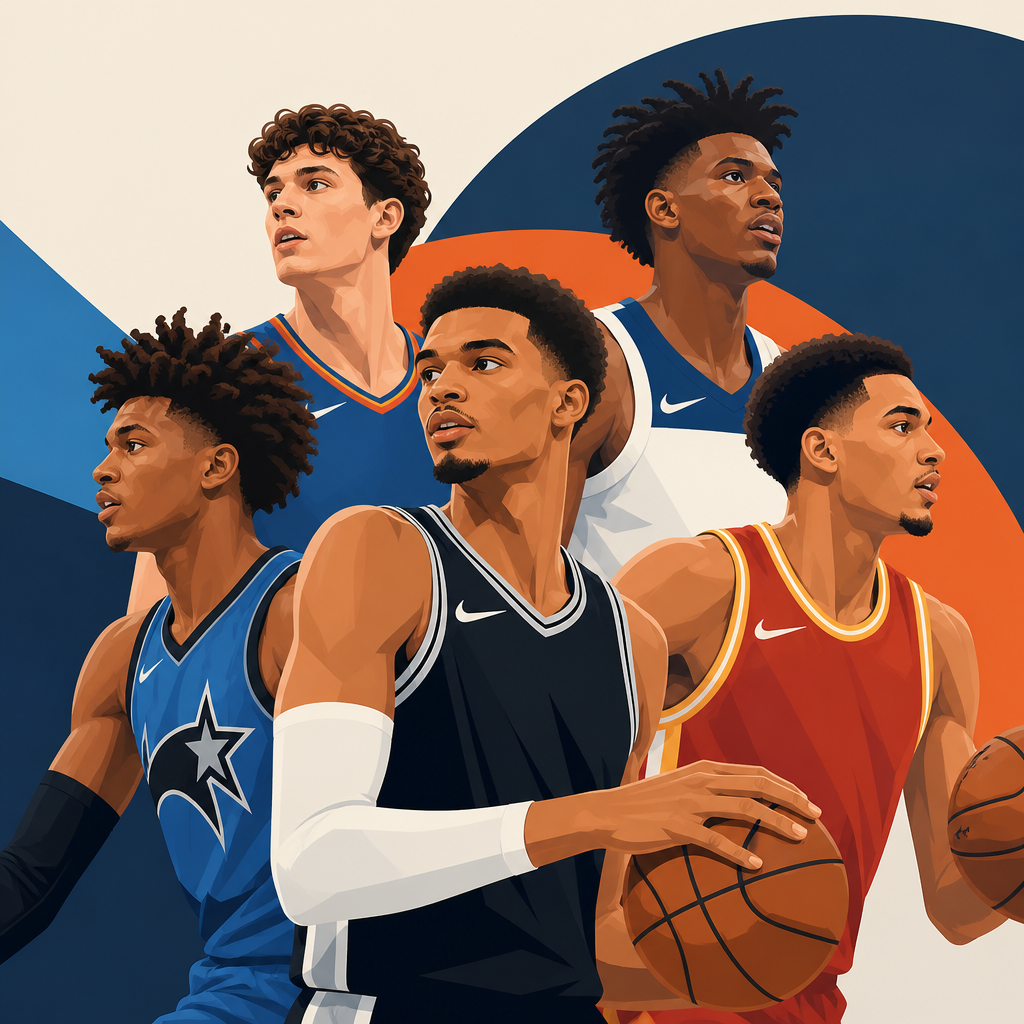
The NBA’s next era is already on the floor, and the best NBA players under 25 are no longer intriguing prospects but foundational stars shaping how the league plays, markets itself, and crowns contenders. In this context, “under 25” refers to players who have not reached their 25th birthday at the time of evaluation, while “all-time rankings” means placing young careers in historical perspective rather than merely listing the hottest names from one season. I have worked through enough draft cycles, playoff runs, and player development arcs to know that age-based rankings can become lazy if they ignore role, health, team context, and postseason translation. The right way to evaluate young stars is to balance current production with scalable skills, durability, decision-making, and evidence that their games will survive tougher defenses in May and June. That matters because every front office is effectively asking the same question: which young players can be the best player on a contender, which can be the second-best player on a title team, and which are excellent regular-season engines whose limitations show up in a seven-game series. This hub article approaches the under-25 conversation with that larger all-time lens, connecting present value, long-term upside, and historical precedent.
How to Rank the Best NBA Players Under 25
Ranking young NBA talent starts with a simple principle: production matters, but translatable production matters more. A 26-point scorer who relies on difficult pull-ups and gets hunted on defense is less bankable than a slightly lower-volume star who creates efficient shots for himself and others while holding up physically and defensively. In practice, I weigh five factors. First is offensive creation, including rim pressure, advantage creation, passing reads, turnover control, and shot versatility. Second is efficiency, especially true shooting percentage relative to league average and whether a player maintains that efficiency when defenses load up in playoff settings. Third is defensive value, both on-ball and in help, because postseason basketball relentlessly tests weak links. Fourth is availability. The best ability is not literally availability, but for stars trying to enter all-time conversations, repeated missed months are a real drag on legacy. Fifth is age-adjusted trajectory: how advanced is the player relative to where comparable stars were at 21, 22, 23, or 24?
Those criteria explain why this topic is broader than a listicle. It is a hub for all-time rankings because every under-25 debate naturally leads to larger questions about player archetypes and historical ceilings. Is a jumbo creator like Luka Doncic on a top-20 all-time path if conditioning and defense improve? Is a two-way force like Anthony Edwards tracking toward the classic lineage of superstar wings? Can a center such as Victor Wembanyama alter the league the way Tim Duncan or Kevin Garnett did, but with modern spacing and weak-side shot-blocking at impossible dimensions? Those are not hypothetical clickbait prompts. They are legitimate ranking questions, and they require comparing current stars to established developmental timelines from players such as LeBron James, Kevin Durant, Giannis Antetokounmpo, Nikola Jokic, and Jayson Tatum.
The Current Tier One: Franchise Players Already Carrying the League
The top tier of NBA players under 25 begins with players who already drive elite offense or elite two-way impact at a level consistent with MVP ballots and playoff game plans built entirely around stopping them. Luka Doncic has long set the standard for young offensive heliocentrism. His strengths are well established: elite pace manipulation, strength-based rim access, every passing angle, and the ability to create a decent shot late in the clock when structure breaks down. Historically, very few players his age have paired that level of usage with comparable box creation. The questions with Doncic are also clear and fair. Conditioning affects late-game burst, transition defense, and durability over deep postseason runs. Yet if you are projecting all-time rank, the offensive baseline is so high that improvement in only one weak area could change his place in history.
Anthony Edwards belongs firmly in this top group because his game scales to playoff basketball. He is explosive enough to collapse the paint, strong enough to absorb contact, and comfortable taking difficult perimeter shots without becoming entirely dependent on them. What has impressed me most in recent seasons is not just the scoring, but the refinement. His reads against loaded defenses have sharpened, his engagement level on defense is more consistent, and his physical profile gives him a wider margin for error than most guards. Superstar wings remain the league’s cleanest championship archetype, and Edwards has the tools to follow that model.
Victor Wembanyama is the hardest under-25 player to rank because his ceiling is historic. Even before his offensive package becomes fully efficient, his defensive influence is extraordinary. He can erase shots at the rim, contest jumpers with absurd length, recover in space, and change opponents’ decisions before the play even materializes. That is not standard shot-blocking; it is systemic deterrence. Offensively, the handle, shooting touch, and comfort facing up are rare for any big, let alone one with his frame. The usual caution with players this unique is health and physical maintenance. If he stays available, his all-time case will move quickly because there may be no direct precedent for his combination of rim protection and perimeter skill.
The Rising Inner Circle and What Separates Them
Just below that top line is a group of young stars who either already make All-NBA level cases or are one sustained leap away. Tyrese Haliburton is a prime example of a modern offensive engine. He bends defenses with deep pull-up range, manipulates weak-side help with live-dribble passing, and turns ordinary possessions into efficient ones through pace and geometry. The assist totals stand out, but the more important point is that he creates clean advantages early, which keeps teammates in rhythm. The concern is not creativity; it is physical pressure points in playoff environments. Defenses will switch size onto him, test his ability to finish through contact, and force him to defend in action repeatedly.
Paolo Banchero has become one of the most important young evaluation cases in the league. Big forwards who can initiate offense are enormously valuable because they let teams play bigger without sacrificing creation. Banchero’s strengths include strength, balance, foul drawing, and the comfort to operate from the elbow, post, or top of the floor. He has already shown he can carry scoring volume against playoff-style coverage. For him, the leap into a truly elite tier depends on efficiency growth, especially from three and from midrange spots where defenses may invite certain attempts.
Tyrese Maxey deserves mention because speed, shooting, and improved command have elevated him from dynamic scorer to primary initiator candidate. Maxey’s first step changes possessions instantly, and his catch-and-shoot accuracy makes him portable next to other stars. The larger test is whether he can quarterback a top offense deep into the postseason against switch-heavy defenses. In all-time ranking terms, portability matters. Players who can thrive on or off the ball often age better and fit more roster constructions.
| Player | Primary Strength | Main Question | All-Time Path |
|---|---|---|---|
| Luka Doncic | Elite offensive creation | Conditioning and defense | Generational offense if longevity holds |
| Anthony Edwards | Two-way superstar wing tools | Playmaking consistency | Classic championship first option |
| Victor Wembanyama | Historic defensive ceiling | Health and physical durability | Unique all-time upside |
| Tyrese Haliburton | Advanced passing and shooting | Playoff physicality | Offensive engine with elite efficiency |
| Paolo Banchero | Big-wing self-creation | Shot efficiency | Primary scorer with matchup advantages |
| Tyrese Maxey | Speed plus perimeter scoring | Lead guard burden | Star scorer who fits many builds |
The Defensive Difference: Why Two-Way Value Changes Young Star Rankings
When ranking under-25 players, defense is where many public lists become too generous with scorers and too dismissive of impact that does not fit a headline stat line. In playoff basketball, defenders who can survive in space, rotate on time, and execute multiple coverages dramatically raise a team’s margin for error. That is why Evan Mobley remains one of the league’s most important young players, even when his offensive development lags behind louder scorers. Mobley can protect the rim, slide with wings, recover as a help defender, and anchor lineups that close driving lanes without constant double teams. If his jumper stabilizes and his self-creation grows even modestly, his total value jumps because the defensive floor is already so high.
Scottie Barnes is another player whose all-time path depends on the tension between versatility and offensive polish. He rebounds, passes, guards multiple positions, and makes connective plays that coaches trust. At his best, Barnes looks like the kind of oversized initiator every team wants: someone who can grab-and-go, trigger actions from different spots, and erase size mismatches on the other end. But historical ranking rewards elite signature skills. To move from highly useful star to franchise-defining star, Barnes must become more consistent as a scorer against set half-court defenses.
Chet Holmgren deserves inclusion in this defensive discussion because his value is unusually modern. He protects the rim without clogging offense, spaces the floor, and processes plays quickly. Teams increasingly need big men who can both defend in structure and preserve spacing on the other end. Holmgren does that, which is why his role on a contender can become enormous even if he is not a 30-point scorer. In all-time terms, defensive scalability often decides who is remembered as a winning superstar and who is remembered as a brilliant talent on flawed rosters.
Context, Team Building, and the Danger of Empty Comparisons
All-time ranking debates often go wrong when they compare raw numbers across wildly different ecosystems. Pace, spacing, shot distribution, and role all shape production. A young guard on a team built around five-out spacing may produce cleaner efficiency than an equally talented player working with cramped half-court geometry and limited secondary shooting. That is why context must be part of any serious NBA players hub. Cunningham, for instance, has shown advanced control, passing vision, and late-clock shot creation on a roster that has not always made his life easy. A lower-efficiency season in that environment can still reveal high-end lead guard traits. Alperen Sengun offers another good example. His footwork, passing, and interior touch resemble classic offensive hubs, but his defensive ecosystem determines how high his team can climb. Ranking him fairly means separating individual skill from lineup constraints.
This is also where historical humility matters. Not every star under 25 needs to project as a top-15 player all time to be enormously valuable. Some will become perennial All-NBA players who define a conference for years without cracking the very top shelf of basketball history. Others will peak earlier than expected because athleticism, injuries, or shot variance shape the arc. The strongest evaluators avoid absolutism. They identify bankable skills, note limitations honestly, and update opinions when roles expand or postseason evidence changes the picture. That discipline is essential when building sub-pillar content around all-time rankings, because readers need a framework they can reuse, not just a snapshot of this month’s discourse.
How These Young Stars Could Reshape the Next Decade
The reason the best NBA players under 25 matter beyond simple fandom is that they signal where the league is going. If Wembanyama reaches his ceiling, teams will search even more aggressively for giants who can defend the rim and function like wings. If Edwards becomes the face of the league, the premium on explosive two-way wing creation will remain unchanged. If Haliburton and Maxey continue to thrive, front offices will double down on guards who combine deep shooting gravity with rapid processing rather than just raw isolation volume. If Banchero and Barnes keep developing, the appetite for jumbo playmakers will grow even stronger.
There is also a style-of-play implication. The next decade will likely reward players who can solve more than one playoff problem. Can they score against switches, punish drop coverage, survive targeted defense, and make quick reads when help rotates early? The stars who stay at the top are usually the ones whose games do not have only one answer. That is why under-25 rankings are a useful bridge to all-time rankings. Greatness is not merely early fame. It is repeatable postseason utility, year after year, in changing tactical environments. The young players closest to that standard today are the ones who deserve the strongest historical optimism.
The best NBA players under 25 are defining the league now, but their deeper significance is historical: they are already separating into tiers that hint at future all-time rankings. Luka Doncic, Anthony Edwards, and Victor Wembanyama stand at the front because they have either established superstar impact or possess a ceiling that could alter the sport’s hierarchy. Behind them, players such as Tyrese Haliburton, Paolo Banchero, Tyrese Maxey, Evan Mobley, Scottie Barnes, Chet Holmgren, Cade Cunningham, and Alperen Sengun illustrate how many paths to stardom exist, from offensive orchestration to defensive dominance to lineup-changing versatility. The central lesson is simple. Age is only the starting point. What matters is which skills hold up under playoff pressure, which bodies hold up across long seasons, and which stars can lift teammates rather than just collect numbers. Use this hub as your starting framework for every NBA players all-time rankings discussion, then follow each player’s evolution with those standards in mind. If you are building your own rankings, start with translatable strengths, be honest about weaknesses, and update the order when postseason evidence demands it.
Frequently Asked Questions
Who are the best NBA players under 25 right now?
The best NBA players under 25 are the young stars who have already proven they can drive winning, carry major offensive responsibility, and influence the league on both ends of the floor. Depending on the exact evaluation date, the names most often at the top of that conversation include Anthony Edwards, Victor Wembanyama, Paolo Banchero, Tyrese Haliburton, Chet Holmgren, Cade Cunningham, Scottie Barnes, Evan Mobley, Tyrese Maxey, LaMelo Ball, and Jalen Williams. Some are already franchise centerpieces, while others are still climbing from high-level potential into full superstar territory.
What separates the true top tier from the rest is not just highlights or scoring averages. It is a blend of production, efficiency, durability, playoff translation, defensive impact, and the ability to elevate teammates. Anthony Edwards stands out because he combines explosive scoring with improving playmaking and a growing postseason résumé. Wembanyama is unique because his defensive ceiling is historically rare, and his offensive growth could make him one of the league’s most dominant two-way players. Banchero has already shown that he can function as a primary offensive engine against set defenses, which is one of the hardest jobs in basketball.
The important point is that “best” should not be reduced to whoever had the hottest month or the loudest social-media momentum. In serious NBA analysis, the conversation has to include role difficulty, team context, age curve, and sustainability. A young player averaging big numbers on a team with no structure may still rank below a slightly less flashy player who consistently impacts winning in meaningful games. That is why the best under-25 list is really a ranking of present value and future franchise importance, not just raw upside.
How should fans evaluate NBA players under 25 without overreacting to hype?
The smartest way to evaluate young NBA players is to look beyond surface-level scoring and ask harder questions about scalability, efficiency, and role. Can the player create offense against playoff-level defenses? Can he defend multiple actions without being targeted? Does his decision-making improve when the game slows down? Is he producing because the system is helping him, or is he the one driving the system? Those are the questions that distinguish a future superstar from a talented stat collector.
Age matters, but context matters just as much. A 22-year-old averaging 21 points per game sounds impressive, but the deeper evaluation should include shooting efficiency, turnover rate, defensive consistency, on-off impact, and how much defensive attention he draws. It also helps to consider developmental environment. Some young players land on stable teams with clear roles and veteran support, while others are asked to carry dysfunctional rosters too early. That can distort public perception in both directions. A player can be underrated because his team is bad, or overrated because his weaknesses are hidden by a strong structure around him.
Another key factor is identifying which skills are “playoff proof.” Shot creation, positional size, decision-making, rim pressure, defensive versatility, and the ability to function without the ball all tend to age well and translate to postseason basketball. On the other hand, regular-season production built mainly on transition scoring, loose defensive schemes, or unsustainably hot shooting often needs more skepticism. Fans do not need to ignore excitement, but they should filter hype through evidence. The best under-25 evaluations combine film, advanced numbers, traditional stats, and a clear understanding of what winning basketball actually demands.
What does “all-time rankings” mean when discussing the best young NBA players?
When an article mentions “all-time rankings” in this context, it is not simply naming the best young players from the current season. It means placing their early careers into historical perspective. In other words, the question is not just whether a player is exciting right now, but how his accomplishments, tools, and trajectory compare to what previous stars had achieved before turning 25. That is a much higher bar, because NBA history is filled with elite young talent, from Magic Johnson and Shaquille O’Neal to LeBron James, Kevin Durant, Luka Doncic, and others who established extraordinary résumés very early.
To rank a player historically before age 25, you would weigh several layers of evidence: individual production, efficiency relative to era, playoff performance, awards consideration, All-Star and All-NBA level impact, defensive value, and how central the player already is to team success. Historical comparisons also require caution because league environments change. Pace, spacing, offensive freedom, three-point volume, and even positional expectations are very different now than they were 10, 20, or 30 years ago. A fair all-time framework adjusts for those differences instead of making shallow box-score comparisons.
This is why the term “all-time” should be used carefully. A player may look like one of the best young stars in today’s league and still have a long way to go before his under-25 résumé belongs in the truly elite historical tier. It is one thing to be a future superstar candidate; it is another to match the early-career standard set by players who were already MVP candidates, deep playoff drivers, or transformational talents before they turned 25. Serious all-time ranking asks where a young player stands on that larger timeline, not just where he stands in the current news cycle.
Which qualities matter most when projecting which under-25 stars will define the next decade?
The players most likely to define the next decade are usually the ones who combine elite talent with portable skills that fit any roster and any postseason environment. Shot creation is at the top of the list, because every contender eventually needs someone who can score or generate offense when a defense takes away the first option. Size also matters, not just in the traditional sense, but in terms of positional flexibility. A guard with strength and playmaking, a wing who can defend across lineups, or a big who protects the rim while stretching the floor immediately has more franchise-shaping value.
Decision-making is another separator. Young players often enter the league with scoring talent, but the ones who become era-defining stars learn how to manipulate defenses, balance aggression with patience, and make quick, repeatable reads under pressure. That is why playmaking growth is so important for players like Edwards and Banchero, and why someone like Haliburton has earned so much respect as a lead organizer of offense. On the defensive side, versatility and motor matter just as much. A young star who can survive being targeted in playoff matchups has a better chance of anchoring a contender than one who must be protected every series.
Durability, competitiveness, and developmental curve should not be overlooked either. NBA history is full of gifted young players who flashed brilliance but could not stay healthy enough, improve the weaker parts of their game, or adapt when the league adjusted to them. The stars who define an era are usually the ones who stack talent, production, resilience, and evolution year after year. That is what makes under-25 rankings so compelling: they are not just about who is best today, but who has the complete profile to shape the league’s style, postseason pecking order, and global identity over the next ten years.
Why are NBA players under 25 already so important to championship and league-wide conversations?
Because the modern NBA moves fast, elite young players are no longer treated as distant projects. If a player is truly special, he becomes central to championship planning almost immediately. Front offices now accelerate timelines when they recognize a foundational talent, building systems, roster fits, and salary-cap strategies around stars who are still years away from their prime. That is why the best players under 25 are discussed not only as future leaders, but as present-day forces who can already shift playoff races, change franchise trajectories, and influence how teams build around size, shooting, pace, and versatility.
These players also matter because they shape the league culturally and commercially. The NBA is driven by stars, and the next generation does more than score points. It sets trends in playing style, expands international reach, fuels rivalries, and becomes the face of the sport for younger audiences. A player like Wembanyama changes conversations about defensive ceiling and global star power. Edwards changes conversations about alpha scoring wings and postseason charisma. Haliburton represents the rise of pace-and-space orchestration, while big playmaking forwards like Banchero point toward where frontcourt offense may continue evolving.
Most importantly, under-25 stars matter because championship windows increasingly overlap with player development. Teams do not wait until a player is 27 or 28 to find out whether he can lead deep playoff runs. They are testing that question early. As a result, the league’s future is not abstract; it is already visible in today’s breakout performances, postseason responsibilities, and franchise-defining decisions. The best young NBA players are not just the next wave. In many cases, they are already the foundation of the current one.