
Starting basketball as an adult is completely realistic, even if you have never dribbled in a game, feel out of shape, or worry that everyone else learned years ago. Adult beginners enter the sport for many reasons: fitness, social connection, stress relief, competition, or simply because basketball finally looks fun enough to try. Whatever the reason, getting started matters because basketball builds cardiovascular endurance, coordination, balance, decision-making, and confidence at the same time. It is one of the few sports that can scale from solo practice in a driveway to organized league play, which makes it unusually accessible for late beginners.
When I help adults start playing basketball, I define a few terms immediately. A late beginner is someone starting the sport after the usual school-age learning window, often with limited skills and no game background. Getting started means more than buying a ball. It includes choosing the right court, learning basic rules, building movement capacity, practicing essential skills, and finding beginner-friendly ways to play. Basketball basics include ball handling, passing, shooting, footwork, defense, spacing, and game awareness. Adults also need a practical plan that respects work schedules, recovery, and injury risk. That is why a clear basketball beginner guide saves time and frustration.
This article serves as a hub for the whole getting started stage within Basketball Basics. It explains the first equipment to buy, how to choose a ball, where to practice, which skills matter most in the first month, how to condition your body safely, and when to join pickup games or leagues. If you are asking, “Can I learn basketball as an adult?” the direct answer is yes. Adults often progress faster than expected because they follow instructions well, practice deliberately, and understand process. The key is to start with the right sequence instead of copying advanced players before you can control your dribble, stop under balance, or make a simple chest pass accurately.
Set Up for Success: Equipment, Court Choice, and Expectations
The first step in learning basketball as an adult is removing unnecessary barriers. You need a quality indoor or outdoor basketball, supportive shoes, comfortable athletic clothing, water, and access to a hoop. Most adult men use a size 7 ball, 29.5 inches, while most women use a size 6 ball, 28.5 inches. If your hands are small or your control is weak, practicing with a size 6 at first can improve confidence without hurting long-term development. For outdoor play, choose a durable rubber ball. For indoor courts, a composite or leather ball gives better grip and touch.
Shoes matter because basketball includes repeated stopping, lateral movement, jumping, and landing. You do not need an expensive signature model, but you do need traction, stability, and cushioning that matches your body and court surface. If you have ankle instability, do not assume a high top alone will solve it; strength and balance work matter more. I usually tell beginners to prioritize fit, heel lockdown, and outsole grip. If possible, test the shoes with quick side steps and short accelerations. Blisters and sliding feet turn a simple session into a frustrating one.
Your choice of court affects progress. Outdoor courts are convenient and usually less intimidating, but rough surfaces change dribble height, wear down balls, and increase impact on joints. Indoor courts provide truer bounce and better shooting feedback. If you are nervous, start with quiet hours at a public court or recreation center. A half court is enough for almost all early skill work. Expectations matter just as much as equipment. In the first few weeks, your shot may feel awkward, your dribble may rise too high, and layups may bounce off the wrong part of the backboard. That is normal, not evidence that basketball is “not for you.”
Learn the Basic Rules Before You Play
Many adult beginners delay games because they think skill matters more than rules. In reality, knowing the rules lowers anxiety immediately. Start with the essential structure: two teams try to score by putting the ball through the hoop, while the defense tries to stop them without fouling. Standard made shots inside the three-point line count for two points, beyond the arc for three, and free throws for one. The team with more points wins when time expires. Pickup games may use simplified scoring and “make it, take it,” but the core idea is unchanged.
Learn the common violations first. Traveling means moving your pivot foot illegally or taking too many steps without dribbling. Double dribble means dribbling, stopping, then dribbling again, or dribbling with two hands at the same time. Carrying happens when the hand goes too far under the ball and pauses it. Out of bounds is exactly what it sounds like. A backcourt violation occurs when the offense sends the ball into the frontcourt, then returns it to the backcourt under pressure. Three-second rules and shot clocks matter more in organized settings than casual park runs, but you should still know they exist.
Fouls are the next priority. Legal defense is based on position, not reaching. If a defender establishes position and the offensive player crashes into them, that can be an offensive foul. If a defender hits an arm, body-checks a driver, or impedes movement with illegal contact, that is a defensive foul. Adult beginners often foul because they chase the ball with their hands instead of moving their feet. Understanding this early makes your games smoother and safer. Before your first run, watch a short rules summary from USA Basketball, FIBA, or a reputable coaching channel and observe one local game in person if possible.
Build the Five Foundational Skills First
If you want to start basketball the right way, focus on five foundations: stance, dribbling, passing, finishing, and shooting form. Stance is the base for everything. Keep your feet roughly shoulder width apart, knees bent, chest up, hips loaded, and weight balanced through the balls of your feet. Beginners who stand upright struggle to change direction, protect the ball, or defend. I spend a surprising amount of time correcting posture because good movement makes every other basketball basic easier.
Dribbling should begin with control, not flashy moves. Use finger pads rather than slapping the ball with your palm. Keep the ball around knee height when stationary and slightly higher when moving fast. Practice right hand and left hand equally from day one. Start with pound dribbles, crossovers in place, walking dribbles, and simple change-of-pace moves. The goal is to move without staring at the ball every second. In actual games, the most useful dribble is often one or two controlled bounces to create a passing angle or attack open space, not a long sequence of advanced combinations.
Passing is underrated in beginner development. Learn the chest pass, bounce pass, and overhead pass. A chest pass should travel directly from your sternum to your teammate’s chest with thumbs turning down on release. A bounce pass should hit the floor about two thirds of the way to the receiver. Passing teaches timing, spacing, and reading defenders. Finishing starts with layups from both sides. Right side: left foot, right foot, jump off the left, finish with the right hand. Left side is the mirror image. Shooting form should emphasize balance, aligned elbow, smooth upward motion, and a relaxed follow-through. Start close to the basket so you can feel correct mechanics before adding distance.
| Skill | Beginner Focus | Common Mistake | Simple Fix |
|---|---|---|---|
| Stance | Bent knees, chest up, balanced base | Standing too tall | Hold an athletic position for 20 to 30 seconds between drills |
| Dribbling | Finger pad control with both hands | Watching the ball constantly | Alternate three dribbles down, three glances up |
| Passing | Accurate chest and bounce passes | Throwing too hard off target | Aim at the receiver’s numbers, not open space |
| Finishing | Correct footwork on both sides | Wrong step pattern near the rim | Walk through the layup sequence slowly before adding speed |
| Shooting | Close-range form and balance | Launching from too far too soon | Make 25 short shots before stepping back |
Use a Beginner Practice Plan You Can Repeat
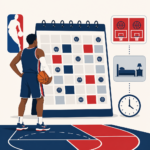
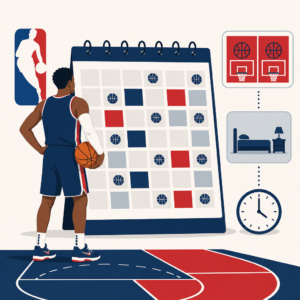
Consistency beats intensity for adult beginners. A strong starting schedule is two or three skill sessions per week, one light conditioning session, and one low-pressure play session when available. Keep early practices to 45 to 60 minutes. Start with a dynamic warm-up: brisk movement, ankle hops, leg swings, lunges, arm circles, and short defensive slides. Then move into ball handling for 10 to 15 minutes, form shooting for 10 minutes, layups and finishing for 10 minutes, passing against a wall or with a partner for 10 minutes, and a short conditioning block to finish.
Repeatable structure matters because skill learning depends on volume and feedback. Track simple metrics: makes out of 25 from close range, consecutive weak-hand dribbles without losing control, or successful right and left layups in a row. Adults improve faster when progress is visible. Video helps too. A phone on a bench can reveal that your base is too narrow, your guide hand interferes with the shot, or your dribble rises above your waist under pressure. Those corrections are hard to feel in real time.
One warning from experience: do not make every session a hard workout. Basketball is already demanding on calves, knees, Achilles tendons, and lower back. Build gradually. If you have not trained recently, add walking, cycling, or rowing to improve aerobic capacity without extra court impact. A practical benchmark for a beginner is being able to move continuously for 20 to 30 minutes, recover between short efforts, and maintain basic technique while tired. That level is enough to start enjoying pickup basketball rather than simply surviving it.
Prepare Your Body and Reduce Injury Risk
Adult athletes need preparation that younger players often get for free. The most common beginner problems are sore knees, tight calves, rolled ankles, and overuse from doing too much too soon. The solution is not avoiding basketball; it is building tolerance. Strength training two times per week supports court performance and durability. Focus on squats or split squats, hinges such as Romanian deadlifts, calf raises, rows, push-ups, planks, and single-leg balance work. If that sounds basic, good. Basic strength is exactly what protects a late beginner.
Mobility should target ankles, hips, and thoracic rotation. Limited ankle dorsiflexion changes landing mechanics and can affect both squatting and defensive stance. Tight hips can make low dribbling and lateral movement feel unnatural. Recovery also matters. Sleep, hydration, and sensible volume make more difference than expensive recovery gadgets. If you are returning from injury, use a physical therapist or sports medicine professional, especially for Achilles, ACL, or chronic patellar tendon issues. Basketball includes cutting and deceleration, and those forces demand respect.
Warm-up quality is one of the clearest separators between adults who stay in the game and adults who quit after a month. Increase body temperature, activate key muscles, rehearse movement patterns, then play. Static stretching alone is not enough before explosive work. During play, pain that sharpens, changes your gait, or worsens with each jump is a stop sign, not something to “push through.” Long-term progress in basketball comes from staying healthy enough to practice regularly.
Find the Right Playing Environment
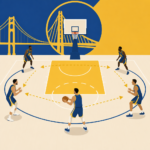
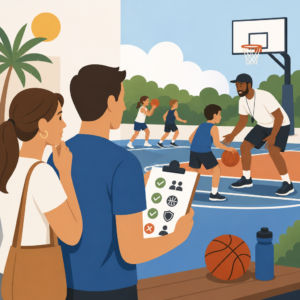
Not every court is equally welcoming to beginners. The best environment is one where you can get repetitions without constant pressure or embarrassment. Start with solo sessions, then one-on-one with a patient friend, then small-sided games such as two-on-two or three-on-three. Smaller games give you more touches, clearer spacing, and more chances to learn than chaotic full-court runs. Recreation centers, community classes, church leagues, workplace gyms, and adult education programs often have beginner-friendly options. Meetup groups and local parks departments can also help you find consistent runs.
Pickup basketball has its own etiquette. Call fouls honestly, respect the “check ball” exchange, rotate fairly, and avoid arguing over every possession. As a beginner, your fastest route to being welcomed is simple: play hard, defend without hacking, move the ball, and communicate. You do not need to score much to contribute. Set a screen, box out, make the extra pass, and hustle back on defense. Those habits earn trust quickly. If a game is too aggressive, too advanced, or unsafe, leave and find another run. Good basketball culture exists, but you may need to search for it.
Leagues can be excellent once you have a basic comfort level. Choose recreational divisions rather than competitive open divisions. Ask organizers about average experience, age range, and officiating. Structured games teach timing, transition defense, inbound plays, and substitution patterns in a way pickup often does not. Still, do not rush. Most adults enjoy leagues more after four to eight weeks of practice, when the ball no longer feels foreign in their hands.
Think Like a Beginner, Progress Like an Athlete
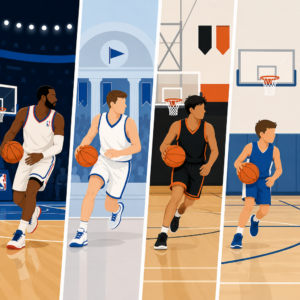
Improvement in adult basketball comes from patience and smart priorities. First, accept that your game will look simple for a while. That is not failure; it is efficient learning. Second, build identity around repeatable strengths. Maybe your early value is defense, rebounding, and safe passes. Great. Games reward reliability. Third, learn by watching the right models. Study players known for footwork, positioning, and decision-making, not only highlight creators. Jrue Holiday, Jalen Brunson, and Tim Duncan offer far better lessons for most beginners than impossible isolation packages.
Use resources wisely. Form shooting videos, beginner ball-handling progressions, and rule explainers are useful. Random social clips promising “three unstoppable moves” are usually not. A coach, experienced friend, or adult skills clinic can accelerate learning because external feedback catches mistakes before they become habits. If you continue within Basketball Basics, the next smart topics are dribbling drills, shooting mechanics, layup footwork, defensive stance, pickup game strategy, and basketball conditioning. Together, those subjects turn this getting started guide into a practical roadmap.
Starting basketball as an adult is less about talent than about sequence. Get the right ball and shoes, learn the rules, master the five foundational skills, follow a repeatable practice plan, prepare your body, and choose beginner-friendly places to play. That approach works because it lowers friction and builds confidence through small wins. You do not need a varsity background, elite fitness, or natural coordination to begin. You need structure, consistency, and enough humility to stay teachable while your body and skills adapt.
The main benefit of starting now is not just that you will eventually play better. It is that basketball gives you a lasting way to train, compete, and connect with other people. Few activities combine skill, exercise, and social energy so effectively. If you have been waiting for the perfect time, this is it. Grab a ball, find a hoop, schedule your first three sessions this week, and use this hub as your starting point for every Basketball Basics article that follows.
Frequently Asked Questions
Is it really possible to start playing basketball as an adult with no experience?
Yes, absolutely. Adults start basketball from scratch all the time, and many of them become competent, confident recreational players much faster than they expected. The biggest misconception is that basketball is only for people who grew up playing in school leagues or youth programs. In reality, adult beginners often have major advantages: they are more patient, more intentional about learning, and usually better at following a structured practice routine. You do not need a childhood background in the sport to learn the fundamentals of dribbling, passing, shooting, footwork, and defense.
The key is to approach basketball as a skill-building process rather than a test of natural talent. In the beginning, you may feel awkward handling the ball, running the court, or trying to coordinate your eyes, hands, and feet at the same time. That is normal. Basketball combines fitness, timing, balance, reaction speed, and decision-making, so it can feel challenging early on. But those abilities improve with repetition. A beginner who practices basic movements consistently for a few months can make noticeable progress in control, stamina, and confidence.
It also helps to redefine what “starting” means. You do not need to jump directly into full-court competitive games. A realistic adult beginner path might start with solo dribbling drills, form shooting close to the basket, short pickup sessions, and beginner-friendly open gym play. As your comfort level improves, you can add more movement, more defensive pressure, and more game-like situations. Starting small is not a weakness; it is the smartest way to build skill without feeling overwhelmed or discouraged.
What skills should an adult beginner focus on first?
The best place to start is with the core skills that affect every part of the game: ball handling, passing, shooting form, footwork, and basic defensive movement. Many beginners want to learn flashy dribble moves or shoot long jumpers right away, but progress comes faster when you build a stable foundation first. If you can control the ball, move your feet well, and make simple decisions under pressure, everything else becomes easier over time.
Ball handling should begin with comfort rather than speed. Practice dribbling with your dominant hand and non-dominant hand while standing still, then while walking, then while changing direction. Keep your eyes up as much as possible so you are not always looking down at the ball. Passing matters just as much, because basketball is a team sport built on quick ball movement. Chest passes, bounce passes, and simple catch-and-pass habits will immediately make you more useful in a group setting.
Shooting should start close to the basket. Focus on balance, hand placement, follow-through, and repeating a smooth motion instead of forcing difficult shots from far away. Adult beginners often improve faster when they treat shooting as a technique problem, not a strength contest. Footwork is equally important. Stopping under control, pivoting, changing direction, and staying balanced help with offense and defense. On defense, learn how to stay low, slide laterally, and keep yourself between your opponent and the basket. You do not have to master everything at once, but if you consistently train these basics, you will build a game that is dependable and practical.
How can I get in shape for basketball without getting injured or overwhelmed?
The safest and most effective approach is to build your fitness gradually around the actual demands of basketball. The sport requires short bursts of running, changes of direction, jumping, stopping, and repeated effort, so getting in shape for it is different from only doing long, steady cardio. That said, you do not need an elite training plan. You need consistency, sensible progression, and enough recovery to let your body adapt.
Start with a combination of walking, light jogging, mobility work, and short basketball sessions. If you have been inactive for a while, even twenty to thirty minutes of movement a few times per week can make a real difference. As your fitness improves, add intervals that mimic game action, such as brief sprints, defensive slides, jump stops, and repeated layup runs. Strength work is also extremely valuable. Basic exercises for the legs, core, hips, and upper body can help protect your knees, ankles, and back while improving power and stability. You do not need to lift like an athlete at a professional level, but you do need enough strength and control to move well on the court.
Injury prevention comes from respecting your current level. Warm up before playing, especially your ankles, calves, hips, and shoulders. Wear shoes designed for court use with good traction and support. Do not jump into intense pickup games if you have not yet built conditioning. One of the most common mistakes adult beginners make is doing too much too soon because adrenaline makes them feel capable in the moment. A better plan is to increase your court time and intensity week by week. Mild soreness is normal; sharp pain, swelling, or lingering joint discomfort is not. When in doubt, back off, recover, and progress steadily rather than trying to rush the process.
Where should I play if I feel intimidated by experienced players?
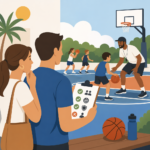
Look for environments that are welcoming, low-pressure, and suited to your current skill level. The best options for adult beginners often include community recreation centers, local gyms with open court hours, beginner-friendly pickup runs, adult education sports programs, and casual games organized by friends or coworkers. Some areas also offer skills clinics or recreational leagues specifically for adults, which can be ideal because they give you structure without expecting advanced experience on day one.
If competitive pickup games feel intimidating, start by spending time on the court during quieter hours. Use that time to shoot, dribble, practice layups, and become comfortable moving around the space. This helps you build confidence before you have to react to other players. You can also watch a few games from the sideline and get a feel for the pace, etiquette, and style of play at that location. Not every court culture is the same. Some runs are highly competitive, while others are much more relaxed and social. Finding the right environment can make a huge difference in whether you stick with basketball long term.
When you do join games, be honest and simple. You do not need to apologize for being new, but it is completely fine to say you are learning. Most players respond well to someone who hustles, listens, passes the ball, and plays within their limits. You do not need to dominate to belong. Set small goals: get back on defense, make the easy pass, box out, call for the ball clearly, and stay engaged. Those habits earn respect quickly. Experienced players usually care less about whether you are polished and more about whether you play hard, stay under control, and contribute to the game.
How long does it usually take for an adult beginner to feel comfortable playing real games?
There is no single timeline, but most adult beginners start feeling noticeably more comfortable within a few weeks to a few months of regular practice. The exact pace depends on how often you play, your general fitness level, whether you have experience in other sports, and how intentionally you practice. Someone who gets on the court two or three times a week and works on fundamentals consistently will usually improve much faster than someone who only plays occasional pickup games without focused repetition.
Comfort tends to develop in stages. First, you become less self-conscious with the ball. Then you begin recognizing basic spacing, where to move without the ball, when to pass, and how to avoid the most common mistakes. After that, the game starts to slow down mentally. You may still miss shots or lose the ball under pressure, but you no longer feel completely lost. That is an important turning point, because once the court feels more familiar, learning accelerates. You can pay attention to decision-making and timing instead of just trying to survive each possession.
The most useful mindset is to measure progress in practical ways rather than dramatic ones. Can you dribble more confidently with both hands? Can you make open layups more consistently? Can you defend without crossing your feet? Can you play for longer without exhausting yourself? Can you contribute in a casual game without panicking? Those are meaningful signs of growth. Adult beginners often underestimate how much progress they are making because they compare themselves to experienced players. A better comparison is who you were one month ago. If you stay consistent, basketball becomes more natural, more fun, and far less intimidating than it feels on day one.