
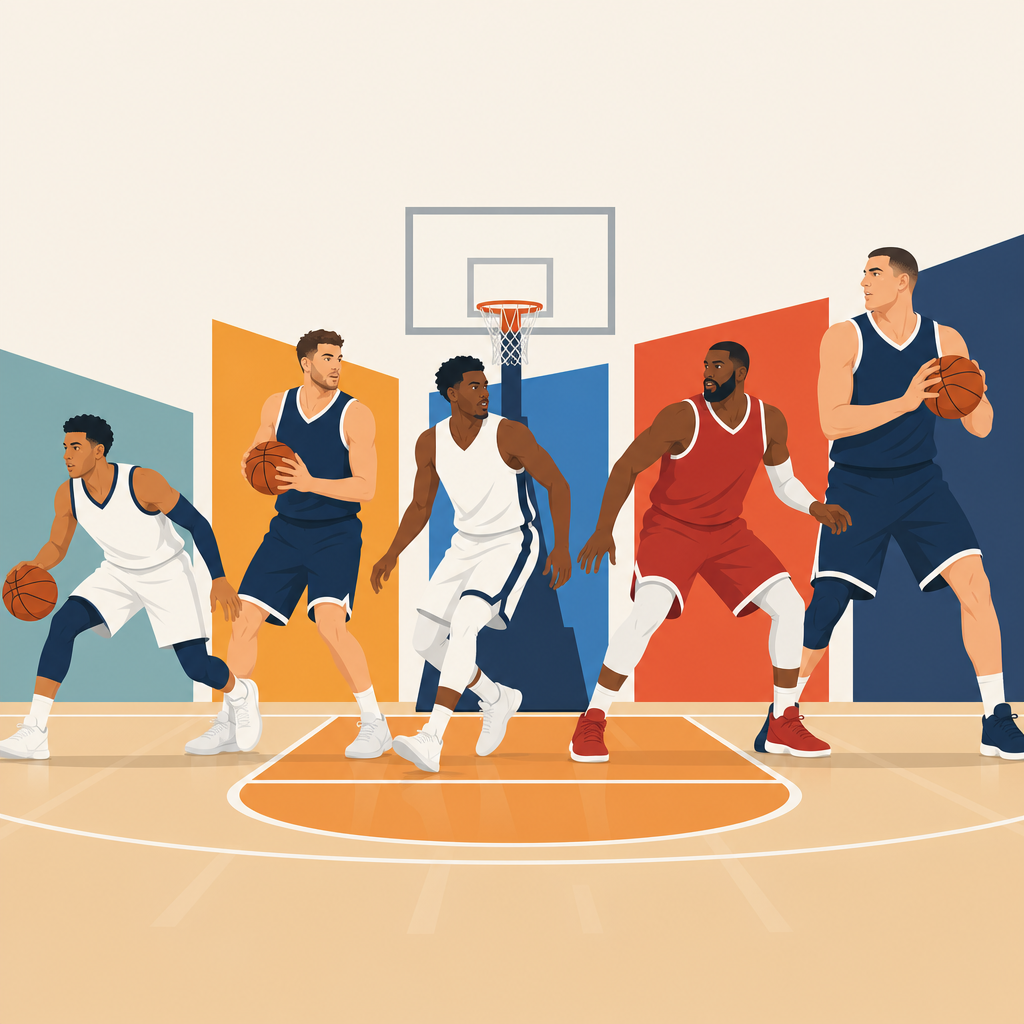
Basketball positions explained clearly means understanding how the five traditional spots on the floor—point guard, shooting guard, small forward, power forward, and center—shape offense, defense, spacing, leadership, and lineup construction in today’s NBA. Positions still matter, but not in the rigid way many fans learned from old box scores. In modern basketball, roles often matter as much as labels: a team may start a nominal center who handles the ball, a forward who protects the rim, or a guard who screens like a big. I have coached youth teams, broken down NBA film, and built scouting reports, and the same lesson keeps showing up: the best way to understand positions is to study responsibilities, not just height.
A basketball position is the job a player performs within a lineup. A role is the specific function that player is asked to carry out in a scheme. For example, a point guard may organize the offense, push pace in transition, and defend at the point of attack. A shooting guard might space the floor, attack closeouts, and guard bigger perimeter scorers. A center may set ball screens, rebound, and anchor drop coverage. Yet those duties overlap more than ever. Nikola Jokic is a center who runs an offense through handoffs and post reads. Luka Doncic is listed as a guard but often functions as a primary creator in a forward-sized body. Jayson Tatum plays wing, initiator, and small-ball power forward depending on matchup.
This matters because positions are the framework fans use to understand lineups, player development, and team building. If you know what each role demands, you can quickly see why some lineups create elite spacing, why others struggle to defend pick-and-roll, and why one prospect projects as a modern playoff player while another may be limited. This page serves as a complete hub for positions and roles within basketball basics, giving you a practical foundation before you dig into narrower topics such as ball handling, screening, rebounding, help defense, or offensive spacing.
Point Guard: The Offense Organizer and Decision Engine
The point guard, or PG, is traditionally the lead ball handler and primary decision-maker. In simple terms, the point guard gets the team into offense, reads the defense, and creates efficient shots for teammates or for himself. In today’s NBA, that job starts before the half-court set begins. A good point guard advances the ball quickly, recognizes cross-matches in transition, calls for early drag screens, and manipulates help defenders with pace and timing. When I evaluate point guards on film, I focus less on raw assist totals and more on processing speed, live-dribble passing, turnover control, and command of pick-and-roll coverages.
Classic examples help. Chris Paul has long been the template for control: he snakes ball screens, rejects picks when defenders cheat, gets to his elbow spots, and punishes weak-side mistakes. Stephen Curry changed the position by combining point guard skills with unprecedented off-ball movement and shooting gravity. Tyrese Haliburton shows the modern version of a tall lead guard who creates efficient offense through pace, hit-ahead passing, deep pull-up range, and quick decision-making. These players prove that point guard is not just about dribbling a lot. It is about steering the possession toward a high-value outcome.
Defensively, point guards usually guard the ball first. They must fight over screens, contain penetration, and keep the offense from turning the corner. Smaller guards can be targeted in switches, so screen navigation and anticipation are critical skills. On offense, the best point guards must also score enough to force defenses into honest coverage. If defenders can go under every screen without consequence, the entire attack compresses.
Shooting Guard: Scoring Threat, Spacer, and Secondary Creator
The shooting guard, or SG, is traditionally the team’s perimeter scorer. In practical terms, this position is built around shooting, movement, and complementing the primary ball handler. A great shooting guard stretches the floor from above the break and from the corners, attacks hard closeouts, relocates after passes, and can take over possessions when the offense stalls. In many NBA systems, the shooting guard is the player sprinting off pindowns, lifting on drives, or running off dribble handoffs to force defensive confusion.
Think about Klay Thompson at his peak. He could score 30 points with very few dribbles because his footwork, balance, and off-ball timing were elite. Devin Booker represents a broader modern shooting guard profile: high-level shotmaking, enough handle to run pick-and-roll, and improved playmaking against traps. Anthony Edwards brings power and downhill force to the position, showing how explosive athletes can blend wing scoring with guard responsibilities. The common thread is pressure on the defense. A strong shooting guard makes help defenders hesitate, and that half-second changes everything for the offense.
On defense, shooting guards often take on difficult assignments against scoring wings or larger guards. They need lateral quickness, discipline chasing shooters through screens, and enough strength to absorb contact. Because teams hunt weaknesses in playoff series, a shooting guard who cannot defend in multiple actions becomes hard to keep on the floor. The best modern SGs are therefore not one-dimensional snipers. They are two-way perimeter players who can shoot, attack, pass on the move, and survive complex defensive game plans.
Small Forward: The Versatile Wing Connector
The small forward, or SF, is often the most flexible position in basketball. Traditionally, the small forward sits between guards and bigs, offering size on the wing without sacrificing mobility. In today’s NBA, this spot is frequently filled by the most adaptable player in the lineup. A small forward may initiate offense, defend multiple positions, rebound in traffic, and space the floor. When coaches talk about lineup versatility, they are often talking about what their wings can do.
LeBron James has redefined the small forward role multiple times. Early in his career he was a transition force and downhill scorer. Later he became a full-scale offensive engine, creating from the top, the post, and the nail. Kawhi Leonard has shown the value of a wing who can defend top scorers, operate in the mid-post, and generate efficient offense late in games. Mikal Bridges illustrates another version: a low-mistake wing who spaces, cuts, finishes, and guards across positions. Small forwards connect actions. They keep possessions flowing rather than sticking.
From a tactical standpoint, the small forward is usually judged by scalability. Can this player fit next to stars? Can he defend guards and forwards? Can he close games as a rebounder in a smaller lineup? These questions matter because the NBA increasingly prizes wings who can solve multiple problems at once. If a small forward can shoot 38 percent from three, make a quick extra pass, and switch one through four, he becomes extremely valuable even without a star usage rate.
Power Forward: From Interior Enforcer to Hybrid Frontcourt Piece
The power forward, or PF, used to live mainly on the block and around the elbows. In the current NBA, the position has expanded dramatically. Many power forwards are now stretch shooters, short-roll passers, switch defenders, and weak-side rim protectors. Some still score inside and dominate the glass, but the best modern power forwards can play in space. I often describe the PF as the frontcourt problem-solver: this player has to cover for mistakes, screen with force, rebound, and often guard in uncomfortable areas.
Tim Duncan represented the classic power forward fundamentals: footwork, post defense, shot contesting, and efficient interior scoring. Draymond Green changed the conversation by turning the position into a defensive quarterback and offensive connector. Giannis Antetokounmpo, although functionally positionless at times, shows how a power forward can pressure the rim in transition, defend all over the floor, and tilt an entire scheme with length and force. Jaren Jackson Jr. adds another model, combining shooting with elite help-side shot blocking.
The modern PF must make quick reads. On offense, he may set a screen and then short roll into a four-on-three situation, where one correct pass leads to a layup or corner three. On defense, he may switch onto a guard one possession, tag a rolling center the next, then rotate to contest at the rim. A power forward who cannot move laterally or shoot enough to space the floor can still be useful, but only if the rest of the lineup compensates. Fit matters enormously here.
Center: Rim Protector, Screener, Rebounder, and Sometimes Playmaker
The center remains the anchor of most lineups, even as the league has become more perimeter-oriented. Traditionally, the center protects the basket, controls the defensive glass, sets screens, and finishes inside. Those duties still define the job, but the best centers today add touch passing, decision-making from the elbows, and coverage flexibility on defense. The center is often involved in every possession, even when he does not take the shot, because screens, rolls, seals, box-outs, and paint presence shape where everyone else can go.
Joel Embiid shows the scoring side of the position: post play, face-up shooting, foul drawing, and rim deterrence. Rudy Gobert represents the vertical-spacing and defensive-end specialist, using screen setting, lob gravity, and elite rim protection. Nikola Jokic has expanded the definition entirely by serving as a primary hub who reads cutters, throws one-handed skip passes, and punishes doubles with precision. Bam Adebayo demonstrates the mobile center archetype, switching onto guards, handling dribble handoffs, and facilitating from the high post.
Because playoff basketball is ruthlessly tactical, centers are judged by how they survive specific actions. Can they defend pick-and-roll without giving up open pull-up threes? Can they recover to the rim? Can they punish small lineups on the glass or in the post? Can they avoid clogging driving lanes on offense? The answers determine whether a center is merely playable or truly foundational.
How the Five Positions Work Together in Real Lineups
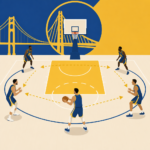
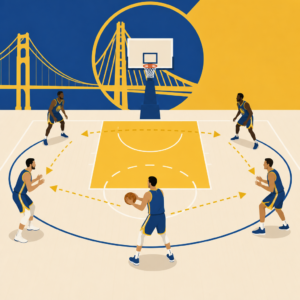
Understanding basketball positions explained in isolation is useful, but games are won through combinations. A lineup works when the five roles complement one another in spacing, creation, screening, rebounding, and defensive coverage. Coaches are constantly balancing tradeoffs. More shooting may reduce rim protection. More size may hurt ball handling. More switching may weaken defensive rebounding. The best lineups solve several of these tensions at once.
| Position | Primary Offensive Role | Primary Defensive Role | Modern Must-Have Skill |
|---|---|---|---|
| Point Guard | Initiate offense and create advantages | Contain the ball | Pick-and-roll decision-making |
| Shooting Guard | Space, score, and attack closeouts | Chase and contest perimeter scorers | Reliable three-point shooting |
| Small Forward | Connect actions and add versatile scoring | Switch across wing matchups | Two-way versatility |
| Power Forward | Screen, short roll, rebound, and stretch | Help protect the rim and cover space | Defensive mobility |
| Center | Screen, finish, rebound, and anchor interior play | Protect the rim | Coverage adaptability |
A simple example is the Denver Nuggets. Jokic functions as the offensive hub at center, Jamal Murray gives them shot creation from the guard spot, Aaron Gordon fills a power forward role as cutter and physical defender, and wings like Michael Porter Jr. provide spacing. The roles interlock. Another example is the Boston Celtics, who have often used wings and forwards with interchangeable defensive responsibilities while relying on multiple ball handlers instead of one classic point guard. Modern teams still list five positions, but they win by blending them intelligently.
Why Positions Are More Fluid Than Ever
The biggest change in today’s NBA is not that positions disappeared. It is that every position absorbed skills that once belonged somewhere else. Centers pass more. Forwards handle more. Guards rebound more. This shift happened because spacing, three-point volume, and playoff matchup hunting forced players to become more complete. If a defender cannot switch, offenses target him. If a shooter cannot make a basic read, defenses trap and rotate. If a big cannot defend in space at all, spread pick-and-roll exposes him.
That is why terms like combo guard, wing, stretch four, point forward, and small-ball five have become standard. They describe hybrids created by modern tactics. Still, the old five-position model remains valuable because it gives structure to player evaluation. A 6-foot-2 guard and a 6-foot-10 center face different physical demands, help responsibilities, and matchup problems. Labels are not perfect, but they are useful starting points.
For players, coaches, and fans, the smartest approach is to learn both the traditional definitions and the modern adaptations. Start with the core jobs of PG, SG, SF, PF, and center. Then ask how a specific team bends those jobs. That is how you read basketball accurately.
Basketball positions explained well should leave you with one clear idea: positions are still real, but roles decide impact. The point guard organizes and creates. The shooting guard spaces and scores. The small forward connects the lineup with versatility. The power forward solves frontcourt problems through screening, rebounding, and defensive coverage. The center anchors the paint while shaping both ends with size and timing. In today’s NBA, the best players often blur those boundaries, yet they still succeed because they master the responsibilities underneath the label.
If you are learning the game, use these five positions as your map. When you watch a team, identify who brings the ball up, who bends the defense with shooting, who guards the best wing, who handles the dirty work inside, and who protects the rim. Those answers will tell you how the lineup is built and why it works. From here, the next step is simple: keep exploring basketball basics, study specific roles in real game film, and use this hub as your foundation for understanding every lineup you watch.
Frequently Asked Questions
What are the five traditional basketball positions, and what does each one usually do in today’s NBA?
The five traditional basketball positions are point guard (PG), shooting guard (SG), small forward (SF), power forward (PF), and center (C). At a basic level, the point guard is often responsible for organizing the offense, bringing the ball up the floor, reading the defense, and creating shots for teammates. In today’s NBA, though, a point guard is not always a small pass-first player. Many modern point guards are also primary scorers, high-volume pick-and-roll creators, and late-clock decision-makers who need to balance playmaking with efficient shot creation.
The shooting guard is typically expected to score, stretch the floor, and provide secondary ball-handling. Traditionally, this was the perimeter scorer next to the point guard, but modern shooting guards may initiate offense just as often, especially in lineups built around multiple creators. The small forward is usually the most flexible wing position, often asked to score from the perimeter, attack closeouts, defend multiple positions, rebound, and fit around stars. Because versatility matters so much in the modern game, the small forward is often one of the most valuable lineup connectors on the floor.
The power forward used to be associated with low-post play and mid-range scoring, but today the role has expanded dramatically. Many power forwards are now floor spacers, switchable defenders, short-roll passers, or weak-side rim protectors. Some operate like oversized wings, while others still bring physicality inside. The center is still usually the biggest player, but the job description has changed too. Centers now may screen, rebound, finish around the basket, anchor the defense, and protect the rim, but many also handle the ball, facilitate from the elbow, or stretch defenses with outside shooting. In short, the five positions still provide a useful framework, but in today’s NBA, responsibilities are defined as much by skill set, system, and matchup as by the label next to a player’s name.
Do basketball positions still matter, or have roles replaced positions in the modern NBA?
Positions still matter, but they matter differently than they once did. They remain useful for understanding lineup balance, defensive matchups, offensive spacing, and roster construction. Coaches still need someone to initiate offense, someone to defend the point of attack, wings who can switch and space the floor, and interior players who can rebound and protect the rim. So in that sense, the basic positional structure has not disappeared. What has changed is that teams are less concerned with strict labels and more focused on what each player can actually do.
That is why many analysts say roles now matter as much as, or even more than, positions. A player listed as a center may function as a playmaker. A forward may be the team’s best rim protector. A shooting guard may run the offense like a point guard, while a point guard may spend large stretches off the ball as a shooter. Teams build around capabilities such as shot creation, screen navigation, help defense, switching, spacing, rim pressure, rebounding, and decision-making. Those traits often tell you more than the traditional position listing.
Still, the idea that positions no longer matter at all is overstated. A lineup with no real ball-handler can struggle to organize offense. A lineup with no credible rim protection may collapse defensively. A lineup with too many non-shooters can shrink the floor, while one with too little size may get overwhelmed on the glass. Modern basketball is less about eliminating positions and more about blending them. The smartest way to understand today’s NBA is to use positions as a starting point, then evaluate the specific role each player fills within a team’s system.
What is the difference between a point guard and a shooting guard in modern basketball?
The traditional difference is simple: a point guard is the primary organizer and playmaker, while a shooting guard is more focused on scoring and floor spacing. In older basketball models, the point guard was expected to direct traffic, control tempo, and rack up assists, while the shooting guard worked off the ball, came off screens, and looked for scoring opportunities. That distinction still exists, but in the modern NBA, the line between the two positions is often blurred.
Today, many teams rely on multiple ball-handlers, which means the shooting guard may initiate pick-and-rolls, bring the ball up, or act as a secondary creator. Likewise, some point guards play off the ball when paired with another high-level initiator and are valued heavily for catch-and-shoot ability. The more accurate modern distinction often comes down to offensive responsibility and defensive matchup. A point guard is usually the player most trusted to make first-read and second-read decisions with the defense shifting in real time. A shooting guard is often expected to pressure defenses as a scorer, attack tilted defenses, and provide complementary playmaking rather than full-time orchestration.
Defensively, the difference can also show up in assignments. Point guards often defend smaller, quicker ball-handlers at the point of attack, while shooting guards may take on bigger perimeter scorers or wings depending on the lineup. But even that can change based on size, strength, and team scheme. In practical terms, the modern point guard-versus-shooting guard debate is less about who brings the ball up first and more about who creates the structure of the offense, who bends the defense with scoring gravity, and who can survive the toughest backcourt matchups.
How have the roles of power forwards and centers changed compared with past eras?
Power forwards and centers have changed more dramatically than almost any other positions because the NBA has become faster, more spaced out, and more skill-driven. In past eras, power forwards were often interior scorers and rebounders who operated from the low post or mid-post, while centers were expected to play near the rim almost exclusively as scorers, rebounders, and shot blockers. Those responsibilities still exist, but the modern game asks frontcourt players to do much more in space.
Today’s power forwards often need to defend on the perimeter, switch across multiple positions, rotate as help defenders, and either space the floor with three-point shooting or create advantages as short-roll passers and face-up attackers. Many teams want their power forward to be mobile enough to guard wings in certain actions while still being strong enough to rebound and hold up physically inside. That makes the position one of the most tactically demanding roles in basketball.
Centers have evolved from purely paint-bound players into a wider variety of archetypes. Some are still traditional rim-running screen setters who finish lobs, rebound, and protect the basket. Others stretch the floor as pick-and-pop threats. Some centers are elite offensive hubs who facilitate from the high post, make quick reads, and punish double teams with passing. Defensively, the center often remains the backbone of the scheme, especially in drop coverage or rim-protection systems, but many teams now also value centers who can hedge, switch, or at least survive in space. The modern frontcourt is defined less by size alone and more by versatility, mobility, decision-making, and fit within a team’s overall style.
Why are versatile wings and positionless lineups so important in today’s NBA?
Versatile wings and so-called positionless lineups are important because they give teams more options on both ends of the floor. A versatile wing, usually playing somewhere between shooting guard and power forward depending on the lineup, can defend multiple positions, handle the ball, shoot from deep, attack closeouts, and keep the offense flowing without needing plays called specifically for them every possession. That kind of adaptability is extremely valuable in a league where teams constantly hunt mismatches, force switches, and test weak defenders in space.
Positionless lineups are not really about having no positions at all; they are about reducing rigid specialization. When a team has five players who can pass, dribble, shoot, rotate defensively, and make quick decisions, it becomes much harder to defend. Offensively, these lineups improve spacing, pace, and ball movement. Defensively, they can switch more actions, recover faster, and avoid being targeted in isolation or pick-and-roll. That flexibility becomes especially important in the playoffs, when opponents spend entire series trying to expose one-dimensional players.
At the same time, successful positionless basketball still requires role clarity. Someone has to initiate offense under pressure. Someone has to protect the rim or at least provide interior resistance. Someone has to rebound consistently and communicate on defense. The best modern teams combine versatility with structure. They may look interchangeable on paper, but each player still fills a clear purpose. That is the key to understanding today’s NBA: positions have become more fluid, but responsibilities have not disappeared. They have simply been redistributed across players with broader and more overlapping skill sets.