
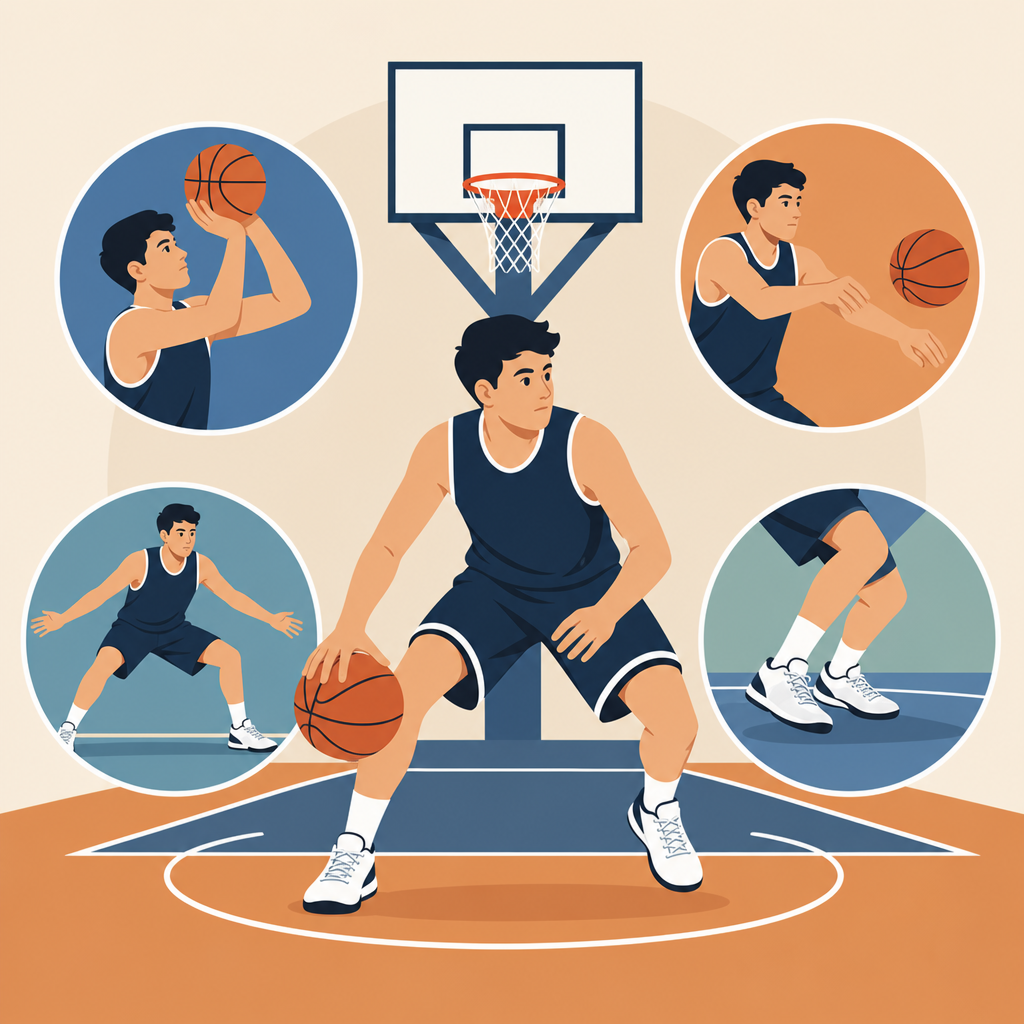
Basketball fundamentals are the core skills that let a new player contribute before advanced moves, athleticism, or position-specific tactics matter. When coaches talk about “skills explained,” they usually mean the repeatable habits that show up on every possession: stance, dribbling, passing, shooting, and defensive movement. I have coached beginners in school gyms, community leagues, and adult rec programs, and the pattern is always the same. Players who master the basics early improve faster, earn more minutes, and avoid the frustration that comes from copying highlight plays without understanding how the game actually works.
For a beginner, fundamentals are not boring extras. They are the operating system of basketball. A solid base affects ball security, shot quality, decision-making, and team trust. It also reduces wasted movement. A player who catches in balance, pivots correctly, and sees the floor can make a simple chest pass at the right time instead of forcing a turnover. A player who slides with proper defensive posture can stay in front of an opponent without reaching and fouling. These details decide games long before advanced dribble combinations or step-back jumpers do.
This article is a hub for basketball basics because new players usually ask the same practical questions. What should I learn first? Which skills transfer to every position? How should I practice when I do not have a trainer? The answer is to prioritize five fundamentals that appear in every level of the sport, from youth basketball to FIBA competition and the NBA. They are easy to define, harder to execute consistently, and essential for long-term development. Learn them in the right order and every future skill becomes easier to build.
Before breaking them down, it helps to define one more term: mastery. For a beginner, mastery does not mean perfection. It means performing a skill with reliable technique under light pressure, then under game speed, then in live play. USA Basketball coaching materials emphasize progression for a reason. Players need sound mechanics first, then repetition, then decision-making. With that standard in mind, here are the five basketball fundamentals every new player should master before anything else.
1. Athletic stance, balance, and footwork
If I could fix only one thing for a brand-new player, I would start with stance and footwork. Everything in basketball begins from the ground up. A good athletic stance means feet about shoulder width apart, knees bent, hips lowered, chest up, and weight on the balls of the feet without leaning too far forward. Hands stay active, and the head stays level enough to see the floor. This sounds simple, but beginners often stand too upright, click their heels together, or cross their feet when they move. Those mistakes slow every action.
Footwork includes stopping, starting, pivoting, jumping, and landing under control. The two most important stops are the jump stop and the stride stop. A jump stop lets a player land on two feet and become balanced quickly after a catch or drive. A stride stop helps absorb momentum and set up a layup or pass. Pivoting matters just as much. Once a player establishes a pivot foot, that foot stays planted while the other foot moves to create passing angles, protect the ball, or square to the basket. Travel calls often happen because beginners have never practiced these details deliberately.
Real improvement comes from small, precise reps. I like to teach stance checks in front of a mirror, then add jump stops from a jog, forward and reverse pivots, and closeout footwork. Watch strong defenders at any level and you will see efficient feet before anything else. Kawhi Leonard and Jrue Holiday are elite examples on defense, while Jalen Brunson is excellent at using balance and pivots to create space without wasting movement. New players do not need those stars’ advanced reads yet, but they do need the same foundation.
2. Ball handling and dribbling with purpose
Dribbling is the skill beginners usually want most, but they often misunderstand it. Great ball handling is not a collection of flashy moves. It is the ability to control the ball with either hand, keep the eyes up, change pace, protect the dribble, and get to a useful spot on the floor. Under official rules, a legal dribble begins when the ball is pushed to the floor and ends when a player places both hands on it or lets it come to rest. That matters because many turnovers are not caused by pressure alone; they come from poor control and rule violations.
For a new player, the first benchmarks are straightforward. Dribble with fingertips rather than slapping the ball with a flat palm. Keep the wrist flexible, the off arm ready to shield legally, and the body low enough to stay balanced. Practice pound dribbles, retreat dribbles, crossovers, and speed changes before trying combinations. The eyes should scan the court, not stare at the ball. In games, the best beginner dribbler is often the one who knows when not to dribble. One or two efficient dribbles to improve an angle is better than six unnecessary dribbles that let the defense recover.
Here is a practical progression I use for beginners because it builds control before creativity.
| Skill focus | What to practice | Common mistake | Game benefit |
|---|---|---|---|
| Control | Stationary pound dribbles with each hand at low, middle, and high heights | Looking down constantly | Fewer turnovers under light pressure |
| Protection | Body between defender and ball, retreat dribbles, off-hand shield | Exposing the ball on the side | Safer handling against pressure |
| Change of direction | Crossover, between-the-legs, and inside-out at walking then jogging speed | Wide, slow moves | Creates angles to attack or pass |
| Change of pace | Slow-to-fast bursts after a hesitation | Same speed every dribble | Beats defenders without extra moves |
| Decision-making | Dribble into jump stop, pivot, pass, or finish | Overdribbling into traffic | Connects handle to real offense |
Real-world examples make this clear. Youth players often copy an advanced combo from social media, then lose the ball because their base is too high and the move has no purpose. By contrast, a simple in-and-out dribble used at the right time can create a clean driving lane. Chris Paul built a Hall of Fame career on exactly this principle: tight handle, excellent pace, low turnover rate, and constant control. Beginners should chase that standard first. Fancy moves only matter if they help you arrive balanced and ready for the next read.
3. Passing, catching, and decision-making
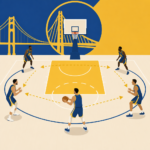
Passing is the fastest way to move the ball, the defense, and the advantage. New players sometimes treat it as a secondary skill, but coaches do not. Teams trust players who can catch cleanly, pivot under control, and deliver the right pass on time. The basic pass types are chest pass, bounce pass, overhead pass, and push pass. Each has a purpose. A chest pass is quick and direct in open space. A bounce pass helps feed a cutter or avoid reaching hands. An overhead pass can reverse the ball or hit a target over traffic. The right pass depends on angle, distance, timing, and defenders.
Catching is part of passing skill, not a separate afterthought. Players should show target hands, meet the ball, and secure it into a ready position without bringing it down where defenders can swipe. On the catch, the feet should land balanced so the player can shoot, pass, or drive immediately. This is often called triple threat position. From there, beginners can scan the floor, pivot to improve the angle, and make a simple read. In my experience, youth offenses stall less when players learn to catch ready and make the next pass quickly.
Good passing is really decision-making under time pressure. A “good passer” is not the player who attempts the hardest feed. It is the player who recognizes help defense, sees where the next advantage is, and delivers the ball accurately. Watch teams with strong ball movement and you will notice the ball rarely sticks. The San Antonio Spurs under Gregg Popovich became the clearest modern example of this idea, using extra passes and quick decisions to create efficient shots. Beginners can apply the same concept in simple form: pass early, pass on target, and pass to help a teammate do something useful.
4. Shooting mechanics and finishing at the rim
Shooting is the most visible basketball skill, but beginners improve faster when they learn mechanics and finishing together. A sound shooting motion starts with balance, eyes on the target, elbow reasonably aligned under the ball, guide hand on the side, and a smooth upward motion that finishes with wrist flexion and touch. Coaches describe these details with different cues, but the principles are consistent. The shot should be repeatable, compact, and free of unnecessary tension. Most beginners miss not because they lack strength alone, but because their feet, hands, and release timing are disconnected.
Start close to the basket. Form shooting from a few feet away teaches touch, arc, and alignment better than launching long jumpers. I usually have new players make one-hand shots near the rim, then add the guide hand, then step back gradually. Video helps. When players see themselves fading, twisting, or dropping the ball below the waist before every shot, correction becomes easier. Research and coaching consensus both support blocked practice for mechanics early on, followed by variable practice from different spots and speeds to improve transfer into games.
Finishing matters because many beginners will score more often at the rim than from outside. That means learning right- and left-hand layups, inside-foot and outside-foot timing, using the backboard, protecting the ball from shot blockers, and stopping under control for short floaters or power finishes. Watch how elite guards such as Stephen Curry or Shai Gilgeous-Alexander use angles, touch, and body positioning around the rim. They are not simply throwing the ball up. They read the defender, create a shield with the body, and finish softly off the glass or with high release points. New players should practice those simple versions every session.
5. Defensive stance, positioning, and rebounding habits
Defense is where fundamentals become immediately visible. A beginner who cannot yet score much can still help by staying in stance, communicating, contesting without fouling, and rebounding. The base position is similar to an athletic stance but slightly wider, with hips low, chest up, and hands active. Players should slide rather than click their heels or cross their feet on short movements. On closeouts, the goal is to arrive under control with one hand high to contest and the body balanced enough to guard the drive. Reaching across the body usually leads to fouls and broken defensive shape.
Positioning depends on the ball, the player being guarded, and the team scheme. Even in simple man-to-man defense, beginners need to understand ball-you-man alignment, help position, and recovery. If your player is one pass away, you should be close enough to contest while still seeing the ball. If your player cuts, you move with purpose, not by turning fully and losing sight of the action. Communication ties this together. Calling “ball,” “help,” “screen,” or “shot” is not decoration. It improves reaction time for the entire unit.
Rebounding is the finishing skill of defense and a hidden scoring skill on offense. The basic technique is to find a body, make contact, and pursue the ball with two hands. Beginners often watch the flight of the shot and forget to box out. That gives up second-chance points. Teams that rebound well control possessions, and possession control is one of the clearest drivers of winning at every level. If you are new to the game and want fast playing time, defend with discipline and rebound every miss. Coaches notice that immediately.
The five skills explained here work best as one system, not isolated drills. Good footwork improves dribbling control. Better dribbling creates cleaner passing angles. Clean catches and balance lead to better shooting. Strong defensive stance reinforces overall movement quality and competitive toughness. That is why these are the basketball fundamentals every new player should master before anything else. They show up on every possession, translate across positions, and scale from beginner games to elite competition.
If you are building your basketball basics, start with a simple weekly plan: footwork every session, ball handling with both hands, passing and catching against a wall or with a partner, form shooting and finishing close to the rim, then defensive slides and rebounding work. Track makes, turnovers, and quality reps rather than chasing complicated drills. Improvement comes from doing ordinary things well, repeatedly, and under control. Master these five fundamentals first, and every advanced skill you want later will rest on stronger ground. Pick one area today, practice it with intent, and build from there.
Frequently Asked Questions
What are the five basketball fundamentals every new player should learn first?
The five fundamentals every beginner should focus on first are stance and footwork, ball handling, passing, shooting mechanics, and defensive movement. These are the skills that show up on nearly every possession, no matter your age, position, or level of athleticism. A solid stance and good footwork help you stay balanced, change direction efficiently, and play under control. Ball handling allows you to move the ball safely and confidently without constantly looking down. Passing teaches you how to move the ball quickly, make teammates better, and avoid unnecessary turnovers. Shooting mechanics give you a repeatable motion that improves consistency over time instead of relying on luck or strength alone. Defensive movement helps you stay in front of your player, contest shots, and contribute even when you are not scoring.
For new players, these fundamentals matter more than flashy moves, deep three-pointers, or advanced position-specific training. In real games, coaches notice the players who can stop, pivot, protect the ball, make a simple pass, take a balanced shot, and defend without fouling. Those are the players who earn trust early. Once these basics become habits, everything else gets easier. Advanced dribble moves work better when your stance is low and balanced. Shooting range improves when your form is sound. Team offense flows better when your passing is sharp. Defense becomes less chaotic when your feet and angles are disciplined. If a beginner wants the fastest path to real improvement, these five fundamentals should come before anything else.
Why do coaches emphasize stance and footwork so much for beginners?
Coaches emphasize stance and footwork because they affect everything else a player does on the court. A good athletic stance usually means your feet are about shoulder-width apart, knees bent, hips lowered, chest up, and weight balanced on the balls of your feet. From that position, you can dribble, pass, shoot, slide on defense, and react to the game much faster. Beginners who stand too upright tend to lose balance, move slowly, and struggle to stay under control. When the foundation is weak, even simple skills become harder than they should be.
Footwork is just as important because basketball is a game of angles, timing, and balance. Learning how to jump stop, stride stop, pivot, reverse pivot, and change direction cleanly helps a new player avoid travels, stay strong with the ball, and create better opportunities without needing elite speed. Good footwork also improves defense, because staying in front of an opponent is often more about positioning and body control than raw athleticism. On offense, proper footwork helps set up better passes and more balanced shots. On defense, it helps you slide, recover, and contest without crossing your feet or reaching unnecessarily. In practical terms, stance and footwork are what let a beginner look composed instead of rushed. That is why experienced coaches return to them over and over.
How can a beginner improve dribbling and ball control quickly?
The fastest way for a beginner to improve dribbling is to focus on control, posture, and repetition before trying advanced moves. Start with a low, balanced stance and keep your eyes up as much as possible. The goal is not just to bounce the ball; it is to handle it without losing awareness of the floor. New players often make the mistake of dribbling too high, slapping at the ball, or staring down at it every second. Better habits include using your fingertips rather than your palm, keeping the ball tight to your body, and learning to dribble at different heights depending on the situation. Low dribbles are useful under pressure, while stronger waist-high dribbles can help when moving into open space.
Beginners should spend time on basic stationary drills with both hands before moving on to game-speed movement. Pound dribbles, control dribbles, crossover dribbles, and alternating rhythm drills all help build comfort. Once that feels stable, add walking and jogging dribbles, changes of pace, and direction changes. Just as important, practice protecting the ball with your off arm and body position. A player with modest speed but strong ball control is more effective than a player with flashy moves and loose handling. Improvement comes from daily repetition and attention to details, not from copying highlights. If a beginner can dribble confidently with either hand, keep their head up, and stay balanced while moving, they will already be ahead of many new players.
What matters most when learning to pass and shoot as a new basketball player?
When learning to pass, what matters most is accuracy, timing, and decision-making. A good pass is not just technically correct; it reaches the teammate on time and in a spot where they can do something useful with it. For beginners, chest passes, bounce passes, and overhead passes are the main priorities. Each should be thrown with balance, proper hand placement, and enough force to arrive cleanly. New players should also learn to step into passes, snap their wrists, and follow through toward the target. Just as important, they need to understand when not to pass. Many turnovers happen because beginners force the ball into crowded spaces or deliver soft passes that defenders can easily intercept. Strong passing habits make a player immediately more valuable because they help the whole team function.
For shooting, consistency starts with simple, repeatable mechanics. A beginner should focus on balance, hand placement, alignment, and follow-through before worrying about range. Start close to the basket so the motion stays smooth and controlled. The shooting hand should guide the ball upward, while the non-shooting hand acts as support rather than force. Feet should be set under control, the body should stay balanced, and the follow-through should finish high and relaxed. Many beginners rush to shoot far from the hoop, which usually creates poor habits like twisting, heaving, or relying on two-handed pushes. Coaches would much rather see a player make balanced shots from short range than force ugly shots from deep. Over time, good mechanics build touch, confidence, and range naturally. Passing and shooting both improve fastest when players value clean technique and good decisions over speed or style.
How important is defense for beginners, and what should they work on first?
Defense is extremely important for beginners because it is often the quickest way to earn playing time and help a team. A new player may not score much right away, but they can still contribute by staying in front of their matchup, talking on defense, contesting shots, and hustling for loose balls. Coaches love beginners who take defense seriously because it shows discipline, effort, and coachability. Good defense also reinforces many of the same fundamentals used on offense: balance, footwork, anticipation, and body control. In other words, learning defense early does not distract from offensive development; it supports it.
The first defensive priorities should be stance, lateral movement, and positioning. A beginner should learn to stay low, keep their chest up, and move their feet without crossing them. Sliding under control is more effective than lunging or reaching. Players should also understand basic defensive spacing, how to keep the ball in front, and how to contest without fouling. Hands should be active but disciplined, and the goal should be to influence the offensive player into tougher shots or uncomfortable angles. Communication matters too. Even at the beginner level, calling out screens, cutters, and help responsibilities makes a huge difference. The best defensive beginners are rarely the ones who gamble for steals every play. They are usually the ones who stay balanced, move on time, recover quickly, and compete on every possession. That kind of defense translates at every level of basketball.