
Basketball rules for beginners can feel overwhelming at first, but the game becomes much easier to follow once you understand its core structure, scoring, violations, fouls, and player roles. If you are preparing for your first game as a player, parent, or fan, learning the basics ahead of time will help you enjoy the action instead of guessing what every whistle means. Basketball is a five-on-five sport played on a rectangular court, with each team trying to score by shooting the ball through the opponent’s hoop while defending its own. The main objective sounds simple, yet the game runs on a detailed rule system that controls movement, possession, timing, contact, and substitutions.
For beginners, key terms matter. A possession is the period when one team controls the ball. A field goal is any made basket during live play; it is worth two points inside the three-point arc and three points beyond it. A free throw is an uncontested shot from the foul line worth one point, usually awarded after certain fouls. A violation breaks a procedural rule, such as traveling or double dribbling, and usually gives the ball to the other team. A foul involves illegal physical contact or unsportsmanlike behavior and can lead to free throws, team foul accumulation, or player disqualification.
I have coached new players through their first practices and sat beside first-time spectators during youth and adult league games, and the same pattern always appears: once people learn what starts play, what stops play, and why possession changes, the sport clicks. That matters because basketball moves quickly. Unlike baseball or American football, there is very little downtime between meaningful actions. Understanding the rules before your first game lets you react in real time, make smarter decisions, avoid preventable turnovers, and recognize why referees call what they call. This guide gives you the complete getting-started foundation so you can step onto the court, or into the bleachers, with confidence.
The basic setup: court, teams, and how a game starts
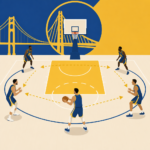
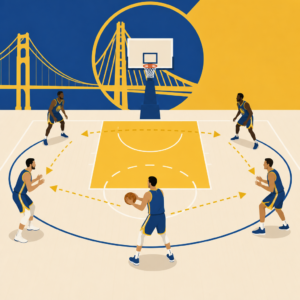
A regulation basketball game features two teams of five players on the court at one time. Those players are commonly grouped as guards, wings, and posts, though modern basketball is more flexible than old position labels suggest. Most teams still balance ball handling, shooting, rebounding, and rim protection across the lineup. The court has a center circle, a midcourt line, a three-point arc, a free-throw lane, and a basket at each end mounted ten feet high. Youth leagues may modify court size, ball size, and game length, but the fundamental rules stay similar.
The game begins with a jump ball at center court. The referee tosses the ball upward, and one player from each team tries to tap it to a teammate. After that opening tip, most levels use an alternating-possession system for held balls, meaning the jump ball does not keep happening after every tie-up. You will usually see a possession arrow at the scorer’s table showing which team gets the next alternating-possession situation. That detail confuses many beginners, especially when a whistle stops play and players are not sure whether a tie-up means another jump. In most school and amateur games, it does not.
Game length depends on the level. NBA games have four 12-minute quarters, FIBA uses four 10-minute quarters, and NCAA men play two 20-minute halves. Youth leagues often use shorter periods and running clocks in some situations. The clock usually stops for fouls, violations, timeouts, out-of-bounds plays, and made baskets in certain late-game moments. Coaches can substitute players during dead balls, allowing teams to manage fatigue, foul trouble, and strategy. If the score is tied at the end of regulation, overtime periods are played until one team finishes ahead.
How scoring works and what counts as a legal basket
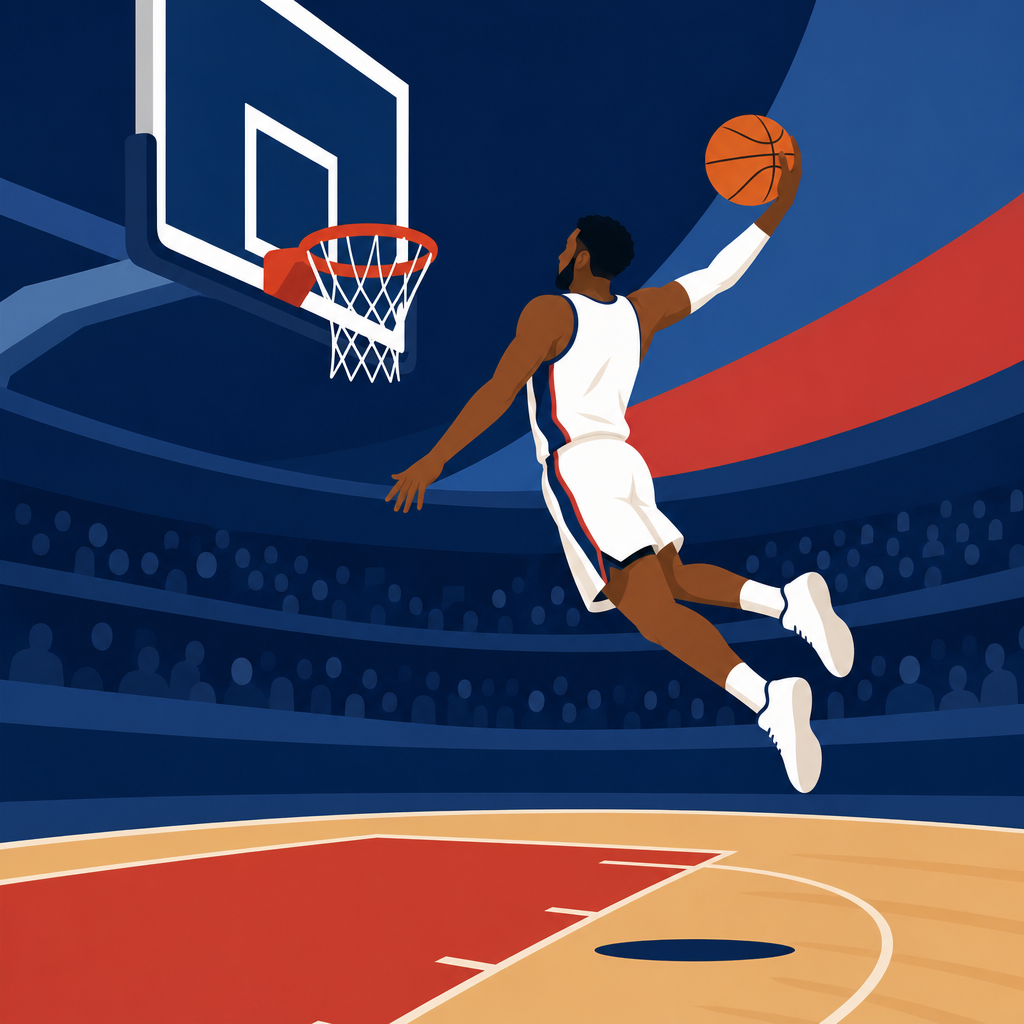
Basketball scoring is straightforward once you know where the shooter is and what caused the shot. A made shot from inside the three-point line is worth two points. A made shot from behind the arc is worth three. A made free throw is worth one. The ball must pass completely through the hoop from above to count, and the shot must leave the shooter’s hand before the game clock or shot clock expires. If the horn sounds before release, the basket does not count.
There are also rules governing whether a player’s feet are on the line. If any part of the shooter’s foot touches the three-point line, the shot is only worth two points. I often tell beginners to watch the referee’s signal after a made perimeter shot. Officials raise three fingers to indicate a three-point attempt and then signal whether the basket counts for three. This helps spectators understand a scoring play instantly.
Goaltending and basket interference matter near the rim. Under standard rules, a defender cannot touch the ball on its downward flight toward the basket if it has a chance to go in, and no player can touch the ball while it is on or directly above the rim in a way that affects the shot. If that happens, officials award or cancel points depending on who committed the violation. In practice, beginners most often need to remember one simple principle: once the ball is descending toward the hoop, do not swat it away.
Dribbling, passing, pivoting, and common violations
The most important skill rule in basketball is that a player cannot run with the ball without dribbling. A dribble begins when the ball is pushed, bounced, or tapped to the floor and ends when the player catches it with one or both hands. Once you stop dribbling, you cannot start again unless another player touches the ball. That is double dribble, one of the most common beginner violations. Traveling is another frequent call. It happens when a player moves their pivot foot illegally, takes too many steps without a legal dribble, or falls to the floor and gains an unfair advantage while holding the ball.
Pivoting is legal and essential. After receiving the ball while stationary, a player may keep one foot planted as the pivot foot and rotate with the other to pass, shoot, or protect possession. Trouble starts when the pivot foot lifts before the ball leaves the hand on a pass or shot, or when both feet shift before a dribble begins. In first games, players often travel because they catch, hesitate, and then shuffle before deciding what to do. Practicing jump stops and strong pivots solves much of that problem.
Other common violations include carrying or palming the ball by letting the hand move too far under it during a dribble, kicking the ball intentionally, staying in the backcourt too long before advancing, and stepping on the sideline or baseline while holding the ball. Offensive players also cannot remain in the key too long under certain rule sets, such as the three-second rule. These calls exist to keep the game fair and fluid rather than slow and overly physical.
| Rule | What it means | Typical beginner example | Result |
|---|---|---|---|
| Traveling | Illegal foot movement without a legal dribble | Catching a pass, taking extra steps, then shooting | Ball awarded to the other team |
| Double dribble | Dribbling again after ending the first dribble | Picking up the ball, pausing, then dribbling again | Turnover |
| Out of bounds | Ball or player touches boundary lines or outside area | Stepping on the sideline while holding the ball | Turnover |
| Backcourt violation | Offense fails to advance or returns ball illegally | Guard dribbles over half court, then passes backward | Turnover |
| Three seconds | Offensive player stays too long in the lane | Standing under the basket waiting for a pass | Turnover |
Fouls, legal defense, and what referees are watching
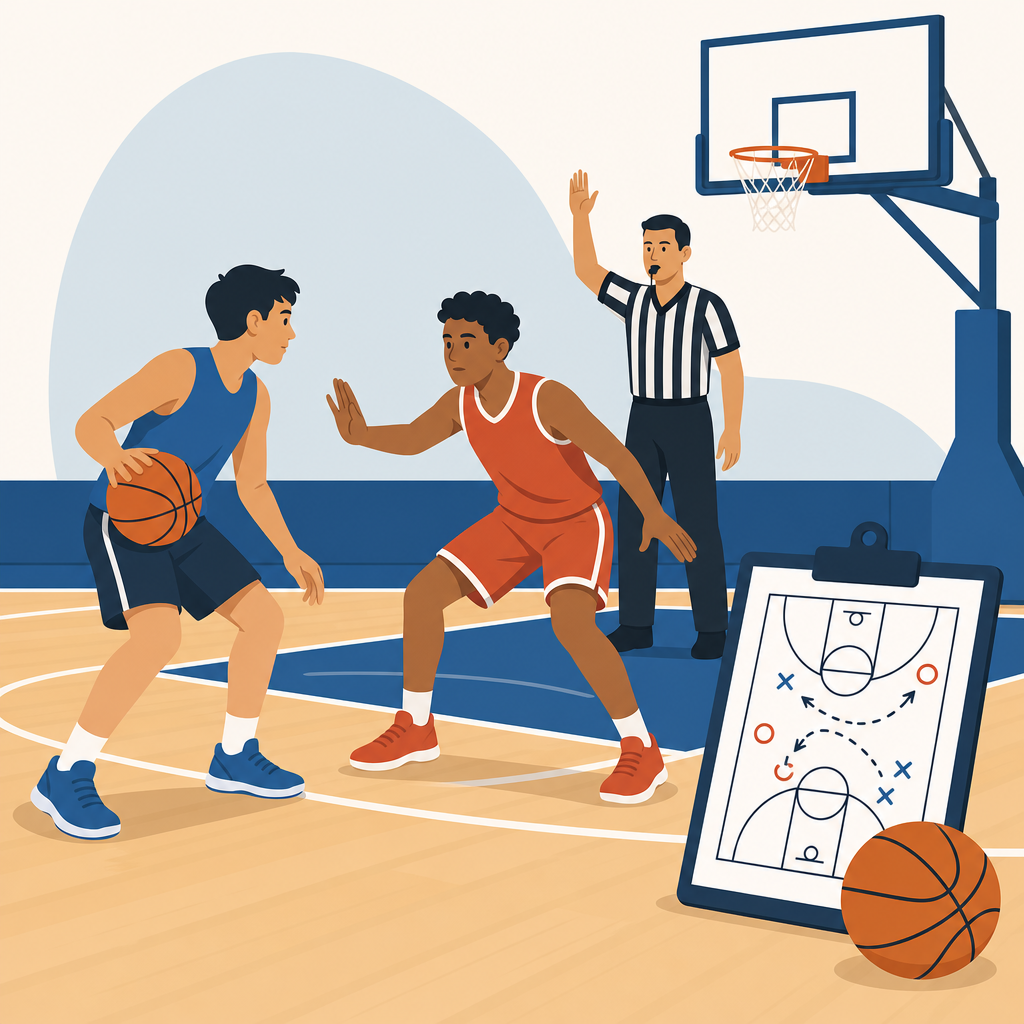
Many new players think any contact is a foul. That is not true. Basketball allows some contact, especially when players are moving in tight spaces. A foul is called when contact creates an unfair advantage or displaces an opponent illegally. Common personal fouls include reaching across an arm while defending, bumping a shooter, blocking a driver without legal guarding position, and holding a cutter to prevent movement. A charge is the opposite scenario: an offensive player runs into a defender who established legal position in time.
Legal defense requires balance, anticipation, and discipline. Defenders are generally entitled to a spot on the floor if they establish it first without moving illegally into the opponent’s path. Referees watch torso position, timing, and whether the defender was sliding laterally or still moving forward into contact. This is why block-charge calls generate debate. They are difficult because they happen fast and depend on fractions of a second.
Shooting fouls typically result in free throws if the shot misses. If the shot goes in anyway, the basket counts and the shooter gets one additional free throw, commonly called an and-one. Non-shooting fouls may lead to inbounding or free throws once the opposing team has reached the bonus, depending on the competition rules. Players also accumulate personal fouls; at a set limit, usually five in high school and college or six in the NBA, they foul out and cannot return. Technical fouls cover unsportsmanlike actions such as abusive language, taunting, or excessive arguing. Flagrant fouls involve unnecessary or excessive contact and carry stronger penalties.
Possession, shot clocks, timeouts, and substitutions
Understanding basketball rules for beginners also means understanding game management rules. The offense cannot hold the ball forever. Many levels use a shot clock that requires a team to attempt a shot within a certain time, such as 24 seconds in the NBA and FIBA or 30 seconds in NCAA women’s basketball. The shot must hit the rim before the buzzer, or the other team gets the ball. Some youth leagues do not use a shot clock, which can change strategy dramatically.
Teams must also move the ball from the backcourt to the frontcourt within a time limit. In the NBA and FIBA, that limit is eight seconds. Once the offense establishes the ball in the frontcourt, it cannot legally return it to the backcourt if the offense was the last team to touch it before crossing. That is a backcourt violation. This rule prevents stalling and encourages attacking play.
Timeouts let coaches stop the action to advance strategy, rest players, or organize an end-of-game play. Substitutions happen only during dead-ball situations, and players must report properly in organized leagues. On the floor, understanding possession changes is vital. After most made baskets, the opposing team inbounds from the baseline. After many violations or non-shooting fouls, the ball is inbounded from a designated spot. Strong teams use these moments to set presses, quick hitters, or defensive matchups.
Practical tips before your first game
Before your first game, learn the local rule set. A youth recreation league, school league, FIBA event, and NBA game all share the same foundation, but details differ. Check quarter length, foul limits, whether zone defense is allowed, whether there is a shot clock, and how overtime works. Bring proper shoes with court grip, remove jewelry, and warm up with layups, short jumpers, defensive slides, and passing. If you are a spectator, sit where you can see both the ball and the weak side, because many fouls and cuts happen away from the immediate action.
As a beginner player, focus on simple winning habits. Come to a stop before passing. Keep your eyes up while dribbling. Use bounce passes in traffic and chest passes in space. Box out when a shot goes up by making contact and turning to find the rebound. On defense, move your feet before reaching with your hands. Communicate screens and matchups loudly. These habits prevent the exact mistakes that produce turnovers, fouls, and missed rotations.
The fastest way to improve is to watch one game with rules in mind. Track just three things: why possession changed, why the whistle blew, and how points were awarded. After a quarter, the game will already look slower and more logical. That is the real benefit of learning basketball rules for beginners before you play. You stop reacting randomly and start recognizing patterns. Review your league handbook, watch a full game, and then get on the court with confidence for your first tip-off.
Frequently Asked Questions
What are the basic rules of basketball that every beginner should know?
At its core, basketball is a five-on-five game in which each team tries to score by shooting the ball through the opponent’s basket while also preventing the other team from doing the same. The game is played on a rectangular court with a hoop at each end, and teams move the ball by dribbling or passing. A player cannot run while holding the ball without dribbling, and the ball must stay in bounds during play. The team with possession, often called the offense, tries to create open shots, while the defense works to block shots, force mistakes, or steal the ball. The game begins with a tip-off, and from there possession changes through made baskets, rebounds, steals, turnovers, and violations.
For beginners, the most important rules to understand are scoring, movement, time limits, and common violations. Most shots made inside the three-point line are worth two points, shots made from beyond the three-point line are worth three points, and free throws are worth one point each. Players must dribble if they want to move with the ball, and they cannot stop dribbling and then start again, which is called a double dribble. They also cannot take too many steps without dribbling, which is known as traveling. There are also timing rules, such as the shot clock in many leagues, which requires a team to attempt a shot within a certain number of seconds, and backcourt rules that prevent a team from bringing the ball back behind midcourt once it has advanced it. Once you know these basics, the flow of the game starts making much more sense.
How does scoring work in basketball?
Scoring in basketball is straightforward once you learn the three main types of points. A standard field goal made from inside the three-point arc is worth two points. If a player shoots from behind the three-point line and makes the basket, that shot is worth three points. Free throws, which are awarded after certain fouls, are taken from the free-throw line and are worth one point each. This scoring system creates a lot of strategy because teams must decide when to attack the basket for easier two-point shots, when to take more difficult three-pointers, and how to draw fouls that can lead to free throws.
Beginners should also know that not every whistle automatically leads to free throws. Sometimes a foul simply results in the ball being inbounded, depending on where the foul occurred and how many team fouls have been committed. Another important detail is that if a player is fouled while shooting and still makes the basket, the points count and the player usually gets one additional free throw, often called an “and-one.” If a player is fouled while attempting a shot and misses, the number of free throws awarded usually depends on the type of shot attempted. Understanding these scoring situations helps you follow momentum swings in a game, especially during close finishes when every possession matters.
What are the most common violations and turnovers for new players?
The most common violations for beginners are traveling, double dribbling, carrying, stepping out of bounds, and backcourt violations. Traveling happens when a player moves their feet illegally without dribbling. Double dribbling occurs when a player stops dribbling and then begins again, or dribbles with both hands at the same time. Carrying, sometimes called palming, happens when a player lets their hand get too far under the ball while dribbling, giving them too much control. Stepping on or over the boundary lines while holding the ball means the player is out of bounds, and possession goes to the other team. A backcourt violation happens when the offense crosses half court and then sends the ball back into its defensive half without the defense touching it.
Turnovers can also happen without a formal violation. A bad pass that is intercepted, losing control of the ball, offensive fouls, or shot clock violations all give possession to the other team. For new players, these mistakes are common because basketball requires coordination, awareness, and quick decision-making. The good news is that many beginner errors improve with repetition and understanding. If you focus on keeping your dribble controlled, using jump stops, making safe passes, and being aware of court boundaries, you will avoid a large percentage of early turnovers. For fans and parents, learning these violations makes it much easier to understand why the referee blew the whistle and why possession suddenly changed.
How do fouls work in basketball, and what happens when a player gets one?
Fouls are rule infractions involving illegal physical contact or unsportsmanlike behavior. The most common type is the personal foul, which can occur when a player blocks, holds, pushes, reaches in illegally, or makes improper body contact with an opponent. Basketball allows some contact, but not contact that unfairly disrupts another player’s movement, balance, rhythm, or opportunity to make a play. Defensive fouls often happen when guarding the ball handler or contesting a shot, while offensive fouls can occur when the player with the ball charges into a defender who has established legal position. Referees judge these situations quickly, which is why some calls can seem confusing to beginners at first.
What happens after a foul depends on the situation and the rules of the league being played. If the foul occurs during a shot, the offensive player may be awarded free throws. If it is not a shooting foul, the team may simply inbound the ball unless the defense has committed enough team fouls to put the offense in the bonus, which leads to free throws. Players also accumulate personal fouls over the course of the game, and once they reach the limit set by the league, they foul out and cannot continue playing. There are also technical fouls for unsportsmanlike conduct, arguing excessively, delay of game, or other non-contact issues. For beginners, the main thing to remember is that fouls are designed to keep the game fair, safe, and under control, even if not every whistle is obvious in real time.
What are the player positions and roles in basketball for beginners?
Traditional basketball has five positions: point guard, shooting guard, small forward, power forward, and center. The point guard is usually the primary ball handler and playmaker who helps organize the offense. The shooting guard is often one of the better perimeter scorers and outside shooters. The small forward is typically versatile and may score, defend, rebound, and attack from multiple areas on the court. The power forward usually plays closer to the basket, helps with rebounding, sets screens, and scores inside or from mid-range. The center is often the tallest player and is responsible for rim protection, rebounding, and scoring near the basket. These roles help beginners understand why different players move and contribute in different ways during a game.
That said, modern basketball is more flexible than ever, and not every team uses positions in a rigid way. Some guards rebound well, some centers shoot three-pointers, and many players are expected to handle multiple responsibilities on offense and defense. For a beginner player, it is often more useful to think in terms of jobs rather than labels: bring the ball up safely, pass to open teammates, cut to open space, defend your assignment, box out for rebounds, and communicate. For parents or fans, understanding positions helps you see the strategy behind substitutions, defensive matchups, and offensive plays. Once you recognize each role on the floor, the game starts to feel much more organized and far less intimidating.