

Defense wins possessions long before a block or steal appears on the stat sheet, and the skill that separates reliable defenders from reckless ones is the ability to stay in front without fouling. In basketball, “playing defense without fouling” means using stance, angles, timing, and legal body position to contain the ball handler while avoiding hand checks, reaches, hip bumps, and late collisions. “Footwork” refers to the sequence and efficiency of defensive steps—drop steps, slides, opens, closes, and recoveries—that keep the defender balanced. “Stay-in-front drills” are practice patterns that train reaction, lateral speed, deceleration, and discipline so a defender can absorb pressure, mirror movement, and contest cleanly. This matters because fouls do more than give away free throws. They break rhythm, force substitutions, remove aggression from good defenders, and let offenses attack weak habits on purpose.
I have coached and audited player development sessions where talented athletes repeatedly got beat not because they were slow, but because their feet crossed, their chest rose, or their hands reached after losing the angle. The fix was rarely “try harder.” It was teaching repeatable mechanics under realistic pressure. At youth, high school, and college levels, the same truths hold: the best on-ball defenders arrive early, keep their hips loaded, and make the dribbler see bodies instead of gaps. They understand legal guarding position, maintain balance through contact, and use the floor as an extra defender. As a hub for basketball defense, this guide covers stance fundamentals, common fouling mistakes, game-tested footwork, closeout technique, and drill progressions that build control. If you want better perimeter defense, stronger containment, fewer whistles, and a foundation for team concepts like help, rotations, and pick-and-roll coverage, start here.
Build the defensive stance that prevents fouls before they happen
The first rule of disciplined defense is simple: if your stance is wrong, everything after it becomes a recovery. A good stance begins with feet just outside shoulder width, knees bent, hips hinged, chest tall enough to see the ball and the torso, and weight loaded on the balls of the feet without tipping forward. Hands should be active but not grabby—one hand tracing the dribble window, the other taking away a direct pass or shot pocket. I teach players to feel “nose behind toes,” not over them. When the head drifts too far forward, the body lunges, and lunging turns into reaching. Reaching turns into fouling.
Legal guarding position matters here. Under standard rule interpretations used by NFHS, NCAA, and FIBA, a defender who establishes position facing the opponent with both feet on the floor earns certain rights to the space. That does not mean standing still forever. It means the defender can move laterally or backward and still remain legal if the torso gets there first. Players foul when they chase the dribble with their hands instead of beating the drive spot with their feet. The coaching cue is chest before hands. Slide the body to the line of attack, absorb with the core, and contest up through the finish rather than across the arms.
Another key is posture durability. Many players can hold a perfect stance for five seconds in a drill but lose it on the second change of direction. Defensive shape must survive fatigue and deception. That requires ankle mobility, hip strength, groin resilience, and eccentric control. Simple preparation helps: mini-band walks, snap-down holds, lateral lunges, and short mirror rounds before live defense. Good defense is not just effort; it is a physical position the body can repeat.
Master footwork patterns that keep the ball in front
Great defenders do not use one movement for every situation. They switch patterns based on the dribbler’s speed, angle, and space. The lateral slide is the base pattern for short movements, especially when the ball is in front and the attacker has not gained a shoulder advantage. Feet should push, not click together. The trail leg drives the body; the lead foot receives the ground. Crossing the feet is dangerous because it narrows the base and delays braking. If the ball handler threatens a straight-line drive, defenders need an open step or drop step. That means turning the hips enough to run without fully surrendering the line. The chest stays connected to the path while the top foot opens to gain speed.
Closeouts demand another pattern. A reckless closeout causes many fouls because the defender arrives off balance and leaves the floor on a pump fake. The correct sequence is sprint the first two-thirds, then chop the last third into controlled steps with a high hand, low hips, and inside-out angle that takes away the easiest driving lane. If scouting says the shooter prefers right-hand drives, shade the right hip and force the ball left into help. Defense is not random movement; it is informed footwork with a purpose.
Recovery footwork also matters. When beaten, players often swipe from behind, creating obvious fouls. A better response is the rear-view contest: sprint on the ball side hip, get the inside hand high without striking the arm, and influence the finish from behind while the rim protector handles verticality. On switches and scrambles, defenders need a quick “hit-and-get” technique—brief body contact to slow the roller or cutter, then immediate recovery to their own assignment. Footwork is the language that connects individual defense to team defense.
| Situation | Best Footwork | Main Coaching Cue | Common Foul Risk |
|---|---|---|---|
| Ball handler stationary | Short lateral slides | Stay loaded, mirror the hips | Hand checking after a jab |
| Drive gains half-step | Open step or drop step | Turn and run without crossing under the body | Hip ride or body bump |
| Closing out to shooter | Sprint then chop steps | Arrive under control with high hand | Flying into the shooter |
| Beaten on the edge | Recovery sprint and rear-view contest | Contest up, not across | Reach from behind |
| Helping then recovering | Stunt, plant, push back | Show body early, recover on airtime | Late collision on the catch |
Use angles, gaps, and the sideline to defend smarter
Staying in front is not purely about speed. It is about taking away efficient space. Smart defenders line up slightly off-center to influence the dribbler toward lower-value areas. The sideline and baseline can act like extra defenders if the on-ball player positions correctly. Rather than guarding a quick guard in the full middle of the floor, angle the stance to discourage the preferred hand and make the next dribble travel toward help. This is why elite team defenses talk about nail help, low man positioning, and strong-side gap responsibility. On-ball defense works best when the defender knows where support lives.
I have found that many fouls happen when players misunderstand distance. Too tight, and one jab step creates a chest collision. Too loose, and the defender panics when the shooter rises. The right cushion depends on personnel. Against a great shooter, close the airspace and be ready to absorb the first step with a retreat slide. Against a shaky shooter, shrink the floor, sit in the driving gap, and dare the pull-up. This is coverage discipline, not gambling.
Angles also reduce the need for steals. Instead of lunging at the exposed ball, influence the dribbler into predetermined support. For example, icing a side pick-and-roll means the on-ball defender jumps to the high side to keep the ball from using the screen toward the middle. Weak-side defenders then rotate according to the coverage. Even younger teams can apply the same principle in simpler terms: no middle, early help, recover on the pass. A defender with angle control uses feet first, chest second, hands last.
Stay-in-front drills that build real game control
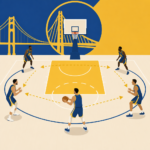
The best defensive drills train perception and restraint, not just exhaustion. Start with mirror slides. Two players face each other in a lane or box; the leader moves laterally and diagonally while the defender mirrors without crossing feet or reaching. Keep rounds short, usually ten to fifteen seconds, so posture stays honest. Progress to mirror-plus-touch, where the defender wins by beating the ball handler’s chest to a marked line rather than poking the ball away. This teaches body positioning instead of gambling.
Next, use lane-line containment. The offensive player starts on the wing and gets three dribbles max to reach the paint. The defender begins with a legal closeout, shades to the scouting report, and must keep the ball outside the lane line. This drill works because it gives a clear win condition: contain space. If the offense scores on a contested two outside the paint, the defender still did the main job. Players learn that defense is about percentages, not highlight steals.
For advanced groups, add reactive closeout to cut-off. A coach passes to the perimeter, the defender closes out under control, then the offensive player has one live drive. The defender must absorb the first move, execute an open step if needed, and finish with a vertical contest at the rim. Track fouls separately from stops. I often grade defenders on three categories: arrival on balance, chest to path, and contest without contact. That makes progress measurable.
Another excellent drill is the disadvantage recovery series. Start the defender half a step behind at the hip. On the whistle, the offense drives; the defender must sprint into rear-view position and challenge without swiping down. This mirrors real possessions after a closeout gets cracked or a screen creates separation. Finish with shell drill variants that connect on-ball pressure to help and recover responsibilities. Individual defense improves fastest when players understand where the next layer of support is coming from.
Common fouling mistakes and how to correct them
Most defensive fouls come from predictable errors. The first is reaching after losing the angle. Correction: stop the drill on the first reach and reset only when the defender moves the lead foot first. The second is upright stance. Correction: use short bouts with external cues such as “show numbers, keep hips low,” and film from the side so players can see posture breakdown. The third is jumping on shot fakes. Correction: teach high hands with grounded contests, then add a late-clock rule where the offense seeks fouls so defenders practice patience.
Another frequent problem is illegal body contact during cutoffs. Defenders slide well once, then lean with the shoulder or hip on the second effort. The answer is deceleration training. Players need to brake before impact, not at impact. Simple methods include lateral decel sticks, where the defender slides hard for two pushes then freezes in stance, and closeout-to-brake drills emphasizing a last-step sink into the floor. Good defenders are elite brakes, not just fast movers.
Hand discipline deserves special attention. Active hands are useful in passing lanes and on gathers, but random digging against strong handlers often leads to reach-ins and broken team shape. I tell players to “tag the ball on the way up, not on the way down.” That means attacking exposed gathers, pivots, and passing windows rather than dribbles protected by the body. Film study helps. Watch how players like Jrue Holiday or Derrick White slide, absorb, and time contests. Their defense looks calm because they trust position more than impulse.
How this defensive foundation connects to the rest of basketball skills
Defense is the hub skill that sharpens everything else in basketball. Footwork learned on defense improves offensive balance, rebounding leverage, transition stops, and screen navigation. Stay-in-front discipline also feeds team identity. When your point-of-attack defender contains the ball without fouling, help defenders stay home on shooters, rebounders keep inside position, and transition offense begins with cleaner outlets. That is why defensive training should connect to closeouts, help-and-recover rotations, pick-and-roll coverage, communication, and defensive rebounding rather than sit alone as isolated slide drills.
For a complete basketball skills plan, build from this page into specialized topics: on-ball defense, off-ball positioning, closeout technique, screen navigation, help-side rotations, post defense, and defensive rebounding. Each area relies on the same non-negotiables covered here—stance, angles, legal contact, and controlled feet. The payoff is immediate. Players foul less, stay on the floor longer, and force harder shots. Teams gain lineup flexibility because coaches can trust defenders in high-leverage possessions. Start with ten focused minutes of stance, footwork, and containment drills in every practice, chart stops versus fouls, and make clean defense a daily standard.
Frequently Asked Questions
What does it really mean to play defense without fouling in basketball?
Playing defense without fouling means controlling the ball handler with positioning, footwork, balance, and timing instead of relying on reaching, grabbing, bumping, or recovering late with contact. A disciplined defender works to arrive early, establish legal guarding position, and move the feet well enough to stay between the offensive player and the basket. That includes keeping the chest square when possible, maintaining a strong stance, and using angles to influence the dribbler away from the middle or into help. The goal is not to “win” every possession with a steal or highlight block. The goal is to make the offense uncomfortable, take away clean driving lanes, and force tougher shots or slower decisions.
A defender who avoids fouling understands the difference between active defense and reckless defense. Active defense uses quick slides, controlled drop steps, and timely changes of direction to mirror the offense. Reckless defense usually shows up as unnecessary hand contact, lunging across the body, leaning with the upper body, or trying to recover after getting beat by crashing into the dribbler. Most fouls happen before the whistle: the defender stands too upright, opens the hips too early, crosses the feet, or gives up an angle that requires emergency contact to fix. In that sense, clean defense is built from the ground up. The feet, hips, and eyes do most of the work, while the hands stay disciplined and purposeful.
Which footwork skills are most important for staying in front of a ball handler?
The most important footwork skills are stance, defensive slides, drop steps, opening and closing the hips, deceleration, and recovery movement. Everything starts with stance. A good defensive stance is low, balanced, and mobile, with the feet just outside shoulder width, the hips loaded, the chest upright, and the weight distributed so the defender can push in either direction without rocking backward. From there, defensive slides allow the defender to move laterally without crossing the feet. Crossing over can be useful in certain recovery situations, but in close containment it often compromises balance and creates opportunities for the offense to attack the defender’s top foot or body line.
Drop steps are essential when the offensive player gains a step or threatens the hip. Instead of reaching to stop the drive, the defender turns and drops the lead foot to reopen the angle, then works to reestablish position. Hip mobility is especially important because good scorers win with changes of speed and direction more than straight-line speed. If a defender cannot open and close the hips efficiently, they end up chasing from the side, which often leads to hand checks, hip contact, or late contests. Deceleration is another overlooked skill. Defenders foul not only because they are too slow, but because they cannot stop under control once they slide or sprint. The best defenders arrive balanced, absorb movement legally, and are ready to slide again instead of crashing into the offense. Put simply, elite no-foul defense comes from efficient steps, controlled transitions, and the ability to recover without panic.
What are the best stay-in-front drills to improve defensive footwork without encouraging fouls?
Some of the best stay-in-front drills are mirror slides, cone angle drills, lane-line containment drills, shadow closeout drills, partner resistance slides, and live one-on-one constraints that reward clean positioning rather than steals. Mirror slides are simple and effective: one player leads with short movements while the defender mirrors every step without using the hands. This builds reaction time, balance, and discipline. Cone angle drills help defenders learn how to cut off driving lanes with their feet instead of reaching. Set cones at the wing, elbow, and slot, and have the defender move through slides, opens, and drop steps while staying aligned to an imaginary ball handler’s chest. The focus should be on angles and body control, not speed alone.
Lane-line containment drills are excellent because they create a narrow driving corridor that forces the defender to stay square and move efficiently. The ball handler tries to advance while the defender works to contain within the lines using legal body position. Shadow closeout drills are also valuable because many fouls happen on the initial approach. In this drill, the defender closes out under control, chops the feet, arrives balanced, and then transitions into live containment without lunging. Partner resistance slides, using a band or light physical cue, can help strengthen the legs and teach sustained low posture. Finally, controlled one-on-one drills are where everything comes together. Use rules such as “no steals below the waist,” “hands off the body,” or “one live dribble direction first” to emphasize containment, legal contact, and anticipation. These constraints train defenders to value staying in front over gambling. That habit is exactly what reduces fouls in real games.
Why do defenders foul so often when they get beat, and how can they fix it?
Defenders usually foul when they get beat because they try to solve a footwork problem with their hands or upper body. Once the offensive player gains an edge, the defender often panics. That panic shows up as a reach across the body, a grab on the hip, a hand check to slow momentum, or a collision caused by recovering too late. In most cases, the foul is only the final symptom. The real mistake happened a second earlier: the defender stood too upright, let the offense attack the top foot, opened the stance too wide, lunged on a fake, or failed to move on the dribbler’s first step. When the feet lose the battle early, the hands tend to create the whistle later.
The fix starts with identifying exactly where the breakdown occurs. If the defender is getting beat on the first step, the answer may be better stance discipline and shorter reaction steps. If the defender is getting turned at the hip, more work on drop steps and hip turns is needed. If the defender reaches after the offense changes speed, then deceleration and patience are the issue. Film can help, but so can simple drill design. Repetition under control teaches defenders not to lunge, not to swipe down, and not to chase steals from behind. Coaches should reinforce the idea that staying attached and contesting late without contact is better than trying to erase a mistake with a foul. Defenders also need a mental reset: getting beat slightly is not the same as being out of the play. A composed recovery with clean footwork can still force a tough finish. That mindset is a major part of becoming a reliable, low-foul defender.
How can players use their hands legally while still being aggressive on defense?
Players can be aggressive with their hands by making them active without making them invasive. Legal hand use in defense is about showing, tracking, and disrupting vision or passing lanes without placing hands on the dribbler’s body or slapping at the ball out of position. Good defenders keep their hands alive, but they do so with purpose. One hand may be low to discourage the crossover pocket, while the other is high to bother the vision of the passer or shooter. The key is that the hands complement the feet. They do not replace them. As soon as a defender depends on the hands to steer the offense, hold a driving line, or recover after a mistake, fouls become much more likely.
The best way to train legal hand discipline is to connect it to body position. If the chest and feet are in front, the hands can be active and selective. If the defender is on the side or behind, hand activity often becomes risky. Players should avoid reaching across the dribbler’s torso, swiping downward at the ball, or extending an arm bar that turns into a hand check. Instead, they should time digs when the ball is exposed, stunt and recover to show help, and contest vertically or with a balanced high hand. Coaches often say “show your hands” for a reason: visible, disciplined hands reduce unnecessary contact and build trust with officials. Aggressive defense does not mean constant contact. It means constant pressure with legal technique. When the feet establish control and the hands stay disciplined, defenders can be disruptive, physical in a legal sense, and much less likely to foul.