
Boxing out in basketball is the defensive art of making first contact, establishing legal position, and sealing an opponent away from the rebound before the ball comes off the rim. It sounds simple, but it decides possessions, controls game tempo, and often separates disciplined teams from talented ones. In every level I have coached and analyzed, from youth games to high-level club basketball, rebounding technique consistently changes outcomes more than highlight blocks or steals. A team that finishes defensive possessions limits second-chance points, protects its half-court defense, and creates cleaner transition opportunities the other way.
To box out means using timing, footwork, balance, and body angle to keep an offensive player from reaching the ball first. Rebounding technique refers to the full sequence: reading the shot, locating a body, making contact, sealing space, pursuing the ball, and securing it with strong hands. Positioning is where many players fail. They watch the flight of the shot, drift under the rim, and react late. Good defenders do the opposite. They assume the shot may miss, identify their matchup early, and create a barrier before the ball descends. That sequence is teachable, repeatable, and central to team defense.
This article is the defense hub within Basketball Skills because boxing out connects to nearly every major defensive principle: stance, communication, help rotation, closeouts, screen navigation, rim protection, and transition coverage. If your on-ball defense is excellent but you do not rebound, the possession is not over. If your help defender forces a bad shot but nobody checks and seals, the offense still gets rewarded. Strong rebounding discipline turns defensive effort into defensive results. For players, coaches, and parents trying to improve winning habits, learning how to box out is one of the highest-value skills on the court.
Why Boxing Out Is the Foundation of Team Defense
Defense is not complete until the rebound is secured. That statement is basic, but it is the most useful way to think about boxing out. Coaches chart stops, but serious staff also chart “one-and-done” possessions, because the true objective is forcing a miss and ending the play. Offensive rebounds are damaging for two reasons. First, they often produce efficient put-backs, kick-out threes, or fouls while the defense is scrambled. Second, they drain defensive energy. A unit can defend for twenty seconds, rotate correctly, contest the shot, and still give up points because nobody made contact at the rim.
At competitive levels, rebounding is less about jumping highest than about arriving earliest and staying strongest. Dennis Rodman is the classic example. He was not simply an elite leaper; he was an elite anticipator who studied spin, trajectory, and shooter tendencies. Modern bigs such as Kevon Looney have built major defensive value through angles, leverage, and timing rather than pure explosiveness. For guards, players like Jrue Holiday and Josh Hart show that team defense improves dramatically when perimeter players rebound down and finish possessions. Good boxing out scales across positions.
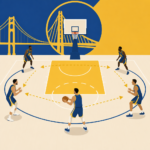
There is also a tactical reason this skill belongs at the center of defensive teaching. When a team switches more actions, sends aggressive help, or rotates from the weak side, cross-matches happen. That means the defender nearest the basket may be a guard sealing a center. Without boxing-out rules, those possessions become chaotic. With clear principles, the nearest player hits first, the next player rebounds, and the furthest player protects against run-outs. That is why rebounding should be coached as a team defensive system, not as a task reserved for centers.
The Core Mechanics: Hit, Find, Seal, Pursue, Secure
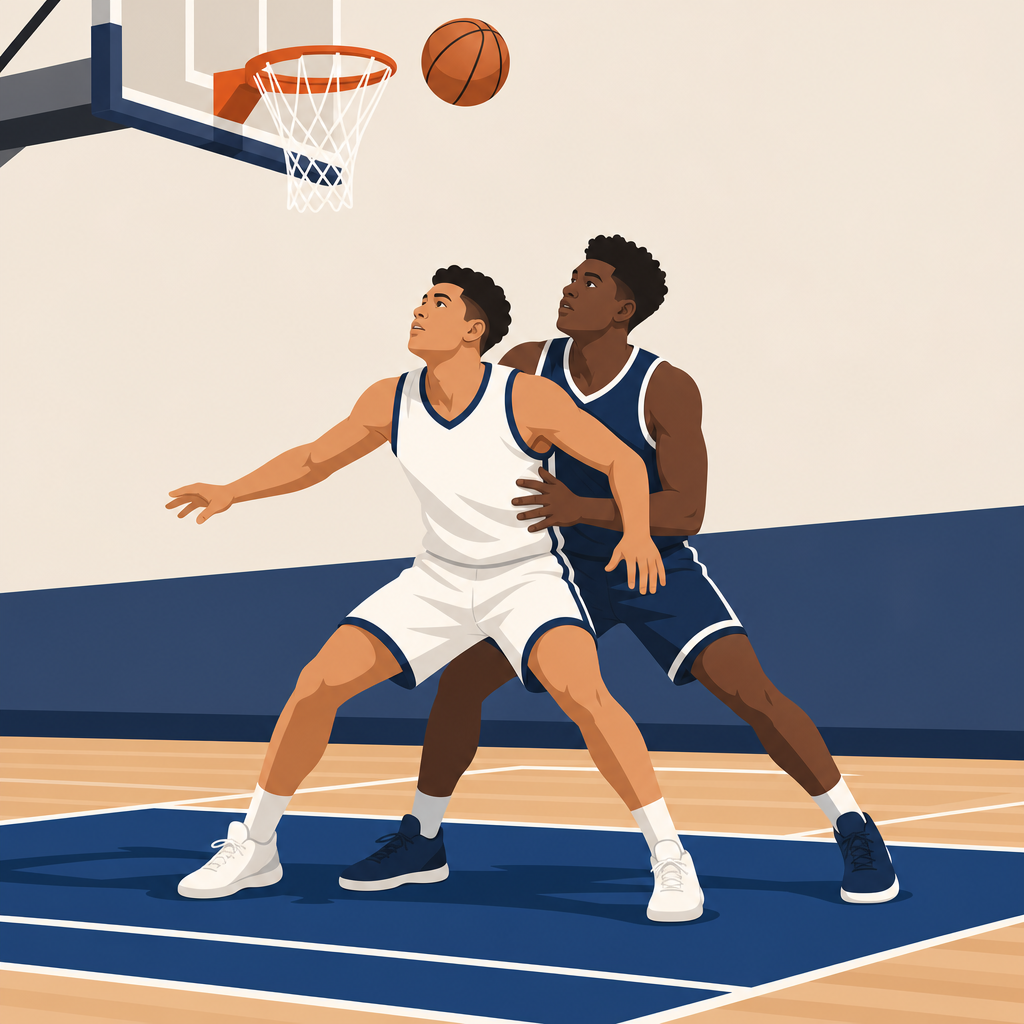
The cleanest teaching model for boxing out is a five-part sequence: hit, find, seal, pursue, secure. “Hit” means initiating legal contact after the shot goes up. The defender turns or steps into the opponent’s path with a wide, balanced base. “Find” means locating the body, not staring only at the rim. Many missed box outs happen because a player never identifies who is crashing from the perimeter. “Seal” means holding inside position with hips low, chest up, and arms active without pushing. “Pursue” means going to the ball after the seal creates advantage. “Secure” means catching the rebound with two hands, elbows strong, chin on the ball, then making the next decision.
Footwork matters more than most players realize. On a perimeter shot, defenders should usually use a quick reverse pivot or drop step to make contact. The feet must be outside shoulder width enough to absorb force but not so wide that balance is lost. Knees stay bent, hips sink, and the chest remains upright. Leaning backward invites a shove and often draws a foul if the arms extend. The best rebounders create force from the lower body, not from reaching with the hands. Contact should be early and controlled, with the butt and hips sealing the line to the basket.
Hand discipline is another separator. Young players are often told to “put a forearm on the opponent” and “go get the ball,” but the forearm is only a reference point, not a pushing tool. At higher levels, officials watch displacement. If the defender extends the arms and moves the opponent off the spot, that is a foul. Better technique is to absorb with the legs, feel the opponent with the back or forearm, and keep one or both hands ready to react to the carom. Once the ball is within reach, rebound with two hands whenever possible. One-handed rebounds look athletic, but two-handed rebounds end possessions.
Positioning by Shot Location, Matchup, and Defensive Scheme
Where the shot comes from changes rebounding angles. Misses on corner threes often rebound long to the opposite side or bounce hard off the near side of the rim. Wing jumpers can produce longer caroms than short paint shots. Free throws reward inside lane positioning and timing. Post hooks and floaters frequently die near the rim. Players who understand these tendencies gain a step before the ball drops. That does not mean guessing wildly; it means pairing likely trajectory with immediate body contact. In film sessions, I have seen teams improve quickly just by identifying where their worst second-chance rebounds originate.
Matchups also alter the technique. Against a bigger player, the priority is earlier contact and a lower base. A smaller defender cannot wait for the ball to descend, because once the bigger player gets moving, leverage disappears. Against a quicker guard crashing from the slot, the priority is vision and angle. The defender may need a half-turn stance to see both shooter and cutter. Against teams that send four players to the glass, the defense needs gang rebounding, with guards pinching down to the elbows and nail area instead of leaking out.
Scheme matters just as much. In man-to-man defense, box-out responsibilities start with your matchup but can change after help and rotation. In a zone, the assignment is area first, body second. Defenders locate the nearest threat entering their zone and put a body on that player before pursuing the rebound. In switching defenses, communication is essential because mismatch rebounding is constant. Teams that use “hit-and-get” language usually teach the nearest defender to make first contact while a second defender attacks the ball. That concept is especially useful when a guard is switched onto a rolling big near the restricted area.
| Situation | Primary Boxing-Out Focus | Common Mistake | Better Adjustment |
|---|---|---|---|
| Corner three | Seal inside and expect a long rebound to the weak side | Standing under the rim watching the shot | Make contact early, then pursue outside the lane line |
| Post shot | Hold low leverage and protect space directly in front of the rim | Jumping before contact | Hit first, then rebound at the peak of the bounce |
| Switch mismatch | Nearest defender hits the big; help defender gets the ball | Both defenders chasing the ball | Communicate and divide hit-versus-pursue roles |
| Zone defense | Find the nearest crashing player entering your area | Assuming the center rebounds everything | Rebound by area with all five players engaged |
Common Boxing-Out Mistakes and How to Correct Them
The most common mistake is ball watching. Players see the shot go up and immediately drift toward the rim without finding a body. This is why coaches use the cue “see man, see ball.” You need visual awareness of the shot and physical awareness of the opponent at the same time. The fix is simple in practice: every shell drill and closeout drill should finish with a live rebound segment. If players know the rep is not over on the contest, they learn to transition from pressure to contact automatically.
A second mistake is trying to rebound before establishing position. Athletic players often trust their vertical leap, especially at younger ages where they can recover above smaller opponents. That habit breaks down fast against stronger competition. The correction is emphasizing first contact within a split second of the release. Another mistake is opening the gate by turning too far and allowing the offensive player to spin around the outside shoulder. Defenders should angle the seal toward the likely rebounding lane, not just turn blindly with their back to the basket.
There are also mental mistakes. Some players box out only against obvious post players and ignore weak-side wings. Others assume a contested shot will not be rebounded by the offense. In reality, many offensive rebounds come from broken floor spacing after help rotations, not from dominant centers. Teams should define responsibilities clearly: low man hits, nail defender pinches, opposite guard cracks back, and outlet player presents a target after the catch. Once roles are named and rehearsed, rebounding becomes a habit instead of a hope.
Drills, Teaching Cues, and Position-Specific Rebounding
The best boxing-out drills are competitive, short, and specific. A classic is the triangle rebounding drill, where a coach shoots and two or three players fight for position from different angles. Another is the “hit-find-get” drill, where defenders start in stance, react to a coach’s shot fake, locate an assigned player, make contact, and finish with the board. For guards, I like a crack-back drill in which they start above the break, tag a crashing wing, then pursue a long rebound outside the lane. For bigs, a two-on-two inside drill teaches sealing one body while reading a second offensive threat.
Teaching cues should be concise enough to survive game speed. “Shot means contact” is one. “Hit first, jump second” is another. “Chin it, pivot, outlet” completes the possession. Video review strengthens those cues when clips are short and targeted. I prefer showing one positive example and one correction clip from the same game. Players recognize the difference faster when the context is identical. Tools like Hudl and Synergy make this easier because coaches can tag contested rebounds, offensive boards allowed, and possessions where help defense created a cross-match.
Position-specific details matter. Centers need to own the restricted area, absorb contact without fouling, and keep the ball high after the catch. Forwards often handle the hardest weak-side box outs because they rotate to protect the rim, then must find a shooter or cutter on the crash. Guards should not treat rebounding as optional. In modern basketball, defensive guards who rebound start fast breaks immediately. A guard who secures the ball can push without an outlet pass, punishing teams that overcommit to the glass. That is one reason coaches value complete defenders over specialists who guard well but do not finish possessions.
How Boxing Out Connects to the Rest of Defensive Skill Development
Boxing out is a hub skill because it links directly to every important part of defense. Good stance creates balance for the initial hit. Good communication identifies cutters and cross-matches before the shot. Good closeouts reduce clean catch-and-shoot attempts but also place the defender in a recoverable path to rebound. Help defense and rim protection change where the shot comes from, which changes where the rebound goes. Even transition defense is affected, because teams that secure the ball cleanly can send the right players out in organized lanes instead of scrambling after a loose tip.
This is why defensive development should be taught as a chain, not isolated topics. On-ball defense matters. Help defense matters. Rotations, screen coverage, and contest technique matter. But the chain breaks if the rebound is lost. When players understand that connection, they stop viewing boxing out as dirty work and start seeing it as the final step of a successful stop. If you want your defense to hold up against stronger opponents, study your rebounding clips, drill contact every week, and make boxing out a nonnegotiable habit on every shot.
The key takeaway is straightforward: great rebounding begins before the ball touches the rim. Players who read the shot, make first contact, seal legally, and pursue with two hands will win more possessions regardless of height or position. Teams that treat boxing out as a shared defensive responsibility become tougher, more consistent, and harder to score on. Build your defensive system around ending each stop with the ball, then carry that standard into every practice and game.
Frequently Asked Questions
What does boxing out in basketball actually mean?
Boxing out is the fundamental rebounding technique of creating legal body position between your opponent and the basket before the ball comes off the rim. In practical terms, it starts the moment a shot goes up. A defender first identifies the player they are responsible for, makes controlled contact with that player using their body, and then turns or seals to keep that opponent from getting a direct path to the rebound. The goal is not simply to jump higher or chase the ball first. The goal is to win space early, control the rebounding lane, and force the opponent to go through you rather than around you.
Good boxing out combines awareness, timing, balance, and discipline. Players often think rebounding begins after the miss, but strong rebounders know it begins before the ball hits the rim. They locate, make contact, widen their base, keep their hands active, and then pursue the ball once they have neutralized the opponent. That sequence matters. If a player turns and looks at the ball too early without making contact, they often get beaten by a quicker or more aggressive opponent crashing from the side. Boxing out is what turns rebounding from a hustle play into a repeatable skill.
Why is boxing out so important if some players can just out-jump everyone anyway?
Even elite athletes lose rebounding battles when they rely only on vertical leap. Boxing out matters because rebounds are usually won by positioning and contact, not by raw jumping ability alone. Most missed shots do not fall straight down into easy reach. They come off the rim at different angles and speeds, and when multiple players are converging, the one who has inside position usually has the advantage. A technically sound player who makes first contact and seals properly can beat a taller or more explosive player to the ball simply by controlling space.
From a team perspective, boxing out has a major impact on possessions, momentum, and defensive efficiency. Every defensive stop is unfinished if the offense gets a second-chance opportunity. Teams that box out consistently reduce put-backs, kick-out threes, and broken defensive possessions. They also create cleaner rebounds that can trigger transition offense. That is why coaches place so much value on boxing out. It is one of the clearest examples of discipline turning into winning basketball. Athleticism helps, but positioning is what makes rebounding reliable over the course of a game.
What is the proper technique for boxing out step by step?
The basic sequence is simple, but doing it well requires habits. First, when the shot goes up, locate your player immediately. Coaches often teach this as “hit first” or “find a body.” Second, step into the opponent’s path and make solid, legal contact with your hips, backside, or chest area while staying balanced. Third, turn and seal by widening your stance, bending your knees, and keeping your center of gravity low. Your arms should be active but under control. You are not grabbing, pushing, or extending your hands into the opponent. You are using your body to occupy space and hold legal position.
After the seal, keep your eyes tracking the flight of the ball while maintaining contact. Then, once the rebound comes within range, pursue it aggressively with two hands whenever possible. Many players box out correctly at first and then relax too early. That is a common mistake. The job is not done when contact is made. The job is done when the ball is secured. Great rebounders finish the possession by sealing, reading the bounce, attacking the ball, and then protecting it with strong hands and a controlled outlet or reset. The full sequence is locate, contact, seal, pursue, secure.
What are the most common boxing out mistakes players make?
The biggest mistake is watching the ball instead of finding a man first. When players stare at the shot and drift toward the rim without making contact, they give up inside position and allow offensive rebounders to crash freely. Another common error is making weak contact. A light bump is not enough. Boxing out requires deliberate, balanced contact that stops the opponent’s momentum and establishes your space. Players also make the mistake of standing too upright, which makes them easy to move and slow to react.
There are also technical errors that lead to fouls or lost rebounds. Reaching back with your arms, extending your hands into the opponent, or trying to hold someone instead of moving your feet are all bad habits. Turning completely away from the ball is another issue because it can leave a player unaware of the rebound’s path. The best box outs are physical but controlled. You stay low, absorb contact, keep a wide base, and maintain awareness. Finally, many players stop after the initial seal and forget to actually go get the ball. Boxing out creates the advantage, but effort and timing still have to finish the play.
How can players improve their boxing out and rebounding position in games?
Improvement starts with repetition and intent. Players should practice the habit that every shot triggers the same response: locate, make contact, and seal. Coaches often use partner drills, shell drills, and live rebounding situations to build this instinct. The key is to practice against movement and resistance, not just in static form. Players need to learn how to find their assignment quickly, absorb contact without losing balance, and adjust when the rebound comes off long or to the weak side. Film study also helps because players can see whether they are making first contact early enough or getting caught ball-watching.
Strength, footwork, and anticipation all matter as well. A stronger lower body helps a player hold position. Better footwork allows them to step into the opponent’s path instead of reaching. Anticipation improves by learning shot angles and understanding where misses tend to go from different areas of the floor. Guards should not assume rebounding is only for bigs, and bigs should not assume size alone is enough. The most effective teams have all five players committed to finishing possessions. If you want to become a better rebounder, focus less on highlight plays and more on winning the first battle for space. That is where most rebounds are really decided.