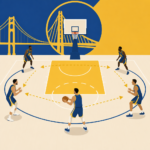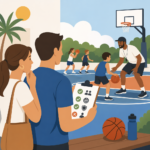

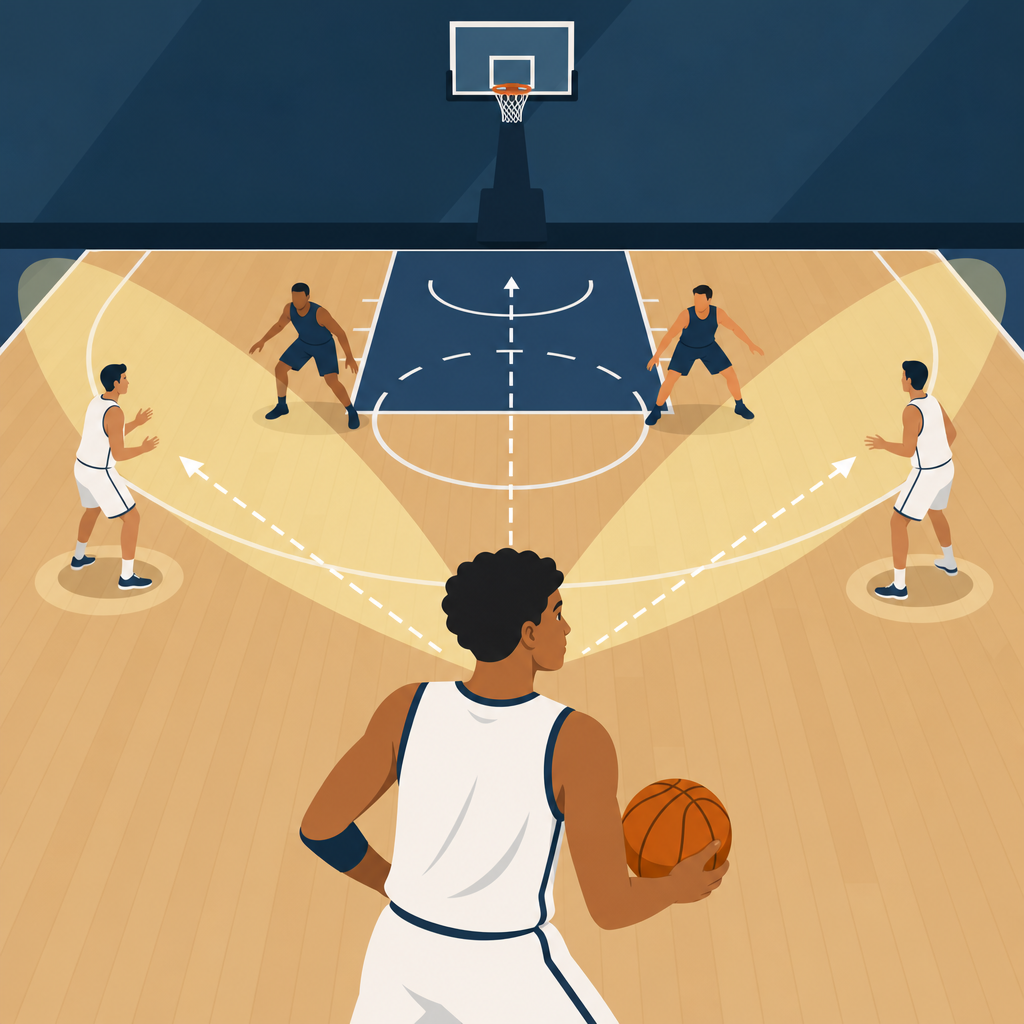
Court vision in basketball is the skill of reading all ten players, the ball, the clock, and the space between actions quickly enough to make the right decision before the defense closes the window. It is not just passing flair or highlight assists. It is perception, anticipation, and timing working together. When coaches talk about “seeing the full floor,” they mean recognizing help defenders, cutters, tags, rotations, mismatches, and transition lanes early, then acting with purpose. I have coached guards and wings through film sessions and live reads long enough to know that court vision improves fastest when players train their eyes, feet, and decision rules together rather than treating vision like a mysterious gift.
Why does this matter so much? Because basketball is increasingly decided by processing speed. At every level, defenses shrink driving gaps, switch actions, and bait risky passes. A player with strong court vision keeps the offense on time, creates efficient shots, and lowers turnovers without playing cautiously. That affects every possession. Better reads lead to corner threes instead of contested floaters, deep seals instead of reset dribbles, and early hit-ahead passes instead of stagnant half-court possessions. Court vision also strengthens leadership. Teammates trust players who deliver the ball on time and in rhythm, and coaches trust players who understand game context, not just individual moves.
For a skills hub focused on basketball IQ and fundamentals, court vision sits at the center. It connects ball handling, passing mechanics, footwork, screening, spacing, transition offense, and defensive recognition. A point guard needs it to manipulate pick-and-roll coverages. A wing needs it to punish nail help and skip to the weak side. A post player needs it to read digs, doubles, and split cuts. Even off-ball players use court vision to relocate into windows, time cuts, and understand where the next pass should go. If you want to improve basketball IQ, this is one of the highest-return areas to train.
At its core, court vision is built from three layers. First is visual discipline: where your eyes go before and after the catch. Second is pattern recognition: knowing what common actions and coverages usually produce. Third is decision execution: making the pass, drive, shot, or reset with sound mechanics. Players often work on only the third layer. They practice passing off one foot or throwing pocket passes, but they fail to scan early, identify the low man, or recognize when the weak-side wing has sunk too far. The result is late decisions. Great court vision is usually early vision.
What Court Vision Actually Includes
Many players think court vision means “finding the open man.” That description is too narrow. Functional court vision includes pre-scan habits before receiving the ball, awareness of defensive shell positioning, understanding of teammates’ tendencies, and knowledge of score, time, and foul context. In practical terms, it means you know where the rim protector is before using the ball screen, where the shooter is relocating after a drive, and whether the tag defender is committing from the corner or stunting from the wing. Those are very different reads with different passing solutions.
It also includes seeing one action ahead. The best decision-makers do not simply react to what is open now; they predict what the defense must do next. If the on-ball defender goes over a screen and the big drops, the pull-up may be available. If the low man steps up to stop the roller, the corner skip is likely next. If the weak-side wing “x-outs” early, the second pass can beat the rotation. This is why elite passers often appear calm. They are not processing more slowly. They are processing earlier.
Position matters, but the principles stay consistent. Guards usually read pressure, screen coverage, and weak-side help first. Wings often read closeouts, nail help, and baseline support. Bigs read double teams, top-locks, and cutter timing. Yet every player benefits from broad awareness. Nikola Jokic is the obvious example of a center with point-guard level processing, but even youth players can learn simplified versions: check the rim, identify help, locate shooters, then attack. Those read priorities create repeatable habits under pressure.
How Elite Players Read the Floor Before the Catch
One of the most teachable habits in basketball is the pre-catch scan. Before the ball arrives, skilled players quickly gather where the defense is loaded, who is in help, and where the next advantage might come from. That half-second matters. If you catch, then start searching, the defense recovers. In workouts, I teach players to look away from the ball briefly before the catch: rim, help, nearest teammate, then the pass. This does not require exaggerated head turns. It requires efficient eye work.
Watch strong decision-makers at any level and you will see the same sequence. They sprint into spacing, glance at the lane line help, note whether the low defender has two feet in the paint, and catch ready to shoot, drive, or swing. That readiness is why “0.5 basketball,” popularized in player development circles and used by several professional systems, is so effective. The principle is simple: on the catch, shoot, pass, or drive within about half a second unless the action clearly demands a reset. Fast decisions force defensive rotations before they can organize.
Pre-catch reads are especially important against modern help schemes. Defenders at the nail often stunt at drives, then recover to shooters. Low men rotate early to rollers. Weak-side defenders split the difference between two shooters. If you identify those positions before touching the ball, your first dribble becomes more decisive. A wing catching on the slot can immediately attack the top foot of a bad closeout if the nail is occupied, or swing to the corner if the low man is sitting deep. The read starts before possession, not after.
Core Reads Every Player Should Master
Players do not need hundreds of reads to improve court vision. They need a few essential reads mastered deeply enough to recognize them in real time. Start with these situations because they appear constantly in games and connect directly to core offensive fundamentals.
| Situation | Primary cue | Best common response |
|---|---|---|
| Drive from the wing | Low man steps to the ball | Skip or drift pass to the corner |
| Pick-and-roll | Big drops below the screen | Pocket pass, floater, or pull-up based on tag |
| Post catch | Baseline or middle double comes early | Hit the opposite slot or cutter immediately |
| Transition push | Defender stops ball, wings collapse | Advance pass to sideline runner or opposite lane |
| Closeout catch | Top foot high, hips opened | Attack the front foot and force help rotation |
These reads are teachable because they rely on visible cues. The low man is either committed or not. The screen defender is dropping, showing, switching, or blitzing. The post double is early or late. Once players learn to anchor decisions to cues, court vision becomes less abstract. This is also where film study helps. Tag clips by action type, pause before the decision, and ask what the defense is showing. Over time, players stop guessing and start recognizing patterns.
Just as important is understanding pass windows. The right idea with bad timing still becomes a turnover. Bounce passes work when the lane is open and a defender’s hands are high. Pocket passes need a narrow angle and pace. Hook passes can beat a rear contest, but they are riskier across the body. Skip passes are strongest when thrown before the help defender can recover, not after. Decision quality and pass technique are inseparable.
Training Methods That Build Better Vision
Improving court vision requires constraints, not random reps. Traditional stationary passing helps mechanics, but it does little for scanning and decision speed. Better drills add movement, defenders, and changing cues. Small-sided games are the most efficient method I use. Three-on-three in a narrowed paint or four-on-four with a dribble limit forces players to scan sooner and move the ball on time. Constraint-based training has support across skill acquisition research because it teaches perception and action together instead of in isolation.
Film study should be specific, not passive. Instead of watching full games casually, break possessions into categories: pick-and-roll, transition, post entry, drive-and-kick, and zone offense. Use tools like Hudl, Synergy, or even basic phone clips with pause-and-predict prompts. Ask direct questions: Where is the low man? Who is tagging the roller? What did the nail defender give up? Players often improve rapidly once they can label what they are seeing. Language sharpens attention.
Live drills should progress from simple to complex. Start with advantage scenarios such as two-on-one, three-on-two, and drive-kick-relocate sequences. Then layer in reads: a coach signals drop, switch, or trap; a help defender chooses whether to tag or stay home; the passer must respond immediately. Tennis ball toss drills and numbered cone scans can help peripheral awareness, but they should support game reads rather than replace them. Basketball vision is contextual. The best drill is one that looks and feels like the decisions a player will actually face on Friday night.
Footwork, Pace, and Body Position Shape What You Can See
Vision is not only an eye skill. Your feet and torso determine your sight lines. Players who jump to a stop under control can pivot and survey more options than players who leave their feet without a plan. That is why coaches stress jump stops, stride stops, and playing off two feet in traffic. A balanced player can pass to either side, protect the ball, and avoid getting trapped on the baseline. Good body position creates extra milliseconds, and extra milliseconds create better reads.
Pace matters just as much. Many players think faster feet automatically improve playmaking, but rushed movement often narrows vision. Skilled guards change speeds to expand it. They probe into the lane, keep the dribble alive, force help to declare, then deliver the pass once the rotation commits. Steve Nash mastered this with dribble retention and patient angles. Luka Doncic does it with deceleration and shoulder positioning. Neither player relies on pure speed. They rely on timing and balance to keep the floor visible.
Body orientation also affects passing deception. If your chest and eyes lock onto one target too early, defenders load the lane and jump the pass. Learning to stay square, use pass fakes, and keep the ball tight to the body helps preserve options. Even simple details matter: on a pick-and-roll snake dribble, getting your inside shoulder past the defender changes the tag angle and opens the pocket pass; on a post catch, chinning the ball and reverse pivoting can reveal the weak-side cutter before the double arrives.
Common Mistakes That Limit Court Vision
The biggest mistake is ball watching. Young players often stare at the dribble, then lift their eyes only after they stop moving. That breaks the chain of information. The second mistake is predetermined decision-making. A player decides to drive, score, or throw a flashy pass before reading the defense. Good offenses punish what is given; poor offenses force what was planned. The third mistake is drifting into bad spacing, which crowds passing lanes and reduces visible options. Vision gets blamed for spacing problems more often than it should.
Another common issue is overhelping on the offensive side mentally. Players collapse toward the ball instead of holding corners, lifting on penetration, or making the right 45 cut. When teammates occupy the same window, even elite passers have no clean angle. That is why court vision cannot be taught separately from team concepts. Read quality improves when spacing rules are clear: one in the dunker, corners occupied, weak-side lift on baseline drive, drift on middle drive, and timely shake action behind a blitz.
Players also misjudge risk. Not every ambitious pass is a good pass. A one-hand skip through two defenders may work in workouts and fail in games. Turnover rate matters. Strong court vision means creating efficient offense repeatedly, not collecting a few difficult assists. I tell players to value “boring right plays”: the early swing, the simple pocket pass, the advance pass in transition, the hit-ahead that creates a hockey assist. Those decisions build reliable offense possession after possession.
Building a Long-Term Plan for Basketball IQ and Fundamentals
If this page is your starting point for basketball IQ and fundamentals, build your development plan around repeatable reads and measurable habits. Track assists, turnovers, potential assists, paint touches, and drive-kick outcomes during games. In practice, grade pre-catch scans, on-time passes, and correct read percentage by action. A player who makes the right pick-and-roll read eight times out of ten is progressing, even if teammates miss shots. Metrics should reflect decision quality, not only box-score results.
Link court vision work to adjacent skill areas. Better ball handling lets you keep your eyes up under pressure. Better footwork gives you balance to pass or pivot. Better shooting forces harder closeouts, creating easier reads. Better conditioning helps decision-making late in games, when tired players stop scanning and start reacting slowly. This is why court vision belongs at the center of the IQ and fundamentals category: it improves when every surrounding skill becomes more dependable.
The practical next step is simple. In your next workout, add pre-catch scans, film one live read drill, and review ten possessions where you must identify the low man or tag defender before the ball screen occurs. Then repeat that process every week. Court vision is trainable. When you learn to see the full floor before you act, the game slows down, your teammates become easier to play with, and your decisions start producing points instead of wasted chances. Make that habit the foundation of your basketball skill development.
Frequently Asked Questions
What does court vision actually mean in basketball?
Court vision is the ability to process the full game picture before and during a play, then make the best decision quickly. It goes far beyond flashy passes or creative assists. A player with strong court vision reads all ten players, tracks the ball, understands spacing, notices the clock, and anticipates where openings will appear before they are obvious. That includes seeing weak-side help, identifying tag defenders in pick-and-roll, recognizing backdoor cuts, spotting transition lanes, and understanding when a mismatch is developing. In practical terms, court vision is a blend of perception, anticipation, awareness, and timing. The best players are not just reacting to what is directly in front of them. They are reading the next action before the defense completes its rotation. That is why good court vision improves passing, scoring, decision-making, and overall offensive flow. It helps players act with purpose instead of holding the ball until options disappear.
Can court vision be trained, or is it something players are just born with?
Court vision can absolutely be trained. Some players may develop spatial awareness earlier than others, but seeing the floor is not a fixed gift reserved for a select few. It improves when players learn what to look for, when to look for it, and how to connect what they see to fast decisions. Coaches often build court vision by teaching players to scan before the catch, keep their eyes up while dribbling, and recognize common defensive patterns such as help rotations, traps, switches, and late closeouts. Film study is also a major tool because it trains the mind to notice cues that might be missed at full speed on the court. Repetition matters too. Small-sided games, advantage drills, and decision-based passing exercises force players to read live movement instead of memorizing predetermined actions. Over time, those repeated reads become faster and more natural. Players who commit to this process usually become much better at seeing the full floor because their eyes, mind, and body begin working together under pressure.
What are the best drills to improve court vision in game-like situations?
The best drills are the ones that force players to make real reads instead of going through scripted motions. Small-sided games such as 3-on-3 or 4-on-4 are excellent because they create more touches, more spacing decisions, and more opportunities to read defenders. Constraint-based drills also work well. For example, a coach may require players to make a paint touch before passing out, reward skip passes against help defense, or limit dribbles so players must scan and decide earlier. Advantage-disadvantage drills, such as 2-on-1, 3-on-2, or rotating closeout drills, are especially useful because they teach players to identify where the extra defender is coming from and where the next pass should go. Another strong method is using vision cues, such as having players call out weak-side defenders, count teammates, or identify the low man while handling the ball. Film breakdown paired with on-court repetition is powerful because players start to connect concepts like tags, stunts, and rotations to live action. The key is this: if a drill does not require a player to read space, defenders, and timing under pressure, it is not doing much to build real court vision.
How can a player see the floor better without turning the ball over more often?
The answer is learning to simplify reads and act earlier. Many turnovers happen not because a player is trying to see too much, but because they process information too late. Good decision-makers scan the floor before they catch the ball, so they already know where the help is, where the shooter is lifted, and whether a cutter has a window. That early information makes the game feel slower. It is also important to understand passing angles and defensive leverage. A player should not force a highlight pass just because they noticed an opening for a split second. Strong court vision includes knowing which reads are high percentage and which ones are too risky. Keeping dribbles purposeful, using jump stops, changing pace, and staying balanced all help create better passing windows. So does manipulating defenders with the eyes, shoulders, or body position before making the pass. In other words, better court vision does not mean attempting harder plays. It means recognizing easier, earlier, and smarter ones. When players combine awareness with disciplined decision-making, turnovers usually go down while offensive efficiency goes up.
How long does it take to develop better court vision, and what should players focus on first?
Improving court vision is a long-term process, but players can make noticeable progress quickly if they focus on the right habits. Early improvement often comes from simple changes: keeping the eyes up, scanning before the catch, understanding basic spacing, and learning to identify the nearest help defender. Those habits alone can dramatically improve passing and decision-making within a few weeks of focused practice. Bigger gains come over months and seasons as players build pattern recognition. That means learning to recognize repeated game situations such as when the low man rotates, how defenses tag rollers, when skip passes are available, and how transition lanes open before defenders match up. Film study accelerates this process because it teaches players to see recurring actions and understand why certain decisions work. Players should focus first on awareness and timing rather than flashy creativity. The foundation is reading the floor early, staying under control, and making the correct simple play again and again. Once that base is strong, advanced reads become much easier. The best court vision is not rushed, random, or dramatic. It is calm, prepared, and consistently one step ahead.