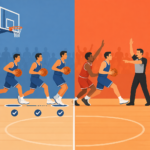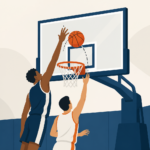

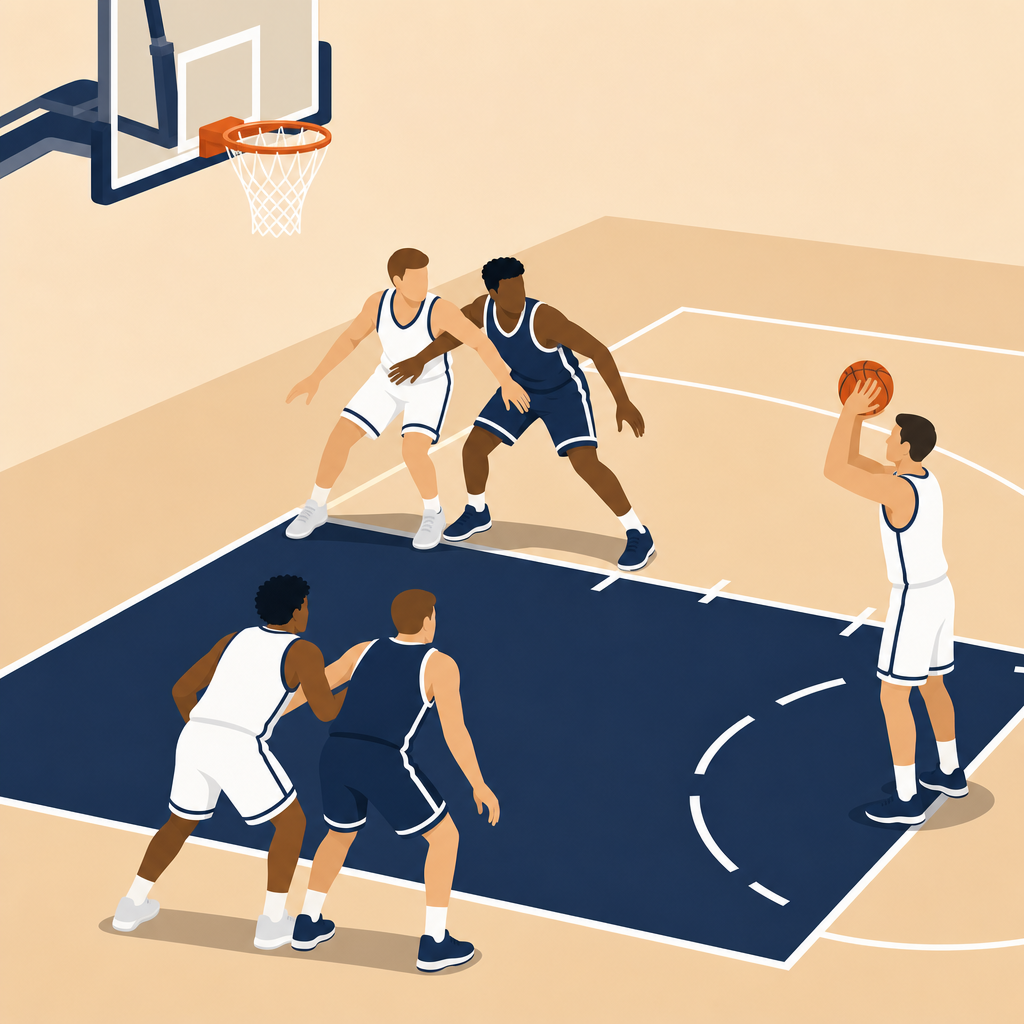
Free throws look static, but the rebound that follows is one of basketball’s purest defensive possessions. If you want to understand defense beyond steals and blocks, learn how to box out on free throws. The play lasts only a second after the ball hits the rim, yet it swings games because coaches can predict where the miss will go, assign matchups by lane spot, and demand contact before the ball descends. Many fans watch the shooter and ignore the lane. Players and coaches do the opposite. They know the free throw rebounding rule most fans overlook is simple: your job is not to jump first, but to make first contact, hold legal position, and finish the possession with two hands.
Boxing out on free throws means establishing a legal rebounding stance between your assigned opponent and the basket as the shot is released, then maintaining leverage until the ball is secured. The defender on the low block usually has inside position, which is a structural advantage built into the lane alignment rules. That advantage disappears if the defender stands upright, watches the flight, or lets the offensive player get a running start. Good teams treat this as technique, timing, and responsibility. Great teams treat it as identity. I have sat in enough film sessions to know coaches stop clips of missed free throws as quickly as they stop transition breakdowns, because the error is rarely luck. It is usually a blown assignment, poor contact, or a late hit-and-find.
This topic matters because free throw rebounds are high-value possessions. The offense is already organized around the lane, the defense is set, and one clean board can end the trip. One failure can create an easy putback, a kicked-out three, or a foul. At every level, from youth leagues to the NBA, defensive rebounding on free throws rewards fundamentals more than vertical pop. It belongs at the center of any serious discussion of basketball defense because it connects stance, leverage, communication, anticipation, and discipline. If you are building a complete defensive foundation, this is the hub skill that ties those habits together.
Why free throw box outs are a core defensive skill
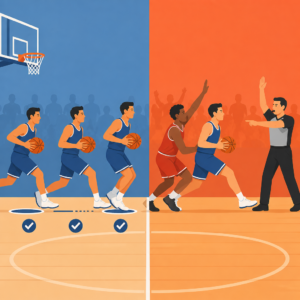
Defensive rebounding starts before the ball touches the rim. On free throws, the structure makes that reality obvious. Lane spaces are assigned by rule, with defenders commonly occupying the first marked spaces nearest the basket. That setup gives the defense inside track position, but inside position alone is not the box out. The defender still has to lower the hips, widen the base, feel the offensive player with the forearm or rear contact point, and keep the chest angled toward the basket. The phrase coaches use is hit, find, and get. Hit the body legally, find the ball, get the rebound.
The reason this belongs in a defense hub is that every major defensive principle appears in condensed form. There is on-ball discipline from the shooter’s release timing. There is help-side awareness from reading bounces. There is communication because players must know who crashes and who leaks out. There is finishing the possession, which is the non-negotiable last step of any stop. A strong defensive possession is not complete until the rebound is controlled. Free throws strip the game down to that truth.
At advanced levels, teams scout tendencies in free throw misses. Slightly short misses often rebound softly to the front rim area, while misses off the back iron can kick longer. Left-right drift often mirrors the shooter’s hand dominance, rotation, and entry angle. Those tendencies are not absolute, but they shape how disciplined rebounders time their seal. This is why veteran bigs seem to arrive at the ball without appearing to jump much. They win early with position and read.
The rule most fans overlook: contact before pursuit
The biggest misconception is that rebounding is a race to the ball. On free throws, it is a race to legal leverage. If a defender turns and chases the miss immediately, the offensive rebounder can slip into the defender’s path, wedge inside, or draw over-the-back contact. The better move is controlled contact first. Step back into the body, absorb the push, then pursue once the offensive player is sealed or displaced off the direct line to the rim.
This is where many fouls and broken possessions begin. Younger players often think boxing out means throwing their hips backward wildly. That creates balance issues and can become a push. Proper contact is lower-body stable and upper-body quiet. Knees bent, feet outside shoulder width, rear and forearm making legal touch, elbows in, head on a swivel. You are not wrestling. You are occupying space early enough that the opponent must go around you.
Officials also watch lane violations and displacement closely on free throws. Under common rule sets such as NFHS, NCAA, and FIBA interpretations, players in marked lane spaces cannot enter illegally before the ball contacts the ring, and they cannot shove opponents under the rim. The cleanest box outs look almost boring because the defender arrives on time, absorbs contact, and rebounds on balance. Boring is elite on this play.
Footwork, stance, and hand placement that actually work
Players ask what technique works best, and the answer is compact, repeatable footwork. Start in an athletic stance with the top foot slightly split if the matchup is aggressive. As the shooter begins the motion, sink rather than rise. On release, execute a short reverse step or drop step into the opponent’s line. The goal is not to create a huge collision. The goal is to remove the runway to the basket.
Hand placement matters because officials punish obvious grabs but allow body control. I teach hands high enough to protect space but not extended into a hold. One forearm can feel the opponent briefly; both hands then go to the ball once it comes off. The worst habit is reaching with one hand while still boxed into traffic. Two-hand rebounds finish possessions. One-hand tips prolong them.
Guards and wings in the second lane spaces need different emphasis than centers. They often face slashers who try to knife through gaps after the release. That means more lateral awareness and quicker second jumps if the ball ricochets long. Bigs on the low blocks need stronger root position and earlier contact because they are defending the highest percentage putback area. Different body types, same principle: win the first collision legally.
| Role | Primary responsibility on a missed free throw | Common mistake | Correct adjustment |
|---|---|---|---|
| Low-block defender | Seal inside lane, protect front-rim rebound area, secure with two hands | Watching the shot and giving up chest contact | Reverse step on release, feel the body first, then pursue |
| Second-space defender | Control slashers and react to medium or long rebounds | Standing too upright | Lower hips, stay loaded, slide into the path before chasing |
| Top-of-key defender | Read long carom, secure outlet spacing, stop quick kick-out action | Leaking early | Hold until possession is clearly secured |
| Shooter’s defender after release | Contest nothing, communicate, prepare for transition balance if live | Relaxing after the attempt | Talk through matchups and react to the result immediately |
Reading the shooter and the bounce
Not all missed free throws are equal. Experienced rebounders study arc, depth, and spin. A flat shot tends to produce harder, longer rebounds. A shot that dies on the front rim often drops into the paint. Back-rim misses can spring higher and farther. If the shooter fades or drifts, the miss often follows that line. These reads are subtle, but they separate players who simply occupy a lane spot from players who own it.
Scouting reports help. College and professional staffs chart free throw misses in synergy clips and manual breakdowns, noting miss direction and lane crash habits. Even high school teams can track this by hand over a season. If a certain opponent sends a second-space player hard to the weak-side elbow on every free throw, your guard must know that before the game starts. Defensive rebounding is easier when anticipation replaces surprise.
Still, reading the ball never replaces the box out. The sequence remains contact, locate, pursue, secure. Skip any step and the read loses value. I have seen athletic teams lose to disciplined teams because they trusted their jump more than their technique. The ball favors position far more often than fans think.
How team defense shapes free throw rebounding
Free throw box outs are individual assignments inside a team system. Some coaches send no one on the release if they want instant transition defense after a make or miss. Others crash designated spots aggressively against poor free throw shooting teams. The defense must mirror that plan. If one player assumes leak-out while another assumes gang rebound, the lane opens.
Communication solves most of these errors. Before the shot, defenders should confirm matchups, especially after substitutions or late-clock fouls. A simple call of shooter, left, right, and release responsibility can prevent confusion. On the miss, the nearest guard should talk outlet or hold depending on game context. Down one with seconds left, the rebounder may need an immediate timeout or push. Up three, the only priority is secure possession and protect the ball.
This is why free throw rebounding belongs under defense broadly, not just under rebounding technique. It sits at the intersection of scheme and skill. The same habits that produce strong shell defense show up here: early talk, loaded stance, knowing personnel, and finishing the play without gambling.
Common mistakes and how coaches fix them
The first mistake is ball watching. Players stare at the shot, rise out of their stance, and give the offense a direct path to the rim. Coaches fix this with release-trigger drills that punish upright posture. The second mistake is boxing out too high in the lane. If contact happens several feet from the basket, the offensive player can spin around it. Effective seals happen on the rebounding line, not in no-man’s land.
The third mistake is assuming the nearest big will clean everything up. Good offensive rebounding teams target weak guards and inattentive wings because those players often think the play belongs to someone else. Coaches correct this by grading every lane assignment in film, not just the final rebounder. If your player got inside your frame, you lost the rep even if a teammate bailed you out.
Another frequent error is trying to rebound while off balance. Players absorb contact, then reach outside their base. The fix is simple and difficult at once: chin down slightly, hips low, feet under you, then explode upward through the ball. Rebounding technique is less glamorous than shot blocking, but it wins more possessions over a season.
Applying the skill at youth, high school, college, and pro levels
At youth levels, the emphasis should be safety, spacing, and basic body control. Young players need to learn that legal contact is part of defense and that turning to face the basket too early opens the lane. At high school level, strength and timing become more important because players can dislodge each other with real force. NFHS coaches often drill lane habits daily because one extra free throw rebound can decide low-possession games.
In college basketball, scouting and role precision sharpen the details. Opponents know your favorite release move, and special situations matter. A coach may insert a stronger rebounder solely for a final free throw sequence. At the professional level, the margins get thinner still. Everyone is athletic, so leverage, anticipation, and film work become decisive. Veterans survive because they master angles and timing, not because they outjump everyone.
If you are building a complete basketball defense toolkit, start here. Practice lane box outs with a live shooter, grade first contact, and demand two-hand finishes. Then connect the skill to broader defensive habits: stance, communication, transition balance, and possession-ending discipline. Teams that do this well make opponents earn every point and erase the easy second chances that break game plans. Watch the next close game during a free throw, and ignore the shooter for a moment. Look at the lane. You will see whether the defense is merely present or truly trained. Then bring that detail into your own practices, film study, or game analysis, because mastering this small moment is how sound defensive teams turn stops into wins consistently.
Frequently Asked Questions
What does it actually mean to box out on a free throw?
Boxing out on a free throw means establishing legal body position between your assigned opponent and the basket the moment the shot is released and especially once the ball contacts the rim. It is not just “standing in the lane” or jumping for the rebound. It is a disciplined defensive action built around contact, leverage, balance, and timing. The defender turns, finds the player he is responsible for, makes controlled contact with his hips and lower body, widens his base, and keeps that player behind him long enough to secure the rebound or allow a teammate to collect it.
On free throws, this matters even more because everyone starts from fixed positions along the lane lines. Coaches treat those spots strategically. They know who is likely to crash, who is strongest at carving out space, and where certain misses tend to land. That is why the rebound after a missed free throw is not random chaos. It is a structured battle. A good box out prevents the offensive player from getting a straight-line path to the ball and forces him to rebound through contact, around a body, or from a worse angle.
The key idea many fans miss is that the box out starts before the ball is available. Great rebounders are not reacting late to the bounce. They are creating advantage early. On a free throw, one clean box out can eliminate an easy second-chance point, stop momentum, and finish an otherwise successful defensive possession. In that sense, boxing out is less about highlight plays and more about doing the unglamorous work that wins possessions.
Why is the free-throw rebound considered such an important defensive possession?
Because it is one of the few moments in basketball where both teams know exactly when the rebounding contest will begin, where players will be lined up, and who will be next to whom. That makes execution highly measurable and highly coachable. If a defense gives up an offensive rebound on a missed free throw, it often feels worse than giving one up in open play because there was time to prepare, assignments were known, and the defense still failed to complete the possession.
Free throws also create high-leverage rebound situations. If the shooter misses the final free throw, that rebound can immediately become a putback, a kick-out three, or another foul drawn in traffic. One mistake in positioning can turn a nearly successful defensive sequence into extra points. At every level of basketball, coaches emphasize finishing the play, and on a free throw, “finishing the play” usually means making first contact, holding your ground, and securing the ball with two hands.
There is also a predictive element that makes these rebounds especially important. Coaches and players study tendencies: whether a shooter misses short or long, whether the ball tends to come off strong side or weak side, and which lane spots have the best angle to attack the rebound. Since the action is so condensed, small technical advantages become decisive. The defense that treats the free-throw rebound as a real possession rather than a pause in the game usually comes away with the ball far more often.
When should a player make contact and what is the correct technique for boxing out legally?
The timing is crucial. A player should first be aware of the shooter’s release, then prepare to engage as soon as the ball is on its way and especially once it hits the rim. In most cases, coaches teach players to make early, controlled contact with the opponent next to them rather than waiting to see where the miss goes. If you watch the ball too long without finding your man, you often lose leverage. The player who initiates legal contact first usually controls the rebounding space.
The technique starts with locating the opponent. Good rebounders use a quick “hit-find-hold-get” sequence: hit with legal body contact, find the player, hold position with a wide and balanced base, then get the ball. That contact should come from the hips, rear, and lower torso area, not with extended arms or a push in the back. Hands should stay active but disciplined. Arms can be used to feel where the opponent is, but not to hook, shove, or displace. Knees should be bent, feet staggered or shoulder-width apart, and the body should stay low enough to absorb force without getting knocked underneath the rim.
Legally, a box out is about occupying space you are entitled to, not moving someone out of theirs with an obvious shove. Defenders who lean backward excessively, extend both arms, or drive through the opponent can be called for a foul. The best box outs look almost boring because they are efficient: quick contact, strong base, chest up, eyes shifting from man to ball, then an explosive move to secure the rebound once it drops. That is the difference between rebounding on purpose and simply hoping the ball falls your way.
How do coaches use lane assignments and expected miss patterns on free throws?
Coaches rarely leave free-throw rebounding to chance. They assign players to lane spots based on strength, size, physicality, discipline, and expected matchups. A tougher interior player may be placed where he can neutralize the opponent’s best offensive rebounder. A guard might be positioned higher to react to long rebounds or to get back on defense. These details are intentional because the lane setup creates repeatable rebounding angles.
Expected miss patterns matter too. While no miss is guaranteed, coaches know that certain shooters tend to leave the ball short, long, left, or right depending on mechanics and fatigue. Players also know that many missed free throws hit the back rim and kick outward with a predictable bounce. Over time, teams build scouting expectations around these tendencies. That does not mean players abandon technique and chase guesses. It means they combine sound box-out fundamentals with an educated sense of where the ball is most likely to come off.
This is why knowledgeable players often seem to react before the crowd realizes a rebound is available. They are not guessing wildly. They are reading the shooter, understanding the likely carom, and trusting the team’s rebounding assignments. The lane alignment on a free throw is basically a small tactical map. If everyone does his job, the defense can turn a potentially dangerous live-ball rebound into a routine possession. If one player loses his matchup or forgets the scouting detail, that map falls apart quickly.
What are the most common mistakes players and fans overlook on free-throw box outs?
The biggest mistake is ball-watching. Fans naturally track the shooter and the flight of the ball, but players who do that without first locating their man usually lose the rebounding battle. On a missed free throw, the offensive player next to you already has momentum and a target area in mind. If you never initiate contact, he can slide around you, get inside position, or tap the ball to a teammate. The rebound is often lost before it ever reaches anyone’s hands.
Another common mistake is assuming height alone wins the rebound. Size helps, but leverage, anticipation, and balance matter just as much. A shorter, more disciplined player who makes first contact and seals properly can beat a taller opponent who tries to jump over the play. That is why coaches constantly preach fundamentals. Rebounding is not just vertical; it is positional. The player who owns the space usually owns the rebound.
Players also get into trouble by boxing out too late, making illegal contact, or failing to pursue the ball after making contact. A box out is not complete just because you touched your opponent. You still have to maintain the seal and then go get the rebound. Some players make contact but never turn to locate the ball, while others turn too early and allow the offensive player to slip around them. The complete skill is contact, control, and finish.
What fans most often overlook is that this tiny moment says a lot about a team’s discipline. Free throws look static, but the rebound is a live test of toughness, detail, and coaching. Teams that consistently box out on free throws are usually the teams that value possession basketball. They do not just defend the shot; they defend the entire sequence until the ball is secured.