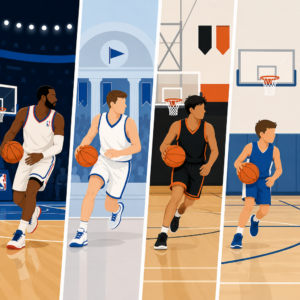

Basketball footwork drills build the foundation for scoring, passing, and decision-making because every move starts from the floor. In the Basketball Skills category, the IQ and Fundamentals branch teaches players how to create advantage without relying on elite athleticism, and no area matters more than the jab step, pivot, and triple threat position. These are not beginner-only concepts. I have used them with youth guards learning spacing, high school wings attacking closeouts, and adult players fixing habits that limit efficiency. Good footwork sharpens timing, protects the ball, reduces turnovers, and turns a static catch into multiple threats at once. When coaches talk about playing under control, reading defenders, and winning small moments, they are usually talking about footwork discipline.
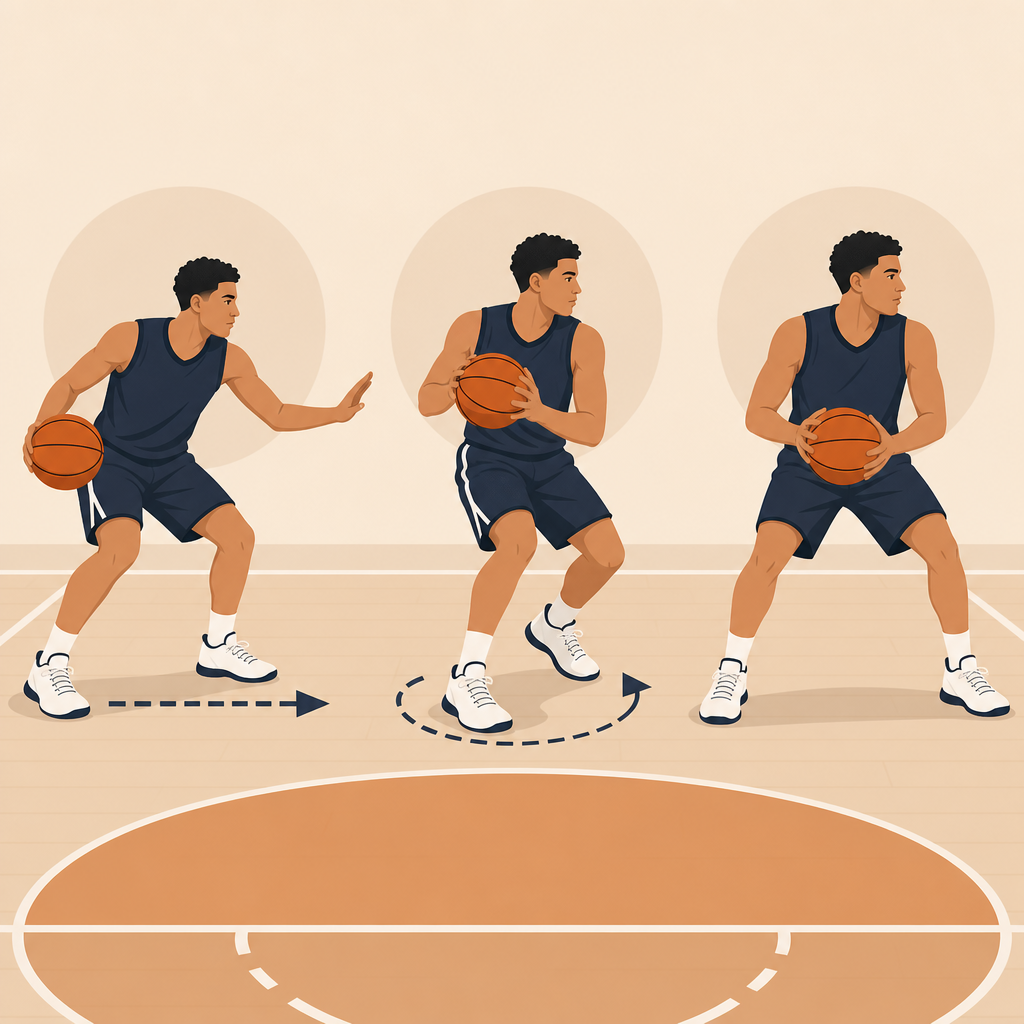
Triple threat position means the player catches or secures the ball in a balanced stance and becomes an immediate threat to shoot, pass, or drive. A jab step is a quick, convincing step used to shift a defender, test reaction, and open a lane or shot window. A pivot is the legal rotation of the body around one planted foot, used to protect the ball, improve passing angles, square to the rim, or counter pressure. Together, these movements form the language of offensive basketball IQ. They connect directly to spacing, closeout reads, post entries, escape dribbles, and late-clock decisions. If a player cannot hold balance, identify the pivot foot, and threaten the defense with intent, advanced offensive actions break down before they start.
This hub article explains the core mechanics, the reasons they work, and the drills that actually transfer to games. It also frames how these skills connect across the wider Basketball Skills topic. Shooting footwork depends on a clean catch and balanced base. Ball handling improves when the first step comes from a stable pivot. Passing becomes more accurate when the hips and shoulders align through a turn. Defensive pressure is easier to beat when the offense does not panic after the catch. At every level, the best players save dribbles, keep options alive, and make the defender commit first. That is the real value of basketball footwork drills: they improve technique, but they also raise the quality of every decision that follows.
Triple Threat Position: The Starting Point for Offensive IQ
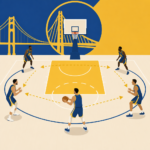
Triple threat position is the most important non-dribble stance in basketball because it creates immediate uncertainty for the defender. The feet should be slightly wider than shoulder width, knees bent, hips loaded, chest upright, and the ball secured in a strong pocket where it can move quickly into a shot, pass, or rip-through. The eyes must be up. That point gets repeated because many players assume they are in triple threat when they are really just holding the ball. True triple threat is active, not static. The defender should feel pressure from all three options at once.
In practice, I teach players to land on the catch with either a one-two step or a hop, depending on the pass angle and intended action. The key is arriving balanced without extra heel clicks or wasted adjustment steps. If the catch pulls the player off line, the stance must reset instantly. NBA skill coaches often emphasize “catch ready” because the half-second after possession is when defenses are most vulnerable. A late closeout, a top foot turned the wrong way, or a helper pinned too deep in the lane can all be exploited from triple threat before the dribble even starts.
Common errors include standing too tall, bringing the ball above the shoulders unnecessarily, locking the knees, or narrowing the base. Those mistakes kill explosiveness and make reads slower. Against pressure, players also expose the ball by swinging it wide instead of keeping it tight to the frame. A strong triple threat position protects possession while preserving options. That is why this concept belongs at the center of any IQ and Fundamentals training plan.
The Jab Step: Creating Advantage Without Wasting the Dribble
The jab step is one of the most misunderstood moves in basketball. Many players treat it like choreography, tapping the foot with no purpose. An effective jab step is a read-based tool designed to move the defender’s balance, feet, or eyes. It works because defenders react to credible threats. The front shoulder, eyes, and ball position must sell the possibility of a drive or shot. If the upper body stays casual, the defender does not bite. If the jab is too long, the player loses base and cannot explode back into the counter.
There are several useful versions. The directional jab attacks the defender’s lead foot and tests whether the lane can be opened. The shot jab raises into the shooting pocket to trigger a hard closeout reaction. The rocker step shifts weight rhythmically without surrendering the pivot foot, which is especially useful for shooters. Carmelo Anthony built entire isolation possessions off jab series footwork because he understood how to stack believable threats. Even at youth level, one sharp jab can force a retreat step that creates enough space for a pull-up or straight-line drive.
The best teaching cue is simple: jab to make the defender declare. If the defender opens the hips, drive. If the defender jumps to cut off the lane, pull back to shoot or swing the ball. If help creeps early, use the pivot to improve the passing angle. Jab stepping is not about style points. It is about preserving the dribble, gathering information, and acting before the defense can recover.
Pivoting: The Legal Turn That Solves Pressure
A pivot lets a player rotate while one foot remains anchored, and that legal turn changes the geometry of the possession. Front pivots open the body toward the basket or target area. Reverse pivots help shield the ball from pressure and create separation. Inside pivots are common when squaring from the wing or slot, while outside pivots appear often in post play and pressure relief. Every player should know the pivot foot instantly after a catch, stop, or step-through action. Uncertainty here leads directly to travels.
In games, pivoting solves practical problems. A wing catches, sees a hard closeout, and uses a reverse pivot to protect the ball while reading a cutter. A post player receives an entry, front pivots middle to test help, then reverse pivots baseline to counter. A guard trapped near the sideline keeps the pivot foot down, chins the ball, and rotates to hit the safety outlet. These are not flashy plays, but they decide possessions. When players panic, they pick up the pivot foot early, expose the ball, or spin without seeing the floor. Proper pivoting keeps them calm and connected to options.
Officials judge travels based on the established pivot foot under FIBA and NFHS interpretations, and players need that rules awareness. Teaching legal movement is part of basketball IQ. The point is not simply avoiding violations. It is using the pivot to buy time, improve vision, and force defenders to chase angles they thought they had closed.
Footwork Drills That Transfer to Games
Basketball footwork drills should be brief, repeatable, and tied to game reads. I have found that players improve fastest when every rep starts with a realistic catch and ends with a decision. Static lines have some value for pattern learning, but transfer happens when the drill includes stance, defender cues, timing, and finish. The table below highlights the drills I use most often for jab step, pivot, and triple threat development.
| Drill | How It Works | Main Coaching Points | Game Transfer |
|---|---|---|---|
| Catch to Triple Threat Freeze | Player catches from different angles and holds balanced stance for two seconds | Wide base, eyes up, ball tight, no extra steps | Improves catch readiness and immediate balance |
| Jab Read Series | Coach gives live closeout; player jabs and reacts to defender’s footwork | Sell the jab, keep pivot foot, explode on the counter | Teaches attack decisions without wasted dribbles |
| Front and Reverse Pivot Circle | Players pivot to four cone targets around the body | Low hips, chin the ball, see each target before turning | Builds passing angles and ball protection under pressure |
| Rip Through to One-Dribble Finish | From triple threat, player rips low and attacks after reading top foot | Ball below the defender’s hands, first step wins the lane | Connects footwork to finishing and closeout attacks |
| Trap Escape Pivot Drill | Two defenders shade sideline; ballhandler pivots to find outlet | No panic, pivot strong, pass on time | Reduces turnovers against pressure |
Keep reps short and competitive. Eight perfect reps are better than thirty lazy ones. Add constraints such as one dribble maximum, weak-hand finish, or mandatory pass if help rotates. Constraints force the player to use footwork as a thinking tool rather than a memorized routine. Video helps too. Slow-motion review often reveals that the “bad decision” was actually caused by a poor catch or drifting pivot two beats earlier.
Linking Footwork to Shooting, Passing, and Ball Security
Footwork is not a separate skill silo. It powers the rest of offensive execution. For shooting, balanced feet and proper alignment allow the player to get on line quickly. Many missed catch-and-shoot attempts start with a rushed or uneven base, not with the release itself. For passing, a pivot creates cleaner windows and changes the release angle around active hands. For ball security, the ability to chin the ball, reverse pivot, and keep elbows tight prevents strips and jump-ball situations.
One practical example is the wing catch against an aggressive closeout. A player with weak fundamentals may rush a dribble into traffic. A player with strong fundamentals lands in triple threat, shot fakes or jabs to move the defender, then drives the exposed hip or hits the corner after a pivot opens the lane line view. Same catch, different possession quality. That is why fundamental footwork often looks like game intelligence. The body organizes the read.
This hub also connects naturally to related Basketball Skills pages. Shooting mechanics benefit from catch preparation and inside-foot alignment. Passing fundamentals expand on pivot-created angles and timing. Ball handling drills become more effective when the first move is efficient and legal. Finishing at the rim improves when the initial attack step wins space. Defenders can scout dribble packages, but they struggle more against players who are balanced, patient, and precise before the dribble begins.
Building IQ Through Reads, Not Just Reps
Players do not improve decision-making by rehearsing footwork in a vacuum. They improve by attaching each movement to a question. Where is the defender’s top foot? Is the closeout short or long? Is the help defender tagging from the nail? Is the baseline open? Can the pivot create a safer passing lane? These are the checks that turn a jab step or pivot from a technical action into a basketball solution.
In film sessions, I often pause at the catch and ask players to name the three immediate options from triple threat. The strongest decision-makers answer quickly because their stance has already organized the possession. They know whether they are on balance to shoot, whether the defender is vulnerable to a rip-through, and whether a teammate is about to become open if the defense shifts. This is why experienced players seem composed. Their feet and eyes are synchronized.
To train that synchronization, use guided reads. A coach can call “shot,” “drive,” or “swing” after the catch, forcing the player to move from the same triple threat base into different outcomes. Then progress to live defenders where the call disappears and the player must read honestly. Small-sided games, especially three-on-three from the wing or slot, are ideal because every touch creates a real closeout decision. Over time, the drills teach patience: do not spend the dribble until the feet, eyes, and defender tell the same story.
How to Practice Safely and Measure Progress
Quality footwork work is demanding on ankles, knees, groins, and lower back, so warm-ups matter. Begin with ankle rocks, calf raises, hip openers, deceleration lunges, and low pogo hops before sharp pivots or explosive jab series. Shoes should provide lateral stability, not just cushioning. Slippery surfaces increase injury risk and hide bad mechanics because players shorten movements to avoid sliding.
Measure progress with simple standards. Count how many balanced catches a player makes in twenty reps. Track turnover rate in trap escape drills. Record shooting percentage after jab-to-pull-up actions from each wing. Time how quickly a player can catch, pivot, and hit a target on command without traveling. These metrics make fundamentals tangible. Improvement should show up not only in drill scores but in game indicators such as fewer rushed dribbles, more paint touches off one move, and cleaner passes against pressure.
The central lesson is straightforward. Jab step, pivot, and triple threat position are not isolated moves; they are the core operating system of offensive basketball IQ and fundamentals. Master them, and every other skill becomes more efficient, more controlled, and more useful under pressure. Use this hub as the starting point for your Basketball Skills training plan, then build outward into shooting, passing, ball handling, and finishing with the same attention to detail. Start with ten focused minutes of basketball footwork drills in every session, and let your game become simpler, sharper, and harder to guard.
Frequently Asked Questions
What is the triple threat position, and why is it so important in basketball footwork?
The triple threat position is the fundamental stance where a player is ready to shoot, pass, or dribble without telegraphing the next move. It begins with balanced feet, bent knees, hips loaded, chest up, and the ball protected in a strong position near the shooting pocket. From there, the player can read the defender and make an efficient decision. The reason it matters so much is simple: it turns every catch into an attacking opportunity. A player who catches upright, narrow, or off balance gives the defender time to recover. A player who catches in triple threat immediately applies pressure because the defense must respect multiple options at once.
This position is not just for beginners learning the basics. It remains essential at every level because it improves timing, body control, and decision-making. Youth players use it to learn spacing and balance. High school players use it to attack closeouts and make quicker reads. Adult players and experienced scorers use it to stay composed under pressure and create efficient advantages without wasting movement. In practical terms, a strong triple threat position helps players rip through cleanly, protect the ball, sell shot fakes, and move into jab steps or pivots with purpose. If the feet are wrong, everything after the catch becomes slower and less effective. That is why coaches return to triple threat again and again: it is the starting point for skilled basketball.
How do you teach and practice an effective jab step without traveling or losing balance?
An effective jab step is a sharp, controlled fake with the non-pivot foot designed to move the defender, force a reaction, or create a driving lane. The key is that it must look real while keeping the player balanced enough to do something immediately afterward. To teach it well, start with the idea that the jab is not just a foot movement. It is a full-body threat. The eyes, shoulders, hips, and ball position should all support the fake. If the player jabs lazily with only the toe, defenders will not react. If the player overreaches, the body drifts forward and the next move becomes slow. A good jab step is quick, violent, and recoverable.
To avoid traveling, the player must clearly establish the pivot foot before making the move. Once that pivot foot is down, it cannot slide or lift before the dribble begins. That is where many players make mistakes. They focus so much on selling the fake that they forget where their weight is. Good drill work should emphasize catching on balance, pausing in triple threat, identifying the pivot foot, and then stepping with the free foot while keeping the chest controlled. Start with stationary reps, then progress to live catches, shot fake into jab, jab into drive, and jab into crossover or rip-through. The best coaching cue is often “stay loaded.” If the player remains low and centered, the jab becomes explosive but legal, and the follow-up move becomes much more effective.
What is the difference between a front pivot and a reverse pivot, and when should players use each one?
A front pivot turns the body forward around the pivot foot, while a reverse pivot turns the body backward around the pivot foot. Both are essential, and both serve different purposes depending on spacing, defensive pressure, and the next read. A front pivot is often useful when a player wants to face the basket quickly, square up to attack, or protect the ball while opening a passing angle. A reverse pivot is especially valuable when shielding the defender with the body, creating separation, escaping pressure, or changing the angle of attack without exposing the ball.
In game situations, the choice depends on what the defender is taking away. If a player catches on the wing and wants to square to a closing defender, a front pivot may be the fastest way to get into triple threat and attack. If that same player catches with a defender crowding the high side, a reverse pivot might better protect the ball and create a safer passing or driving lane. In the post, reverse pivots can help maintain a strong seal and keep the defender on the back. On the perimeter, front pivots can create quick alignment for shot preparation. The most skilled players are not guessing which pivot to use. They understand body positioning, they feel pressure, and they use the pivot that gives them the best balance and the cleanest next option. That is why pivot drills should include both techniques, both feet, and multiple reads rather than only rehearsing one pattern.
What are the best drills to improve jab steps, pivots, and triple threat position for real game situations?
The best drills are the ones that connect clean technique to realistic reads. Start with simple form work: catch into triple threat, hold balance for a count, identify the pivot foot, then execute front pivots, reverse pivots, and jab steps on command. This builds body awareness and discipline. From there, add progression drills such as jab-and-hold, jab-to-shot, jab-to-drive, pivot-to-pass, and pivot-away-from-pressure. These should be done on both sides of the floor and off both feet so players do not become one-directional. Mirror drills are also excellent, where one player reacts to a partner’s movement and must stay legal and balanced while changing angles.
To make the drills more game-like, add a defender and force decisions. For example, in a closeout drill, the offensive player catches in triple threat and reads whether the defender is short, long, under control, or off balance. Based on that read, the player might shoot, jab and go, or pivot into a passing lane. Another strong option is constrained live play, where the offense is required to start every rep from triple threat and can only use one dribble after a jab or pivot. This teaches efficiency and helps players understand that footwork is not separate from basketball IQ. It is decision-making through movement. The goal is not just to look good in drills. The goal is to create habits that show up under pressure, at speed, and against defenders who are trying to take away the first option.
Can advanced players still benefit from practicing basic footwork drills like triple threat, jab steps, and pivots?
Absolutely. In fact, advanced players often gain more from these drills because they can apply small technical improvements to complex game situations. At higher levels, defenders are faster, rotations are sharper, and advantages disappear quickly. That means the quality of the first step, the angle of the pivot, and the balance of the catch matter even more. A sloppy catch or a weak jab may not be punished at lower levels, but against disciplined defenders it kills the possession. Advanced players use these same fundamentals to manipulate closeouts, shift help defenders, improve passing windows, and create scoring chances without needing extra dribbles.
There is also a major efficiency benefit. Strong footwork reduces wasted motion, helps protect the ball, and improves timing within the offense. A skilled wing can catch in triple threat, freeze the defender with a jab, and get downhill in one clean action. A guard can reverse pivot away from pressure and create a passing lane without picking up a second defender. A post player can use pivots to score without rushing. These are advanced applications of basic-looking skills. The best players do not move more than necessary; they move better than everyone else. That is why footwork work never really graduates out of a training plan. It simply evolves from memorizing positions to mastering reads, tempo, deception, and control.