
Basketball IQ separates players who merely react from players who control games. In practical terms, basketball IQ is the ability to recognize patterns, read defenders, anticipate help, understand time, score, spacing, and make the right decision before the window closes. Reading defenses means identifying what the other team is trying to take away and spotting the weakness their coverage creates. Knowing when to pass means delivering the ball early, on time, and to the right teammate, not just avoiding a shot. I have coached and charted games where average athletes consistently beat better athletes because they processed actions one beat faster. That is why IQ and fundamentals sit at the center of player development. Better decisions raise shooting quality, reduce turnovers, improve team rhythm, and make every skill you already have more valuable on every possession.
For a player building a complete basketball skills foundation, this topic serves as the hub because it connects directly to passing technique, footwork, shooting preparation, ball handling, off ball movement, and defensive awareness. A smart pass usually starts with stance, vision, and spacing. A successful drive and kick depends on understanding gap help and closeout angles. Even simple concepts such as jump stopping, pivoting, and keeping the ball moving become decision tools when you see the floor clearly. At every level, from youth leagues to college film rooms, coaches reward players who can process advantage and disadvantage quickly. If you want to improve your basketball IQ, you need a repeatable framework for reading the defense, predicting rotations, and choosing the pass that creates the best next action.
Start with the language of advantage: spacing, timing, and help
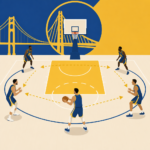
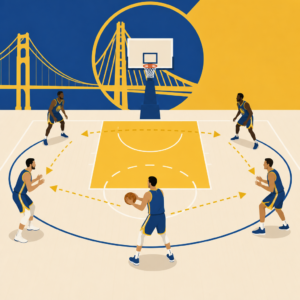
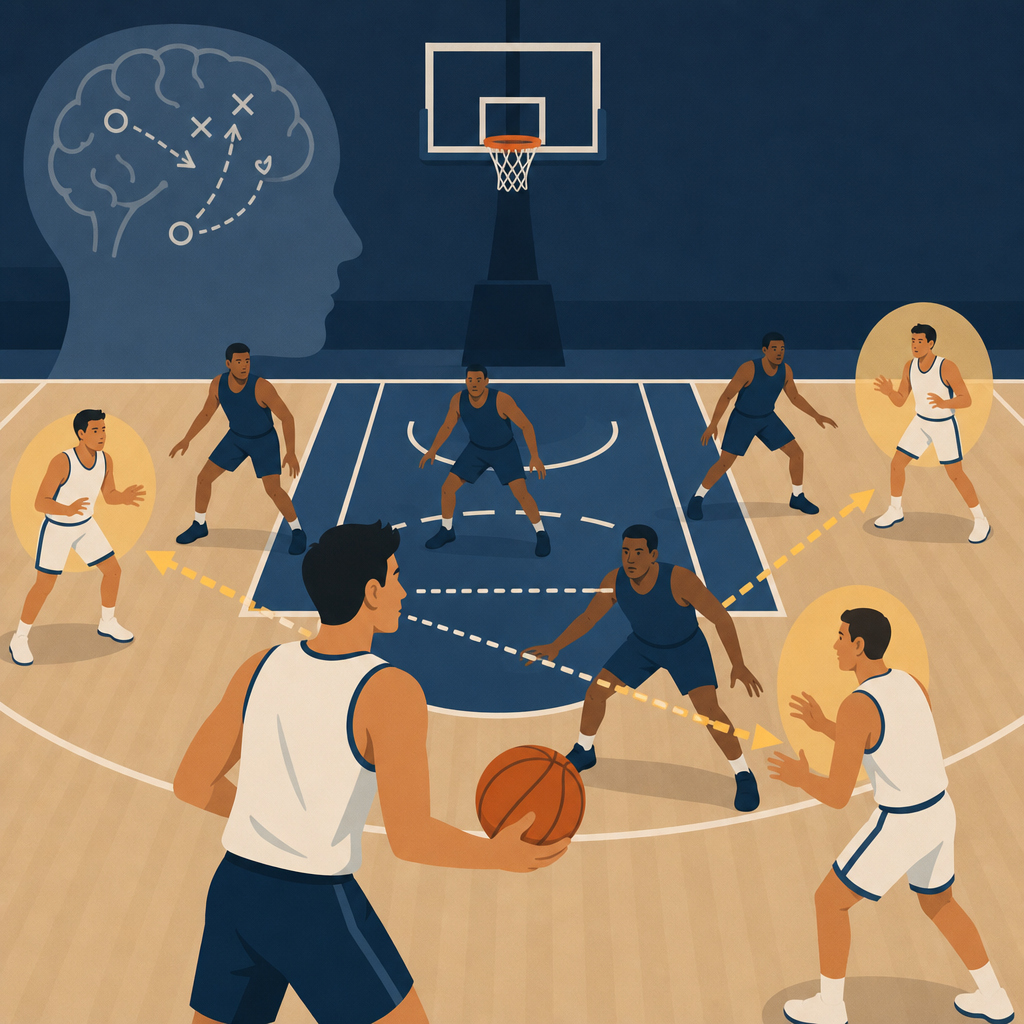
Basketball decisions become easier when you stop viewing the floor as ten moving players and start viewing it as shifting advantages. An advantage exists anytime the offense forces a defender to cover too much space, arrive late, or guard two threats at once. In film study, I teach players to scan three things first: spacing, the location of the help defender, and the timing of rotations. Good spacing stretches a defense horizontally and vertically. When teammates stand too close, one defender can guard two players, and passing windows shrink. When the floor is spaced correctly, the ball handler can see a gap, the help defender must commit, and the next pass becomes obvious.
Help defense is the second key term. On ball defense is the primary defender in front of the ball. Help defense is everyone positioned to tag a cutter, stop a drive, or protect the rim. Most defensive schemes are built on the same logic: contain the ball, protect the paint, then recover to shooters. If you understand that priority order, you can predict where the defense will overcommit. For example, when you beat your defender from the wing, the low man often slides over from the weak side corner to protect the rim. That rotation opens a pass to the corner or a drop off to the dunker spot. Reading defenses is rarely mystical. It is pattern recognition anchored in spacing and help responsibilities.
Timing completes the picture. Many players see the right pass a moment too late. The best pass is usually available before the receiver looks obviously open. In pick and roll, the pocket pass appears when the screener’s defender steps up to contain, not after the lane fully opens. On a backdoor cut, the ball should be thrown as the defender turns his head, not after the cutter reaches the rim. Smart players learn to deliver passes on the catch, on the move, and before the defense can load to the ball. That is how IQ turns fundamentals into efficient offense.
How to read common defenses in real games
Man to man defense asks each defender to guard a matchup while still helping within team rules. To read it, identify the nail defender, the low man, and whether the defense is top locking, icing side pick and roll, or switching actions. If the nail defender digs hard at drives, the slot pass is often available for a catch and shoot or extra swing. If the low man is early and aggressive, baseline drift passes become valuable. If the defense switches off ball screens, slips and ghost screens can create immediate confusion. Against a switching team, the first read is not always to attack the mismatch. Sometimes the smarter play is quick ball movement that forces two switches and produces a bigger breakdown.
Zone defense looks different but follows the same principle of overloaded responsibility. In a 2-3 zone, the soft spots are typically the high post, short corner, and weak side wing after reversal. In a 1-3-1, the corners and baseline runner areas are vulnerable. Against a 3-2, the gaps at the elbows and along the baseline become important. The mistake many players make against zone is holding the ball and allowing the shape to reset. Quick reversals, touch passes, and interior catches force the zone to collapse and expand repeatedly. Once two defenders commit to the ball, the next pass should attack the newly exposed window. That is why coaches emphasize entering the ball to the high post: one catch there can collapse the entire top line of the zone.
Press defenses demand a different reading process. Instead of scanning half court help, you read traps, sideline pressure, and middle coverage. The rule is simple: avoid dead zones near sidelines and corners, show numbers to the ball, and look middle before looking long. A press wants panic. High IQ players beat it with spacing and pivots. The first safe pass is often backward, not forward. Once the ball reaches the middle, numbers tilt in the offense’s favor and the next pass can create a layup. In games I have charted, teams that use one reversal and a middle flash against pressure generate far cleaner possessions than teams trying to dribble through traps.
| Defensive look | Primary cue to read | Best passing answer | Common mistake |
|---|---|---|---|
| Man to man | Low man helping at the rim | Corner kick or drop off pass | Driving into a second defender |
| Switching defense | Two defenders exchanging assignments late | Quick slip pass or immediate swing | Holding for isolation while defense resets |
| 2-3 zone | Top defenders shifting on reversal | High post entry, short corner feed | Static perimeter passing without penetration |
| Full court press | Trap forming at sideline or corner | Reverse out, flash middle, advance | Picking up the dribble too early |
Knowing when to pass: the decision hierarchy that works
The right time to pass is determined by advantage, not by the number of dribbles you have taken. I teach a simple decision hierarchy. First, pass when a teammate has a better shot than you. Second, pass when your drive forces help and creates an open receiver. Third, pass early to improve the next action, even if the immediate pass does not create a shot. That third category is where high level basketball IQ often shows up. An advance pass in transition may only lead to one more swing, but it shifts the defense and creates an uncontested three. The box score gives the assist to the final passer, yet the possession was won by the earlier decision.
Passing windows are small and specific. A bounce pass works when a defender’s hands are high and the lane is open below the waist. A pocket pass is best when the screener rolls into a narrow seam and the big defender is in a drop or hedge recovery. A hook pass can skip over a crowd, but it carries risk if thrown late. The read must match the pass type. Too many players think “pass” in a general way. Smart players think “right pass, right target, right timing.” That is why turnover reduction comes less from becoming passive and more from becoming precise.
Shot clock, score, and personnel also matter. Late in the clock, the best pass may be a safety outlet that leads to a contested but balanced shot rather than a risky cross court attempt. If your shooter is relocating to the strong side corner, one beat of patience may produce a better result than forcing a pass into traffic. If your rolling big has strong hands and touch, feed him in crowds more often. If a teammate struggles finishing over length, skip the difficult dump off and move the ball to the perimeter. Basketball IQ is not one universal answer. It is context applied quickly and correctly.
Building basketball IQ through film, reps, and constraints
Players improve their reads fastest when film study and court work reinforce each other. On film, do not watch only highlights or only the ball. Pause before the pass and ask three questions: Where is the help coming from, who is open next, and what would happen if the ball moved one more time? Then compare your answer to the actual play. Synergy, Hudl, and even simple phone edits can help players tag pick and roll possessions, closeouts, and turnovers by type. Over time, patterns emerge. You may discover that most of your turnovers occur on jump passes to the opposite wing or that you miss the weak side corner whenever the low man tags from the baseline.
On court, small sided games accelerate learning because they increase decision frequency. A 3 on 3 game with a paint touch rule teaches players to recognize help and kick out opportunities. A 4 on 4 shell drill sharpens defensive positioning and helps offensive players see tags, stunts, and recoveries. Adding constraints matters. For example, allowing only half a second to hold the ball forces quicker processing. Requiring a jump stop in the lane before any pass teaches balance and vision. Banning dribble pickups near the sideline improves press breaking habits. These details are not gimmicks. They train players to scan, predict, and act under realistic pressure.
Communication is another overlooked part of IQ and fundamentals. Great passers constantly read teammates’ eyes, pace, and body angle. A cutter who sprints through the lane opens a different window than a cutter who pauses and seals. A shooter who lifts from the corner to the wing changes the help defender’s math. Teams with clear terminology for slots, tags, veer backs, Spain action, and empty side pick and roll make better decisions because everyone recognizes the same cues. Shared language speeds processing. In live games, that speed is the difference between an open shot and a deflection.
Common mistakes that lower basketball IQ, and how to fix them
The first mistake is predetermining the pass. Players decide before the action starts that they will hit the roller, skip to the corner, or force the post entry. Defenses punish predictability. The fix is to read defender movement, not offensive intention. Start every action with a neutral mind and let the defense tell you the answer. The second mistake is watching only your defender. Good decisions require seeing one layer deeper. On a drive, the most important defender is often not the player in front of you but the low man stepping over from the weak side.
The third mistake is poor footwork. Many bad reads are actually bad body positions. If you leave your feet to pass, turn your chest away from the floor, or catch without a plan, your options shrink. Jump stops, reverse pivots, stride stops, and pass fakes are intelligence tools because they buy time and improve angles. The fourth mistake is confusing movement with purpose. Constant dribbling can make a player feel active while the defense gets organized. One hard paint touch and one clean pass often do more than six aimless dribbles.
Finally, players often ignore the simplest read: moving the ball before help arrives. The best way to beat a loaded defense is not always heroic creation. It is often an early swing, a hit ahead pass, or a simple give and go. If you want to improve your basketball IQ, commit to charting your decisions for a month. Track turnovers by pass type, note every missed open teammate on film, and count “advantage passes” that led to the next advantage even without an assist. You will quickly see that reading defenses and knowing when to pass are trainable skills. Master them, and every possession becomes clearer, calmer, and more productive. Start with one game of film this week, then carry those reads into your next workout.
Frequently Asked Questions
What does basketball IQ actually mean when it comes to reading defenses and making passes?
Basketball IQ is the ability to process what is happening on the floor and make the right decision before the defense can recover. It goes beyond effort, talent, or ball-handling skill. A high-IQ player sees the alignment of defenders, understands where help is coming from, recognizes what the defense is trying to remove, and quickly identifies the best counter. That might mean attacking a gap, pulling the ball out, making the extra pass, or delivering a simple pass a second earlier than most players would.
When it comes to reading defenses, basketball IQ means understanding common coverages and their built-in weaknesses. If the weak-side defender tags the roller, the corner may be open. If two defenders jump the ball on a ball screen, the short roll is often available. If the on-ball defender is forcing baseline and the help is late, there may be a driving lane. Smart players are always asking: What is the defense taking away, and what is it giving me?
Knowing when to pass is a major part of that equation. Good passers do not wait until a teammate looks completely open. They pass on time, which often means passing before the opening is obvious. In basketball, windows close fast. A pass that is late by half a second can turn a layup into a contested catch or a turnover. That is why high-IQ players value timing, angle, and purpose. They understand the score, clock, spacing, matchup, and game flow, then make the decision that gives their team the highest-quality shot.
How can I get better at reading defenses during live game action?
Improving your ability to read defenses starts with learning what to look at before and during the play. Many players make the mistake of watching only their own defender, but strong decision-makers scan the whole floor. Before the catch, identify where the help defenders are positioned, whether the defense is loaded to the ball, who is guarding the roller or cutter, and whether the weak-side corner defender is hugging the shooter or sinking into the lane. The more information you gather early, the slower the game will feel when the action begins.
During live play, focus on defensive cues. Watch the feet and shoulders of defenders. A defender whose top foot is high may be trying to force you in a certain direction. A big man sitting deep in the paint is inviting a pull-up or floater while taking away the rim. A weak-side defender with one foot in the lane is already showing help responsibilities. If two defenders are tracking the ball, someone else is usually uncovered or vulnerable to a quick advantage pass. Reading defenses is often about seeing these small clues before the defense completes its rotation.
Film study also accelerates improvement. Instead of only watching highlights, study full possessions. Pause the video before the key action and ask yourself what the defense is doing and where the best pass should go. Then watch what actually happens. Over time, you start recognizing recurring patterns: nail help against drives, low-man rotations on pick-and-rolls, late closeouts after skip passes, and traps near sidelines. Pair that with game-speed drills that force quick reads, such as small-sided games, advantage drills, and pick-and-roll reads, and your ability to process defenses under pressure will improve much faster.
What are the biggest signs that it is the right time to pass instead of forcing a shot or dribble?
The clearest sign it is time to pass is when the defense has committed extra attention to you. If a second defender shades over, if the low man steps up early, or if your driving lane closes faster than expected, the defense is telling you that someone else is now in a better position than you are. Good offensive players understand that drawing help is a success, not a failure. Once the defense shifts to stop you, your job is to move the ball to the open space that shift created.
Another important sign is when your advantage is no longer clean. Maybe you beat your man initially, but the gap shrinks and a rotating defender meets you at the rim. Maybe you come off a screen and the big shows high enough to take away your pull-up while the guard recovers to your hip. Those are classic moments to pass early rather than dribble into trouble. The best decision is often made before the defense fully traps you. Leaving your feet without a plan, picking up the dribble in traffic, or trying to split defenders late usually leads to rushed plays and turnovers.
You should also pass when a teammate has a higher-value opportunity than you do. That could mean a cutter heading to the basket, a shooter with inside position on a closeout, or a big sealing deep in the paint. High-IQ passing is not about giving the ball away randomly. It is about upgrading the possession. If your teammate has a layup, open three, or mismatch because your action shifted the defense, that pass is the right play. Players who control games know that the goal is not to make the hardest play; it is to make the best one at the right moment.
How do spacing, time, and score affect passing decisions?
Spacing changes everything because it determines how much room the defense has to rotate and recover. When teammates are properly spaced, help defenders have to cover longer distances, and passing lanes become clearer. When the floor is crowded, even correct reads become harder to execute because defenders can guard multiple players at once. That is why smart players are constantly aware of who is in the dunker spot, who is in the corner, who is lifting on the wing, and whether a cutter is occupying the same space as a driver. Good passing decisions come from understanding not just who is open, but whether the floor structure makes the pass clean and useful.
Time is equally important. In basketball, there is a difference between an open player and an open window. A teammate may appear available for only a brief moment, especially against fast, disciplined defenses. The best passers deliver the ball early, on time, and in rhythm. That means the receiver can shoot, drive, or swing the ball immediately. A late pass allows the defense to recover. A rushed pass with poor angle forces the receiver to adjust and kills the advantage. The right pass is not just accurate; it is timed to preserve the offense’s edge.
Score and game situation also shape decision-making. Early in the shot clock, you may have time to reverse the ball and force the defense through another rotation. Late in the clock, you may need to make the simplest direct play available. If your team is protecting a lead, valuing possession may matter more than attempting a risky thread-the-needle pass. If you are trailing late, a quick kick-out for a three may be more valuable than a contested two. High basketball IQ means understanding that no pass exists in a vacuum. The scoreboard, the clock, and the lineup on the floor all influence what the best decision really is.
What are the best ways to practice knowing when to pass and making better reads consistently?
The best way to improve passing decisions is to train them in realistic situations, not just in static drills. Traditional partner passing has value for technique, but decision-making grows when defenders are involved and multiple options are live. Small-sided games such as 2-on-2, 3-on-3, and 4-on-4 are especially effective because they increase the number of reads per possession. In these settings, you can repeatedly practice drive-and-kick reads, short-roll decisions, help-side recognition, and skip passes against actual pressure. The smaller format also forces you to see the floor more clearly and process actions faster.
You should also build a habit of reading specific defenders, not just passing to predetermined spots. For example, in a pick-and-roll drill, focus on the low man, the tag defender, or the weak-side wing and make your decision based on that player’s movement. In a penetration drill, read whether the corner defender sinks, stunts, or stays home. This teaches you to connect the defense’s behavior to your passing choice. Over time, you stop guessing and start reacting with purpose. That is where consistency comes from.
Finally, combine on-court reps with intentional film review and post-practice reflection. After games or workouts, think through a few possessions: Where was the help? Did you pass too late? Did you miss the easy read because you were locked onto the rim? Watching yourself honestly can reveal patterns in your decision-making. Maybe you overdribble against crowded paint touches, or maybe you miss weak-side shooters when driving left. Once you identify those habits, you can target them in training. Players improve their basketball IQ fastest when they treat passing and reading defenses like a skill to study, test, and refine every day.