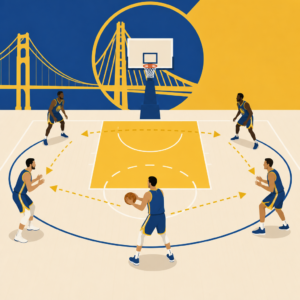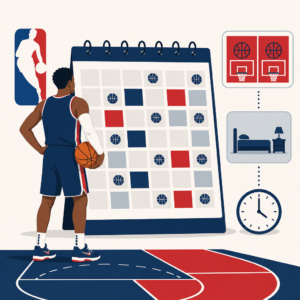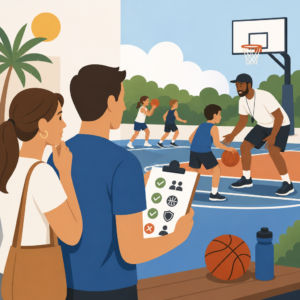

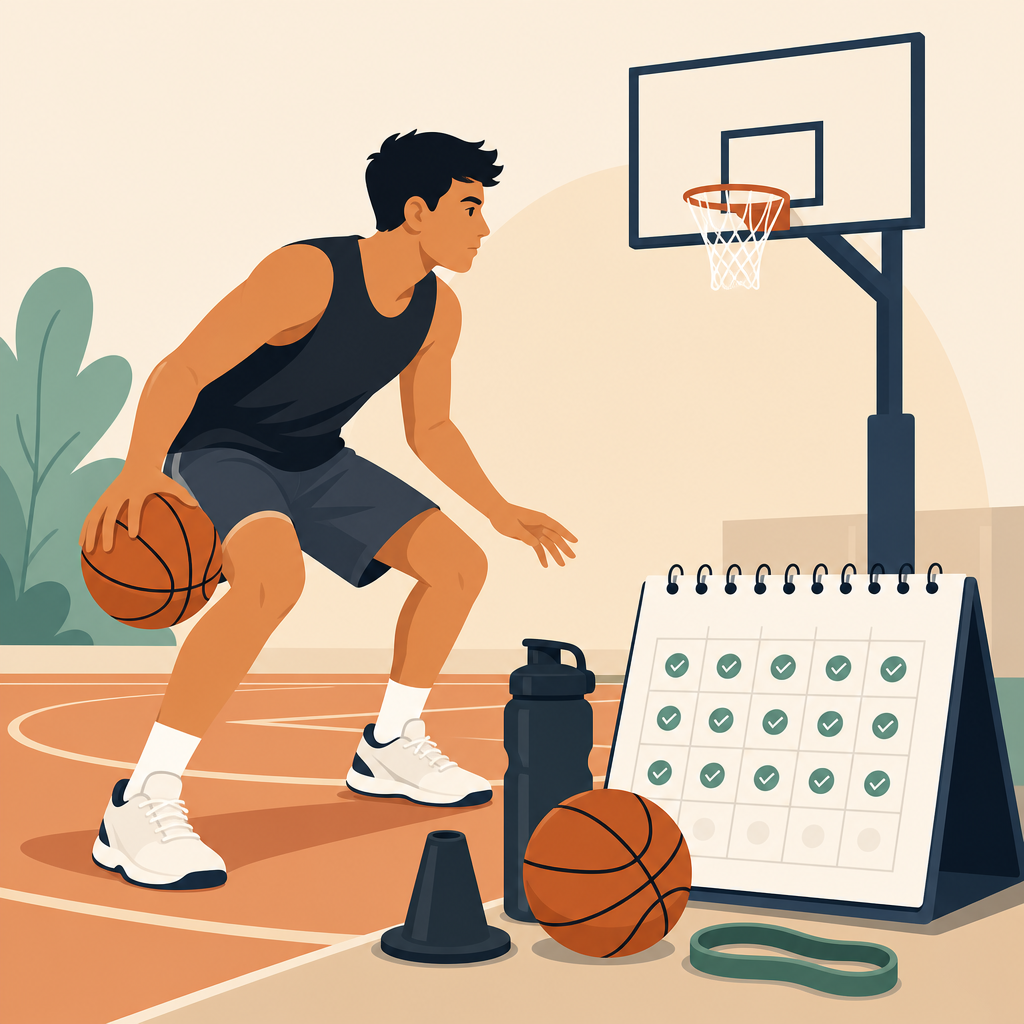
Getting better at basketball in 30 days is realistic if you follow a structured daily plan that improves skill, conditioning, decision-making, and recovery at the same time. In basketball training, a program is more than a list of drills. It is an organized sequence of work that builds shooting mechanics, ball control, footwork, strength, and game awareness in a deliberate order. A workout is the daily session inside that larger program. When players stall, it is usually because they train hard without a plan, repeat favorite drills instead of weak-point drills, or ignore recovery. I have seen the biggest month-to-month improvements come from players who track makes, reps, sprint times, and sleep with the same seriousness they bring to pickup games. Thirty days will not turn a beginner into an elite guard, but it can produce sharper handles, better shooting consistency, stronger movement patterns, and more confidence under pressure. This article serves as a basketball training hub for programs and workouts, showing what to do each day, why it works, and how to adjust it for your level.
What a 30-day basketball training program should include
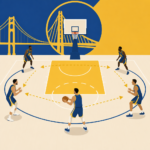
A complete basketball improvement plan needs six components: skill work, game-speed finishing, shooting volume, athletic development, film study, and recovery. Skill work covers dribbling, passing, pivoting, stopping, and changing pace. Game-speed finishing means practicing layups, floaters, reverse finishes, and finishes through contact at realistic angles and speeds. Shooting volume should include form shooting, spot shooting, movement shooting, and free throws, with results tracked. Athletic development includes acceleration, deceleration, lateral movement, core stability, and lower-body strength. Film study teaches spacing, shot selection, and how good players solve pressure. Recovery includes sleep, hydration, mobility, and rest from impact.
Many players ask, what is the fastest way to get better at basketball? The direct answer is this: train fundamentals daily, measure outcomes, and practice at game pace. Programs fail when they overemphasize flashy cone drills and underestimate boring but effective habits such as 100 quality form shots, ten minutes of footwork, and post-session free throws when tired. In my own training blocks with guards and wings, the athletes who improved most in a month were rarely the most talented. They were the most consistent and the most honest about misses, turnovers, and conditioning gaps.
Your 30-day plan should use progressive overload. In basketball, that means increasing difficulty through speed, defensive pressure, movement complexity, weaker-hand emphasis, or tighter time limits. Week one establishes technique. Week two adds volume. Week three adds pressure and fatigue. Week four sharpens game application and testing. This progression mirrors basic training principles used in reputable strength and conditioning systems, including movement quality first, then workload, then specificity. It also reduces overuse problems that come from jumping immediately into max-intensity sessions.
The 30-day daily plan: week-by-week structure
The easiest way to follow a daily basketball workout plan is to use repeatable themes across each week. Every session should start with a dynamic warm-up: light jump rope, hip mobility, ankle mobility, lunges, skips, and activation for glutes and core. From there, move into the day’s main emphasis. Keep most sessions between 60 and 90 minutes. Longer is not better if quality drops.
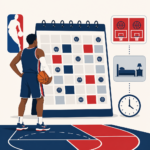
| Day | Main focus | Key work | Target outcome |
|---|---|---|---|
| 1 | Baseline testing | Form shooting, timed dribble series, lane agility, free throws | Starting numbers |
| 2 | Ball handling | Pound dribbles, crossovers, retreats, change of pace | Tighter control |
| 3 | Shooting mechanics | One-hand form shots, set shots, footwork into catch-and-shoot | Repeatable release |
| 4 | Finishing | Mikan variations, floaters, off-foot layups, contact finishes | Touch at rim |
| 5 | Strength and movement | Squats, split squats, push-ups, lateral shuffles, deceleration | Stronger movement |
| 6 | Game application | Small-sided play, reads, transition decisions, free throws | Transfer to games |
| 7 | Recovery and film | Mobility, walking, stretching, watch possessions | Reset and learn |
Repeat this structure across four weeks, but change the difficulty. In week one, make mechanics the priority. In week two, raise rep counts and add movement before shots. In week three, place skill work under fatigue by pairing drills with short sprints or defensive slides. In week four, test performance against your day-one baseline and focus on game situations such as two-dribble pull-ups, closeout attacks, and end-of-workout free throws. If you play a game on one of these days, reduce the workout volume and keep only activation, light skill work, and recovery.
Beginners should use more stationary ball-handling, close-range shooting, and bodyweight strength work. Intermediate players should add combo dribbles, movement shooting, and unilateral leg work. Advanced players benefit from constraints: one-dribble scoring, weak-hand finishing only, or shot clocks of five seconds. That is how a basketball workout program remains effective without becoming random.
Daily skill workouts that actually improve handles, shooting, and finishing
If your goal is better handles, spend at least ten focused minutes on dribbling every day. Start with stationary pounds at different heights, then alternate between crossovers, between-the-legs, and behind-the-back moves. Add retreat dribbles, hesitations, and change-of-pace bursts. The key is not just move variety. The key is posture, eyes up, off-hand protection, and explosive exits. I tell players to judge a dribble drill by whether it creates a cleaner first step, not whether it looks advanced on video.
For shooting, begin close to the basket. Form shooting teaches wrist alignment, elbow path, and arc without the bad compensation patterns that appear when players start too far out. A proven progression is 25 one-hand shots, 25 two-hand set shots, 25 catch-and-shoot shots from five spots, and then movement shooting off a one-two step or hop. Record makes, not attempts alone. If you shoot 200 shots but cannot say how many were clean makes from each spot, the session was incomplete.
Finishing deserves equal attention because many players can dribble and shoot in workouts but lose points at the rim in traffic. Use Mikan drills for touch with both hands, then add reverse Mikans, inside-hand finishes, same-foot same-hand layups, and floaters from the dotted line. To simulate contact, use a pad, a heavy bag, or a partner with legal body pressure. Real games demand balance through bumps and awkward takeoff angles. Train that directly.
Footwork connects all three areas. Every day, include jump stops, stride stops, front pivots, reverse pivots, jab steps, and drop steps. Good footwork shortens the time between decision and action. That matters because defenders recover faster than most players expect. One clean stop into a balanced shot is often more valuable than three extra dribbles.
Strength, conditioning, and recovery for basketball performance
Basketball conditioning is not endless running. The sport is built on repeated accelerations, decelerations, jumps, cuts, and brief recoveries. A better 30-day program uses interval conditioning and movement training that resemble game demands. Good options include ten-second court sprints with twenty seconds rest, slide-to-sprint transitions, shuttle runs, and tempo jump-rope rounds. These methods improve repeat-sprint ability without stealing too much energy from skill work.
Strength training should support basketball movement, not interfere with it. Two or three sessions each week are enough for most players in a 30-day block. Prioritize split squats, goblet squats, Romanian deadlifts, calf raises, push-ups, pull-ups or rows, planks, and anti-rotation core work such as Pallof presses. Unilateral lower-body work is especially useful because basketball is full of single-leg landings and push-offs. Stronger hips and ankles improve first-step power and reduce collapse on cuts.
Recovery is where many players lose progress. Sleep is the most powerful recovery tool you have. Most teenagers and athletes need roughly eight to ten hours, and performance drops quickly when sleep debt builds. Hydration matters as well. Even mild dehydration can reduce repeat sprint output and concentration. After hard sessions, eat protein and carbohydrates, then do light mobility for ankles, hips, thoracic spine, and shoulders. If your knees ache, do not push through with more jumping volume. Adjust the plan, lower impact for a day or two, and keep training through shooting form, ball handling, upper body work, and mobility.
Use one lower-intensity day every week. That is not weakness. It is how adaptation happens. Players who insist on maximum intensity seven days in a row usually see their shot quality, leg freshness, and motivation decline by the second week.
How to measure progress and make the program sustainable
Tracking is what turns a basketball workout schedule into a real development system. On day one, test a few simple metrics: makes out of 50 spot-up shots, free throws out of 20, weak-hand layups out of 20, timed full-court dribbles, lane agility, and maximum push-ups or split squats with good form. Retest at the end of each week and again on day 30. Improvement becomes visible when the numbers move.
Film is another powerful tool. Use your phone to record ten jump shots, a finishing series, and one live segment of one-on-one, pickup, or small-sided play. Look for specifics: Is the ball drifting left on release? Are your hips too upright on crossovers? Do you gather too slowly before pull-ups? Video removes guesswork. Many players think they are low and explosive until they actually watch themselves.
To make the plan sustainable, pair ambition with constraints. If you have school, work, or team practice, your individual workout might need to be 45 focused minutes instead of 90. That is acceptable. A shorter session with clear goals beats a long, distracted one. Also, keep one primary emphasis per day. Trying to max out shooting, handles, conditioning, strength, and film study in the same session usually leads to mediocre work across all categories.
Common mistakes are easy to avoid. Do not chase new drills every day. Do not train only your strengths. Do not ignore your off hand. Do not count ugly makes as wins. Do not compare your month one to someone else’s year five. Compare your day 30 to your day 1. That is the standard that matters.
In 30 days, you can become a better basketball player by following a structured daily plan built on fundamentals, progression, and honest measurement. The most effective basketball programs and workouts combine ball handling, shooting, finishing, footwork, strength, conditioning, film study, and recovery rather than treating them as separate worlds. Start with baseline testing, train with purpose each day, increase difficulty gradually, and retest at the end of every week. If you do that, your handle will be tighter, your shot mechanics cleaner, your finishing more reliable, and your conditioning more game ready. Use this page as your basketball training hub, then build outward into deeper work on shooting workouts, ball-handling programs, strength plans, and position-specific development. The best next step is simple: write down your day-one numbers, schedule your first seven sessions, and begin today with full effort and consistent focus.
Frequently Asked Questions
Can you really get better at basketball in just 30 days?
Yes, you can make noticeable and meaningful improvement in 30 days if your training is structured and consistent. The key is understanding what “better” actually means. Most players will not completely transform every part of their game in a month, but they can absolutely improve shooting form, ball-handling control, footwork, conditioning, decision-making, and confidence if they follow a deliberate plan every day. The biggest mistake players make is training randomly. They do a few drills one day, skip two days, then play pickup and assume that counts as development. A real 30-day plan works because it organizes daily workouts in a sequence that builds one layer on top of another. For example, you improve mechanics first, then add speed, then add pressure, then add game-like reads. That is how progress becomes measurable instead of accidental.
In practical terms, a strong 30-day basketball program should include daily skill work, controlled conditioning, movement training, and recovery. It should also have a purpose for each session. Some days should emphasize shooting volume and mechanics, some should focus on tight ball control and change of direction, and others should build footwork, finishing, or defensive movement. Just as important, the plan should include film study, mental reps, and enough recovery to allow adaptation. Players often stall not because they lack effort, but because they train hard without structure. If you follow a smart plan for 30 days, track your results, and stay disciplined, you should expect better consistency, better execution under fatigue, and a stronger overall foundation.
What should a structured daily basketball plan include to improve the fastest?
A structured daily plan should train the full player, not just one isolated skill. That means each workout should fit into a larger program designed to improve technical skill, physical readiness, and basketball decision-making at the same time. At a minimum, your daily plan should include a warm-up, ball-handling, shooting, footwork, finishing, conditioning, and recovery. The warm-up should prepare the body with mobility, activation, and movement prep rather than a few lazy stretches. Ball-handling should cover control, rhythm, weak-hand development, and movement under pressure. Shooting should include form work, spot shooting, movement shooting, and game-speed reps. Footwork should reinforce balance, stopping, pivoting, closeouts, and change of direction. Finishing work should train touch, angles, and contact tolerance around the rim. Conditioning should match basketball demands with short bursts, repeat efforts, and active rest. Recovery should include cooldown work, hydration, sleep, and tissue care.
Just as important, the plan should be progressive. You should not do the exact same workout every day for 30 days. Improvement happens when the difficulty, speed, complexity, or decision-making demand increases over time. For example, in week one you might focus on clean fundamentals and consistent reps. In week two, you add more movement and pace. In week three, you introduce fatigue and reactive decision-making. In week four, you test your skills in game-like sequences and competitive situations. This progression helps transfer practice results into actual basketball performance. The fastest improvement usually comes from players who stop treating training like a random collection of drills and start treating it like a system with a clear objective for every day.
How long should each daily basketball workout be during a 30-day improvement plan?
For most players, a productive daily workout should last between 60 and 90 minutes, depending on age, training background, schedule, and total workload. That is enough time to get quality reps without letting fatigue destroy technique. Younger or newer players may progress well with 45 to 60 focused minutes, while more advanced players can handle 75 to 90 minutes if the session is organized properly. The goal is not to stay in the gym as long as possible. The goal is to get a high number of intentional, game-relevant reps with enough focus and energy to perform them correctly. Long, unfocused workouts often create sloppy habits. Short, consistent, high-quality workouts produce better results over 30 days.
A good session structure might look like this: 10 to 15 minutes of warm-up and movement prep, 15 to 20 minutes of ball-handling and footwork, 20 to 30 minutes of shooting and finishing, 10 to 15 minutes of conditioning or defensive movement, and 5 to 10 minutes of cooldown and recovery work. If you also play pickup, team practice, or lift weights, your individual workout may need to be adjusted so you do not overload yourself. Remember that total workload matters more than just the workout on paper. If your legs are dead every day, your shooting mechanics and decision-making will suffer. The best 30-day plans balance intensity and freshness so that you improve steadily instead of burning out halfway through the month.
What is the most common reason players stop improving, even when they train hard every day?
The most common reason is that they confuse effort with effective training. Working hard is important, but effort alone does not guarantee progress. Many players train hard in a random way. They do a lot of drills, take a lot of shots, and leave the court exhausted, but they are not following a progression, tracking weaknesses, or building skills in the right order. That usually leads to plateaus. A player might spend hours dribbling but never challenge the weak hand under pressure. Another player might shoot hundreds of shots but never fix balance, release consistency, or footwork going into the shot. Training feels productive because it is intense, but the results stay limited because the work is not organized around specific goals.
Another major reason players stall is that they ignore the parts of development that do not look exciting. Recovery, film study, sleep, strength, and decision-making all affect performance. Basketball improvement is not just about what happens during drills. It is also about whether your body can adapt, whether your mechanics hold up when tired, and whether you can make smart reads at game speed. Players who improve the fastest usually review what is working, identify what is breaking down, and adjust their daily workout accordingly. They understand that a program is bigger than a single workout. It is an organized process that helps them develop skills, physical tools, and game awareness together instead of hoping one more hard session will solve everything.
Should the 30-day plan focus more on drills, conditioning, or actual game situations?
It should include all three, but in the right balance and in the right order. Drills are essential because they let you isolate mechanics and build repeatable habits. Conditioning matters because basketball skills fall apart when the body gets tired. Game situations are critical because isolated skill only becomes useful when you can apply it under pressure, at speed, and while making decisions. The problem is that many players lean too hard in one direction. Some only do drills and become great workout players who struggle in real games. Others only play pickup and never build the technical foundation needed for reliable improvement. The best 30-day plan blends technical work, physical preparation, and game-like application so your progress transfers onto the court.
A smart approach is to use drills early in the month to clean up mechanics and sharpen control, then increase decision-making and pressure as the weeks go on. For example, you might start with stationary ball-handling, form shooting, and basic footwork patterns. After that, you progress to movement-based shooting, change-of-direction dribbling, finishing through contact, and defensive slides under fatigue. Later in the plan, you add live reads, timed challenges, contested finishes, and competitive shooting sequences that force execution under pressure. Conditioning should be built into this process, not treated as punishment at the end. Basketball conditioning works best when it supports movement quality and game stamina. In other words, the fastest path to getting better is not drills versus conditioning versus game situations. It is combining them into one organized development plan that prepares you to perform your skills when the game gets fast, physical, and unpredictable.