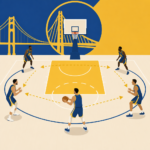


Free online basketball training programs have become the fastest way for players to build a structured routine without paying for private lessons, and the best ones now deliver real skill progress when used with discipline. In basketball training, a program means a planned sequence of workouts, drills, recovery work, and performance tracking rather than random videos watched whenever motivation appears. A workout is the individual session; a program is the system that connects sessions over weeks. That distinction matters because players improve through repetition, progression, and feedback, not through isolated highlight drills copied from social media.
I have worked with youth guards, high school wings, and adult rec players who all made the same early mistake: they searched for “ball-handling drills” or “shooting workouts,” tried five exciting moves in the driveway, and then wondered why game performance barely changed. Once we shifted them into free online basketball training programs with weekly structure, measurable targets, and a balance of skill work, footwork, conditioning, and mobility, their improvement became visible. Handles tightened because the drills repeated under fatigue. Shooting percentages rose because mechanics were tracked. First-step quickness improved because strength and movement prep were built into the plan.
This matters more than ever because quality instruction is no longer limited to elite camps or expensive trainers. Reputable coaches, performance specialists, and organizations now publish complete online basketball workouts on YouTube, apps, team development sites, and federation resources. The challenge is not access. The challenge is selecting programs that are free, credible, age-appropriate, and comprehensive enough to support long-term development. This hub covers the best free online basketball training programs you can start today, how to judge them, which players they suit, and how to combine them into a practical weekly plan.
What Makes a Free Online Basketball Training Program Worth Following
The best free online basketball training programs share five traits. First, they have progression. A beginner ball-handling plan should advance from stationary pound dribbles to movement changes, reactive reads, and pressure handling. Second, they define outcomes. Good programs tell you whether the goal is better form shooting, improved finishing, stronger lateral movement, or game conditioning. Third, they fit real constraints. Most players have a hoop, one ball, limited space, and forty-five to ninety minutes. Fourth, they emphasize fundamentals before advanced combinations. Fifth, they include volume guidelines, so you know whether to take fifty game-speed shots or three hundred form repetitions.
When I review online basketball workouts, I look for instruction that names exact details: hip position on a crossover, guide-hand discipline on a jump shot, shin angle during acceleration, or deceleration mechanics on a pull-up. That precision separates usable training from entertainment content. Credible coaches also explain why a drill exists. For example, a two-ball dribbling drill is not automatically useful just because it looks hard. It is useful only if it improves rhythm, off-hand confidence, posture, and visual discipline without distorting game-relevant movement.
Players should also understand the limits of free programs. A video cannot fully correct your mechanics in real time. It cannot always account for age, injury history, training age, or season schedule. That means the smartest approach is to use free online basketball training as a framework while filming yourself, tracking results, and adjusting based on evidence. If knees hurt after every plyometric session, reduce landing volume. If your shot breaks down after heavy conditioning, separate skill practice and conditioning blocks. The program should serve the player, not the other way around.
Best Free Online Basketball Training Programs to Start Today
YouTube remains the deepest free library for basketball skill development, but quality varies widely. Channels run by established trainers such as ILB Basketball, ShotMechanics, Vision Driven Basketball, and By Any Means Basketball often provide more than single drills. They publish full at-home basketball workouts, position-specific routines, finishing sequences, and film-backed teaching points. For a beginner or intermediate player, these channels are often the best starting point because they combine demonstration, coaching cues, and session structure. A practical example is a thirty- to sixty-minute workout built around dynamic warm-up, stationary handling, movement dribbling, form shooting, game-speed shooting, and conditioning finishes.
USA Basketball also offers free development resources that are especially useful for younger players, parents, and coaches who want age-appropriate progressions. Its materials emphasize long-term athlete development, decision-making, and foundational movement patterns rather than chasing advanced tricks too early. That matters. An eleven-year-old does not need an overloaded bag of combo moves. That player needs balance, pivoting, stopping, passing mechanics, layup footwork, and a repeatable shooting base. Federation-backed content is often less flashy than influencer videos, but it is usually safer and better sequenced.
For performance training, many strength coaches publish free basketball-specific workouts on YouTube and Instagram, including bodyweight strength, mobility circuits, ankle stiffness work, landing mechanics, and sprint technique. Programs from trainers influenced by concepts from PJF Performance, THP Strength, and general force-production principles can be valuable when they scale intensity properly. A bodyweight lower-body session with split squats, pogo jumps, lateral bounds, calf raises, Copenhagen planks, and core anti-rotation work gives players a solid physical base even without a weight room.
| Program source | Best for | Main strengths | Watch-outs |
|---|---|---|---|
| YouTube skill channels | Beginners to advanced players | Huge variety, full workouts, visual demos, easy access | Quality inconsistent; requires self-selection |
| USA Basketball resources | Youth players, parents, coaches | Age-appropriate progressions, fundamentals, safety | Less individualized for elite needs |
| Performance coach channels | Players needing strength and athleticism | Mobility, jumping, deceleration, conditioning structure | Can be too intense in season |
| Team and academy apps with free tiers | Players wanting schedules and tracking | Convenient plans, reminders, session organization | Best features sometimes behind paywalls |
Apps with free tiers can also help players who struggle with consistency. Even when premium features are locked, the free version often provides workout calendars, drill libraries, and reminders that support adherence. In practice, compliance is a bigger obstacle than drill selection. A simple four-day plan followed for twelve weeks beats an advanced six-day program abandoned after nine days.
Programs and Workouts by Skill Goal
Players improve fastest when they choose a primary goal. If your main weakness is ball control, follow a free basketball dribbling program built around posture, weak-hand volume, movement changes, and decision speed. A good thirty-minute dribbling workout might include stationary pounds, pocket dribbles, in-and-out series, retreat dribbles, change-of-pace attacks, and live finishes. The key metric is not how many fancy combinations you can perform while standing still. It is whether you can protect the ball, change direction efficiently, and get into a scoring move without losing balance.
If shooting is the priority, use a free online shooting program that starts close to the rim and builds outward. The best shooting workouts organize reps into form shooting, one-hand release work, footwork entries, spot shooting, movement shooting, and pressure free throws. I like sessions that prescribe percentages, such as making eight of ten from five close spots before moving back, or hitting sixty-five percent on mid-range one-two footwork before adding a dribble pull-up. Those targets force honesty. Shooting improvement is measurable, and programs should treat it that way.
For finishing, search for workouts that teach stride stops, inside-hand finishes, wrong-foot layups, floaters, and contact balance rather than only acrobatic finishes. Real-game finishing depends on angle, timing, and deceleration. A guard who can veer finish around a rim protector, extend off the inside hand, and stop on two feet in traffic is more effective than a player who practices only uncontested reverse layups. Good finishing programs also pair footwork with pad contact or improvised contact using a heavy bag, doorway noodle, or light bump from a training partner.
For athletic development, the best free basketball conditioning workouts combine movement quality with energy-system training. Endless suicides are not a complete plan. Players need acceleration, deceleration, repeat sprint ability, lateral shuffles, jumps, landings, and recovery capacity. In off-season work, a smart conditioning day may include short sprints, slide intervals, tempo runs, and core work. In season, volume should drop to preserve freshness for practices and games.
How to Build a Weekly Plan Using Free Online Basketball Workouts
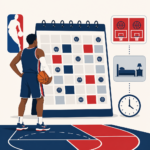
A strong weekly structure keeps free content from becoming random content. For most youth and amateur players in the off-season, four to five training days works well. Day one can emphasize ball-handling and finishing. Day two can be shooting and lower-body strength. Day three can be recovery, mobility, and light form shooting. Day four can be game-speed skill work and conditioning. Day five can be shooting under fatigue, upper-body strength, and free throws. If you also play pickup, treat that as competition exposure, not your only development plan.
Session order matters. Start with movement prep, then technical skill, then higher-speed game actions, then conditioning, then cooldown. Technical quality drops as fatigue rises, so form shooting should happen before sprint intervals. Likewise, intense plyometrics should not follow sloppy, exhausted landings. Players who train in a driveway can still follow sound sequencing: five to ten minutes of dynamic warm-up, twenty minutes of primary skill, twenty minutes of applied skill, ten minutes of conditioning, and five minutes of mobility.
Progression should be planned over four-week blocks. In week one, learn the drills and establish baseline numbers. In week two, add volume. In week three, raise speed or complexity. In week four, test performance with shooting percentages, timed dribbling courses, or repeated sprint scores. Then adjust. This is how online basketball training becomes a real program instead of a playlist.
Mistakes Players Make With Free Basketball Training Programs
The biggest mistake is chasing novelty over mastery. Players often switch programs because a new drill looks exciting, not because their current plan stopped working. Skill acquisition depends on high-quality repetition. Another mistake is overloading advanced moves before owning the base. If a player cannot stop on balance, keep the ball tight on a crossover, or shoot with consistent arc, adding step-back combinations from deep only hides the weakness.
A second common problem is ignoring recovery. Online culture rewards grind language, but basketball adaptation happens when training stress is balanced with sleep, nutrition, and lower-intensity days. Adolescent athletes especially should not stack intense jumping, lifting, pickup runs, and extra conditioning every day. Tendon pain, shin soreness, and low-back tightness usually appear before major improvement stalls. Smart programs include mobility, tissue tolerance, and at least one low-load day.
Finally, players fail when they do not measure anything. Track makes, attempts, sprint times, jump counts, and perceived exertion. Film your shot weekly from the front and side. Note whether misses are short, left, or flat. Without feedback, free online basketball workouts stay motivational, not developmental.
How to Choose the Right Program for Your Age, Position, and Season
The right program depends on three filters: development stage, on-court role, and calendar. Younger players should spend most of their time on coordination, ambidexterity, passing, stopping, pivoting, and close-range shooting. High school players can add position-specific reads, strength training, and more demanding conditioning. Guards need more handle volume, pick-and-roll footwork, and pull-up shooting. Wings need attack reads, catch-to-drive work, and defensive mobility. Bigs need screening angles, finishing touch, rebounding footwork, and short-roll decision-making, not just post moves.
Season matters just as much. In the off-season, use free basketball workout programs that build capacity and address weaknesses. Preseason should shift toward game-speed actions and repeatability. In season, reduce volume, keep skill sharp, and prioritize freshness. I usually tell players to maintain shooting touch, mobility, and one or two short strength sessions rather than trying to make dramatic physical gains during heavy competition periods.
The best choice is the one you can perform consistently, safely, and with clear purpose. Start with one credible skill source and one credible performance source, follow them for a month, log results, and then refine your plan. Free access has removed the cost barrier. What remains is commitment. Choose a structured program today, train with intention, and let steady repetitions compound into better basketball.
Frequently Asked Questions
What makes a free online basketball training program actually effective?
An effective free online basketball training program does more than hand you a collection of random drills. The biggest difference is structure. A real program gives you a planned sequence of workouts over time, with clear goals for skill development, conditioning, recovery, and progress tracking. That matters because players improve fastest when each session builds on the last one rather than starting from zero every day. If a program helps you organize ball-handling, shooting form, finishing, footwork, strength, mobility, and rest into a repeatable weekly system, it is far more useful than simply watching highlight-style drill videos.
The best free programs also match your current level and available resources. A younger beginner may need simple form shooting, stationary dribbling, balance work, and basic movement patterns, while a more advanced player may need change-of-pace ball-handling, game-speed shooting, deceleration work, and film review. Good free training plans usually include progressions, so you can start with fundamentals and advance as your control and consistency improve. If every drill is too advanced, too vague, or impossible to do with your space and equipment, the program will not be sustainable.
Another key sign of effectiveness is measurability. Strong programs tell you what to track: made shots, weak-hand reps, turnover count during dribble sequences, sprint times, vertical progress, or how many quality finishes you complete under fatigue. Progress tracking keeps training honest. Without it, players often feel busy without actually getting better. Free programs can absolutely produce real results, but only when they are consistent, progressive, and specific enough to turn practice into a system instead of entertainment.
Can free online basketball training programs really replace private coaching?
For many players, free online programs can replace private coaching at least for a period of time, especially when the main goal is building consistency, learning training habits, and improving core skills through repetition. A disciplined player who follows a strong online program can make major gains in ball control, shooting mechanics, footwork, conditioning, and confidence. That is because a lot of basketball improvement still comes down to focused reps performed correctly over weeks and months. If the program gives you a weekly structure and you follow it seriously, you can create meaningful development without spending money on private lessons.
That said, free training programs do have limits. A coach can give immediate correction, personalize progressions, identify mechanical flaws, and adjust workload based on your strengths and weaknesses. Online training cannot always catch subtle issues like poor shooting alignment, inefficient first-step mechanics, or bad deceleration habits. It also cannot respond in real time when you misunderstand a drill or rush through technique. So while a free program can be enough to create strong improvement, it works best when paired with self-awareness, video review, or occasional outside feedback from a coach, trainer, or knowledgeable teammate.
The most practical way to think about it is this: free online basketball training is often the best starting point and, for many players, a highly effective long-term tool. It may not fully replace expert coaching for elite-level refinement, but it can absolutely replace the excuse of having no plan. If you are motivated, willing to film yourself, and disciplined enough to repeat the boring basics, a free program can deliver far more progress than inconsistent paid training that you barely follow.
How should I build a weekly schedule from a free basketball training program?
The smartest weekly schedule is balanced, repeatable, and realistic. Most players do better with a program they can sustain for months rather than an overly aggressive plan that lasts one week. A strong free basketball training schedule usually includes skill work, game-speed movement, strength or bodyweight training, recovery, and at least one method of tracking improvement. For example, a player might train ball-handling and finishing on one day, shooting and footwork on the next, then include lower-body strength, mobility, or recovery work around those sessions. The exact layout depends on your age, schedule, access to a hoop, and whether you also practice with a team.
A good weekly system might include four to six training days, but the quality of the sessions matters more than the number. One common approach is to use two high-skill emphasis days, two game-speed or conditioning-focused days, one strength and mobility day, and one lighter recovery or form day. If you have limited time, even three focused sessions per week can work if they are organized well. The important thing is that each workout has a purpose. One day might emphasize weak-hand development and change of direction. Another might prioritize form shooting and shot volume. Another might focus on first-step explosiveness, balance, and core control.
Recovery should be part of the plan, not an afterthought. Free programs are most effective when they account for soreness, sleep, stretching, and tissue care. Players often make the mistake of stacking hard sessions every day and then wondering why their legs feel dead and their shot gets worse. Build in enough recovery to maintain intensity and technique. Also, review your results weekly. If your shooting percentage is dropping, if your legs are consistently fatigued, or if you are skipping workouts, the schedule needs adjustment. A training program is supposed to connect workouts over the week in a way that creates progress, not burnout.
What should beginners look for when choosing the best free online basketball training program?
Beginners should look for simplicity, progression, and clear instruction. The best free online basketball training program for a beginner is not the one with the flashiest drills. It is the one that teaches fundamentals in the right order and explains exactly how to practice them. That means starting with basic ball-handling control, footwork, balance, shooting form, layup mechanics, and body coordination before moving into advanced combo drills or high-speed shot creation. If a program expects a beginner to perform complex moves before mastering stance, rhythm, and coordination, it will likely create frustration rather than improvement.
Clear coaching cues are especially important for new players. Good beginner-friendly programs explain what to focus on during each drill, such as keeping the chest up while dribbling, staying low through direction changes, snapping the wrist on the shot, or planting the inside foot on a layup. Without those details, a beginner may repeat poor technique and build bad habits. The best free options usually break drills into manageable steps and provide ways to increase difficulty only after the player shows control and consistency.
Beginners should also choose programs that fit real-life constraints. If you only have a driveway, a ball, and 30 minutes a day, the ideal program should still be usable. A plan that requires constant gym access, rebounding help, or specialized equipment may sound impressive but can be hard to follow consistently. Above all, beginners need a program they will actually complete. Early progress in basketball often comes from mastering simple movements with discipline. A free program that gives you a straightforward weekly routine and teaches you how to measure improvement is usually far more valuable than a huge library of advanced drills with no roadmap.
How long does it take to see results from a free online basketball training program?
Most players can feel early improvements within two to four weeks, but visible, reliable basketball progress usually takes longer. The first changes are often better workout discipline, improved dribble comfort, cleaner footwork patterns, and more confidence because the player finally has a structure to follow. That is one of the biggest benefits of a real program: it removes guesswork. Instead of bouncing between random videos, you begin repeating the same core skills enough times to build rhythm and control. Those early gains are meaningful, even if they are not dramatic yet.
More noticeable performance changes often show up around six to twelve weeks, assuming the program is followed consistently and the player is training with intention. Shooting form can become more repeatable, weak-hand control can improve, conditioning can increase, and finishing through contact or at speed can feel more natural. However, results depend heavily on the quality of reps. Ten focused workouts where you move at game speed, record your makes, and correct mistakes will usually produce more progress than thirty lazy sessions done without concentration. Consistency matters, but deliberate consistency matters more.
It is also important to define results correctly. Improvement is not only about flashy moves or scoring more in pickup right away. Real progress includes fewer careless turnovers, better balance on jump stops, improved stamina late in workouts, stronger shooting mechanics, and a clearer understanding of how to train. If you judge progress only by dramatic outcomes, you may miss the signs that the program is working. The best free online basketball training programs produce results when used with patience and discipline. Think in months, not just days, and track your development so you can see the small wins that eventually become major improvements.