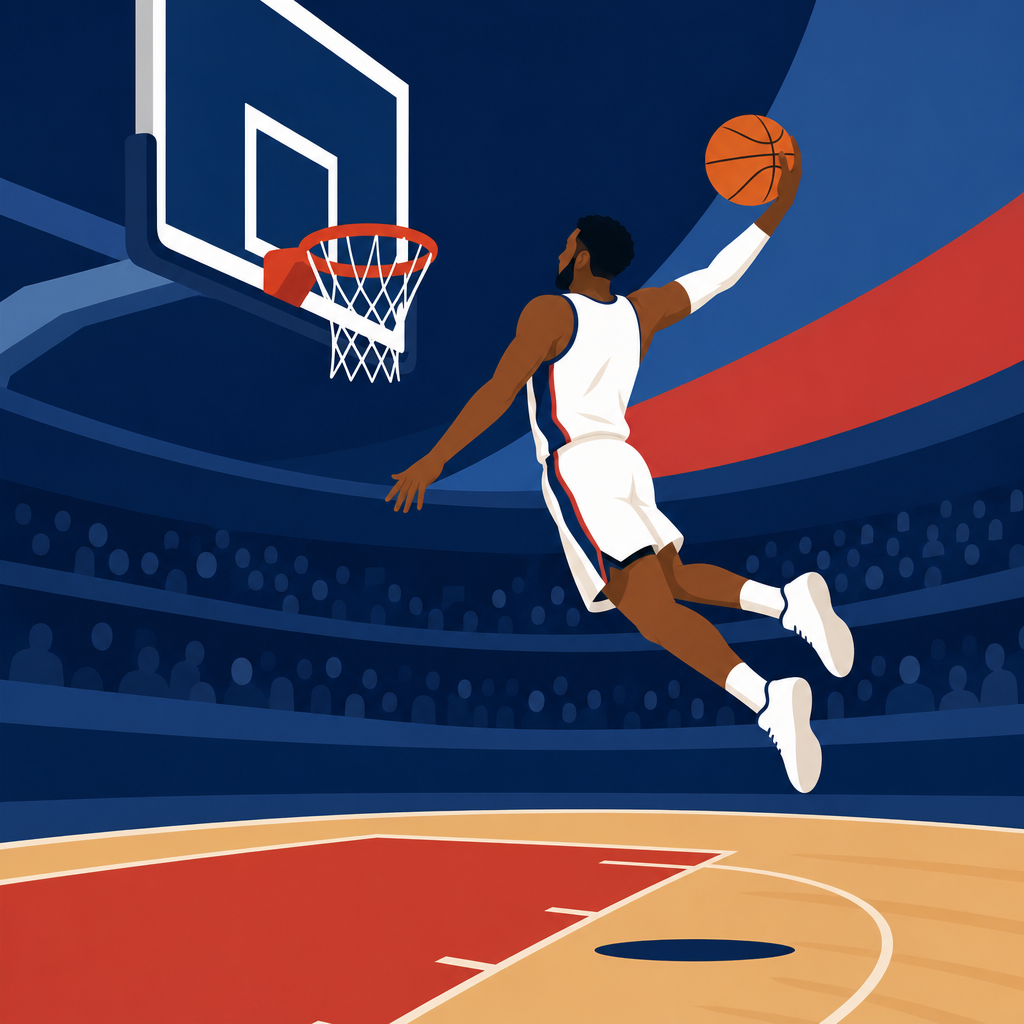

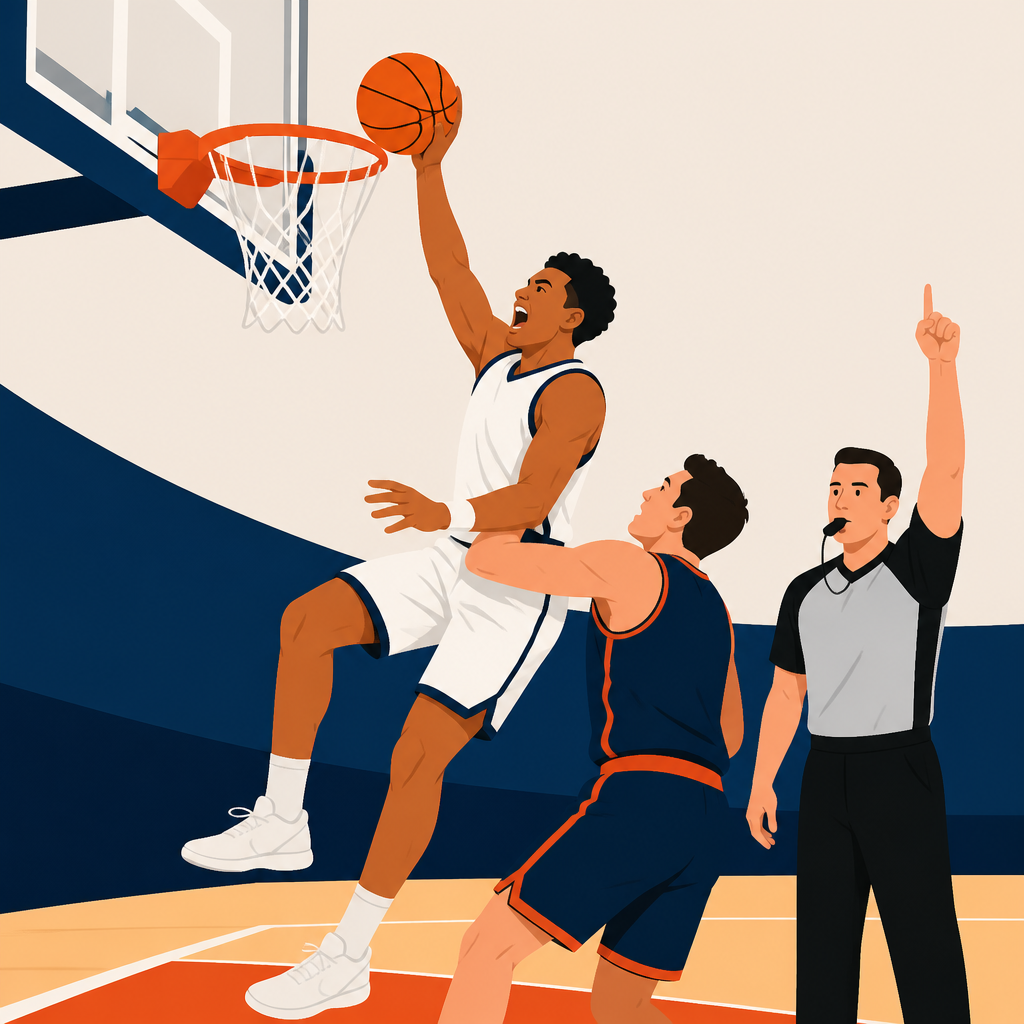
An and-one in basketball happens when an offensive player makes a field goal while being fouled in the act of shooting, then receives one additional free throw. It is one of the game’s most exciting plays because it combines contact, skill, momentum, and a chance for extra points in a single sequence. Fans celebrate it as a display of toughness, but the rule itself is straightforward: if the basket counts and the shooter was fouled legally during that shot attempt, the player gets an extra chance at the line.
Understanding the and-one matters because it sits at the intersection of scoring rules, personal fouls, continuation, free throws, and game management. I have explained this call to new players, youth coaches, and casual viewers many times, and the confusion is usually the same. People ask whether every made shot through contact is an and-one, whether offensive fouls can still produce one, and what changes between the NBA, NCAA, and FIBA. Those questions matter because the answer affects possessions, foul trouble, strategy, replay review, and how players attack the rim.
In plain terms, the and-one belongs to the broader category of shooting fouls. A shooting foul occurs when a defender makes illegal contact on a player who is in the act of shooting. If the shot misses, the player usually gets two or three free throws depending on the attempt. If the shot goes in, the basket counts and the shooter gets exactly one free throw. That is why many broadcasters say “count the basket” before adding “and one.” The foul does not erase the made shot; it adds a bonus opportunity.
This article serves as a hub for basketball game rules, using the and-one as the entry point. To understand it fully, you need a clear view of legal guarding position, verticality, restricted-area judgment, continuation on drives, team fouls, penalty situations, and dead-ball versus live-ball fouls. Those are the practical rules that officials apply in real time. Once you know how the and-one works, many other NBA rules become easier to read because they all depend on the same foundation: when contact is legal, when a shot begins, and when a basket counts.
The core rule: when an and-one is awarded
An and-one is awarded when three things happen on the same play. First, the offensive player is in the act of shooting. Second, a defender commits a personal foul that officials judge to be illegal defensive contact. Third, the shot is successful. If all three conditions are met, the basket counts and one free throw follows. This applies to two-point shots and three-point shots. A made three while being fouled produces a four-point play opportunity, which is still commonly called an and-one.
Officials do not award an and-one simply because there was contact. Basketball is a contact sport with legal incidental contact built into normal play. Defenders can maintain verticality, absorb some contact in legal guarding position, and contest shots without fouling. The key question is whether the contact displaced, impeded, or otherwise illegally affected the shooter during the act of shooting. In the NBA rulebook, that judgment falls under personal foul principles, and the scorekeeper records both the field goal and the foul.
Timing also matters. If the foul occurs before the upward shooting motion begins, the play may become a common foul on the floor rather than a shooting foul. In that case, the basket may not count unless officials determine continuation applies. Continuation is why a driving player can gather, take legal steps, absorb contact, and still have the play ruled as a shooting foul with a made basket. This is one of the most misunderstood parts of the rule, especially on layups and short floaters in traffic.
One simple test helps viewers: did the illegal contact happen after the shooting motion began and before the play was complete, and did the shot still go in? If yes, an and-one is likely the correct ruling. If the contact happened after release, it can still be a foul, but the officials must determine whether it affected the shooter within the protected landing or follow-through space and whether the shot itself remains valid. Those details are why close plays often trigger a quick conference among referees.
What counts as “the act of shooting” and why continuation matters
The phrase “act of shooting” is the engine of the and-one rule. In practice, it starts when a player begins the motion that normally precedes release and continues until the shooter returns to the floor if airborne. On jump shots, this is often easy to spot. On drives, post moves, and gather steps, it is harder. I have found that most disputed and-one calls come from that gray area between a dribble pickup and the upward move, where defenders and offensive players collide almost simultaneously.
Continuation allows a shot attempt to remain connected to the scoring motion even when contact occurs a beat earlier than fans expect. In the NBA, continuation is interpreted more generously than in many lower levels of play, especially on drives to the basket. That is why viewers sometimes see a whistle, then the player takes another step and finishes, and the basket still counts. The official is not ignoring the whistle; the official is recognizing that the player had already begun the act of shooting before the foul disrupted the play.
Consider a common example. A guard beats the first defender, gathers the ball with two hands near the dotted circle, and a rotating help defender clips the forearm as the shooter rises. If the ball drops in, that is a textbook and-one. By contrast, if the same guard is still dribbling and gets bumped at the hip before gathering, the whistle is usually on the floor. The difference may be less than half a second, but by rule it changes everything: counted basket and one free throw versus side out or bonus free throws.
Continuation is also why post scorers generate and-ones with pivots and shoulder fakes. A player like Joel Embiid can establish position, turn into a hook or power finish, absorb body contact, and still complete the shot. Once the shooting motion begins, illegal contact does not cancel the score. Instead, it creates the extra free throw. Learning to recognize this timing makes games easier to follow and helps explain why some physical finishes are celebrated as advanced offensive skill, not lucky whistles.
Situations that are not and-ones
Not every made basket plus a whistle is an and-one. If the offensive player commits a charge, the basket never counts because offensive fouls by the shooter wipe out the score. If the foul is away from the ball before the shot begins, the made basket generally does not convert into an and-one. If a player is fouled intentionally before gathering on a late-game take foul, the ruling depends on league-specific transition foul rules, not the standard and-one framework. These distinctions matter because broadcast reactions often lag behind the actual signal from the referee.
Loose-ball fouls are another source of confusion. Suppose a shot goes up, the ball bounces around, and an official calls contact during the rebound scrum before the ball drops through after touching the rim. That is not an and-one because the foul did not occur on the successful shooter during the act of shooting. Similarly, basket interference and goaltending produce awarded points, but they do not create and-one free throws unless a separate shooting foul occurred on the shooter. The reason is simple: the bonus free throw attaches to a successful shot made through illegal defensive contact, not to every scoring event with contact.
Technical fouls and defensive three-second violations also stand apart. In the NBA, a defensive three-second violation leads to one technical free throw and retained possession, but it is not an and-one even if a field goal is made around the same time. Flagrant fouls create their own penalty structure as well. If a shooter makes the basket and the defender’s contact is upgraded, the scorer may still receive one free throw for the shooting foul, but the administration of additional flagrant free throws and possession follows a separate rule path.
When teaching this to new fans, I use one checklist: who was fouled, when did the foul happen, was the player actually shooting, and did the ball go in? If the answer does not line up perfectly, it is probably not an and-one. That checklist works across youth basketball, college games, and the NBA even though continuation and review procedures vary by level.
How officials evaluate contact on and-one plays
Referees use specific concepts to decide whether contact is legal. Legal guarding position, verticality, and marginal contact are central. A defender who establishes position before the shooter leaves the floor and jumps straight up can contest without fouling, even if there is body contact. A defender who slides under late, hacks the forearm, bumps the hip off line, or dislodges the shooter’s balance is far more likely to be penalized. The crowd often reacts to the made shot; the official has to isolate the precise moment and type of contact.
Arm contact is one of the clearest indicators. Contact on the wrist or forearm during release commonly produces a shooting foul because it affects control of the shot. Body contact can also qualify when it displaces the shooter. In the paint, lower-body collisions are especially important. If a rotating defender arrives late and creates illegal contact through the torso or legs, the official may award the basket and one free throw even when the upper-body contest looks clean. That nuance explains many replay debates.
Replay can help only in limited ways. In the NBA, officials can review whether a basket was released in time, whether a foot was on the line, whether the foul happened before the period expired, or whether contact rises to flagrant criteria. Standard judgment on common foul versus no foul is usually not fully reviewable. That means the first call on the floor carries major weight. Good crews communicate quickly, especially on drives where the lead and center officials may have different angles on the same hit.
| Situation | Ruling | Why |
|---|---|---|
| Made layup, defender hits shooting arm during gather-to-release motion | And-one | Illegal contact on shooter during the act of shooting and basket is successful |
| Made jumper, foul occurs before upward motion begins | No and-one | Common foul on the floor unless continuation applies |
| Made basket, shooter called for charge | No basket | Offensive foul by shooter cancels the score |
| Made three-pointer, defender fouls shooter on release | One free throw | Basket counts, creating a four-point play opportunity |
NBA, NCAA, WNBA, and FIBA differences
The basic idea of the and-one is consistent across major rule sets, but the details can feel different. The NBA is known for broader continuation on drives, which means more made baskets after contact can still count as shooting plays. NCAA men’s and women’s games often look tighter on continuation, though interpretations evolve and crews vary. FIBA tends to apply a more compact, immediate view of the shooting motion, and its interpretations around gathered drives can differ from what NBA viewers expect. That is why the same play may be ruled on the floor in one competition and as an and-one in another.
Lane administration and timeout structure differ by league, but the relevant point for this rule is adjudication. The WNBA mirrors many NBA concepts, including the value of continuation and freedom-of-movement enforcement, so viewers will recognize many of the same and-one patterns. International viewers should also remember that FIBA’s goaltending and basket interference rules allow play on the rim once the ball touches it, which can change surrounding possession dynamics even though it does not alter the core and-one principle.
For coaches and players, the practical lesson is to learn the officiating standard of your competition. A youth player trained only on local high school interpretations may be shocked by NBA continuation clips. Conversely, a player imitating pro gather timing in a scholastic game may hear the whistle and assume the basket counts when it will not. Rule literacy improves shot selection, coaching challenges, and late-game communication with officials.
Why and-ones matter strategically
And-ones are not just highlight plays; they are efficient offense. A standard two-point possession maxes out at two points unless fouls produce separate free throws after a miss. An and-one creates a chance for three points on one shot attempt, and a made three with a foul can produce four. Analytics departments value these outcomes because they combine rim pressure or elite shotmaking with foul generation, increasing points per possession and pushing opponents toward foul trouble. This is one reason physical downhill scorers remain so valuable in playoff basketball.
Players like Giannis Antetokounmpo, Jimmy Butler, Jalen Brunson, and Shai Gilgeous-Alexander generate and-ones in different ways. Giannis overwhelms defenders at the rim and forces late contact. Butler uses balance, pacing, and shoulder angles to invite illegal contests without losing control. Brunson manipulates help defenders with footwork and deceleration. Gilgeous-Alexander excels at keeping defenders on his hip, then finishing softly through arm contact. The rule rewards all of those skills because each player stays in a legitimate shooting motion while absorbing contact.
Defensively, teams study how to avoid and-ones because they are morale killers. A coach would rather force two free throws after a miss than allow a made basket plus a bonus shot. Teaching verticality, early help positioning, chest-first contests, and disciplined closeouts reduces these plays. From experience, the biggest defensive mistake is being late. Late help leads to reaching, swiping, and body collisions that officials call consistently. Early help gives defenders a chance to wall up legally and avoid gifting extra points.
Using the and-one to understand the rest of basketball game rules
If you want one rule that opens the door to the whole game-rules category, the and-one is a strong starting point. It forces you to understand personal fouls, shooting motion, continuation, legal defense, free-throw administration, replay limits, and scorebook procedure. From there, related topics naturally follow: clear-path fouls, flagrant criteria, restricted-area charges, hand-checking, bonus situations, lane violations, and challenge rules. That is why this topic works well as a hub for broader NBA rules coverage.
For readers building a complete rules foundation, the next useful steps are studying what defines a shooting foul, how block-charge calls are judged, what verticality actually protects, and when continuation does or does not apply. Then move to special situations such as take fouls, transition fouls, hostile act review, and flagrant upgrades. Once those concepts are clear, many controversial calls stop looking random. They follow a structure, and the and-one is one of the clearest examples of that structure in action.
The main takeaway is simple: an and-one is a made basket through illegal defensive contact during the act of shooting, followed by one free throw. That single rule explains some of basketball’s loudest arenas, biggest momentum swings, and smartest offensive tactics. It also teaches the logic behind many other game rules because it depends on timing, legal position, and clean rule administration. If you want to understand NBA rules more deeply, start here, then keep building through the connected topics that shape every possession.
Watch the next game with this lens and you will see more than a celebration after contact. You will see why the official counted the basket, why the defender was late or legal, and how one ruling can change strategy, fouls, and momentum instantly. Use this article as your hub for game rules, then continue into the connected subjects that define how basketball is actually officiated possession by possession.
Frequently Asked Questions
What exactly is an and-one in basketball?
An and-one happens when a player makes a field goal while being fouled during the act of shooting, and the made basket still counts. Because the shot goes in despite the contact, the offensive player is then awarded one additional free throw. That extra free throw is the “and one” part of the play. In practical terms, it means a player can turn a normal two-point basket into a possible three-point play, or a three-point basket into a possible four-point play if the original shot came from beyond the arc. The reason this play stands out is that it combines scoring, physical contact, body control, and a bonus opportunity all at once. It is one of the clearest examples of a player finishing through contact and being rewarded by the rules.
Why does the basket count if the shooter was fouled?
The basket counts because not every foul automatically wipes out the result of the shot. If the officials determine that the defender fouled the shooter during a legal shot attempt and the ball still went in, the offense keeps the points from the made field goal. The foul is still enforced, but instead of erasing the basket, the rules award the shooter one extra free throw. That is what separates an and-one from a missed shot foul situation, where the player goes to the line for free throws because the basket did not go in. The key idea is simple: the defense committed illegal contact, but the offensive player successfully completed the shot anyway. Since the score was earned and the foul affected the play, the rules recognize both outcomes by counting the basket and adding a bonus free throw.
Does an and-one only happen on two-point shots?
No. Most fans think of an and-one as a made two-point basket plus one free throw, but the rule applies to any successful field goal scored while the shooter is fouled in the act of shooting. If the made basket is worth two points, the player gets one additional free throw and has a chance at a three-point play. If the player makes a three-pointer while being fouled, that shot still counts for three points and the shooter gets one free throw, creating a chance for a four-point play. Those are less common, which is part of why they generate so much excitement. The underlying rule remains the same in both cases: legal shot attempt, defensive foul during the shot, made basket, then one extra free throw.
What has to happen for officials to call an and-one?
Officials look for a specific sequence. First, the offensive player must be in the act of shooting, meaning the shot motion has started in a way recognized by the rules. Second, the defender must commit a personal foul that involves illegal contact against the shooter. Third, the shooter must still complete the play by making the basket. If all of those elements are present, the basket counts and one free throw is awarded. Timing matters a lot here. The foul has to occur during the shooting action, not well before it and not after the play is clearly over. Referees also have to determine whether the contact was illegal and whether the offensive player was attempting a legitimate shot rather than initiating non-basketball contact. While fans often view the play emotionally because it looks dramatic, the actual rule application is fairly straightforward once the official confirms the shooter was fouled during a made shot attempt.
Why is an and-one considered one of the most exciting plays in basketball?
An and-one is exciting because it compresses several of the sport’s best elements into one moment. There is the made basket itself, the visible physical challenge of finishing through contact, the whistle that confirms the foul, and then the added pressure of a bonus free throw. It often feels like a momentum swing because the scoring team not only gets points but also receives an immediate chance to add another. Fans also love the toughness associated with the play. When a player absorbs contact, keeps control, and still scores, it shows strength, concentration, and competitive edge. That is why celebrations after an and-one are so common from players, teammates, and crowds. Even though the rule behind it is simple, the emotional impact is huge. It is one of those plays that feels bigger than the box score because it can energize a team, frustrate the defense, and change the tone of a game in a single sequence.