
Serious players in 2026 have more basketball training programs available than ever, but more choice has not made selection easier. A useful basketball training program is not just a collection of drills. It is a structured system that develops skill execution, game-speed decision-making, strength, mobility, conditioning, recovery, and measurable progress over time. Players who want real results need programs and workouts built around position demands, competitive level, schedule constraints, and injury risk, not generic social media routines.
When coaches and athletes ask what makes the best basketball training programs, the answer starts with specificity. Guards need more live-ball handling under pressure, change-of-pace footwork, and pick-and-roll reads. Wings need shooting volume from multiple spots, transition finishing, defensive versatility, and strength for contact. Bigs need screening angles, rebounding technique, rim finishing, short-roll decisions, post footwork, and mobility that supports switching. Across every position, the best programs blend on-court skill work, basketball strength training, movement quality, film study, and recovery protocols.
This matters because the modern game is faster, more spaced, and more demanding than it was even a few seasons ago. Players must shoot off movement, defend in space, absorb contact, and process information quickly. I have worked with athletes who trained hard six days a week yet plateaued because their workouts were disconnected from how games are actually played. Once we reorganized their weekly plan around progressive overload, shot quality, live decision-making, and recovery, improvement became obvious in both performance and confidence. A great program saves time, reduces wasted effort, and turns practice into transferable game production.
What the best basketball training programs include
The best basketball training programs for serious players share a clear architecture. First, they begin with an assessment: shooting percentages by zone, turnover patterns, first-step explosiveness, deceleration control, mobility limits, and workload tolerance. Second, they define a development priority. A player cannot realistically overhaul every weakness at once. Third, they organize training into phases, usually off-season, pre-season, in-season, and postseason recovery. Fourth, they track outputs such as made threes on the move, free-throw consistency under fatigue, sprint times, jump testing, and perceived exertion. Without those elements, even hard training becomes guesswork.
Good basketball workouts also respect the difference between skill acquisition and conditioning. Many players still confuse being tired with getting better. A forty-minute workout filled with random cone dribbling and rushed shooting may feel demanding, but it often delivers poor transfer. By contrast, an effective session might use fewer drills and stricter standards: ten makes from each corner off a relocation cut, eight live pick-and-roll reads against a defender, or finishing reps that require inside-hand, outside-hand, and contact variation. Quality constraints create adaptation. Sloppy volume creates habits that show up in games.
The strongest programs in 2026 also integrate technology wisely. Tools such as Noah Basketball for shot arc and depth, Vert for jump load tracking, Blast Motion for shooting analytics, and wearable heart-rate systems can add precision when used by informed coaches. Film platforms like Hudl and Synergy remain central because players improve faster when they can connect a workout theme to real possessions. If a guard struggles rejecting a ball screen, that weakness should appear in film review, drill design, and live play segments during the same training block.
How to choose a program based on level, position, and goals
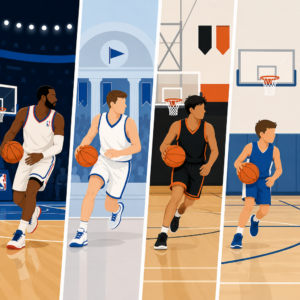
A middle school athlete, a varsity starter, a college recruit, and a pro cannot use the same basketball training program effectively. The best choice depends on training age, access to competition, physical maturity, and the player’s current role. Younger athletes benefit most from broad movement skills, shooting mechanics, balance, coordination, and simple decision-making games. High school players need more structured strength work, higher shooting volume, and more exposure to live reads. College and professional players need advanced workload management, detailed scouting integration, and position-specific repetition that fits team systems.
Goals matter just as much. A player chasing a roster spot may need a six- to twelve-week emphasis on conditioning, defensive habits, and low-turnover offensive play. A scorer preparing for an expanded role may need heavy shot creation, finishing counters, and pick-and-roll passing development. An undersized post player may need lateral quickness, vertical rebounding timing, and short-roll passing more than classic back-to-the-basket volume. The best programs answer a simple question directly: what must this player do better, under game pressure, by the next evaluation point?
Cost and coaching quality also deserve scrutiny. Expensive does not always mean effective. I have seen premium programs run by charismatic trainers with little progression, no testing, and no communication with the athlete’s school coach or strength staff. A reliable program explains why each workout exists, how progress is measured, and how workload changes around practices, games, travel, and soreness. If a trainer cannot clearly describe the goal of a drill, the likely transfer to competition, and the standard for success, the program is probably not built for serious development.
Best program models for skill development, strength, and game transfer
Most serious players do best with a hybrid model rather than a single-style program. In practice, that means combining individual skill sessions, small-group competitive workouts, formal strength and power training, and some guided self-work. Individual sessions help isolate mechanics and targeted weaknesses. Small-group work introduces pressure, timing, and decision-making. Strength sessions improve force production, tissue resilience, and repeatability. Self-work builds ownership and shot volume. The key is sequencing these elements so the athlete can perform them with intent instead of carrying fatigue from one poorly timed session to the next.
A proven weekly structure often looks like this:
| Program focus | Main objective | Best for | Example workload |
|---|---|---|---|
| Individual skill | Mechanics and targeted repetition | Fixing shooting, finishing, footwork | 3 sessions, 45 to 75 minutes |
| Small-group live play | Decision-making under pressure | Guards, wings, game transfer | 2 sessions, 60 to 90 minutes |
| Strength and power | Force, durability, deceleration | All serious players | 2 to 4 lifts per week |
| Conditioning through basketball | Repeat sprint ability and recovery | Preseason and role preparation | 1 to 2 targeted sessions |
| Film and self-review | Tactical understanding and correction | Players with access to game footage | 20 to 40 minutes twice weekly |
Among program styles, small-sided games are especially valuable. Three-on-three in tight spaces improves reads, spacing, and contact finishing better than endless unguarded dribbling. Constraints-led training, where rules shape the behavior you want, is another high-return model. For example, allowing only paint touches before a kick-out pass can train drive-and-kick recognition; requiring a score after a rejected ball screen can sharpen footwork and timing. These methods work because they preserve perception and decision-making, not just movement patterns.
Strength programming must also reflect basketball demands. The strongest plans emphasize unilateral lower-body work, landing mechanics, trunk stiffness, posterior chain development, and ankle and hip capacity. Trap-bar deadlifts, split squats, rear-foot elevated split squats, Copenhagen planks, med-ball throws, and low-volume plyometrics show up repeatedly in effective programs because they support speed, power, and injury reduction. Heavy lifting has value, but basketball players rarely benefit from bodybuilding-style fatigue that compromises movement quality on court.
Programs and workouts for shooting, ball handling, finishing, and defense
Shooting remains the highest-leverage skill in basketball, so elite basketball shooting programs are built around mechanics, footwork, and context. Players need stationary form work, but they also need game-speed reps off cuts, relocations, drifts, handoffs, step-ups, and pull-ups. The best shooting workouts define shot families and benchmark them. A serious wing might track corner catch-and-shoot makes, slot movement threes, one-dribble pull-ups going both directions, and free throws between sets. Programs that only count total makes miss the details that actually drive game improvement.
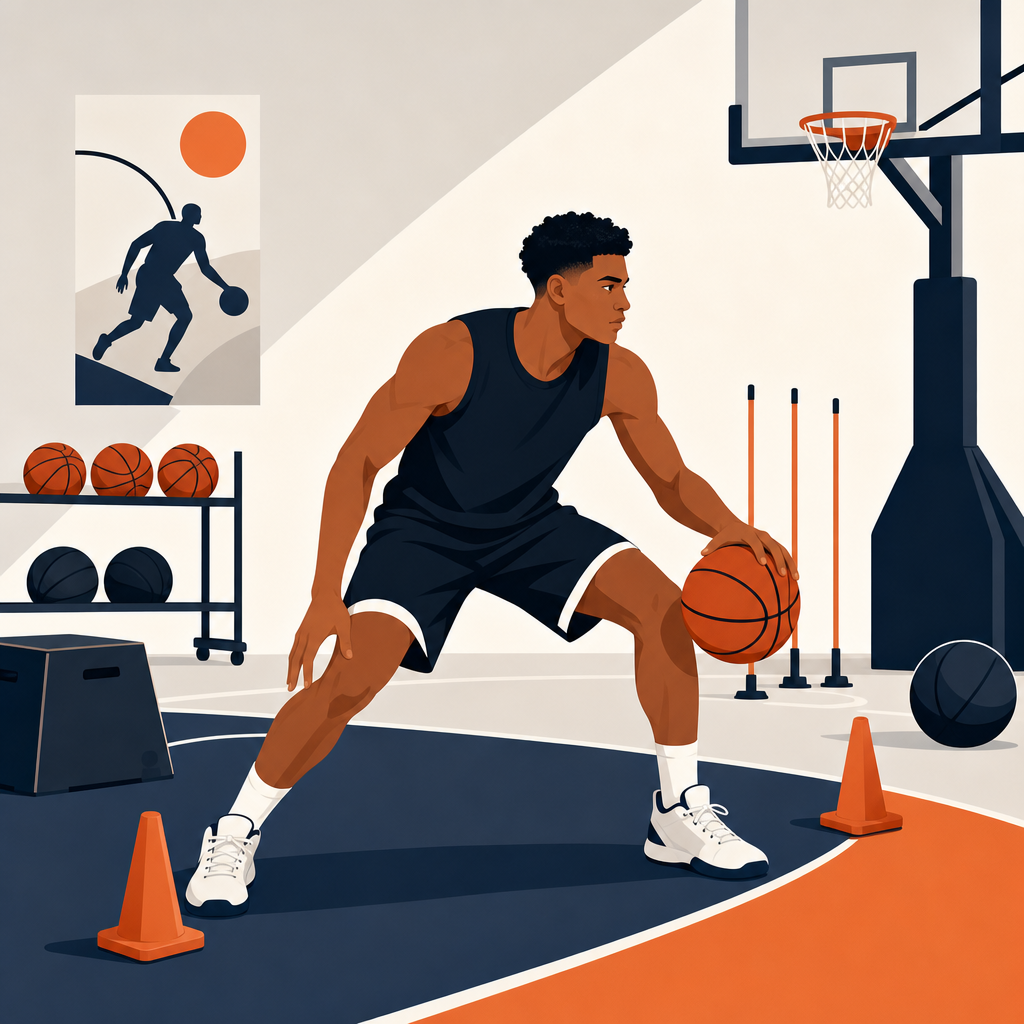
Ball-handling workouts should move quickly from control to application. That means rhythm and weak-hand development first, then change of speed, change of direction, pickup options, and pressure solutions. Guards especially need drills that connect the dribble to a decision: split the hedge, snake the screen, retreat to re-space, hit the pocket pass, or reject and finish. In my experience, players improve faster when every handle drill ends with a scoring or passing read. The dribble is a tool for creating an advantage, not a performance by itself.
Finishing programs have become more sophisticated because rim protection and help rotations are better than ever. A useful finishing workout includes stride stop finishes, same-foot same-hand layups, inside-hand extension, euro steps, floaters from multiple windows, and finishes through pads or legal body contact. Bigs need seal-and-finish work, short-roll touch, and second-jump rebounding. Wings need transition gathers and long-stride finishes. Guards need angles, pace, and off-foot options around shot blockers. One-size-fits-all finishing sessions usually leave important gaps.
Defensive development is often the missing piece in popular training programs, yet it is decisive for playing time. Strong defensive workouts train stance integrity, hip turns, closeout technique, screen navigation, tagging the roller, and rebounding out of contact. Conditioning should be embedded in these drills rather than added randomly at the end. For example, a sequence of closeout, contain, rear-view contest, and box-out mirrors real effort patterns better than repeated suicides. Coaches trust players who can guard actions, communicate early, and finish possessions with rebounds.
Building a year-round basketball training plan in 2026
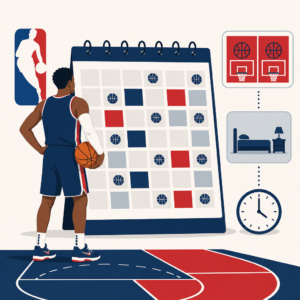
The smartest year-round basketball training plan changes across the calendar. In the off-season, the priority is adaptation: rebuilding mechanics, increasing strength, expanding the skill package, and adding volume. In pre-season, the goal shifts toward role readiness, conditioning, and sharper decision-making under fatigue. In-season training should protect performance, maintain force output, and address small technical issues without creating unnecessary soreness. After the season, players need a brief recovery block before the next progression begins. Skipping that reset usually leads to overuse problems or stagnant performance.
Workload management is nonnegotiable. Serious players often underestimate cumulative stress from school practice, games, AAU events, strength training, and poor sleep. The best programs use simple monitoring tools such as session RPE, jump counts, soreness ratings, and performance markers like bar speed or sprint quality. If a player’s legs are flat, shooting depth is short, and deceleration looks sloppy, the answer is not always more work. Sometimes the right adjustment is reducing high-impact volume for forty-eight hours, keeping skill quality high, and restoring freshness.
Nutrition, sleep, and recovery are part of the program, not extras. Most athletes perform better when they consume adequate carbohydrate around training, prioritize daily protein intake, rehydrate aggressively after high-sweat sessions, and protect eight or more hours of sleep when possible. Recovery methods should stay simple and evidence-based: sensible cool-downs, light movement the next day, mobility where restrictions exist, and enough rest to support adaptation. Fancy gadgets cannot compensate for chronic underfueling and short sleep.
How to evaluate whether a training program is actually working
A basketball training program is working if performance changes show up in measurable, game-relevant ways. The clearest signs are better shot quality, improved efficiency, fewer repeated mistakes, stronger movement in late-game moments, and more trust from coaches. Data helps. Track shooting by zone and shot type, turnovers by action, free-throw percentage under fatigue, transition sprint effort, rebound conversion, and defensive assignment success. Film should confirm the numbers. If workouts say a player has improved as a pick-and-roll guard, game clips should show better pace, tighter angles, and faster decisions.
Progress should also be realistic. Mechanical shooting changes may temporarily reduce percentage before improvement stabilizes. Strength gains can arrive before they appear as vertical jump increases. Conditioning can improve while a player still feels tired during a heavy block. That is why checkpoints matter. I prefer four- to six-week review windows with clear standards: makes, times, loads, movement quality, and game transfer clips. If a program cannot show what has improved and what still needs work, serious players should move on.
The best basketball training programs for serious players in 2026 are the ones that connect every workout to a role, a standard, and a result. Choose a program that assesses honestly, teaches precisely, progresses logically, and respects recovery as much as repetition. Build around shooting, live decision-making, strength, and defense, then track whether those gains appear in games. If you are building your basketball training plan now, audit your current routine, identify the one skill that most affects your minutes, and commit to a program that develops it with purpose.
Frequently Asked Questions
What should serious players look for in a basketball training program in 2026?
The best basketball training programs in 2026 are built as complete development systems, not random libraries of drills. Serious players should look for a program that clearly connects on-court skill work, game-speed decision-making, strength training, mobility, conditioning, recovery, and progress tracking. A strong program should explain not only what to do, but why each phase matters and how it fits into long-term performance. If a program only gives shooting drills or ball-handling workouts without addressing movement quality, physical preparation, and in-game application, it is usually incomplete.
It is also important to choose a program that matches position, age, experience level, and competition goals. A high school point guard preparing for varsity or AAU play needs a different emphasis than a college wing, post player, or overseas pro. Guards may need more work on pick-and-roll reads, pace changes, and shot creation, while forwards and centers may need more focus on finishing through contact, screening angles, rebounding footwork, and defensive mobility. Serious players should also consider schedule fit. The best plan on paper will fail if it requires six intense sessions per week when the athlete is already balancing practices, games, school, travel, and recovery demands.
Finally, look for measurable structure. Good programs include progression from basic skill execution to pressure-based and game-speed training, along with benchmarks such as shooting percentages, sprint times, strength numbers, movement screens, workload management, and recovery habits. In 2026, the most effective basketball training programs are personalized, progressive, and realistic. They help players improve in ways that actually transfer to games instead of simply making workouts feel hard.
How often should a serious basketball player train each week?
There is no single perfect training frequency for every serious player, because the right schedule depends on season, age, workload, recovery ability, and playing level. In general, serious players benefit from a weekly structure that balances skill development, strength and athletic work, conditioning, film study, and rest. During the off-season, many athletes can handle four to six focused training days each week if volume and intensity are managed properly. That might include three to four on-court sessions, two to three strength sessions, mobility work on most days, and one or two lower-stress recovery days. During the competitive season, however, the goal shifts from building capacity to maintaining performance and staying fresh.
One of the biggest mistakes serious players make is believing that more is always better. In reality, too much volume can reduce explosiveness, hurt skill quality, increase injury risk, and stall progress. A smart basketball training program in 2026 should account for game schedules, travel, school demands, and accumulated fatigue. If a player is practicing every day and playing multiple games per week, adding intense extra workouts on top of that may do more harm than good. Effective programs adjust the load so that players can improve without constantly training in a fatigued state.
The best approach is usually periodized training. That means some weeks emphasize development, others emphasize performance maintenance, and some include deliberate deloads for recovery. Serious players should aim for consistency over months, not burnout in two weeks. A well-designed weekly plan leaves enough room for quality repetitions, proper sleep, mobility work, nutrition, and tissue recovery. If a player is constantly sore, losing lift in jumps, seeing shooting percentages drop, or feeling mentally flat, the schedule probably needs adjustment. Smart training frequency is about quality, transfer, and sustainability.
Are online basketball training programs effective, or is in-person coaching still better?
Online basketball training programs can be highly effective in 2026, but only when they are designed with real progression, clear instruction, and accountability. The old assumption that online training is automatically generic is no longer true. Many strong digital programs now provide video breakdowns, structured phases, performance tracking, movement progressions, and even feedback systems. For serious players who live far from elite trainers, need flexible scheduling, or want a more affordable option, a high-quality online program can offer a clear and effective path to improvement.
That said, in-person coaching still provides advantages that are hard to fully replace. A skilled coach can immediately correct mechanics, adjust footwork, read body language, and tailor session intensity in real time. In-person training can also create better competitive energy and more direct accountability. For players with major shooting flaws, movement inefficiencies, or poor habits that need close supervision, live coaching can speed up the correction process. The best option often depends on the player’s needs, budget, location, and self-discipline.
For many serious players, the strongest solution is a hybrid approach. They may follow an online basketball training program for structure, weekly planning, and progression, while also using occasional in-person coaching for technical adjustments and personalized feedback. This combination can be especially effective because it gives players consistency between sessions rather than relying only on isolated workouts. In the end, the question is not whether online or in-person is universally better. The real question is whether the program creates game transfer, tracks progress, addresses individual needs, and keeps the athlete accountable over time. Those factors matter more than delivery format alone.
How do basketball training programs help players improve game performance instead of just workout skills?
The best basketball training programs improve actual game performance by progressing beyond isolated drills and teaching players how to apply skills under pressure, at speed, and in context. It is one thing to make shots in an empty gym or complete a cone dribbling series. It is another to read a help defender, change pace, create a clean window, and finish or shoot while fatigued. Programs that produce real results build this transfer intentionally. They develop mechanics first, then add timing, movement, decision-making, defensive reads, contact, and competitive pressure.
That is why serious players should pay attention to whether a program includes game-like constraints. Strong training systems use small-sided actions, reaction work, read-based finishing, variable shooting, closeout decisions, pick-and-roll scenarios, transition spacing, and defensive movement tied to actual basketball situations. They also connect physical development to performance needs. For example, lower-body strength helps with deceleration and first-step force, mobility supports cleaner movement patterns, and conditioning improves late-game execution. Recovery is part of game performance too, because tired athletes often make poor decisions and show less precision with their skill work.
Another major factor is performance tracking. A serious basketball training program should measure progress in ways that relate to competition, such as shooting efficiency from specific spots, turnover reduction under pressure, improved lateral movement, better repeat sprint ability, or stronger finishing percentages through contact. Players need evidence that training is creating useful change. In 2026, the best programs are not built around making workouts look advanced for social media. They are built around helping athletes play faster, think clearer, move better, and perform more consistently when the game gets demanding.
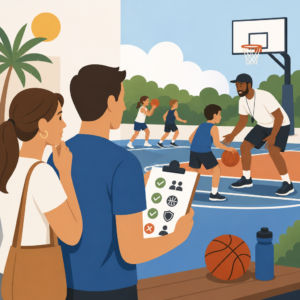
How can a player choose the best basketball training program for their position, level, and schedule?
Choosing the best basketball training program starts with honest self-assessment. A serious player needs to identify current strengths, limiting weaknesses, role demands, and practical constraints. Position matters because different game responsibilities require different training priorities. Point guards usually need more emphasis on ball control under pressure, live reads, pick-and-roll management, pull-up shooting, and defensive containment. Wings often need a blend of shooting versatility, attacking closeouts, transition decision-making, and switchable defense. Post players may need more specialized work on sealing, interior finishing, screen actions, rebounding, and mobility in space. The best program should reflect the realities of the role the player is actually trying to fill.
Level matters just as much. A middle school or early high school athlete usually needs a larger foundation in movement quality, basic strength, coordination, and fundamental skill consistency. Advanced high school, college, and professional players often need more refined game-specific detail, individualized workload management, and targeted development around role efficiency. A serious player should avoid programs that are either too advanced to execute correctly or too basic to stimulate progress. Good training meets the athlete where they are and then builds upward with clear progression.
Schedule fit is the final piece, and it is often overlooked. A program is only effective if it can be executed consistently alongside team practices, games, lifting, school or work, travel, and recovery. The best basketball training program is not necessarily the most intense one. It is the one that aligns with the player’s calendar, preserves energy for high-value sessions, and supports long-term development without burnout. Before committing, players should ask whether the program includes flexible planning for off-season, pre-season, and in-season phases, whether it offers measurable benchmarks, and whether it can be adjusted when life or competition demands change. The right choice is specific, sustainable, and built for real basketball progress.