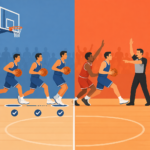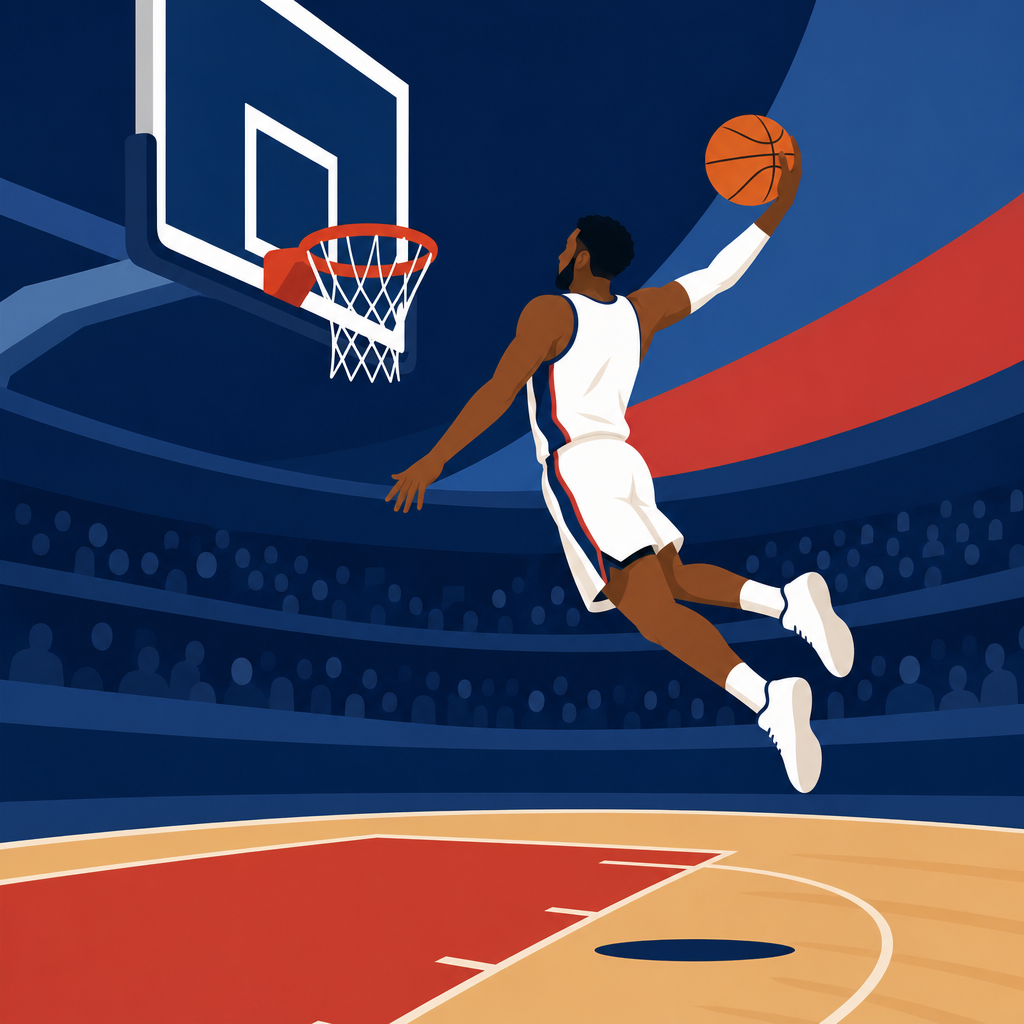

Dunking under six feet is not a genetics-only stunt reserved for rare outliers; it is a trainable athletic outcome built on force production, approach mechanics, body composition, tendon stiffness, and consistent skill practice. In basketball training, athletic development refers to the physical qualities that raise on-court performance: vertical jump, acceleration, deceleration, change of direction, coordination, mobility, resilience, and the ability to express power when tired. For shorter players, dunking becomes a useful benchmark because it demands almost every one of those qualities at once. You need enough relative strength to overcome your bodyweight, enough elastic power to convert a fast penultimate step into upward lift, enough hip and ankle mobility to hit efficient positions, and enough technical precision to touch the rim with intent rather than simply jump high in place. I have coached players from about 5’7″ to 5’11” through this process, and the pattern is consistent: the athletes who improve fastest stop chasing random jump workouts and start treating dunking like a complete athletic system. That matters beyond the highlight itself. The same training that helps a player dunk usually improves first-step explosiveness, rebounding range, finishing through contact, transition speed, and defensive recovery. This hub article explains that full system, from measuring your starting point and identifying jump style to building strength, practicing approach mechanics, managing recovery, and avoiding the mistakes that stall progress.
Start With the Real Dunking Equation
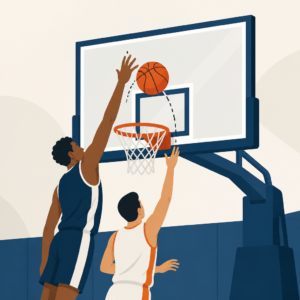
If you are under six feet tall, the first question is simple: how high do you actually need to jump? A regulation basketball rim is 10 feet high. To dunk cleanly, most players need to get the wrist at or slightly above rim level, not just the fingertips. A 5’10” player with a standing reach around 7’7″ typically needs roughly 29 to 33 inches of vertical just to grab rim comfortably, and closer to 35 to 40 inches to dunk a basketball reliably, depending on hand size, ball control, and whether the jump is off one foot or two. A 5’7″ player often needs more like 40-plus inches for consistent one-hand dunks. This is why honest assessment matters. Measure standing reach, standing vertical, and approach vertical before you choose a plan.
Use a Vertec if you have access to one, or chalk on fingertips and a wall if you do not. Test three jumps: a standing countermovement jump, a two-foot approach jump, and a one-foot approach jump. The gap between them tells you what type of athlete you are today. If your approach jump is much higher than your standing jump, you likely benefit from speed and elastic mechanics and may respond well to sprint work, approach practice, and low-contact plyometrics. If your standing jump is relatively strong but your approach jump is not much better, you may need more technical work and reactive strength. In practice, most shorter dunkers need both stronger force production and cleaner movement efficiency.
Another key term is relative strength, which means how strong you are compared with your bodyweight. For dunking, relative strength usually matters more than absolute strength. A guard who can front squat 1.5 times bodyweight and move explosively will often jump better than a heavier athlete with a bigger raw squat but poorer force-to-weight ratio. Athletic development for dunking is therefore not bodybuilding. Extra mass only helps if it contributes meaningful force and does not blunt speed.
Build Strength That Transfers to Vertical Jump
Strength is the base quality that allows power to rise. If you cannot produce high force into the floor, you cannot turn that force into elite lift. For players under six feet, the most productive lifts are usually simple, technically sound patterns: trap bar deadlifts, back squats or front squats, Bulgarian split squats, Romanian deadlifts, calf raises, and heavy isometric work for the lower leg. I have seen the biggest improvements when athletes stop maxing out randomly and instead train in structured blocks with progressive overload. Two lower-body strength sessions per week is enough for many basketball players, especially in season or while practicing jumps frequently.
The muscles and tissues that matter most are the glutes, hamstrings, quadriceps, calves, feet, and trunk. However, dunkers often overlook the ankle complex. The soleus and gastrocnemius contribute heavily to takeoff, particularly during the final ground contacts of an approach jump. Seated calf raises, standing calf raises, pogo jumps, and isometric holds can improve lower-leg stiffness and force transfer. Tendons are not just passive cables; they store and release energy when trained correctly. That is one reason consistent plyometric and isometric exposure can improve jumping even when bodyweight-room numbers change modestly.
Strength work should also reflect your jump style. Two-foot jumpers often benefit from deeper force absorption and concentric strength, so squats, trap bar pulls, and split squats tend to carry over well. One-foot jumpers rely more on speed through the plant and reactive stiffness, so they still need strength, but the emphasis often shifts earlier toward sprinting, bounds, and approach rhythm. The mistake is assuming one style is superior. The better approach is to train your natural tendencies while rounding out the missing qualities that limit performance.
Use Plyometrics to Convert Strength Into Explosiveness
Plyometrics are the bridge between weight-room strength and game-speed jumping. They train the stretch-shortening cycle, which is the rapid transition from muscle lengthening to shortening during explosive movement. For dunking, this matters because the penultimate step and plant create a brief loading phase that must reverse instantly into lift. Effective plyometric training is not about doing the most contacts possible. It is about selecting drills that fit your readiness and executing them with crisp intent.
Good foundational options include pogo jumps, snap downs, line hops, squat jumps, box jumps, and low-level bounds. More advanced choices include depth jumps, hurdle hops, single-leg bounds, and repeated approach jumps. The progression should move from low amplitude and simple landing demands toward higher intensity and more sport-specific patterns. I typically keep beginners between 40 and 80 quality contacts in a session, depending on intensity. Once athletes start doing true high-output jumps, volume usually drops because power falls quickly when fatigue rises.
Two-foot dunkers often respond well to repeated broad jump variations, approach jumps with controlled arm swing, and depth drops that teach force acceptance. One-foot jumpers usually gain from wicket runs, straight-leg bounds, single-leg hops, and max-velocity sprinting because these build stiffness, timing, and front-side mechanics. The common rule is this: if your landings are noisy, slow, or unstable, the exercise is too advanced or the session is too fatigued. Elastic power develops from quality contacts, not survival mode.
Master Approach Mechanics and Ball Control
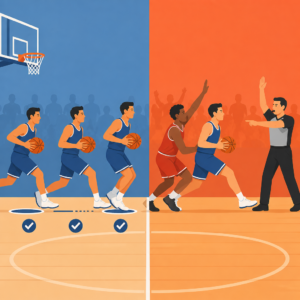
Many sub-six-foot athletes are physically capable of touching rim or even dunking a tennis ball, yet they fail with a basketball because their approach mechanics waste speed and their ball handling disrupts takeoff. Dunking is a skill. The approach usually determines whether your best jump appears. For a two-foot dunk, the classic pattern is a controlled curved approach, a long penultimate step to lower the center of mass, then a faster, shorter plant step that redirects horizontal speed vertically. For a one-foot dunk, the rhythm is often smoother and faster, with less braking and more seamless conversion through the final step.
Arm swing matters more than most players realize. A full, aggressive but coordinated arm action can add several inches compared with a muted swing. So can the ball pickup. I often have athletes practice with no ball, then with a volleyball, then a youth basketball, then a full-size ball. This staged progression teaches timing without forcing compensations. If you palm poorly, one-hand dunking may still be possible, but you must practice carrying the ball high and tight through the last two steps. Some shorter athletes improve faster by learning lob finishes first because the catch timing naturally places the ball in a better position.
| Limitation | What it looks like | Best training focus |
|---|---|---|
| Low standing jump | Slow takeoff, poor force from static position | Squats, trap bar deadlifts, split squats, squat jumps |
| Small gap between standing and approach jump | Run-up adds little height | Approach mechanics, penultimate step drills, arm swing timing |
| Good touch, poor dunk control | Can grab rim but lose ball on takeoff | Ball pickup drills, smaller-ball progression, one-hand technique |
| Fast athlete, weak plant | Speed into jump but collapse on final steps | Reactive strength, calf work, single-leg and bilateral plyometrics |
| Strong athlete, limited bounce | Big lifts but stiff, slow jump pattern | Plyometrics, sprinting, lower volume lifting, mobility |
Video analysis helps here. Use slow motion from the side and from behind. Check whether your hips drop excessively on the penultimate step, whether your chest collapses, whether the plant foot angles are consistent, and whether the ball delays the arm swing. These details decide whether your training shows up on the rim.
Improve Mobility, Tendon Capacity, and Landing Skill
Mobility for dunking is not about extreme flexibility. It is about owning the ranges that let you hit efficient positions quickly and safely. The most relevant areas are ankle dorsiflexion, hip flexion, hip internal rotation, thoracic extension, and shoulder mobility for arm swing and ball position. Limited ankle dorsiflexion often forces compensations at the knee and trunk during the plant. Limited hip mobility can shorten your penultimate step or reduce force absorption. Short players who rely on speed need especially clean ranges because small leaks in position cost inches.
Landing skill is equally important. Every high jump creates large forces on the feet, ankles, knees, hips, and spine. If you cannot absorb those forces well, your training volume must stay low, and injuries become more likely. Teach quiet landings, balanced single-leg catches, and deceleration mechanics early. In my experience, athletes who spend even ten focused minutes per session on landing patterns, foot strength, and lower-leg capacity stay healthier and progress more steadily than athletes who only chase max jumps.
Isometrics are underused here. Mid-thigh pull isometrics, split squat isometrics, and calf isometrics can improve joint angles specific to takeoff and build tendon tolerance with less soreness than high-volume lifting. They also fit well during heavy basketball periods. This is one reason many performance staffs combine traditional strength work with yielding and overcoming isometrics rather than relying on one method alone.
Program Training Around Basketball, Recovery, and Body Composition
The best dunk plan is the one you can recover from while still playing basketball well. That usually means managing total jump contacts, sprint volume, lifting fatigue, and game or practice load across the week. A common setup is two lower-body training days, one to two dedicated jump sessions, one sprint exposure, and skill work layered around them. High-intensity days should cluster together instead of being spread out carelessly. For example, heavy lifts and max jumps often pair well on the same day, leaving the next day for lighter shooting, mobility, and recovery.
Sleep is a performance tool, not a lifestyle extra. Most athletes need at least eight hours to adapt well to explosive training. Nutrition matters too. If you are carrying unnecessary body fat, reducing it gradually can improve relative strength quickly. If you are already lean, aggressive dieting usually hurts power output and recovery. Protein intake around 1.6 to 2.2 grams per kilogram of bodyweight supports muscle repair. Creatine monohydrate has strong evidence for high-intensity performance and is widely used in basketball preparation. Hydration also affects power more than players expect; even mild dehydration can reduce repeat explosive output.
Recovery does not mean doing nothing. Low-intensity cycling, walking, mobility circuits, tissue work, and easy pool sessions can help restore readiness without adding impact. The key is honesty. If your jump numbers are falling for several sessions, your knees feel heavy, and your approach looks flat, more effort is not the answer. Better load management is.
Common Mistakes That Keep Shorter Players From Dunking
The first mistake is testing too often and training too little. Max dunk attempts are exciting, but they create fatigue and can become junk volume if every session turns into a miss-fest. The second mistake is copying programs built for volleyball athletes, track jumpers, or professional dunkers without adjusting for basketball schedule and individual profile. The third is neglecting sprinting. Max-velocity sprinting improves stiffness, force application, and coordination in ways that often transfer to jumping, especially for one-foot athletes and guards.
Another frequent error is living in the middle: moderate weights, moderate jumps, moderate fatigue, every day. Athletic development improves fastest when sessions have a clear purpose. Lift heavy enough to build force, jump fresh enough to express power, and recover enough to repeat that quality. Finally, many players ignore timelines. Meaningful vertical jump gains usually take months, not weekends. Ten to fifteen pounds of body fat loss, a cleaner approach, and a three-inch reactive jump improvement can transform dunk ability, but those changes come from blocks of patient work.
If you are under six feet tall, learning how to dunk a basketball is really about learning how to develop as an athlete. The rim does not care how motivated you feel; it responds to measurable qualities: relative strength, reactive power, approach speed, technique, mobility, tendon capacity, recovery, and body composition. When those pieces improve together, dunking stops looking mysterious. Start by measuring your standing reach and current jump numbers. Identify whether you are stronger from a standstill or from an approach. Build a plan around the qualities you actually lack, not the exercises you happen to like. Use basic strength lifts to raise force production, plyometrics to sharpen elastic power, and repeated technical practice to turn that athleticism into a usable dunk.
As the hub for athletic development within basketball training, this topic connects to everything else a player does well. Better jumping usually supports better finishing, rebounding, transition play, and defensive range. More important, the process teaches you how to train with intent. Track your jumps, film your approach, manage fatigue, and progress patiently. If you want the shortest path to your first dunk, stop searching for miracle workouts and start building the full athletic system that makes dunking inevitable. Pick your baseline test this week, commit to twelve focused weeks, and chase inches with purpose every session.
Frequently Asked Questions
Can someone under 6 feet tall really learn to dunk, or is it mostly genetic?
Yes, many players under 6 feet tall can learn to dunk, and while genetics do influence your ceiling, dunking is not limited to a tiny group of natural outliers. Height helps, arm length helps, and natural explosiveness helps, but dunking is ultimately a combination of measurable physical qualities and trainable skill. For shorter players especially, the key factors are vertical jump ability, how efficiently you transfer speed from your approach into takeoff, your body composition, your tendon stiffness and reactive strength, and how consistently you practice the movement itself.
In practical terms, a player under 6 feet usually needs less wasted motion and better athletic efficiency than a taller player. That means producing more force into the floor, improving rate of force development, learning proper penultimate-step mechanics, strengthening the hips, glutes, calves, hamstrings, and core, and becoming comfortable jumping at high speed. It also means staying lean enough that every pound of bodyweight is helping rather than hurting your power-to-weight ratio. A shorter athlete does not usually have much margin for technical error, so improvements in sprinting mechanics, coordination, mobility, and jump timing can make a very noticeable difference.
The most important mindset shift is this: dunking under 6 feet is not a party trick and not just a genetics lottery ticket. It is an athletic development goal. If your training improves your acceleration, deceleration, change of direction, power output, jump technique, and resilience, you are not only moving closer to a dunk, but also becoming a better basketball athlete overall. Genetics may affect how fast you get there and how high your eventual ceiling is, but smart, consistent training determines far more than most players realize.
What vertical jump do you usually need to dunk if you are under 6 feet tall?
The exact number depends on your standing reach, hand size, jump style, and whether you are trying to dunk off one foot or two, but most players under 6 feet need a very good vertical jump to dunk consistently. Standing reach matters more than height alone. Two players who are both 5 feet 10 inches can have very different reach measurements based on arm length and shoulder structure, and that changes how much elevation they need. In general, you need to get the ball clearly above the rim, not just touch it, which means your required jump is often several inches higher than people first assume.
As a rough guideline, a player around 5 feet 8 inches to 5 feet 11 inches often needs a vertical in the mid-30s to low-40s to complete a clean one-hand dunk, depending on standing reach and ball control. Palming ability and hand size matter too. If you cannot control the ball with one hand, a dunk becomes more difficult because you must jump high enough not only to reach the rim, but also to keep two-hand coordination through the finish. That is why some players can touch rim for a long time before they can actually dunk a basketball in game-like conditions.
The best way to assess your target is to measure your standing reach and compare it with the rim height. A regulation rim is 10 feet, or 120 inches. If your standing reach is 92 inches, you need 28 inches just to touch rim, but realistically you need additional height to get the ball over and through the cylinder. Add ball size, wrist position, and finishing margin, and the true requirement may be closer to the mid-to-high 30s. This is also why training should not focus only on “vertical jump” as an abstract number. You need approach jump skill, ball control in the air, timing, and repeatable takeoff mechanics, because the goal is not to win a vertical test but to finish a dunk.
What kind of training helps shorter players dunk faster and more safely?
The most effective training combines strength, power, plyometrics, sprint work, mobility, and actual jump practice. For players under 6 feet, the goal is to build a stronger and more explosive body while also learning to express that power through basketball-specific movement. Lower-body strength is foundational because stronger hips, glutes, quads, hamstrings, and calves improve your ability to put force into the floor. Exercises like squats, trap-bar deadlifts, split squats, Romanian deadlifts, step-ups, calf raises, and hamstring work help develop the engine behind your jump. A stronger athlete can usually improve both jump height and resilience, provided the program is balanced and progressive.
Plyometrics are the bridge between strength and explosiveness. Box jumps, depth drops, pogo hops, bounds, approach jumps, and low-to-moderate volume reactive drills help train stiffness, coordination, and rapid force application. For shorter athletes, tendon qualities and elastic response are especially important because they help convert speed into lift. Sprinting also matters more than many players think. Faster acceleration and better top-end mechanics improve your approach speed, which can raise one-foot jump performance and even help two-foot jumpers create more momentum into takeoff. At the same time, deceleration and landing mechanics protect your knees and ankles and make your movement more efficient on the court.
Just as important is specificity and load management. Jumping hard several times per week can be effective, but too much max jumping without adequate recovery often leads to stalled progress, shin pain, patellar tendon irritation, or general fatigue. A smart plan includes high-quality jump sessions, strength sessions that support rather than crush your nervous system, and enough recovery to actually adapt. Mobility work should focus on the ankles, hips, and thoracic spine so you can get into strong positions. Core training should build trunk stiffness and force transfer, not just exhaustion. Most importantly, the program should include regular dunk-related practice: rim touches, volleyball or tennis ball dunks, one-step and full-approach jumps, and technique rehearsals. The athletes who improve fastest are usually the ones who train the body and the skill at the same time.
Is it better to jump off one foot or two feet if you are under 6 feet tall?
Neither is universally better; it depends on your natural tendencies, strength profile, speed, and basketball movement style. In broad terms, one-foot jumpers often benefit from greater approach speed, elastic qualities, and fluid coordination. They tend to convert horizontal momentum into vertical lift efficiently and may feel bouncier off fast, smooth takeoffs. Two-foot jumpers often rely more on raw force production, braking strength, and the ability to create a powerful block off the penultimate step. They may feel stronger and more stable on gathers, especially in traffic or when jumping from a shorter approach.
For shorter players, the best answer is usually the one that matches your current strengths while also leaving room for skill development. If you are naturally fast, springy, and comfortable leaping off a long, smooth approach, one-foot jumping may give you a quicker path to your first dunk. If you are stronger, more compact, and able to produce force well from both legs, a two-foot takeoff may be more repeatable. That said, many players should train both patterns. Practicing both can improve your overall athletic development, make you more adaptable in real basketball situations, and reveal which style gives you the highest ceiling.
Technique matters enormously in both cases. For one-foot jumping, rhythm, posture, and approach control are critical. For two-foot jumping, the penultimate step, lowering mechanics, torso position, and timing of the arm swing can make or break your jump. Many players plateau not because they lack power, but because they leak force through poor mechanics. Video analysis can be extremely useful here. Watching your approach, foot placement, and takeoff angles often reveals simple changes that unlock several inches. For a player under 6 feet, those inches are everything, so choosing and refining the right jump style can be just as important as getting stronger.
How long does it usually take to dunk if you are under 6 feet tall, and what mistakes slow progress down?
The timeline varies widely based on your starting point. If you are already touching rim, relatively lean, and have a training background, you might progress to a dunk in a few months with focused work. If you are far from the rim, carrying excess body fat, inconsistent with training, or lacking lower-body strength and jump skill, the process may take much longer. Most players make the best progress when they treat dunking as a structured performance goal rather than a random test they try at the end of pickup runs. Consistency over time matters more than a few intense weeks of motivation.
The biggest mistake is training only by “trying to jump high” without building the physical qualities that support better jumping. Another common mistake is doing too much fatigue-based work that looks athletic but does not improve power. Endless leg workouts, random high-rep circuits, and excessive running can leave you tired without making you more explosive. Poor recovery is another major issue. Sleep, nutrition, hydration, and managing total basketball volume all matter because power development depends on nervous system freshness and tissue recovery. If your legs are constantly heavy, your jump training quality drops fast.
Technique neglect also slows progress. Many shorter players could gain meaningful improvement simply by cleaning up their approach, adjusting their last two steps, improving their arm swing, and practicing with smaller