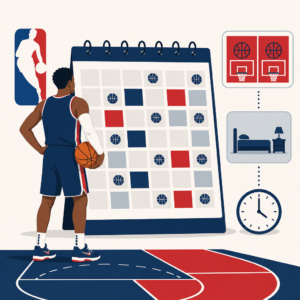


A basketball training schedule only works if it fits your real life, matches your current level, and tells you exactly what to do each day. Players often fail not because they lack motivation, but because their plan is too vague, too demanding, or disconnected from game goals. A useful schedule turns broad intentions like “get better handles” or “shoot more” into repeatable sessions with clear time blocks, measurable targets, and recovery built in. In practical terms, a basketball training schedule is a weekly and monthly plan that organizes skill work, strength training, conditioning, film study, mobility, and rest so progress happens without burnout.
This matters because basketball performance is layered. Shooting form improves through high-quality repetitions. Ball handling improves through deliberate constraints and pressure. Speed, vertical jump, and durability improve through strength and power work. Decision-making improves through film and live play. I have seen athletes train hard six days a week and still stall because every workout was random, intense, and redundant. I have also seen players make major gains with four focused sessions per week because each workout had a purpose. Consistency beats intensity when intensity cannot be sustained.
For players, parents, and coaches, this page serves as a hub for basketball training programs and workouts. It explains how to build a schedule around your season, goals, age, and available time. It also clarifies key terms. Skill training means technical work such as shooting, finishing, footwork, passing, and ball handling. Strength and conditioning refers to weight room work, sprint training, jumps, change of direction, and energy-system development. Recovery includes sleep, nutrition, hydration, soft tissue care, and lower-intensity movement. When these pieces are planned together, players improve faster and stay healthier.
A good plan answers the questions athletes actually ask: How many days per week should I train? What should I do on school days? Can I lift and do skill work on the same day? How do I balance individual workouts with team practice? What changes in the preseason, in-season, and offseason? The best schedule is not the one that looks toughest on paper. It is the one you can execute for months, adapt when life gets busy, and trust because every session connects to basketball performance.
Start With Your Goals, Season, and Constraints
Before writing drills into a calendar, define the outcome. Most players need one primary goal and two secondary goals. A guard might choose primary: improve pull-up shooting under pressure; secondary: tighten left-hand handling and add lower-body strength. A forward might choose primary: finish through contact; secondary: improve corner three consistency and lateral movement. Specific goals create specific sessions. If your goal is “become more explosive,” your schedule should include heavy strength work, jump training, sprint mechanics, and full recovery days. If your goal is “make more game shots,” your schedule must include game-speed shooting from your actual spots, not endless stationary form shots alone.
Next, place your schedule inside the basketball calendar. Offseason is the best time for physical development and technical rebuilding. Preseason shifts toward basketball conditioning, role-specific skill work, and practice readiness. In-season training should maintain strength, preserve movement quality, and sharpen skills without adding fatigue that hurts games. This is where many athletes get into trouble. They copy offseason workout volume during the season, then wonder why their legs feel dead by Friday night. The right schedule changes with the phase.
Constraints matter just as much as goals. Time, court access, equipment, school, travel, practice, and recovery capacity all shape what is realistic. I usually tell players to build from the minimum effective week first. If you know you can always complete three skill sessions, two lifts, one film block, and one recovery day, that becomes your foundation. Extra time can be added later. Starting with a perfect seven-day plan and completing half of it is worse than starting with a sustainable five-day plan and completing nearly all of it.
Build the Weekly Structure Around High, Medium, and Low Stress Days
The simplest way to create a basketball training schedule you will actually stick to is to organize stress, not just activities. High-stress days combine demanding work such as heavy lifts, sprints, jumps, full-court skill work, or intense team practice. Medium-stress days focus on technical repetitions, moderate lifting, controlled conditioning, or shorter court sessions. Low-stress days prioritize recovery, mobility, film, and light shooting. This approach helps your nervous system recover and keeps quality high. It is also how many performance staffs structure training loads across a week.
Pairing hard work with hard work is often smarter than sprinkling moderate fatigue everywhere. For example, if you have a hard team practice on Tuesday, you might lift before school or earlier that day, then make Wednesday a lower-stress recovery and touch session. That leaves Thursday available for another productive workload. What players should avoid is stacking medium-hard days every day until they feel flat. Chronic fatigue usually comes from poor distribution, not from one demanding workout.
The weekly template should also reflect your training age. Younger athletes often need fewer total sessions but more supervision and skill repetition. Advanced high school and college players can handle more specialized work, but only if sleep, nutrition, and mechanics are solid. A typical offseason week for an intermediate player might include three skill sessions, two strength sessions, one speed and agility session, one film block, one pickup or small-sided play session, and one full rest day. In-season, that might drop to two shorter lifts, two brief individual skill sessions, team practice, games, and active recovery.
| Season Phase | Primary Focus | Weekly Structure | Main Caution |
|---|---|---|---|
| Offseason | Skill expansion, strength, power | 3-4 skill sessions, 2-3 lifts, 1 speed day, 1 recovery day | Avoid random volume without progression |
| Preseason | Game conditioning, role-specific skills | 2-3 skill sessions, 2 lifts, team practice, short recovery blocks | Do not chase soreness close to tryouts |
| In-season | Maintain strength, sharpen skills, recover for games | 1-2 short lifts, 2 short skill sessions, practices, games, recovery | Keep fatigue low and quality high |
Choose the Right Mix of Programs and Workouts
A complete basketball training schedule covers more than shooting drills. Programs and workouts should be selected by function. First is skill development: shooting, finishing, footwork, passing, post work, and ball handling. Second is physical preparation: strength, power, speed, deceleration, mobility, and conditioning. Third is basketball IQ: film review, offensive reads, defensive positioning, and situational understanding. Fourth is recovery. If any category is missing for long periods, progress becomes incomplete. A player can score well in workouts and still struggle in games because footwork, conditioning, or reads were neglected.
For skill sessions, separate technical work from performance work. Technical work is slower and more corrective. Examples include one-hand form shooting, footwork on inside-foot stops, or stationary weak-hand dribble patterns with posture cues. Performance work is game-speed and decision-based: relocation threes after a sprint, two-dribble pull-ups against a closeout, or finishing through pad contact. In my experience, players stay more consistent when each session includes both. Ten to fifteen minutes of precision work at the start improves mechanics, then the session shifts into competitive, measurable reps.
Strength training should match movement demands on the court. Lower-body staples include trap bar deadlifts, goblet squats, split squats, Romanian deadlifts, calf raises, and landing mechanics. Upper-body work often includes push-ups, dumbbell bench press, rows, pull-ups, landmine press, and shoulder stability. Core training should emphasize anti-rotation and force transfer, not endless crunches. Conditioning should reflect basketball’s repeated sprint nature. That means tempo runs, shuttle variations, slide-to-sprint transitions, and short burst intervals are usually more useful than long, slow distance runs.
Film study belongs in the schedule because it speeds up learning. A 20-minute session reviewing your turnovers, closeouts, shot selection, or pick-and-roll reads can sharpen the next on-court workout. Use simple categories: good decision, late decision, poor spacing, balance issue, missed rotation. This turns video into action. If your film shows you drifting left on catch-and-shoot attempts, your next shooting workout should include foot alignment and hold-the-finish checks from those exact spots. That connection between evidence and training is what makes a program feel purposeful.
Make Each Session Specific, Measurable, and Easy to Start
The reason many schedules fail is that the daily workouts are undefined. “Workout after school” is not a plan. “4:15 to 5:20 p.m.: dynamic warm-up, 10 minutes form shooting, 25 makes off the catch from five spots, 20 pick-and-roll pull-ups going left, 15 finishing reps each side through contact, 8 down-and-back transition threes, cooldown” is a plan. Specificity reduces decision fatigue. When athletes know the start time, duration, and targets, compliance improves. This is true for beginners and serious prospects alike.
Use measurable goals inside workouts. For shooting, track makes, percentage, shot type, and fatigue level. For ball handling, track error-free rounds, weak-hand volume, and pressure constraints. For strength, track sets, reps, load, bar speed if available, and rating of perceived exertion. For conditioning, track total work, rest intervals, and movement quality. Apps, notes, and simple spreadsheets all work. The best program is the one you can review. If your catch-and-shoot percentage from the corners has not moved in six weeks, the answer is not more random reps; it is better drill design and feedback.
Make workouts easy to begin by lowering friction. Pack your shoes, bottle, and notebook the night before. Reserve court time. Save your workout template on your phone. If you train at home sometimes, create a backup version that uses one ball, one cone, and a driveway or garage. Sticking to a basketball workout routine depends heavily on setup. Motivation is unreliable on busy days. Systems are reliable. I have had players stay on track during exam weeks simply because they had a 35-minute “minimum day” workout ready instead of assuming every session had to be 90 minutes.
Adapt the Schedule for Age, Position, and Competition Level
A middle school player, a varsity starter, and a college guard should not follow the same basketball training schedule. Younger athletes need movement literacy, basic coordination, confidence with both hands, sound landing mechanics, and fun built into practice. Too much volume too early can create overuse issues and burnout. High school athletes can tolerate more structured progression, but growth spurts require attention to mobility, tendon load, and technique. College and advanced players need greater precision: scout-based skill work, force-velocity balance, and recovery strategies that account for travel and dense competition schedules.
Position also changes emphasis. Guards usually need more ball-screen reads, handle under pressure, deceleration into pull-ups, and change-of-pace work. Wings often need closeout attacks, transition finishing, shooting on the move, and defensive coverage versatility. Posts need sealing, finishing from multiple angles, screening footwork, rebounding contact, and short-roll passing. That said, modern basketball is increasingly positionless, so every player should shoot, pass, handle, and defend in space. Position-specific training should add emphasis, not create narrow limitations.
Competition level determines standards. A recreational player may only need three organized training blocks per week to see clear gains. A serious high school player trying to earn varsity minutes may need structured year-round development with benchmarks every four to six weeks. An elite prospect must train with far tighter feedback loops, including video review, performance testing, and carefully managed workload. The common principle is alignment. Your schedule should reflect the level you are preparing for, not just the level you currently play at.
Use Recovery and Review to Make the Schedule Sustainable
Recovery is not what you do when training is over; it is part of the program. The most effective basketball training plans include at least one lower-stress day every week and regular review points every month. Sleep is the biggest recovery tool. Most teen athletes need roughly eight to ten hours, yet many consistently get less than seven, which affects reaction time, mood, learning, and injury risk. Nutrition matters too. A schedule packed with hard sessions but supported by skipped meals and poor hydration will eventually break down.
Build simple recovery habits directly into the calendar: ten minutes of mobility after lifting, a protein-rich meal after training, one screen-free wind-down routine before bed, and one weekly check-in on soreness, energy, and motivation. If you track resting heart rate, jump performance, or a simple readiness score, use those trends to adjust volume. Decreased explosiveness, persistent soreness, and irritability are not badges of honor. They are signals. The best athletes I have worked with respect those signals early, before they become missed training weeks.
Review your schedule every four weeks. Ask: Did I complete at least 80 percent of sessions? Which workouts drove the best results? Where did I skip most often? Did game performance improve in the targeted area? This review process turns your training from a wish list into a working system. A basketball workout plan you actually follow is built through iteration. Start realistic, measure honestly, adjust without ego, and keep the plan connected to performance. If you do that, your schedule becomes more than a calendar. It becomes a reliable path to better shooting, stronger movement, smarter play, and long-term progress. Audit your current week, choose your primary goal, and build your first sustainable schedule today.
Frequently Asked Questions
1. What makes a basketball training schedule realistic enough to actually follow?
A realistic basketball training schedule is built around your actual life, not your ideal week. That means starting with the time you truly have available after school, work, games, family responsibilities, commuting, and sleep are accounted for. Many players quit a training plan because it looks good on paper but demands six intense sessions a week when they can realistically handle three or four. A schedule you will actually stick to should match your current fitness level, skill level, and available time. It should also clearly define what happens in each session instead of relying on vague goals like “work on my shot” or “do ball handling.” The more specific the plan, the easier it is to follow consistently.
In practice, realism comes from structure and restraint. If you are a beginner or returning after time off, a strong schedule might include three focused skill sessions, two light strength or mobility sessions, one game or scrimmage day, and at least one recovery day. If you are already training regularly, you may be able to handle more volume, but the principle stays the same: every session should have a purpose. For example, Monday might be ball handling and finishing, Tuesday might be strength and mobility, Wednesday might be game-speed shooting, and Thursday might be recovery or light form work. When your week has clear themes and manageable workloads, you remove decision fatigue and lower the chance of skipping sessions.
A realistic plan also leaves room for adjustment. Some days you will feel great, and some days you will be tired, sore, or pressed for time. A schedule that lasts is one that includes “minimum effective” versions of workouts. If your full session is 60 minutes, have a 25-minute version ready for busy days. That way, missing the perfect workout does not turn into missing the whole week. The goal is not to build a schedule that impresses people. The goal is to build one you can repeat long enough to create real improvement.
2. How many days per week should I train basketball skills, strength, and conditioning?
The right number of training days depends on your age, experience, workload, and whether you are in-season or off-season, but most players do best with a balanced weekly structure rather than trying to train everything hard every day. For many athletes, four to six total training days per week is enough when those days are organized properly. Within that structure, basketball skill work usually deserves the highest priority because skill development improves through frequent, focused repetition. Strength and conditioning matter too, but they should support your on-court performance instead of competing with it.
A common and effective setup for an off-season player is three to four basketball skill sessions per week, two to three strength sessions, one to two conditioning-focused sessions, and at least one lighter day or recovery day. Not every category needs its own separate day. You can pair 45 to 60 minutes of skill work with 30 to 40 minutes of strength training, or place short conditioning blocks at the end of selected court sessions. During the season, the schedule usually needs to scale back. If you already have team practices and games, extra training should focus on maintenance, recovery, and targeted skill work rather than piling on fatigue.
The key is total load management. If you train ball handling, shooting, lower-body strength, sprint work, and full-court conditioning hard on the same day, your quality will drop and your recovery will suffer. A better approach is to organize your week so that stress makes sense. For example, you might place intense skill and strength work on the same day, then follow with a lighter shooting or mobility session the next day. This allows your body and mind to recover while still keeping training momentum. A schedule works best when hard days are intentional, easy days are truly easier, and every session fits into a weekly rhythm you can sustain.
3. How do I turn goals like better shooting or tighter handles into a specific weekly training plan?
The best way to turn broad basketball goals into a useful schedule is to break each goal into trainable actions, measurable targets, and dedicated time blocks. “Become a better shooter” is too general to guide a workout. “Make 150 game-speed catch-and-shoot jumpers, 50 off-the-dribble pull-ups, and 25 free throws after every Tuesday and Friday session” is much more useful. The same applies to ball handling. “Improve my handles” is vague, but “complete 12 minutes of pound dribbles, change-of-direction series, weak-hand control work, and live combo moves at game pace every Monday, Wednesday, and Saturday” creates a repeatable routine. A strong schedule translates intentions into drills, sets, reps, minutes, and benchmarks.
Start by choosing two or three priority goals instead of trying to fix everything at once. If your biggest needs are shooting consistency, ball security under pressure, and conditioning, build the week around those. Then assign each goal a place in your schedule. For example, Monday could focus on handles and finishing, Wednesday on game-speed shooting, Friday on decision-making and movement shooting, and Saturday on conditioning plus skill review. Within each session, use a simple sequence: warm-up, main skill focus, secondary skill focus, competitive or game-like segment, and short review or free throws. This keeps workouts organized and easier to repeat.
Measurement is what makes the plan effective over time. Track makes and attempts, turnover counts in live drills, sprint times, session completion, and how you felt physically. If your plan says “shoot 300 shots,” that can be misleading if many are casual and unstructured. It is better to track quality metrics such as made shots from specific spots, percentage on off-movement shooting, or makes under fatigue. When you build your weekly schedule around exact tasks and performance markers, progress becomes visible. That visibility is one of the biggest reasons players stay consistent, because they can see that the work is leading somewhere.
4. How long should each basketball workout be so I improve without burning out?
Most effective basketball workouts last between 45 and 90 minutes depending on the session goal, training age, and total weekly load. Longer is not automatically better. In fact, many players stop following a training schedule because every workout is planned like a marathon. Once a session gets too long, focus drops, effort becomes less game-like, and fatigue starts to reduce the quality of skill work. A well-designed workout is long enough to create meaningful practice volume but short enough to maintain intensity, concentration, and repeatability throughout the week.
For skill development, 60 minutes is often a very strong target. That gives you enough time for a dynamic warm-up, a focused ball-handling or footwork block, a main shooting or finishing segment, and a few competitive or pressure-based reps to end. Strength sessions may run 45 to 60 minutes when built around a few key lifts, movement quality, and injury-prevention work. Conditioning can be shorter still if it is high quality and sport-specific. Ten to 20 minutes of properly structured sprint work, change-of-direction drills, or repeated effort intervals may be more useful than a long, exhausting conditioning session that leaves your legs dead for the next skill workout.
If your schedule includes school, work, team practice, or games, shorter sessions are often the smarter option. You are much more likely to stay consistent with four solid 50-minute sessions than with an ambitious plan calling for daily two-hour workouts. It also helps to assign a clear objective to each workout. If today is a shooting day, do not cram in heavy conditioning, leg strength, and full skill development unless that was planned. Respecting session limits helps protect quality. Players improve fastest when they can recover, return fresh, and stack productive days together rather than constantly digging themselves into fatigue.
5. What should I do if I keep falling off my basketball training schedule after a week or two?
If you keep abandoning your basketball training schedule, the problem usually is not a lack of discipline. More often, the schedule is too vague, too intense, too inconvenient, or too disconnected from what actually motivates you. The first step is to stop treating inconsistency as a character flaw and instead treat it as feedback. Look at where the plan is breaking down. Are sessions too long? Are you trying to train every day with no recovery? Are workouts poorly defined, so you waste time deciding what to do? Are you scheduling hard sessions at times when you are usually tired or busy? Once you identify the real friction points, you can redesign the plan to remove them.
A good reset strategy is to make the schedule smaller and more specific. Instead of promising yourself six days of training, commit to three non-negotiable sessions and one optional bonus session. Write out each workout in advance so there is no guesswork when it is time to train. For example, “Tuesday 5:00 to 6:00 PM: dynamic warm-up, two-ball handling series, finishing through contact, 100 made mid-range shots, 25 free throws.” This level of detail matters because clarity reduces mental resistance. You are not showing up to “figure something out.” You are showing up to execute a plan.
It also helps to build accountability and review into your routine. Track completed sessions on a calendar, log basic results, and evaluate your week every seven days. If you miss a workout, avoid