
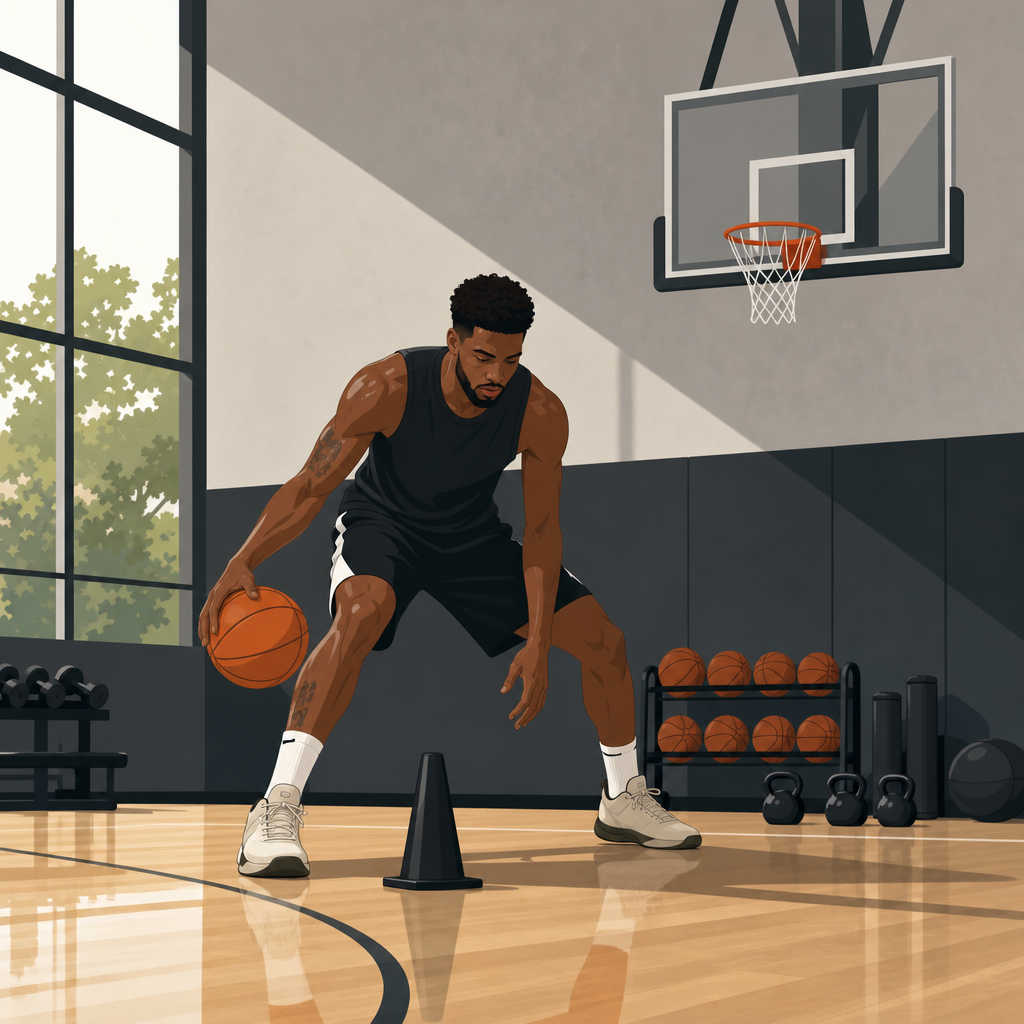
Off-season basketball training is the period between competitive schedules when players rebuild movement quality, add strength, sharpen skill, and prepare their bodies for the demands of the next season. For NBA players, this phase is not casual pickup run time. It is a tightly planned block of programs and workouts that blends performance science, skill acquisition, recovery, nutrition, and film study. I have worked around basketball training environments where the off-season starts with assessment, not highlight reels, because what happens when no one is watching usually determines who holds up in April and who fades in November.
In practical terms, off-season basketball training means structured work performed away from game pressure. Programs and workouts are organized around goals such as improving first-step explosiveness, increasing shooting consistency, restoring joint health, or adding lean mass without losing mobility. The best plans treat the athlete as a complete system. Ankles, hips, thoracic spine, tendons, energy systems, sleep, body composition, and decision-making all matter. A player may need to rebuild tissue tolerance after an 82-game season, correct asymmetries identified in force plate testing, or regain confidence in a jumper after months of in-season fatigue. That is why elite off-season training looks less like random hard work and more like periodized preparation.
This topic matters because fans usually see the result, not the process. A player returns in October looking quicker, stronger through contact, or more comfortable creating off the dribble, and the assumption is simple improvement. The reality is much more deliberate. NBA players use off-season basketball training to solve specific performance problems. A guard who struggles finishing through length may spend weeks on deceleration mechanics, hip strength, and inside-hand finishes. A wing trying to become a reliable spacer may complete hundreds of game-speed catch-and-shoot reps from NBA range while monitoring shot quality, footwork consistency, and fatigue. A veteran managing knee soreness may prioritize load management, isometric work, and pool sessions before higher-impact court work returns. Understanding these programs and workouts gives players, coaches, and serious hoopers a model for training with intent instead of copying isolated drills from social media.
As a hub for basketball training programs and workouts, this article breaks down the major pieces of an NBA-style off-season: assessment, strength and power development, on-court skill work, conditioning, recovery, nutrition, and schedule design. Each section answers the questions athletes usually ask: what are NBA players actually doing, why do they do it, how often do they train, and what can a non-professional player apply safely? The core principle is simple. The off-season is not one long grind. It is a sequence of phases, each with a purpose, each building toward durable performance when the games return.
Assessment and planning: the first step in off-season basketball training
The best off-season programs begin with measurement. Before loading heavy squats or adding two-a-days, performance staff want a clear baseline. In NBA settings, that often includes movement screening, body composition, force plate jumps, sprint splits, medical review, and a conversation about the previous season. Trainers want to know where pain showed up, which movements felt limited, how the athlete slept, and whether body weight drifted during travel. This is not administrative detail. It shapes the entire training block.
A common example is the player who thinks he needs more conditioning but actually needs better force production and lower-body stiffness. If jump testing shows reduced peak power and poor asymmetry between legs, endless running is the wrong answer. The plan should address unilateral strength, landing mechanics, and tendon capacity first. Likewise, if a shooter’s percentages dipped late in the season, the cause may not be “mental.” It may be thoracic stiffness, hip fatigue, or reduced lower-body contribution on deeper shots. Good programs identify root causes before prescribing work.
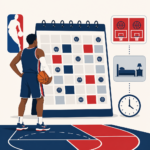
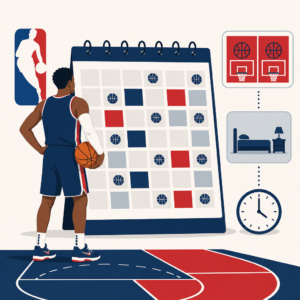
Planning also means periodization. Most NBA off-season basketball training follows broad phases: restoration, strength accumulation, power and speed emphasis, then basketball-specific integration. Early weeks focus on healing, mobility, aerobic rebuilding, and technical cleanup. Middle weeks push load, strength, and volume. Later weeks look more like the sport, with explosive lifts, short sprints, reactive drills, and high-quality live play. The exact calendar depends on playoff length, international play, summer commitments, and injury history, but the pattern is consistent: recover, rebuild, then peak.
Strength and power programs NBA players use
Strength training is the backbone of most serious off-season basketball programs. The goal is not bodybuilding for its own sake. NBA players train strength to hold positions, absorb contact, decelerate safely, and express force quickly. In a well-designed plan, the weight room supports what happens on the court. That usually means a mix of bilateral lifts, unilateral work, trunk training, plyometrics, and medicine ball throws.
Lower-body strength often centers on trap bar deadlifts, front squats, split squats, rear-foot-elevated split squats, and Romanian deadlifts. These lifts build force through the hips and legs without excessive complexity. Unilateral patterns matter because basketball is played off one leg constantly: layups, jump stops, lateral pushes, and landings rarely happen in symmetrical stances. I have seen players make meaningful gains in first-step power simply by improving split-squat strength and pelvic control, then translating that work into resisted accelerations and low-volume jumps.
Upper-body work is equally purposeful. Pressing and pulling patterns support shoulder health, finishing through contact, passing velocity, and posture. Landmine presses, dumbbell bench variations, rows, pull-ups, and scapular control drills are common because they train strength while respecting the shoulder demands of repetitive shooting. For many players, the priority is not max bench press numbers but robust shoulders that still feel fresh after thousands of summer reps.
Power development follows strength. Olympic lift derivatives such as hang cleans or clean pulls are sometimes used, but many NBA performance staffs prefer simpler methods with lower technical cost: loaded jumps, trap bar jump shrugs, broad jumps, depth drops, pogo series, and medicine ball rotational throws. These exercises improve rate of force development, which is critical for rebounding, shot contests, and explosive starts. The key is dosage. More jumps are not automatically better. Quality, freshness, and landing control matter far more than volume.
| Phase | Main goal | Typical methods | Basketball payoff |
|---|---|---|---|
| Restoration | Reduce pain, restore movement | Mobility work, isometrics, light aerobic sessions | Better joint function and readiness to train |
| Strength accumulation | Build force capacity | Trap bar deadlifts, split squats, presses, rows | Improved contact balance and deceleration |
| Power emphasis | Convert strength into explosiveness | Loaded jumps, throws, short sprints, plyometrics | More pop on drives, rebounds, and shot contests |
| Basketball integration | Apply gains to the sport | Reactive drills, live play, position-specific conditioning | Game-speed performance under fatigue |
Skill workouts: shooting, finishing, footwork, and decision-making
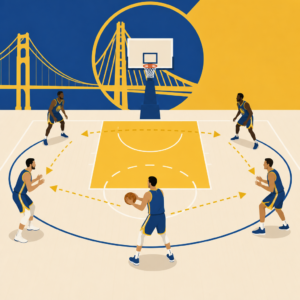
On-court skill work is the part most players recognize, but elite off-season basketball workouts are more precise than generic cone drills. NBA skill trainers usually organize sessions around role, game film, and measurable outcomes. A movement shooter may need relocation footwork, quick dip mechanics, and sprint-to-shot conditioning. A lead guard may need pick-and-roll reads, pocket pass timing, weak-hand finishing, and pull-up shooting after hard deceleration. A big may focus on screening angles, short-roll passing, touch finishes, and corner-three volume.
Shooting development is almost always built from repeatable mechanics under progressive pressure. Early sessions may include form shooting, one-two footwork, hop footwork, balance checks, and targeted makes from specific spots. Later sessions add time pressure, movement off pin-downs, drift passes, relocation, and decision layers such as shoot-or-swing reads. Good trainers track more than total makes. They note left-right misses, short misses under fatigue, pickup consistency, and whether footwork holds from NBA range. Noah Basketball, RSPCT, and high-speed video are often used to evaluate arc, depth, and release patterns.
Finishing work has evolved beyond simple layup lines. Trainers now emphasize deceleration, stride variation, wrong-foot finishes, inside-hand extension, and finishes off awkward contact because that is what modern paint scoring requires. Watch players like Kyrie Irving, Jalen Brunson, or Shai Gilgeous-Alexander and you will see elite pacing and angle manipulation, not just vertical pop. Off-season workouts replicate that by drilling gathers from different speeds, shoulder-bump finishes, and reads against rim protectors. The point is to solve real defensive problems, not just complete pretty reps.
Footwork connects every skill. Jab series, pivots, drop steps, pro hops, side-step threes, and stop-start mechanics all improve when practiced deliberately. The most useful sessions blend technique with perception. Instead of rehearsing a move in empty space forever, players react to a coach’s body position, a pad contest, or a pass location. That makes the drill more transferable. Decision-making is a skill too, and the best off-season workouts train it.
Conditioning, movement quality, and repeatability
Conditioning in basketball is often misunderstood. Players do not need marathon fitness; they need the ability to repeat intense efforts, recover quickly, and maintain skill under fatigue. That means off-season conditioning should resemble the metabolic demands of the sport. Most NBA players use a combination of aerobic base work, tempo runs, court intervals, change-of-direction efforts, and live play. The mix depends on the time of summer and the athlete’s profile.
Early in the off-season, lower-intensity aerobic work can be valuable. Bike sessions, pool conditioning, incline treadmill walks, or controlled tempo runs help restore work capacity without pounding sore joints. This base improves recovery between harder efforts later. As the program advances, conditioning shifts closer to basketball: repeated short sprints, half-court shuttles, transition patterns, and possession-based intervals. A common mistake in amateur off-season basketball training is doing too much random high-intensity work too early, which spikes fatigue without building the right base.
Movement quality stays central throughout. NBA players spend significant time on ankle mobility, hip rotation, adductor strength, trunk stiffness, and landing mechanics because these qualities support efficient movement and reduce injury risk. Copenhagen planks, calf raises, tibialis work, pogo hops, lateral bounds, and sprint mechanics are not glamorous, but they are staples for a reason. A player who moves well saves energy, changes direction better, and tolerates volume more effectively. Over months, that repeatability is often what separates a strong summer from a strained hamstring in training camp.
Recovery, nutrition, and the habits that protect performance
Recovery is not passive in elite off-season programs. It is scheduled and monitored. NBA players commonly use sleep tracking, hydration targets, soft tissue therapy, blood work, massage, contrast methods, and deliberate low days between high-output sessions. The science is clear on at least one point: sleep is the most powerful legal recovery tool available. Consistent duration and timing improve reaction speed, hormonal function, mood, and motor learning. Players who train hard but sleep poorly usually plateau faster than they expect.
Nutrition in the off-season depends on the goal. A player trying to add lean mass needs a sustained calorie surplus, adequate protein intake, and strength work heavy enough to create an adaptation signal. A player aiming to reduce body fat without losing power needs tighter energy balance, high protein, smart carbohydrate timing, and resistance training volume that preserves muscle. Most pros keep protein distributed across the day, fuel sessions with carbohydrates, and use creatine monohydrate, caffeine, and electrolyte strategies selectively. Supplements can help, but they never replace total diet quality.
Injury management also lives here. Tendinopathy, low back irritation, patellar pain, and ankle instability rarely disappear through wishful thinking. They improve through specific loading strategies, patient progression, and honest communication between athlete, skill trainer, strength coach, and medical staff. One of the most valuable lessons from pro settings is that modifying a session is not weakness. If a player’s knee is irritated, shifting from depth jumps to bike flush, isometrics, and controlled shooting may preserve the week instead of sacrificing it.
How non-NBA players can build an NBA-style off-season program
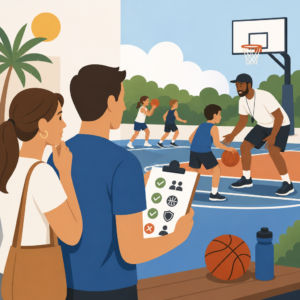
Most players do not have a franchise performance staff, but the principles of off-season basketball training still apply. Start by identifying three priorities, not ten. For example: improve catch-and-shoot consistency, add lower-body strength, and arrive at preseason without shin pain. Then organize the week around those goals. A strong template for many high school, college, and serious adult players is four on-court sessions, three strength sessions, two conditioning sessions, and at least one true recovery day, with overlap managed carefully.
Keep workouts role-specific. If you are a guard, ball-screen decision-making, pull-ups, and finishing angles should dominate more than post hooks. If you are a stretch forward, trail threes, short-roll passing, and defensive slide repeatability may matter more. Use objective markers where possible: shooting percentages by spot, sprint times, jump height, body weight, and session rating of perceived exertion. Review them every two weeks. Progress is easier to trust when it is visible.
Finally, connect this hub to the rest of your basketball training plan. Strength work should link to vertical jump development, speed work to first-step quickness, and shooting workouts to game-role execution. Recovery habits should support consistency, not exist as an afterthought. Off-season basketball training works best when every program and workout serves a clear purpose. That is what NBA players do when no one is watching: they train with structure, solve the right problems, and stack disciplined days until improvement becomes obvious. Use that model, audit your current routine, and build an off-season plan that turns effort into results.
Frequently Asked Questions
What does off-season basketball training actually look like for NBA players?
For NBA players, the off-season is usually a highly structured progression rather than a loose collection of workouts. It often begins with a full assessment phase that looks at movement quality, joint function, strength levels, conditioning status, body composition, previous injuries, and skill needs. Coaches, performance staff, physical therapists, and nutrition professionals use that information to build a program that matches the athlete instead of forcing the athlete into a generic template. Early in the off-season, the priority is often restoring the body after the wear and tear of the season, correcting movement limitations, and rebuilding physical foundations that may have slipped during months of travel, games, and recovery management.
As the summer moves forward, the work becomes more targeted and more intense. Strength training may focus on force production, unilateral stability, power transfer, deceleration ability, and resilience through the hips, feet, ankles, and trunk. On-court work is layered in carefully, starting with technical skill refinement and controlled repetitions before progressing into live reads, decision-making drills, game-speed shooting, and positional scenarios. Conditioning is usually built in phases too, moving from general aerobic development toward basketball-specific repeat sprint capacity and explosive recovery between high-intensity efforts.
What separates NBA off-season training from recreational basketball is precision. Sessions are scheduled with intent, loads are monitored, recovery is planned, and every training block serves a purpose. Players are not just trying to stay busy. They are trying to return to camp moving better, stronger, more explosive, more efficient, and better prepared for the tactical and physical demands of the next season.
Why is the off-season so important if NBA players already train and play all year?
The off-season is critical because the in-season environment rarely allows enough space for deep physical development. During the season, the priorities are performance maintenance, game preparation, travel management, recovery, and staying healthy through a demanding schedule. That means players often spend much of the year preserving what they have rather than making major improvements. The off-season creates the only realistic window to rebuild movement quality, address weaknesses, and make measurable gains in strength, power, mobility, and skill execution.
It is also when accumulated problems can be identified before they become larger setbacks. Small asymmetries, compensations, chronic soreness patterns, and inefficient movement strategies often show up more clearly once the season ends and the body is no longer locked into the constant cycle of games and flights. Smart off-season training gives athletes time to correct these issues through targeted strength work, tissue care, mobility progressions, and workload management. That process matters because durability in basketball is not just about toughness. It is about preparing the body to handle repeated acceleration, deceleration, jumping, landing, cutting, and contact over a long calendar.
Just as important, the off-season is where players can expand their game. A shooter may work on creating space off the dribble. A big may improve footwork, passing reads, and perimeter mobility. A guard may build more finishing strength through contact. These changes usually do not happen by accident. They come from months of focused repetition and feedback. In that sense, the off-season is where visible improvements next year are quietly built long before fans ever notice them.
How do NBA players balance strength training, skill work, conditioning, and recovery in the off-season?
The best off-season programs are built around sequencing and dosage. NBA players do not simply pile every training quality into the same day at maximum intensity. Instead, performance teams organize sessions so that the athlete can adapt without being buried by fatigue. High-neural-demand work such as sprinting, jumping, power lifting, and explosive on-court skill sessions is often placed when the athlete is freshest. Lower-intensity shooting, mobility, recovery modalities, film study, and corrective work can be positioned around those sessions to support development rather than interfere with it.
A typical week might include several lifting sessions, multiple on-court skill workouts, conditioning exposures, regeneration work, and strategic rest days, but the exact structure depends on the player’s needs, position, injury history, and training age. Some players need a bigger emphasis on muscle gain and foundational strength. Others need more movement restoration, tendon loading, or aerobic rebuilding before they can tolerate more advanced explosive work. The strongest programs are individualized, because a veteran guard with years of mileage should not train exactly like a younger player who still needs broad physical development.
Recovery is not treated as something separate from training. It is part of the plan. Sleep quality, hydration, soft tissue work, nutrition timing, active recovery, and stress management all influence whether the athlete adapts well. If a player cannot recover, the training loses value. That is why high-level off-season work often looks less chaotic than people expect. It is not about proving how hard someone can grind every day. It is about applying the right stress, at the right time, with enough support to produce measurable improvement.
What role do nutrition, recovery, and film study play during the basketball off-season?
Nutrition, recovery, and film study are major pillars of a serious off-season plan because physical improvement does not happen through workouts alone. Nutrition supports body composition goals, muscle repair, energy availability, and tissue health. Depending on the player’s needs, the nutrition strategy may emphasize lean mass gain, improved body composition, inflammation management, hydration habits, and consistent fueling around demanding training blocks. That means protein intake, carbohydrate timing, micronutrient sufficiency, hydration status, and total calorie intake all matter. For NBA players, eating well in the off-season is not about dieting trends. It is about giving the body what it needs to adapt, recover, and perform.
Recovery is equally important because the body only gets better when it can absorb training stress. Quality sleep is often the foundation, since it affects hormone regulation, cognition, tissue repair, and readiness to train. Beyond that, players may use mobility sessions, massage, physical therapy, contrast work, breathwork, low-intensity aerobic recovery, and scheduled down time to help the nervous system and musculoskeletal system recover. The goal is not to chase every recovery gadget. It is to create a repeatable routine that keeps the athlete healthy and responsive to training.
Film study is the bridge between physical work and basketball performance. During the off-season, players and coaches can review game clips without the pressure of immediate competition. They can study shot selection, defensive positioning, transition habits, pick-and-roll reads, finishing angles, and tendencies under fatigue or pressure. This allows skill workouts to become more specific. Instead of doing generic drills, the player can train the exact decisions and situations that show up in games. That combination of physical development, deliberate recovery, and tactical learning is what makes the off-season such a powerful improvement window.
Can amateur players learn anything from how NBA players train in the off-season?
Absolutely. Amateur players may not have access to a full performance staff, but they can still apply the principles that make NBA off-season training effective. The first lesson is to train with a plan. Instead of randomly lifting, shooting, and playing pickup, players should identify priorities. That might mean improving ankle mobility, building lower-body strength, developing a more repeatable jump shot, increasing conditioning, or cleaning up landing mechanics. When the training has a clear purpose, progress becomes easier to measure and much more likely to transfer to game performance.
The second lesson is to respect assessment and fundamentals. NBA players do not start by assuming more volume is always better. They often begin by looking at what the body needs most. Amateur athletes can do the same by paying attention to movement limitations, nagging pain, fatigue patterns, and technical weaknesses. Working on basic strength, stability, movement control, and shooting mechanics is not boring busywork. It is the foundation that supports everything else. Skipping that phase to chase only flashy drills often leads to stalled progress or overuse issues.
The third lesson is that recovery and consistency matter as much as motivation. Most players improve not because they occasionally have heroic workout days, but because they stack quality sessions over time. Getting enough sleep, eating well, managing training volume, and leaving room for adaptation can make a bigger difference than adding another random workout. Amateur players should also remember that skill work should become increasingly game-relevant. Practice should reflect real movement, real footwork, and real decisions. That is one of the biggest takeaways from professional off-season training: the best work is not just hard. It is intentional, progressive, and tied directly to how the game is actually played.