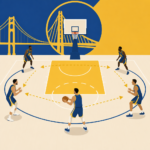

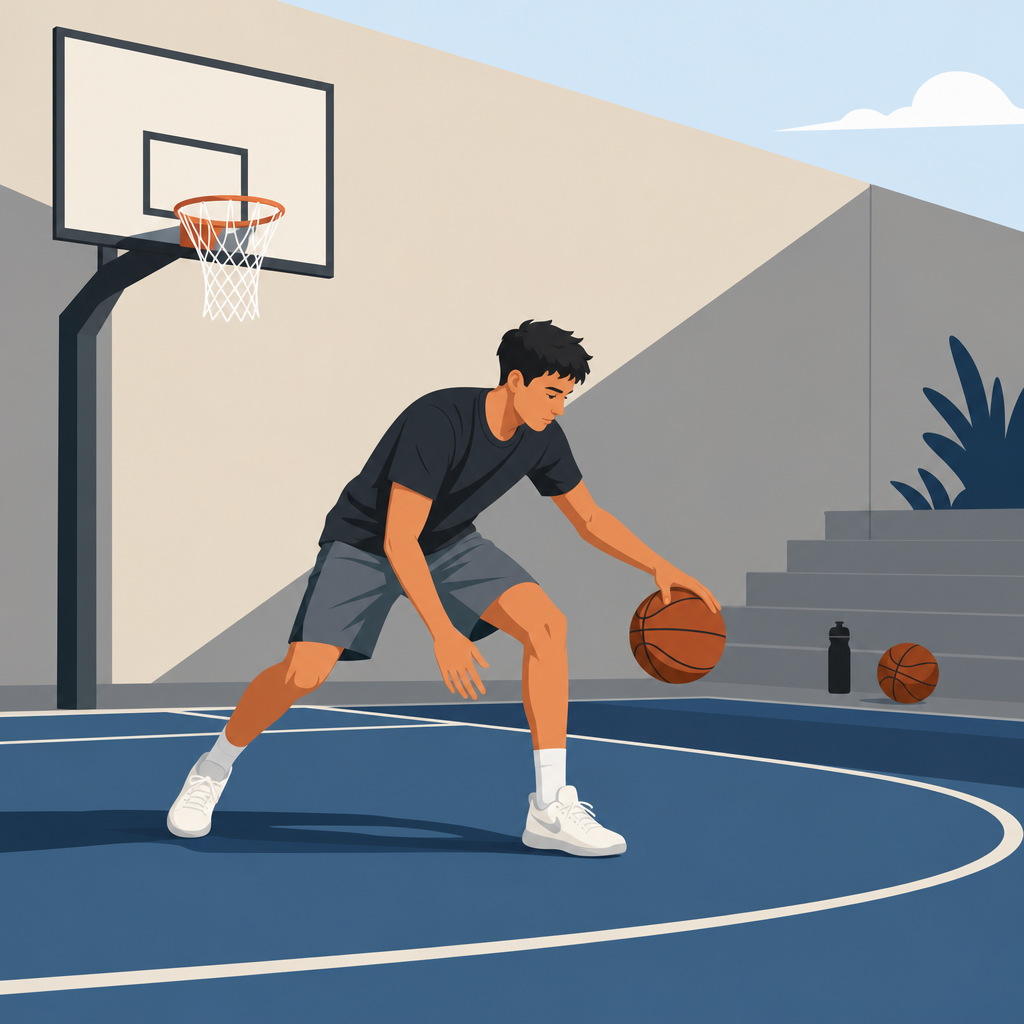
Getting better at basketball alone is not a compromise; it is one of the fastest ways to build skill, conditioning, and confidence when your workouts are structured correctly. In basketball training, “solo drills” means exercises you can perform without a teammate or coach, while “programs and workouts” refers to the plan that organizes those drills by goal, intensity, and progression. I have used solo sessions for years to sharpen ball handling, shooting mechanics, footwork, and game conditioning, and the players who improve most are rarely the ones doing random moves for an hour. They follow a repeatable program. That matters because basketball rewards precision under fatigue. If your training does not measure reps, track makes, and simulate game decisions, you may sweat a lot without adding skill that transfers on the court.
The best solo basketball workout combines technical work, physical preparation, and feedback. Technical work covers dribbling, shooting form, finishing, passing against a wall, and footwork. Physical preparation includes deceleration, core control, ankle stiffness, and change of direction, because those qualities support cleaner movement and lower injury risk. Feedback comes from video, shot charts, timed sets, and simple standards such as makes out of one hundred or turnovers per drill. This sub-pillar hub for basketball programs and workouts matters because most players search for isolated tips when they really need a system. They ask how to practice basketball alone, how long a workout should be, what drills improve handles, and whether home workouts without a hoop still work. The answer is yes, but only if each session has a purpose, progression, and measurable outcome.
A complete solo development plan should answer three questions. First, what skill are you targeting today: shooting, ball control, finishing, athleticism, or conditioning? Second, what game situation does the drill represent: bringing the ball up under pressure, attacking a closeout, finishing through contact, or shooting after movement? Third, how will you know you improved: more makes, fewer mistakes, faster completion time, or cleaner mechanics on film? When players ignore those questions, they drift into low-value workouts. When they answer them, even a thirty-minute session can move the needle. That is why effective basketball programs and workouts are built around intent, not just effort.
Build a Solo Basketball Workout Around Goals, Not Random Drills
The biggest mistake in solo basketball training is treating every workout like a highlight mixtape. A better approach is to organize sessions into categories: skill acquisition, skill under pressure, and game conditioning. Skill acquisition is slower and more controlled. You might spend fifteen minutes on one-hand form shooting, stationary pound dribbles, or drop-step footwork. Skill under pressure raises speed and complexity. That includes combo moves into pull-ups, finishing off one foot from different angles, or catch-and-shoot reps on a timer using self-tosses. Game conditioning blends work rate with decision quality, such as six sets of transition pull-ups, defensive slides into change-of-pace attacks, or full-court dribble intervals.
In practice, I recommend assigning each day a primary focus and a secondary focus. For example, Monday can be shooting plus footwork, Tuesday ball handling plus conditioning, Thursday finishing plus deceleration, and Saturday a mixed test day. This is how strong basketball training programs and workouts stay balanced without becoming chaotic. Guards often need higher volumes of ball handling, off-the-dribble shooting, and pace change work. Wings need catch-to-attack footwork, movement shooting, and contact finishing. Bigs still need handles, but their solo plan should also include pivots, short-roll touch, rim finishes, and elbow jumpers. Position matters, but every player benefits from a complete base.
Progression is what turns drills into a program. Start simple, then increase difficulty by adding movement, weak-hand emphasis, fatigue, time limits, or decision cues. A beginner may do stationary crossovers for three rounds of thirty seconds. An intermediate player can move to crossover-sprint-change-of-direction sequences. An advanced player can add tennis-ball reaction catches, retreat dribbles, and a pull-up finish at the end. This layered approach is how players train alone without plateauing. It is also how a hub page for programs and workouts should frame the topic: not as a list of trendy drills, but as a roadmap for progression.
Ball Handling Drills That Translate to Real Games
Solo ball handling should improve control, posture, and decision speed, not just hand speed. The foundation starts with stance. Hips down, chest over knees, eyes up, and the ball driven with fingertips rather than slapped with the palm. I have seen players spend months doing flashy combinations while standing too high, then lose the ball as soon as a defender crowds them. Better solo dribbling drills teach you to protect the ball, change pace, and move efficiently. Start with stationary series: pounds at knee height, ankle-height dribbles, crossovers, between-the-legs, behind-the-back, and wraps. Use intervals of twenty to forty seconds with short rest. Focus on clean rhythm and minimal wasted movement.
After the stationary base, move to directional dribbling. Set up cones, shoes, or water bottles. Practice hesitation to burst, in-and-out to crossover, retreat dribble to re-attack, and inside-out to push cross. Every move should finish with two explosive steps, because that is what happens in games. One useful standard is the “mistake rule”: if you lose the ball twice in a set, reduce complexity and rebuild. Another is weak-hand overload. Spend at least one-third of ball handling time leading with the non-dominant hand. Players improve fastest when they stop treating the weak hand as a maintenance skill and start treating it as a development priority.
To make solo ball handling more game-like, add scanning. Call out numbers on a wall chart, glance at a raised finger count from a training app, or listen for audio cues that tell you which move to use next. Elite guards process information while dribbling, and solo training should reflect that. If you only rehearse scripted combinations, you build coordination but not adaptability. The best ball handling workouts create constraints that force posture, change of pace, and reaction. That is what translates to real possessions.
Shooting Alone: Mechanics, Volume, and Shot Quality
Shooting alone can absolutely make you better, but only when you separate mechanics work from scoring-range volume. Start close to the basket with one-hand form shooting. The ball should come off your index-middle finger line, elbow stacked under the ball, guide hand quiet, and wrist fully extended on release. Ten perfect reps from three feet are more valuable than thirty rushed threes with inconsistent form. From there, progress to set shots from five spots, then movement shooting, then off-the-dribble shooting. This order matters because stable mechanics create repeatable arc and direction before fatigue and footwork add complexity.
Use make goals, not just time goals. For example, twenty makes from each midrange spot, ten floaters with each hand, and fifty catch-and-shoot threes if you have access to rebounds or a return system. If you train alone without a passer, use self-toss footwork: toss the ball ahead, sprint into your catch, land on a one-two or hop depending on the shot, and rise immediately. I have found that players who chart their workouts improve faster because the data exposes weak zones and sloppy standards. A simple shot chart on your phone works. If you are below sixty percent on unguarded midrange spot shooting or below fifty percent on unguarded corner threes at your current level, you need more base reps before emphasizing difficult off-the-dribble work.
Shot quality matters as much as volume. Many solo players overtrain low-value fadeaways and side-step threes while undertraining finishing and open catch-and-shoot attempts. Build your workout around shots you will actually get in games. For younger players, that usually means layups, floaters, short pull-ups, free throws, and catch-and-shoot jumpers. For experienced guards, add relocation threes, snake-dribble pull-ups, and stop-on-a-dime jumpers. For wings, emphasize corner threes, one-dribble escapes, and baseline drift footwork. A smart basketball shooting program mirrors your role while still building a broad scoring base.
Finishing, Footwork, and Athleticism Without a Teammate
Players often think solo improvement means dribbling and shooting, but finishing and movement skill are where many athletes make the biggest jump. Start with footwork around the rim: stride stops, jump stops, inside-hand finishes, same-foot same-hand finishes, reverse layups, and extended finishes using the far side of the glass. Add chair or cone reads to simulate a rotating defender. One cone at the nail can represent help; attack outside it for a long layup or inside it for a floater. These simple constraints teach angles. Good finishing is rarely about jumping highest. It is about arriving on balance and choosing the right release.
Footwork training also improves defense, rebounding position, and first-step efficiency. Include split-step reactions, jab series, drop steps, pivots, and deceleration drills. Deceleration is especially important. In game film, many missed pull-ups and charges happen because players cannot sink their hips and stop under control. Solo workouts should include sprint to jump stop, backpedal to plant, and lateral push-stop-hold patterns. These drills train eccentric control, which supports cleaner movement and reduces stress on knees and ankles when load is progressed sensibly.
Athleticism work does not need a full weight room, but it should be specific. Short accelerations, pogo jumps, snap downs, broad jump stick landings, and lateral bounds build the qualities basketball demands. Keep plyometric volume moderate and technique strict. The National Strength and Conditioning Association consistently emphasizes landing mechanics, progressive loading, and adequate recovery for power development. If you are adding jumps after a hard on-court session, lower the volume. Solo basketball workouts help most when they improve explosiveness without stealing quality from your skill work.
Weekly Programs and Workouts for Different Levels
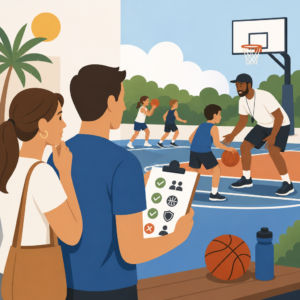
The right basketball program depends on age, training history, schedule, and access to a court. A middle school player may need four forty-minute sessions focused on fundamentals and fun. A varsity player in the offseason can handle five or six targeted workouts if intensity rotates properly. Adults returning to the game usually need fewer high-impact sessions and more mobility, strength, and shooting volume. The principle is simple: train often enough to build consistency, but not so hard that mechanics break down or soreness ruins the next day.
| Player level | Weekly structure | Main priorities | Example benchmark |
|---|---|---|---|
| Beginner | 4 sessions, 30–45 minutes | Form shooting, basic handles, layups, stance | 100 stationary dribbles each move, 50 close-range makes |
| Intermediate | 5 sessions, 45–60 minutes | Weak-hand work, movement shooting, finishing reads, conditioning | 150 game-speed dribble reps, 150 total makes, timed full-court sets |
| Advanced | 5–6 sessions, 60–90 minutes | Role-specific shots, decision training, deceleration, power | Shot chart by zone, turnover limits, sprint-repeat consistency |
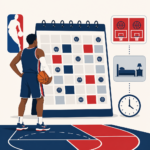
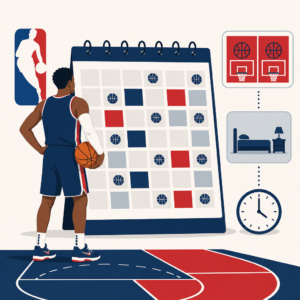
A strong weekly plan alternates stress. One high-skill day, one higher-condition day, one lower-impact technique day, then another high-intent session. This is how experienced trainers protect quality. For example, Monday can be heavy shooting, Tuesday handles and acceleration, Wednesday recovery and form work, Thursday finishing and pull-ups, Friday mixed game conditioning, and Saturday testing or scrimmage integration if available. Sunday can be off or limited to mobility and free throws. This structure lets you accumulate meaningful volume without grinding through junk reps.
As a hub for basketball programs and workouts, this page should also point players toward specialization. If your biggest weakness is shooting, bias the week toward shot volume and lower-body freshness. If your weakness is control under pressure, bias toward dribbling constraints and change-of-pace drills. If your issue is game stamina, build repeated sprint ability and maintain skill under fatigue. Programs work best when they are personalized around the bottleneck that most limits performance.
Tracking Progress, Avoiding Common Mistakes, and Making Solo Work Count
Improvement requires evidence. Track makes, attempts, turnover counts, times, and notes from video. I advise players to keep a simple log with date, workout focus, best benchmark, and one correction point. Video your form shooting from the side and front at least once a week. Small issues like thumb flick, drifting feet, or off-hand dominance are easier to fix early than after thousands of reps. If you have access to tools such as HomeCourt, Noah Basketball, or even a basic tripod and stopwatch, use them. Technology is not mandatory, but feedback is.
The most common mistakes in solo basketball training are easy to spot. Players skip warm-ups, train only their strengths, rush mechanics, and confuse exhaustion with development. They perform advanced dribble packages without mastering stance, or they shoot deep before they can repeat the same release close to the rim. Another mistake is ignoring recovery. Sleep, hydration, and lower-leg care matter. Basketball creates repeated stress on calves, Achilles tendons, and knees. Five to ten minutes of ankle mobility, calf raises, tibialis raises, and hip work can improve movement quality and help you tolerate more productive practice over time.
Ultimately, getting better at basketball alone comes down to structure. Choose the skill, pick drills that mirror game actions, measure outcomes, and progress them over weeks instead of chasing novelty every session. Solo drills that actually make a difference are not always the most entertaining ones; they are the ones you can repeat with high intent and clear standards. Build your basketball training around purposeful programs and workouts, review your data, and adjust honestly. If you do that consistently, your solo sessions will stop feeling like filler and start becoming the engine of real improvement. Start with a four-week plan, track every rep that matters, and let the results guide your next block.
Frequently Asked Questions
What are the best solo basketball drills to improve quickly when training alone?
The best solo basketball drills are the ones that target core game skills and are repeated with purpose, not just effort. If you want to improve quickly, your solo workouts should focus on four main areas: ball handling, shooting mechanics, footwork, and conditioning. For ball handling, start with stationary pound dribbles, crossovers, between-the-legs, and behind-the-back variations to build control with both hands. Then progress to movement-based dribbling, such as zig-zag dribbles, change-of-pace attacks, retreat dribbles, and combo moves into imaginary defenders. These drills help you become more comfortable handling the ball under pressure, even when no defender is physically there.
For shooting, form shooting is one of the most effective solo drills you can do. Begin close to the basket and focus on balance, elbow alignment, follow-through, and consistent arc. Once your mechanics are solid, add spot shooting from multiple locations, one-dribble pull-ups, and game-speed catch-and-shoot footwork using self-tosses or quick pickups. Footwork drills such as jump stops, pivots, jab steps, drop steps, and lateral movement patterns are also essential because good basketball players create advantages with their feet before they ever make a move with the ball. Finish with conditioning drills like full-court dribble sprints, defensive slides, closeout reps, and timed shooting circuits to simulate fatigue. The key is not just doing a lot of drills, but choosing solo drills that directly connect to how you want to play in real games.
How should I structure a solo basketball workout so it actually leads to progress?
A productive solo basketball workout should be organized like a real training session, with a clear goal, a logical sequence, and measurable progress over time. One of the biggest mistakes players make when training alone is doing random drills without any structure. That may feel like work, but it usually leads to slower improvement. A better approach is to divide your session into sections. Start with a warm-up that includes light jogging, dynamic mobility, activation, and basic ball control to get your body ready. Then move into a skill block that focuses on one or two priorities, such as ball handling under control, shooting consistency, finishing footwork, or change-of-direction movement.
After the skill block, include a competitive or game-speed section where you increase intensity and simulate real basketball situations. For example, you might do a timed dribble series, a make-based shooting challenge, or a sequence of move-and-shoot reps from your favorite spots. Then finish with conditioning that matches basketball demands, such as short bursts, repeated sprints, slides, or high-tempo shooting under fatigue. A simple solo workout might last 45 to 75 minutes: 10 minutes to warm up, 20 minutes on ball handling and footwork, 20 minutes on shooting, and 10 to 15 minutes on conditioning and free throws. The most important part is progression. Track your makes, rep counts, weak-hand success, speed, and consistency. Programs and workouts matter because they turn drills into a repeatable system. When you know what you are training, why you are training it, and how to increase the challenge each week, solo practice becomes far more effective.
Can you really become a better basketball player without a coach or training partner?
Yes, you can absolutely become a better basketball player without a coach or training partner, especially in the areas that depend on repetition, discipline, and body control. Solo training is one of the fastest ways to improve because it gives you more touches, more shots, and more decision-making reps than many team settings. Ball handling, shooting mechanics, footwork, conditioning, and weak-hand development all respond very well to individual work. In fact, many skilled players build their foundation through hours of solo sessions before they ever showcase those improvements in games or team practices.
That said, getting better alone works best when you train intentionally. You need to be honest about your weaknesses, pay attention to technique, and avoid mindless repetition. If your shooting form is inconsistent or your dribble posture is poor, repeating bad habits will not help. This is why filming your workouts, using performance benchmarks, and following a structured training plan can make a huge difference. A coach can accelerate development, but lack of a coach does not prevent progress if your workouts are focused and consistent. Think of solo training as the place where you build your tools. Team runs, games, and coaching then help you apply those tools under pressure. If your goal is to become more confident, more skilled, and better conditioned, training alone is not a backup option. It is one of the most valuable parts of basketball development.
How often should I do solo basketball workouts, and how long should each session be?
The right frequency depends on your age, experience, schedule, and current conditioning level, but most players benefit from solo basketball workouts three to six days per week. Consistency matters more than occasional marathon sessions. A player who trains alone for 45 to 60 focused minutes four or five times per week will usually improve faster than someone who does one or two long, unstructured workouts. The ideal session length for most athletes is between 45 and 90 minutes. That gives you enough time to warm up, work on specific skills, add game-speed reps, and finish with conditioning without losing quality or concentration.
It also helps to vary the emphasis of your solo sessions throughout the week. One day can focus on ball handling and footwork, another on shooting mechanics and shot volume, and another on conditioning with skill work under fatigue. If you train daily, do not make every workout high intensity. Mix hard days with moderate or lighter technical days so your body can recover and your skill quality stays high. Recovery is part of training, especially if you are also playing in games, lifting weights, or attending team practices. A smart weekly plan might include four solo workouts, one active recovery day, and one or two days that are either lighter or fully off. The goal is to build momentum without burning out. If you can maintain focus, execute the drills correctly, and recover well enough to repeat that effort regularly, your training volume is probably in a productive range.
What should I focus on first if I want my solo basketball workouts to make a real difference in games?
If you want your solo basketball workouts to translate to actual game improvement, start with the skills that show up constantly: ball control, footwork, finishing basics, shooting form, and conditioning. These areas affect almost every possession. A player who can dribble confidently with either hand, stop under control, pivot cleanly, and shoot with repeatable mechanics will be much more effective in games than someone who spends most of their solo time practicing flashy moves that rarely hold up under pressure. Start with fundamentals and make them automatic. Tight handles let you play with your head up. Strong footwork helps you attack, defend, and create balance. Reliable shooting mechanics improve consistency. Better conditioning helps all of it hold together when the pace rises.
Once those basics are in place, make your solo drills more game-like. That means training pace changes, direction changes, pickups into jump shots, finishes off either foot, and transitions from defense to offense. Use constraints that force focus, such as make goals, time limits, weak-hand-only segments, and sequences that require clean foot placement before each shot. You should also work on skills that fit your likely role. Guards may need more emphasis on handle, pull-ups, and decision-ready footwork. Wings may prioritize attacking off one or two dribbles and shooting from multiple spots. Bigs can train touch, pivots, finishes, and mobility. Solo drills make the biggest difference when they are connected to real basketball actions and repeated with intensity. Do not just ask whether a drill looks advanced. Ask whether it builds a skill you will actually use in games, and whether your workout plan helps that skill improve week after week.