
Mini basketball hoops turn spare wall space into a quick practice station, stress reliever, and compact game zone, which is why they have become one of the most useful pieces of basketball equipment for bedrooms, offices, and dorms. In this guide to the best mini basketball hoops for bedrooms, offices, and dorms, I will cover not only which styles are worth buying, but also how hoops and gear fit together as a complete setup. A mini hoop is a scaled-down basketball rim and backboard designed for indoor use, usually mounted over a door, on a wall, or on a freestanding frame. The wider category of hoops and gear includes the rim, backboard, net, mini basketballs, pumps, mounting hardware, protective padding, and accessories such as return systems or score counters. Choosing the right setup matters because indoor spaces have very different limits than a driveway court: noise, clearance, wall protection, door fit, and safety are all bigger factors. After testing entry-level and premium indoor hoops in apartments, home offices, and student housing, I have learned that the best product is rarely the one with the flashiest look. It is the one that matches the room, the user, and the type of play. A quiet foam ball, a breakaway rim, and thick backboard padding often matter more than brand hype. If you want a hub page that helps you compare hoop types, understand materials, identify must-have gear, and avoid common buying mistakes, this article gives you the full framework in plain language.
What makes a mini basketball hoop worth buying
The best mini basketball hoop is durable, quiet enough for indoor use, easy to mount securely, and sized appropriately for the room. Those four factors decide whether a hoop becomes a daily-use piece of basketball gear or an annoying purchase that gets removed after a week. Start with the backboard. Polycarbonate is the best all-around material for most buyers because it resists cracking, handles repeated bank shots, and feels closer to a real hoop than thin molded plastic. Acrylic can look cleaner and more premium, but on cheaper products it scratches more easily. Basic plastic boards are acceptable for children, but adults and older teens usually notice the weaker rebound response quickly.
Rim design is the next separator. A fixed rim works for light shooting, but a spring-loaded breakaway rim is far better for serious use because it absorbs force and reduces stress on the door or mounting points. In my experience, this feature is the difference between a hoop surviving months of play and developing rattles or bent brackets after a few aggressive dunks. Net quality also matters. Nylon nets are standard and fine, but heavier woven nets last longer and produce less fraying. Padding is another detail buyers overlook. Door hooks, rear braces, and lower backboard edges should be covered with foam to protect paint, reduce vibration, and limit noise in shared spaces.
Ball choice changes the entire experience. Many kits include a very light rubber ball, but bedrooms and offices benefit from soft foam or low-bounce mini basketballs because they reduce wall marks and disturbance. If the hoop will be used in a dorm, check school housing rules first. Some residence halls permit over-the-door hoops but ban wall anchors, adhesive mounts, or loud play after quiet hours. In offices, a small backboard and muted ball are usually the best fit, while bedrooms can support larger boards if ceiling height and doorway clearance allow it.
Best mini basketball hoops by room type
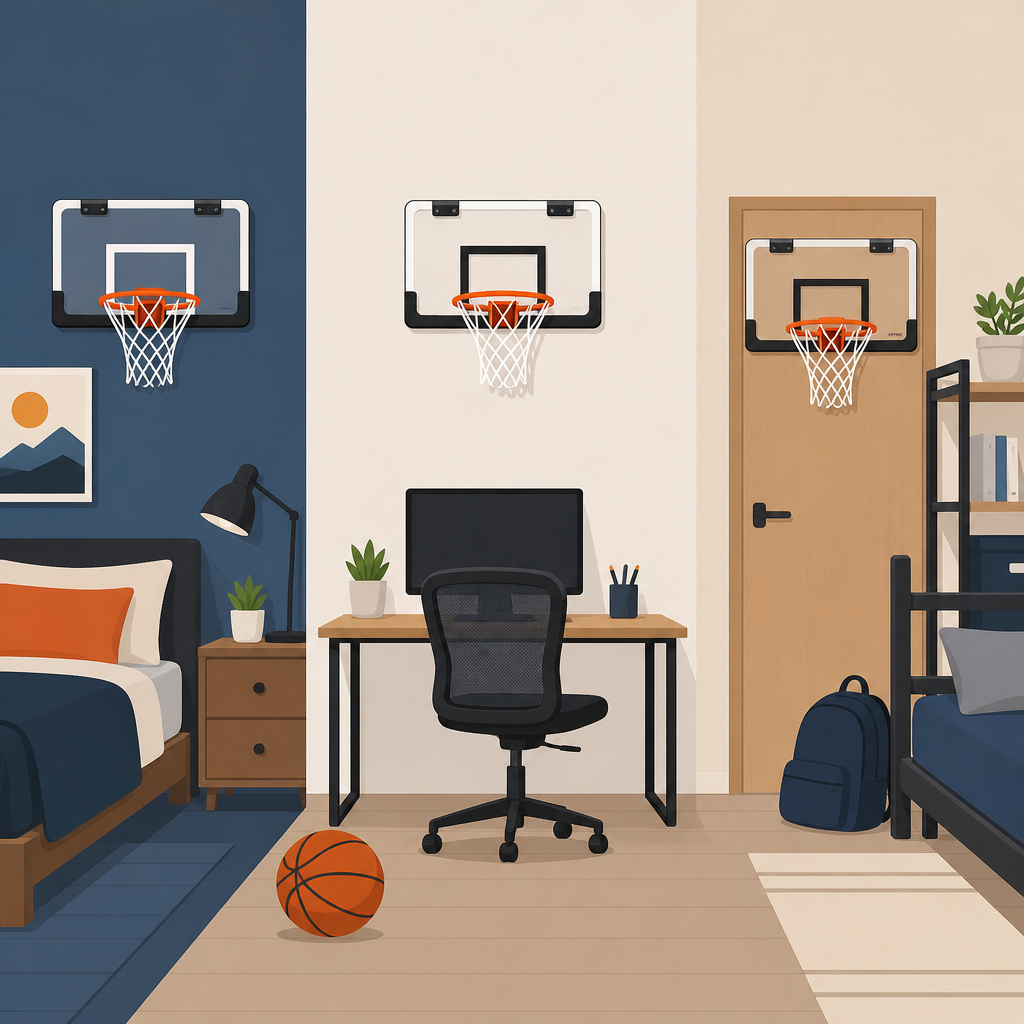
Different rooms demand different hoop designs, so the best mini basketball hoops for bedrooms, offices, and dorms are not all the same. For bedrooms, the top choice is usually an over-the-door hoop with a medium or large polycarbonate backboard, a breakaway rim, and substantial foam backing. Bedrooms often have enough privacy for more active play, and a larger rebound surface makes solo shooting more enjoyable. Models modeled after pro-style indoor practice hoops are especially popular because they combine realistic response with easy installation. If a bedroom has thin hollow-core doors, however, a lighter rim and softer ball may be smarter than the heaviest premium setup.
For offices, quiet operation is the priority. The best office mini basketball hoop uses soft contact points, a relatively compact board, and balls that do not echo off hard surfaces. In shared work environments, the goal is not repeated rim-rattling dunks but quick movement breaks and stress relief between tasks. I have seen compact office hoops work especially well in private offices and home offices where users can take short shooting sessions without distracting others. A hoop with a ball return can be useful, but it is not essential in tighter spaces where simplicity matters more than gimmicks.
Dorm rooms introduce the most restrictions. Space is limited, walls are often off-limits, and noise carries. The best dorm mini basketball hoop is an over-the-door unit with strong padding, narrow mounting arms that fit standard dorm doors, and at least one foam mini basketball. Students often buy the biggest board they can find and regret it when the door no longer closes properly or the hoop shakes every time someone scores. A compact but sturdy design is usually the better choice. If roommates are sharing the setup, pick a breakaway rim and keep an extra ball and hand pump nearby so the hoop remains usable through the semester.
| Room type | Best hoop style | Key features | Main caution |
|---|---|---|---|
| Bedroom | Over-the-door or wall-mounted | Polycarbonate board, breakaway rim, larger rebound area | Check door strength and ceiling clearance |
| Office | Compact over-the-door | Quiet padding, soft ball, smaller footprint | Avoid loud rims and hard balls |
| Dorm | Lightweight over-the-door | Foam padding, standard door fit, soft mini balls | Review housing rules and quiet hours |
Hoops and gear: building the right indoor setup
A mini hoop performs best when the supporting gear matches the space. This is where many buyers underspend or buy the wrong accessories. Start with basketballs. A seven-inch mini ball is the most common size, but the material matters more than diameter. Foam balls are best for bedrooms with framed art, mirrors, or nearby electronics. Rubber mini basketballs feel more authentic in the hand and bounce better, but they create more noise and can leave scuffs on white doors and baseboards. Composite mini balls sit in the middle, offering better grip without the hardness of full rubber.
An air pump is a small but important part of indoor basketball gear. Underinflated mini balls feel dead and inconsistent, which leads users to blame the hoop unfairly. I always recommend a compact hand pump with a spare needle stored in a drawer near the setup. Protective accessories are equally useful. Adhesive felt pads can reduce contact noise if the included foam is thin. Door-stop strips or clear wall bumpers can keep a swinging door from slamming the hoop into nearby furniture. For shared living spaces, a small storage bin for balls prevents clutter and keeps the area looking intentional rather than messy.
Some buyers ask whether a wall-mounted mini basketball hoop is better than an over-the-door model. If the wall can be drilled safely into studs and the user wants a more stable, realistic rebound, wall mounting is superior. It eliminates many of the rattles associated with doors and allows better height control. However, it is usually a poor fit for rentals, dorms, and offices where permanent installation is restricted. Over-the-door remains the most practical indoor category because it balances performance, portability, and convenience. Freestanding mini hoops can work for young children, but for teens and adults they often feel less stable indoors and take up valuable floor space.
How to compare materials, dimensions, and performance
Comparing mini basketball hoops gets easier when you focus on measurable features instead of marketing language. Backboard width is one of the clearest indicators of play style. Boards around 15 to 18 inches wide suit young children or tight office corners. Boards from 18 to 24 inches hit the sweet spot for most buyers because they provide enough surface for bank shots without overwhelming the room. Larger boards can feel excellent in bedrooms or rec rooms, but they may be too heavy for lightweight interior doors. Always check product dimensions rather than judging size from photos, which often make hoops appear larger or thicker than they are.
Steel rims outperform plastic rims by a wide margin. Even light indoor use exposes weak rims quickly, especially when users hang briefly or snap the net downward after shots. A spring breakaway mechanism with a stable hinge point is worth paying for if the hoop will see daily use. Look closely at the mounting frame too. Thicker metal arms and reinforced corner brackets reduce wobble, while cheap thin-gauge supports are usually the first failure point. If a manufacturer publishes door-compatibility measurements, treat that as a good sign. It shows the company understands real installation issues rather than selling a generic toy.
Performance also includes rebound feel and noise control. A realistic rebound helps players practice touch on bank shots and short-range accuracy. Polycarbonate paired with a metal rim generally produces the most satisfying response indoors. But realism comes with tradeoffs. Heavier assemblies generate more vibration, so the best performance setup for a solo bedroom may not be the best hoop for a shared dorm. Customer reviews can help, but read them carefully. Separate comments from parents buying for eight-year-olds from comments by teens or adults using the hoop hard. Their standards and use cases are completely different, and mixing them can lead to poor decisions.
Top buying mistakes and how to avoid them
The most common mistake is buying solely by price. Very cheap mini basketball hoops often use brittle backboards, thin nets, and weak hooks that bend under normal play. Spending slightly more on a recognized indoor hoop line usually buys better materials, stronger packaging, and replacement-part availability. Another mistake is ignoring door thickness. Many over-the-door hoops are built for standard interior doors, and buyers run into trouble when decorative trim, heavy seals, or nonstandard dorm doors change the fit. Measuring first prevents returns and damaged paint.
A third mistake is choosing the wrong ball for the room. Hard rubber balls may seem more legitimate, but in apartments and dorms they create complaints fast. I have watched buyers solve “bad hoop” problems simply by switching to foam balls. Another issue is underestimating clearance. A hoop might technically fit over the door but still hit the ceiling during quick motion or block the door from opening fully. Check top clearance, swing path, and nearby lights or shelves. Safety is the final area where people get casual. If children will use the hoop, make sure all hardware is fully seated, the door can support repeated motion, and no sharp bracket edges remain exposed after installation.
Brand selection should also be practical rather than emotional. Well-known names in basketball equipment often produce dependable mini hoops, but even strong brands have entry models and premium models with very different quality levels. Read specification sheets, not just logos. A reputable seller with clear return policies is valuable, especially when buying online. If the hoop arrives with warped plastic, missing hardware, or bent rim components, an easy exchange matters more than saving a few dollars up front. The goal is not merely to own a mini hoop. It is to create a setup that gets used consistently because it feels stable, safe, and fun.
Why this hub matters for basketball equipment buyers
Mini hoops are often the entry point into a wider basketball equipment setup, which is why this topic deserves a hub page rather than a simple product list. Once buyers understand how to choose an indoor hoop, they usually need guidance on mini basketballs, pump options, wall protection, breakaway rim design, portable versus mounted systems, and gear durability. These decisions connect directly to the broader hoops and gear category. A good hub helps readers move from one buying question to the next logically instead of forcing them to piece together advice from scattered product pages and shallow reviews.
For parents, a mini hoop can support coordination and active play indoors when weather or schedules limit outdoor court time. For students, it can make a dorm room more social without requiring much space. For remote workers, it creates a simple movement break that is easier to stick with than a full workout. The benefit is not just entertainment. It is convenience. A mini basketball hoop puts repetition within reach, whether that means practicing touch, resetting mentally between meetings, or giving kids a safe indoor target. The best choice depends on space, noise tolerance, door strength, and the kind of play you actually expect.
If you are building out your basketball equipment collection, start with the room, then choose the hoop style, then match the gear. Prioritize a durable backboard, a reliable rim, proper padding, and the right ball material before worrying about cosmetic extras. That approach leads to fewer returns and a better daily experience. Use this page as your starting point for all hoops and gear decisions, then compare related guides on backboard materials, mini basketball types, mounting methods, and indoor practice accessories. The right mini hoop can turn a small indoor area into a space you use every day, so choose with purpose and set it up properly.
Frequently Asked Questions
What should I look for when choosing the best mini basketball hoop for a bedroom, office, or dorm?
The best mini basketball hoop for your space depends on where you plan to use it, how often it will get used, and how much durability you need. For bedrooms and dorms, one of the most important factors is mounting style. Over-the-door hoops are the most popular because they install quickly, do not require drilling, and are easy to move if you rearrange furniture or switch rooms. If you want a cleaner, more permanent setup, wall-mounted mini hoops can feel more stable, but they are usually better for spaces where you are allowed to install hardware.
You should also pay close attention to backboard material, rim construction, and noise control. Polycarbonate backboards are a strong all-around option because they hold up well without adding too much weight. A breakaway rim is ideal if you want a more realistic playing feel and plan to take frequent shots or light dunks. In shared spaces like dorms and offices, padding on the door hooks and backboard frame makes a big difference because it helps reduce rattling, scuffing, and vibration. The included ball matters too. Some mini hoops come with a soft foam ball, while others include a small rubber basketball. Foam is quieter and more neighbor-friendly, while rubber offers a more authentic bounce and grip. If your goal is daily use, stress relief, and casual practice, the best choice is usually a sturdy over-the-door model with protective padding, a solid backboard, and a rim that can handle repeated play without loosening over time.
Are over-the-door mini basketball hoops safe for doors and walls?
Yes, most over-the-door mini basketball hoops are safe when they are designed properly and installed correctly, but the level of protection varies from model to model. A quality hoop will include padded mounting brackets or foam strips that sit between the metal hooks and the door surface. These features help prevent scratches, pressure marks, and paint wear. Many better models also include padding behind the backboard so the unit does not slap hard against the door every time the ball hits the rim or board. This is especially useful in apartments, dorm rooms, and home offices where repeated impact noise can become annoying.
That said, safety and protection also depend on how the hoop is used. Light shooting and normal play are generally fine, but hanging with full body weight from the rim or repeatedly slamming the door with the hoop attached can damage both the hoop and the door over time. Before buying, check the thickness compatibility listed by the manufacturer to make sure the mounting hooks will fit your door properly. A poor fit can lead to wobbling, uneven pressure, or trouble closing the door. If you are placing the hoop on a painted wall nearby, make sure the door has enough clearance when it opens so the backboard does not rub into the surface. For most people, an over-the-door mini hoop is a safe and practical option, especially if you choose a model with protective padding and use it with reasonable care.
What is the difference between a cheap mini hoop and a high-quality one?
The biggest differences come down to durability, realism, and long-term value. Lower-cost mini basketball hoops often use thinner plastic backboards, lighter rims, and basic mounting hardware. These can be fine for very casual use or for younger kids who just want a simple place to toss a ball, but they tend to shake more, sound louder, and wear out faster. The net may fray quickly, the rim may bend, and the mounting system may loosen after repeated use. In many cases, the included ball is also lower quality, with limited grip and inconsistent bounce.
Higher-quality mini hoops are built to feel closer to a scaled-down version of real basketball equipment. They often feature shatter-resistant or polycarbonate backboards, steel rims, spring-loaded breakaway mechanisms, stronger door mounts, and better protective padding. That added build quality matters if you plan to use the hoop regularly for shooting drills, one-handed finishes, or stress-relief breaks throughout the day. A premium model usually produces a more satisfying bank shot, rebounds more consistently, and holds its position better during play. In practical terms, that means fewer adjustments, less noise, and less chance of replacing the hoop after a few months. If the hoop will be used frequently in a bedroom, office, or dorm, spending a little more on construction quality usually pays off in a better experience and a longer lifespan.
Can a mini basketball hoop actually help with practice, or is it just for fun?
A mini basketball hoop is definitely fun, but it can also be a useful training tool when used the right way. It will not replace a full-size rim for game-speed shooting, footwork, or regulation finishing, but it can help sharpen several small but important basketball habits. Repetition is one of the biggest benefits. Having a hoop in your room or office makes it easy to get extra shot reps throughout the day, even if they are short sessions of five to ten minutes. That kind of consistent touch work can improve hand-eye coordination, release timing, and concentration.
Mini hoops are especially effective for close-range accuracy games, off-hand development, quick reflex work, and creative finishing practice. They are also useful for younger players learning how to aim bank shots or for older players who simply want a convenient way to stay connected to the game. In offices and dorms, they work well as stress relievers too, which is a real benefit if you want something active and low-effort between study sessions or meetings. To get more practice value, pair the hoop with a quality mini ball that fits your grip preference, and create simple routines such as swishes-only shooting, weak-hand layup motions, or timed shot challenges. So while a mini hoop is not a full training system on its own, it absolutely can support skill development, confidence, and consistency when it is part of a broader basketball setup.
What accessories or gear should I pair with a mini basketball hoop for the best setup?
If you want a mini hoop setup that feels complete rather than temporary, a few accessories make a noticeable difference. The first is the ball itself. Many included balls are usable, but upgrading to a better mini basketball can improve grip, control, and overall shooting feel. Some people prefer a soft foam ball for quieter indoor use, while others want a rubber mini ball for a more authentic bounce. An air pump is also a smart addition if your hoop comes with an inflatable ball, since underinflation can affect shot response and make the experience less enjoyable.
Beyond the ball, think about the environment around the hoop. Protective door pads or adhesive furniture bumpers can reduce noise and vibration even further, which is especially helpful in dorms and apartments. A small floor mat under the hoop can soften bounce, protect hardwood or tile, and keep the ball from rolling across the entire room. If you are using the hoop for practice, a simple storage bin or wall basket for mini balls helps keep the area organized and ready for quick sessions. Some players even add a rebound-friendly open space by moving a chair or desk slightly back so they can take more natural shot attempts. In other words, the best mini basketball hoop setup is not just about the hoop itself. It is about combining the hoop, the right ball, basic protection, and a little room planning so the whole system works smoothly for practice, fun, and everyday indoor use.