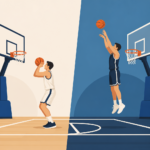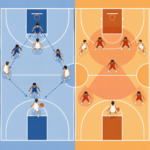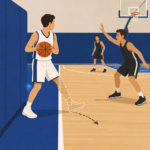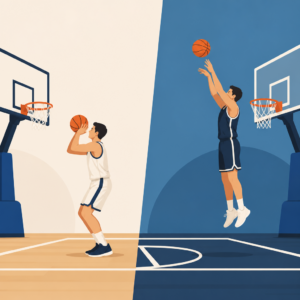

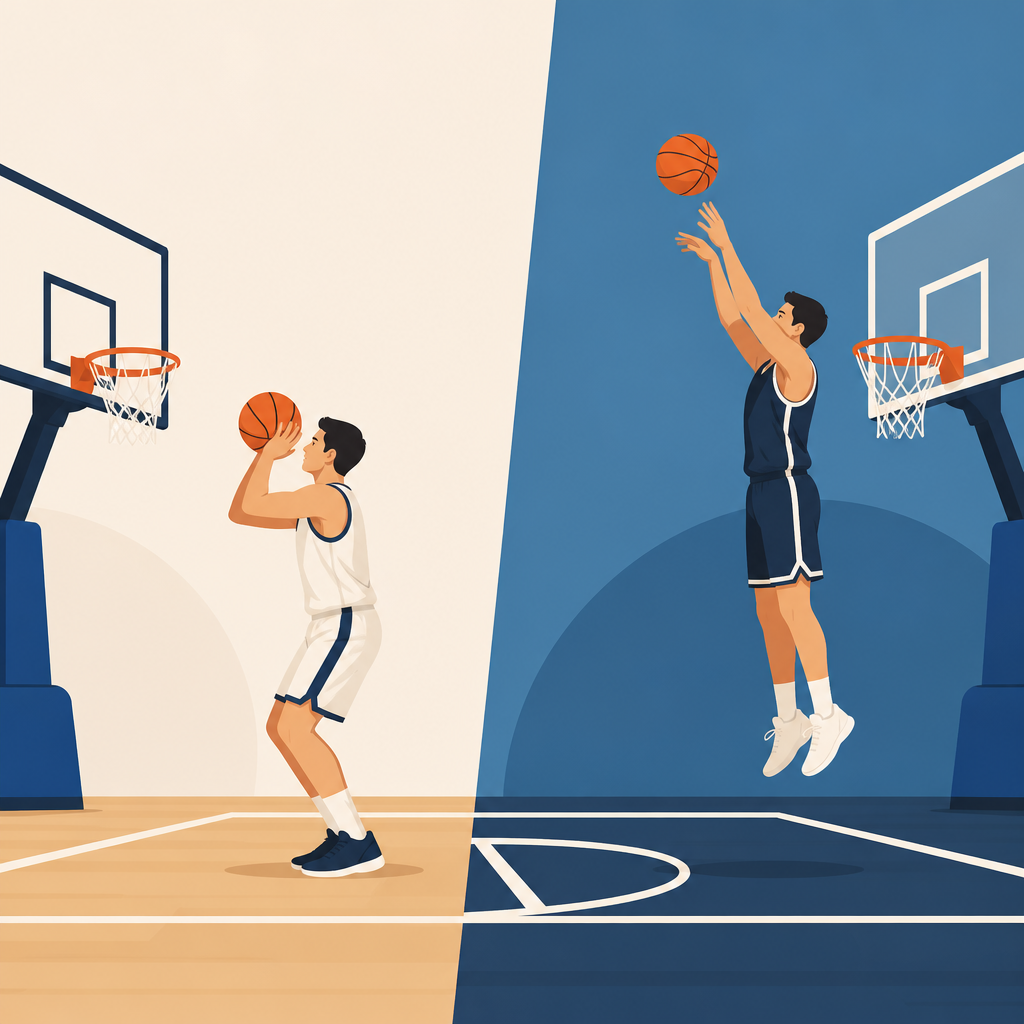
Every basketball player shoots, but not every shot is built the same, and understanding the difference between a push shot and a jump shot is one of the fastest ways to improve scoring efficiency. In coaching gyms, player development sessions, and film rooms, these two terms describe different release patterns, body mechanics, and game uses. A push shot is typically a controlled one-hand or dominant-hand release powered more by the legs, torso, and forward momentum than by vertical lift. A jump shot is a shot taken while elevating off the floor, usually with a compact shooting pocket, coordinated wrist snap, and balanced landing. Both belong in modern basketball. The mistake I see most often is treating the push shot like a beginner flaw and the jump shot like the only “real” shot. That misses how players actually score.
This distinction matters because shooting is not a single skill. It is a family of related scoring actions that includes set shots, floaters, runners, pull-ups, catch-and-shoot threes, free throws, short-roll touch shots, and finishing counters in traffic. The push shot sits closer to touch scoring and pressure releases around the lane. The jump shot sits at the center of perimeter offense and shot creation. If you coach youth players, the difference affects what mechanics you teach first. If you train guards, wings, or bigs, it determines which shots deserve the most reps. If you are a player, it helps you choose the right shot under real defensive pressure instead of forcing textbook form into the wrong situation.
At the skill-development level, the push shot versus jump shot conversation is really about force production, release timing, arc, and defensive coverage. A push shot usually leaves the hand earlier, often on the way up or with minimal lift, making it useful against close pressure inside the paint. A jump shot usually reaches full extension near the top of the jump, creating a cleaner release point and better separation for midrange and three-point shooting. Over years of working through shooting sessions, I have seen players gain confidence quickly when they stop asking, “Which shot is correct?” and start asking, “Which shot solves this game problem?” That is the frame this shooting hub article uses: define each shot, compare the mechanics, explain when each works, and connect both to broader basketball shooting development.
What a push shot is and how it works in real games
A push shot is a soft, guided release in which the ball is propelled with coordinated force from the legs, core, shoulder, elbow, wrist, and fingers, but without the classic full-elevation jump-shot pattern. The player may leave the floor slightly or not at all. In practical terms, the push shot shows up as a short paint shot, floater variation, runner, one-foot release, or quick interior touch finish before a shot blocker arrives. It is common among youth players because they lack the strength to shoot from distance with true jump-shot mechanics, but it is also common among elite guards who use it intentionally in the lane.
The key mechanical feature is that the shot “pushes” the ball toward the rim with smooth forward-upward energy rather than lifting into a high, suspended release. The elbow may stay slightly lower than on a textbook jump shot. The guide hand may come off later on some variations, especially among younger players. The release angle can vary widely depending on traffic, distance, and whether the player is moving off one foot or two. Tony Parker built a Hall of Fame scoring package around push-shot touch in the lane. Tyrese Haliburton, while using a perimeter form many coaches would call unconventional, proves that efficient shooting does not always look identical across contexts if alignment, timing, and repetition are consistent.
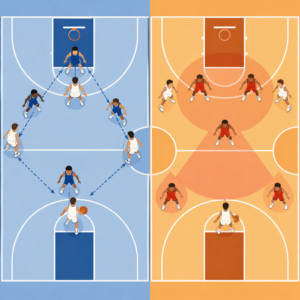
Push shots work best when time and space are limited. A defender trailing over a ball screen often gives a small pocket near the dotted line. A true jump shot there may require too much gather time and vertical load. A push shot lets the ball get out early, over reaching hands, before the rim protector is fully set. Bigs also use push shots after offensive rebounds or short catches in the paint because the ball starts lower and the finish must happen quickly. In youth basketball, a push shot can be a stepping stone, but it should be shaped carefully so it develops touch without becoming a distance-shooting habit.
What a jump shot is and why it anchors modern shooting
A jump shot is a shot taken with deliberate elevation, balanced body alignment, and a release timed to the upward motion or near the apex of the jump. It is the foundation of perimeter shooting because it creates separation, raises the release point, and allows consistent rhythm from midrange and three-point distance. The classic jump shot includes a stable base, loaded hips, aligned shooting pocket, elbow under or near the ball, relaxed guide hand, full extension, wrist flexion, and a controlled landing. While players differ in stance width, dip, and release speed, the core idea remains the same: create a repeatable airborne shot that can hold up under defensive pressure.
In real games, jump shots appear in several forms: catch-and-shoot attempts, one-dribble pull-ups, side-step threes, transition trail threes, pindown curls, and post fadeaways. Stephen Curry, Klay Thompson, and Kevin Durant all use jump shots, but with different timing and body shapes. Curry uses exceptional range and tempo changes. Thompson is a model of compact catch-and-shoot efficiency. Durant wins with release height and length. Their forms are not identical, yet each uses vertical lift and release structure that fit the demands of perimeter scoring. That is why teaching “one perfect form” is less useful than teaching non-negotiable principles such as balance, alignment, sequencing, and repeatability.
The jump shot anchors shooting development because defenses now prioritize paint protection and help rotations. If you cannot punish space with a jump shot, defenders shrink the floor, go under screens, tag rollers earlier, and overload driving lanes. At every competitive level, reliable jump shooting changes scouting reports. It also connects directly to other Basketball Skills pages you would build around this hub: shooting form, footwork, catch-and-shoot mechanics, off-the-dribble shooting, free-throw routine, shot preparation, and game-speed shooting drills. The jump shot is not the only shot in basketball, but it is the central shot around which most modern offensive spacing is organized.
Push shot vs jump shot: the core differences in mechanics, timing, and outcomes
The simplest difference is this: a push shot prioritizes quick release and touch from short to intermediate range, while a jump shot prioritizes elevation, structure, and repeatable range. That sounds basic, but the mechanical consequences are significant. In a push shot, force often travels more forward than straight up, especially on runners and lane shots. In a jump shot, force is more vertical, allowing the shooter to rise into a balanced release. Push shots usually have lower release points and less hang time. Jump shots usually have higher release points and clearer shooting windows over contests.
Another major difference is where each shot fits on the floor. Push shots are most effective in the paint, short midrange, and transitional spaces between a layup and a full jumper. Jump shots dominate from the elbows, wings, corners, top of the key, and any area where defenders concede a cushion that can be punished with elevation. Shot arc also differs. Many push shots rely on a soft touch arc that drops over shot blockers from close range, especially floaters. Jump shots usually aim for a consistent entry angle driven by extension and spin. Research from Noah Basketball and other shot-tracking systems consistently shows that arc and depth strongly influence make percentage, particularly on perimeter shots where small misses are magnified by distance.
| Category | Push Shot | Jump Shot |
|---|---|---|
| Primary use | Quick interior scoring, floaters, runners, short touch shots | Perimeter scoring, pull-ups, catch-and-shoot, contested midrange |
| Lift | Minimal or moderate | Deliberate vertical elevation |
| Release timing | Earlier, often before full elevation | During upward motion or near apex |
| Best range | Paint to short midrange | Midrange to three-point line and beyond |
| Main advantage | Speed and touch in traffic | Consistency, range, and cleaner separation |
| Main limitation | Harder to scale to deep range efficiently | Requires more balance, load time, and strength |
The outcome difference is important for coaching decisions. A player who uses a push-shot pattern from three-point range often loses accuracy because the ball path, guide-hand involvement, and body drift become inconsistent. A player who insists on jump-shot mechanics for every interior finish often gets blocked or rushed. Good shooting development is not choosing one forever. It is assigning the right mechanics to the right scoring problem and building both with intention.
When a push shot works best
A push shot works best when the defense takes away the rim but has not fully taken away the lane. The classic example is a drop-coverage big waiting near the restricted area while the on-ball defender trails the screen. The ball handler gets inside the free-throw line, but a layup would run into length. The push shot, floater, or runner fills that gap. It also works on baseline drives when a reverse layup is cut off, on offensive rebounds when the ball must go back up immediately, and on short-roll catches when help defenders rotate late.
For smaller guards, the push shot is often a survival tool. If a 6-foot guard attacks a 6-foot-10 rim protector, a standard two-foot jump shot in the lane may still be blocked because it needs a clean gather. A one-foot push shot released earlier can avoid that window. For bigs, the same principle applies in crowded paint touches. A short push shot off the glass or with soft center-line touch is often more practical than trying to power through multiple bodies. In youth basketball, players with limited upper-body strength can use controlled push shots near the basket to learn trajectory and touch before their jump shot extends outward.
The limitation is range. Once the shot moves too far from the basket, the push pattern often flattens, adds off-hand influence, and reduces consistency. That is why coaches should separate a useful paint push shot from a long-distance heave. Effective training keeps the push shot specific: dotted line floaters, short corner touch shots, one-hand runners, and quick-release paint finishes under pressure.
When a jump shot works best
A jump shot works best when the player has enough space and balance to rise into a repeatable release. That includes catch-and-shoot opportunities created by drive-and-kick action, relocation threes, pull-ups after defenders go under screens, and elbow jumpers when a big drops too deep. It also becomes essential late in possessions. When the clock is low, offenses need a shot that can be created off one or two dribbles from multiple spots on the floor. The jump shot is that answer because it is scalable across distances and offensive roles.
For wings and guards, the jump shot is the skill that turns athletic tools into half-court production. A defender who must honor your jumper closes out harder, which creates driving opportunities. For bigs, even a reliable 15-footer or pick-and-pop three changes spacing and opens post seals. At advanced levels, the best jump shooters also manipulate footwork: one-two steps on the catch, hop footwork, inside-foot stops, and stride stops into pull-ups. Those details matter because the shot often begins before the ball arrives. Shot preparation, not just hand mechanics, separates average shooters from dangerous ones.
The jump shot is less effective when rushed from poor balance or forced through heavy interior traffic. That is where players get trapped into fading, drifting, or dropping the ball too low on the gather. The solution is not abandoning the jumper. It is improving footwork, core stability, and decision-making so the jump shot is used in the right windows.
How to train both shots within a complete shooting plan
The best shooting development plans teach the push shot and jump shot as connected but distinct tools. I structure training in layers. First comes form shooting close to the rim, where players learn alignment, touch, wrist action, and straight ball flight. Second comes footwork and shot preparation: stance, pivots, one-two steps, hop catches, and pickups into balance. Third comes range building for the jump shot, using progressive distance only when mechanics stay intact. Fourth comes paint scoring touch, including floaters, runners, and short push shots with both high and medium trajectories. Finally, everything moves into live or semi-live reads.
Useful tools include slow-motion video, shot-tracking apps, and systems such as Noah Basketball or HomeCourt for arc and depth feedback. But technology should confirm good coaching, not replace it. A practical weekly shooting program might include one day centered on catch-and-shoot volume, one day on pull-ups and movement shooting, one day on floaters and push shots, and one day on decision-based finishing. Track makes, misses, release quality, and game-transfer notes, not just total attempts. A player who makes 70 percent of unguarded shots but cannot get into the same mechanics under pressure does not yet own the skill.
The broader lesson for any Basketball Skills hub is that shooting must be trained as a system. Form, footwork, balance, reading defenders, touch finishes, free throws, and range are interdependent. Players improve fastest when drills mirror the actual problem each shot solves.
Choosing the right shot in games and building a smarter scoring package
The best scorers do not argue about push shot versus jump shot. They read the floor and select the tool that fits the moment. If the help defender is back and the lane pocket is open, use the push shot. If the closeout is short and your feet are set, rise into the jump shot. If the big drops under the screen, pull up. If the weak-side shot blocker rotates early, release the floater before contact. Shot selection is not separate from shooting skill; it is the application of it.
For players, the takeaway is simple: build a dependable jump shot for spacing, range, and repeatable offense, then add a push shot for the spaces where jumpers and layups both become difficult. For coaches, teach the jump shot as the long-term perimeter foundation and the push shot as a deliberate interior scoring skill, not an accident. For parents and youth trainers, avoid rushing young players into deep jumpers before they own touch, balance, and short-range mechanics. Strong shooting development starts near the basket and expands outward with purpose.
In the end, the difference between a push shot and a jump shot is not just form. It is function. One solves close-range pressure with speed and touch. The other creates sustainable scoring from space with balance and range. Players who understand both become harder to guard because they can answer different defensive problems without forcing low-percentage attempts. Use this page as your Basketball Skills shooting hub, then keep building the details: form, footwork, catch-and-shoot reps, off-the-dribble work, free throws, and paint touch. Train both shots with clear intent, and your scoring options will expand where games are actually decided.
Frequently Asked Questions
What is the main difference between a push shot and a jump shot in basketball?
The main difference is how the shot is generated and released. A push shot is usually powered by forward momentum, lower-body drive, and a more guided release from the dominant hand, often with minimal vertical elevation. It is commonly used on floaters, runners, short paint shots, and quick finishes where the player does not have time or space to rise into a full jumper. A jump shot, by contrast, relies on a more balanced upward lift, a clear shooting pocket, and a release that happens at or near the top of the jump. In simple terms, the push shot is more about touch, timing, and getting the ball up quickly, while the jump shot is more about elevation, rhythm, and repeatable form. Both shots can be effective, but they solve different problems on the court. The push shot helps score over help defenders in tight spaces, while the jump shot is the standard choice for mid-range and perimeter scoring because it creates a higher, cleaner release.
When should a player use a push shot instead of a jump shot?
A player should usually choose a push shot when operating in traffic, attacking the lane, or finishing before a defender can fully contest. This shot is especially useful in the space between the rim and the free-throw line, where big defenders are waiting and a traditional layup may get blocked. Guards often use push shots on floaters and runners after beating the first defender but before reaching the shot blocker. It also works well when a player is moving laterally or forward and cannot gather into a balanced vertical jump. A jump shot is still the better option when the player has time to get square, rise under control, and shoot with full mechanics. So the decision often comes down to game context: if the defense is collapsing, the lane is crowded, and the finish needs to happen quickly, the push shot is the smarter tool; if the player has space, balance, and a clean window, the jump shot usually offers more consistency and range.
Is a push shot less fundamentally sound than a jump shot?
No, a push shot is not automatically less sound; it is simply a different skill with a different purpose. The confusion comes from the fact that many young players “push” the ball on long-range attempts because they lack strength or proper shooting mechanics, and that is usually a form issue. But an intentional push shot in the lane is a legitimate, high-level scoring technique used by skilled guards and crafty finishers. It is a functional shot built for touch, speed, and ball protection. The jump shot remains the foundational shooting form for most catch-and-shoot, pull-up, and perimeter situations because it is more scalable across distances and easier to standardize mechanically. However, that does not make the push shot inferior. In player development, the key is teaching athletes when each shot belongs. A player who can only shoot jumpers may struggle in the paint against length, while a player who understands how to use a push shot can score in the gaps where defenders expect either a pass or a blocked layup attempt.
How do the mechanics of a push shot differ from the mechanics of a jump shot?
The mechanics differ in body positioning, force production, and release timing. On a push shot, the player often stays more upright or slightly forward, using the legs, core, and forward movement to carry the ball into the release. The shooting motion can be more compact, and the ball may come out earlier and from a slightly lower or more forward release point than a textbook jumper. The wrist and fingers still matter for touch, but the shot often feels more like guiding the ball softly over defenders than snapping into a classic high-release form. On a jump shot, the player typically gathers with better balance, aligns the hips and shoulders, loads the legs, and jumps vertically. The release is more structured, with the shooting elbow under the ball, the guide hand staying quiet, and the ball leaving the hand at a consistent point in the jump. Because of that structure, the jump shot is generally more repeatable from mid-range and beyond. The push shot is more adaptable in motion, but it requires excellent feel, distance control, and practice around live defenders.
Can practicing both push shots and jump shots improve scoring efficiency?
Absolutely. Players become far more efficient when they stop treating every scoring opportunity as the same shot. Basketball rewards decision-making as much as mechanics, and practicing both the push shot and the jump shot gives players answers for different defensive situations. A reliable jump shot improves spacing, punishes defenders who go under screens, and creates a dependable scoring option off the catch or dribble. A polished push shot adds an in-between game, which is critical because many possessions break down in the area where a layup is too risky and a full jumper is not available. That is where floaters, runners, and soft push finishes become valuable. Training both shots also improves shot selection. Players learn to recognize when they are balanced enough to rise into a jumper and when they should stay on the move and release a touch shot before the help arrives. Over time, that leads to better finishing percentages, fewer forced attempts at the rim, and more complete offensive versatility.