
Basketball players ask a deceptively simple question all the time: can you move when inbounding the basketball? The correct answer is yes, but only within strict limits that change based on the spot of the throw-in, the level of play, and whether the defender is allowed to guard the inbounder closely. That gray area is why inbounder rules are among the most misunderstood parts of game rules, from youth leagues to the NBA. I have spent years breaking down officiating clips, coaching late-game sideline actions, and correcting players who assume the inbounder must always keep one foot planted. In reality, the throw-in rule gives the inbounder controlled freedom, not total freedom.
To understand the rule, start with the key term. An inbounds pass after the ball goes out of bounds is officially a throw-in. The player making that pass is the thrower-in, often called the inbounder. During a throw-in, the inbounder is out of bounds and must release the ball onto the court within five seconds. The rulebook then adds location-based restrictions. On a designated throw-in spot, the inbounder may usually move laterally along the boundary line within a limited area. After a made basket or awarded score in many rule sets, the inbounder often has the right to run the end line. Those differences matter because they affect press break timing, late-game substitutions, and even whether a defender can force a turnover with footwork alone.
This topic matters because throw-ins decide possessions, and possessions decide games. A player who shuffles one extra step on a baseline out-of-bounds play can erase a carefully designed action. A defender who reaches across the boundary can hand the offense a technical free throw or create a delay warning depending on the code. Coaches also build entire mini-playbooks around where the inbounder may stand, how much room a receiver needs, and whether the offense can trigger movement before the ball is released. If you understand inbounding rules clearly, you reduce dead-ball turnovers, improve spacing, and exploit legal advantages most casual players miss.
As a hub for basketball game rules, this article explains the full framework players get wrong: when movement is allowed, when the inbounder must stay in one place, what counts as stepping over the line, how the five-second count works, what defenders may do, and why NBA rules differ from high school, college, and FIBA interpretations. The goal is straightforward. By the end, you should be able to watch any sideline or baseline throw-in and identify what is legal immediately, instead of relying on myths that spread in pickup runs and highlight clips.
The basic answer: yes, the inbounder can move, but not anywhere
The quickest accurate answer is this: an inbounder can move during a throw-in, but the movement is limited by the throw-in spot and the governing rules. Most violations happen because players think the rule is all or nothing. It is neither. On many sideline and baseline throw-ins, the official designates a spot. The inbounder is then usually allowed to move one or more steps to either side of that spot, but not to leave the throw-in area entirely. Under NBA rules, the common guideline is that the player has a three-foot wide area centered on the designated spot. In high school and college mechanics, officials similarly expect the thrower-in to remain within the marked or implied spot area unless the end-line run exception applies.
The major exception is after a successful basket, when the team putting the ball in play from the end line often may move along that end line and even run it. This is why you see guards catch the ball after an opponent scores, step out of bounds, and sprint a few feet before passing to beat backcourt pressure. That movement is legal because the throw-in is not anchored to one exact point. By contrast, on a dead-ball baseline play after the ball was deflected out by the defense, the referee may point to a specific location, and the inbounder cannot simply wander to the other side of the backboard to improve the passing angle.
The easiest way to remember the principle is that the game rewards quick resumption after a score but controls location after stoppages. Officials want fairness. The defense must know where the ball is entering, and the offense must not gain a surprise angle the referee did not award. If you keep that logic in mind, most throw-in movement rules become easier to read in real time.
When the inbounder may run the baseline and when that is illegal
Running the baseline is the phrase players use most loosely, and it causes endless confusion. In standard NBA play, after a made field goal or successful final free throw, the team taking the ball out from behind its own end line may move anywhere along that end line before inbounding, as long as the ball is released within five seconds once at the disposal of the player. The inbounder can pass from one side of the backboard to the other, hand the ball to a teammate out of bounds for the throw-in if the rules permit the substitution of the thrower-in role, and use the whole line to create a better passing lane.
That freedom disappears in many other baseline situations. If the ball goes out of bounds off the defense and the referee awards a baseline throw-in from a marked spot, the inbounder is not allowed to run the line. This is the situation players get wrong most often because both plays look the same to casual eyes: the offense is inbounding from the baseline. The difference is why play stopped. A score creates a live resumption privilege. A dead-ball award creates a location-specific restart.
Here is the practical test I teach players: ask whether the inbound follows a made basket or whether an official has clearly pointed to a spot. If it follows a made basket, expect more freedom. If an official bounces or hands the ball to a player at a specific place, stay there unless that rule set explicitly grants end-line movement. Late-game turnovers regularly happen when a player instinctively drifts under the rim on a set play and the official whistles an out-of-bounds violation before the pass is even thrown.
Spot throw-ins, sideline limits, and the five-second count
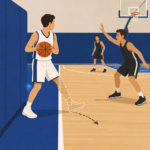
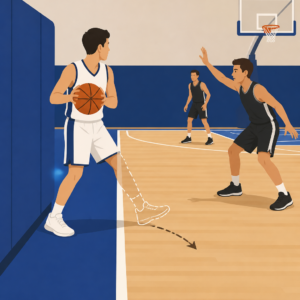
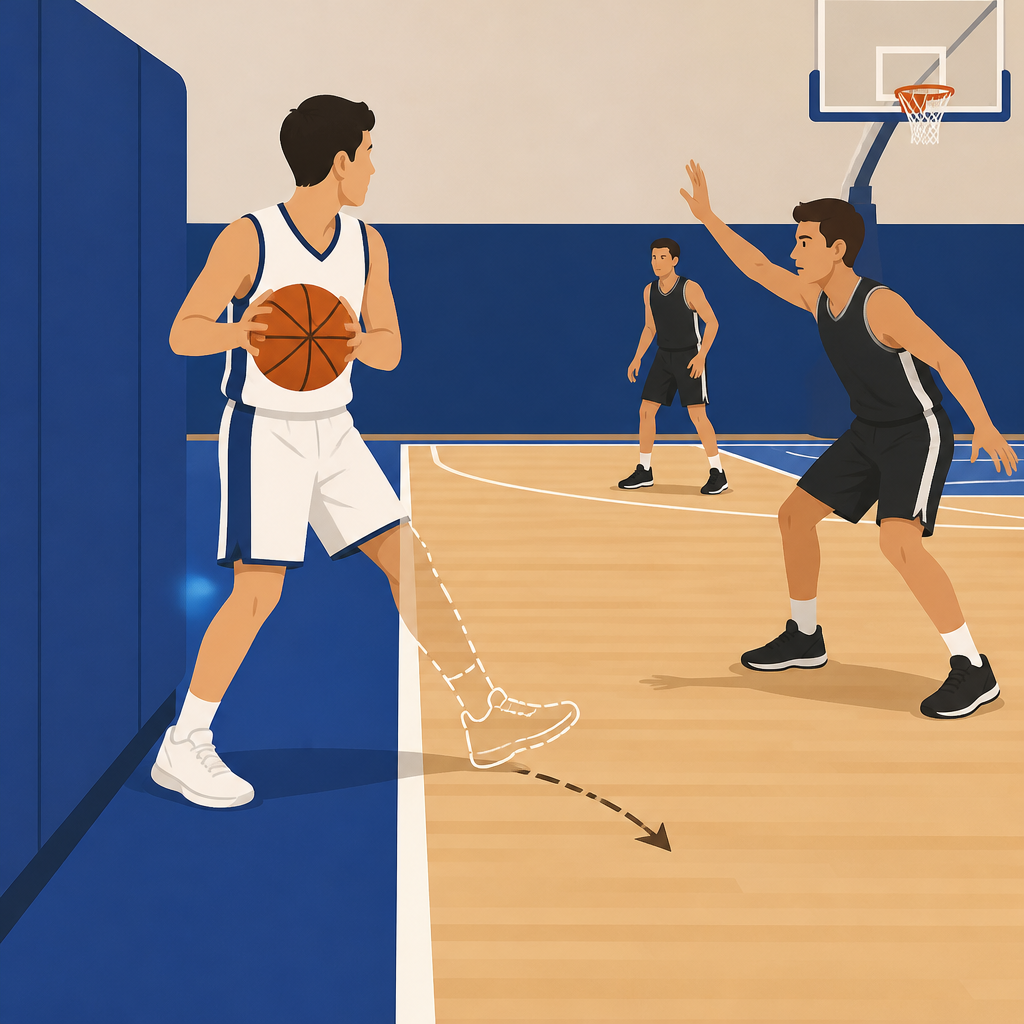
On a spot throw-in, the inbounder must keep at least one foot on or over the boundary line and may not step onto the court before releasing the ball. The player also cannot back away from the line to create a runway. Movement is typically sideways, not forward into the playing area. The official starts a visible five-second count once the ball is at the player’s disposal. If the inbounder has not released the pass before that count expires, it is a throw-in violation and the ball goes to the other team.
The exact boundaries of legal movement differ slightly across codes, but the officiating principle is stable. The inbounder gets a small corridor, not free range. In the NBA, the designated spot generally allows a three-foot area to either side depending on administration mechanics. In NFHS high school rules, the thrower-in is entitled to the spot designated by the official and usually one step to either side when a specific spot is not rigidly marked, but may not move from the spot once the ball is at disposal beyond the permitted range. In NCAA and FIBA play, the same common-sense application holds: stay near the awarded location unless the rules grant movement after a score.
Players also misunderstand when the count begins. It does not start when the player catches the dead ball casually or when teammates finish talking through a play. It begins when the official places the ball at the player’s disposal by handing, bouncing, or making it available for the throw-in. Experienced defenders watch for that moment because the offense often wastes two of the five seconds setting up without realizing the count is already live.
| Situation | Inbounder movement | Common mistake |
|---|---|---|
| After a made basket | May run the end line in many rule sets, including the NBA | Defense assumes inbound spot is fixed |
| Baseline throw-in after out-of-bounds call | Usually limited to designated spot area | Inbounder drifts under rim illegally |
| Sideline throw-in | Limited lateral movement near the throw-in spot | Player walks several feet to improve angle |
| Any throw-in | Ball must be released within five seconds | Team waits too long for a play to develop |
What counts as a violation on the inbound
The simplest inbound violations are stepping over the boundary line before releasing the pass, taking too long, and leaving the designated throw-in spot. But there are several subtler errors players make. The inbounder cannot score directly by throwing the ball through the opponent’s basket without touching a player on the court. The inbounder also cannot carry the ball onto the court and begin dribbling; the ball must be passed inbounds first. If the inbounder tosses the ball so it never enters the court and a teammate catches it out of bounds, that does not satisfy the throw-in requirement either.
Another misunderstood rule involves touching the ball after the inbound. The thrower-in may not be the first player to touch the ball inbounds unless it has first touched another player on the court. So if a player throws the pass off the back of a defender who is standing inbounds, then steps in and recovers it, that can be legal because another player touched it. If the inbounder simply self-passes off the floor or wall area without an eligible touch, it is a violation. At advanced levels, teams use legal throw-ins off an opponent’s back only when the defender is positioned inbounds and the inbounder has room to step onto the court after releasing the pass.
There are also team violations tied to positioning. Teammates may not illegally cross lane spaces during certain free throw administration sequences that lead into throw-ins, and on designated spot throw-ins players cannot use the boundary area outside the court as an extension of legal screening space. Smart officials monitor all of it because dead-ball restarts are structured, not improvised.
What defenders can and cannot do to the inbounder
Defenders are allowed to pressure the inbounder, but that pressure has hard limits. A defender may guard the player closely, wave arms, and deny passing angles while staying inbounds. What the defender may not do is break the plane illegally, make contact across the boundary, slap the ball from the inbounder’s hands, or delay the throw-in by preventing the official from administering it properly. Under NBA rules, crossing the boundary plane and touching the ball or the player can lead to a delay-of-game warning or technical foul depending on the act and context. In high school and college games, reaching through the boundary and contacting the ball while it is still out of bounds is also a violation officials watch carefully.
This matters in pressure situations because defenders often try to “crowd the line” without understanding how little contact is needed for a whistle. I have seen end-game possessions swing on a defender who leaned over the sideline, slapped downward, and clipped the inbounder’s wrist. Coaches hate that foul because it is avoidable. The correct technique is to mirror the passer’s eyes, take away the easiest angle, and force a lob or a safety release, not to invade the out-of-bounds space recklessly.
The inbounder, however, does not own unlimited space. If the thrower-in leans into a defender who is legally positioned inbounds, the official can still judge contact normally. Rights and restrictions apply to both players. That balance is why inbounding under pressure is a skill, not merely an administrative restart.
NBA, NCAA, NFHS, and FIBA differences players should know
Most arguments about inbounding come from people mixing rule sets. NBA players, referees, and broadcasters are working from a different code than most youth players see on weekends. The NBA is especially notable for allowing movement along the end line after a made basket and for enforcing delay-of-game provisions tightly during throw-ins. FIBA also allows the clock and throw-in mechanics to differ in ways that affect end-game strategy, particularly with frontcourt throw-ins after timeouts in some competitions. NCAA and NFHS emphasize designated spots and visible counts in ways that are similar to each other but not identical in administration details.
The safest takeaway is not to memorize every edge case from every code unless you compete under those rules. Instead, know your game’s baseline principles: where the spot is, whether the end line can be run after a score, when the count starts, and what defender contact is prohibited. Then confirm the local league modifications. Many recreational leagues borrow high school language but enforce it loosely, which teaches bad habits that fail under trained officials.
At the coaching level, I advise creating a short “restart rules” sheet before the season. Include throw-ins after made baskets, timeout advancement rules, backcourt status, and substitution windows. Teams that do this save possessions because they stop arguing with officials and start exploiting legal options immediately.
How smart teams use inbound rules to create easier offense
Understanding inbounder movement is not just about avoiding violations. It is a tactical edge. After made baskets, a guard can run the baseline to improve the passing angle against a full-court press. On sideline out-of-bounds plays, an inbounder can use every inch of the permitted spot to shift a defender and open the first cut. In late-game situations, a team may align its best passer as the thrower-in because throw-in vision matters more than dribbling in that instant. The best inbounders read top-lock denial, anticipate switching, and know exactly how long they can wait before using the safety valve.
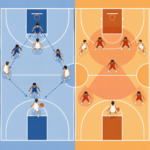
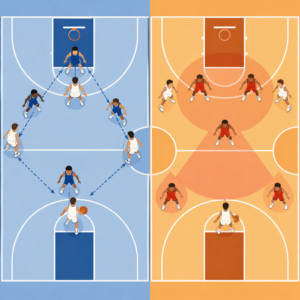
One common NBA example is the “box” alignment on a sideline out-of-bounds play. Four offensive players stack near the lane lines and elbows, then break in opposite directions. If the inbounder legally slides a step toward the corner, the angle to the near-side receiver improves enough to beat a switch. Another example is using the freedom after a made basket to inbound quickly before the defense matches up. Teams that understand the rule do not stand still under the hoop; they move with purpose, force confusion, and turn a routine restart into transition offense.
The main benefit of mastering these game rules is simple: fewer empty possessions and more controlled ones. Learn your rule set, practice throw-ins under a live five-second count, and treat every inbound as a scoring opportunity. If you coach or play, review your last game’s dead-ball restarts this week and fix the inbound mistakes that keep giving points away.
Frequently Asked Questions
Can you move when inbounding the basketball, or do you have to stay in one exact spot?
Yes, you can usually move when inbounding the basketball, but only within the limits of the throw-in spot and the rules being used. This is where players get tripped up. Many assume the inbounder must plant both feet and stay frozen, but that is not how most rule sets work. On a standard throw-in, the inbounder is typically allowed to move laterally along the boundary line after the ball is at their disposal, as long as they stay within the designated throw-in area. They can also step backward away from the line in many situations, but they cannot come onto the court before releasing the pass, and they cannot run the baseline unless the rules specifically allow it.
The key is that the inbounder’s freedom depends on the location and game situation. After a made basket in many levels of play, the thrower-in often has more freedom and may be allowed to run the end line. On most other throw-ins, such as after a violation, out-of-bounds call, or timeout, the inbounder is restricted to a specific spot or a small area around it. If they slide too far, switch spots, or step across the boundary line onto the court before letting go of the ball, officials can call a throw-in violation. So the best short answer is this: yes, the inbounder can move, but not wherever they want and not under every inbound scenario.
When is an inbounder allowed to run the baseline after a made basket?
Running the baseline is one of the most misunderstood inbound rules in basketball. In many rule codes, after the opposing team scores a field goal or final free throw, the team putting the ball in play from the end line is allowed to move anywhere along that end line before making the throw-in. That means the inbounder can walk, shuffle, or run the baseline to improve the passing angle, force the defense to shift, or trigger a quick-hitting press break. Players often forget that this special freedom exists only in certain dead-ball situations and mostly after a made score.
Just as important, that freedom usually disappears once the inbound is for any reason other than a made basket. If the ball went out of bounds, if there was a held ball alternating-possession throw-in, if a violation stopped play, or if a timeout created a designated throw-in spot, the inbounder generally cannot run the entire baseline. Instead, they must stay at or near the assigned throw-in location. This is why players who get used to “baseline freedom” after made baskets sometimes commit violations later in the game by drifting too far on a sideline or end-line inbound. The practical coaching point is simple: always identify why the ball is dead before assuming the inbounder can move freely.
How much space does the inbounder get on a normal sideline or baseline throw-in?
On a normal throw-in that is not one of those special run-the-baseline situations, the inbounder is usually given a designated spot plus a limited amount of lateral movement. The exact allowance depends on the rule book, but the principle is the same across levels: the player throwing the ball in is not entitled to roam up and down the line searching for a better passing lane. Officials will indicate the throw-in spot, and the inbounder must remain within that permitted area when releasing the pass. Moving a step or two within the legal width is often fine; relocating several feet to create a completely different angle is where violations happen.
This matters more than players realize because defenders position themselves based on the official’s spot. If the inbounder slides well away from that area, it creates an unfair advantage and changes the geometry of the play. That is why officials enforce the spot even if the pass itself is harmless. A good habit for players is to check where the official is standing, where the handoff or bounce of the ball occurs, and whether the official verbally designates the location. If you are inbounding, treat that spot as your operating window. You may have a little movement, but not unlimited freedom.
Can the defender reach over the line, crowd the inbounder, or try to steal the pass before it comes in?
Defenders are allowed to pressure the inbounder, but they still have restrictions, and those restrictions vary based on the level of play and game situation. At many levels, the defender may closely guard the thrower-in from the court side of the boundary line and contest vision, passing lanes, and timing. However, the defender cannot break the plane illegally by contacting the ball while it is still out of bounds in the inbounder’s hands, and they cannot step out of bounds to block or dislodge the pass unless the rules specifically allow positioning there after a made basket. Contact rules also remain in effect, so slapping the inbounder, bodying through the line, or deliberately interfering before the ball is released can draw a whistle.
This gets even more technical in situations where the throw-in count is active and the defender is tightly guarding. Some rule sets have special provisions for warning or penalizing defenders who cross the boundary plane to delay or interfere with the throw-in. That is why late-game sideline inbounds can look chaotic but still have very specific legal boundaries. The defender can be aggressive, loud, and close, but not reckless or illegal. For players, the takeaway is that defensive pressure does not cancel inbounder rights. If a defender crowds you, you still cannot step onto the court early, but they also cannot simply invade your space without consequence.
What are the most common inbound violations players commit because they misunderstand the rules?
The most common mistake is stepping onto the court before releasing the ball. This is the classic throw-in violation and happens constantly, especially when an inbounder pump fakes, loses balance, or tries to drive the pass from an awkward angle. Another frequent error is moving outside the allowed throw-in spot, particularly when players think they can run the baseline on any end-line inbound. Travel-like footwork also causes problems: hopping, changing pivot position across the line, or lifting and replacing a foot onto the playing court before the release can all create a violation even though the player is technically still “inbounding.”
Other mistakes include taking too long to inbound, throwing the pass so it never touches a player inbounds before going out again, and handing the ball to a teammate standing out of bounds when that teammate is not the designated thrower-in. Players also get confused after timeouts because the restart spot may change where they are legally allowed to stand. At advanced levels, teams can lose crucial possessions by assuming NBA habits apply to high school rules, or vice versa. The smartest approach is to learn the principles instead of memorizing one version of the rule. Know whether you have baseline freedom, know your spot, know the count, and release the ball before any body part touches inbounds. That alone prevents most inbound violations players keep making under pressure.