
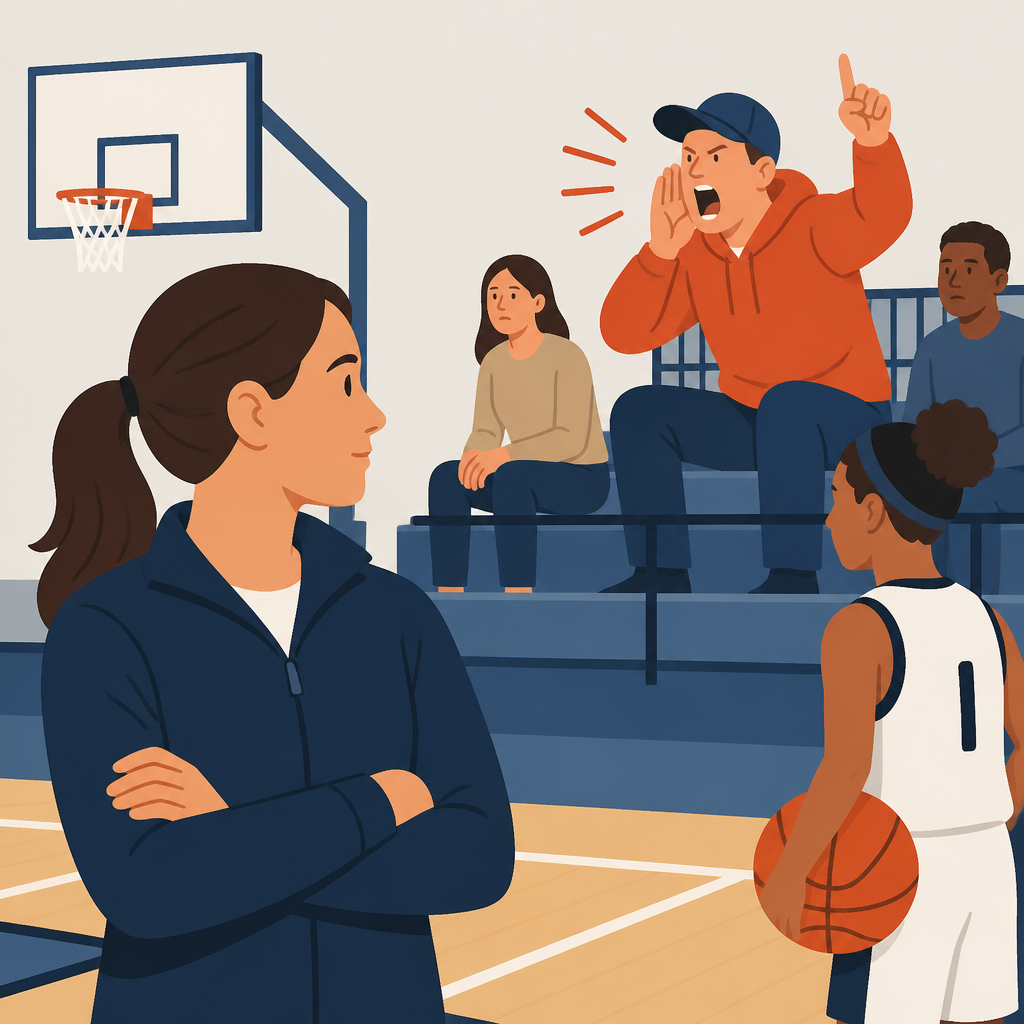
A basketball parent who yells from the stands can rattle players, undermine the coach, and turn a healthy youth sports environment into a stressful one. In youth basketball, this issue sits squarely inside coaching because coaches set expectations, protect learning space, and manage the sideline culture as deliberately as they manage practices and game plans. When I have dealt with loud parents in gyms, the problem was rarely just volume. It was usually authority confusion, emotional spillover, or a mismatch between what families thought support should look like and what young athletes actually needed to perform and enjoy the game.
Handling a basketball parent who yells from the stands starts with a clear definition of the behavior. Yelling can mean instruction shouted over the coach, criticism aimed at referees, commentary directed at a child, arguments with other spectators, or emotional outbursts after mistakes. Not every loud comment is harmful, but repeated sideline coaching and negative reactions almost always create problems. Research from youth sport psychology consistently shows that children perform best in climates emphasizing effort, learning, and emotional safety. The National Alliance for Youth Sports and Positive Coaching Alliance have long stressed that adult behavior strongly shapes whether kids stay in sports or burn out early.
This matters because coaching is not only about tactics, skill development, and substitutions. It includes communication systems, parent education, conflict management, and athlete protection. A coach who can teach shell defense but cannot manage the gym environment is missing a core part of youth basketball leadership. Parents also matter deeply to player development. They provide transportation, encouragement, fees, and emotional support. The goal is not to “win” against a difficult parent. The goal is to redirect that parent into a role that helps the player and supports the team. Done well, this preserves trust, reduces sideline chaos, and keeps the focus on the athletes.
Why parents yell and what their behavior does to a team
Most yelling comes from one of five sources: anxiety, overidentification, misunderstanding, habit, or a genuine belief that louder support helps. Anxiety is common when a parent sees basketball as important to confidence, scholarships, or status. Overidentification happens when adults attach their own identity to the child’s performance. Misunderstanding appears when parents think coaching from the stands is useful. Habit shows up when a family comes from sports cultures where sideline noise is normalized. In a few cases, yelling signals broader stress unrelated to basketball, and the game becomes the outlet.
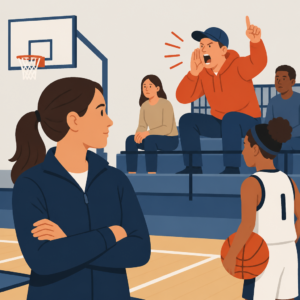
The impact on athletes is immediate. A player hearing “Shoot it,” “Pass,” “Box out,” and “Wake up” from the stands is processing multiple commands while trying to make decisions in live play. That raises cognitive load and slows reaction time. I have seen guards glance toward the bleachers after a turnover instead of sprinting back on defense, simply because they were bracing for a parent’s reaction. This is not a character flaw in the player. It is a predictable response to external pressure. Young athletes need one tactical voice in competition, and that voice should be the coaching staff.
Yelling also affects the bench, officials, and team culture. Referees become less receptive when they are harassed. Assistant coaches spend energy monitoring the stands instead of helping players. Teammates notice whose parents cause scenes and may avoid those families. Over time, standards erode. If one parent can shout instructions or criticize referees without consequence, others conclude the boundary is optional. That is why coaches must treat sideline behavior as a system issue, not a one-off annoyance.
Set expectations before the first game
The easiest conflict to solve is the one prevented in October. Coaches should establish a parent communication plan before the season begins. In youth basketball, I recommend a short preseason meeting, a written parent guide, and a follow-up email that documents standards. This should cover playing time philosophy, communication channels, practice attendance, developmental goals, and a sideline code of conduct. Families do better when expectations are concrete. “Be respectful” is too vague. “Cheer effort, do not coach from the stands, and never address referees or other players” is usable.
A strong parent meeting explains the why behind the rules. Tell families that players need a consistent learning environment. Explain that game-time instruction from the stands conflicts with reads taught in practice. If your team uses “jump to the ball” principles on defense or has a specific transition call, sideline commands can override those habits. Parents usually respond better when they see the rule as athlete-centered rather than power-centered. The standard is not “because I am the coach.” The standard is “because your child learns and competes better this way.”
It helps to define appropriate cheering. Many parents are afraid that limits mean silence. Give examples they can use: “Great hustle,” “Nice help defense,” “Way to keep working,” or simply applause. These comments reinforce effort without hijacking decision-making. Also explain your preferred process for concerns. A 24-hour cooling-off rule after games is widely used for good reason. Emotions are highest in the parking lot. Set a method such as email first, then a scheduled call or brief meeting. That reduces confrontations in front of players.
Recognize the difference between support and interference
Not every loud parent requires intervention. Coaches need a practical threshold. Support becomes interference when it disrupts athlete focus, contradicts team instruction, intimidates others, or damages the environment. A parent shouting “Defense!” after a made basket is different from a parent directing every possession or berating a child for mistakes. The first may be harmless enthusiasm. The second is active disruption. Making this distinction prevents overreaction and helps coaches stay fair.
I use a simple lens: content, target, and frequency. Content asks what is being said. Tactical commands, criticism, and officiating complaints are the biggest red flags. Target asks who the comment is aimed at: one’s own child, another player, a referee, or the coach. Frequency asks whether this is occasional emotion or a steady stream. When all three factors point the wrong way, the coach should act. Waiting too long usually makes the eventual conversation harder because the parent assumes tacit permission.
There is also a developmental difference by age. Younger players are especially vulnerable to public correction from parents because they are still building basic confidence and attentional control. By middle school and early high school, athletes may look tougher, but many become more sensitive to embarrassment, not less. A parent yelling “You always dribble into trouble” at a thirteen-year-old can do more damage than people realize. Public shame is not motivation. It narrows risk-taking, and basketball development depends on players being willing to make decisions and learn from them.
How coaches should respond in the moment
When a parent is yelling during a game, the coach’s first task is to keep the players steady. Do not get pulled into a sideline argument across the court. A public back-and-forth almost always escalates the problem and distracts the team. Instead, stay composed, coach the game, and use the next natural break to assess whether immediate action is necessary. If the behavior is merely distracting, finish the game and address it afterward. If it is abusive, profane, threatening, or directed at officials or children, intervene through the site director, athletic administrator, or gym supervisor right away.
Many leagues have spectator behavior policies, and coaches should know them before the season. In school settings, athletic directors often control spectator removal. In AAU or travel environments, tournament staff or club directors may do it. If you have to act in the moment, be brief and factual. “This parent is directing criticism at players and referees. It is affecting the game environment. Please handle it under the site policy.” Do not diagnose motives and do not try to win the crowd. Let the designated authority enforce the standard.
| Situation | Best coach response | Why it works |
|---|---|---|
| Occasional loud cheering | Monitor only | Avoids policing harmless enthusiasm |
| Repeated sideline coaching | Address after game or at next practice pickup | Protects player focus without public escalation |
| Criticism of own child | Private conversation within 24 hours | Stops shame cycle and reframes support |
| Harassing officials or other players | Contact site administrator immediately | Uses formal authority and safety procedures |
| Threatening or profane behavior | Request removal and document incident | Creates a record and protects participants |
Timeouts are not the moment to lecture athletes about the parent. Keep your coaching normal. If a player is visibly shaken, use direct reassurance: “Stay with us. One play at a time. We’ve got you.” That matters. Young athletes often need explicit permission to tune out the noise. If the game ends without intervention, avoid a hallway confrontation. Your body language should signal calm control, not bottled anger. The real coaching work happens in the follow-up conversation.
Have the right conversation with the parent after the game
The most effective parent conversations are private, specific, and calm. Start with observation, not accusation. For example: “During the second half, I heard repeated instructions from the stands and comments after turnovers. That pulled attention away from the bench and put pressure on your player.” This is better than “You were out of control,” which invites defensiveness. Then connect behavior to impact. Parents are more likely to adjust when they understand how their actions affect their child’s confidence, decision-making, and enjoyment.
Use a collaborative frame. I often say some version of: “I know you care and want to help. Here is the best way to help on game day.” Then offer alternatives. Cheer effort. Let the coaches handle instruction. Save concerns for a scheduled conversation. If the parent believes the player needs more correction, explain that games are for execution and emotional regulation, while teaching and film review happen in structured settings. This distinction is standard in good coaching and aligns with how effective player development works.
If the parent denies the problem, stay with facts and team standards. You do not need total agreement to enforce a boundary. “I understand you see it differently. Our team policy is no coaching from the stands and no negative comments toward players or officials.” If the behavior has been severe, state consequences clearly. Those might include sitting away from the bench area, involving the club director, or following league discipline procedures. Consistency matters more than forcefulness. A respectful standard enforced every time is stronger than a dramatic speech delivered once.
Build a parent culture that supports player development
The best long-term solution is not repeated discipline. It is a team culture where parents understand their role in development. Coaches should educate families on what actually helps basketball growth. Players improve through deliberate practice, clear feedback loops, recovery, confidence, and game reps with room for mistakes. Parents often overvalue in-game correction and undervalue the car ride home, sleep, nutrition, and emotional tone. When I have shown parents how many possessions a young guard needs to learn pace, reads, and decision-making, many become less reactive to single errors.
Make parent education part of your coaching system. Share periodic notes on team concepts, common developmental stages, and ways to talk to athletes after games. A useful postgame question is, “What did you learn today?” Another is, “Did you have fun?” These questions invite reflection without turning the child into a walking stat line. If your program has multiple teams, align coaches around the same sideline expectations so families hear one message. Consistency across the club or school reduces arguments about fairness.
When possible, praise parents who model the right behavior. Quiet reinforcement works. Thank families for positive energy, respectful support, and patience with long-term development. People repeat what is noticed. You can also point families toward resources from Positive Coaching Alliance, USA Basketball coaching materials, and NFHS guidance on sportsmanship where applicable. Referencing established organizations helps parents see that these standards are not personal preferences. They are part of responsible youth sport leadership.
Document patterns and know when to escalate
Most cases improve with clear communication, but some do not. Coaches should document recurring incidents with dates, locations, brief descriptions, and any follow-up taken. This is especially important in school programs, travel clubs, and leagues with formal conduct policies. Documentation protects players, supports administrators, and keeps the coach from relying on memory during stressful situations. Stick to observable facts: what was said, who heard it, and what action followed.
Escalation is appropriate when behavior is repeated, abusive, or affects safety and team function. In those cases, involve the athletic director, club director, age-group coordinator, or league administrator. Ask for a joint meeting if needed. Severe cases may require written behavior agreements, seating restrictions, or suspension from attendance under league policy. That may feel uncomfortable, but allowing one adult to repeatedly destabilize the environment is unfair to every player and family who is trying to participate in good faith.
Coaches should also check on the athlete privately. Children of loud parents often carry embarrassment, divided loyalty, or fear of making mistakes. Do not criticize the parent to the child. Instead, reinforce the player’s place on the team and your commitment to a safe environment. A simple message works: “Your job is to play and learn. The adults will handle the adult issues.” That clarity can relieve enormous pressure. If you coach youth basketball long enough, you learn this is not a side issue. Managing parents is part of coaching, and doing it well helps kids stay confident, coachable, and excited to return to the gym.
Handling a basketball parent who yells from the stands comes down to preparation, calm intervention, and consistent standards. Coaches need preseason expectations, a clear line between support and interference, and a response plan for both minor and serious incidents. Parents usually improve when they understand the effect of their behavior on learning and confidence. When they do not, documentation and administrative support are essential. The central principle is simple: game environments should belong to the players, with coaches directing play and parents providing steady encouragement.
For youth basketball programs, this is one of the most important coaching skills to master because it protects development on every level. It preserves focus during games, strengthens trust with families, reduces burnout, and keeps the team culture aligned with effort, growth, and respect. If you coach, build your parent communication system now, put your sideline standards in writing, and address problems early. A well-coached bench starts with a well-managed set of stands.
Frequently Asked Questions
What should a coach do first when a basketball parent keeps yelling from the stands?
The first step is to stay calm, resist the urge to correct the parent publicly in the middle of the game, and protect the players from the distraction as quickly as possible. In most youth basketball situations, the coach’s job is not just to run substitutions and call plays, but to preserve a learning environment where kids can hear one clear voice. When a parent is yelling instructions, criticizing officials, or reacting emotionally to every mistake, players often become tense, confused, and self-conscious. They start listening in two directions at once, which undermines confidence and decision-making.
A smart first response is to assess the severity. If the behavior is irritating but not threatening, it may be best to address it at the next natural break, after the game, or through an administrator if league policies require that. If the yelling is aggressive, personal, or escalating the gym environment, the coach should involve the site director, athletic director, or league official immediately rather than trying to manage the entire situation alone while coaching. The goal is not to “win” against the parent. The goal is to restore order, reduce emotional spillover, and make sure the players are not carrying adult tension onto the court.
After the game, the coach should have a direct, private, respectful conversation. That conversation should focus on impact rather than accusation. For example, it helps to explain that when players hear repeated instructions from the stands, they get mixed messages and it interferes with coaching. It is also important to restate team expectations clearly: parents can support, encourage, and cheer, but they cannot coach from the bleachers. Setting that boundary early and firmly is usually much more effective than letting the pattern continue and hoping it resolves itself.
Why is yelling from the stands such a big problem in youth basketball?
It is a big problem because it affects much more than noise level. Loud parent behavior often creates authority confusion, emotional instability, and a game environment that feels unsafe or stressful for kids. In youth basketball, players are still learning how to process mistakes, respond to coaching, and stay composed under pressure. When a parent is constantly shouting directions, arguing calls, or reacting to every possession, players can become overwhelmed. Instead of learning to read the floor, trust their training, and recover from mistakes, they begin worrying about pleasing adults or avoiding criticism.
It also undermines the coach’s role. A team cannot function well if the official coaching voice is competing with commentary from the stands. Even when a parent believes they are being helpful, sideline instructions often conflict with the team’s system, terminology, or developmental goals. A coach may be teaching patience, spacing, defensive positioning, or decision-making, while the parent is yelling “shoot,” “dribble,” or “steal it” at the wrong moments. That disconnect makes learning harder and can erode trust between player and coach.
Beyond the court, a yelling parent can change the emotional climate for everyone in the gym. Other families feel uncomfortable, officials become more defensive, assistant coaches get distracted, and teammates may feel embarrassed. Over time, that kind of sideline culture can drive players away from the sport or make them associate competition with stress rather than growth. That is why coaches have to treat this as a real leadership issue, not just an annoying sideline habit.
How can a coach talk to a yelling parent without making the situation worse?
The best approach is private, calm, specific, and centered on team standards. Coaches usually make things worse when the conversation becomes emotional, personal, or public. A parent who already feels invested and reactive may become more defensive if they are confronted in front of other parents, players, or staff. A short private conversation after the game or at a later scheduled time is usually the better setting, unless the behavior requires immediate intervention for safety or sportsmanship reasons.
During the conversation, the coach should describe what was observed, explain the impact on players, and restate expectations for future games. It helps to avoid labels like “crazy” or “out of control” and instead use language tied to behavior and consequences. For example, a coach might say that repeated instructions from the stands made it difficult for players to hear the bench, or that comments toward officials raised tension in the gym and distracted the team. This keeps the discussion anchored in facts rather than personalities.
The tone matters just as much as the message. A strong coach can be firm without being hostile. It is useful to acknowledge that the parent cares and wants the best for their child, but that support has to show up in a way that helps rather than harms. The coach should clearly define what appropriate support looks like: cheering effort, encouraging the team, and leaving strategy, corrections, and playing-time decisions to the coaching staff. If the behavior continues, the coach should follow the organization’s process for escalation so the issue is not handled inconsistently from one game to the next.
What boundaries should coaches set with parents before the season starts?
The most effective time to deal with sideline yelling is before it starts. Coaches should set parent expectations at the beginning of the season in writing and in person. A preseason parent meeting is one of the best tools a coach has because it lets the coach define roles before emotions are tied to playing time, wins, losses, and game-day mistakes. Parents need to hear clearly that the coach is responsible for instruction, substitutions, team standards, and communication with players during games. Parents are responsible for support, transportation, encouragement, and helping their child maintain perspective.
It helps to be explicit about what is and is not acceptable. General statements like “please be respectful” are often too vague to prevent problems. Better boundaries include no coaching from the stands, no confronting officials, no public criticism of players, no addressing other children during games, and no sideline behavior that disrupts the bench or the learning environment. Coaches should also explain why these boundaries matter. When parents understand that mixed messages hurt player development and emotional regulation, they are more likely to buy into the standard.
Coaches should also establish a communication policy for concerns. Many sideline conflicts happen because parents do not know when or how to raise frustrations appropriately. A 24-hour rule after games, designated channels for discussing concerns, and clear limits around playing-time debates can reduce emotional confrontations. When expectations are laid out early, documented, and reinforced consistently, coaches are not inventing discipline in the moment. They are simply enforcing a team culture everyone was told about from the start.
When should a yelling parent be removed or reported to league leadership?
A parent should be removed or reported when the behavior crosses from frustrating to disruptive, abusive, threatening, or repeated after clear warnings. Not every loud comment requires ejection, but certain lines should never be blurred in youth basketball. Personal attacks on players, coaches, or officials, profanity, intimidation, hostile confrontation, or behavior that makes children feel unsafe should be addressed immediately through game administration or league leadership. Coaches should not feel obligated to manage serious misconduct alone, especially while they are responsible for a team during competition.
Repeated behavior also matters. If a coach has already addressed the issue respectfully and clearly, and the parent continues to coach from the stands, berate officials, or destabilize the environment, the matter becomes a program and leadership issue rather than just a communication issue. At that point, documentation is important. Coaches should note what happened, when it happened, who witnessed it, and what prior conversations occurred. This helps league leaders respond fairly and consistently instead of relying on emotion or memory.
Removal or formal reporting is not about punishment for its own sake. It is about protecting the players, preserving the authority structure, and maintaining standards that make youth sports healthy. If one parent is allowed to dominate the gym emotionally, everyone else learns that the environment belongs to the loudest adult. Good coaching leadership says the opposite. The gym belongs to the kids, the learning process, and the shared standards that keep competition constructive. When those standards are repeatedly ignored, stronger action is not overreaction. It is responsible leadership.