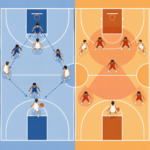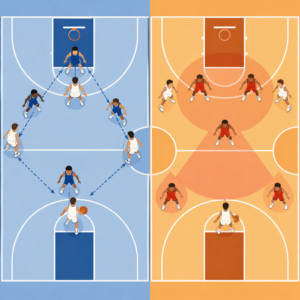

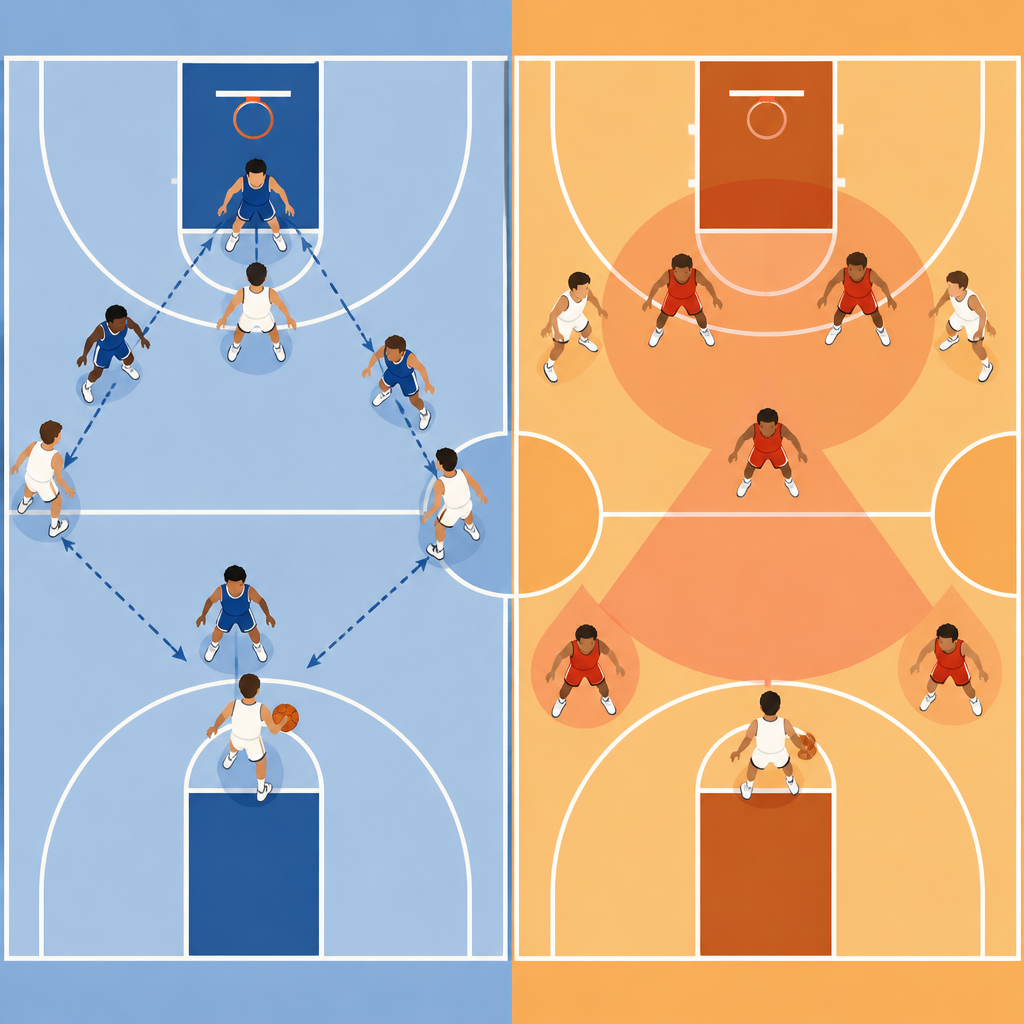
Basketball strategy often looks simple from the bleachers, yet one of the most important coaching choices in high school basketball is also one of the most misunderstood: why so many teams still play man-to-man defense even when zone seems easier, safer, and sometimes more effective. In practical terms, man-to-man means each defender is responsible for a specific offensive player, while zone assigns each defender an area of the floor and asks the group to protect space together. That sounds straightforward, but the decision shapes player development, game planning, foul trouble, transition defense, rebounding assignments, and even how a program is perceived by opponents and future coaches.
I have sat through enough high school practices and scouting sessions to know that this choice is rarely ideological in the abstract. It is usually tied to roster limitations, teaching time, league style, and long-term goals. A coach with two quick guards, an active center, and only limited practice hours may still choose man because it sharpens footwork, communication, and accountability. Another coach with one dominant rim protector and several undersized wings may choose more zone because it keeps that center near the basket and hides weaker individual defenders. The debate matters because high school teams are not just trying to win Friday night; they are trying to prepare teenagers to make reads, guard in space, and understand help principles that carry into higher levels of the game.
This article serves as a strategy hub by breaking down why man-to-man remains the default teaching defense in many programs, when zone makes sense, and how smart coaches combine both without becoming predictable. The best answer is not that one system is always superior. The real answer is that man-to-man teaches universal defensive habits, while zone can solve immediate matchup problems and conserve a roster. Understanding the case for and against zone gives players, parents, and coaches a clearer view of why high school defenses look the way they do.
Why man-to-man remains the foundation
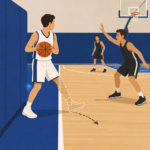
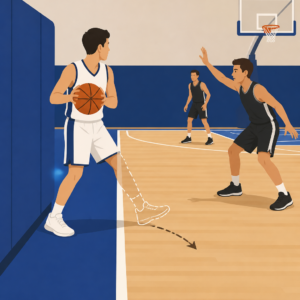
Most high school coaches start with man-to-man because it teaches the broadest transferable skills. On the ball, players learn stance, slide mechanics, angle control, and how to influence a ball handler away from preferred driving lanes. Off the ball, they learn deny positioning, help-side depth, stunt-and-recover timing, closeout footwork, and tag responsibilities against cutters or rollers. These are not just scheme details. They are the grammar of defense. If a player cannot stay in front, contain dribble penetration, and rotate from help, that player will struggle in almost any system.
Man also creates immediate accountability. When film is reviewed, it is easier to identify who got beat, who missed a low man rotation, who failed to box out, or who died on a screen. That clarity matters in player development. In a zone, mistakes are often shared or blurred. One defender may say the wing should have bumped the cutter, while the wing says the middle defender was too high. In man, assignments are cleaner, and corrections are usually more direct.
There is also a developmental reason tied to the broader basketball ecosystem. Many varsity coaches believe younger players who spend too much time sitting in a 2-3 zone arrive later without the movement habits needed for advanced competition. College programs overwhelmingly recruit athletes who can guard the ball, switch selectively, navigate screens, and execute help rules. Even in the NBA, where schemes are varied, the essential skill remains point-of-attack defense supported by coordinated help. High school programs that emphasize man are often teaching with those future demands in mind.
The strategic case against zone
Zone defense can absolutely win games, but it comes with tradeoffs that explain why some coaches resist relying on it. The first issue is coverage stress against shooting. A disciplined offense that reverses the ball quickly, flashes the high post, and places a shooter in the short corner can bend a standard 2-3 zone until rotations become late. The second issue is rebounding. Because defenders guard areas instead of bodies, finding a box-out assignment after the shot often takes an extra beat. That is why many coaches say zone can protect the paint but give up put-backs if players are not drilled constantly on hit-find-pursue technique.
Another concern is development. Zone can hide weak defenders. That sounds useful, but it can become a cost later. A guard who spends two years being masked in the top of a 1-3-1 may not learn how to contain the ball at all. When that player faces a man-heavy opponent in the postseason, every possession becomes a target. I have seen strong regular-season records unravel this way because the defense looked solid structurally but did not build individual habits.
Zone can also be vulnerable to scouting. If a team plays only one zone, opponents can script actions specifically to attack it. Common examples include overload sets against a 2-3, dribble-entry actions to force baseline help, and middle flashes that create short-roll style passing decisions. Once those reads are rehearsed, the zone is no longer confusing. It becomes a map the offense already knows.
When zone is the right choice
None of that means zone is a bad defense. In many high school settings, it is the smartest option. If a roster lacks lateral quickness, zone can keep the ball out of the paint and reduce isolation exposure. If a team has one excellent shot blocker, a 2-3 zone can anchor that player near the rim, where his value is highest. If foul trouble threatens a thin rotation, zone may protect key players from repeated drives and recovery fouls. Tempo matters too. A compact zone can slow a game, shrink possessions, and frustrate more athletic opponents into taking early jumpers.
Zone is especially useful against poor shooting teams. Analytics at many levels show that contested perimeter shots are lower-value outcomes than paint attempts and free throws. At the high school level, where shooting consistency varies widely, some coaches are comfortable conceding certain threes if it means eliminating layups, post seals, and foul-line drives. That is not passive coaching. It is calculated risk management.
Well-coached zones also create turnovers. A 1-3-1 can trap corners and bait skip passes. A 3-2 can distort wing vision and challenge teams that rely on simple pass-around motion. Matchup zones, which look like zone but attach to cutters in man-like ways, can confuse offenses that expect static spacing reads. Syracuse under Jim Boeheim made the 2-3 famous at the college level not because zone was easy, but because its rules were precise, practiced, and tied to length. High school teams can borrow that lesson: zone works when it is taught with the same detail most coaches give man.
How strong programs blend both defenses
The best high school strategy is usually not man or zone in isolation. It is knowing when each tool serves the game. Many successful teams open in man to establish physicality and evaluation points, then shift into zone after timeouts, dead balls, or lineup changes. The purpose is not novelty for its own sake. It is to alter rhythm, force new reads, and make the offense spend possessions identifying coverage before attacking.
Coaches often think in terms of possession value. A six-possession stretch of zone can protect a star with two fouls. Two surprise possessions of 1-3-1 after made free throws can steal a turnover. A late-game switch to man may improve rebounding security when every miss matters. In film rooms, these decisions are planned around opponent tendencies: does the other team have a weak high-post passer, a dominant driver, or only one reliable shooter?
| Situation | Why coaches choose man-to-man | Why coaches choose zone |
|---|---|---|
| Facing elite ball handlers | Pressure the ball, force weaker hand, switch matchups intentionally | Shrink driving gaps and send help without constant rotations |
| Limited team speed | Can expose slow defenders in space | Protects slower players by reducing isolation coverage |
| Foul trouble | Riskier if defenders must contain repeated drives | Can keep key players near the rim and out of reach-ins |
| Need to secure rebounds | Clear body matchups improve box-outs | Requires stronger gang rebounding habits |
| Player development focus | Builds universal defensive skills and accountability | Can help win now but may hide individual weaknesses |
Blending coverages also supports internal teaching. Players begin to understand principles instead of memorizing patterns. The common thread across great defenses is not alignment; it is communication, early help, disciplined closeouts, and finishing the possession with a rebound. Teams that grasp those ideas can move between systems without losing identity.
What players actually learn from man defense
When coaches defend man-to-man so strongly, they are usually defending the teaching outcomes, not just the scoreboard. A player in man learns to absorb scouting reports and apply them live. Shade a right-handed guard to the left. Go under against a poor shooter. Top-lock a shooter trying to curl off pin-downs. Ice a side ball screen toward the baseline. These are advanced decisions, but high school players can learn them when coaches build progressively.
Man defense also develops conditioning and mental concentration. Every cut, screen, relocation, and second effort matters. A lapse of one second can concede a layup. In zone, a possession can sometimes let a disengaged player survive by standing in the right region. In man, survival is harder. That pressure develops competitive honesty. Players know whether they can guard.
There is an offensive benefit too. Teams that practice against disciplined man every day usually get better at screening, cutting, spacing, and reading help. In that sense, choosing man as a defensive base improves the entire program. It sharpens both sides of practice. That is one reason many respected high school and grassroots coaches accept short-term defensive growing pains in exchange for better long-term habits.
The real drawbacks of forcing man-to-man
Still, insisting on man in every circumstance can become stubbornness. Not every roster is built for it. A team with two freshmen guards, limited depth, and no rim protection may simply bleed dribble penetration all season. In that case, calling man “better” offers little value if players are constantly in rotation, fouling, and giving up layups. Good strategy matches principle with personnel.
There are also schedule realities. High school teams do not always get enough practice time to master complex ball-screen coverages, weak-side X-outs, and multiple late-clock adjustments. Zone can simplify decisions and make a team functional faster. For programs with football players arriving late, injuries, or small-school numbers, that practicality matters.
Finally, postseason basketball often rewards flexibility. Opponents have film, coaches have scouts, and one bad matchup can end a season. Teams that treat zone as inferior may find themselves without an answer when their base defense fails. I have seen talented man teams get picked apart by a dominant post player or dribble-drive guard, then resist changing because the program identity felt too important. The better identity is adaptability.
How to evaluate the best defensive identity
The simplest way to decide between man-to-man and zone is to start with four questions. Can your guards keep the ball out of the middle? Can your bigs protect the rim without fouling? Can your team finish possessions with rebounds? Can you defend common actions like stagger screens, baseline runners, and ball screens without confusion? If the answer is yes, man should probably be the base. If several answers are no, zone deserves a real role.
Data helps. Track points per possession allowed, fouls per game, offensive rebounds conceded, and corner-three attempts given up by coverage. Synergy Sports is the gold standard at higher levels, but even simple charting from assistants can reveal patterns. If your man defense allows constant paint touches, that is evidence. If your zone gives up too many second shots, that is evidence too. The best programs do not argue from tradition alone. They measure, adjust, and teach accordingly.
High school teams play man-to-man because it teaches the widest range of defensive skills, creates accountability, and prepares players for higher levels of basketball. The case against zone is not that it cannot work. It is that zone can hide weaknesses, complicate rebounding, and become predictable if it is the only answer. At the same time, the case for zone is strong when a roster needs protection, tempo control, foul management, or a specific counter to an opponent’s strengths.
The smartest defensive strategy is rarely all man or all zone. It is a clear foundation in man principles combined with enough zone competence to solve real game problems. Coaches who build both give their teams a better chance to win now and develop later. If you are shaping a program, study your personnel honestly, track what each coverage actually produces, and choose the defense that serves your players rather than your preferences.
Frequently Asked Questions
Why do so many high school basketball teams still prioritize man-to-man defense over zone?
Many high school teams prioritize man-to-man because coaches often view it as the best long-term teaching defense, not just the best short-term tactic. Man-to-man forces players to learn core defensive habits that carry into every level of basketball: staying in a stance, moving their feet, containing the ball, helping from the right spots, closing out under control, boxing out specific opponents, and communicating every possession. In other words, it teaches accountability. Every defender knows exactly who they are guarding and whether they won or lost the matchup on a given play.
There is also a developmental reason. At the high school level, coaches are not only trying to win Friday night’s game; they are building players over months and often years. A steady man-to-man system can help athletes understand angles, timing, and team defense in a way that translates to nearly any scheme. Even when a coach eventually uses zone, pressing, or switching defenses, the underlying principles usually come from man-to-man habits. That is why many coaches believe that if players cannot guard the ball and help correctly in man, they will struggle in other defenses too.
Another factor is perception and trust. Man-to-man is often seen as the more aggressive, disciplined, and “honest” defense because it puts defenders directly in front of offensive players rather than protecting areas by default. Some coaches feel it reduces excuses. If a team gives up dribble penetration, a wide-open jumper, or an offensive rebound, the film usually shows clearly what broke down. That clarity matters in practice. It makes teaching more direct and corrections more specific.
That said, the reason man-to-man remains common is not because zone is ineffective. It is because many coaches believe man-to-man gives them a stronger base, clearer teaching points, and better player development, even when zone might occasionally produce easier results in a single matchup.
If zone defense can be easier and sometimes more effective, why don’t more high school coaches rely on it full time?
Zone can absolutely be effective, especially at the high school level where outside shooting may be inconsistent and not every team has the passing precision to attack gaps. It can protect foul-prone players, hide weaker individual defenders, shrink driving lanes, and force opponents into jump shots. On some nights, a well-drilled zone is the smartest possible choice. So the issue is not whether zone works. It is whether a coach wants it to be the primary identity of the team.
One reason some coaches hesitate to rely on zone full time is that zone demands its own kind of discipline, and it is often misunderstood as “easier.” Players still need to communicate, identify cutters, bump drivers, contest shooters, and rebound aggressively out of an area rather than off a direct assignment. In fact, one of the biggest problems with zone at the high school level is rebounding. In man-to-man, players usually know exactly whom to block out. In zone, defenders must first locate a body after the shot goes up, which can be harder for younger teams and often leads to second-chance points.
Another concern is flexibility. A team that lives in zone may be very good at it, but if an opponent has skilled shooters, smart passers, or a strong high-post presence, the zone can be stretched and exposed. Coaches may worry that if their players are uncomfortable in man-to-man, they will have fewer answers when a game changes. Tournament settings especially reward versatility. A coach may face very different opponents in a short span, and being able to defend in multiple ways becomes valuable.
There is also a developmental and reputational piece. Some coaches believe a full-time zone can limit individual defensive growth, especially for younger players who need repetitions guarding the ball and learning help-side responsibility in a more direct way. In certain basketball circles, there is also a lingering belief that overusing zone at the youth and high school levels can stunt defensive fundamentals. Whether that view is always fair is debatable, but it remains influential. So even when zone could help in the moment, many coaches resist building their entire program around it.
Is man-to-man actually better for player development, or is that just a coaching tradition?
There is real substance behind the idea that man-to-man helps player development, although it can sometimes be overstated. The strongest case for man-to-man is that it teaches universal defensive skills. Players learn how to guard the ball without fouling, how to force direction, how to deny or contain, how to help and recover, how to navigate screens, and how to communicate through actions. Those are foundational basketball skills, and they matter regardless of future system or level of play.
Man-to-man also creates more direct learning feedback. If a player gets beat off the dribble, loses a cutter, dies on a screen, or fails to rotate, the mistake is usually easier to identify and teach on film. That makes practice more precise. For younger athletes especially, clear cause-and-effect is important. It helps them understand defense as a series of connected responsibilities rather than as a vague idea of “stand in this spot and wave at shooters.”
However, it would be simplistic to say zone does not develop players. A good zone teaches anticipation, positioning, teamwork, communication, floor awareness, and timing. Players can learn to read the ball, stunt at drivers, trap corners, protect the paint, and rotate as a unit. Some teams become extremely intelligent defensively through zone principles. The key difference is that zone develops players in a different way. It often emphasizes collective spacing and pattern recognition more than repeated one-on-one containment.
So the most accurate answer is this: man-to-man is usually considered better for broad, transferable defensive development, but that does not make zone automatically bad for growth. The best coaches often combine both. They use man-to-man to build individual habits and accountability, then add zone to expand tactical understanding and prepare for specific matchups. In that sense, the debate is not really tradition versus innovation. It is about what a coach wants players to learn first and what gives the team the best balance between present results and long-term improvement.
What are the biggest advantages and drawbacks of playing zone defense in high school basketball?
The biggest advantage of zone defense is that it can simplify the floor and force opponents to beat structure with patience, shooting, and decision-making. At the high school level, that matters. Not every team has multiple reliable shooters or players who can consistently make the right reads against packed-in help. A zone can take away easy drives, protect the rim, conserve energy, and keep key players out of foul trouble. It can also disrupt rhythm. Offenses that are comfortable running set plays against man-to-man sometimes become hesitant when they have to diagnose a zone on the fly.
Zone can also be very useful from a roster standpoint. If a team lacks elite lateral quickness or has one or two players who struggle to stay in front of the ball, zone can keep those weaknesses from being attacked every trip. It can also help teams with length around the basket, because long defenders can clog passing lanes and contest shots without needing to pressure every dribble. In some cases, zone is simply the smartest way for a coach to put players in positions where they can succeed.
The drawbacks are just as real. Good shooting can tear apart a zone, especially if the defense is slow to close out or late on skips and reversals. A smart offense can attack the short corners, overload one side, flash the high post, and force defenders into difficult choices. Rebounding is another major issue. Because defenders are guarding space instead of a person, they can be slower to find a body once the shot goes up. Teams that play zone but do not rebound with force often give away the benefits of the scheme.
There is also the danger of passivity. Poorly coached zone can become a habit of standing, watching, and reacting late. Instead of being an active, connected defense, it turns into a shell that gives up too many comfortable shots. That is why the best zone teams are not actually passive at all. They talk, rotate, stunt, contest, and rebound with urgency. Zone is not automatically easier. It is only effective when taught with the same seriousness and detail that coaches bring to man-to-man.
Should high school teams choose one defensive identity, or is it better to mix man-to-man and zone depending on the opponent?
For many high school teams, the best answer is to have a primary identity while still being able to change coverages when the game or opponent demands it. A team that tries to do everything equally well can end up doing nothing well enough. Players usually need one base defense they understand deeply, trust under pressure, and can return to when possessions get chaotic. For many programs, that base is man-to-man because it provides structure, accountability, and developmental value.
At the same time, modern high school basketball rewards adaptability. Opponents vary too much to stay rigid all season. One team may have a dominant post scorer who is easier to crowd with zone help. Another may have several guards who break down man-to-man but struggle against a compact 2-3. Another may shoot so well that zoning them is asking for trouble. Coaches who can shift intelligently between man and zone gain a strategic edge, especially in