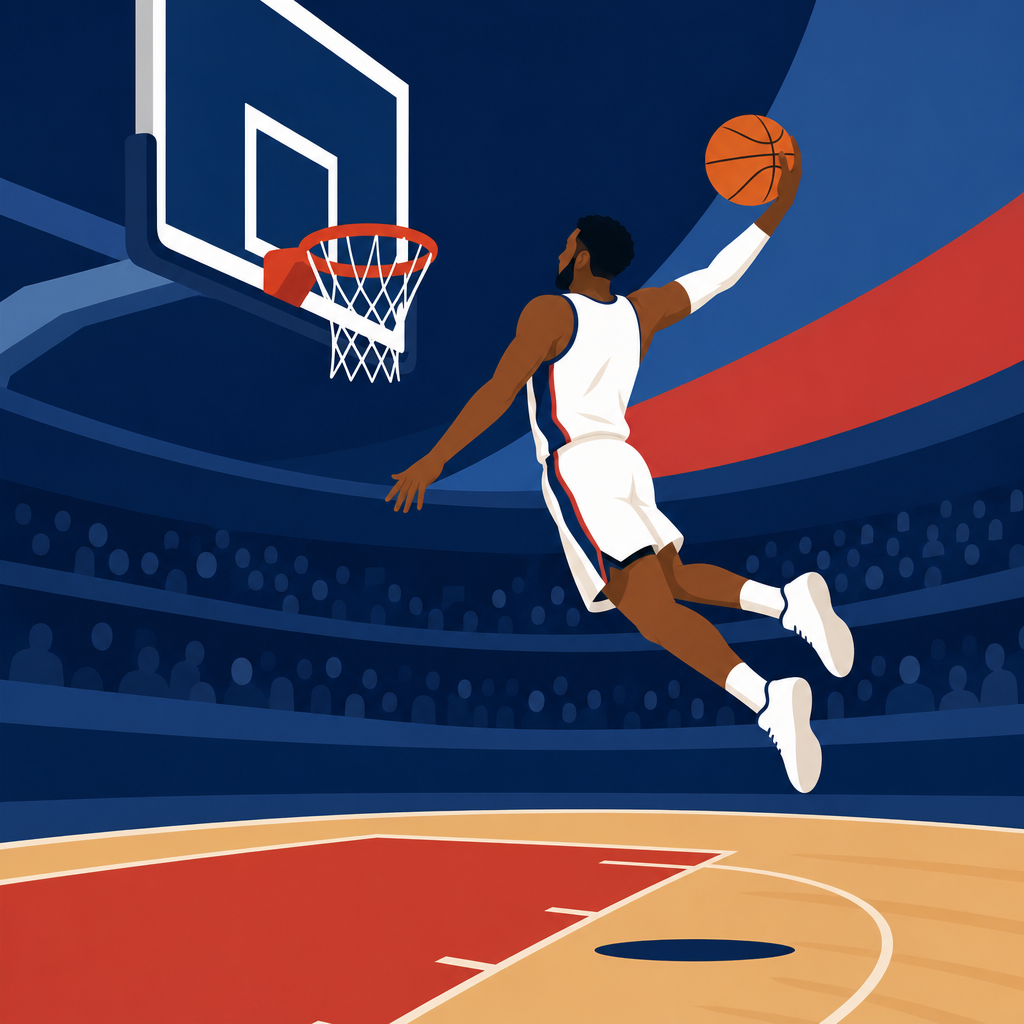

The best dunks in NBA history are more than highlights. They are compressed pieces of basketball culture, combining athletic ability, star power, rivalry, timing, and image into a few unforgettable seconds. In the NBA, a dunk is not simply a made field goal at the rim. It is a statement play in which a player controls the ball above the cylinder and forces it through the basket with one or both hands, often through contact, over a defender, or with unusual hang time, power, or creativity. When people debate the most athletic and memorable slams ever recorded, they are really debating what the league values most: force, style, fearlessness, originality, or context.
I have covered dunk history by going back through full games, not just clipped montages, and that context matters. A breakaway windmill in February is exciting, but a vicious poster in the Finals or a contest dunk that changes a player’s image lands differently. The strongest candidates for the greatest NBA dunks usually check several boxes at once. They happen against meaningful opposition, feature elite body control, create a strong crowd and bench reaction, and remain easy to identify years later from a single frame. That is why certain plays by Michael Jordan, Vince Carter, LeBron James, Kobe Bryant, Blake Griffin, Shaquille O’Neal, and others still anchor conversations about player culture.
As a hub for NBA player culture, this topic opens into several connected questions. Which dunkers changed how players trained? Which slams turned stars into brands? How did media, sneakers, and television elevate certain moments above others? Why do some in-game dunks age better than Slam Dunk Contest creations? This guide answers those questions directly while mapping the subtopics that define player culture: reputation, aesthetics, intimidation, celebration, era differences, and the way signature plays shape a player’s legacy. If you are exploring NBA culture, dunk history is one of the clearest entry points because it shows how individual expression becomes league-wide mythology.
To judge these moments fairly, it helps to separate categories. The most athletic dunk is not always the most important dunk. The most memorable slam is not always the most difficult. Athletic dunks emphasize vertical explosion, body control, speed, and contact balance. Memorable dunks depend on setting, opponent, reaction, and replay value. Greatness can also come from innovation. Julius Erving popularized a soaring style that made above-the-rim play look artistic. Jordan turned free-throw-line imagery into global iconography. Carter brought a level of violence and elegance that reset standards for in-game and contest dunking. Later players built on that foundation with more power, spacing, and camera-era visibility.
What makes a dunk historically great
A historically great dunk usually combines five traits: difficulty, opposition, context, reaction, and staying power. Difficulty covers the physical feat itself, such as gathering in traffic, elevating off one foot, finishing through contact, or improvising midair. Opposition asks who was involved. Dunking on a rim protector like Alonzo Mourning, Patrick Ewing, Dikembe Mutombo, Tim Duncan, or Dwight Howard carries more weight than finishing over a rotating guard. Context includes score, playoff stakes, rivalry, and momentum swing. Reaction means what happened immediately after: crowd eruption, bench chaos, commentary, and the defender’s response. Staying power is simple. If fans can identify the play instantly years later, it belongs in the discussion.
These criteria explain why posters often outrank cleaner, prettier slams. Shawn Kemp’s demolition of Alton Lister in the 1992 playoffs is remembered not only because of the finish, but because Kemp pointed at him afterward and the entire sequence felt confrontational, raw, and era-defining. Baron Davis dunking on Andrei Kirilenko during the 2007 “We Believe” run had similar force because the upset atmosphere amplified the play. In player culture terms, these dunks become reputation accelerants. They reinforce a star’s fearlessness and edge, and they often shift how opponents, broadcasters, and fans talk about that player for years.
There is also a technical side that serious basketball audiences notice. Some dunks involve extraordinary deceleration and re-acceleration, especially in half-court traffic. Others require elite core strength to absorb body contact and still finish on line. Smaller guards who dunk in crowds, such as Allen Iverson, Derrick Rose, Russell Westbrook, and Ja Morant, create a different kind of awe because the margin for error is tiny. Big men generate another version of greatness by overwhelming size and timing. Shaquille O’Neal tearing down rims was less about finesse than unavoidable force. Different archetypes matter because player culture is built on contrast as much as consensus.
The dunks that define NBA player culture
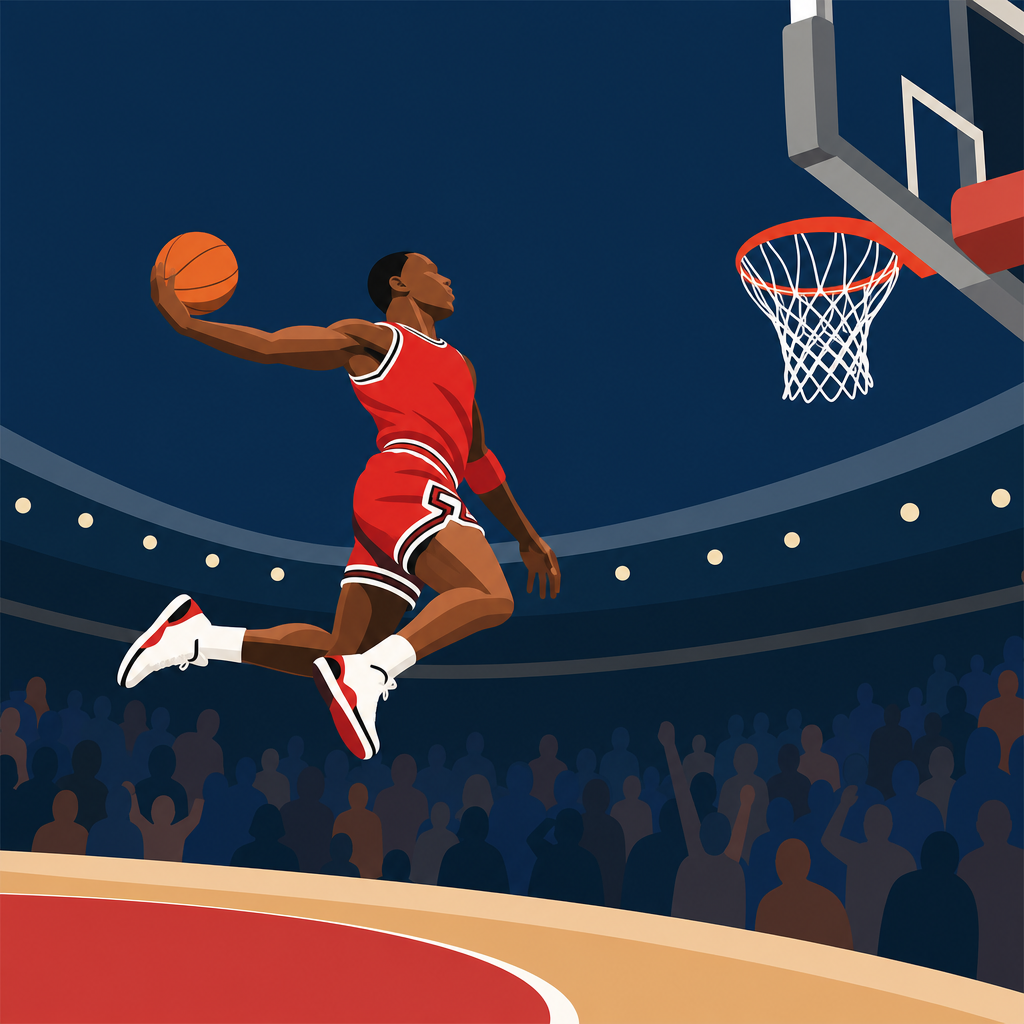
If one play symbolizes style becoming identity, it is Michael Jordan’s free-throw-line dunk from the 1988 Slam Dunk Contest. The image mattered as much as the mechanics. Jordan in Chicago, tongue out, soaring from the stripe, created a permanent link between individual athleticism and commercial mythology. It helped sell the idea that a player could be both competitor and global symbol. In conversations about player culture, Jordan’s dunk is foundational because it fused performance, branding, and aspiration in a way the NBA still markets today.
Vince Carter’s 2000 contest in Oakland did something equally important for a later generation. The 360 windmill, the between-the-legs finish, and the honey-dip elbow hang were not just high-scoring attempts. They reintroduced wonder into an event that had lost energy in the late 1990s. Players around the league reacted like fans. Youth players copied the arm swing from his windmill on playgrounds everywhere. Carter’s style became a cultural language: relaxed face, impossible elevation, violent finish. When discussing how dunking influences player identity, his 2000 performance is a central chapter because it turned technical mastery into mass imitation.
Kobe Bryant’s dunks fit a different template. He was not the most explosive leaper of his era, but his best slams reinforced competitive obsession. The reverse baseline finish on Dwight Howard, the putback traffic dunks, and his 1997 contest title all fed the perception of relentless skill layered onto top-tier athleticism. LeBron James took another route. His chase-down blocks may be more singular to his legacy, but his in-game power dunks, especially in transition and in playoff settings, expressed inevitability. Blake Griffin then captured the social media era, where a dunk over Kendrick Perkins or Timofey Mozgov could dominate sports conversation for days and shape an entire season’s public image.
Most athletic and memorable slams ever recorded
The strongest shortlist starts with a handful of unquestioned entries. Vince Carter over Frédéric Weis at the 2000 Olympics was not an NBA game, yet it remains essential because it altered how people described human leaping. In NBA play, Carter’s poster on Alonzo Mourning in Toronto showed the same fearlessness against elite interior defense. Michael Jordan’s baseline double-clutch reverse against the Lakers in the 1991 Finals is another lock because midair adjustment at that speed and angle remains astonishing. Julius Erving’s cradle baseline finish in the 1980 Finals belongs for creativity under pressure. Shawn Kemp over Alton Lister, Baron Davis over Kirilenko, and LeBron James’ tomahawks in full stride all belong because force met moment.
Several dunks deserve mention for pure violence. Shaquille O’Neal’s backboard-shaking finishes in the 1990s changed arena equipment conversations and symbolized the league’s interior brutality. Dominique Wilkins attacking from the wing with a windmill or double-pump finish brought rare combination of flexibility and power. Tom Chambers dunking on Mark Jackson in 1989 remains one of the nastiest one-foot launch posters ever. More recent examples include Giannis Antetokounmpo covering impossible ground in two strides and finishing through multiple defenders, plus Ja Morant attempts that miss but still redefine what guards think is possible around shot blockers.
| Dunk | Why it matters | Cultural impact |
|---|---|---|
| Jordan, 1988 free-throw-line contest dunk | Iconic flight image and clean execution | Linked star image, sneakers, and global NBA aspiration |
| Carter, 2000 contest between-the-legs dunk | Elite creativity with effortless elevation | Reset contest standards for a generation |
| Jordan, 1991 Finals baseline switch | Midair body control under championship pressure | Elevated playoff artistry as part of legacy |
| Kemp over Lister, 1992 playoffs | Violence, confrontation, and timing | Became a defining poster of 1990s edge |
| Baron Davis over Kirilenko, 2007 playoffs | Explosive finish against real rim protection | Embodied the We Believe identity |
The lesson from this list is that fans remember dunks that reveal character. Jordan looked majestic and precise. Carter looked impossible. Kemp looked angry. LeBron looked unstoppable. Griffin looked theatrical. Those descriptions matter because NBA player culture is built through repeated visual evidence. A signature slam is often the fastest way a player communicates who he is without saying a word.
How eras, media, and rules changed dunk culture
Dunk culture did not develop in a vacuum. In the 1970s and 1980s, limited broadcast angles and fewer national windows meant some spectacular plays lived more through reputation than instant repetition. Dr. J’s legend spread through highlight packages, magazines, and word of mouth as much as live national exposure. By the 1990s, improved television production and sneaker advertising made Jordan, Wilkins, and Kemp into recurring visual brands. The rise of SportsCenter then turned a great dunk into a national event within hours, and the internet later made every angle permanent.
Rule changes and playing style also mattered. Illegal defense rules before the early 2000s created different spacing patterns, often loading the paint in distinct ways. Hand-checking rules affected perimeter drives. Modern spacing gives slashers cleaner lanes, but it also means help defenders arrive later from longer distances, creating huge gather-and-launch windows for players like Giannis and LeBron. At the same time, advanced scouting can reduce surprise. Rim protectors now study tendencies, and coaches prioritize verticality under current officiating standards. So while today’s athletes may have more space, they also face smarter defensive preparation and a nonstop replay environment that magnifies every attempt.
Social platforms transformed the hierarchy of memorable dunks. A regular-season slam that perfectly suits short-form video can travel farther than a technically better playoff finish from an earlier era. That creates a challenge for historians. Visibility is not the same as quality. When evaluating the best dunks in NBA history, full context still matters more than clip circulation. I always return to game situation, defender quality, and the technical demands of the play because those anchors keep the conversation honest across generations.
Why dunk history matters to player legacy
Dunk history matters because it helps explain how stars become symbols. A player’s culture footprint is not built only through points per game or championships. It is built through signature visuals that fans replay in their minds. The best dunks compress athleticism, confidence, and narrative into one sequence, making them unusually powerful legacy tools. They influence shoe campaigns, nicknames, video packages, and even Hall of Fame memory. That is why Jordan, Carter, Dr. J, Kemp, LeBron, Kobe, Shaq, and Griffin remain central to this conversation.
For an NBA Culture reader, this page should also point toward deeper player-culture themes: rivalry psychology, fashion and sneaker identity, celebrations and taunts, workout evolution, highlight media, and the difference between playoff reputation and regular-season fame. The most athletic and memorable slams ever recorded are not isolated moments. They are evidence of how players express status and style in the league’s most dramatic language. If you want to understand NBA player culture, start with the dunks, then follow the story outward to the eras, brands, and personalities they helped define. Explore those connected topics next, and the history of the league will make far more sense.
Frequently Asked Questions
What makes a dunk one of the best in NBA history rather than just another highlight?
The best dunks in NBA history stand out because they combine much more than raw athleticism. A truly unforgettable slam usually brings together several elements at once: elite body control, timing, power, creativity, and context. A breakaway windmill in an empty regular-season moment can be impressive, but a dunk becomes historically significant when it happens over a respected defender, in a major rivalry, during a playoff game, or at a crucial turning point. That is why certain plays live on for decades. They are not just aesthetically great; they mean something within the story of the game.
There is also a visual and emotional component that matters. The most iconic dunks create an instant reaction from teammates, opponents, announcers, and fans because everyone understands what just happened. Think about poster dunks, baseline attacks through contact, or soaring finishes in traffic. These plays often freeze into basketball memory because they capture dominance in a single image. In that sense, the best dunks are compressed moments of NBA culture. They reflect star power, fearlessness, crowd energy, and the ability of one player to impose himself physically and emotionally on a game in just a second or two.
Why are poster dunks considered so important when discussing the greatest slams ever recorded?
Poster dunks hold a special place in NBA history because they add confrontation and risk to the play. A player is not simply finishing at the rim; he is challenging a defender directly and winning that battle in the most public way possible. When an elite shot blocker or interior defender rotates over and still gets dunked on, the moment instantly becomes more memorable. It demonstrates not only explosion and skill from the offensive player, but also courage. The dunker is attacking a contested space instead of avoiding it.
That is a major reason so many all-time lists are filled with names like Vince Carter, Michael Jordan, LeBron James, Kobe Bryant, Dominique Wilkins, and Shawn Kemp. Their most famous slams were not just clean finishes in open court situations. They often happened over real resistance. A true poster changes the mood in the arena, energizes a team, and can even rattle the opponent. Visually, it also creates the kind of image that lasts: the airborne attacker above the rim, the defender underneath or absorbing contact, and the crowd erupting in the background. In NBA history, those are the dunks that become cultural shorthand for power, confidence, and competitive dominance.
Are dunk contest dunks judged differently from in-game dunks when ranking the most memorable NBA slams?
Yes, and they should be. Dunk contest dunks and in-game dunks belong to the same art form, but they are evaluated through different standards. In a dunk contest, the emphasis is usually on creativity, originality, style, body control, presentation, and difficulty under a planned setup. Players can rehearse, use props, involve teammates, and attempt highly choreographed ideas that showcase imagination as much as pure athleticism. That is why performances by players like Vince Carter, Zach LaVine, Aaron Gordon, Michael Jordan, and Dominique Wilkins remain legendary. Their dunks were spectacular because they expanded what fans thought was physically possible in a controlled environment.
In-game dunks, however, carry a different kind of weight. They happen at full speed, against real defenders, with no second attempt and no guarantee of open space. The pressure is immediate, and the stakes are often much higher. A playoff poster, a transition slam in a rivalry game, or a violent finish through contact can outrank a more creative contest dunk in the minds of many fans because the competitive setting makes it feel more authentic and dramatic. When people debate the best dunks ever, they often separate “best contest dunk” from “best game dunk” for exactly this reason. One category celebrates invention and style, while the other highlights force, timing, and the emotional reality of NBA competition.
Which players are most often mentioned in conversations about the best dunks in NBA history?
Several names appear repeatedly because they built reputations around unforgettable above-the-rim plays. Vince Carter is near the top of almost every discussion thanks to his combination of hang time, violence, smoothness, and creativity. His in-game posters and legendary dunk contest performance made him one of the most complete dunkers the league has ever seen. Michael Jordan is another constant presence because of his elegance in the air, iconic contest dunks, and ability to make athletic finishes feel theatrical. Dominique Wilkins, known as “The Human Highlight Film,” belongs in the same company because he brought exceptional power and explosiveness to nearly every slam.
Beyond those classic names, modern and later-era stars also have major places in the conversation. LeBron James has delivered some of the most physically imposing dunks ever recorded, especially in transition and in high-pressure moments. Kobe Bryant produced an impressive catalogue of aggressive, acrobatic finishes that blended skill with competitiveness. Shawn Kemp was famous for thunderous power dunks that seemed to shake the building, while Julius Erving helped define dunk artistry with soaring finishes that influenced generations. More recent players such as Blake Griffin, Ja Morant, and Zach LaVine are often included as well because they brought fresh energy, vertical explosion, and memorable highlight moments to new audiences. The exact order may vary, but these players are central to any serious discussion of NBA dunk history.
Why do certain dunks remain famous for decades while others fade, even if they were equally athletic?
Longevity in basketball memory usually comes down to context, storytelling, and repetition. Many dunks are incredibly athletic, but only a smaller number arrive at the perfect intersection of moment and meaning. A slam becomes timeless when it happens in a major game, against a notable opponent, or at a point when the player’s reputation is already growing. The play then gets replayed on broadcasts, featured in documentaries, shared across generations, and attached to the legacy of the athlete. Over time, it becomes more than a highlight. It becomes part of how fans remember an era, a team, or a superstar.
Presentation also matters. Some dunks produce instantly recognizable visuals: the leap from an impossible angle, the defender caught in the frame, the crowd exploding, the announcer delivering a famous call. Those details help a play survive long after the box score is forgotten. In other words, memorable dunks are not just athletic achievements; they are narrative events. They symbolize swagger, momentum, rivalry, or greatness itself. That is why the best dunks in NBA history continue to resonate. They capture the drama and personality of basketball in one vivid, unforgettable action.