
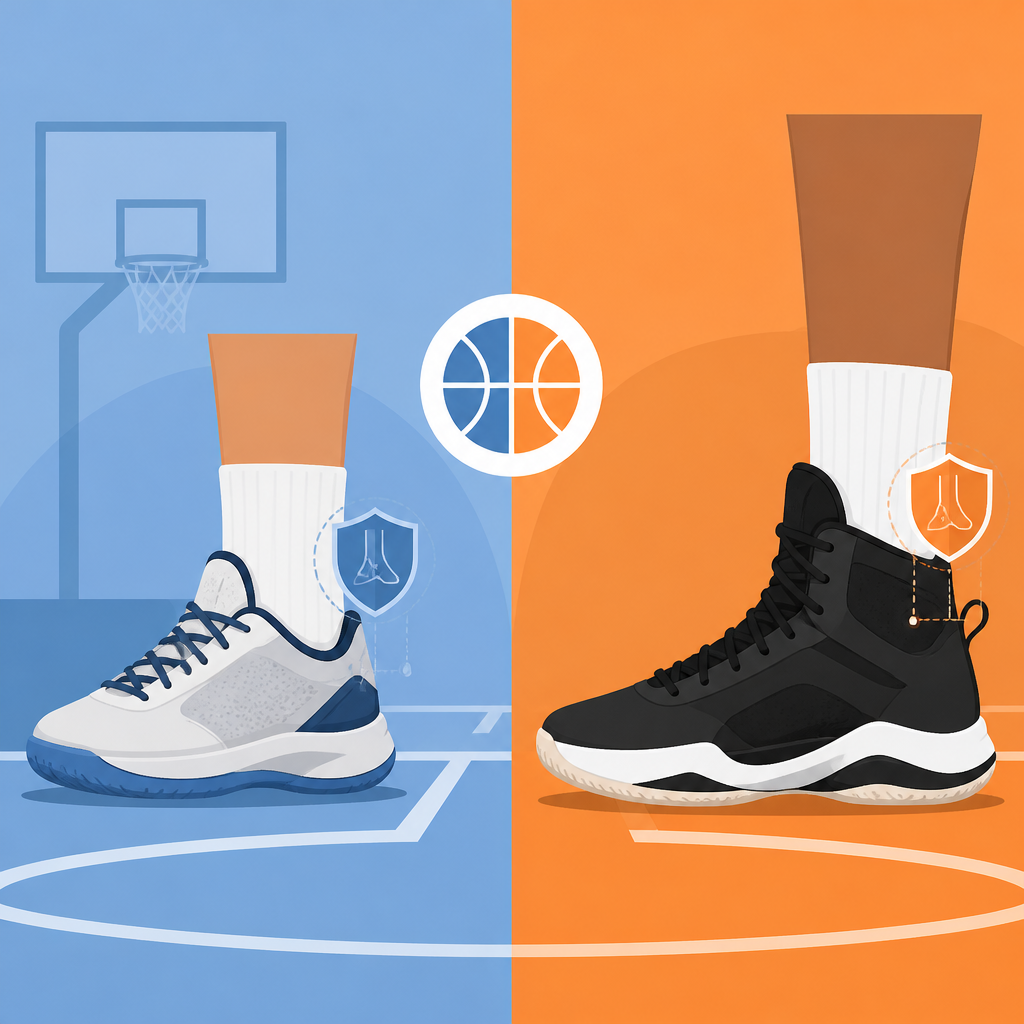
Basketball players ask one footwear question more than almost any other: are high tops actually better for ankle support than low tops? After fitting players, testing models, and reviewing injury data for years, I can say the debate is more nuanced than marketing suggests. The best basketball shoes for ankle support are not defined by collar height alone. True support comes from the full system under and around the foot: heel lockdown, lateral containment, torsional rigidity, midsole geometry, outsole width, and the way the shoe works with your movement patterns. If you are building out your basketball equipment setup, footwear is the foundation, because every cut, landing, closeout, rebound, and sprint starts at the floor.
In basketball footwear, ankle support refers to how well a shoe helps control excessive movement during hard changes of direction without making the athlete feel unstable, slow, or disconnected from the court. Low tops end below the ankle bones, while high tops extend above them. Mid tops sit between those points. Many players assume more material around the ankle equals more protection. In practice, a padded collar can improve comfort and security, but it does not automatically stop inversion sprains. Lab testing and sports medicine research consistently show that ankle injury risk depends on several factors, including prior sprains, neuromuscular control, playing style, fatigue, surface conditions, and whether the foot stays centered over the platform during impact and cutting.
This matters because ankle sprains remain one of the most common basketball injuries at every level, from youth leagues to the NBA. A poor footwear choice can increase rollover risk, reduce confidence, or create fit issues that cause blisters, toe jamming, and heel slippage. The right choice can improve balance, support aggressive movement, and keep performance consistent deep into games. This hub article settles the low top versus high top argument by focusing on what actually influences ankle support. It also covers the wider footwear questions players ask when choosing shoes: cushioning, traction, fit, materials, orthotics, break-in, and position-specific needs. Use it as your starting point for every basketball footwear decision.
Low Tops vs High Tops: What Really Determines Ankle Support
The simplest answer is this: high tops can feel more supportive, but low tops can be just as safe when the rest of the shoe is built correctly. I have seen guards play confidently in low-cut models with outstanding containment, and I have also seen players roll an ankle in soft high tops with narrow bases and poor heel hold. Collar height influences sensation and, to a limited degree, mechanical restraint, but it is not the primary variable. The primary variables are the platform and the fit.
Start with heel lockdown. If your heel lifts inside the shoe during a hard stop, your foot shifts before the outsole does. That delay can place the ankle in a compromised position. Next is lateral containment, which comes from sturdy sidewalls, upper reinforcement, and how the midsole cradles the foot. Torsional rigidity matters too. A shoe that twists too easily through the midfoot can feel unstable on off-balance landings. Outsole width is another major factor. A wider forefoot and heel platform create a more forgiving base when your center of mass moves outside neutral alignment.
The settled conclusion is that low tops versus high tops is the wrong headline question. A better question is whether the shoe keeps your foot centered and stable through basketball-specific movements. If it does, a low top can offer elite support. If it does not, a high top will not rescue it. Players with previous sprains may still prefer a higher collar because the proprioceptive feedback feels reassuring, and there is value in that confidence. Just do not mistake that feeling for proof that every high top prevents injury better than every low top.
Key Features That Make Basketball Shoes Supportive
When I evaluate basketball shoes for ankle support, I look at six features before I even consider colorways or signature branding. First is the base. A supportive shoe usually has a broad outsole, especially at the forefoot, with flare that resists tipping during lateral cuts. Second is containment. Strong uppers, internal straps, cables, or sidewall wraps prevent the foot from sliding over the edge of the footbed. Third is heel structure. A firm heel counter and secure lacing reduce slippage and improve rearfoot stability.
Fourth is torsional support through the midfoot. Many quality basketball shoes use a shank plate or rigid support frame to stop excessive twisting. Fifth is cushioning geometry. Soft foam feels comfortable, but if it is too unstable or too tall without proper sidewall support, it can increase wobble. The best setups balance impact protection with predictable compression. Sixth is traction. Support is not only about the upper; if the outsole slides unexpectedly on dust, the ankle can be forced into awkward positions. Reliable bite helps the rest of the support system work.
| Feature | Why It Matters for Ankle Support | What to Look For |
|---|---|---|
| Collar height | Affects security and comfort more than total injury prevention | Low, mid, or high cut that does not pinch the ankle |
| Heel lockdown | Limits internal foot movement during stops and landings | Minimal heel slip, padded collar, effective lacing |
| Lateral containment | Helps keep the foot centered on the footbed | Sidewalls, strong upper materials, outrigger flare |
| Torsional rigidity | Reduces unstable twisting through the midfoot | Shank plate, supportive frame, stable arch area |
| Cushioning setup | Balances shock absorption with platform stability | Moderate stack, contained foam, wide base |
| Traction | Prevents slips that can put the ankle at risk | Consistent grip pattern, durable rubber, dust tolerance |
These features explain why some widely praised low tops outperform bulkier high tops for support. They also explain why trying on shoes matters. Two models can look similar online yet behave completely differently once you plant, decelerate, and change direction. The shoe should feel connected to the floor, not merely wrapped around your ankle.
How Cushioning, Fit, and Traction Affect Injury Risk
Players often isolate ankle support from the rest of footwear performance, but the body does not work in isolated categories. Cushioning, fit, and traction all influence how forces travel up the kinetic chain. Cushioning protects against repeated impact, especially for heavier players, frequent jumpers, and anyone playing on unforgiving courts. However, excessively soft foam can create instability if the foot sinks unevenly on cuts. That is why many of the best supportive basketball shoes use firmer sidewalls, caging, or a lower center of gravity even when the underfoot feel is plush.
Fit is non-negotiable. A shoe that is too long allows forward slide and toe jamming. A shoe that is too wide lets the forefoot drift over the platform during crossovers. A shoe that is too narrow can create hot spots, numbness, and compensation patterns that change movement quality. In my experience, true ankle support starts with a one-to-one fit through the heel and midfoot, with enough forefoot room for natural toe splay. Players who wear thick braces or custom orthotics should test shoes with those inserts in place, because they alter volume and heel position.
Traction deserves equal attention. On a clean indoor court, elite traction supports powerful cuts with confidence. On a dusty court, a pattern that clogs or loses bite can turn a stable shoe into a liability. Outdoor players need durable rubber compounds and deeper grooves, but those outsoles may feel firmer and less responsive indoors. Matching the outsole to your playing environment is one of the most practical ways to reduce slips, and fewer slips generally mean fewer uncontrolled ankle positions.
Which Shoe Type Fits Your Position and Playing Style
Guards often prefer low tops because they feel lighter, faster, and less restrictive. That preference makes sense when a shoe has excellent containment and traction. Quick guards rely on sharp deceleration, rapid foot strikes, and constant directional changes, so court feel and secure lockdown matter more than extra collar height. Many guard-friendly models prioritize a low ride, rigid outrigger, and snug heel, creating support through geometry rather than bulk.
Wings usually need balance. They cut like guards but absorb contact like bigger players. For them, mid tops or supportive low tops often work best, especially if they combine responsive cushioning with a stable platform. Forwards and centers tend to value impact protection, forefoot stability, and rebound landing security. That can lead them toward mid or high tops, but again the more important traits are base width, heel counter strength, and controlled cushioning. A tall, soft shoe with a narrow platform can be a problem for a big athlete.
Your movement signature matters as much as your listed position. If you are an explosive leaper who lands slightly off-center, prioritize base stability and sidewall containment. If you are a shifty ball handler with prior sprains, you may benefit from a shoe that locks the heel aggressively and works well with a lace-up brace. If you are a spot-up shooter or recreational player, all-day comfort and predictable traction may matter more than ultra-responsive court feel. The best basketball shoes for ankle support are the ones that match how you actually move, not how a brand categorizes you.
When High Tops Help, When Low Tops Win, and Where Braces Fit In
High tops help most when they are part of a complete support package and when the player values the added sense of security around the ankle. They can reduce the feeling of looseness, improve comfort for athletes who like a locked-in collar, and pair well with larger frames that appreciate a structured upper. They also suit players returning from ankle issues who want every possible reminder to stay controlled. The benefit is often psychological plus incremental mechanical support, not a guarantee against sprains.
Low tops win when agility, comfort, and natural movement are priorities and when the shoe provides strong lockdown and containment elsewhere. Many modern low tops are engineered with outriggers, internal support systems, and sculpted midsoles that deliver outstanding stability. This is why so many elite guards trust them at the highest levels of play. A well-built low top does not leave the ankle unprotected; it simply shifts the support job to the platform, upper structure, and fit.
Braces deserve a clear mention because they can matter more than collar height for players with a history of sprains. Semi-rigid and lace-up ankle braces have meaningful evidence behind them for reducing recurrent sprains in at-risk athletes. The tradeoff is that some braces add bulk, alter fit, and slightly change shoe flex. If you wear one, bring it when trying on shoes. Look for a model with enough internal volume, a stable heel, and lacing that cinches over the brace without pressure points. For many players, the best answer is not low top or high top alone, but the right shoe plus the right brace.
How to Choose, Test, and Maintain Basketball Footwear
Choose basketball shoes late in the day, when feet are slightly swollen, and wear your game socks, orthotics, or braces. Test heel slip first, then lateral containment with side-to-side cuts. Check forefoot width by planting and loading the edge of the foot; your foot should not spill over the platform. Walk, jog, stop hard, and simulate a rebound landing. If the shoe feels tippy in the store, it will not become magically stable in a game. Break-in should improve comfort, not fundamental support flaws.
Maintenance affects performance more than most players realize. Dusty outsoles lose bite, compressed midsoles lose stability, and stretched uppers lose containment. Wipe soles during runs, rotate pairs if you play often, and replace shoes when traction hardens or the platform feels dead. Indoor shoes should stay indoors whenever possible. Outdoor asphalt chews through rubber and can ruin traction patterns quickly. If a shoe starts to lean, crease unevenly, or let your foot drift, its support profile has changed even if the upper still looks fine.
As the hub page for basketball footwear, this guide should shape every buying decision you make. Low tops versus high tops is settled: collar height matters less than total shoe design, fit, and how the model matches your body and playing style. Prioritize heel lockdown, lateral containment, torsional rigidity, a stable cushioning setup, and dependable traction. Add a brace if you have previous ankle sprains or need extra confidence. Basketball equipment works best when each piece supports movement rather than distracting from it, and footwear is the most important piece of that system.
The main benefit of choosing wisely is simple: you move better and worry less. That means cleaner cuts, steadier landings, and fewer preventable setbacks over a long season. Use this hub as your reference point, compare shoes by support features instead of hype, and evaluate every pair on court-specific performance. If you are shopping now, start by identifying your fit needs, injury history, and playing surface, then narrow your options to shoes built for real stability.
Frequently Asked Questions
Are high top basketball shoes actually better for ankle support than low tops?
Not automatically. This is the biggest misconception in basketball footwear. A higher collar may give some players a greater sense of security because it wraps more of the ankle area, but that does not mean it truly prevents rolling or sprains on its own. Real ankle support comes from how the entire shoe controls the foot during hard cuts, abrupt stops, landings, and lateral movement. That includes heel lockdown, how well the upper contains the foot over the footbed, torsional rigidity through the midfoot, outsole width, base stability, and midsole sidewall design.
In practical terms, a well-built low top can provide better functional support than a poorly structured high top. If the heel slips, the forefoot slides, or the platform is narrow and unstable, a tall collar will not fix those problems. On the other hand, a low top with excellent containment and a wide, stable base can feel far more planted and reliable. High tops can still be useful, especially for players who like a more wrapped-in fit or want a little extra structure around the ankle area, but collar height should be viewed as one feature, not the deciding factor. The debate is not really low versus high in isolation; it is stable design versus unstable design.
What features matter most for ankle support in basketball shoes?
If ankle support is your priority, start with heel lockdown. Your heel should sit securely in the rear of the shoe with minimal lift when you sprint, decelerate, or change direction. A secure heel helps keep your foot aligned over the platform and reduces the sloppy movement inside the shoe that often creates instability. Next, look at lateral containment. During side-to-side movement, the upper should keep your foot from spilling over the edge of the midsole. Strong sidewalls, outriggers, reinforced materials, and a well-shaped upper all help here.
Torsional rigidity is another major factor. A shoe that twists too easily through the midfoot can feel unstable during aggressive play. A supportive shank or a well-braced midfoot helps the shoe resist unwanted twisting and keeps transitions more controlled. Also pay close attention to platform geometry. Shoes with a wider base, especially in the forefoot and heel, tend to feel more stable than shoes with a narrow or overly rounded platform. Midsole design matters too. Very soft, tall, unstable cushioning can feel great underfoot but may increase wobble if it is not paired with good containment. Finally, fit is critical. Even the best support features fail if the shoe is too long, too wide, or too roomy for your foot shape. A shoe that matches your foot properly will almost always support you better than one with the “right” collar height but the wrong fit.
Can low top basketball shoes be safe for players with weak ankles or a history of sprains?
Yes, they can, provided the shoe has the right stability features and fits correctly. Players with previous ankle issues often assume they need the tallest collar possible, but many do very well in low tops that offer excellent lockdown, containment, and underfoot stability. In fact, some low tops feel more responsive and natural because they do not restrict movement around the ankle in a way that creates a false sense of security. If the foot is held securely on a stable platform, a low top can absolutely be a safe and effective option.
That said, injury history changes the equation a bit. If you have recurrent sprains, chronic instability, or are returning from injury, your best setup may include more than just the shoe itself. Many players benefit from ankle braces or taping, which often provide more meaningful external support than collar height alone. In those cases, a low or mid top with enough volume to accommodate a brace can work extremely well. The key is to test how the shoe performs during basketball movements, not just standing still. If your foot slides on hard cuts or you feel tippy on landings, it is not the right model, regardless of whether it is a low top or high top.
Do ankle braces make high tops unnecessary?
For many players, yes, an ankle brace can matter more than whether the shoe is a low top or a high top. Braces and taping are designed specifically to limit excessive ankle motion, especially the kinds of movements associated with common sprains. A shoe collar, even a high one, usually does not create that same level of mechanical restraint. That is why many experienced players, athletic trainers, and return-to-play athletes focus more on a stable shoe-plus-brace combination than on collar height by itself.
However, “unnecessary” depends on comfort, fit, and personal preference. Some players like the way a high top feels with a brace because it creates a more secure, wrapped sensation. Others prefer a low top because it leaves enough room for the brace without causing pressure points or restricting movement awkwardly. If you wear a brace, make sure the shoe still locks the heel down and does not become too tight across the midfoot or forefoot. Sizing up carelessly to fit a brace can create internal movement, which defeats the purpose. The ideal setup is a shoe that remains stable with the brace on, keeps you centered over the platform, and feels predictable during real basketball movement.
How should I choose between low tops and high tops for my playing style and position?
Start by thinking less about your listed position and more about how you actually move. Guards who rely on speed, sharp cuts, and constant change of direction often prefer lower-cut models because they tend to feel lighter and more agile, but that does not mean they should sacrifice stability. Wings and bigger players may sometimes prefer a more substantial upper and a broader, more supportive platform because they put higher forces through the shoe on rebounds, closeouts, and powerful landings. Still, there is plenty of overlap. A quick guard can benefit from a stable high top, and a forward can thrive in a well-built low top.
The best approach is to judge the whole package. If you are explosive and make lots of lateral moves, prioritize containment, forefoot stability, and traction consistency. If you are a heavier player or frequently land in traffic, look closely at heel stability, base width, and how controlled the cushioning feels under load. If you have prior ankle issues, test whether the shoe works with a brace or tape. Most importantly, do not choose based on appearance or the old belief that more material above the ankle automatically means more protection. The best basketball shoes for ankle support are the ones that keep your foot secure, centered, and stable through the exact movements you make on the court, whether the collar sits low or high.