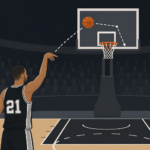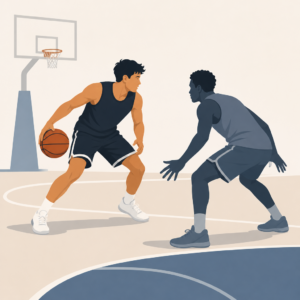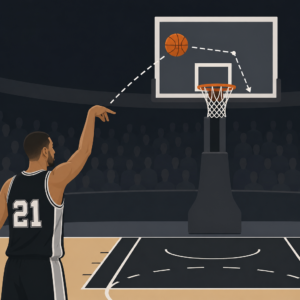

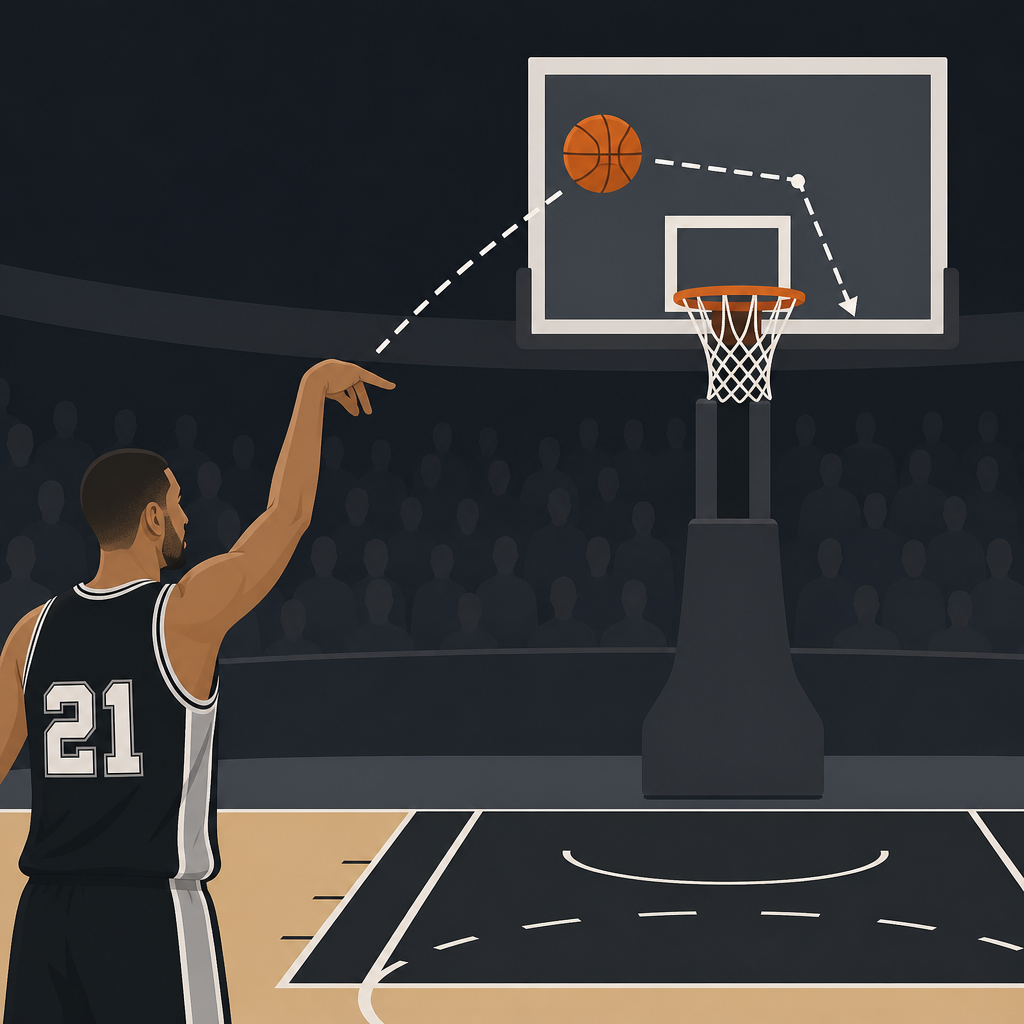
A bank shot is a shot that intentionally hits the backboard before dropping through the rim, and when players learn how to shoot a bank shot with correct angles, touch, and timing, it becomes one of the most reliable scoring tools in basketball. In coaching gyms, skill workouts, and game film sessions, I treat the bank shot as more than a specialty finish. It is a practical answer to real defensive pressure. A straight-line jumper can be blocked, rushed, or thrown off by a hard closeout, but a well-placed bank shot changes the target and often gives the shooter a larger effective margin for error. That is one reason the shot mattered so much to Tim Duncan, whose quiet, repeatable use of the glass turned a fundamental into a signature weapon.
To understand the move, start with the key terms. The glass is the backboard. The sweet spot is the area on the backboard where the ball should land so it rebounds softly into the basket. The angle is the path from the shooter to that spot and then into the rim. Touch refers to speed and spin, because a bank shot needs enough force to reach the board but not so much that it ricochets long. Footwork matters too. A bank shot can come from a layup, a short runner, a turnaround in the post, or a midrange jumper from either side of the floor. Different forms, same principle: use geometry and control to create a higher-percentage look.
This matters because shooting skill is not just about making open threes. Complete scorers need solutions at every level: finishing at the rim, pulling up from midrange, and punishing defenders who overplay one option. A strong bank shot supports all of that. Youth players benefit because the glass provides a visual guide. Guards benefit because the bank can beat length in traffic. Forwards and centers benefit because post angles naturally open windows to the square. As the shooting hub within Basketball Skills, this guide connects to the full scoring picture: form shooting, footwork, layups, floaters, post moves, pull-up jumpers, and game decision-making all feed into your bank shot results.
Tim Duncan loved the bank shot because it fit elite habits: balance, patience, shot selection, and repetition. He did not use it for style points. He used it because it was efficient from his spots, especially from the wings and short corners, and because it held up under playoff pressure. That is the deeper lesson. The bank shot is not old-fashioned. It is situationally smart basketball. Learn where it works, how to aim it, and when to choose it, and your shooting package becomes harder to defend at every level.
How a bank shot works: angles, target points, and touch
If you want to shoot a bank shot consistently, think of the backboard as a passing surface. You are not firing the ball at the rim and hoping it glances in. You are sending the ball to a precise point so the rebound angle carries it down through the basket. For most bank shots outside point-blank range, that target is not the middle of the square. It is usually the upper corner area of the square on the side of the basket matching your shooting angle. From the right side, many right-handed shooters aim near the upper right portion of the box. From the left side, they shift toward the upper left portion. The exact spot changes with distance, height, and speed, but the concept remains constant.
Physics explains why. The ball approaches the board with horizontal and vertical force. The board redirects that force toward the rim. A softer shot with moderate arc tends to die on the glass and drop kindly. A flat, hard shot leaves less room for error. That is why players who struggle with bank shots usually miss in one of two ways: they hit too low and the ball catches front rim, or they hit too hard and the ball springs over the cylinder. In workouts, I teach players to see a window rather than a dot. The goal is to own an aiming zone and pair it with consistent release speed.
Spin also matters. Backspin is your friend because it helps the ball soften on contact and bounce more predictably. Side spin introduces extra variables and often comes from poor hand placement or body drift. Good bank shooters keep shoulders level, eyes up early, and release the ball with the same clean mechanics they use on other touch shots. That consistency is why form shooting and one-hand touch drills translate so well to the glass.
Where on the floor the bank shot is most effective
The bank shot is most effective from angles where the backboard creates a natural path into the rim. In practical terms, that means the right wing, left wing, short corner, and low block are the prime zones. Directly in front of the basket, especially from the free-throw line area, banking becomes less intuitive and often less efficient than a normal jumper unless the shooter has trained it extensively. The geometry is simply cleaner from the sides because the board gives you a visible lane to the hoop.
Most players first learn the bank on layups, where the top corner of the square is the classic target. From there, the next progression is short-range shots: jump hooks, push shots, post turnarounds, and one-foot runners from eight to twelve feet. Midrange wing bank shots are the next layer. This is where Tim Duncan built a career advantage. He did not force banks from everywhere. He knew his spots. Around fifteen feet from the left or right side, especially after facing up or turning over one shoulder, he could put the ball high off the glass with remarkable repeatability.
The short corner deserves special attention because defenders often expect a baseline floater or a tough direct jumper. A bank shot from that area can be deceptively efficient if your feet are set and the contest comes from the middle. In youth basketball, it is often one of the best answers against taller shot blockers who protect the rim but leave room on the board. In high school and college settings, it remains effective for posts and bigger wings who catch near the lane line and need a fast, balanced release.
| Floor area | Best bank shot type | Why it works |
|---|---|---|
| Low block | Layup, hook, turnaround | Short distance and clear angle to the square |
| Short corner | Push shot, short jumper | Helps avoid rim protectors rotating from the paint |
| Wing midrange | Pull-up or post face-up bank | Natural angle and larger perceived target |
| Top of key | Rarely recommended | Angle is flatter and direct swish is usually cleaner |
When to use a bank shot in games
The best time to use a bank shot is when the defense gives you an angle and takes away your clean direct line to the rim. That happens often. A help defender may be waiting inside. A primary defender may be trailing on your hip. A taller shot blocker may be stepping up late. In those moments, the board becomes an ally. Instead of trying to arc the ball over length, you can put it where the defender cannot reach it without fouling or overcommitting.
Use the bank on drives when your momentum carries you slightly wide of the basket. Use it on post catches when your shoulder turn naturally opens the glass. Use it on short pull-ups when a defender contests from the inside hand and you have a side angle. On fast breaks, the bank is often the safest finish because speed makes touch harder and the square gives the eyes a simple target. Even in half-court offense, a controlled wing bank can punish teams that run shooters off the line and crowd the lane.
Do not force it when the angle is poor or when a direct finish is simpler. If you are centered in front of the basket with a clear view, a standard layup or jumper is often the better choice. If you are deep in the short corner with a drifting body and no balance, a bank may become a bailout instead of a percentage shot. Good shot selection is the difference between using the glass intelligently and falling in love with a low-value attempt. The bank shot is a tool, not an identity.
Technique: footwork, eyes, release, and follow-through
Proper bank-shot technique starts from the ground up. Your feet set your angle, and your angle determines whether the board can help you. On layups, that means taking a path that keeps your shoulders aligned to the target point on the square rather than sliding under the rim. On post shots, it means finishing the pivot with balance instead of fading unnecessarily. On pull-ups, it means hopping or one-two stepping into a base that lets you rise vertically. If your lower body drifts, your aiming point changes in midair.
Your eyes should find the target early. Young players often look at the rim and then switch to the square during the release, which creates hesitation. Pick the exact area on the board before the ball leaves your shooting pocket. That commitment improves rhythm and touch. The release itself should be compact and high enough to protect the ball. On short shots, many players benefit from a slightly softer wrist finish than they use on longer jumpers, but the core mechanics stay the same: shooting hand under and behind the ball, guide hand quiet, elbow aligned, wrist snapping through the target.
Follow-through matters because it reflects whether you delivered the ball with control. A held finish with relaxed fingers usually produces better touch than a jabbed release. I also coach players to land balanced and watch the outcome without turning away. The board gives immediate feedback. Too low means more lift. Too hard means more touch. Too wide means your feet or shoulders changed the line. A bank shot improves quickly when players make small adjustments from clear misses rather than guessing.
Why Tim Duncan made the bank shot iconic
Tim Duncan did not invent the bank shot, but he modernized its reputation by proving that a fundamental skill could survive against elite length, speed, and scouting. Across nineteen NBA seasons, he built his offense around repeatable decisions. He established deep position, used clean pivots, stayed on balance, and shot from spots he could own under pressure. The bank shot fit every part of that profile. It required no wasted motion, worked from both blocks and mid-post areas, and punished defenders who gave him even a sliver of space.
What separated Duncan was not novelty but precision. He understood where his release, arc, and footwork met the geometry of the court. If he caught on the left block, turned over his right shoulder, and saw a contest arriving late, he knew the glass was open. If he faced from fifteen feet on the wing, he could raise into a soft bank before the defender recovered fully. The shot looked simple because his process was simple. Years of repetition removed indecision.
For developing players, Duncan offers two useful lessons. First, signature moves do not have to be flashy. They have to be dependable. Second, the bank shot works best when it grows out of your larger shooting foundation. Duncan was excellent at screening, sealing, pivoting, and using shot fakes, so his bank shot appeared naturally within real offense. Study that sequence, not just the finish. The move was a product of discipline.
Drills that build a reliable bank shot
The fastest way to improve is to train the bank shot in progressions. Start with stationary form banks from both sides, three to six feet out. Make ten from each side with one hand emphasizing arc and backspin. Then move to regular layups using the square, alternating feet and hands. Next add short jump stops into two-foot push banks from the lane lines. Once touch is stable, progress to one-dribble pull-up banks from the wings and turnaround banks from the block.
I like to use a simple constraint in workouts: every make must call its target. Players say “high right” or “high left” before the release so they learn intentional aiming. Another useful drill is partner closeout bank shooting. The shooter catches on the wing, the defender closes from the paint side, and the shooter reads whether the direct jumper or bank angle is available. This connects mechanics to decision-making, which is how the skill appears in games.
Track percentages by spot, not just total makes. A player might be excellent from the right short corner and poor from the left wing. That tells you what to practice and what to avoid in games until the weaker area improves. Film helps too. Slow-motion clips show whether misses come from flat trajectory, drifting shoulders, or late eye focus. Precision practice turns the bank shot from a trick into a dependable scoring option.
Common mistakes and how to fix them
The most common mistake is aiming at the rim instead of the board. That sounds obvious, yet it happens constantly under pressure. The fix is target discipline: identify the spot early and keep your eyes there through release. The second mistake is excessive power. Players often assume the board will absorb force, but hard banks usually bounce long. The fix is to raise arc and soften wrist action. Third is poor body angle. If you fade away or drive too far under the hoop, the target shrinks. The fix is earlier footwork and stronger stops.
Another mistake is using the bank from bad zones. Not every side-angle jumper should be a bank. Players need context. If the defender is giving room and your direct pull-up is comfortable, use it. If you are nearly centered, trust the rim. Finally, some players neglect off-hand development. A complete shooting package includes banking with either hand near the basket, especially on layups and inside finishes. Defenses notice one-hand limitations quickly.
Master the bank shot, and your Basketball Skills foundation becomes more complete. You gain a scoring answer against length, a cleaner finish from side angles, and a midrange option with real game value. Study your spots, practice the correct target, and add the bank shot to your next workout today.
Frequently Asked Questions
What is a bank shot in basketball, and why is it so effective?
A bank shot is a shot that intentionally hits the backboard before going through the rim. Instead of trying to drop the ball straight into the basket on a direct line, the shooter uses the glass as a target. That simple adjustment can make the shot far more forgiving, especially from the right spots on the floor. When you know how to shoot a bank shot with the right angle, arc, and touch, the backboard effectively increases your margin for error.
The biggest reason it works so well is geometry. The square on the backboard gives players a visual target, and that target can be easier to hit consistently than aiming only at the rim. On certain shots, especially from the wings, short corners, and around the lane, using the glass helps soften the ball’s path and reduces the need for a perfectly clean swish. A well-placed bank shot can still score even if it is not absolutely perfect.
It is also effective against defensive pressure. In real games, defenders contest shots, close out hard, and challenge release points. A direct jumper may be rushed or altered, but a bank shot can create a safer scoring window because the shooter is using a higher, more controlled trajectory and a different line to the basket. That is one reason fundamentally sound players have relied on it for decades. Tim Duncan, for example, turned the bank shot into a signature weapon not because it looked flashy, but because it was repeatable, efficient, and difficult to take away.
How do you aim a bank shot correctly?
The key to aiming a bank shot is understanding that your target is not the rim first. Your visual focus shifts to a spot on the backboard, typically near the upper corner of the painted square depending on your angle. For a right-side bank shot, many players aim toward the top right area of the square. For a left-side bank shot, they use the top left area. The exact point changes based on distance, shooting angle, and whether you are taking a layup, a short jumper, or a post turnaround, but the principle stays the same: pick a clear point on the glass and deliver the ball there with touch.
Footwork matters just as much as aim. You want your shoulders balanced and your body under control so the ball comes off your hand cleanly. If you are drifting sideways, fading too much, or rushing the release, even the correct target will not save the shot. Good bank shooters stay compact, rise under control, and let the wrist guide the ball softly into the board. The shot should feel smooth, not forced.
Arc and touch are what complete the formula. A flat bank shot is hard to control and tends to come off too strong. A soft shot with a comfortable arc lets the ball hit the glass and drop naturally toward the rim. That is why coaches often teach players to “shoot it soft off the window.” The backboard is not something you throw the ball against. It is something you use. When players begin treating the glass as a precision target instead of a bailout, their consistency improves quickly.
When should you use a bank shot instead of a regular jumper or layup?
You should use a bank shot when it gives you a better angle, a safer release, or a more controllable finish than a direct shot. One of the best times is from the wing or short corner inside the mid-range area, where the angle to the backboard is clean and natural. From those spots, a bank shot can be easier to judge than a straight jumper, especially if a defender is closing out aggressively. Rather than trying to arc the ball directly over a contest, you can put it high off the glass and let the board do some of the work.
It is also a smart option in the post. Bigs and skilled forwards often use the bank shot on turnaround jumpers, jump hooks, and quick face-up shots because defenders are usually bodying them, crowding their release, or sitting on a direct line to the rim. A bank shot changes the entry angle of the ball and makes the shot harder to block cleanly. This is exactly why Tim Duncan was so dangerous with it. He used the bank not as a trick, but as a disciplined answer to predictable defensive coverage.
Near the basket, the bank shot is often the correct choice on layups and short runners, particularly when the defender is taking away the near side of the rim. Using the glass allows you to finish around shot blockers and protect the ball longer. That said, it is not always the right choice. Straight-on jumpers usually are not ideal for banking unless a player has practiced them extensively. Deep shots also become less reliable off the glass. The best rule is simple: use the bank when the angle is favorable and it improves your odds under pressure.
Why did Tim Duncan love the bank shot, and what can players learn from him?
Tim Duncan loved the bank shot because it fit everything about how he played: efficient, fundamental, calm, and brutally consistent. He was never chasing style points. He was looking for repeatable scoring solutions that worked against size, physicality, and playoff-level defense. The mid-post bank shot gave him exactly that. From either side of the floor, he could square up, turn, and put the ball softly off the glass before defenders could fully affect it. It became one of the most dependable shots of his career.
What made Duncan’s bank shot special was not just touch. It was preparation. His footwork put him in balance, his shoulders stayed composed, and he understood angles at an elite level. He knew where on the glass the ball needed to land from different spots, and he practiced those locations until they became automatic. That is an important lesson for players today. The bank shot is not old-fashioned. It is a high-level skill that rewards discipline and detail.
Players can also learn from Duncan’s shot selection. He did not force the bank from bad positions. He used it from spots where the geometry made sense and where the defense gave him room to get to his release. That is what smart scoring looks like. Instead of viewing the bank shot as something only big men use, guards, wings, and forwards should study why it worked so well for him: it created a controlled target, reduced the impact of contests, and turned a difficult scoring area into a reliable source of points.
How can beginners practice the bank shot and make it a reliable part of their game?
Beginners should start close to the basket and focus on one side at a time. The goal early is not volume. It is accuracy and feel. Stand a few feet from the hoop at an angle where the bank is natural, pick a specific spot on the square, and shoot soft, controlled reps. Watch where the ball hits the glass and how it reacts. If it is coming off too hard, reduce force and add touch. If it misses long or wide, adjust your target point. This kind of feedback-based practice is what builds shot awareness.
Next, add structure. Practice from both blocks, both short corners, and the mid-post on each side. Use the same shooting mechanics each time: balanced base, eyes on the target, smooth release, full follow-through. As you improve, mix in different types of bank shots such as one-foot finishes, two-foot finishes, short pull-ups, and turnaround jumpers. The more game-like the reps become, the more usable the skill becomes in live play. Repetition matters, but deliberate repetition matters more.
Finally, train the bank shot under light pressure and realistic decision-making. Have a partner close out, use a pad for contact, or add a dribble into the shot so you are not always shooting from a static stance. In games, the bank shot works because it solves pressure, so your practice should reflect that. Over time, you will begin to recognize exactly when the angle is there and when the glass is the best option. That is when the shot stops being a drill and becomes a weapon.