
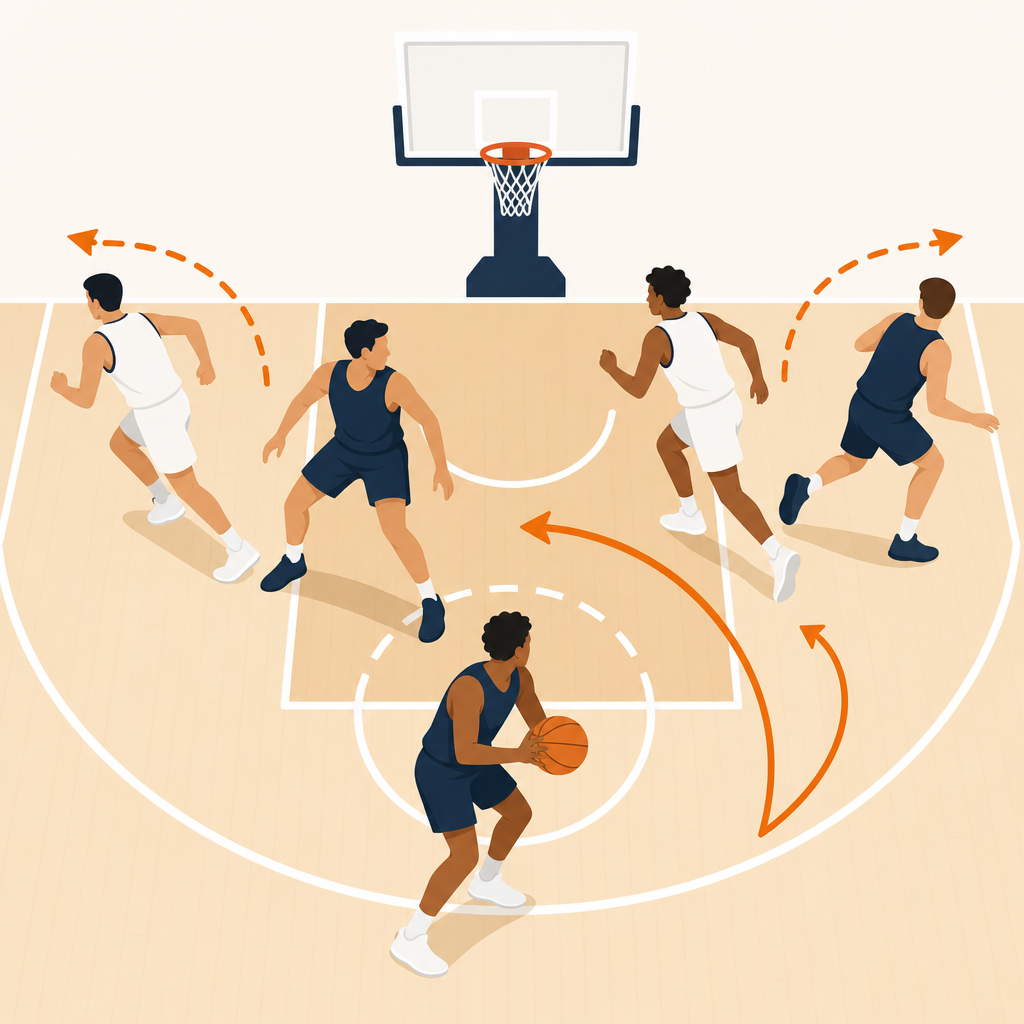
Basketball offense is the art of creating efficient scoring chances, and the players who do it best are often the ones who never stop working without the ball. For coaches, players, and parents trying to improve offensive performance, understanding how open shots are created away from the dribble is essential because most game-winning advantages come from timing, spacing, screening, cutting, and reading defenders before the catch. When I teach offensive habits, I start with a simple definition: playing without the ball means moving with purpose to improve your own shot, open a teammate, or shift the defense out of position. That includes cuts, relocations, screen use, spacing discipline, and communication. It matters at every level of basketball skills development because defenses recover faster than ever, help rotations are smarter, and standing still kills possessions. A great offense does not rely on one star improvising late in the clock. It creates predictable advantages through repeatable habits. This hub covers the foundations of basketball offense with a focus on how to create open shots without the ball, while also connecting the wider ideas that define effective team scoring: spacing, timing, screening, cutting, reading help defense, transition lanes, and shot quality. If you want a practical framework for better offense, start here and build every possession around movement, purpose, and smart reads.
Why off-ball movement is the engine of basketball offense
Off-ball movement is the engine of modern basketball offense because it forces defenders to make multiple decisions in a few seconds. The best offensive players understand that every cut and relocation asks a question: will the defender trail, switch, top-lock, go under, or lose vision? If the defense answers incorrectly, an open shot appears. At the youth level, this may look as basic as a sharp basket cut when a wing pass is denied. At the college and professional levels, it includes split actions, flare screens, hammer actions, and shake movement behind pick-and-roll. The principle is the same. Defenders hate guarding two threats at once: the ball and a moving player. That is why stillness helps the defense. Motion creates confusion, and confusion creates openings.
In practice, off-ball offense improves three outcomes. First, it raises shot quality by generating catch-and-shoot attempts, layups, and close-range paint touches. Second, it reduces turnover pressure because the ball does not have to stick with one creator. Third, it improves team spacing, which makes every on-ball action more effective. I have seen average shooting teams become productive simply by cleaning up floor balance and cutting rules. A player who cannot yet break down a defender one-on-one can still become a valuable offensive piece by setting a hard pin-down, timing a 45 cut, or drifting to the corner as help rotates. That is why this topic belongs at the center of any basketball skills plan.
Spacing principles that create driving lanes and passing windows
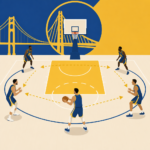
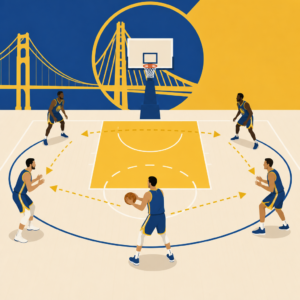
Good spacing is the first requirement for open shots without the ball. Spacing means placing offensive players far enough apart to stretch help defenders, while still staying close enough for realistic passing angles. In most half-court systems, that means using corners, wings, slots, and the dunker spot with discipline. A common spacing error is crowding the ball after a pass. Another is cutting into occupied space. Both mistakes shrink driving lanes and allow one defender to guard two players. Proper spacing does the opposite. It widens the floor, lengthens closeouts, and opens clear passing windows for catch-and-shoot chances.
Players should know basic spacing rules by position and action. If the ball is driven baseline, the strong-side corner usually stays deep unless the scheme calls for a lift, while weak-side players rotate behind the drive for vision and kick-out angles. If the ball is driven middle, weak-side teammates often drift or slot behind the play to stay visible. In five-out offense, every cut must be followed by a fill to the next open perimeter spot. In four-out one-in offense, perimeter players must avoid standing directly behind the post because that invites easy help. NBA teams such as the Sacramento Kings under Mike Brown and the Denver Nuggets around Nikola Jokic have shown how disciplined spacing turns ordinary actions into elite offense. Their movement looks complex, but the spacing rules are simple and repeatable.
Cutting with timing: basket cuts, backdoor cuts, and 45 cuts
Cutting is one of the fastest ways to create an open shot without the ball, but only when the timing is correct. A cut that happens too early brings extra defenders into the lane. A cut that happens too late misses the passing window. The most useful cuts for developing players are basket cuts after a pass, backdoor cuts against denial, and 45 cuts from the wing when a teammate drives from the top. Each cut attacks a predictable defensive behavior.
Basket cuts work because defenders often relax after the ball changes sides. Teach players to pass, then cut hard off the receiver’s shoulder and look for a return pass at the rim. If the layup is not there, they clear through and create space for the next action. Backdoor cuts punish overplay. When a defender jumps high in the passing lane or top-locks a shooter, the offensive player plants the high foot, explodes to the rim, shows a target hand, and expects the passer to lead them away from help. The 45 cut is especially effective against teams that overhelp on drives. When the top player attacks and the weak-side low defender steps over early, the wing cuts diagonally toward the front of the rim. That cut has produced countless layups in international basketball and in motion-based college systems because it targets the exact space the helper just vacated.
Young players often think cutting means sprinting randomly. It does not. Effective cutting uses eye contact, pace change, body angle, and awareness of the helper. The cut should complement the ball, not compete with it. When done well, cutting creates direct layups and indirect threes because the defense has to collapse and recover.
Using screens without the ball to free shooters and slashers
Screens are the backbone of team offense because they let one player create an advantage for another without needing elite individual dribbling. Off-ball screens come in several forms: down screens, flare screens, cross screens, pin-downs, wide pin-downs, and staggered screens. Their purpose is consistent: delay the defender long enough to spring the cutter into an open window. To use screens well, players must understand setup, angle, pace, and read.
The setup matters first. A shooter cannot jog casually into a pin-down and expect separation. They must set up the defender with a step away, a pause, or a change of speed. Then they brush shoulder-to-shoulder off the screener. Leaving too much space allows the defender to slip through. Screen angle matters too. A flare screen should direct the cutter away from the ball toward open space, while a down screen should send the cutter toward a catch area where the passer has vision. The read comes next. If the defender trails, curl to the rim or short midrange. If the defender goes under, pop for the jumper. If the defense switches, slip the screener or seal the mismatch. These are not advanced secrets; they are standard offensive reads that every serious player should know.
| Off-Ball Action | Best Use | Primary Read | Common Open Shot |
|---|---|---|---|
| Pin-down screen | Free a wing shooter | Trail or go under | Catch-and-shoot three or curl jumper |
| Flare screen | Punish help defenders | Late switch or poor closeout angle | Wing or slot three |
| Backdoor cut | Attack denial defense | Defender top-locks passing lane | Layup |
| 45 cut | Counter strong help on drives | Low defender tags the ball | Layup or short floater |
| Hammer action | Create weak-side corner shot | Baseline help commits early | Corner three |
One point I stress in film sessions is that screeners are scorers too. Defenses that chase the shooter often lose the screener on slips and seals. Teams like Villanova under Jay Wright built efficient offense by pairing strong screen discipline with immediate spacing after contact. The lesson is clear: if you set quality screens and read the coverage, open shots appear for both players.
Reading defenders before the catch and making the right relocation
Many players wait until they catch the ball to start thinking. Strong offensive players read the defense before the ball arrives. That is how they turn routine passes into open shots. Pre-catch reading starts with the defender’s stance, head position, and relationship to the ball. If the defender is ball-watching, relocate behind their vision. If they are top-locking a shooter, cut backdoor. If a drive pulls your defender into the lane, drift or lift into the passing window. These are simple reads, but they require constant attention.
Relocation is especially important in today’s game because closeouts are faster and help rotations are more structured. After a pass, players should not admire the action. They should relocate to improve the angle. Common relocations include the corner drift on baseline drives, the slot lift on middle penetration, and the shake-up from the weak-side corner behind pick-and-roll. NBA guards such as Stephen Curry and Tyrese Haliburton create offense this way even when they are not handling the initial action. Curry’s movement is extreme, but the principle is teachable: move after you pass, move when help turns its head, and move into the passer’s line of sight. Those habits raise shot volume and efficiency without increasing dribble count.
The best way to train this is with advantage drills. Start a drive, force the helper to tag, and require weak-side players to choose the correct relocation in real time. Add constraints, such as only one dribble after the catch, to reward fast decisions. Players learn quickly when the drill punishes standing still.
Connecting half-court offense, transition offense, and shot quality
Basketball offense is not just half-court execution. Many of the easiest open shots without the ball happen in early offense before the defense is set. Sprinting to the corners in transition, filling wide lanes, running to the dunker spot, and trailing to the top of the arc all create natural spacing before a play is called. I have coached players who thought transition offense meant only fast-break layups. In reality, the best transition teams use pace to produce early threes, deep seals, and quick-hitting cuts. The player without the ball has a major role. If they run to the wrong area, the possession slows and the defense loads up.
Shot quality should guide every off-ball decision. An open shot is not automatically a good shot; location, shooter skill, contest level, and rebound position all matter. Analytics from Synergy Sports and shot-profile studies across college and professional basketball consistently show that rim attempts, free throws, and catch-and-shoot threes are the most efficient outcomes for most teams. That does not eliminate midrange shots, but it does mean off-ball movement should prioritize actions that produce paint touches and inside-out kick-outs. If your offense creates ten open long twos and two corner threes, the movement may look active but the possession value is mediocre.
As a hub within basketball skills, offense should connect to footwork, shooting, passing, decision-making, and conditioning. Footwork determines whether a cutter can plant and explode. Shooting mechanics determine whether relocation turns into points. Passing accuracy determines whether the open player can shoot in rhythm. Conditioning matters because weak cuts in the fourth quarter produce defended shots. To improve offense comprehensively, study those linked skills and build them into practice. Start with spacing, add cutting and screening, train reads, and measure success by quality looks, not just points. Do that consistently, and your team will create more open shots without the ball and score with far less strain. Review your offense this week, teach one spacing rule and one cutting rule clearly, and build from there.
Frequently Asked Questions
What does “creating open shots without the ball” actually mean in basketball offense?
Creating open shots without the ball means getting yourself or a teammate into a high-quality scoring position before the dribble ever becomes the main action. In good offense, players do not wait for the ball and then try to beat a defender one-on-one every possession. Instead, they use movement, spacing, timing, cuts, screens, and changes of pace to force defenders into difficult decisions. The goal is to arrive at the catch with an advantage already created, whether that is a few feet of separation for a jumper, a defender trailing on a cut to the rim, or help defenders being pulled out of position.
This matters because most efficient offense is built before the catch. When a player catches the ball with balance, time, and space, the shot quality immediately improves. Coaches teach this because defenses are designed to take away easy looks from players who stand still. A stationary offensive player is easy to guard. A player who reads the defense, moves with purpose, and works in sync with teammates becomes much harder to contain. That is why great offenses often look simple on the surface but are really built on constant off-ball habits that wear defenders down over the course of a game.
At its core, off-ball offense is about forcing the defense to react. If the defender loses vision, you cut. If the defender cheats under, you lift or relocate into space. If help shifts too far, you fill behind the play. If a teammate drives, you do not drift randomly; you move into the passing window that creates the clearest shot. These habits turn ordinary possessions into efficient ones, and they are a major reason the best offensive teams consistently generate open shots without needing difficult shot-making every time down the floor.
What are the most important off-ball skills players should learn to get open consistently?
The most important off-ball skills start with spacing, timing, and changing pace. Spacing means understanding where to stand so the floor stays open for drives, passes, and cuts. If players crowd each other, defenders can guard multiple people at once and close out more easily. Proper spacing stretches the defense horizontally and vertically, which creates larger passing lanes and cleaner catch-and-shoot opportunities. Players should learn where to position themselves based on the ball, the basket, and their teammates so they are helping the offense rather than shrinking the floor.
Timing is just as important. Many players make the right cut at the wrong moment. A great cutter does not move just to move; they move when the defender is occupied, when the ball-handler can actually see them, and when the action on the other side of the floor has created a window. Good offense is coordinated. If a player cuts too early, the lane is not available yet. If they cut too late, the advantage is gone. Learning to sync movement with the dribble, the pass, and the defender’s attention is what separates active movement from effective movement.
Changing pace is one of the most underrated skills in basketball. Running hard the whole time sounds good, but skilled offensive players know how to go from slow to explosive in one step. They might walk a defender down, hesitate, then burst into a backdoor cut. They may set up a screen at one speed, then sharply curl or flare into space. Defenders get comfortable guarding predictable movement. Sudden acceleration, stops, and direction changes are what create separation.
Players should also learn how to screen, use screens, relocate after passing, and read defensive positioning. Screening is not just standing in the way; it is about angle, timing, and making the defender choose a path. Using a screen requires setting up the defender first so the screen actually creates contact or confusion. Relocation is another major skill. After making a pass, strong offensive players do not admire the play. They move to a new spot, drift to an open window, or fill behind penetration. When players combine these habits with active communication and a willingness to read the game instead of memorizing movements, they become much more dangerous without the ball.
How do cutting and screening work together to create easier shots?
Cutting and screening work together because both actions force defenders to navigate traffic, split-second decisions, and changes in direction. A cut puts pressure on the rim or on open space. A screen delays or redirects the defender who is trying to stay attached. When these two elements are connected properly, the offense creates confusion and separation without needing a difficult dribble move. That is why even simple actions like down screens, flare screens, pin-downs, and back screens can produce excellent shots when executed with discipline.
For example, if a player sets a strong down screen for a shooter on the wing, the shooter can read the defender’s path. If the defender trails tightly, the shooter can curl toward the lane for a layup or short jumper. If the defender goes under, the shooter can pop out for an open perimeter shot. If the defense switches, the offense may gain a mismatch or trigger a slip opportunity for the screener. In each case, the screen does not guarantee the same outcome. It creates a decision point, and the offense wins by reading that decision faster than the defense can recover.
Backdoor cuts are another powerful example. If a defender is overplaying the passing lane to deny a catch, that pressure can be used against them. Instead of fighting farther away from the basket, the offensive player plants, changes direction, and cuts hard to the rim. This is especially effective when spacing is clean and the passer is ready. The cut punishes aggressive denial, and over time it forces defenders to back off, which then opens easier perimeter catches. Good offense often works like this: one smart action creates the threat of another, and that threat expands future options.
Screening also helps cutters who may not even receive the ball immediately. A well-timed screen can occupy help defenders long enough for the lane to open. It can also create confusion about who is responsible in transition or in half-court actions. Coaches emphasize that the best screening teams are not just physical; they are precise. The screener must arrive under control, set the right angle, and often hold the screen just long enough to matter. The cutter or shooter must set up the defender first and then explode into the read. When both players do their jobs, the result is often a high-percentage shot created without any wasted dribbling.
How can players read defenders better and know when to cut, relocate, or stay spaced?
Reading defenders starts with seeing more than just your own matchup. Great off-ball players constantly scan the ball, their defender, the help defender, and the open spaces on the floor. A simple teaching point many coaches use is to read the defender’s eyes, hips, and body angle. If the defender is ball-watching and loses vision of you, there may be a cutting lane behind them. If their top foot is high and they are denying the pass, a backdoor cut may be available. If they are sagging into the lane to help on penetration, relocation to the perimeter can create a clean catch-and-shoot chance.
Players also need to understand when staying spaced is the smartest choice. Not every moment calls for a cut. Sometimes movement clogs the lane and actually helps the defense. If a teammate is driving into space, the off-ball player on that side may need to drift to the corner or lift higher on the wing rather than cutting into the paint. If the defense is already collapsing, filling behind the drive often creates a better shot than diving toward traffic. Good offensive players know that useful movement creates clarity. Random movement creates congestion.
One of the best habits for improving reads is learning common cues. When your defender turns their head, cut. When two defenders jump to the ball, slide into the open passing lane. When a teammate penetrates baseline, drift or lift based on your spot and the help rotation. When the post is being fronted, create a better passing angle by relocating. These are not rigid rules for every possession, but they give players a strong framework for making quick, intelligent decisions.
Film study and repetition are huge here. Players who watch clips of good spacing and smart off-ball movement begin to recognize patterns faster in games. In practice, coaches can build these reads through small-sided games, guided drills, and controlled scrimmages that reward correct movement. Over time, what feels complicated becomes instinctive. The best off-ball players are not guessing. They are observing, anticipating, and moving with purpose based on what the defense is showing them.
What can coaches, players, and parents do to improve off-ball offense in real games?
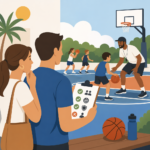
Coaches can improve off-ball offense by teaching it as a priority rather than as a secondary detail after ball-handling and shooting drills. If players only practice scoring with the ball, they will naturally become spectators when they do not have it. Coaches should build drills that emphasize cutting, screening, spacing, timing, and relocation under game-like pressure. Small-sided games are especially useful because they force more decisions and more repetitions for every player. Coaches should also define clear movement principles, such as what to do after a pass, how to react to drives, and where to move when a defender denies a catch. When those rules are consistent, players become more confident and less hesitant.
Players can improve by focusing