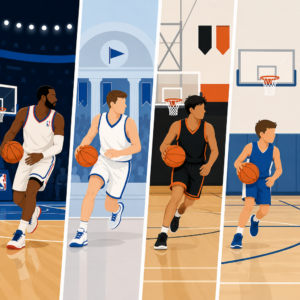

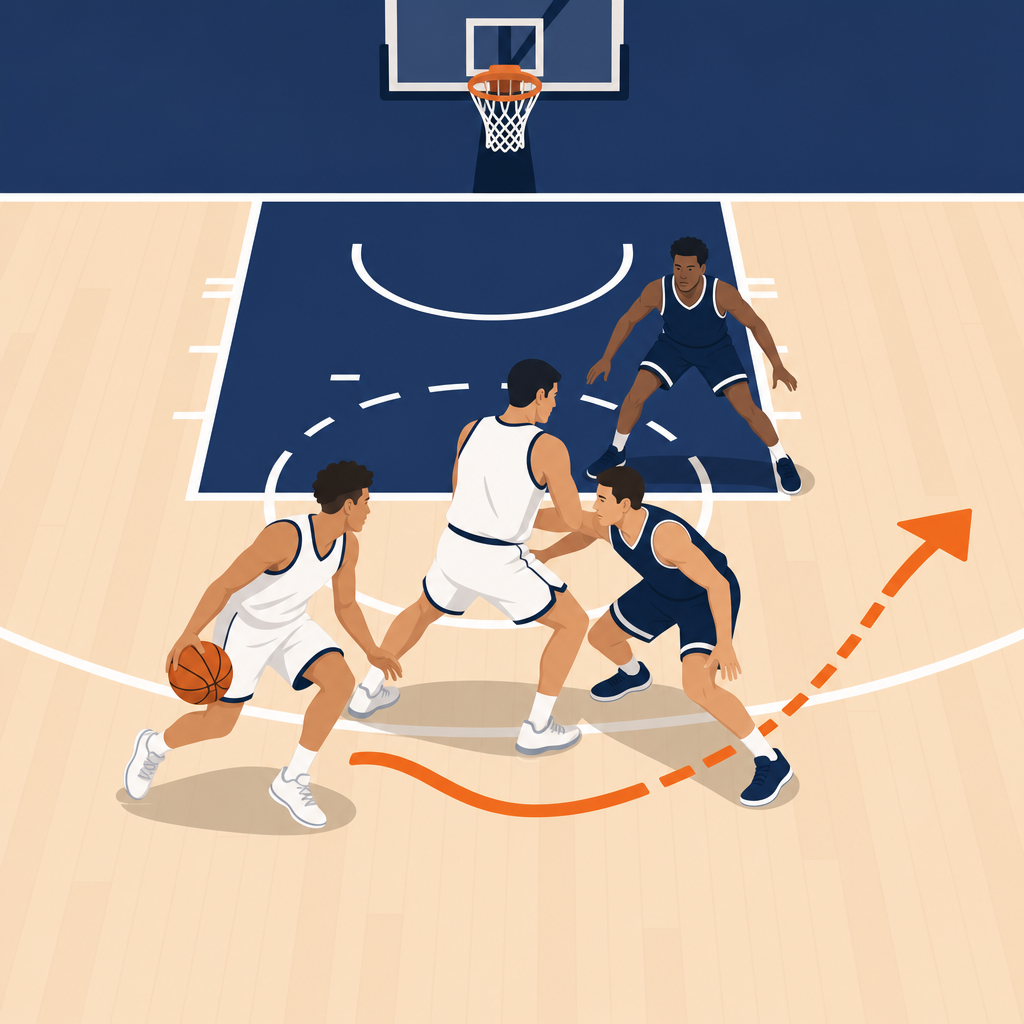
The pick-and-roll offense is the most influential action in modern basketball because it creates structure, forces defensive decisions, and produces efficient shots from youth leagues to the NBA. At its simplest, a ball handler uses a screen set by a teammate, usually a big, to gain an advantage. The screener then rolls, pops, or slips into open space depending on how the defense reacts. That sounds basic, but the action contains nearly every core offensive principle: spacing, timing, angles, reads, ball security, screening technique, passing windows, rim pressure, and shot selection. I have coached and broken down this action for years, and the same truth keeps showing up on film: teams that execute it cleanly can score even when they lack overwhelming individual talent.
Understanding pick-and-roll offense matters because it serves as a hub for the entire offense category. It connects directly to dribbling under pressure, finishing at the rim, shooting off the catch, short-roll passing, cutting, weak-side spacing, and transition flow. It also gives coaches a repeatable framework for organizing players with different skill levels. A youth team can run a simple high ball screen to free its best handler. A college team can layer in Spain pick-and-roll, empty-side actions, and ghost screens. A professional team can weaponize it through matchup hunting, pace control, and analytics-driven shot creation. When people ask why the pick-and-roll dominates every level of basketball, the answer is straightforward: it simplifies offense for the attacking team while complicating the game for the defense.
To understand it fully, define the key terms. The ball handler is the player using the screen. The screener is the teammate setting it. The roll is a hard dive to the basket after contact or after forcing the defender over the screen. The pop is a retreat to open perimeter space. The pocket pass is a short, quick pass delivered into the lane before help defenders recover. Drop coverage places the screener’s defender near the paint, while hedge, switch, blitz, and ice are alternative coverages designed to redirect or disrupt the action. Once you know those terms, you can read almost any game and see why coaches keep building offenses around them.
Why the Pick-and-Roll Creates Advantages
The pick-and-roll works because two offensive players can engage two defenders and force a choice before the weak side can stabilize. That choice is the engine of the action. If the on-ball defender goes under, the handler may shoot. If the big defender drops too far, the handler can pull up from midrange or float the ball to a rolling big. If both defenders commit to the ball, the roll opens. If a low man tags the roll, a shooter becomes available in the corner. Every branch of the decision tree leads to a shot profile that offenses want: layups, free throws, paint touches, corner threes, or rhythm pull-ups.
At the highest levels, the action is powerful because it generates what coaches call “two-on-one on the back side.” Once the screen pulls both primary defenders toward the ball, the offense attacks the remaining help defenders through passing. That is why elite short-roll playmakers such as Draymond Green have been so valuable. He often catches around the free-throw line after a trap, then hits a dunker spot cutter or weak-side shooter. The same principle applies in high school, just with simpler reads. A guard turns the corner, the weak-side defender steps in, and a basic drop-off pass creates a layup. Different speed, same geometry.
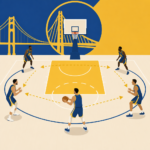
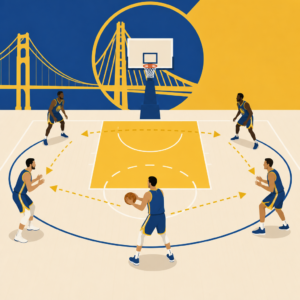
Spacing makes the action dangerous. Four-out alignment gives the roll lane room. Empty-side pick-and-roll removes a tag defender from one side of the floor. A slot shooter lifts to occupy help. The best offenses teach exact landmarks: screen at the defender’s hip, roll down the lane line, weak-side corner stay low, opposite wing sink or lift based on the low man. These details decide whether the action produces a clean advantage or a turnover.
Core Components of Strong Pick-and-Roll Execution
Good pick-and-roll offense starts with the screen itself. A legal, stationary screen set at the right angle changes the possession. Young players often sprint into the action and never get set, leading to offensive fouls or ineffective contact. The screener should arrive early, create a wide base, protect the hands and torso, and angle the screen so the ball handler can attack the defender’s top foot. In side pick-and-roll, that angle often sends the handler toward the middle. In high pick-and-roll, it usually creates downhill momentum toward the elbows and nail area.
The ball handler must set up the screen, not just use it. That means forcing the defender to believe one direction before rubbing shoulder-to-hip off the screener. The most common mistake I see in film sessions is leaving too much space between handler and screener, which allows the on-ball defender to slide through. Great handlers manipulate pace. They may slow into the screen, explode out, hesitate to freeze the drop defender, then attack the gap. Chris Paul built a career on this. Luka Doncic uses deceleration and body contact. Jalen Brunson wins with footwork and strength rather than pure burst.
The screener’s second job is decision-making after contact. A traditional center may rim run every time, but modern offenses value versatility. A short roll to eight to twelve feet can be more damaging than a full dive if the defense tags from the corners. A pop works when the screener can shoot or pass. A slip beats aggressive hedges and switches because the screener leaves early before the defense can make contact. Communication between the pair matters. Many teams use simple verbal or hand signals to call rescreens, flips, and angle changes after the first action is defended.
Weak-side players are not spectators. The low man must be occupied, and help defenders must be punished for overcommitting. That is why coaches drill corner spacing, 45-degree cuts, and lift timing. If the weak-side wing drifts too high too early, the corner pass disappears. If the dunker spot stays directly under the rim with a non-shooter, the roll lane clogs. Strong pick-and-roll teams understand that all five players determine the success of the action.
Main Pick-and-Roll Reads and Counters
Every player learning offense should know the first reads against standard coverages. Against drop, the handler reads the big defender’s depth. If the drop is deep, take the pull-up or floater. If the big steps up, throw the pocket pass or lob. Against a switch, attack the mismatch immediately or reject the screen before the switch is set. Against a blitz, retreat dribble, split if the gap is there, or hit the screener on the short roll. Against ice on the side, reject the screen and drive baseline only if space exists, or flow into a rescreen toward the middle.
The following table summarizes the most common responses.
| Defensive coverage | What the defense wants | Best offensive counter |
|---|---|---|
| Drop | Protect rim, concede pull-up | Midrange jumper, floater, pocket pass, lob |
| Switch | Eliminate advantage, force isolation | Attack mismatch, slip screen, post seal, rescreen |
| Blitz/Trap | Get ball out of handler’s hands | Short roll pass, split trap, quick outlet and swing |
| Hedge/Show | Delay handler, recover to screener | Turn the corner, hit rolling big early, snake dribble |
| Ice/Down | Keep side action on sideline | Reject, flip angle, re-screen to middle |
Counters become more effective when teams chain actions together. If the defense contains the first high ball screen, the offense can flow into a second drag screen in transition, then a handoff, then a side pick-and-roll. Good offenses do not stop after the first denial. They keep the defense in rotation. This is one reason the pick-and-roll dominates all levels: it is not a single play but a framework that can connect into horns, five-out, delay, pistol, and spread systems.
Variations Used Across Youth, College, and Professional Basketball
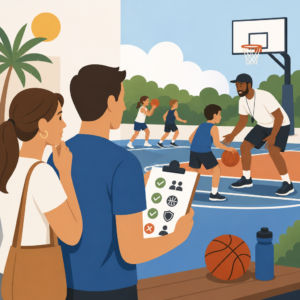
The same principles appear everywhere, but the presentation changes by level. In youth basketball, coaches often keep it simple: one high ball screen, two corner spacers, one slot player, one dunker or weak-side wing. The goals are to teach screening angles, dribble patience, and basic reads. At this stage, execution matters more than complexity. Teams that can make a pocket pass, a simple kick-out, and a layup off a ball screen will outperform teams running sophisticated sets poorly.
High school and college teams add structure through alignment. Horns sets place two bigs at the elbows, allowing either side to trigger a screen and opening slips, pops, and staggered actions. Spread pick-and-roll places four shooters around one screener to maximize driving lanes. Spain pick-and-roll adds a back screen on the roller, often forcing confusion between the dropping big and the tag defender. Many international teams use Spain frequently because it creates immediate pressure at the rim and behind the arc with one coordinated action.
In the NBA, personnel changes everything. Stephen Curry and Draymond Green weaponized short-roll playmaking and relocation threes. Nikola Jokic turns ball screens into passing puzzles because defenders cannot commit fully to the handler or the roller. Trae Young combines deep range with a soft floater, making drop coverage dangerous. Teams also use “ghost” screens, where a perimeter player fakes a screen and slips to the arc before contact, forcing a switch or miscommunication. These wrinkles are not gimmicks. They are responses to increasingly sophisticated defenses that spend entire game plans trying to keep the ball out of the middle.
How Pick-and-Roll Fits the Larger Offense Hub
As a hub topic within basketball skills, offense cannot be separated into isolated tricks. Pick-and-roll sits at the center because it teaches and exposes almost every offensive skill. A guard who cannot change pace will struggle to use the screen. A screener who cannot catch in traffic limits the roll game. A wing who cannot shoot from the corner allows help defenders to tag early. A big who cannot finish through contact leaves points on the floor. Even transition offense connects directly, since many teams prefer early drag screens before the defense sets its coverage.
That is also why player development plans often organize around this action. For guards, the checklist includes live-dribble passing, weak-hand pocket passes, pull-up shooting, floaters, and turnover reduction. For bigs, it includes screening legality, sprint-to-screen habits, short-roll reads, lob timing, and finishing off two feet. For wings, it includes relocation, corner shooting, 45 cuts, and closeout attacks after a kick-out. If you are building a complete offense curriculum, the pick-and-roll is the clearest bridge between individual skill work and team execution.
Common Mistakes That Kill Efficiency
The most common failures are easy to identify on film. The screen is too high or too flat. The handler rejects the screen without reading help. The roller drifts instead of sprinting. Spacers creep inward and shrink the lane. The first pass is late, giving tag defenders time to recover. Young teams also overdribble. One extra bounce often turns a layup into a contested floater. Strong offenses value early decisions after the screen engages the defense.
Shot selection is another separator. Analytics departments have confirmed for years that efficient offense comes from the rim, free-throw line, and three-point line, yet many teams still settle for long twos with no paint touch. The pick-and-roll should create an advantage that leads to one of those efficient zones unless the personnel clearly favors the midrange, as with Paul or Devin Booker. Discipline matters. Not every ball screen needs to end with the handler shooting. Sometimes the correct offensive play is a simple hit-ahead to the weak side after the defense shifts.
Finally, teams must recognize limitations. Pick-and-roll can stagnate if every trip becomes the same high screen with no off-ball movement. Elite defenses will top-lock shooters, pre-rotate the low man, and force role players to make decisions. That is why good coaches blend ball screens with cuts, post entries, handoffs, and transition pace. The action dominates because it is flexible, not because it should be the only thing a team runs.
Pick-and-roll offense dominates every level of basketball because it turns complex team play into repeatable, teachable reads that consistently produce quality shots. It gives coaches a system, gives guards a roadmap, gives bigs a defined role, and gives teammates spacing rules that make the floor easier to understand. When executed well, it pressures the rim, exposes coverage weaknesses, and connects every major offensive skill into one action. That is why it remains the hub of modern offense, whether you are watching a middle school game, a college tournament, or the NBA playoffs.
If you want to improve your offense, start here. Learn the terminology, master the screen angle, read the coverage, and drill the counters until they become automatic. Then connect those habits to finishing, shooting, passing, spacing, and transition concepts across the rest of your basketball skills development. Build from the pick-and-roll outward, and the rest of your offensive game will become clearer, sharper, and far more effective.
Frequently Asked Questions
What is a pick-and-roll in basketball, and why is it so effective?
A pick-and-roll is a two-player offensive action in which one player, usually called the screener, sets a legal screen for the ball handler and then moves into open space after contact or after forcing the defender to react. Most often, the screener is a big, but guards and wings can also set highly effective ball screens. The basic goal is simple: create a brief advantage by getting the on-ball defender hung up on the screen, forcing the defense to shift, and then attacking the gap before the defense can recover. Once that initial advantage is created, the offense can produce a layup, a lob, a short-roll play, a kick-out three, or a pull-up jumper.
What makes the pick-and-roll so effective is that it forces multiple defenders to make decisions in real time. The defender guarding the ball has to decide whether to go over, under, or try to reject the screen. The screener’s defender has to choose whether to drop, hedge, switch, blitz, or contain. Meanwhile, the weak-side defenders must decide whether to tag the roller, stay home on shooters, or rotate to the rim. In other words, one simple action creates chain reactions across the floor. That is why coaches at every level love it: it gives an offense structure while still putting pressure on defensive communication, discipline, and timing. If the offense executes with good spacing and pace, the defense is almost guaranteed to concede something.
Why does the pick-and-roll dominate every level of basketball, from youth leagues to the NBA?
The pick-and-roll dominates because it is both easy to teach at a basic level and endlessly expandable at a high level. Young players can learn the foundation quickly: set a solid screen, use the screen shoulder-to-shoulder, read the defender, and then roll to the basket or move to space. At advanced levels, that same action can include slips, re-screens, ghost screens, pocket passes, short rolls, Spain pick-and-rolls, and spacing counters based on personnel. Few offensive concepts have that kind of range. It can be simplified for youth players and then layered with complexity as players improve.
It also travels well across different styles of play. Teams with dominant guards use it to create downhill drives and pull-up jumpers. Teams with skilled bigs use it to trigger lobs, rolls, pops, and playmaking from the middle of the floor. Teams without elite one-on-one scorers rely on it because it manufactures advantages through teamwork rather than pure isolation talent. Just as important, the pick-and-roll aligns with what modern basketball values most: efficient shots. A successful ball screen often produces attempts at the rim, open threes, free throws, or uncontested mid-range shots for elite pull-up players. Those are high-value outcomes compared with stagnant, heavily contested possessions. That combination of simplicity, flexibility, and shot efficiency is exactly why the action has become the backbone of modern offense.
What are the most important skills and fundamentals for running a successful pick-and-roll?
The most important fundamentals are spacing, timing, screen angle, pace, and decision-making. Spacing matters because the pick-and-roll only works if help defenders are stretched far enough away to make rotations difficult. If offensive players crowd the ball, the defense can clog driving lanes and recover more easily. Timing matters because the screen must arrive when the ball handler is ready to use it, not too early and not too late. Angle matters because the screener has to position the body in a way that actually influences the defender’s path. A poor screen angle can send the ball handler directly into help. Pace matters because great ball handlers do not simply race off the screen every time; they change speeds, set up their defender, and use hesitation to make the screen more effective.
For the ball handler, reading the defense is the key skill. The handler must recognize whether the defender goes over or under, whether the big drops or steps up, and whether the weak side is tagging the roller. That read determines the correct pass or shot. For the screener, physicality and awareness are crucial. The screener must make legal contact, avoid moving screens, open up at the right moment, and decide whether to roll hard, pop into space, or slip out early if the defense is overplaying. For the players off the ball, discipline is just as important. Shooters must stay spaced, cutters must not clog the lane, and weak-side players must understand when to lift, drift, or relocate. The best pick-and-roll teams are not just running a two-man game. They are coordinating all five players around the action.
How do defenses try to stop the pick-and-roll, and how can offenses counter those coverages?
Defenses have several common coverages, and each one is designed to take away a different strength. In drop coverage, the screener’s defender stays back to protect the paint and contain the ball, usually encouraging pull-up jumpers rather than drives or lobs. In a switch, the defense trades assignments to prevent immediate separation, but that can create mismatches. In a hedge or show, the screener’s defender steps out aggressively to delay the ball handler and buy time for the on-ball defender to recover. In a blitz or trap, both defenders attack the ball handler to force the ball out of the hands quickly. Defenses may also go under the screen against weaker shooters, daring the ball handler to take the jumper. At higher levels, teams mix these coverages to disrupt rhythm and test the offense’s reads.
Offenses counter by understanding exactly what each coverage gives up. Against drop coverage, a good pull-up shooter can punish the space, while a skilled passer can hit the roller before help arrives. Against switches, teams can attack mismatches with post-ups, isolations, or slips before the switch is fully set. Against hedges and blitzes, the short roll becomes especially dangerous because the screener can catch the ball in the middle of the floor and play four-on-three. Against defenders going under, confident shooters must be willing to take the shot or use a re-screen to change the angle and force the defender back into contact. The biggest offensive counter is not a single play call but clear reads, fast decisions, and proper spacing. If the offense hesitates, the defense recovers. If the offense acts immediately, almost every coverage has a weak point.
What is the difference between a roll, pop, and slip, and how do teams know which option to use?
These are the three most common screener outcomes after setting or threatening to set a ball screen. A roll happens when the screener sets the screen and then dives toward the basket. This is the classic pick-and-roll look and is especially effective when the screener is a strong finisher, lob threat, or interior scorer. A pop occurs when the screener sets the screen and then moves away from the basket into open perimeter space for a jump shot. This is common with stretch bigs or skilled forwards who can force the defense to choose between protecting the paint and contesting the shot. A slip happens when the screener moves into space before fully setting the screen, usually because the defense is anticipating the screen and committing too early. Slips are excellent against switches, hedges, and aggressive coverage because they take advantage of defenders who are reacting before the contact even occurs.
Teams decide which option to use based on personnel, game plan, and defensive behavior. If the screener is a vertical athlete and the defense is dropping, rolling hard to the rim may be the best answer. If the screener can shoot and the defense is packing the paint, popping can stretch the defense and create cleaner driving lanes on future possessions. If defenders are calling out a switch early or jumping out to trap, a slip can beat the coverage before it forms. The best offenses do not choose these options randomly. They read the floor. That is why the pick-and-roll remains so powerful: the same initial action can lead to completely different outcomes depending on what the defense does. In that sense, the pick-and-roll is not just a play. It is a decision-making framework that turns one screen into a series of efficient offensive possibilities.