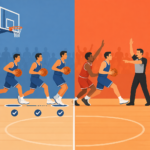

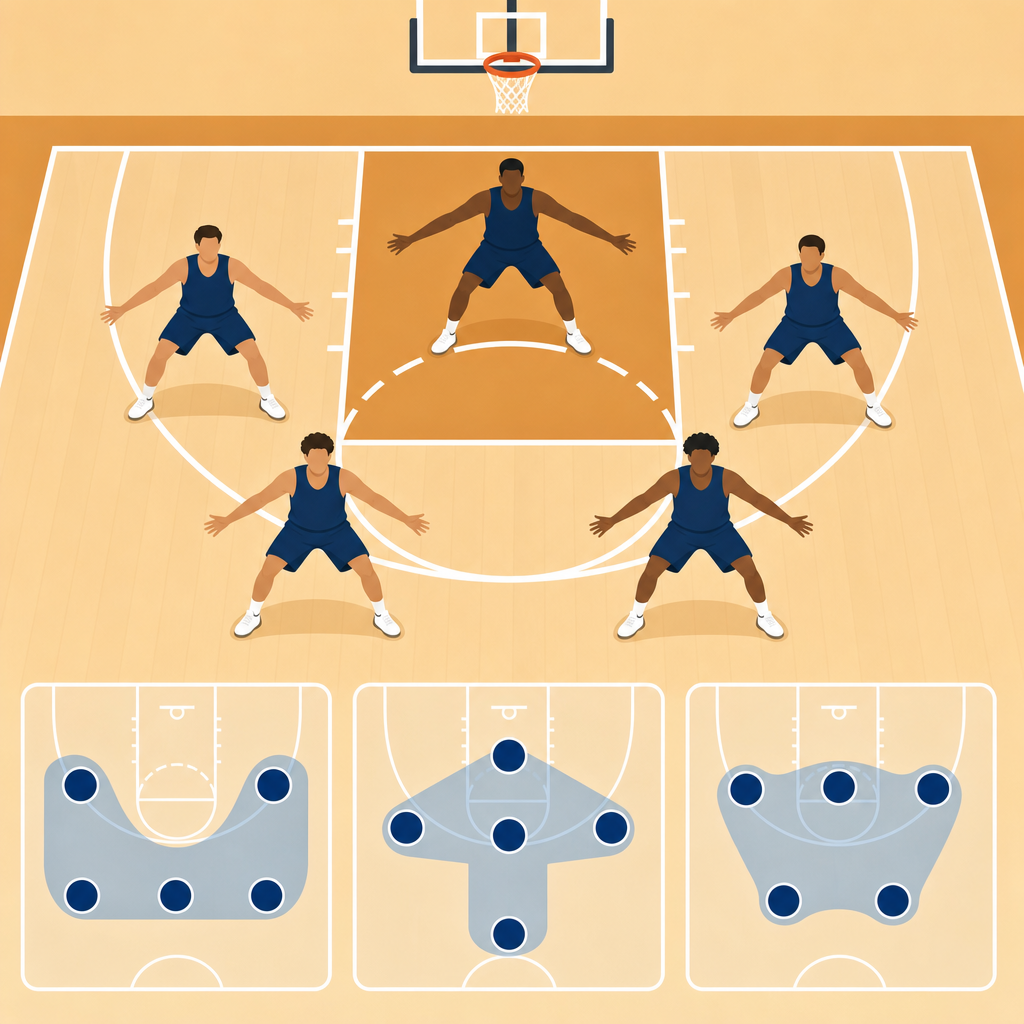
Zone defense in basketball organizes five defenders around areas of the floor instead of assigning each player a single matchup, and understanding the major structures is essential for anyone building a complete defensive system. In a man-to-man defense, every possession begins with a direct assignment. In a zone, responsibility shifts with the ball, cutting actions, and threats entering a defender’s area. That distinction changes stance, communication, rebounding technique, closeout angles, and how help is delivered. The three zone defenses coaches teach most often at the youth, high school, college, and international levels are the 2-3, 1-3-1, and 3-2. Each one protects different spaces, invites different shots, and requires different personnel.
As a coach and skills trainer, I have used all three structures in games and practice plans, usually not as gimmicks but as tools tied to roster strengths and opponent tendencies. A team with size but limited lateral quickness may survive in a 2-3. A long, disruptive lineup can turn the 1-3-1 into a turnover machine. A team facing elite perimeter shooting may lean on a 3-2 to take away easy threes above the break. None of these defenses is automatically better than the others. The value comes from knowing what each scheme is designed to stop, where it is vulnerable, and how to teach the rotations so players move on instinct instead of reacting late.
This hub article explains zone defense within the broader subject of basketball defense. It defines the core principles that apply across all zones, then breaks down the 2-3, 1-3-1, and 3-2 in plain terms. It also covers common offensive counters, practice teaching points, rebounding demands, and game-planning decisions. If you want to understand how zones work, when to use them, and how to connect them to the rest of your defensive approach, this page gives you the full framework.
Core principles that make any zone defense work
Every effective zone defense is built on five nonnegotiable principles: ball pressure, vision, gaps, communication, and gang rebounding. Ball pressure still matters because zones fail when the offense can make uncontested reads. The on-ball defender must influence direction and reduce clean passing windows without getting split. Vision matters because defenders are responsible for both the ball and players entering their area. Most coaches teach “see man and ball,” but in a zone the better phrase is “see ball and threats.” A corner shooter standing still is one threat; a cutter diving behind the low defender is another.
Gap control is the geometry of zone defense. Defenders are not chasing bodies; they are protecting seams where dribble penetration and passes create rotations. Communication gives the structure life. Players must call ball, cutter, bump, corner, high post, and shot. Rebounding is often the deciding factor because zones naturally put defenders farther from a specific box-out assignment. Good zone rebounding uses hit-find-pursue technique: make first contact, locate the ball, then chase it with two hands. Teams that skip this detail often defend the first shot well and still concede second-chance points.
Zone defenses are also strongest when connected to scouting. If an opponent has a dominant post scorer, a zone can crowd touches. If the opponent has four shooters and a patient point guard, lazy zone rotations get exposed quickly. Matchup awareness, not blind loyalty to a scheme, is what turns a zone from a safe fallback into a real defensive weapon.
The 2-3 zone: structure, strengths, and vulnerabilities
The 2-3 zone places two defenders up top, usually around the elbows and slots, with three defenders across the baseline area. It is the most common zone because the shape is intuitive and it naturally protects the paint. The top guards contain the ball and deny direct middle penetration. The wings or forwards cover corner-to-wing responsibilities, stunt at the high post, and help on drives. The middle defender anchors the rim, fronts or three-quarters post entries, and cleans up behind the first line. For younger teams, the 2-3 is often the first zone installed because responsibilities can be taught through shell drill progressions.
The biggest advantage of the 2-3 zone is interior protection. It shrinks driving lanes, discourages post feeds, and can hide a team that lacks elite individual perimeter defenders. Syracuse under Jim Boeheim made a version of the 2-3 famous by extending the wings aggressively and using length to challenge every catch. At lower levels, coaches often use it to control pace, keep players out of foul trouble, and force opponents to prove they can make outside shots consistently. The 2-3 also works well after made baskets, when defenders can get set and establish their line across the lane.
The main weakness is perimeter spacing, especially against teams that reverse the ball quickly and shoot well from the corners. The high post is another pressure point. When the offense catches at the free-throw line, the zone compresses, opening dump-offs to the dunker spot or kick-outs to shooters. Overloads also stress the weak side. If three offensive players occupy one side with a corner, wing, and short corner, the low wing defender can be forced into an impossible two-on-one read. The solution is not random scrambling. It is drilled rotation language: who bumps down, who takes first pass out, and who tags the baseline runner.
How to attack and teach the 2-3 zone
The standard offensive counters against a 2-3 zone are simple and still effective: high-post flashes, short-corner occupation, skip passes, inside-out threes, and offensive rebounding from the weak side. A skilled passer at the nail is especially dangerous. Once that player catches, the defense must choose between contesting the jumper, stopping a lob to the baseline, or closing to shooters. Good offenses also screen the zone. A guard can pin the top defender to free a reversal, or a baseline player can screen the outside low defender to create a clean corner three.
To teach the 2-3 well, start with coverage rules before adding wrinkles. I teach top defenders to keep the ball out of the middle first, wings to own the first pass to the corner without giving up direct baseline drives, and the middle defender to protect the rim before chasing every flash. The common mistake is overhelping to the ball and losing vision of the next pass. Another mistake is passive closeouts. Zone defenders still need disciplined footwork: high hands, chopped steps, and a body angle that removes the easiest driving line.
| Zone | Best at taking away | Most vulnerable area | Ideal personnel |
|---|---|---|---|
| 2-3 | Paint touches, post-ups, straight-line drives | Corners, high post, weak-side overloads | Size inside, active wings, rim protector |
| 1-3-1 | Wing entries, crosscourt visibility, tempo | Deep corners, baseline behind the zone | Length, quick traps, mobile middle defender |
| 3-2 | Perimeter threes, slot actions, pick-and-pop looks | High post, short corner, offensive glass | Three mobile guards, smart back line, fast closeouts |
The 1-3-1 zone: disruption, traps, and risk
The 1-3-1 zone places one defender at the top, three across the middle band, and one baseline runner patrolling behind the play. It is less common than the 2-3 because it is harder to teach, but it can be devastating when used with length and discipline. The top defender shades the ball and influences it toward sideline traps. The two outside midfield defenders take away wings and passing lanes. The middle defender protects the nail, contests high-post catches, and becomes the most important rotator in the system. The baseline runner covers corner-to-corner, often starting on the weak side and sprinting to arrive on the catch.
The 1-3-1 is designed to distort vision and create mistakes. Its angles are unusual, so offenses that are comfortable against man or 2-3 often hesitate for a beat, and that hesitation produces tipped passes or rushed decisions. It is especially effective after timeouts, on dead-ball possessions, or as a changeup after a steady run of man-to-man. College teams have long used it to speed opponents up without pressing full court. Because the middle line occupies passing windows, skip passes appear open but travel through long arms. That is why long wingspan matters more in this defense than pure foot speed alone.
The risk is obvious: the corners and the baseline behind the defense are vulnerable. If the baseline runner is late, the offense gets an uncontested corner three or a direct drive along the baseline. If the middle defender is slow to bump, the offense can flash behind the top line and play four-on-three. Rebounding is also difficult because players rotate so aggressively out of their original spots. Teams that commit to the 1-3-1 must practice sprint rotations, trap timing, and weak-side rebounding every week, not just during installation.
How offenses beat the 1-3-1 and how defenses respond
The best ways to attack a 1-3-1 are to place a skilled player in the short corner, use quick diagonal passes, and reverse the ball before the trap is set. Dribble penetration is not usually the first answer; moving the defense side to side is. Once the ball reaches the short corner, the baseline runner is occupied and the middle defender must decide whether to stop the shot, the cutter, or the kick-out. Smart offenses also use the dunker spot behind the middle line and station a shooter opposite the ball to punish long closeouts. Against aggressive trapping versions, simply catching, pivoting, and making the next pass on time can collapse the scheme.
Defensively, the response starts with early positioning. The top defender cannot get split. The wing on the ball side must arrive with high hands and feet outside the trap line, usually using the sideline as an extra defender. The middle defender cannot chase vanity steals; that player is the stabilizer. In film sessions, I look first at whether the baseline runner moved on airtime. If that player waits until the catch, the possession is already compromised. The 1-3-1 rewards anticipation more than reaction. It is excellent for turning average athleticism into disruptive team defense when the reads are trained properly.
The 3-2 zone: perimeter coverage and modern spacing
The 3-2 zone positions three defenders across the top and two along the back line. In today’s spacing-heavy game, that structure has become more relevant because many offenses begin with multiple shooting threats above the break. The three top defenders can contest slot passes, deny easy reversals, and show more bodies to pick-and-pop actions than a 2-3 can. The back line protects the blocks, short corners, and rim. When coached well, the 3-2 is the strongest basic zone for taking away early rhythm threes, particularly against teams whose centers are screeners rather than low-post scorers.
The tradeoff is interior stress. Because only two defenders patrol the back line, the high post and short corner can become exposed. If the offense flashes a forward to the foul line and places another player along the baseline, the defense is stretched vertically. The middle top defender often has to stunt down, which opens the next pass. Against strong offensive rebounding teams, the 3-2 can also be vulnerable because closeouts start farther from the basket and rebounding responsibilities are less direct. For that reason, the 3-2 works best when the top line is active enough to reduce clean entries before the ball ever reaches danger areas.
Many coaches use the 3-2 against teams that rely on dribble-handoff actions, pick-and-pop fours, or guard-heavy lineups with limited interior finishing. It can also be a useful late-game changeup when an opponent needs three-point attempts. At the professional and international levels, zone principles often blend into matchup concepts, but the 3-2 shape still appears whenever teams want to crowd the arc without going fully man-to-man.
Building a complete defense around zone principles
Zone defense should not exist in isolation. The best defensive programs teach shared concepts across man, press, and zone: early help, shrink the floor, finish with a rebound, and communicate every action. That continuity makes in-game switching practical. A team might open in man, drop into a 2-3 after a dead ball, then show a 1-3-1 after free throws to disrupt tempo. Those changes are effective only if players understand common triggers and language. “Nail,” “I got two,” “bump,” and “x-out” should mean the same thing across your whole system.
Practice design matters more than whiteboard detail. Use shell drills with guided passes, then add cutters, then screening. Use advantage drills that begin with a high-post catch or corner touch so players learn the hardest rotations first. Track deflections, paint touches allowed, and defensive rebound percentage, not just points allowed. Synergy-style possession analysis, if available, can show whether your zone is conceding corner threes, post entries, or second shots. Even without advanced software, charting where shots come from will reveal whether your structure matches your goal.
The core lesson is simple. The 2-3 is your paint-protection zone, the 1-3-1 is your disruption zone, and the 3-2 is your perimeter-protection zone. Choose based on opponent profile and your roster, not habit. Then drill the details relentlessly. If you coach or play basketball, audit your current defensive scheme, identify the shots you most need to remove, and build the zone that answers that problem.
Frequently Asked Questions
What is zone defense in basketball, and how is it different from man-to-man defense?
Zone defense is a team defensive system in which each player is primarily responsible for guarding an area of the floor rather than following one offensive player everywhere he goes. That is the core difference from man-to-man defense, where each defender begins the possession with a direct matchup and is expected to stay attached through cuts, screens, and drives. In a zone, defenders shift with the ball, react to movement entering their space, and work together to protect high-value areas such as the paint, elbows, short corners, and perimeter passing lanes.
This changes almost every defensive habit. Stance is more vision-based because defenders must see both the ball and the players around them. Communication becomes constant because offensive threats are passed from one zone defender to another as the ball swings or cutters flash into gaps. Closeout angles are also different. Instead of closing out only to “your man,” a defender in a zone often closes out from inside-out to protect the lane first and then contest the perimeter shot. Rebounding technique changes too, because defenders often do not have an obvious single player to box out when the shot goes up. Good zone teams must identify the nearest offensive body quickly, make contact, and finish the possession with gang rebounding.
Zone defense is often used to protect the paint, hide foul trouble, slow dribble penetration, force lower-percentage outside shots, and disrupt rhythm. It can also be a strategic adjustment against teams that rely heavily on isolation scoring or have one dominant creator. However, it requires discipline, awareness, and excellent rotations. A poorly executed zone gives up open threes, offensive rebounds, and easy passes into soft spots. A well-executed zone, by contrast, looks connected, active, and difficult to crack because all five defenders move as one unit.
How does a 2-3 zone work, and what are its main strengths and weaknesses?
The 2-3 zone places two defenders across the top line and three defenders along the back line. Typically, the top two guards are responsible for pressuring the ball on the perimeter, discouraging easy reversals, and containing dribble penetration from above the free-throw line. The middle player on the back line usually anchors the paint, protects the rim, and covers the middle of the lane, while the two wing defenders patrol the blocks, short corners, and wing-to-corner areas. The overall goal is to create a wall around the basket and force offenses into contested jump shots.
The biggest strength of the 2-3 zone is interior protection. It naturally crowds the lane, making post entries, cuts, and straight-line drives more difficult. Teams that do not shoot consistently from the outside often struggle against a good 2-3 because the easiest scoring area on the floor is heavily occupied. It is also one of the most teachable zone structures, which is why coaches at many levels use it as a foundational team defense. It helps keep defenders in help position and can reduce the burden on individual on-ball defenders who may not be strong enough to win every isolation matchup.
Its weaknesses are just as important to understand. The 2-3 can be vulnerable on the perimeter, especially against quick ball movement and strong three-point shooting. The high post is a classic pressure point. If the offense gets the ball to the free-throw line area, the defense can be forced to collapse, opening kick-out threes, dump-offs to the baseline, or short corner jumpers. Corner shooters can also be a problem because wing defenders often must cover significant ground from the lane to the corner. In addition, rebounding can become difficult when shots come from the outside and defenders must locate box-outs from zone positions rather than fixed matchups.
At its best, the 2-3 zone is compact, loud, and patient. The top line contains the ball, the back line shrinks the floor, and everyone understands how to bump cutters and rotate to open space. If those details break down, the zone stops being protective and starts becoming passive. That is why coaches stress active hands, early communication, and sharp closeouts as non-negotiables in a successful 2-3.
What is a 1-3-1 zone, and why is it considered more aggressive and disruptive?
The 1-3-1 zone uses one defender at the top, three defenders spread across the middle line, and one defender on the baseline. It is considered aggressive because it is designed not just to protect space, but to distort the offense’s rhythm, passing angles, and comfort. The top defender pressures the ball and influences direction. The three across the middle line crowd wings, elbows, and passing lanes. The baseline defender races from corner to corner behind the play, covering the rim and short-corner threats. When executed well, the 1-3-1 makes the floor feel narrow, cluttered, and rushed.
One of its major strengths is how well it creates deflections and traps. Because the alignment stretches horizontally and vertically, it can bait offenses into wing entries and skip passes that look open for a moment but are actually dangerous. The top defender can steer the ball, the wings can trap on the sideline, and the middle defender can sit in the gaps to take away direct passing windows. It is especially effective against teams that are careless with the ball, uncomfortable making quick reads, or overly dependent on conventional half-court spacing.
The trade-off is risk. The 1-3-1 can be exposed by smart ball movement, baseline penetration, and accurate skip passing. The corners are a common target because the baseline defender has to cover a large amount of ground. If the ball gets reversed quickly, that defender may arrive late, leading to open threes or closeout breakdowns. Rebounding can also be more difficult than in a 2-3 because players are spread out in elongated positions and may not be near obvious box-out assignments when the shot goes up.
The 1-3-1 demands mobile, instinctive players and outstanding communication. The top defender must have energy and anticipation. The middle line must understand angles, not just locations. The baseline defender needs speed, timing, and toughness because that role can be exhausting. Coaches often use the 1-3-1 as a change-up defense, a momentum-shifting tactic, or a system to force tempo. It can be highly effective, but only if all five players move on a string and understand that one late rotation can collapse the entire structure.
How does a 3-2 zone differ from a 2-3 zone, and when should a team choose it?
The 3-2 zone places three defenders across the top line and two defenders along the back line. Compared with the 2-3, it is built to handle perimeter threats more directly. With three defenders up high, the defense can contest ball reversals, cover the wings faster, and apply more immediate pressure to shooters above the arc. That makes the 3-2 especially useful against teams that rely heavily on guard play, ball screens into kick-out threes, or multiple perimeter shooters who can punish slower closeouts.
The strength of the 3-2 is its ability to challenge outside shooting and shrink time for ball handlers. The top line can take away easy catches on the wing, discourage rhythm threes, and influence the ball toward less comfortable areas. It also helps protect against simple overloads at the top of the floor because there is one extra defender already positioned there. Against offenses that want to attack from above the break rather than through post play, the 3-2 can be a smart tactical choice.
The weakness is that the baseline and interior can become more vulnerable. With only two players on the back line, corners, short corners, and low-post seals can be harder to cover. If the offense gets the ball behind the top line or drives deep enough to force the back defenders to help, open baseline shots and interior dump-offs can appear quickly. The high post can still be dangerous, but in the 3-2 the bigger concern is often what happens once the ball gets below the free-throw line extended and the back line is forced into difficult two-on-three decisions.
A team should consider the 3-2 when the opponent’s biggest threat is perimeter shooting, especially from the wings and top of the floor. It is also useful when coaches want more pressure on ball handlers without fully committing to man-to-man. However, personnel matters. The back-line defenders must be physical enough to protect the rim and mobile enough to cover corner actions. The top line must communicate seamlessly so they do not overcommit and open direct driving lanes. In short, the 3-2 is often the better answer to shooting-heavy teams, while the 2-3 is often the better answer to teams that want to attack inside first.
What are the most important coaching points for making any zone defense effective?
No matter which alignment a team uses, the same fundamentals determine whether the zone is solid or soft. First is communication. Zone defense fails quietly and succeeds loudly. Defenders need to call the ball location, identify cutters, alert teammates to flashes into the high post, and announce who is taking the next threat. Because responsibilities constantly shift, silence creates hesitation, and hesitation leads to open shots. Great zone teams talk before the pass, not after it.</