
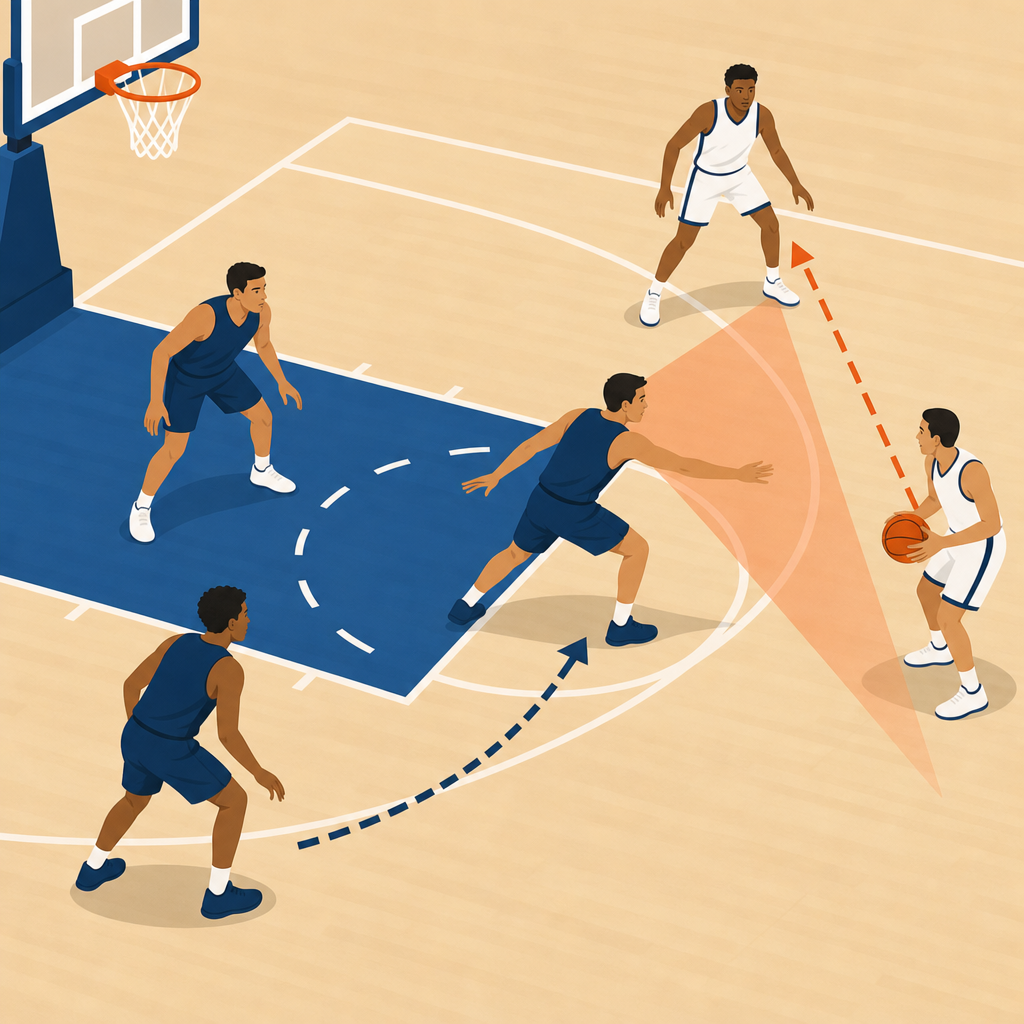
Help defense in basketball is the art of protecting space, anticipating danger, and stopping a scoring action before the ball ever arrives. If on-ball defense is the first line of resistance, help defense is the system behind it: the positioning, communication, and timing that allow five defenders to function as one. Coaches define it in slightly different ways, but the core idea is constant. A help defender leaves direct attachment to a matchup just enough to deter penetration, take away a passing lane, tag a cutter or roller, and still recover under control. Learning how to play help defense in basketball means learning to read the floor before the pass, not after it.
That distinction matters because modern offenses are built to punish late reactions. Spread pick-and-roll, five-out spacing, drive-and-kick actions, flare screens, and short-roll playmaking all create brief windows in which a defender must process multiple threats at once. In film rooms and on practice courts, I have seen the same pattern repeatedly: players who wait for the ball to move are always a step behind, while players who read body language, spacing, and likely options arrive early enough to disrupt the play. Great team defense is rarely dramatic. More often, it is a series of early shifts, stunts, tags, and recoveries that make the offense hesitate.
For a Basketball Skills hub focused on Defense, help defense sits at the center of everything else. Closeouts, pick-and-roll coverage, rim protection, defensive rebounding, transition defense, switching, and off-ball communication all connect back to help principles. A strong stance and active hands matter, but they are incomplete without spatial awareness. The best defenders know who is one pass away, who is two passes away, where the low man is located, how far the nail defender can shrink the floor, and when the weak-side corner is too dangerous to leave. That is why this topic deserves comprehensive treatment. It is not a niche tactic. It is the operating system of team defense.
At its simplest, reading the floor before the pass means identifying the next offensive action based on cues that appear seconds earlier. The ball handler’s shoulders may open toward the middle. A screener may angle his hips for a side pick-and-roll. A shooter may drift from the corner to the wing during penetration. A dunker-spot big may creep behind the backboard, signaling a lob threat. Help defenders are trained to scan those cues while staying in stance, seeing both ball and man, and keeping their chest and feet aligned to the most dangerous path to the rim. Once a player understands those cues, defensive rotations become faster, cleaner, and far less frantic.
What Help Defense Means and Why Positioning Comes First
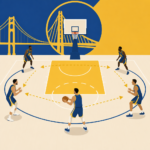
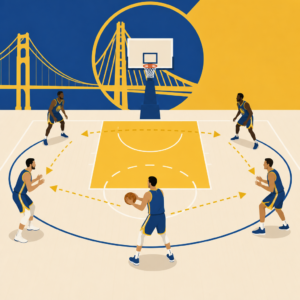
Help defense starts with correct positioning before the offense gains an advantage. Most coaches teach some version of “ball-you-man” vision, meaning an off-ball defender should see both the ball and the player he guards. That usually places the defender somewhere along an imaginary line between assignment and ball, with the exact distance determined by one-pass-away or two-passes-away spacing. One pass away, the defender is tighter and more ready to close out. Two passes away, the defender can sink farther into the lane line area to provide early help. The goal is to shrink driving lanes without surrendering easy catch-and-shoot threes.
The floor has landmarks that organize help responsibilities. The nail, the middle of the free-throw line, is a common spot for wing defenders to discourage straight-line drives. The low man, usually the weak-side defender closest to the baseline, protects the rim on baseline drives, lob threats, and rolls. The slot and wing areas determine closeout angle and stunt distance. The “I” position, with a weak-side defender lined up between ball and rim, allows early rim protection while preserving recovery routes. Teams from youth basketball to the NBA use these landmarks because they simplify decisions under pressure. Good help defense is not random hustle; it is geometry practiced until it becomes instinct.
Positioning also depends on personnel and scheme. Against a poor shooter, defenders may gap more aggressively and load to the ball. Against an elite corner shooter, the weak-side defender may stay more attached and force help to come from the nail or the low man instead. Teams that switch often can flatten some rotations, while drop-coverage teams rely heavily on point-of-attack containment and weak-side tags. FIBA play often shows tighter shell principles because of shorter spacing, while NBA defenses must cover more ground due to deeper shooting range. The principle remains the same: stand where you can affect the next action, not where the offense wants you to be comfortable.
How to Read the Floor Before the Pass
Reading the floor begins with scanning, and scanning must happen continuously. The defender should check the ball, then the nearest threats, then the spaces the offense is trying to attack. In practical terms, that means noticing whether the ball is above or below the free-throw-line extended, whether the strong-side corner is occupied, whether a screener is about to arrive, and whether a cutter has inside leverage. I teach players to ask three questions before the ball is passed: Where is the rim threat? Where is the easiest kick-out? Where is my recovery path? Those questions create anticipation instead of reaction.
Body language is often the best predictor of the next pass. A driver who picks up his dribble early usually looks opposite his momentum. A post feeder staring at the elbow may actually be setting up a baseline drift pass. A guard rejecting a ball screen tends to expose his inside shoulder before the move. Skilled help defenders study these details on film and recognize them live. Jrue Holiday, Derrick White, and Bam Adebayo are strong examples because they process actions early and arrive balanced. They do not gamble often. They move before the pass, but under control, which is what separates anticipation from guessing.
Timing matters as much as recognition. Leave too early and the offense creates an open three behind the rotation. Leave too late and the ball reaches the rim before help arrives. Effective defenders use micro-movements: a half-step to the nail, a short stunt at the ball, a baseline sink toward the restricted area, then an explosive recovery on the airtime of the pass. Coaches call this “help on the flight, recover on the catch.” The pass itself is your window. By moving during airtime, you cover distance without being exposed. This is one of the simplest and most reliable rules in team defense, and it translates at every level.
| Situation | Primary Help Read | Best Defensive Response |
|---|---|---|
| Middle drive from the slot | Nail defender sees shoulders turn downhill | Stunt early, stop direct line, recover on pass airtime |
| Baseline drive from the wing | Low man identifies rim threat behind him | Step across to protect rim, force kick-out, X-out behind rotation |
| High pick-and-roll with rolling big | Weak-side tag defender tracks roller and corner shooter | Tag at the roller’s path, then recover or scram based on pass |
| Post-up on the block | Perimeter defenders read cutter and skip threat | Dig from the nail, crowd passing angles, rotate only on commitment |
| Drive-and-kick to strong-side corner | Nearest defender reads feet and shot prep | Shorten closeout, arrive high hands, force baseline or retreat dribble |
Core Rotations: Nail Help, Low Man, Tags, and X-Outs
Nail help is the first layer against middle penetration. The defender at the nail does not fully abandon his matchup; he shows enough presence to make the ball handler hesitate or change direction. The best nail defenders are compact, active, and disciplined. They stunt with a hand and a step, not a reckless lunge. If the ball handler retreats or picks up the dribble, the defender snaps back to his shooter. This is why shell drill remains a staple in serious programs. It teaches players to move the ball, jump to the ball, and recover with proper footwork and vision.
The low man is the backbone of rim protection when the primary big is occupied. On baseline drives, lobs, or deep rolls, the low man steps in front of the rim threat, chest to the play, ready to absorb contact or contest vertically. In many systems, the low man must “tag” the roller with forearm contact or body presence, then release once the original defender recovers. If that tag pulls the defender away from a corner shooter, the defense often uses an X-out, where two weak-side defenders exchange assignments during the pass sequence. One closes to the wing, the other drops to the corner. This rotation must be called loudly and executed on airtime.
These rotations are demanding because they require trust. A defender will only step over to help if he believes a teammate will cover his man behind the play. That trust is built through repetition and precise language. “Low,” “tag,” “I’m there,” “x,” and “out” are not random noise. They are commands tied to specific responsibilities. The best defenses sound organized because organized talk shortens reaction time. Silent teams are almost always late teams. If a defense gives up open threes after helping, the problem is often not the initial help. It is the lack of a second and third rotation done with urgency.
Help Defense in Common Game Actions
Pick-and-roll is where help defense is tested most often. In drop coverage, the big protects the paint while the on-ball defender fights over the screen. That puts pressure on the nail and weak-side tag defenders to deter pocket passes and rolls. Against a dynamic guard, one weak stunt can be enough to buy the big time to recover. Against a playmaking big like Domantas Sabonis or Nikola Jokić, the weak side must be even more precise because late help becomes a dunk or a skip pass. The answer is not constant over-help. It is early, compact help from the right spots, followed by sharp recovery.
Against dribble handoffs and off-ball screening, help defense becomes a chain of bumps and switches within the scheme. Defenders must top-lock dangerous movement shooters at times, trail at others, and know when to peel switch if a teammate is beaten downhill. On post-ups, disciplined teams dig from the perimeter without fully committing unless the post player turns middle. Miami has long used timely nail digs and scram switches to keep smaller defenders from being buried on the block. At the college and high school levels, the same ideas apply, though the spacing is tighter and offenses often reveal their intentions earlier.
Transition defense is another help-defense environment. The first job is stopping the ball, but the next jobs are forming a wall, protecting the rim, and matching to the most dangerous shooters as the play develops. A sprinting defender may start by guarding space rather than a specific player. That is still help defense. In fact, some of the best team defenders are elite at these “messy” possessions because they sort threats quickly. They see the corner fill, the trailer three, and the rim run at the same time, then choose the action that removes the highest-value shot first.
Teaching Help Defense: Drills, Film, and Common Mistakes
Players improve fastest when help defense is broken into reads they can rehearse. Shell drill remains foundational because it teaches stance, vision, jumping to the ball, and coordinated closeouts. Drive-and-kick drills add realistic penetration and force defenders to stunt, tag, and rotate. Four-on-three and three-on-two advantage drills teach the low man and weak-side defenders to prioritize rim, then ball, then shooter. Film study matters just as much. I prefer clips organized by trigger: slot drive, baseline drive, empty-corner pick-and-roll, post dig, and weak-side tag. Players learn patterns faster when they review possessions by read rather than by opponent.
The most common mistakes are over-helping, ball watching, opening the stance too far, and closing out under control too late. Young defenders often drift so deep into the lane that they cannot contest the next pass. Others hug shooters and never provide real help, exposing the rim. A balanced defender does neither. He shows early, stays loaded, and recovers on a direct line with high hands and choppy feet. Another frequent mistake is helping without communication. A correct rotation that is not called can still fail because the next defender never knows to cover behind it. Team defense is a sequence, not a solo play.
For a complete Defense development plan, players should connect help-defense work with stance and footwork, closeout technique, screen navigation, rebounding position, and communication habits. Build the skill in layers: first positioning, then recognition, then timing, then multi-player rotation. Track it in games with simple metrics such as paint touches allowed, tagged rolls, successful X-outs, and contested catch-and-shoot threes after a rotation. Improvement becomes visible when the offense starts taking tougher shots late in the clock. Study your own film, define your team’s rules clearly, and practice reading the floor before the pass every day.
Frequently Asked Questions
What does help defense mean in basketball, and why is it so important before the pass is made?
Help defense is the team concept of leaving your own assignment just enough to protect dangerous space, discourage dribble penetration, and stop an offensive action before it turns into an easy score. In simple terms, it is the layer of defense behind the on-ball defender. Instead of reacting after the offense has already created an advantage, help defense is about reading the floor early, recognizing where the threat is developing, and positioning your body so the offense sees traffic before the ball ever gets there. That is why the phrase “before the pass” matters so much. Great help defenders do not wait for the drive, the dump-off, or the kick-out to happen. They anticipate it.
This matters because basketball is rarely won by five separate individual defenders guarding five separate offensive players in isolation. Good offenses use spacing, cuts, screens, and ball movement to force defenders into decisions. Help defense gives the team a connected structure. It shrinks driving lanes, protects the rim, supports teammates who get beaten, and buys time for rotations. A defender who understands help principles can influence a possession without getting a steal or block. By being in the right spot early, with the right stance and the right angle, that defender can make the ball-handler hesitate, force a longer pass, or push the offense into a lower-quality option. That is what strong team defense looks like: not just stopping the first move, but taking away the next one before it begins.
How do you read the floor as a help defender before the ball is passed?
Reading the floor starts with understanding that you are not just guarding a person; you are guarding a relationship between the ball, your assignment, the basket, and the nearest threat. The first key is ball awareness. You should know where the ball is at all times and whether it is in a position to attack, pass, or trigger a screen action. The second key is player awareness. You need to identify whether your matchup is one pass away, two passes away, cutting, lifting, screening, or drifting to a corner. The third key is spacing awareness. If the offense is spread wide, your help position changes. If the offense is packed tighter, your help responsibilities become more urgent. Help defense is really a series of constant small calculations.
A useful habit is to play with your chest and feet angled so you can see both your man and the ball. Many coaches describe this as “seeing man and ball” or “having your pistols out,” with each hand indicating one of those points of reference. From there, you read cues. If the ball-handler’s eyes go to the wing, a pass may be coming. If a teammate gets screened and the ball is turning the corner, you must tighten your help position. If an offensive player is drifting behind the play to the corner, you may need to stunt and recover rather than fully commit. Before the pass, the best help defenders are already asking: if the ball moves here, where is the next danger? That thought process allows you to arrive on time instead of late.
Film study also sharpens floor reading. Teams often repeat actions from the same alignments: drive-and-kick from the slot, baseline drift from the corner, or a big diving after a ball screen. When you recognize those patterns, your reactions become faster and more precise. In game action, that means fewer wasted steps and better decisions. Reading the floor before the pass is not guessing. It is disciplined anticipation based on spacing, body language, offensive tendencies, and sound defensive rules.
Where should a help defender stand, and how does positioning change based on ball location?
Proper help position depends on where the ball is, how close your assignment is to the ball, and how much immediate danger the offense presents. In general, the farther your man is from the ball, the more you can shrink toward the lane and become a true help defender. If your assignment is one pass away and a strong shooter, you typically stay tighter and more ready to close out. If your assignment is two passes away on the weak side, you can sink farther toward the paint, tag cutters, and be in better position to protect the rim. The goal is to be close enough to help on penetration but not so deep that you give up an uncontested catch-and-shoot opportunity.
Ball location changes everything. When the ball is at the top, help defenders often position themselves slightly inside the line to the basket, ready to stop straight-line drives. When the ball moves to the wing, weak-side defenders usually sink and pinch in more aggressively because the offense now has a better angle to attack the middle or baseline. When the ball is in the corner, help becomes more delicate because the passer has fewer outlets, but the closeout distance is shorter and the baseline can act like an extra defender. In many systems, defenders on the weak side move into gap or split-line help, putting themselves in a spot to see cutters, support the rim, and rotate if a drive occurs.
Good positioning also means good body alignment. Help defenders should usually be in an athletic stance, with active feet and hands, not flat-footed or fully committed in one direction. If you stand too upright, you cannot react. If you over-help with your body turned completely toward the ball, you may lose sight of your assignment. The best positions are balanced and intentional. You are close enough to influence the play, angled enough to see developing action, and disciplined enough to recover on the pass. That is what separates effective help from reckless gambling.
How can players help without giving up open shots or easy passes to their own matchup?
The key is controlled help, not desperate help. A lot of defenders make the mistake of thinking help defense means fully leaving their man every time the ball moves toward the paint. In reality, strong help often happens in smaller actions: a stunt toward the ball, a quick dig at a post-up, a step into the driving lane, a tag on the roller, then an immediate recovery. These brief, well-timed movements can disrupt the offense without surrendering an open shot. The purpose is to show the ball-handler extra bodies and force indecision, not always to sell out for a steal or trap.
Timing is everything. If you help too early, skilled offenses will simply move the ball and punish the rotation. If you help too late, the ball-handler is already at the rim or the pass is already gone. Help defenders need to learn the difference between showing presence and overcommitting. That usually means taking one or two sharp steps into the gap, having a hand ready in the passing lane, and staying loaded to close out. Your feet should be prepared to push back to your assignment the instant the ball is picked up or kicked out. Defenders who are constantly leaning, reaching, or crossing their feet struggle here because they cannot recover under control.
Communication makes this much easier. If defenders talk early, they can divide responsibilities instead of two players helping on the same threat while someone else becomes completely uncovered. A teammate may call “I’ve got help” so the on-ball defender knows where to push the drive. Another may call “stay home” if the offense has a dangerous shooter in the corner. Help defense works best when the entire unit understands personnel, spacing, and priorities. Against a poor shooter, you may help more aggressively. Against an elite shooter, you may stunt and recover with more discipline. The smartest defenders know that help is not one fixed distance or one fixed movement. It is a calculated adjustment based on the situation.
What are the most common mistakes in help defense, and how can players improve this skill?
One of the most common mistakes is ball-watching to the point of losing awareness of your own assignment. Defenders see the drive developing, drift too far, and then give up an easy backdoor cut or a clean kick-out three. Another frequent mistake is helping in a straight line instead of helping with an angle. If you simply run at the ball, you may open a passing window behind you. Good help defenders move to spots that take away both space and options. Late communication is another major problem. If players only start talking once the offense has already created an advantage, the defense is already behind. Help defense requires early, loud, specific communication.
Over-helping and under-helping are equally damaging. Over-helping gives away open perimeter shots and easy skip passes. Under-helping leaves teammates isolated with no support at the rim or in the lane. Many players also struggle with recovery technique. They help correctly at first, but once the ball is kicked out, they sprint wildly at the shooter, fly by the closeout, and give up the next drive. Improvement comes from learning that help defense is part of a full sequence: see the threat, move into position, affect the action, rotate if needed, and recover under control.
To improve, players should drill specific scenarios rather than treating help defense as an abstract concept. Shell drill, drive-and-kick rotations, closeout-to-gap work, and weak-side tag drills all build the habits needed to read the floor. Watching film is valuable because it shows whether you were early enough, low enough, and connected enough to the rest of the defense. Players should also study offensive tendencies. The more you understand common reads out of pick-and-rolls, wing drives,