
Man-to-man defense is the foundation of serious basketball, and every player who wants to stay on the floor needs to understand how it works, why coaches trust it, and what habits make it effective. In simple terms, man-to-man defense means each defender is responsible for a specific offensive player while still helping the team protect the ball, the paint, and the basket. That sounds straightforward, but good man-to-man defense is never just one player guarding one player in isolation. It is a connected system built on stance, footwork, communication, positioning, help principles, closeouts, rebounding, and discipline against screens, cuts, and drives.
I have coached and broken down game film long enough to know that most defensive mistakes do not come from lack of effort alone. They come from poor spacing, late recognition, bad angles, and players not understanding the difference between on-ball pressure and team defense. A defender can slide hard and still be wrong if he forces the ball toward the middle when the scouting report says baseline, or if she hugs a shooter and leaves the rim unprotected. Strong defense is organized pressure. It is the ability to influence the offense toward lower-value shots, limit clean passing windows, and finish each possession with a rebound.
This matters because defense travels when shots do not. Teams at every level, from youth leagues to the NBA, rely on man-to-man principles because they scale well, teach accountability, and prepare players for any scheme. Even teams that mix in zone, switching systems, or junk defenses still teach stance, gap help, shell positioning, and screen coverage through a man-to-man framework. If you learn these principles now, you improve not only your defense but also your basketball IQ, communication, and trust within a team structure.
At its best, man-to-man defense answers the three questions every possession asks: Who has the ball, where is the help, and how do we end the play? The sections below explain those answers in practical detail so players can build habits that coaches reward and offenses struggle to attack consistently at every competitive level.
What Man-to-Man Defense Really Means
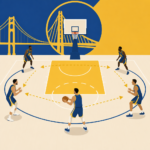
Man-to-man defense assigns primary responsibility, but it never removes team responsibility. If your player has the ball, you are the on-ball defender. If your player is one pass away, you are in deny or tight help depending on the game plan, the shooter, and the action. If your player is two passes away, you are usually in help position with one foot or more in the lane line area, ready to protect the paint, tag a cutter, or stunt at a driver. Coaches often summarize this with variations of “ball, you, man,” meaning your body should see all three whenever possible.
The main objective is not to steal every pass or lock up every isolation. The objective is to reduce efficient offense. That means keeping the ball out of the middle, shrinking driving lanes, contesting without fouling, forcing late-clock decisions, and cleaning the glass. Analytics have reinforced what defensive coaches taught before shot charts became standard: layups, free throws, and uncontested threes are the shots defenses must remove first. Good man-to-man defense is designed around that reality.
Accountability is one reason coaches prefer it as a teaching system. When players know who they are guarding, film review becomes clear. You can identify whether the breakdown came from a missed closeout, a failed low-man rotation, poor nail help, or a weak box-out. That clarity speeds development. It also builds trust because every player knows the standard. You are not simply “playing hard.” You are executing a role inside a collective structure.
Stance, Footwork, and On-Ball Pressure
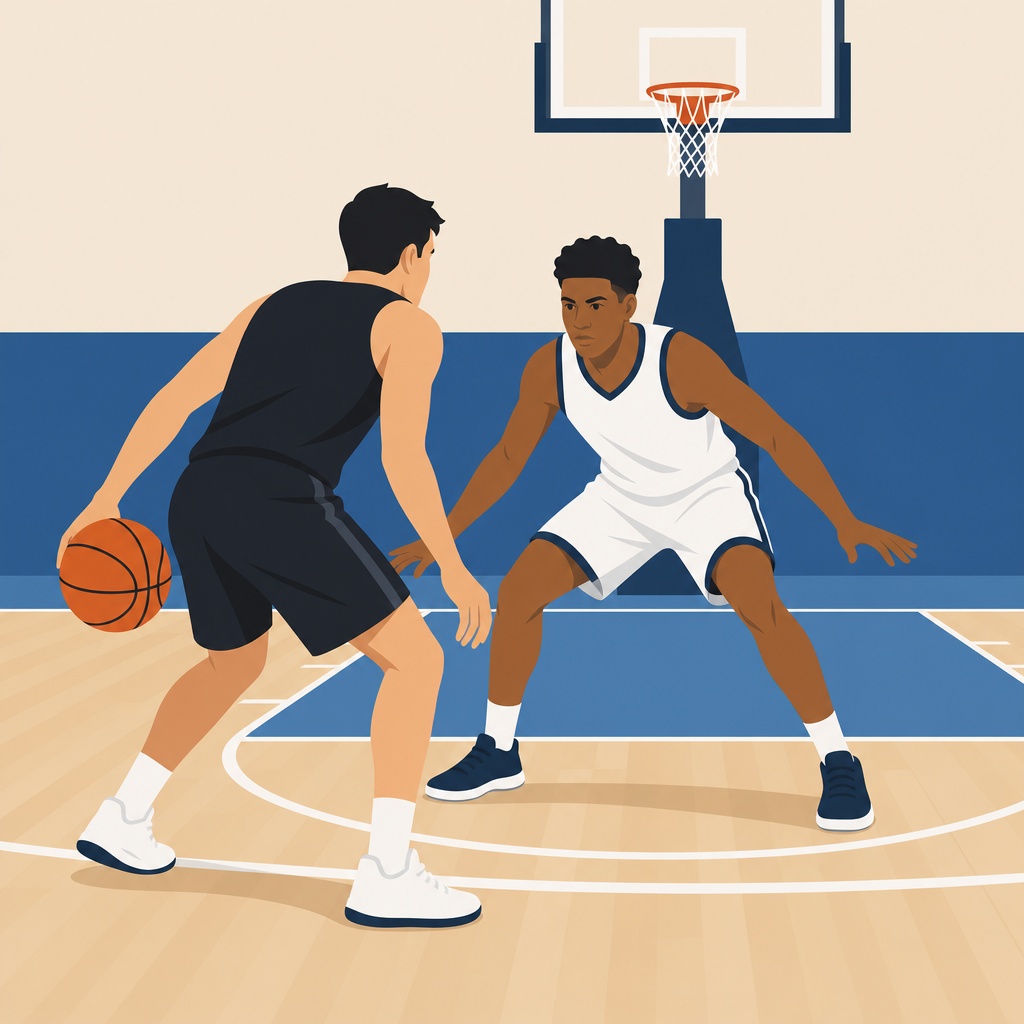
Everything starts with stance. A defender should play low with hips down, chest up, back relatively flat, and weight on the balls of the feet without leaning so far forward that a quick first step causes a stumble. Hands should be active but purposeful: one hand can bother the dribble or vision line, while the other protects against the crossover pocket or passing angle. Reaching across the body is usually a mistake because it opens the hips and creates fouls.
Footwork decides whether your stance actually works. Players should slide, open, and retreat with balance. Crossing the feet is not always forbidden, but in short-area containment it usually leads to getting beat. The first job of the on-ball defender is to influence direction. If the coverage wants the ball sent sideline or baseline, your top foot and chest angle must reflect that. Against a strong right hand, for example, you may shade slightly to take away the direct right-hand drive while staying ready for the counter. Elite defenders win with inches before they win with speed.
Pressure must be intelligent. At youth levels, players often crowd too tightly and get driven. At advanced levels, standing too far off invites rhythm threes and easy reads. The right distance depends on the scouting report, the shooter’s range, and the help behind you. Against a non-shooter, you can give more cushion and prioritize the drive. Against a pull-up threat, you close the space and arrive on balance. The aim is controlled discomfort, not reckless gambling.
Closeouts are where stance and footwork meet in real time. Sprint the first part of the closeout, then chop or shorten steps to arrive balanced with high hands and no fly-by. Coaches teach different hand priorities depending on the opponent; some want a hand high to contest the shot first, others want inside-hand pressure to discourage the immediate drive. The universal rule is this: do not leave your feet unless the shot is certain, because disciplined shooters and drivers punish undisciplined contests.
Off-Ball Positioning, Help Defense, and Communication
Most possessions are decided away from the ball. Great off-ball defenders shrink the floor, see cutters early, and arrive before the offense expects resistance. Positioning changes with distance. One pass away, many teams want stronger denial or a stance that can both contest the catch and help on a drive. Two passes away, defenders sink into the gap, often near the lane line, to deter penetration and be the next rotator. The exact alignment varies by level and philosophy, but the principle is constant: the farther your player is from the ball, the more your body serves team defense first.
Help defense works best when it is early, visible, and recoverable. The best helpers do not wait until the ball handler is at the rim. They load to the ball as it starts downhill, showing chest and creating doubt. That early presence often forces a pickup, retreat dribble, or kick-out pass. From there, the defense rotates. If the ball is driven from the wing, the low man usually protects the rim, the next defender “x-outs” or bumps to the open shooter, and everyone scrambles under control until matchups are restored.
Communication turns five defenders into one unit. In practices I have run, the loudest defenses are almost always the most connected. Players should call ball, help, deny, screen direction, cutter movement, switch decisions, and rebounding assignments. Silence creates hesitation, and hesitation creates open shots. Good communication is not random yelling; it is early, specific, and repeated. “Left, left screen.” “Gap, gap.” “I’m low.” “Shot.” Those short cues save possessions.
| Defensive situation | Correct man-to-man habit | Common mistake |
|---|---|---|
| Guarding the ball on the wing | Angle stance to influence direction and keep the ball out of the middle | Square up too high and open a direct driving lane |
| One pass away | Stay in a position to help and still contest the catch | Overdeny and give up a backdoor cut |
| Two passes away | Sit in the gap with vision on ball and man | Hug a non-threat and leave the paint exposed |
| Drive to the rim | Low man rotates early, others cover down to shooters | Everyone watches the ball and no one protects the basket |
| Shot goes up | Hit, find, and box out before chasing the rebound | Turn and watch the ball without making contact |
Defending Screens, Cuts, and Common Offensive Actions
Modern offenses use actions to force defenders into decisions, and man-to-man defense survives only when those decisions are made quickly and collectively. Ball screens are the most frequent test. Against a pick-and-roll, the on-ball defender must first call the screen early and avoid getting clipped. Then the coverage takes over. Some teams play drop, where the screener’s defender stays back to protect the paint and invite a tougher pull-up. Some hedge or show to delay the ball. Some switch. Some ice side pick-and-rolls to keep the ball on one side. The right choice depends on personnel, spacing, and level of play.
Regardless of coverage, two truths remain. First, getting over or under the screen must match the shooter. Going under against a dangerous pull-up guard is often surrender. Chasing over against a poor shooter can be unnecessary and may open the lane. Second, the weak side must be involved. The low man tags the roller, perimeter defenders sink and stunt at the right moments, and then everyone recovers out to shooters. If one player treats pick-and-roll as a two-man problem, the offense usually wins.
Off-ball screens demand the same discipline. Lock-and-trail may work against movement shooters if help is ready at the rim. Top-locking can remove a curl route but may open a back cut if help is late. Switching can simplify actions but creates mismatch concerns. Coaches usually install rules by area of the floor, type of screener, and game context. That is why players must know not just technique but terminology.
Cuts are another place where young defenders lose shape. Backdoor cuts punish overaggressive denial and poor vision. Basket cuts after passes test whether help defenders see the lane in time. The solution is simple in theory and difficult in execution: maintain vision, talk through the action, and pass cutters through the defense with bumps, tags, and early body position. Teams such as the Miami Heat and Boston Celtics have consistently shown how disciplined help and communication can erase beautiful offensive design.
Finishing Possessions, Avoiding Fouls, and Building a Defensive Identity
A stop is not complete until the defense secures the rebound. This is where many otherwise solid possessions fail. Shot contests pull defenders out of position, help rotations create cross-matches, and long rebounds test awareness. The rule every player should know is hit, find, get. Make contact first, locate the offensive player, then pursue the ball with two hands. Guards matter here as much as bigs. In many systems, the point guard must crack back on long rebounds while wings clean the elbows and corners.
Discipline without fouling is equally important. Fouls do more than give free throws; they break rhythm, create bonus situations, and reward bad offensive possessions. Most defensive fouls come from being late. A late closeout leads to body contact. A beaten defender reaches. A helper arriving second swipes down. Players who defend early with their feet usually foul less. Verticality at the rim, chest containment on drives, and strong hand discipline on contests all preserve possessions.
Building a defensive identity requires standards that show up daily. In my experience, teams improve fastest when defensive language is consistent across drills, shell work, film sessions, and games. Track deflections, paint touches allowed, blow-bys, contested shots, and defensive rebound percentage. NCAA and NBA staffs rely on these indicators because they connect effort to outcomes more reliably than steals alone. Players should also understand tradeoffs. An aggressive denial system may create turnovers but expose back cuts. Heavy switching may simplify communication but challenge rebounding and post defense. There is no flawless scheme, only clear priorities executed with commitment.
For players using this page as a starting point in basketball defense, treat man-to-man as the hub skill that supports everything else. Learn how to guard the ball, help from the gap, navigate screens, rotate as the low man, and finish with a box-out. Then go deeper into closeouts, pick-and-roll coverage, weak-side help, defensive footwork, and rebounding technique. Mastering these fundamentals makes you playable in any lineup, because coaches can build advanced schemes only after players prove they can execute the core principles every possession.
Man-to-man defense remains the clearest way to teach responsibility, teamwork, and winning habits. It asks every player to know the scouting report, understand spacing, communicate early, and compete without losing structure. When done correctly, it does not just stop points; it controls where the game is played. Offenses are pushed away from the rim, star scorers are forced into contested attempts, and possessions become harder than they looked on the whiteboard.
The key lessons are straightforward. Guard the ball with balance and purpose. See both your player and the ball when you are off it. Help early, rotate on time, and talk through every action. Defend screens with the coverage your team has chosen, not with guesswork. Finish every stop with a rebound, and avoid fouls that rescue the offense. Those habits separate active defenders from reliable ones.
If you want to improve under the broader Basketball Skills umbrella, start by auditing your defense honestly. Watch film, ask your coach where your breakdowns happen most often, and drill the situations that appear every game. Man-to-man defense rewards repetition. Build these core principles now, and every defensive system you learn next will become easier to understand and execute under pressure consistently.
Frequently Asked Questions
What is man-to-man defense in basketball, and why is it considered so important?
Man-to-man defense is a defensive system in which each player is assigned a specific offensive player to guard, but the concept goes well beyond simply following one person around the court. At a high level, it teaches accountability, positioning, communication, and teamwork. A defender must know where the ball is, where their player is, where the basket is, and where help is coming from at all times. That is why coaches value it so highly. It builds the defensive habits that carry over to every level of basketball, including effort on the ball, awareness away from the ball, proper help-side positioning, closeouts, box-outs, and recovery.
Coaches trust man-to-man defense because it creates a clear structure for everyone on the floor. Every player knows their primary responsibility, but they also learn how to support teammates when the ball is driven, when a screen is set, or when an offensive player cuts into dangerous areas. In strong man-to-man defense, the entire unit moves together. If one defender gets beat, another rotates to help. If help comes, someone else must recover to cover the open player. That connectedness is the real foundation of the system. It is not just five individual matchups. It is five players working in sync to protect the paint, contest shots, limit easy passes, and finish possessions with rebounds.
What are the core principles every player should know to play good man-to-man defense?
The core principles of good man-to-man defense start with stance, effort, and positioning. A defender needs a low, balanced stance with active feet and active hands. Staying low helps with balance and allows quicker reactions to drives, changes of direction, and sudden passes. Effort is non-negotiable because man-to-man defense demands constant movement. Defenders must slide, sprint, recover, contest, and communicate on nearly every possession. Positioning is just as important as effort. Players need to understand ball-you-man positioning, which means seeing both the player they are guarding and the ball at the same time. That awareness helps defenders deny passes, provide help, and react more quickly to cuts or screens.
Another essential principle is pressure without gambling. Good defenders make the offense uncomfortable, but they do not constantly reach, lunge, or chase steals that take them out of position. Strong man-to-man defense is built on discipline. Players also need to know when to help and when to stay home. If a teammate is beaten off the dribble, help defense must be there early enough to stop the drive. At the same time, defenders cannot overhelp so much that they give up an easy kick-out pass for an open shot. Communication ties everything together. Teammates need to call out screens, switches, cutters, and help. Finally, every possession must end with a rebound. Even perfect defense is wasted if the offense gets a second chance.
How do help defense and recovery work within man-to-man defense?
Help defense is one of the most misunderstood parts of man-to-man defense because many players assume guarding their own player is all that matters. In reality, great man-to-man defense depends on timely help and sharp recovery. Help defense happens when a defender leaves or shades off their assignment to stop a drive, cut off penetration, protect the rim, or discourage an easy scoring opportunity. The purpose is not to abandon responsibility, but to support the team when the ball gets into a dangerous area. This is especially important when the on-ball defender gets beaten, when a mismatch appears in the paint, or when a cutter slips behind the defense.
Recovery is what happens next. Once a help defender steps in, the defense has to rotate behind the play so no offensive player is left wide open. A teammate may “help the helper” by covering the open man until everyone can recover back to their assignments. Good teams do this quickly and with constant communication. Players talk through the entire action by calling “help,” “I’ve got ball,” “rotate,” or “back.” The best help defenders are not just reactive; they anticipate. They position themselves one step off their player, ready to stunt at the ball, tag a cutter, or step into the lane if needed. The goal is to shrink space for the offense without losing the ability to close out under control when the ball is passed out.
How should players defend screens and cutters in a man-to-man system?
Screens and cutters test the discipline of any man-to-man defense because they force defenders to make fast decisions while staying connected as a team. Against cutters, defenders must maintain vision of both the ball and their player. If a player turns their head completely toward the ball, their assignment can cut behind them for a layup. If they lock onto their player and ignore the ball, they may miss a pass or fail to help. Good defenders stay in a position where they can see both, use quick footwork to stay between their player and the basket, and communicate when someone is cutting through the lane or moving off a screen.
Defending screens requires team communication and a plan. On-ball screens may be handled by fighting over the screen, going under it, switching it, or hedging and recovering, depending on the scouting report and the situation. Off-ball screens require defenders to call out the screen early so the teammate being screened is not surprised. In all cases, the biggest mistake is silence. If defenders do not communicate, the offense gains a major advantage. Players also need to avoid dying on screens, which means getting stuck and trailing the play. They should work to stay attached, use proper angles, and recover with urgency. Coaches often stress that screen defense is not just about the player getting screened; it is about both defenders working together to prevent open shots, direct drives, and easy slips to the basket.
What are the most common mistakes players make in man-to-man defense, and how can they improve?
One of the most common mistakes in man-to-man defense is standing too upright. A high stance slows reaction time and makes it easier for offensive players to attack off the dribble. Another frequent problem is ball-watching. When defenders stare at the ball and lose track of their assignment, they give up backdoor cuts, open spot-up shots, and easy offensive rebounds. Poor communication is another major issue. Even talented defenders struggle if they do not call out screens, cutters, and help responsibilities. Reaching instead of moving the feet also hurts many players. Reaching leads to fouls, broken balance, and blow-bys. Finally, many defenders fail to finish the possession by boxing out. They may guard well for fifteen seconds, then allow a put-back because they did not locate their player and rebound.
Improvement starts with repetition and awareness. Players should work on defensive stance, lateral movement, closeouts, and shell-drill concepts that teach positioning relative to the ball and their man. Watching film can also be extremely helpful because it shows where breakdowns happen, especially away from the ball. Communication should become a habit, not something saved for key moments. Players need to talk every possession. It also helps to focus on small, repeatable goals such as keeping the ball out of the middle, arriving in help position on time, contesting without fouling, and making first contact on the rebound. The best man-to-man defenders are rarely those who chase highlights. They are the players who stay disciplined, understand team principles, and consistently do the hard, detailed work that coaches trust.