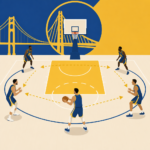


Basketball defense tips for beginners start with a simple truth: good defenders are built on stance, balance, and on-ball positioning long before they learn steals, blocks, or advanced schemes. Defense in basketball means using footwork, body control, timing, and awareness to prevent an opponent from driving, passing, or shooting efficiently. A defensive stance is the athletic position that lets you move in any direction without losing balance. On-ball positioning is where you place your body, feet, hands, and eyes when guarding the player with the ball. For beginners, these two ideas matter most because every other defensive skill—closing out, containing dribble penetration, helping, recovering, boxing out, and communicating—depends on them. I have coached new players who wanted instant highlights, yet their biggest gains came from learning how to sit low, slide correctly, and take away the easiest angle. That foundation changes games. It cuts down layups, forces tougher shots, and gives a team structure. If you are building your Basketball Skills base, defense should be treated as a daily habit, not a side skill.
Why stance is the foundation of beginner basketball defense
The best beginner defensive stance is low, balanced, and active. Your feet should be slightly wider than shoulder width, your knees bent, hips lowered, chest up, and head steady. Your weight belongs on the balls of your feet, not on your heels, because heels make you late. Your back should stay relatively straight rather than folded over at the waist. Hands stay active: one hand high to bother vision and shots, the other low to bother the dribble. Coaches often describe this as “nose behind toes” or “sit in the chair,” but the real goal is mobility. If your stance is too narrow, you get knocked off line. If it is too wide, you cannot push and recover. I usually tell beginners to test their stance by holding it for twenty seconds and then sliding two hard steps each direction. If they rise up, click their feet together, or lose chest position, the stance is not yet game ready.
Stance matters because basketball is a series of rapid decelerations and reaccelerations. Research in strength and conditioning consistently shows that change of direction depends on posture, shin angle, force production, and braking ability. In practical terms, a defender who stays low can absorb a jab step, react to a crossover, and recover after a hesitation dribble. A high defender reaches, opens the gate too early, and gives up direct drives. Watch strong point-of-attack defenders at any level and you will notice they rarely look rushed on the first move. That calm comes from posture. For beginners, mastering stance also reduces fouling. Players who defend upright often use their hands to compensate; players in a sound stance can move their feet and keep legal guarding position.
How to position yourself when guarding the ball
On-ball positioning begins with understanding your job: make the offense uncomfortable without gambling. Against a right-handed player in a neutral situation, a beginner usually wants to shade slightly toward the ball hand and influence the dribbler away from the middle of the floor. Middle drives are dangerous because they open passing angles to both sides and force help rotations. Baseline can also be dangerous, but it is easier to trap with the sideline and baseline acting as extra defenders. Your chest should face the opponent’s numbers, your hips should stay square as long as possible, and your lead foot should not overcommit. Many beginners stand directly in front, too close, and get blown by on the first step. A better rule is arm’s-length distance against a live dribbler, adjusted for speed and shooting ability. Give a non-shooter a little more space. Crowd a strong shooter after the catch, then close the cushion once they put the ball down.
Your eyes should focus around the opponent’s chest, not the ball and not the eyes. The ball lies. The shoulders and chest tell the truth. Good ball handlers use head fakes, hang dribbles, and rhythm changes to move defenders who watch the ball. By locking into the torso, you react to actual body movement. Hand placement matters too. Beginners often swipe down and pick up cheap fouls. Keep one hand in the passing lane and one hand available to contest, but use your feet first. If the dribbler picks up the ball, close space with short, balanced steps, get both hands high, and avoid jumping unless a shot is clearly leaving the hand. This is how you pressure the ball without giving away a drive or a foul.
Footwork, slides, and turning to run
Most breakdowns on defense come from bad feet. Beginners need three movement patterns: defensive slides, drop steps, and sprint recovery. Defensive slides are short, quick pushes from the back leg while keeping the feet apart. Do not click your heels together, because that kills balance. Do not cross your feet on lateral movement unless you are beaten and transitioning into a run. Slides are for containment over short distances. Drop steps are for sudden directional changes when the ball handler attacks your outside hip. Instead of reaching, you open the hips briefly, drop the inside foot, and push to get back in front. Sprint recovery happens when the offensive player gains a clear angle. At that point, the priority is no longer perfect slide form; it is recovery to reestablish legal guarding position and contest from the side or rear without fouling.
Here is the progression I use with beginners. First, practice stance holds and two-step slides. Second, add a coach point or hand signal so the player reacts rather than guessing. Third, add a live dribble with one change of direction. Fourth, include a retreat dribble, because many beginners overpursue and cannot handle someone who attacks, backs up, and attacks again. Finally, add a finish at the rim or pull-up jumper so the defender learns the full possession. This progression mirrors how actual possessions unfold. In film sessions, the defenders who improve fastest are not always the quickest athletes. They are the players who understand when to slide, when to open, and when to run. That decision-making is a basketball skill just as much as speed.
Common beginner mistakes and how to fix them
Beginners usually make the same defensive errors. They stand too tall, reach across the body, lunge on fakes, open the hips too early, and forget the scouting priority. They also talk too little. Defense becomes easier when you name the action early—“ball,” “screen left,” “help,” “dead,” “shot.” Communication buys reaction time for everyone. Another common mistake is defending the dribble instead of the space. A quick guard wants you chasing the bouncing ball. A disciplined defender protects the driving lane, keeps the chest in front, and forces the offense to take extra dribbles. At youth levels, one extra dribble often breaks timing on the entire possession.
| Beginner Mistake | What It Causes | Simple Fix |
|---|---|---|
| Standing upright | Slow first slide, late contests, more reaching fouls | Bend knees, lower hips, keep chest up for entire possession |
| Watching the ball | Falling for crossovers and hesitations | Lock eyes on the chest and near shoulder line |
| Crossing feet on slides | Loss of balance and direct drive angles | Push-slide, keep feet apart, cross only in sprint recovery |
| Reaching with both hands | Cheap fouls and open driving lanes | Use active hands, but move feet first and stay square |
| Overplaying steals | Breakdowns behind the play | Contain first, disrupt second, gamble rarely |
Fixing these issues requires deliberate repetition, not random scrimmaging. For example, if a player opens the gate on every first step, place them on the wing and force baseline drives in a controlled drill so they learn to angle their body and use the sideline. If a player reaches, run mirror slides with hands behind the back for short bursts. That removes the habit and teaches feet to solve the problem. If a player bites on shot fakes, teach the phrase “high hands, low hips.” Contest with length, not forward lunges. These corrections are small, but they accumulate into real stops.
Building complete defensive habits beyond the ball
This article centers on stance and on-ball positioning, but a true Defense hub should connect the rest of the topic. Once beginners can guard the ball, they need off-ball awareness, help-side positioning, closeouts, screen navigation, rebounding responsibility, and team communication. Help defense means being in a position to stop the drive while still able to recover to your assignment. The common teaching progression is ball-you-man, seeing both the ball and your player with an open stance. Closeouts require sprinting under control, chopping the feet, arriving with a high hand, and taking away the immediate shot without surrendering the drive. Screen defense adds another layer: going over against strong shooters, under against weak shooters when the game plan allows, switching when personnel and spacing demand it, or using techniques such as ice on side pick-and-rolls in more advanced systems.
Rebounding is part of defense, not a separate chore after the shot. A possession ends only when your team secures the ball. That means finding your check, making contact, and pursuing the rebound with two hands. Communication ties every layer together. Elite defensive teams are loud because early information solves problems before they happen. Even beginners can learn the nonnegotiables: call the ball, call screens, call help, and call shot. If you want to expand from this hub into deeper Basketball Skills work, the natural next steps are closeout technique, help-and-recover drills, screen defense basics, defensive rebounding, and team shell concepts. Stance and on-ball positioning are the entry point, but they should always be trained in connection with the full defensive possession.
Drills, coaching cues, and practice routines that work
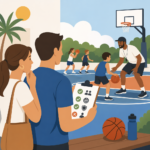
The fastest way to improve beginner defense is short, frequent practice with clear standards. I prefer ten to fifteen minutes of focused defensive work in every session over one long block once a week. Start with stance holds, then lateral slides, then mirror drills, then live containment. A simple mirror drill works well: one player leads without a ball for five seconds inside a small box, and the defender must stay chest-to-chest distance without reaching. Next, add a dribble and limit the offense to two changes of direction. This keeps the drill realistic while protecting technique. Another useful drill is lane-line containment: start on the wing, give the offense three dribbles max, and the defender wins by preventing middle penetration or forcing a contested pull-up. The offensive limit keeps reps sharp.
Use coaching cues that are brief enough to survive game speed. “Low and loaded” reminds players to maintain stance. “Beat the spot” teaches getting to the drive line early instead of absorbing contact late. “Chest wins” reinforces legal guarding position. “No middle” gives a clear directional priority. “High hands, no swipe” cuts down fouls on contests. For measurable progress, track blow-bys allowed, paint touches allowed, deflections, and box-outs completed. Not every defensive improvement appears in points scored. Sometimes the best sign is that the offense takes harder shots later in the clock. Video helps too. A beginner who sees one possession of upright stance and one of proper stance usually understands the difference immediately. Keep the standards simple, repeat them constantly, and demand them in every drill, not just during the defense segment.
Basketball defense tips for beginners are most effective when they return to the same essentials: stance, balance, footwork, positioning, and disciplined effort. If you learn to stay low, keep your chest in front, watch the torso, move your feet before your hands, and influence the ball away from the most dangerous spaces, you will become playable much faster. That matters because coaches trust defenders who are reliable. They may forgive a missed shot, but they rarely ignore repeated defensive mistakes. The biggest benefit of mastering stance and on-ball positioning is consistency. You stop giving away easy points, your teammates can help with confidence, and the whole defense becomes more connected.
Use this page as your hub for the full Defense side of Basketball Skills. Start with stance and on-ball work, then build outward into closeouts, help defense, screen coverage, rebounding, and communication. Keep your practice simple: short daily reps, clear cues, and game-speed accountability. If you want better results quickly, film a few possessions, identify one stance issue and one positioning issue, and fix those first. Defense improves fastest when the focus is specific. Commit to that process this week, and you will feel the difference the next time you guard the ball.
Frequently Asked Questions
What is the proper defensive stance for a beginner in basketball?
The proper defensive stance starts with balance and readiness, not tension. A beginner should stand with feet about shoulder-width apart or slightly wider, knees bent, hips lowered, chest up, and back straight. Your weight should stay on the balls of your feet so you can react quickly in any direction, but your heels should still lightly connect with the floor rather than lifting too high. Keep your head up and eyes forward so you can see both the ball and your opponent’s torso. Your hands should be active without reaching wildly—one hand can be up to bother vision or the shot, while the other stays lower to discourage the dribble or passing lane.
A good stance should feel athletic and controlled, like you are ready to slide, sprint, or stop at any moment. One of the biggest beginner mistakes is bending at the waist instead of bending through the knees and hips. That weakens balance and makes it harder to move laterally. Another common mistake is standing too tall, which slows reaction time and opens driving lanes. The goal is to stay low enough to move efficiently, but not so low that you become stiff or tire out immediately. Think “comfortable pressure”—you want to look and feel engaged, not frozen. If you can slide left or right without crossing your feet and without your shoulders bouncing up and down, you are probably in a solid defensive stance.
Why is staying low so important when playing on-ball defense?
Staying low is important because it gives you better balance, quicker change of direction, and more control over your body. On-ball defense is about reacting to an offensive player who is trying to create space, attack your hips, or force you off balance. If you are upright, your first move is slower, and you are much more likely to get beaten on the drive. A low stance keeps your center of gravity under control, which makes it easier to slide, stop, recover, and absorb contact without getting knocked backward.
Being low also helps you defend without fouling. Beginners often reach with their hands when they feel late, but reaching usually happens because the feet are out of position. When you stay low and move your feet early, you can keep your chest in front, use legal body positioning, and challenge the ball handler with discipline instead of panic. It also improves endurance over time because efficient movement uses less wasted energy than standing tall and constantly lunging. In simple terms, a low defender is a more stable defender. You are harder to move, harder to fake out, and better prepared to contest shots and cut off drives.
How should beginners position themselves when guarding the ball?
When guarding the ball, beginners should focus on staying between the offensive player and the basket while slightly influencing the direction of the dribble. That means your body should not be directly square in a stiff, flat-footed way, but rather balanced and subtly angled depending on the coach’s defensive rules. In many basic situations, defenders are taught to shade the ball handler toward their weaker hand or toward help defense. Your chest should stay lined up with the opponent’s midsection, because the ball and eyes can fake you, but the torso usually tells the truth about where the player is going.
Your distance from the ball handler matters too. If you stand too close, a quick first step can beat you. If you stand too far away, you give up an easy shot or let the offense get comfortable. A good beginner guideline is to stay close enough to contest a shot with one or two quick steps, while still leaving yourself room to react to the drive. Keep one hand active high and one low, but avoid swiping unless you are sure you can make a clean play. Most importantly, move on the dribbler’s movement, not every fake. Good on-ball positioning is less about stealing the ball and more about controlling space, staying in front, and making every offensive decision harder.
What footwork should beginners use to stay in front of an offensive player?
The most important footwork skill for beginners is the defensive slide. To slide properly, push off the opposite foot and move laterally without crossing your feet. If the ball handler goes right, push off your left foot and slide right. If the ball handler goes left, push off your right foot and slide left. Keep your feet wide enough to stay balanced, but do not let them come so close together that you lose power or so far apart that you cannot move quickly. Short, controlled slides are better than long, exaggerated steps that leave you off balance.
Beginners should also learn when to open up and run. If the offensive player gains a step and starts turning the corner, you may need to drop step or pivot your hips and sprint to recover rather than trying to slide forever. This is where many new defenders struggle—they keep sliding when they should transition into a quick recovery step. Another key point is to avoid clicking your heels together or crossing your legs, because that causes stumbles and makes it easier for the offense to attack. Strong footwork is really a combination of slides, drop steps, quick stops, and balance. If you can move your feet first and keep your chest in front, you will defend far better than someone who relies on reaching or guessing.
What are the most common mistakes beginners make in basketball defense, and how can they fix them?
The most common mistakes beginners make are standing too upright, reaching with their hands, watching the ball instead of the player’s body, crossing their feet, and reacting too late. Standing upright makes every movement slower. Reaching leads to fouls and puts the defender out of position. Watching the ball too much makes you vulnerable to fakes. Crossing your feet hurts balance and prevents strong lateral movement. Reacting late usually comes from poor stance, poor focus, or giving the offensive player too much space. These mistakes are common because new players often think defense is about effort alone, when in reality it is about disciplined technique repeated over and over.
The fix starts with simple habits. First, return to a low, balanced stance every possession. Second, keep your eyes on the opponent’s chest or midsection instead of chasing the ball with your vision. Third, move your feet before using your hands. Fourth, practice short lateral slides, closeouts, and recovery steps so the body learns proper movement automatically. Fifth, understand that good defense is not always dramatic. You do not need a steal or block to win the possession. If you force the ball handler into a tough shot, stop a direct drive, or delay the offense so help can arrive, you have done your job. For beginners, the fastest improvement comes from mastering the basics of stance, balance, and on-ball positioning. Once those become consistent, every other defensive skill gets easier.